



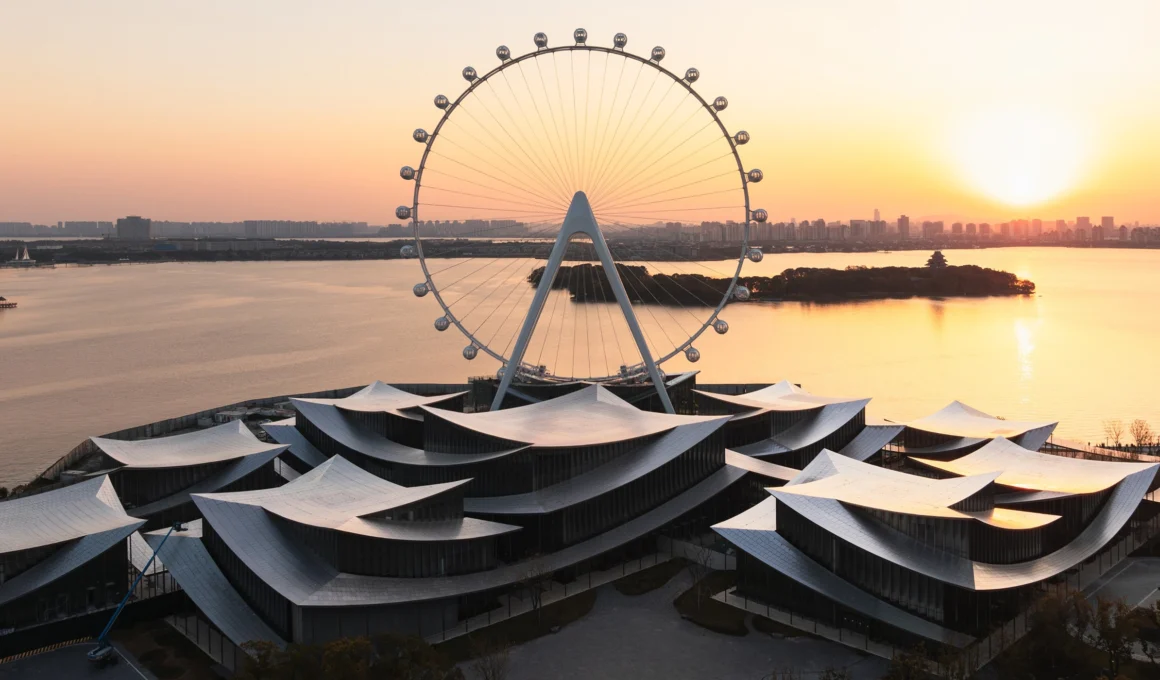
BIG-Bjarke Ingels Group is forging ahead with the completion of the Suzhou Museum of Contemporary Art(Suzhou MoCA), a spectacular cultural landmark set to redefine the Jinji Lake waterfront in Suzhou, China. Slated for a grand opening in 2026, the architectural design masterfully translates the ancient principles of the revered Chinese garden tradition into a contemporary and dynamic public space. The museum is a reimagining of the traditional lang—the long, covered corridor—transformed into an intricate system of pathways that connect art, nature, and community.
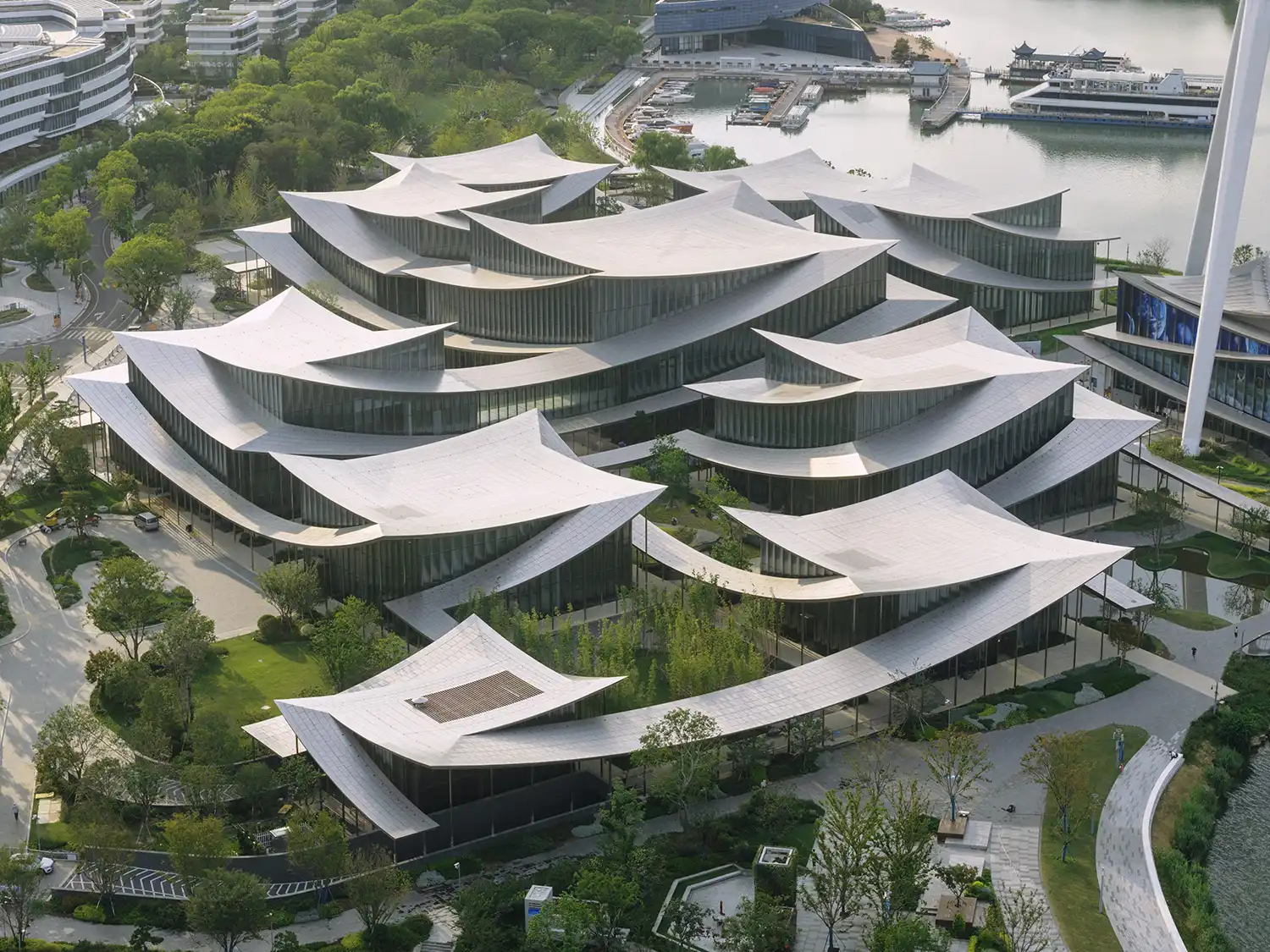
At the heart of the design is a composition of ten interconnected pavilions unified beneath a single, continuous, and gently undulating roof. This elegant ‘ribbon’ roofline pays homage to the tiled eaves found throughout historic Suzhou, while providing a powerful, sculptural form. Bjarke Ingels describes the concept as a “Chinese knot” and a “rhizome” that weaves the city to the lake, creating a manmade maze of interconnected courtyards and exhibition spaces. This unique, nodular logic is best appreciated from the gondolas of the nearby Ferris Wheel, where the striking visual effect of the stainless roof tiles forms a deliberate and photogenic fifth facade.
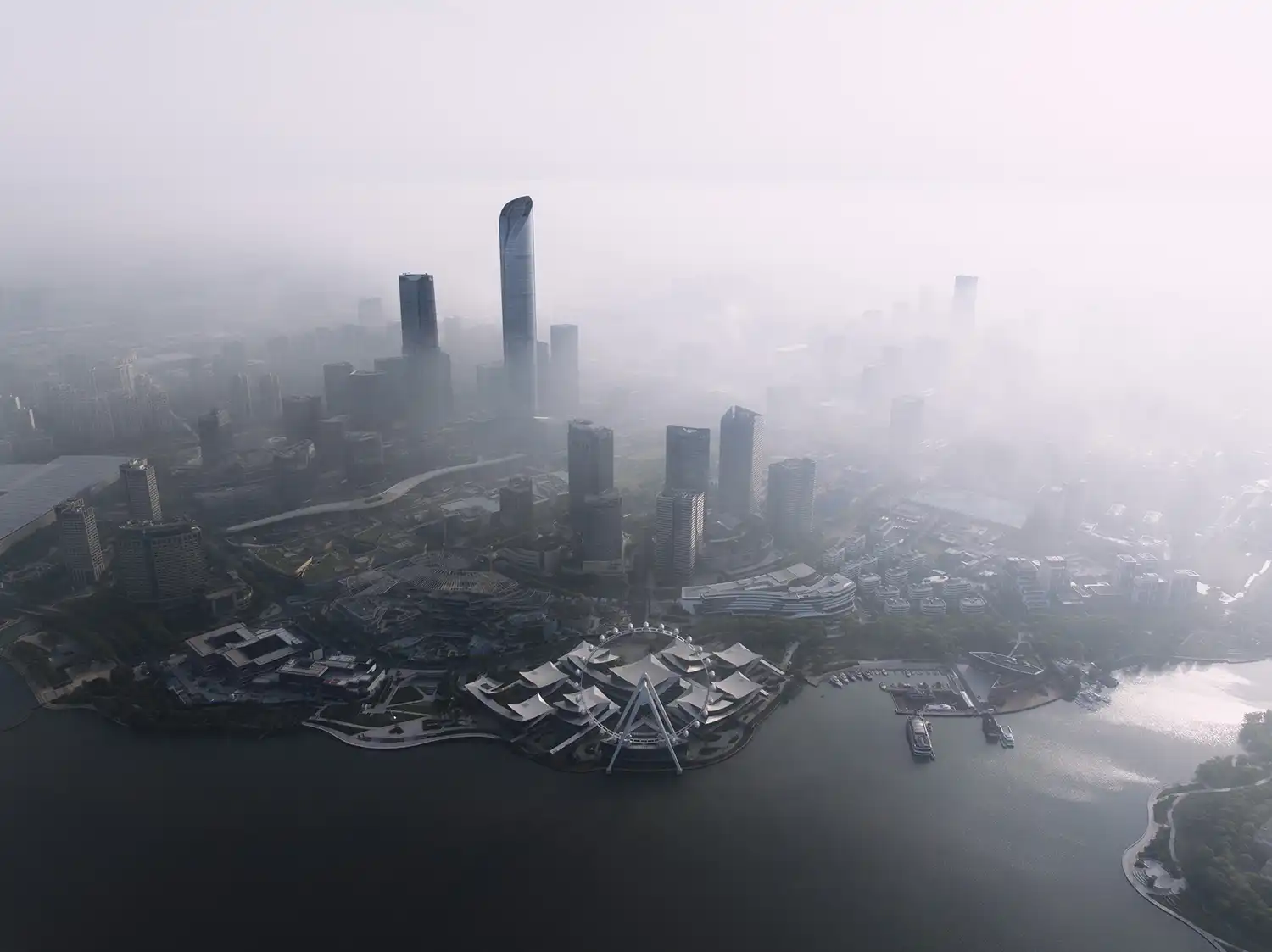
The museum’s structure beautifully blurs the lines between built form and the natural environment. Facades are clad in rippled and curved glass and warm-toned stainless steel, chosen specifically to reflect the surrounding sky, water, and meticulously planned gardens. This material strategy ensures the museum design is constantly in dialogue with its lakeside setting. The pavilions are linked both above and underground via glazed galleries, bridges, and tunnels, affording maximum flexibility for circulation and allowing the museum to adapt its pathing based on seasons and exhibition requirements—a core feature for a dynamic institution focused on contemporary art and design.
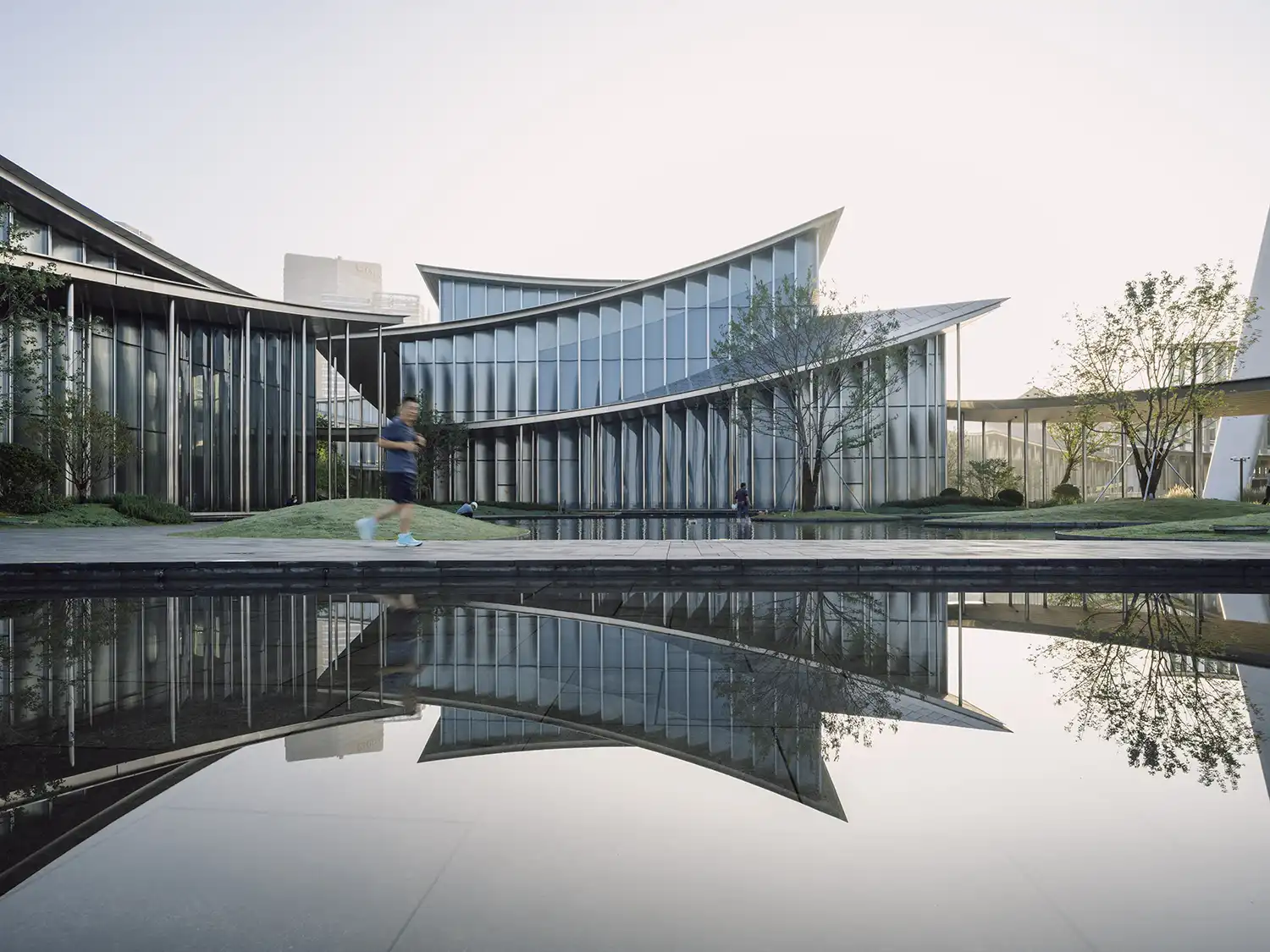
Upon arrival, visitors are welcomed by an expansive plaza that leads into the complex. Inside, a continuous path guides exploration through four primary gallery pavilions, alongside a grand entrance, a theatre, a restaurant, and a multifunction hall. Natural light is employed as an active design element, entering the spaces through clerestories and skylights to animate the galleries with shifting light and shadow. The surrounding landscape design reinforces the architectural narrative, transitioning gradually from hardscape to greenery and then to water-themed plantings, reflecting a natural progression from the museum building towards the lake.
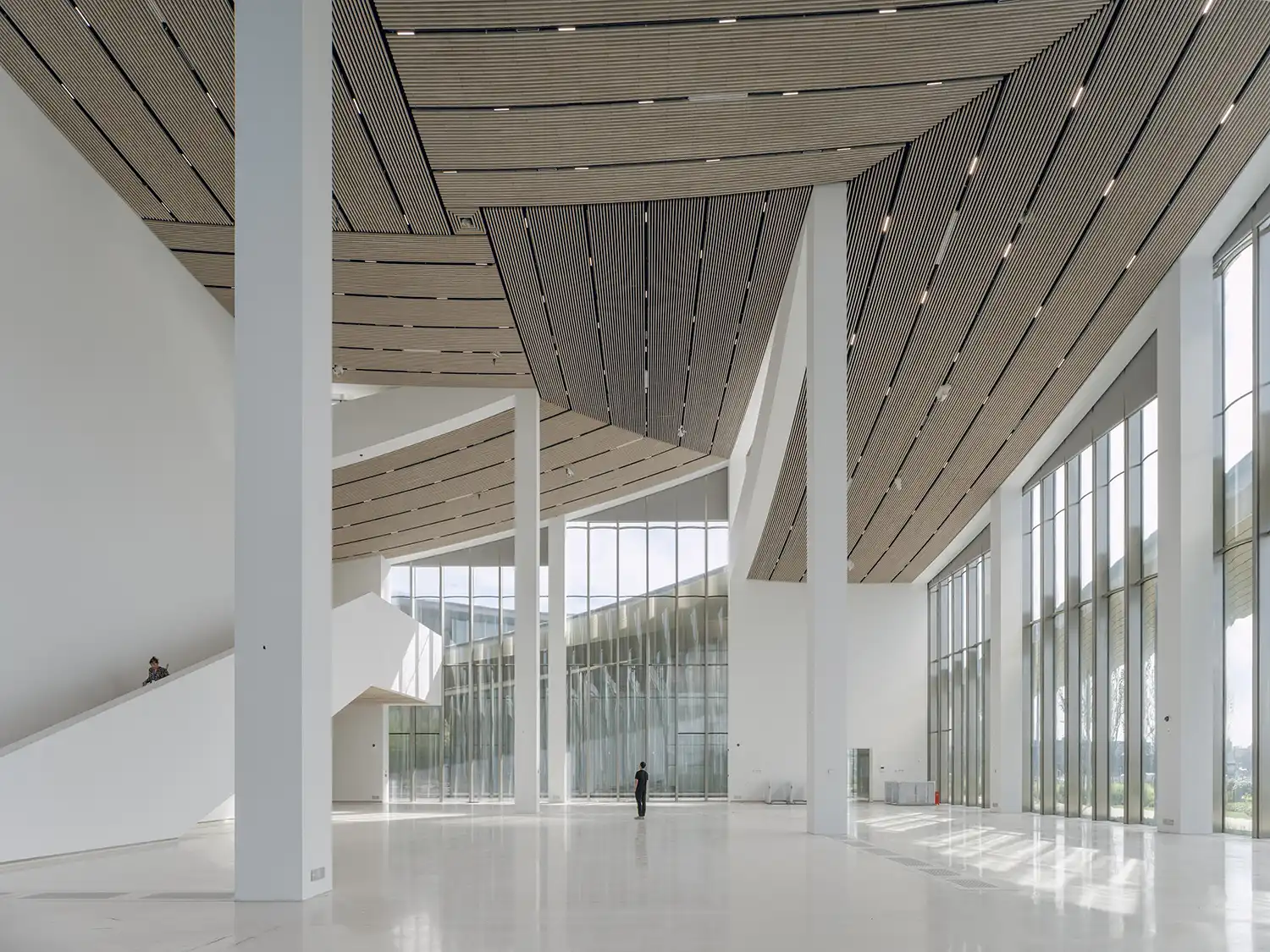
The Suzhou MoCA is designed with a keen eye on sustainable architecture, aiming for China’s GBEL 2-Star certification. This commitment is realized through the integration of passive shading, natural ventilation, and the use of locally sourced materials, establishing the project as a responsible and cutting-edge piece of Contemporary Chinese Architecture. Looking ahead to its opening, the museum will launch with “The Materialism exhibition,” a deep dive into BIG’s architectural philosophy, exploring how elemental materials like stone, earth, and glass shape their iconic structures, including Google Bay View and The Plus.

This sensory, experiential architecture is highlighted within the inaugural exhibition: seating throughout the galleries is fabricated from the very materials on display, fostering a full sensory journey through texture and form. Even the section plaques, crafted from corresponding mediums like rammed earth and yellow rust stone, underscore the studio’s fascination with matter. By reinterpreting cultural heritage through bold, contemporary forms, BIG’s design for Suzhou MoCA creates an unforgettable nexus of art and public life on the shores of Jinji Lake.