



The newly completed Greater Bay Area Sports Centre in Guangzhou, China, designed by acclaimed firm Zaha Hadid Architects (ZHA), is a compelling exercise in large-scale iconic architecture that bridges regional heritage with futuristic design. Set within a vast 70-hectare waterfront park in the city’s burgeoning Nansha District, the complex is poised to host its first major events, confirming its status as a critical piece of infrastructure for the entire region. The project, realized in collaboration with the Guangdong Architectural Design and Research Institute, serves the Pearl River Delta’s major cities, including Shenzhen, Hong Kong, and Macau, underscoring its immense importance to the world’s largest urban area—a conurbation anticipated to top 100 million people by the end of the decade.
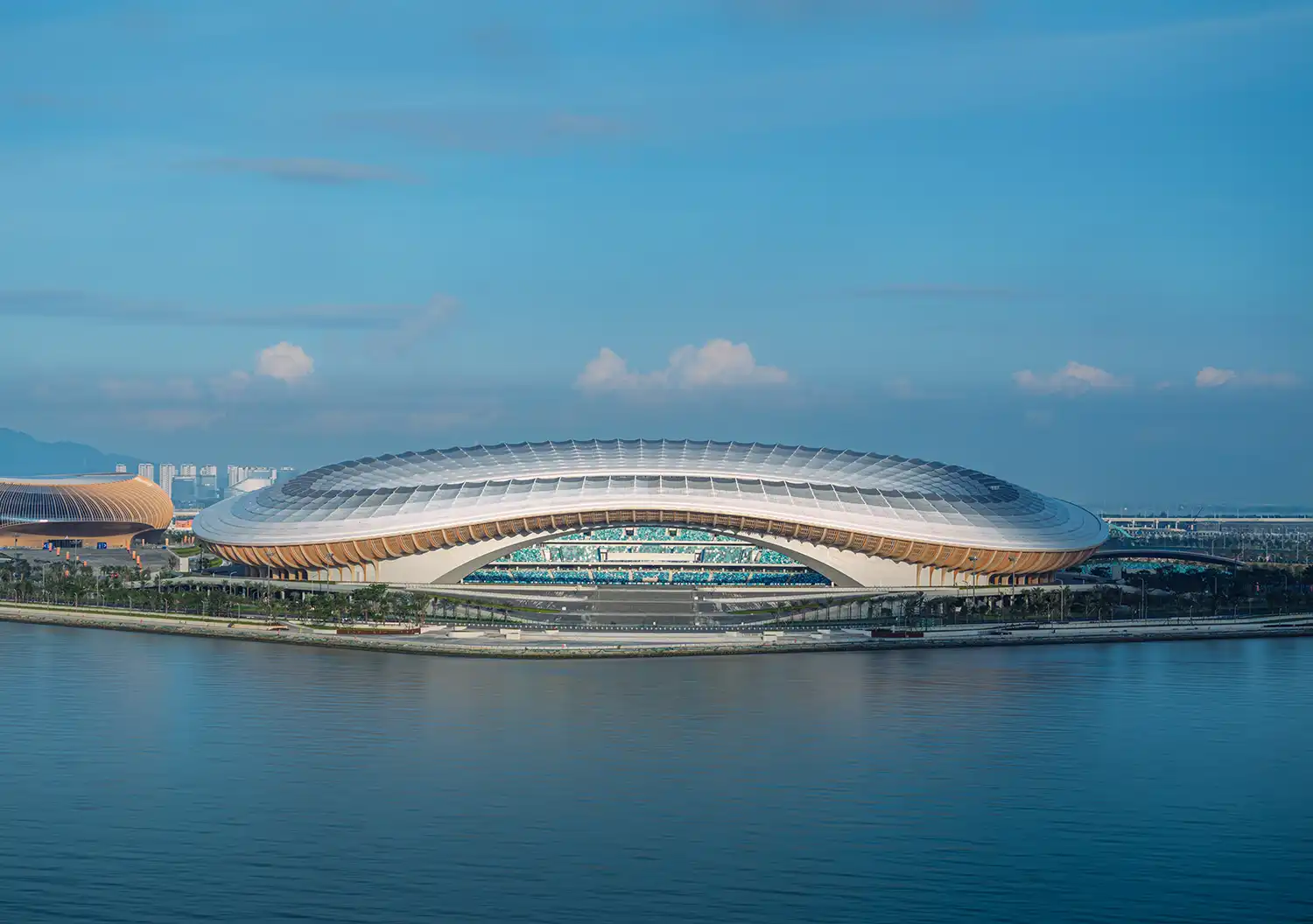
The striking architectural expression of the sports centre draws profound inspiration from the region’s historical maritime prowess. ZHA based the fluid forms and tapering geometries of the structures on the hulls of traditional sailing ships first developed during the Song Dynasty, which cemented the Pearl River as a global trading gateway. Positioned strategically on the primary northern approach from the new Shenzhen-Zhongshan Bridge, the building complex on the riverbanks acts as a dramatic gateway to Guangzhou itself, welcoming visitors with its distinct, undulating profiles that command attention and reinforce a powerful sense of place.
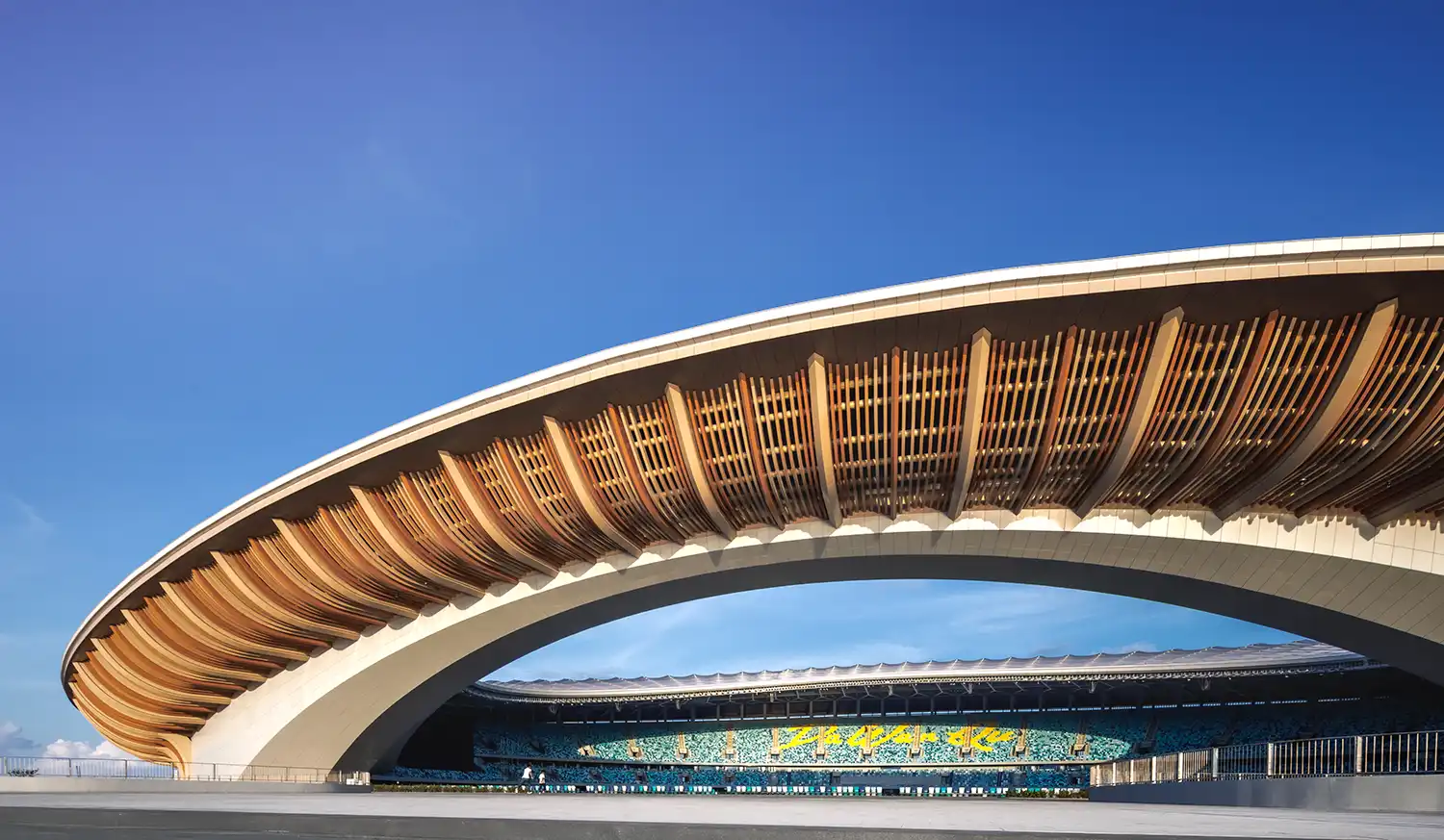
Central to the development are the exceptional sports facilities designed to enhance well-being and support China’s competitive athlete training programmes. The trio of major venues includes the magnificent 60,000-seat stadium, a highly versatile 20,000-seat arena for indoor sports like basketball, and a specialized 4,000-seat aquatic centre complete with a 50-metre swimming pool and diving well for training and competition. Crucially, the site also provides essential supporting infrastructure such as athlete accommodation, outdoor training pitches, and running tracks, ensuring the centre’s year-round use for local schools and sports clubs.
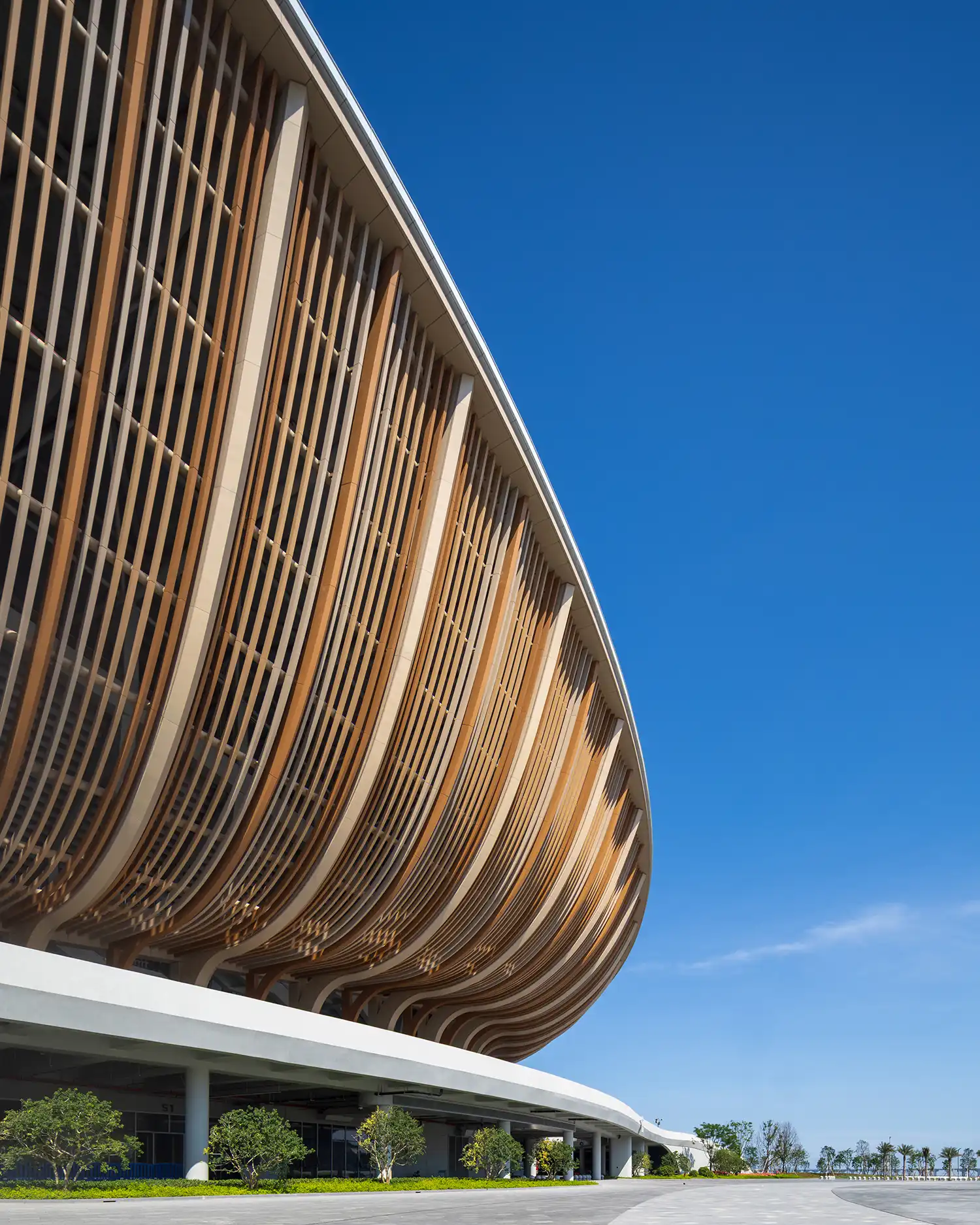
The design is a masterful response to Guangdong’s challenging subtropical monsoon climate, incorporating time-honored environmental strategies adapted for contemporary needs. Zaha Hadid Architects embraced concepts from the local Lingnan vernacular architecture, integrating generous, sheltered areas and employing effective natural ventilation to cool the buildings during the region’s humid summer months. This focus on sustainable design is key to the centre’s long-term operational efficiency, optimizing Nansha’s warm winters to create ideal outdoor conditions for competitive track and field training, fostering future athletic legacies.
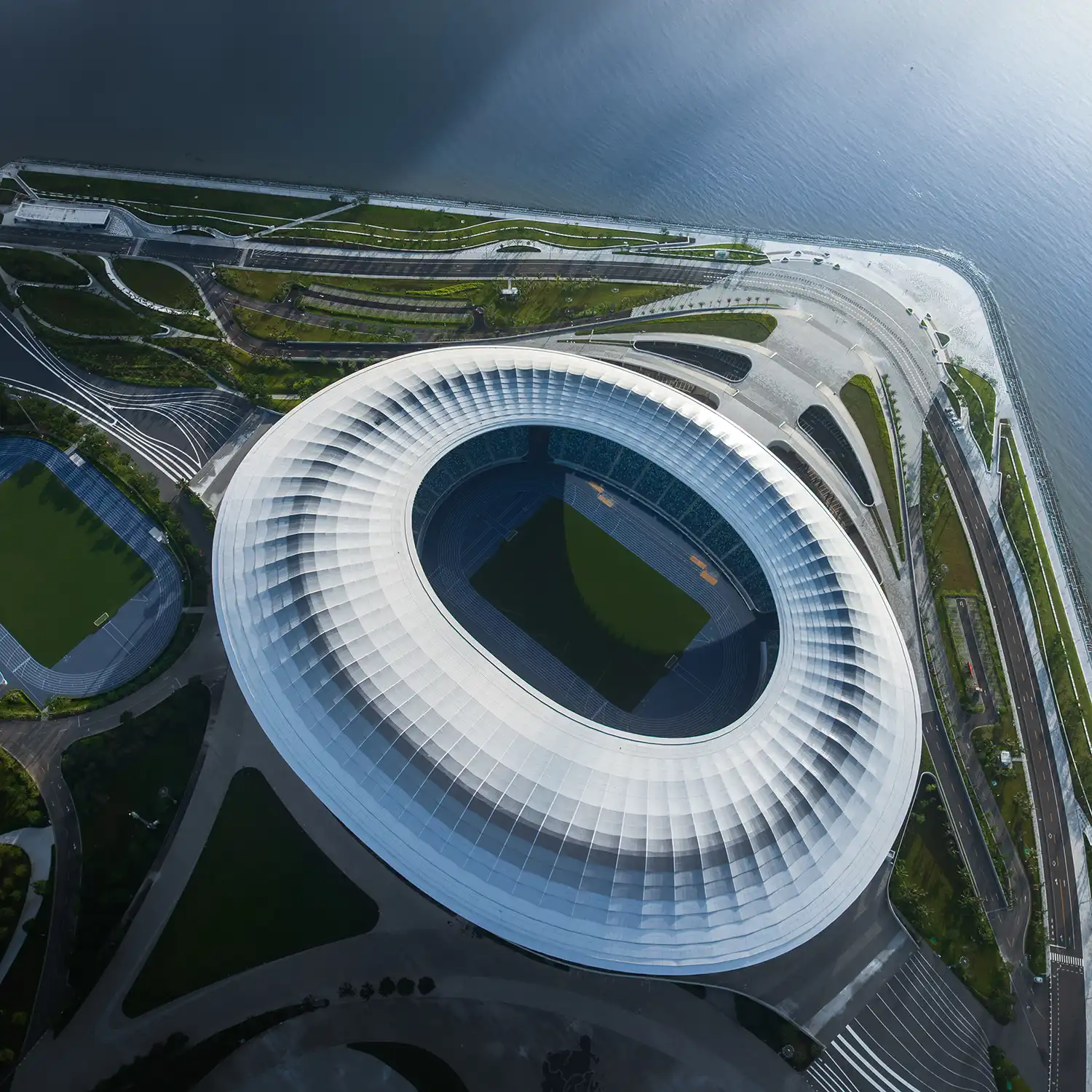
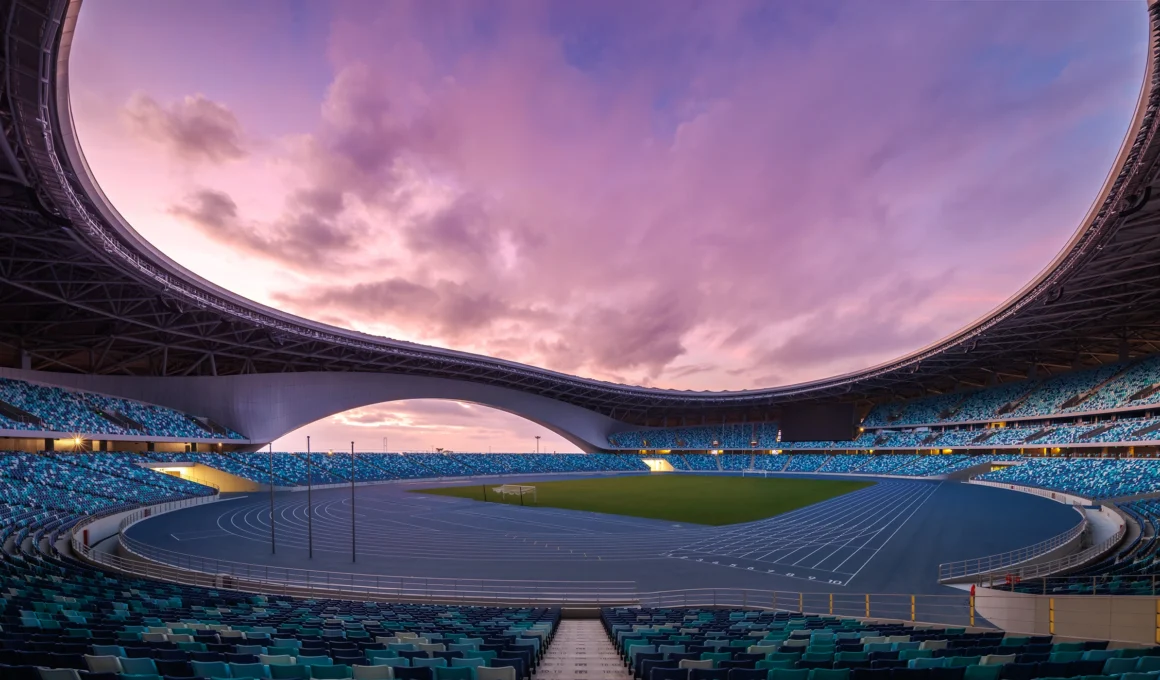
This environmentally conscious approach is most dramatically visible in the stadium’s signature layered canopy. The layered roof system is meticulously engineered to shelter the 60,000 spectators from harsh rain and direct sunlight while allowing warm air to rise and be naturally vented out of the building envelope, acting as a massive passive cooling mechanism. This distinctive structure visually emulates the pleated silk folds found in traditional Chinese fans, providing both an effective climate solution and a highly resonant cultural motif.
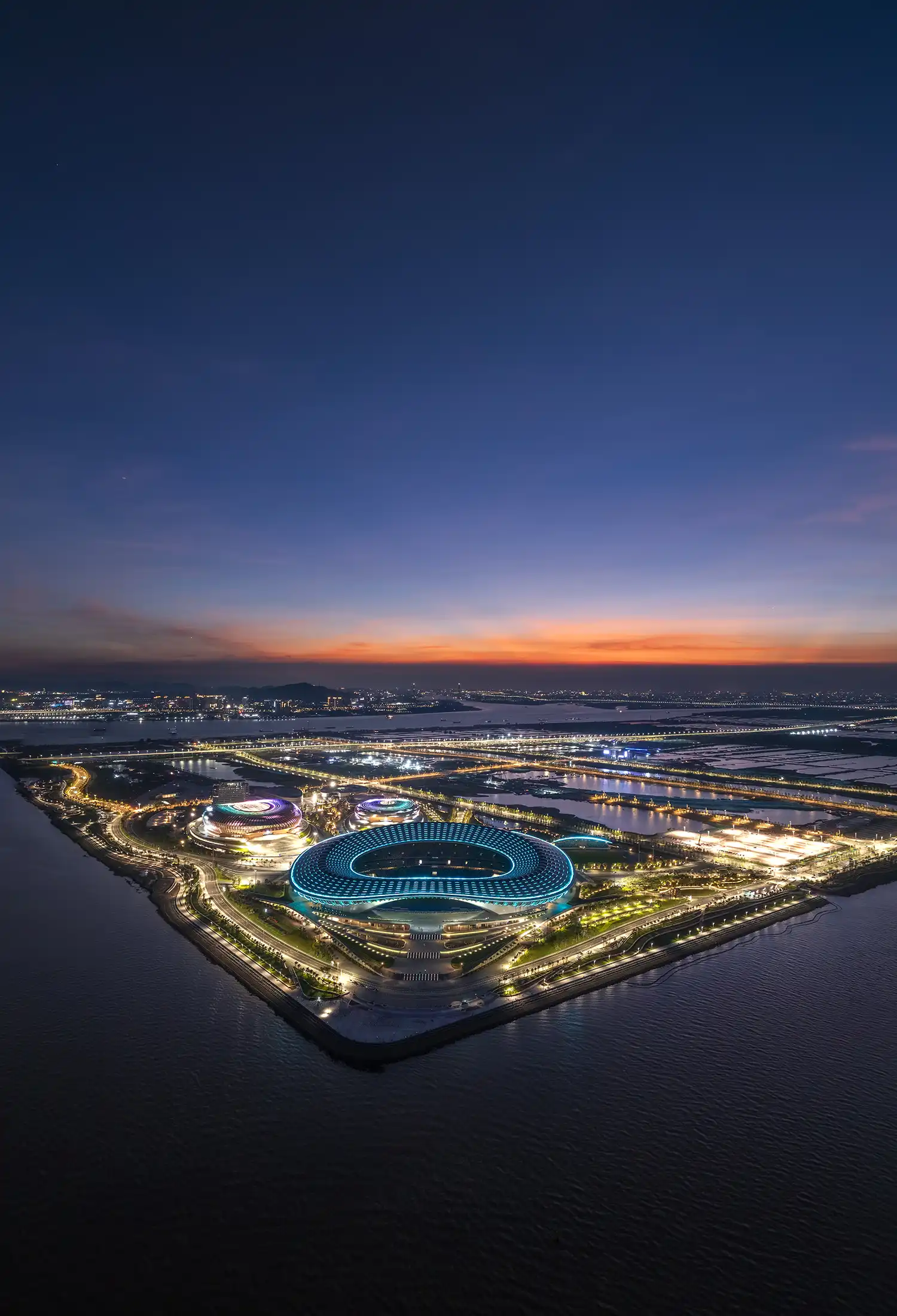
Further leveraging technology, a network of vertical louvres defines the curvature of each building, their orientation optimized through detailed data analytics and advanced digital 3D-modelling to maximize shading and natural airflow. The main stadium’s bowl features adjustable seating for maximum flexibility across cultural and sporting events. It includes a remarkable grand arch that not only provides spectacular views of the Pearl River but, more critically, allows colder sea air from the estuary to enter the space, naturally cooling athletes and spectators, while the surrounding wetlands provide vital flood protection for the Nansha District.