



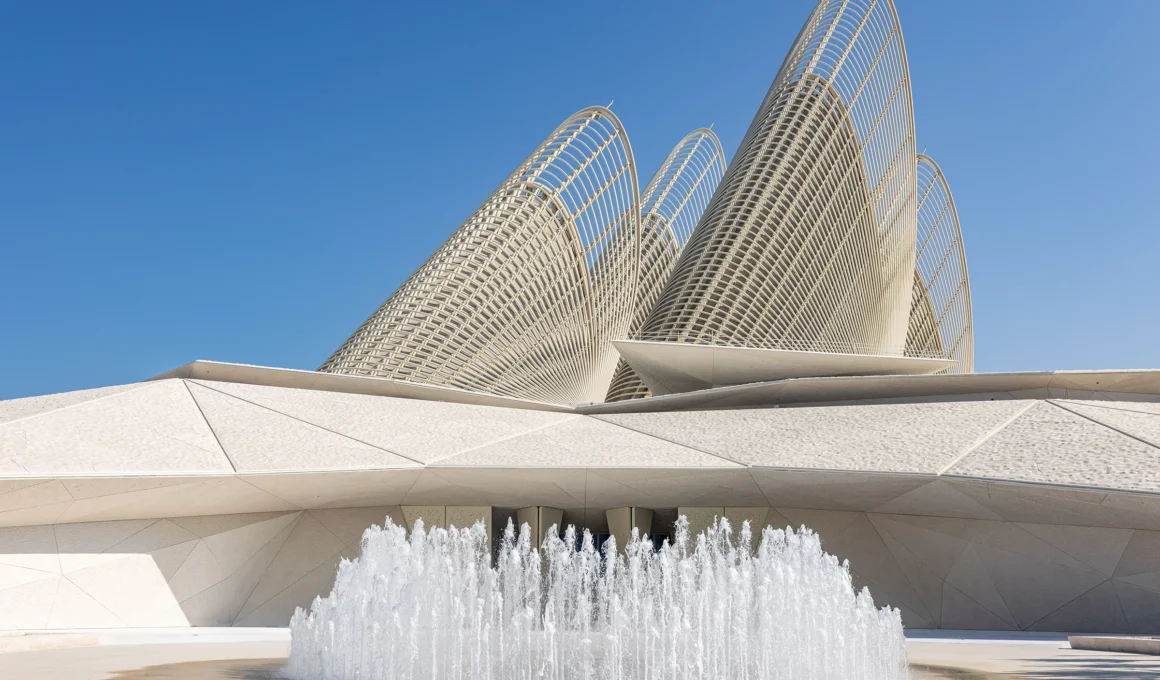
In a dramatic climax to the decade-spanning Saadiyat Cultural District masterplan, Foster + Partners has unveiled the long-anticipated Zayed National Museum in Abu Dhabi. Far from a conventional concrete box, this is a profound statement of contextual modernism, using a monumental form to tell the story of the UAE’s founder, Sheikh Zayed bin Sultan Al Nahyan, and his vision of sustainability and conservation in the desert environment. It is a key architectural pillar that cements the region’s status as a global hub for design and culture.
The museum’s profile is instantly dominated by five soaring, lightweight steel wings, sculpted aerodynamically to evoke the majestic flight of a falcon, an animal central to Emirati cultural heritage and loved by the late Sheikh Zayed. But this is more than mere symbolism. These five elements are sophisticated solar thermal chimneys, a high-tech take on traditional regional passive cooling. This natural ventilation system draws hot air out from the central atrium, while cooler air is channelled in through an underground piping network, demonstrating a commitment to advanced sustainable design in a challenging climate.
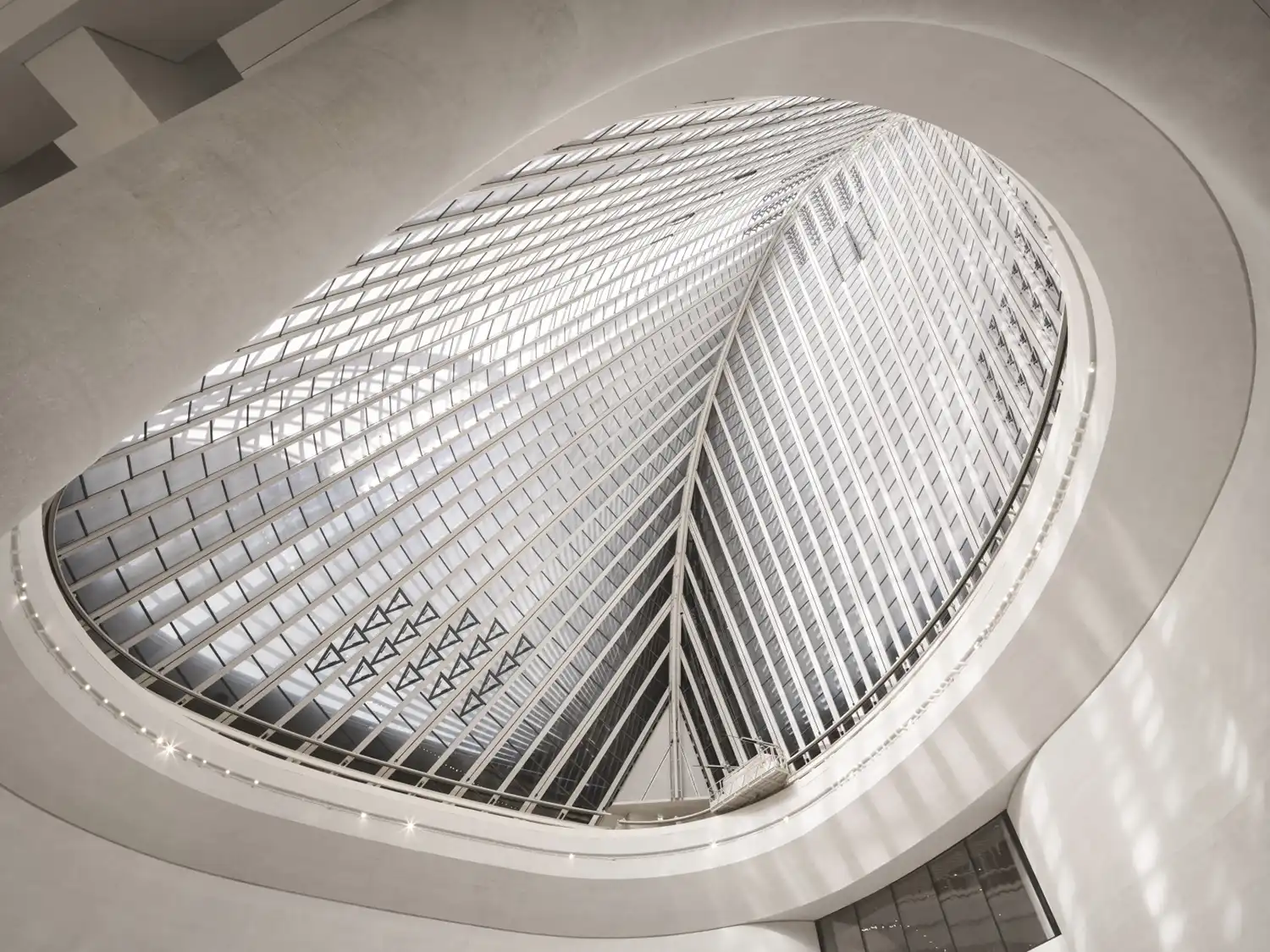
The bulk of the exhibition space is cleverly embedded within a landscaped mound whose textured, faceted panels are an abstraction of the UAE’s topography. This deliberate earth-hugging strategy harnesses the thermal mass of the ground, acting as a natural shield to insulate the interior galleries from extreme solar gain. As visitors pass through the museum’s entrance, they are drawn into the dramatic, top-lit central atrium, the Al Liwan, a vibrant meeting space designed to host everything from poetry readings to traditional dance performances.
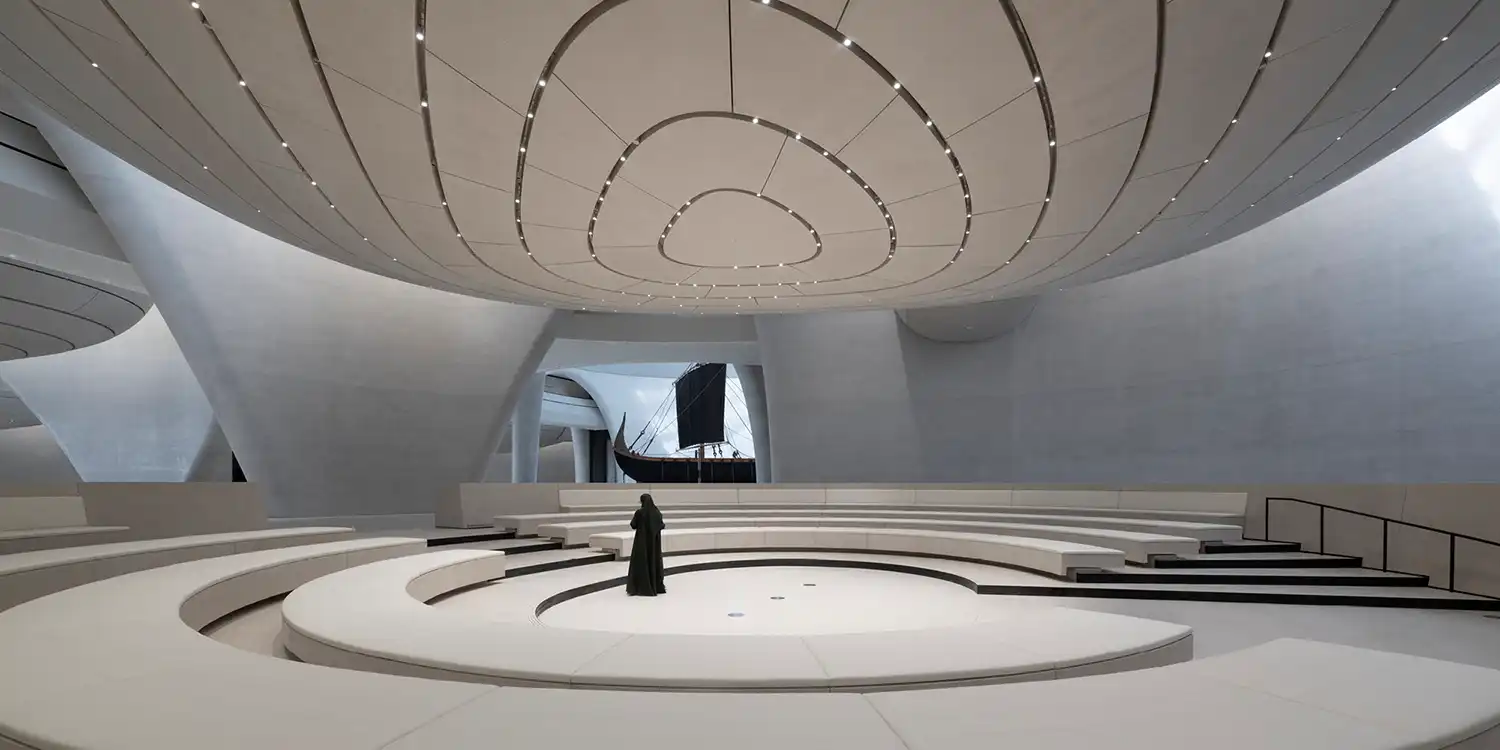
Within this protected environment, the six permanent galleries, including four pod-shaped galleries suspended above the atrium, are designed to be entirely controlled. These sensitive environments protect the displayed artefacts, a challenge met with highly engineered solutions. The pods are lit by rooflights featuring electrochromic glass that can dynamically modulate transparency in response to external light levels, a subtle but crucial detail ensuring the conservation and preservation of the nation’s history.
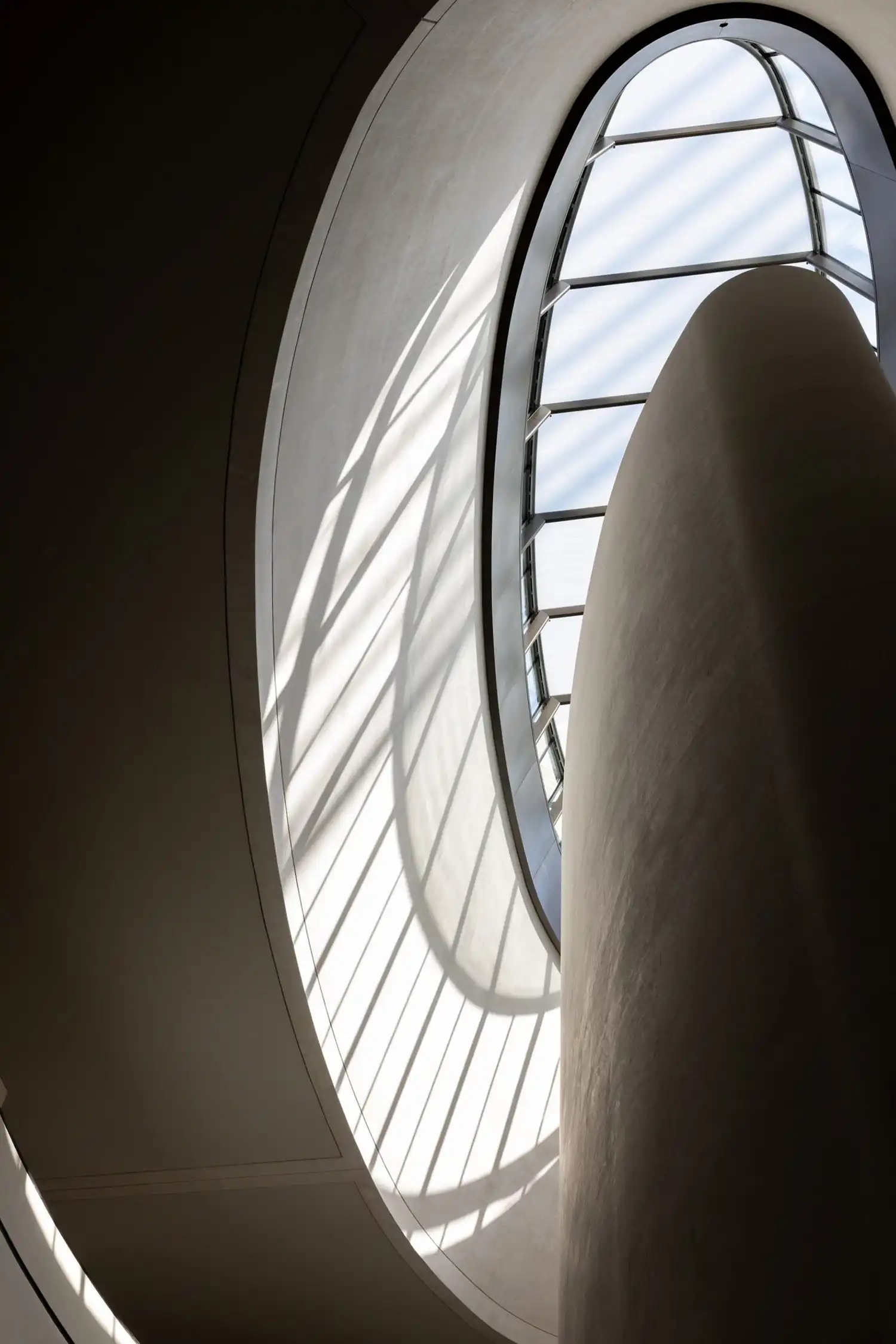
The materiality is a reverent nod to the local vernacular. Both the museum’s exterior and interior spaces are rendered in a distinctive warm-white shade of sand, carefully selected to mirror the tones found naturally on Saadiyat Island and across the Emirates. This chromatic unity ensures the building feels seamlessly integrated with its setting, avoiding the stark contrast often associated with global Starchitect projects. It’s an exercise in modern architecture that manages to feel rooted in its specific place.
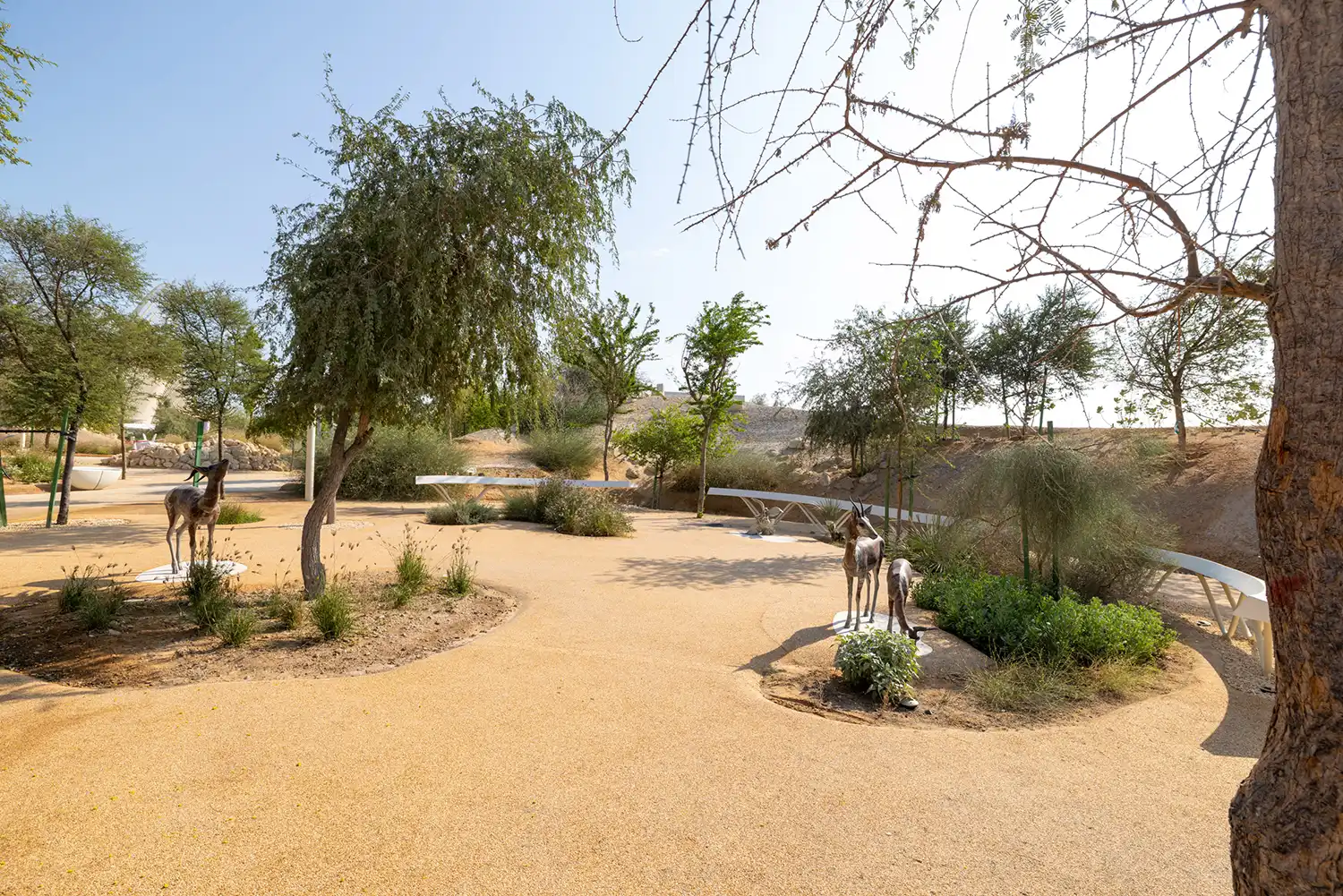
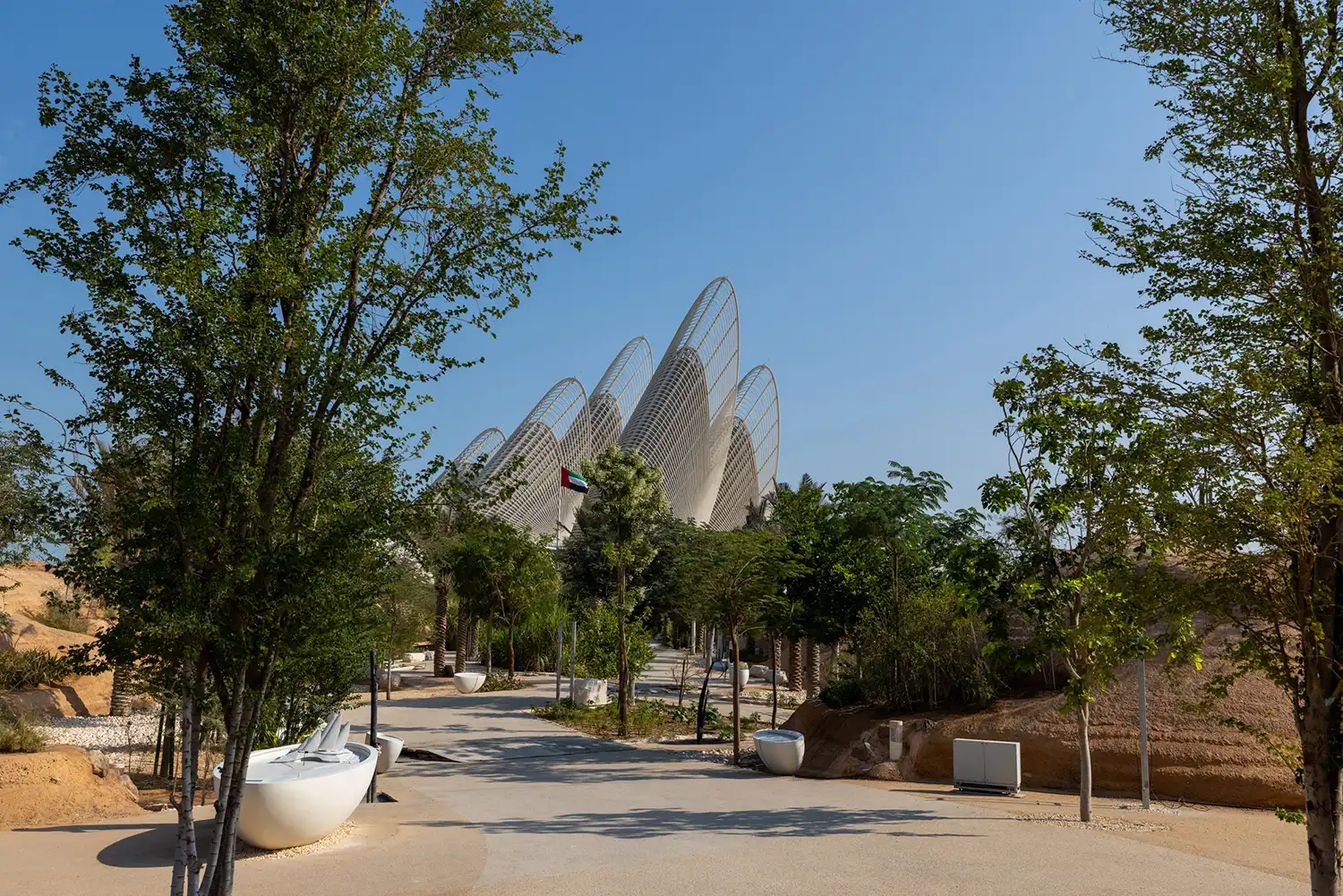
Beyond the museum’s core, Foster + Partners has integrated the project with its environment through the Al Masar Garden. This landscaped garden is conceived as a new community asset, linking the building to the coast and celebrating Sheikh Zayed’s affinity for nature. Offering a shaded route to a viewing platform at the base of the striking towers, the design is a compelling dialogue between global architectural innovation and deeply local cultural heritage, redefining what a national museum can be in the 21st century.