


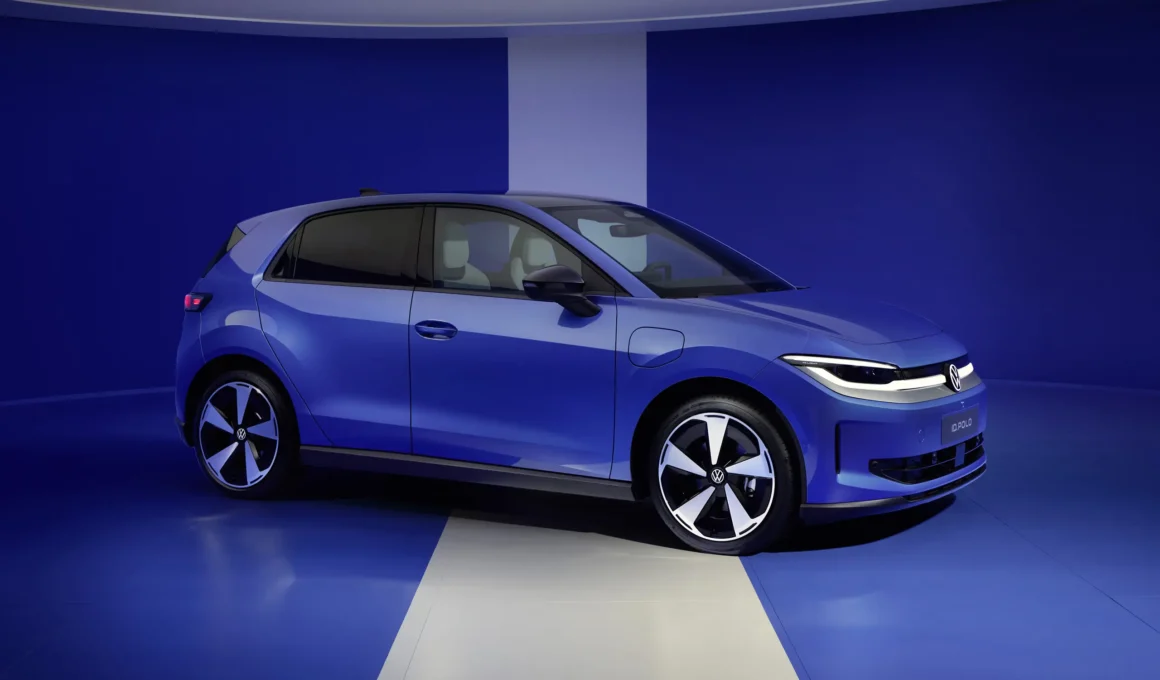
The new Volkswagen ID. Polo, developed in Wolfsburg under the creative direction of Andreas Mindt, marks a pivotal evolution for the German automaker by introducing the “Pure Positive” design language—a philosophy that prioritizes tactile ergonomics and superior build quality to make high-level electric design accessible starting at 24,995 euros.
The automotive landscape is currently undergoing a quiet rebellion against the clinical, overly digitized environments that have dominated the last decade. With the debut of the ID. Polo, Volkswagen is not merely launching an electric successor to a twenty-million-unit bestseller; it is reasserting a vision where the car returns to being an object of emotional industrial design. This transition was arguably foreshadowed by the vision of the ID. EVERY1 concept, which already outlined the necessity for a return to solid proportions and a less detached formal simplicity—now finally realized in a production model that favors human intuition over technological complexity.
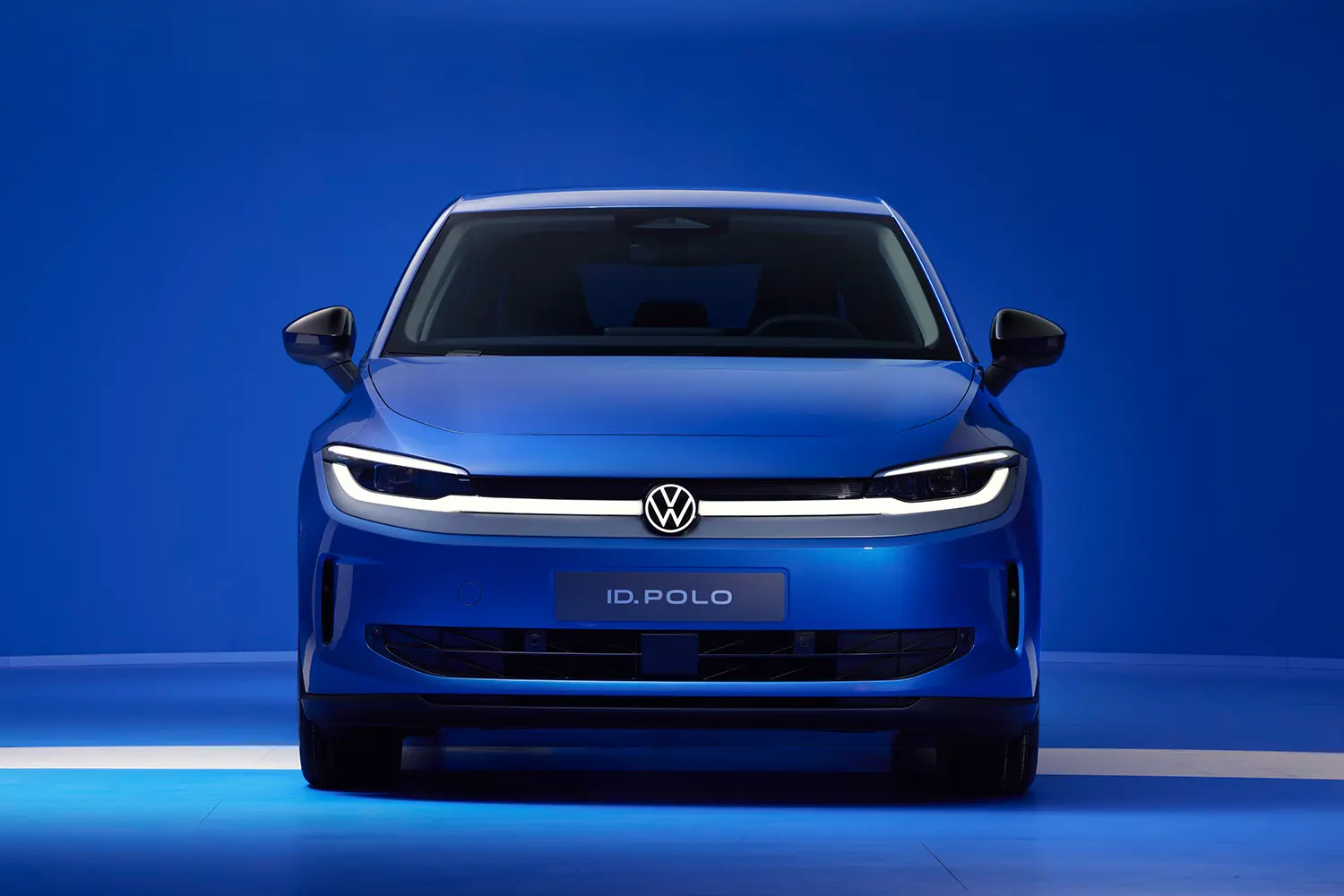
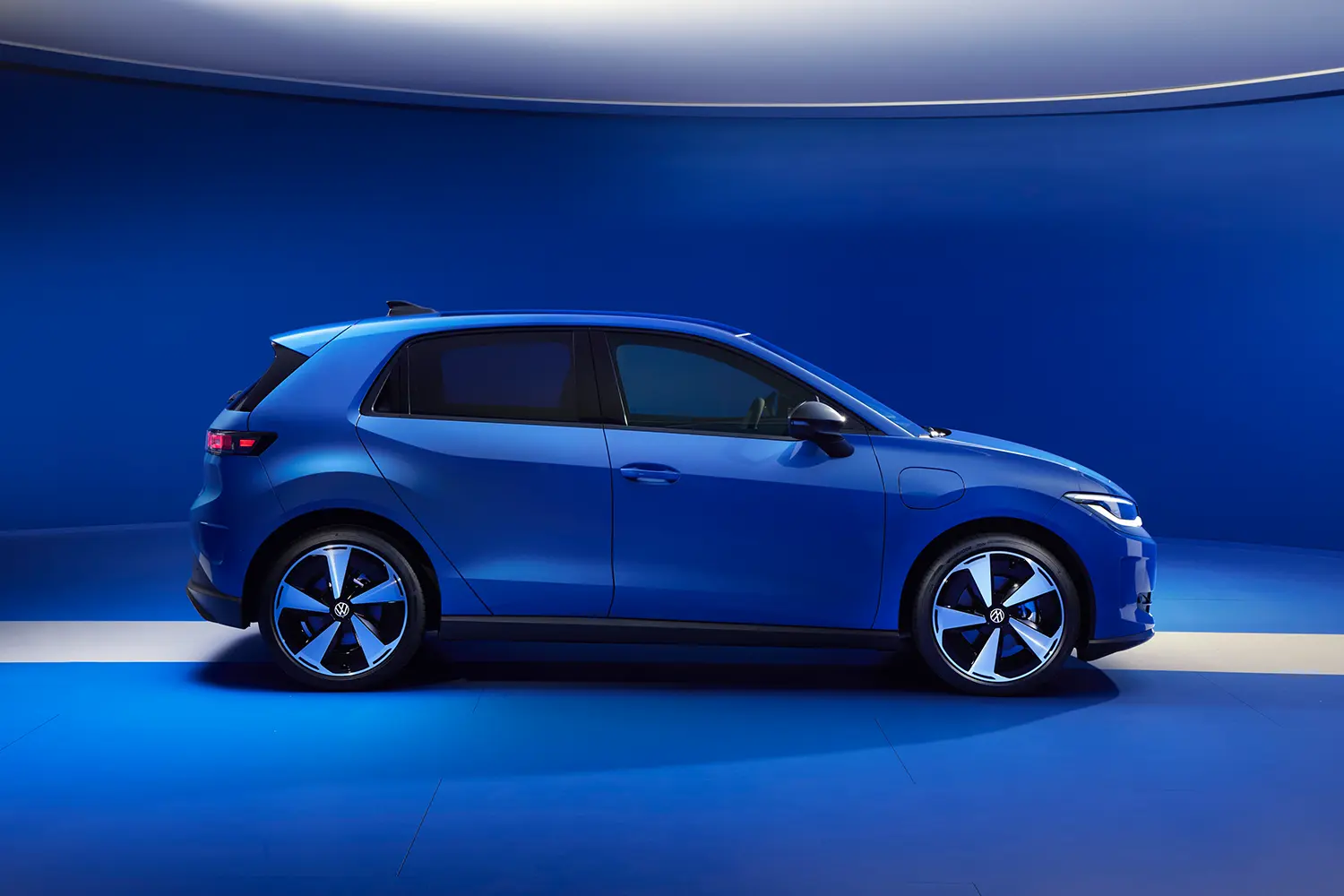
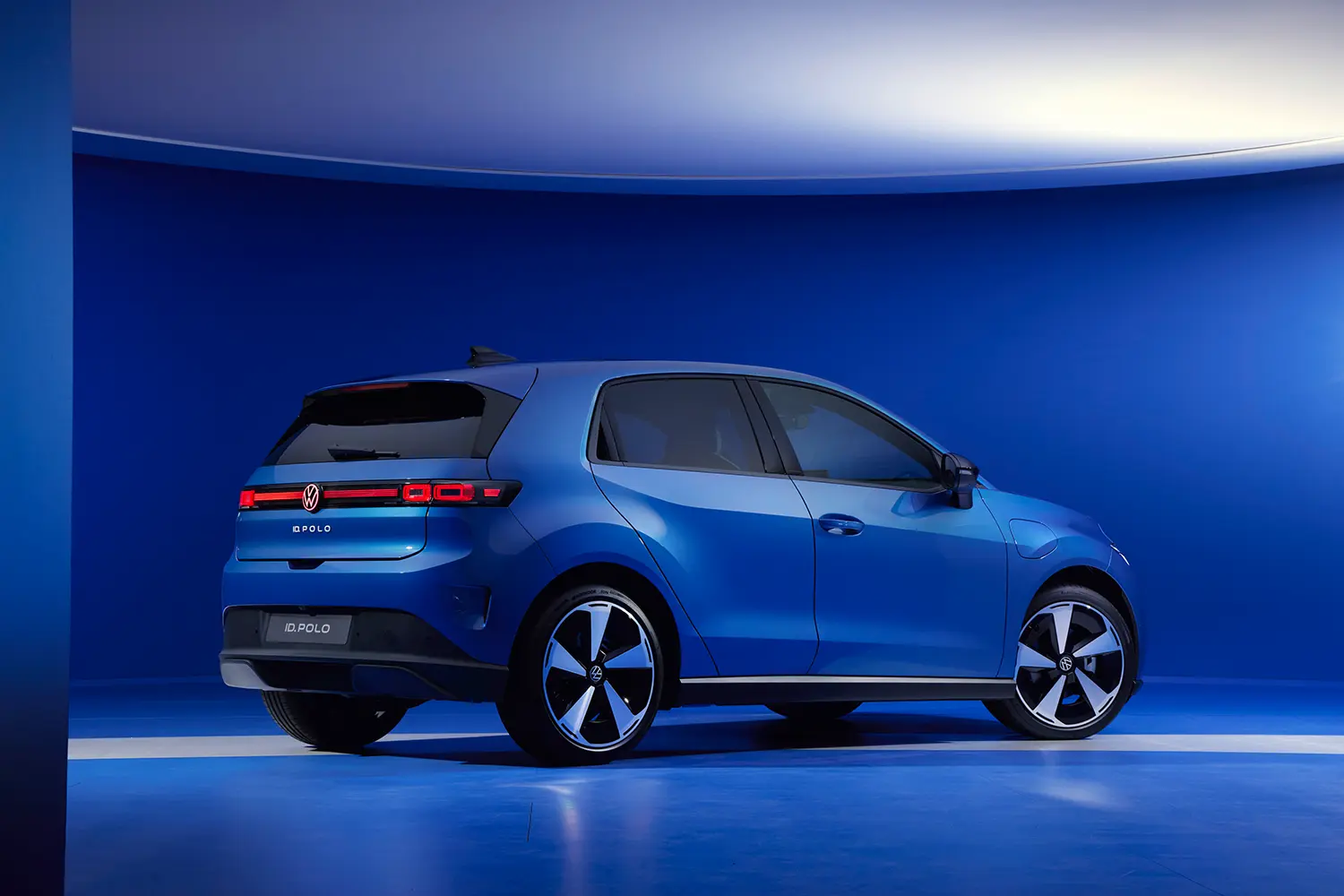
The Pure Positive Philosophy and Heritage Cues. The silhouette of the ID. Polo does not seek the aggressive, hyper-dynamic styling typical of many contemporary electric vehicles; instead, it aims for a “reassuring” aesthetic. Chief Designer Andreas Mindt has focused on clear proportions and distinctive traits, such as the C-pillar that directly honors the functionalist beauty of the original Golf I. This is not mere nostalgia, but a clever use of product design codes to convey stability and trust. The vehicle appears as a sculpted volume, where modern light design is not an ornament but a functional extension of its technological identity.
Internal Architecture and Spatial Optimization. Leveraging the MEB+ platform, designers have radically reimagined the hierarchy of space. Despite a length of just over four meters, the interior offers a volumetric generosity that challenges segment conventions. The luggage compartment, which has grown by 25% compared to the combustion version, is proof of how electric architecture can be bent to the needs of daily life, transforming the vehicle into a versatile environment suitable for multiple scenarios—from urban commutes to family travel.
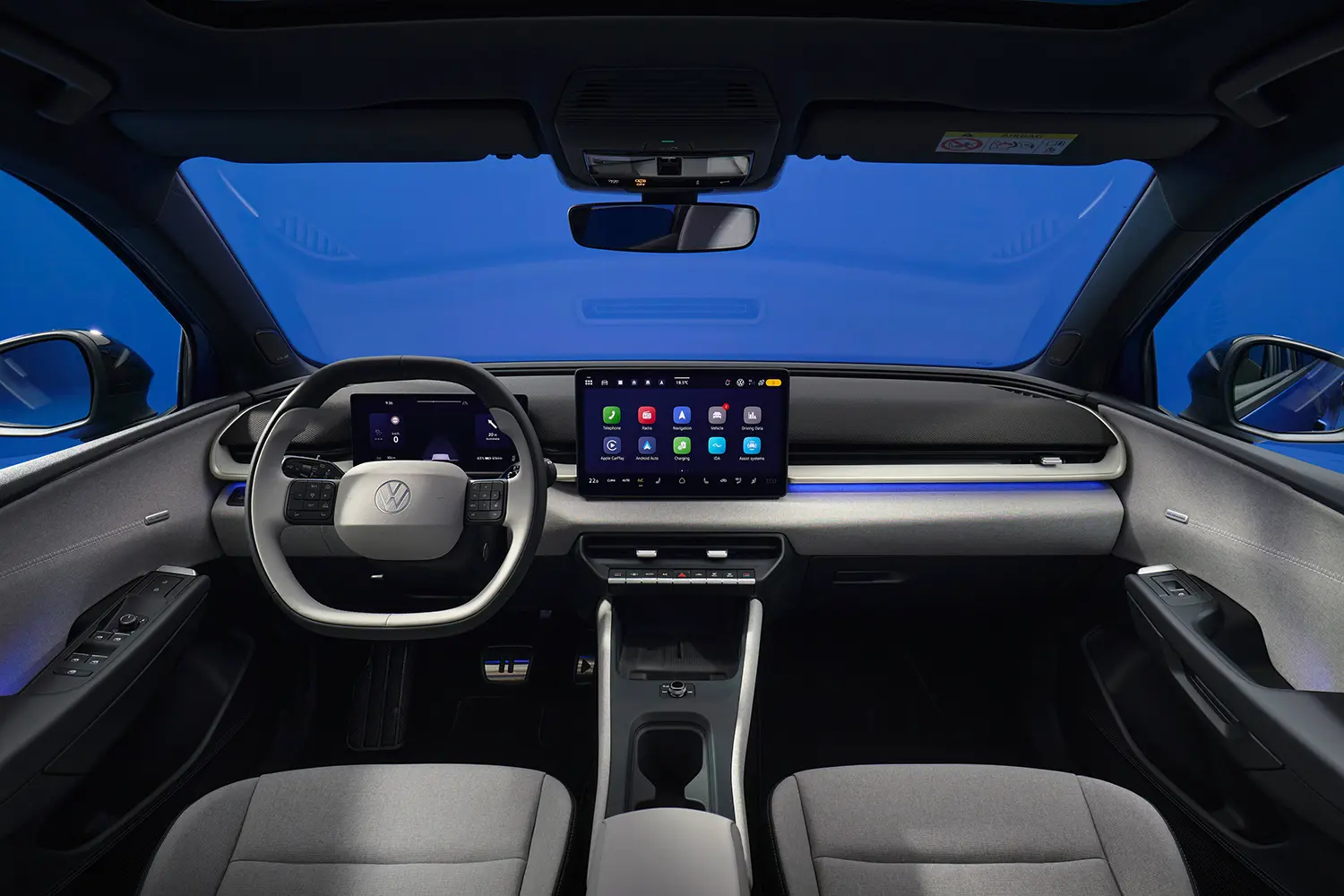
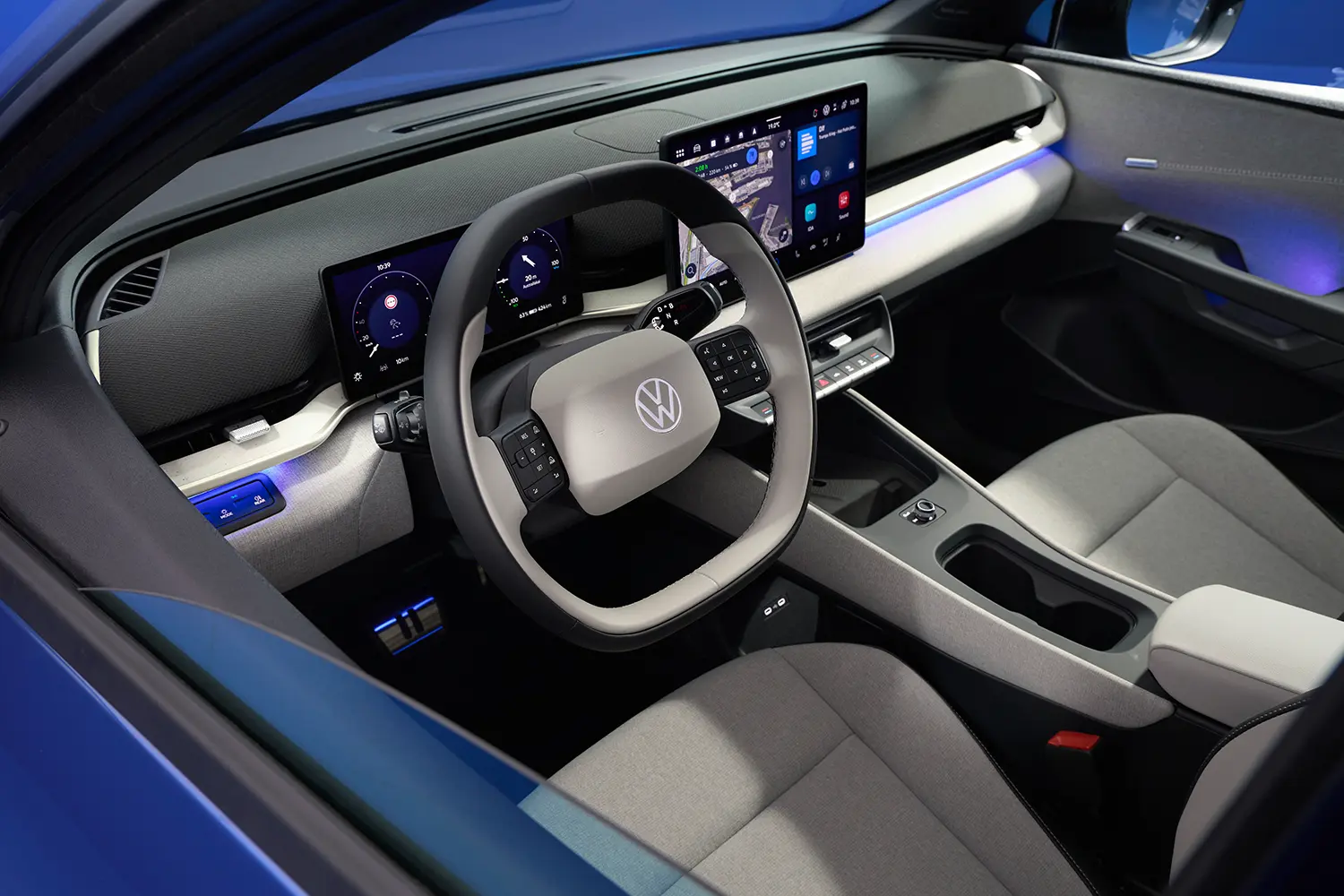
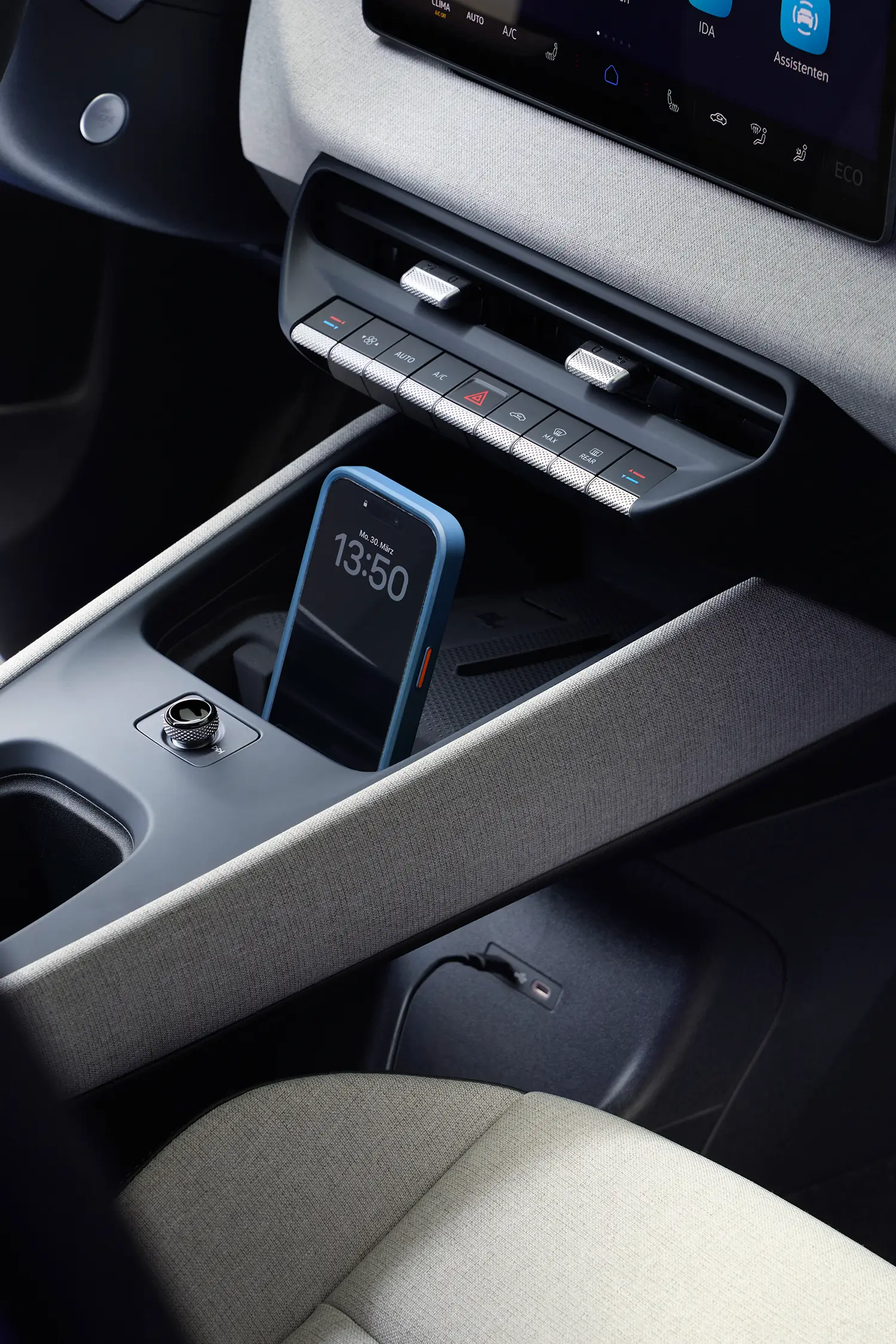
The Tactile Renaissance in User Experience. The most significant critical shift lies in the user interface. Following years of global critique regarding “touch-only” cabins, the ID. Polo introduces a configuration that celebrates the return of physical controls and ergonomic precision. While the 13-inch display dominates the dashboard visually, the integration of easily accessible physical buttons reflects a deep understanding of User Experience (UX): the driver no longer needs to navigate complex digital menus for basic functions, regaining a sensory and immediate relationship with the cockpit.
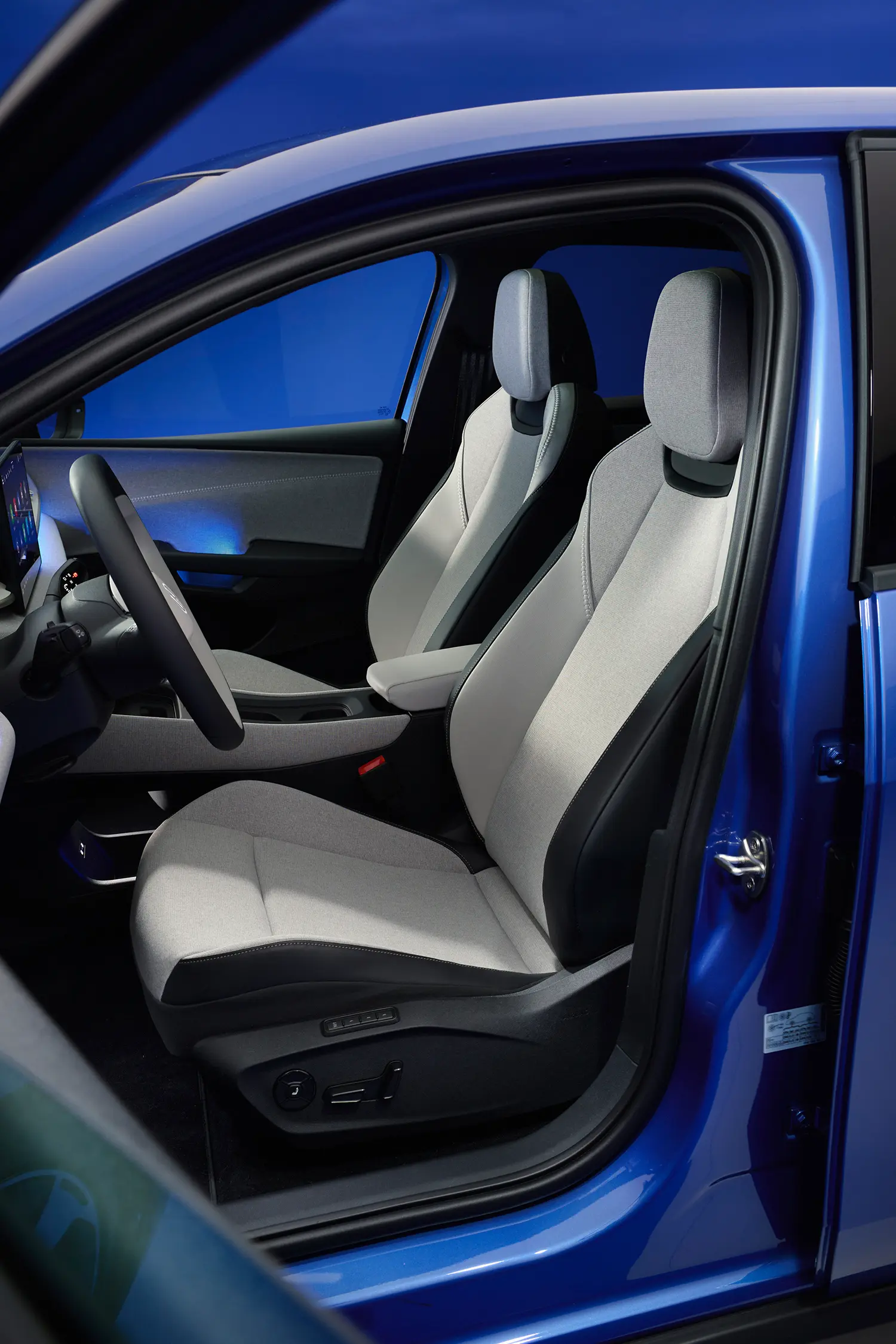
Materiality and Domestic Detail. The sensory experience is defined by a meticulous selection of materials that aim to recreate a domestic atmosphere. Elegant decorative seams in the door trims and small integrated badges are details that elevate the perception of quality, moving away from the Spartan feel of many entry-level cars. It is an approach that looks toward interior design rather than traditional automotive styling, where every surface is meant to be touched and lived in, transforming the journey into a moment of visual and tactile well-being.
The Democratization of High-Level Design. Bringing premium features such as pneumatic massage seats or a large panoramic glass roof to a compact car is a strategic choice as much as an aesthetic one. Volkswagen is working on the democratization of “good design,” making finishes and comfort solutions accessible that were previously reserved for luxury segments. This positioning shifts the value of the car from pure performance—the classic “horsepower and torque”—to the quality of the time spent inside the object itself.
Functional Versatility as a Lifestyle Extension. Technology aboard the ID. Polo is treated as a seamless extension of the user’s lifestyle. The vehicle-to-load function, which allows the car to power external devices like e-bikes or professional equipment, transforms the vehicle into a mobile power hub. This type of functional innovation reflects a shift in how we perceive mobility: no longer just a move from point A to B, but an active support for the professional and recreational activities of the owner.
A New Standard for the Urban Ecosystem. The ID. Polo project demonstrates how collaboration within the core brand group can generate products with a strong aesthetic identity without compromising on perceived quality. In a market saturated with electric offerings often lacking in character, Volkswagen chooses the path of formal refinement and tangibility. The result is a vehicle that does not need to shout its modernity but whispers it through a coherence of vision that makes it, at its debut, a new benchmark for contemporary design.