


Roland Baldi Architects has completed a complex multifunctional ensemble at the approach to Barbiano, an intervention conceived as a new green landmark for the South Tyrolean village. The project, which integrates a kindergarten, daycare centre, children’s eatery, and a tourist office with critical public infrastructure, aims to redefine rural architecture by visibly concentrating education, mobility, and community functions.
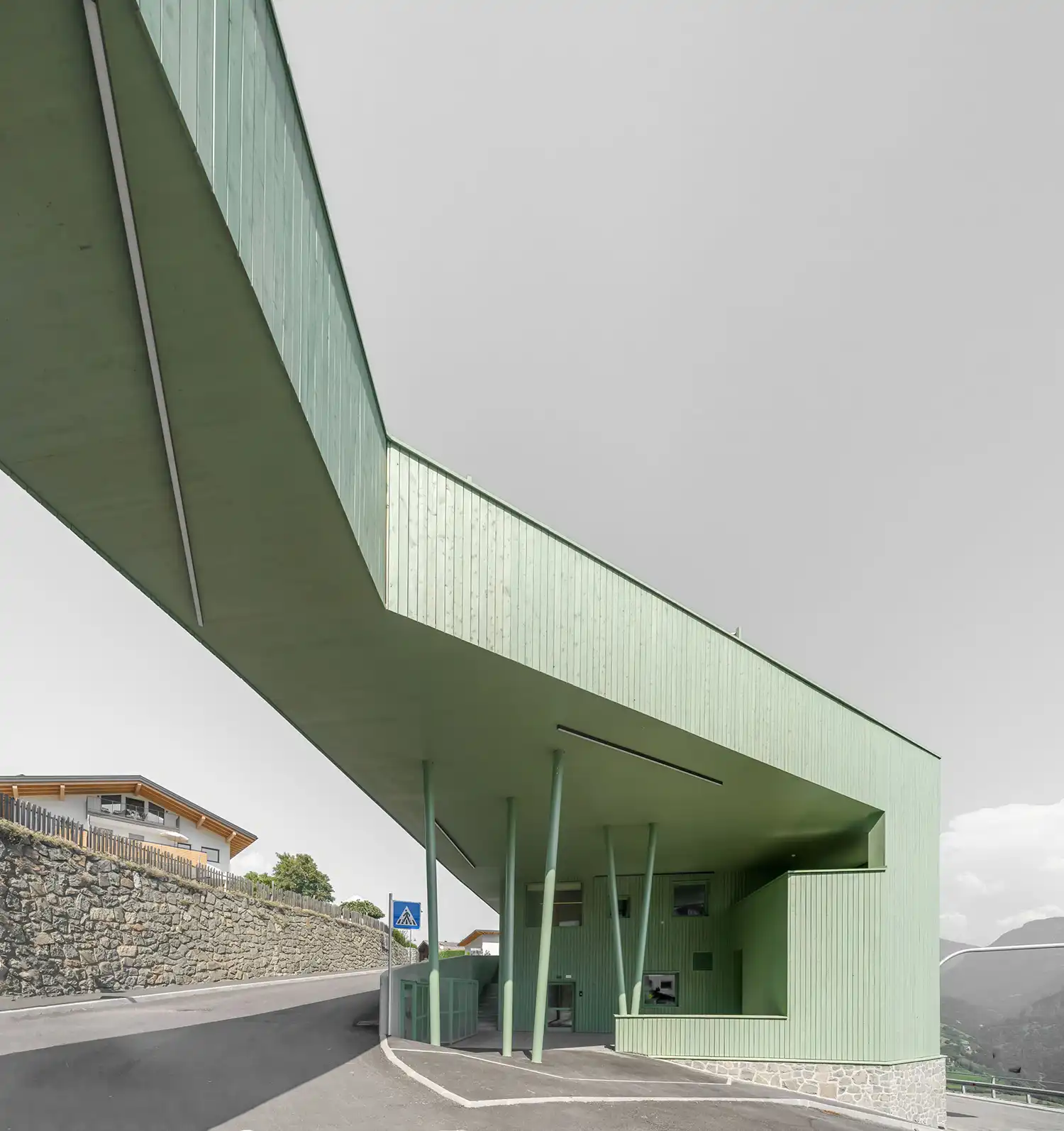
Financed through the Recovery and Resilience Plan (PNRR) and the European Union’s NextGenerationEU initiative, the development is a high-profile demonstration of how public investment can yield progressive, integrated architectural design. The practice’s stated goal—to create a “green bridge” that makes spatial transformation tangible—drove the decision to split the program across two structures, unified by a critical link.
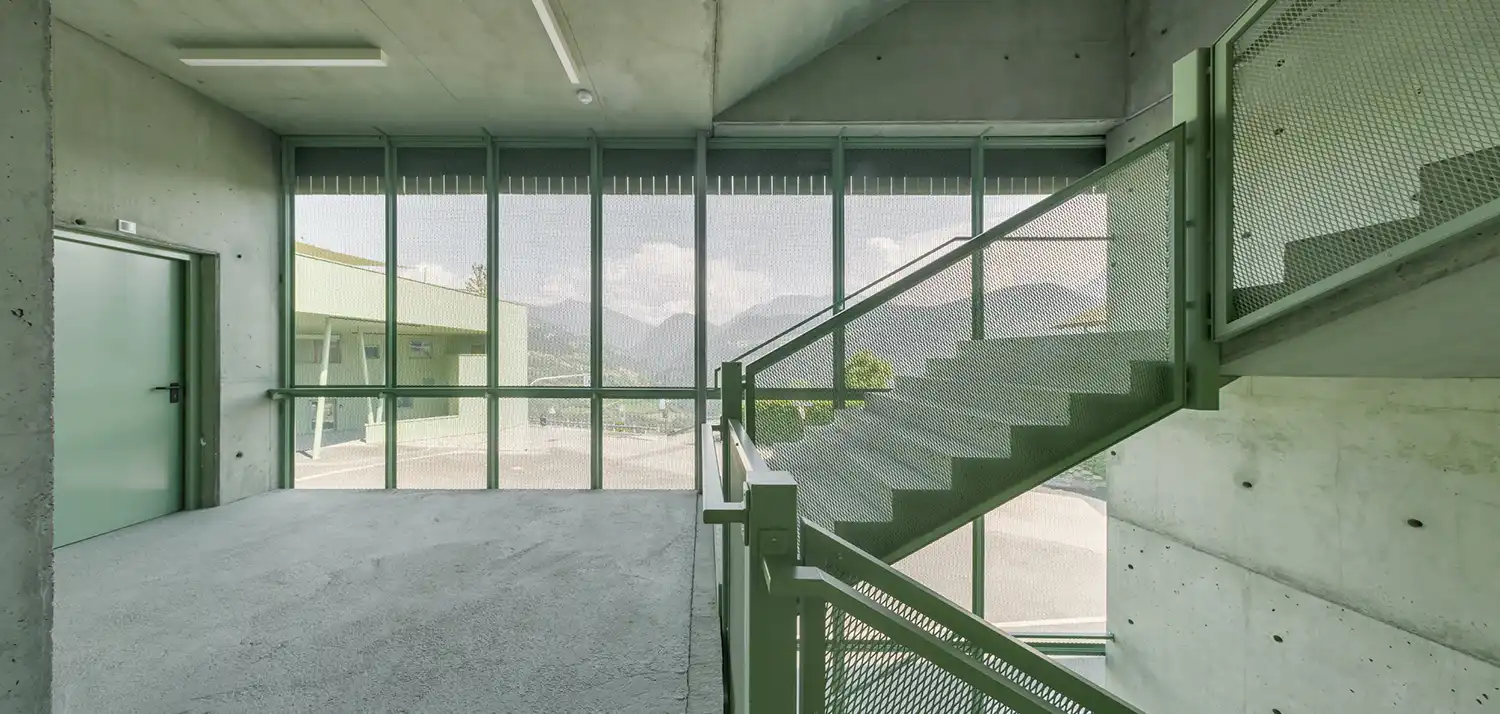
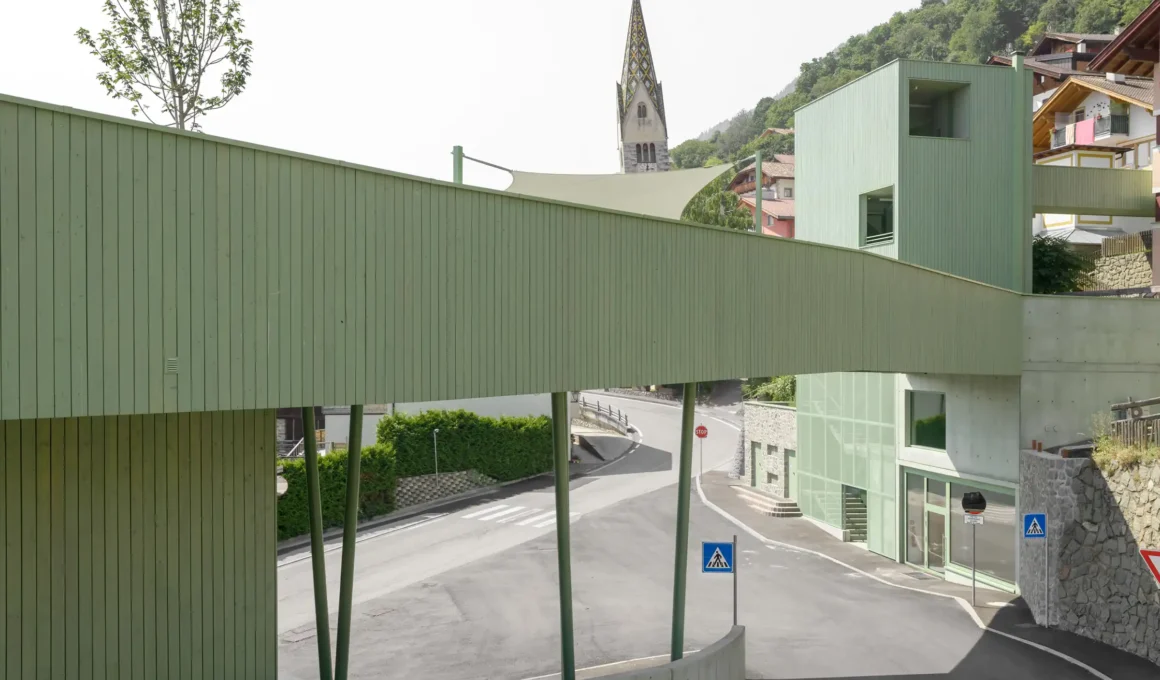
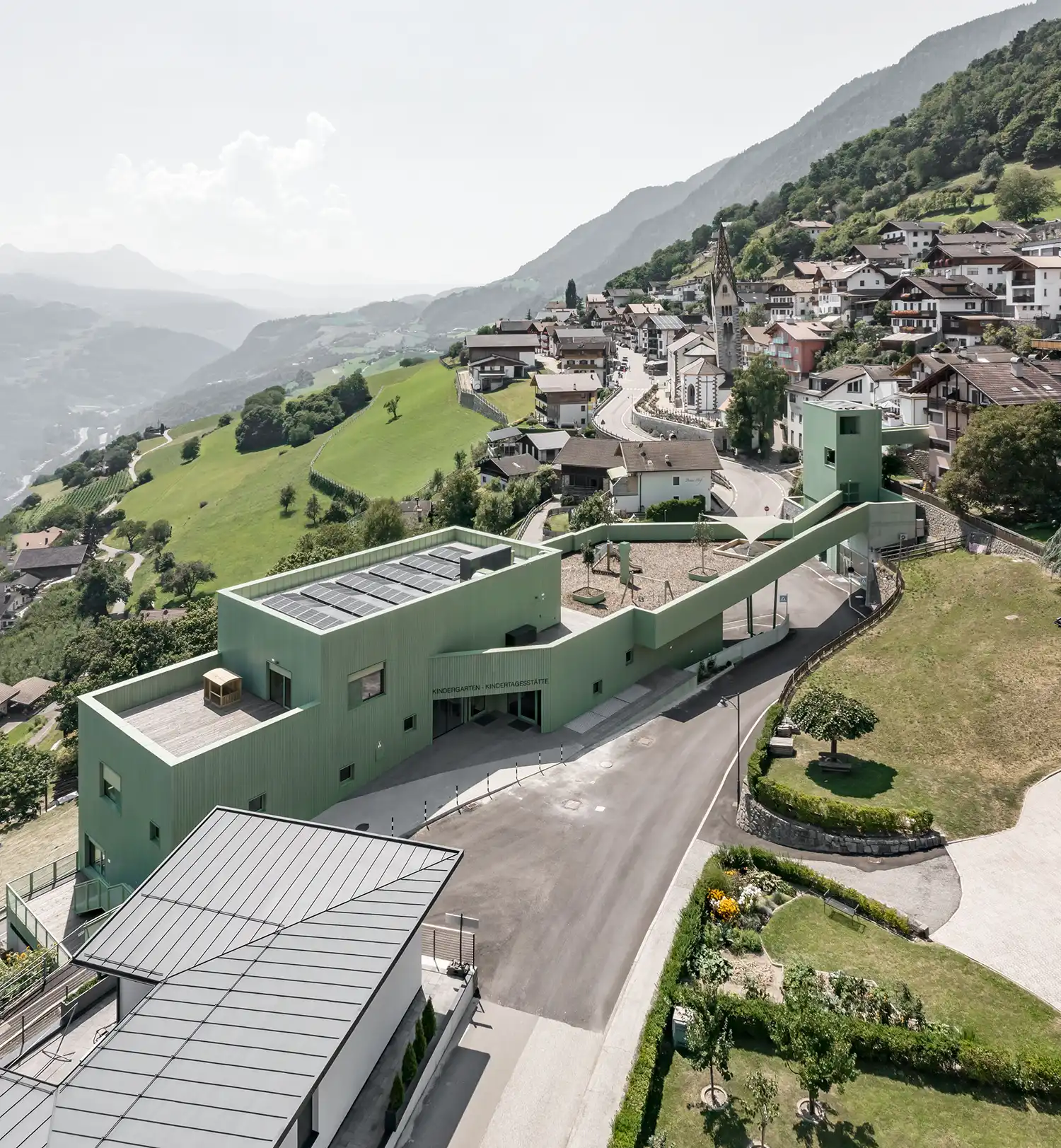
The core functions—the nursery, kindergarten, and associated social spaces—occupy the larger volume, which is cleverly embedded into the steep hillside topography. Facing it, across the road, sits the standalone tourist office and its ancillary facilities. The most compelling design element is the aerial walkway: the eponymous green bridge dramatically spans the street, functioning as both a secured circulation route and a powerful, unifying formal gesture that establishes the project’s presence.
The building’s response to the steep slope defines its material and programmatic organization. A heavy robust exposed concrete plinth anchors the structure against the ground, establishing a secure base for the technical rooms. Above this foundation, the building shifts to a light wood construction, a strategic material choice reflecting sustainable architecture goals. This layering culminates in the protected outdoor play area situated atop the roof—a safe, exclusive landscape for the children.
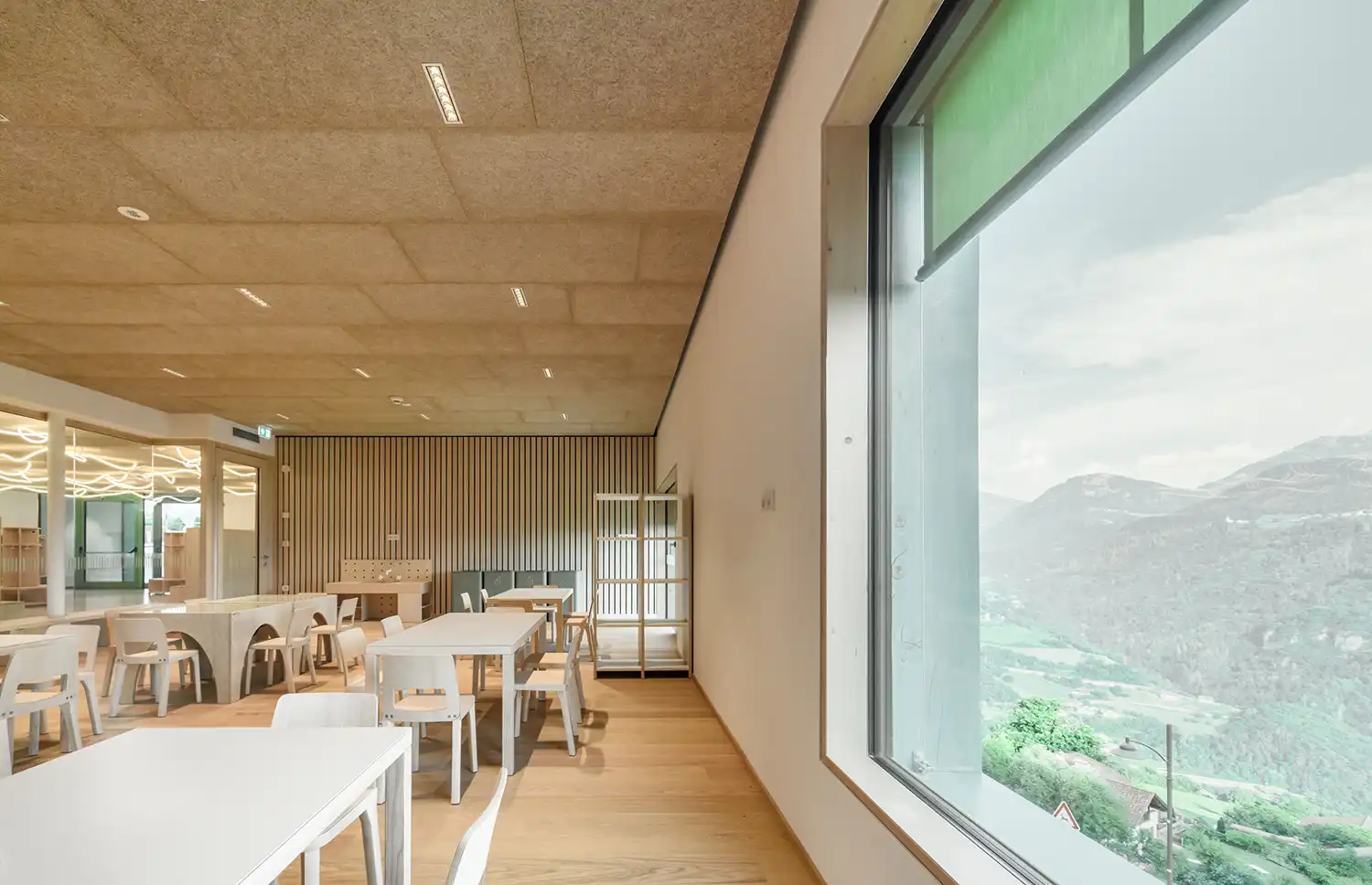
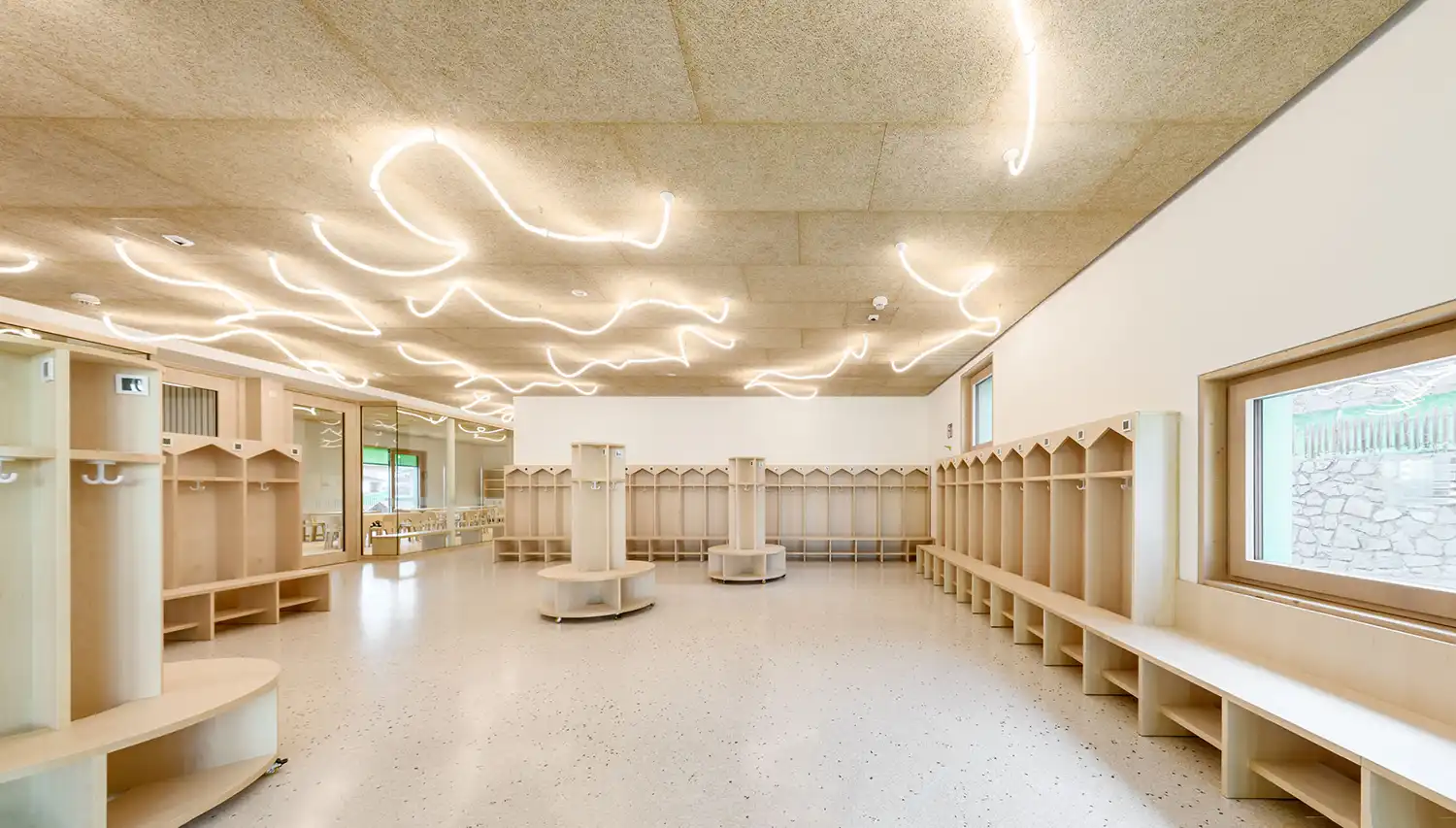
Internally, the practice has rejected the restrictive classroom typology. The design instead advocates for an open, fluid pedagogical model, structuring the interior with permeable functional areas. This includes creative zones, quiet rooms, and areas designated for role-play, all organized around circulation paths that periodically expand into small meeting islands. These lounges and retreat niches are designed to enrich the daily teaching environment and promote self-directed learning. The cafeteria and kitchen, which also service the adjacent primary school, are strategically located on a naturally lit lower level, fully open to the valley.
The external facade is defined by its striking material treatment: a vertically structured, green-glazed timber façadethat offers a distinct and highly textural finish. This visual strategy makes the multifunctional ensemble instantly recognizable from afar and signals its importance as a new landmark at the village’s entrance. Adhering strictly to the Climate House Gold standard, the project emphasizes resource efficiency, featuring a heat pump system with controlled ventilation and heat recovery.
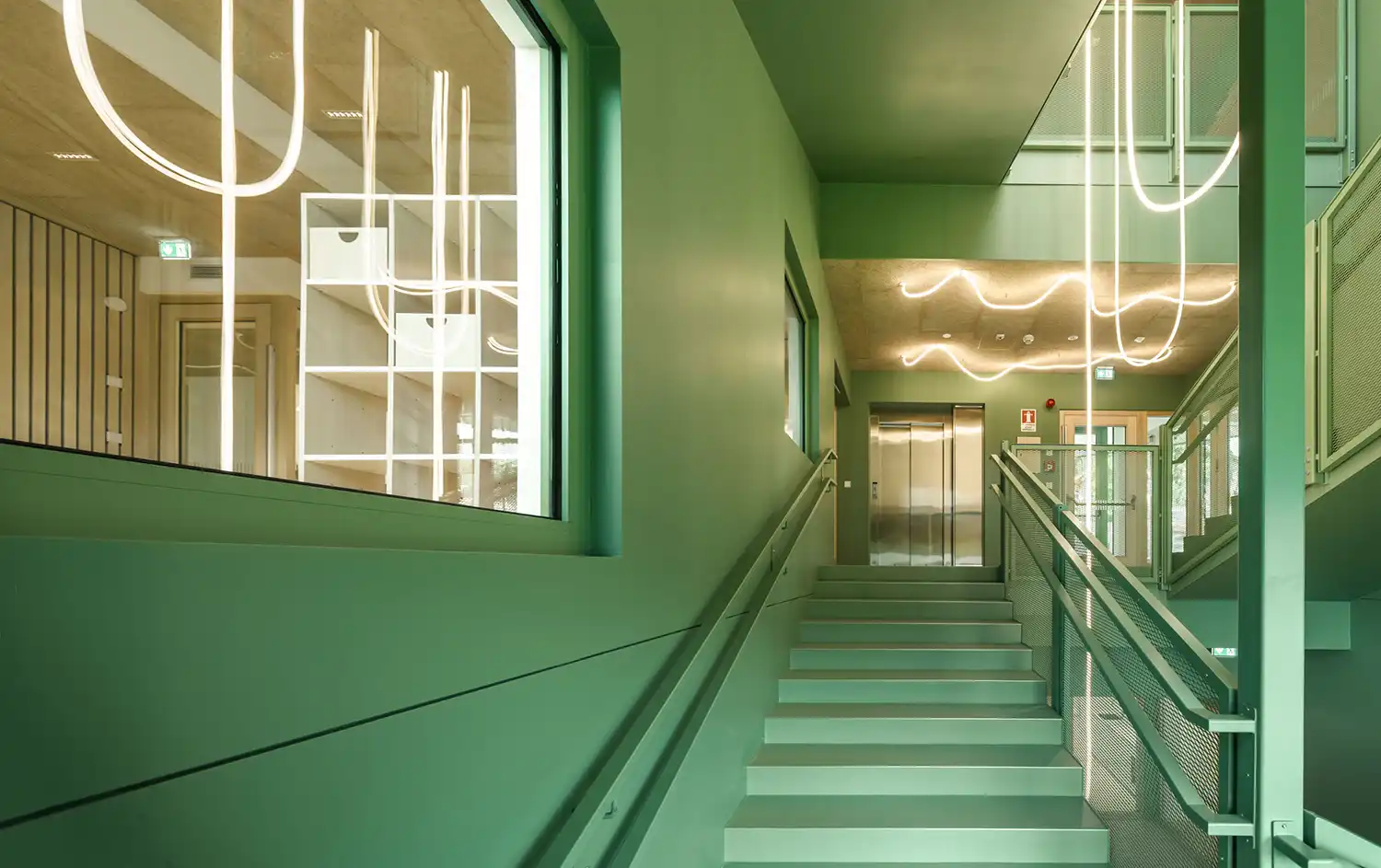
A commitment to warmth and clarity permeates the interiors, characterized by extensive daylighting and the consistent use of natural wood—from the oiled floors and solid wood furniture to the acoustically effective wooden ceilings. This carefully curated material palette fosters a calm, supportive, and stimulating atmosphere where architecture and education are truly integrated. Across the road, the barrier-free access tower and elevator further extend the project’s mobility brief, ensuring direct connection from the underground parking garage to the village centre. The project successfully transforms a complex functional spatial programme into a singular, cohesive architectural narrative that promises to shape the rural landscape for decades.