



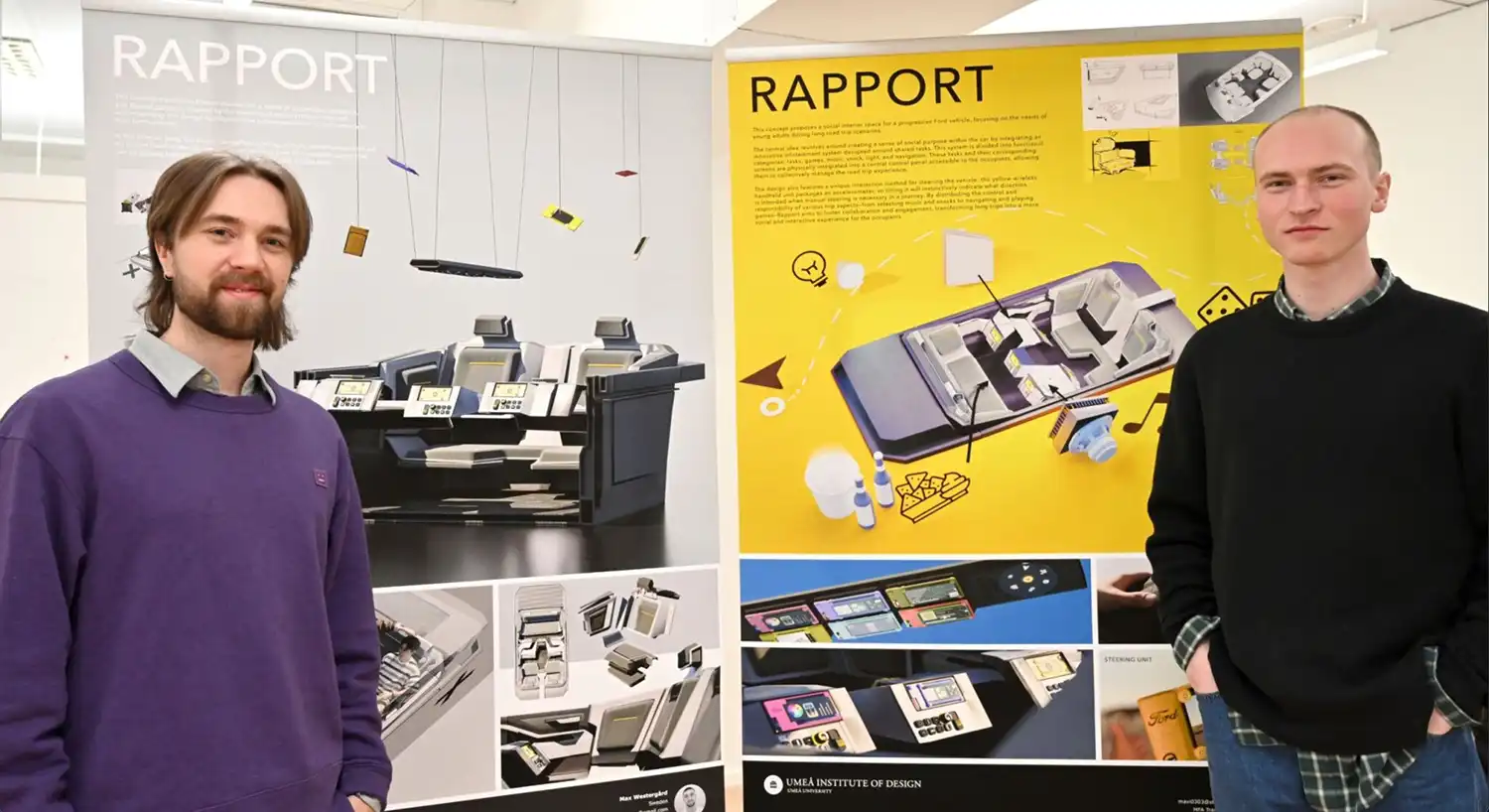
The traditional hierarchy of the driver and the passenger is a relic of the combustion engine era, a structure defined by the necessity of a forward-facing pilot. As we pivot toward a future of semi-autonomous mobility, the interior of the car is undergoing a profound ontological shift. In their recent collaboration, Ford Rapport, designers Max Westergård and Viggo Bergström—both MFA Transportation Design graduates from the Umeå Institute of Design (UID)—challenge the isolation of the modern commute. Their vision moves beyond the car as a mere transit vessel, reimagining it as a vessel for human connection and shared agency.
The conceptual core of Rapport lies in the transition from “transportation” to “togetherness.” In the sterile landscape of autonomous technology, there is a risk of passengers becoming passive observers, disconnected from both the journey and each other. Westergård and Bergström sought to counteract this by designing an environment that fosters “purposeful interaction.” By stripping away the rigid, front-facing orientation of the Swedish automotive tradition, they have created a social lounge that prioritizes the gaze of the human over the gaze of the road. It is a space designed not just for moving through Gothenburg or Stockholm, but for being present within it.
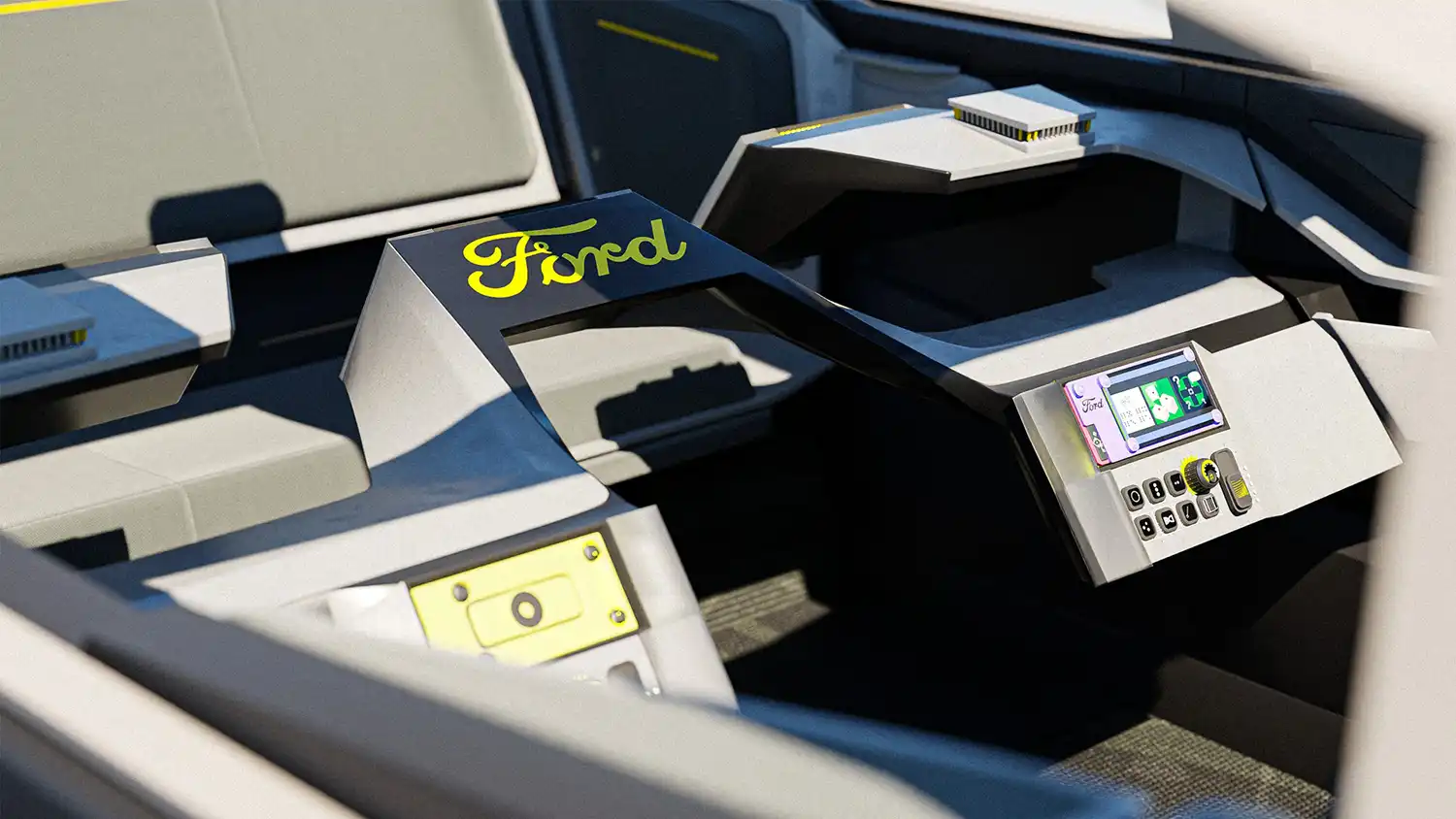
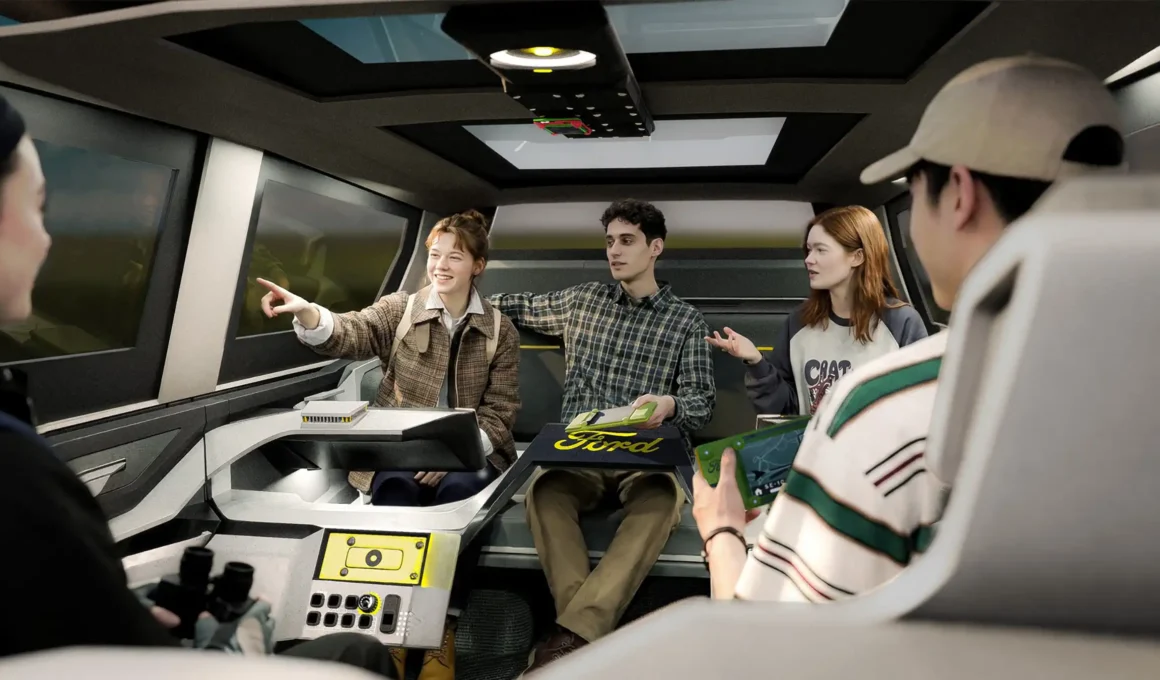
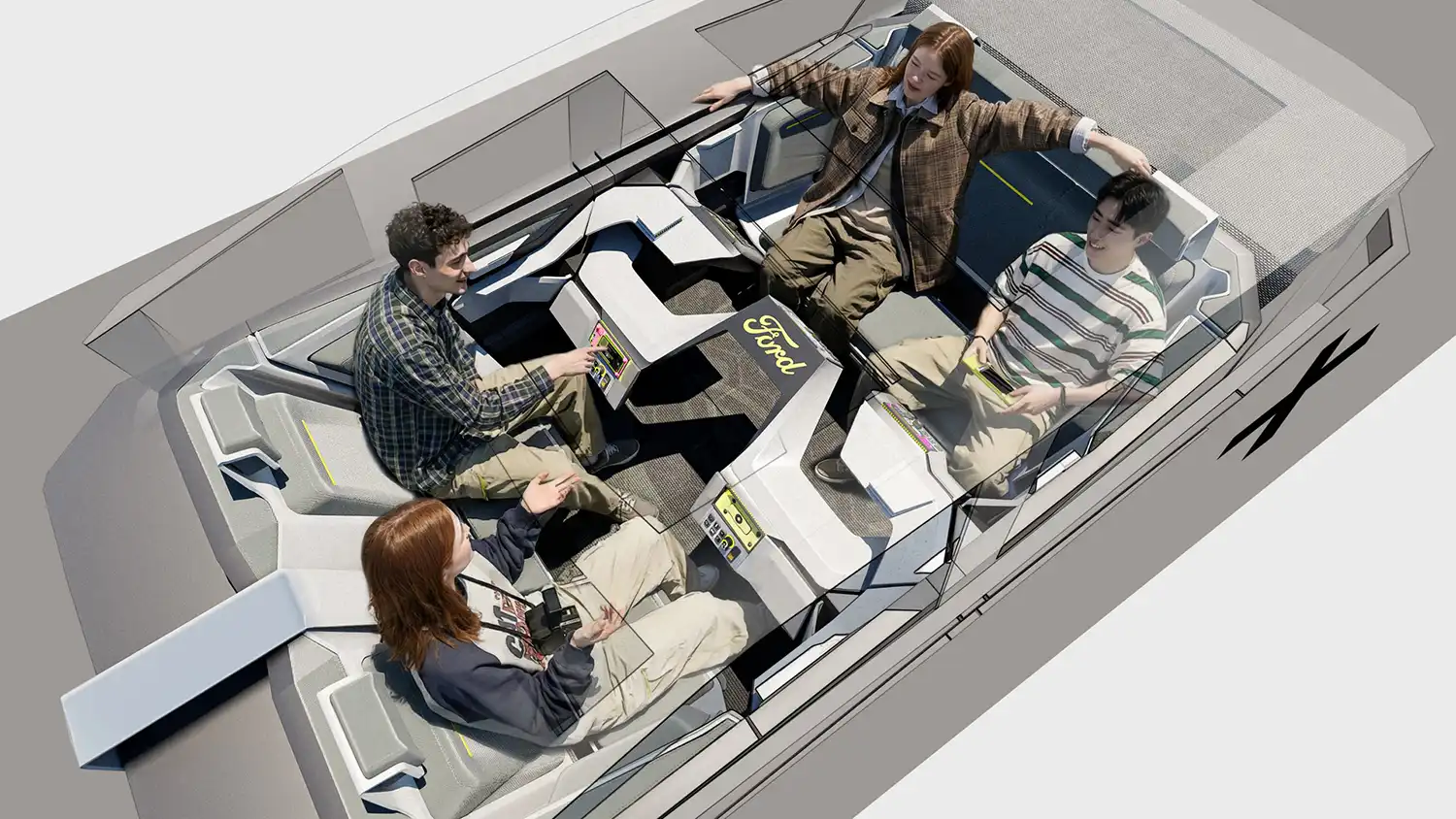
A shift in spatial dynamics is achieved through a radical reorientation of the seating. The interior rejects the traditional row-based layout in favor of a configuration that invites eye contact and physical proximity. This is not merely a stylistic choice; it is a psychological one. Through extensive prototyping and workshops, the designers identified that reducing hierarchy in the cabin directly correlates to a sense of shared responsibility. The interior feels less like a cockpit and more like a shared studio or a living room, where the “driver” is no longer a solitary figure of authority but a participant in a collective experience.
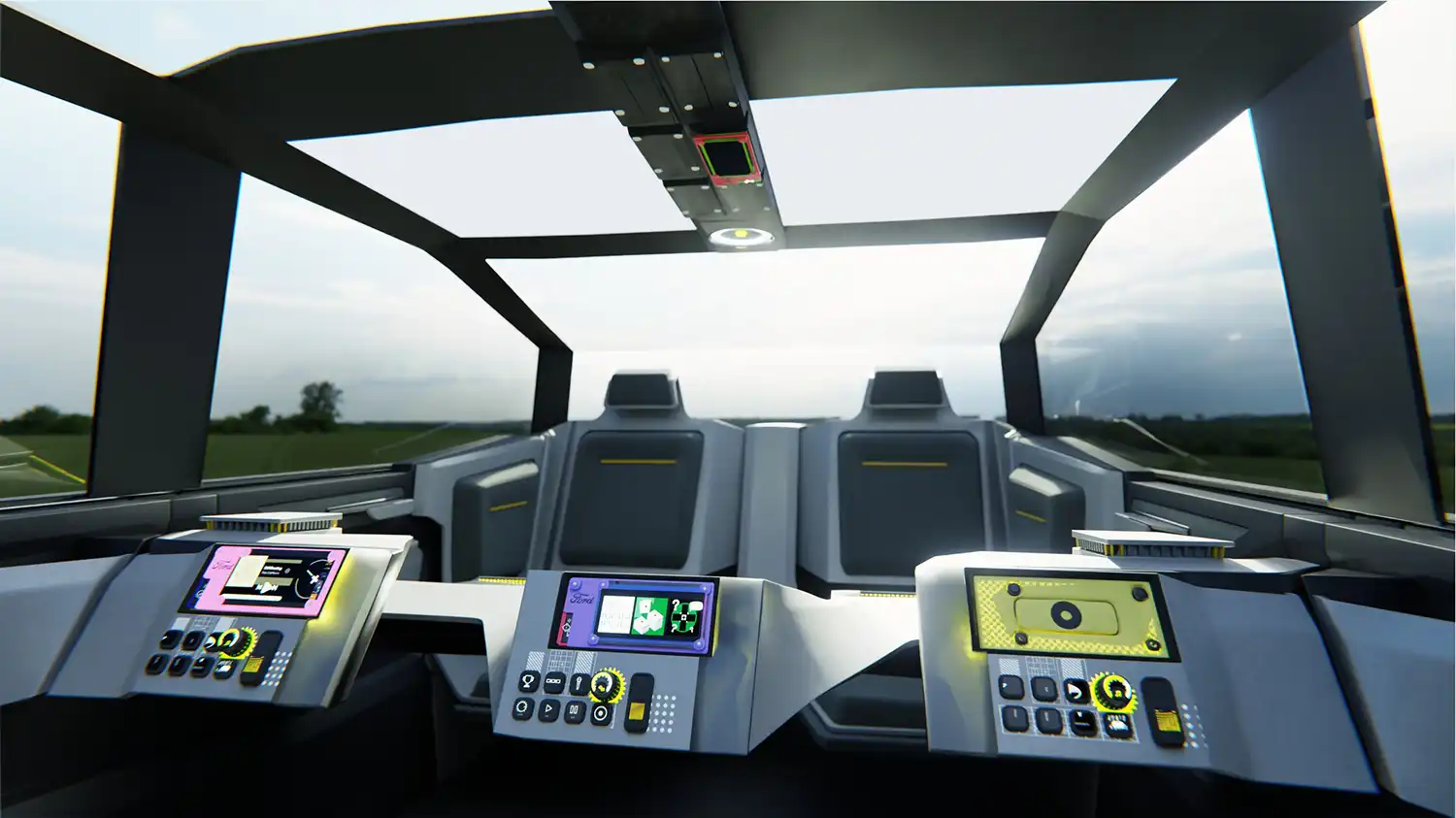
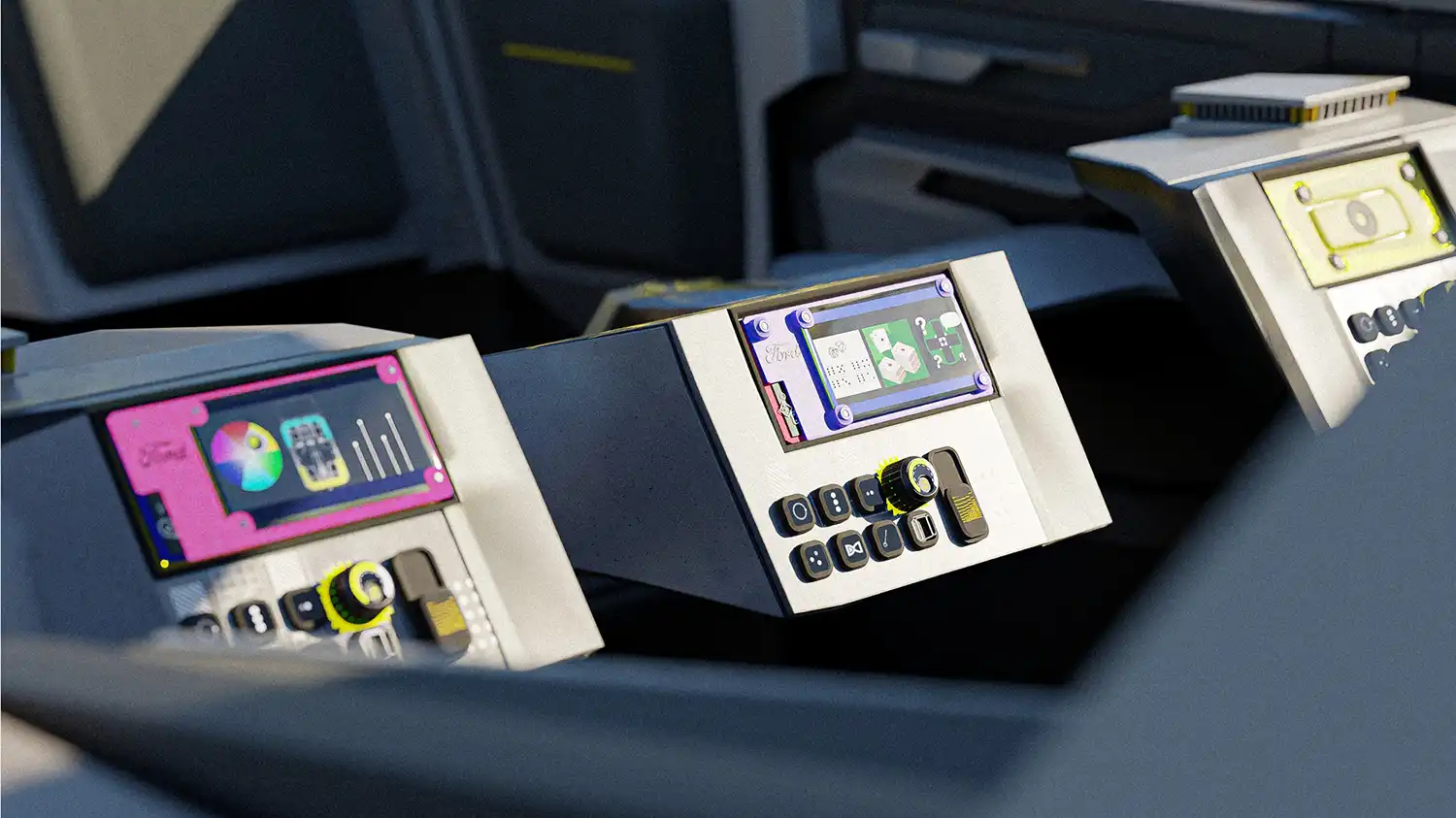
The technical execution of collaboration is managed through a sophisticated, yet intuitive, modular task system. Rather than a static dashboard, the Rapport concept introduces six “passable” tasks: drive, music, lighting, games, snacks, and navigation. These are facilitated by a central infotainment system that distinguishes clearly between hardware and software. This allows passengers to “host” different aspects of the journey, effectively distributing the mental load and the creative joy of travel. The sensory experience is one of fluid movement—not just of the vehicle, but of the roles within it—as a tablet or a control interface is handed from person to person like a shared plate at a dinner table.
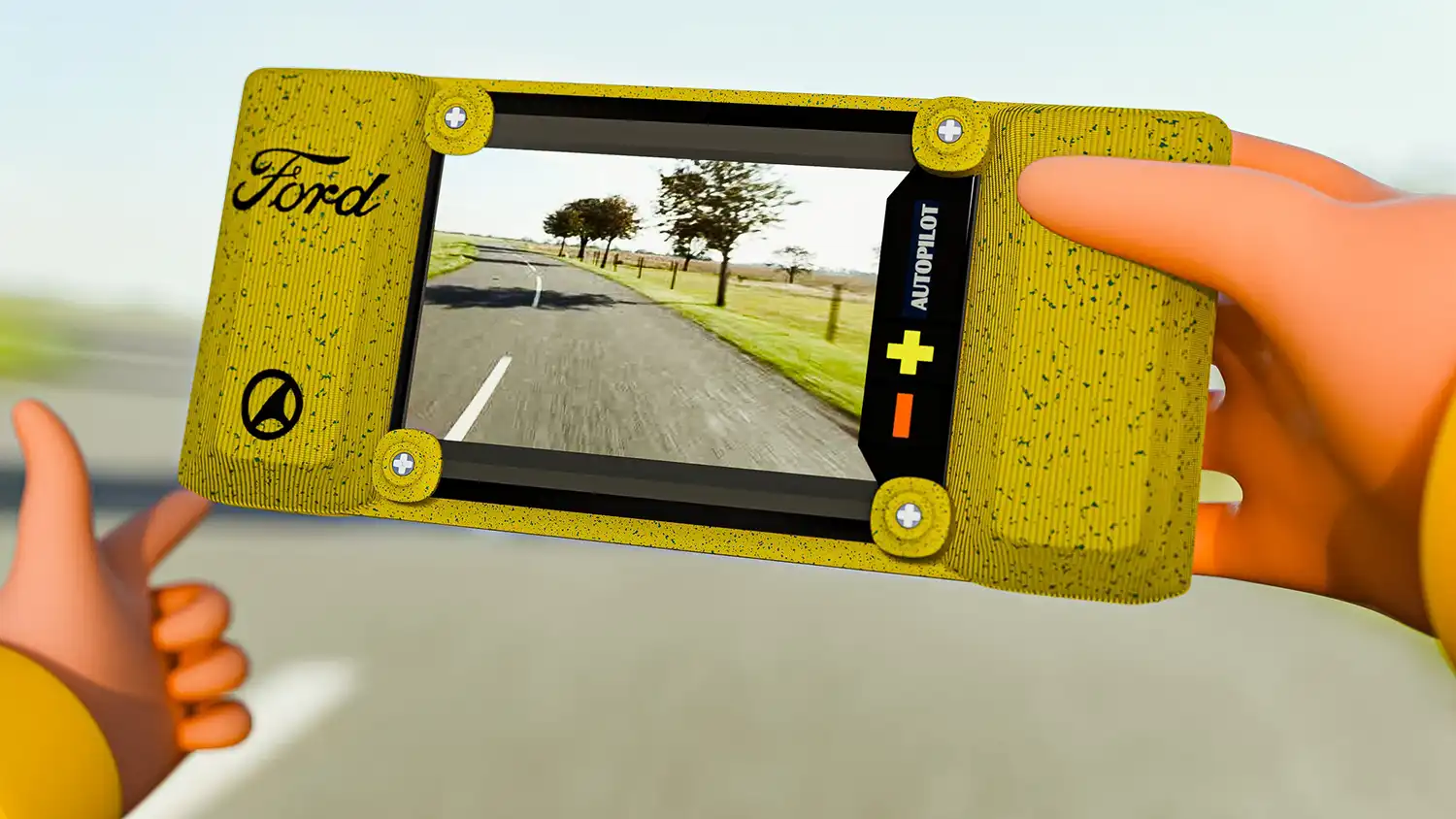
At the heart of the manual interface is a striking, canary-yellow handheld unit. This wireless device, equipped with an accelerometer, serves as the bridge between human intuition and machine precision. It allows for instinctive steering when the semi-autonomous system requires intervention or when the passenger simply desires the tactile pleasure of driving. By detaching the steering mechanism from the steering column, the designers have liberated the interior architecture. The unit is a bold, sculptural object—a playful nod to the “gamification” of transit that builds emotional trust between the user and the autonomous “brain” of the car.
The contextual impact of this project extends far beyond the aesthetics of a concept car. Ford Rapport addresses a growing concern in Europe and globally: the loneliness of the digital age. By transforming the vehicle into a social catalyst, Westergård and Bergström have proposed a future where the “commute” is no longer “dead time” to be endured, but a meaningful interval for connection. It is a sophisticated argument for the return of the human element to transportation, suggesting that while the car may drive itself, the journey remains a deeply human endeavor.
A broader shift toward nomadic living is reflected in this project, echoing themes we explored with the Citroën ELO concept, which reimagined the vehicle as a “tiny house” on wheels. Much like the ELO’s ability to rotate its interior into a mobile office or a cinema, the Ford Rapport prioritizes the human experience over the mechanical necessity of travel. This trajectory suggests that the future of automotive design is no longer just about the engine or the exterior silhouette; it is about the “sensory architecture” of the cabin. By looking at these concepts collectively, it is clear that the next frontier of mobility in Europe and beyond lies in creating environments that serve as high-end extensions of our social and digital lives, turning every journey into an opportunity for presence.