

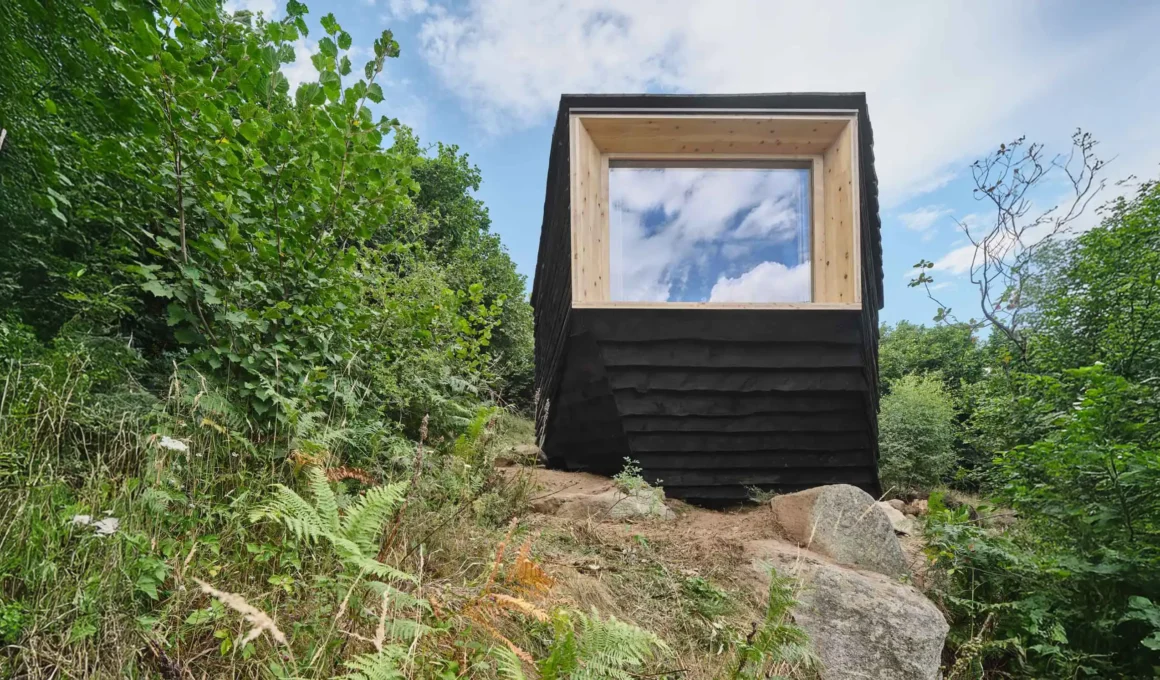
The concept of the forest retreat is undergoing a radical transformation, shifting from a mere aesthetic escape to a functional tool for environmental stewardship. Deep in the heart of MónNatura Sort, located in the Spanish Pyrenees, a new experimental dwelling named Forestone challenges the traditional boundaries of sustainable construction. Designed and realized by the 2025 cohort of the IAAC (Institute for Advanced Architecture of Catalonia), this 20-square-meter cabin is not just a guest house; it is a physical manifesto for the Bio for Piri initiative. Supported by the Fundació Catalunya La Pedrera, the project explores how architecture can actively participate in regenerative forestry and wildfire prevention in one of Europe’s most sensitive ecological corridors.
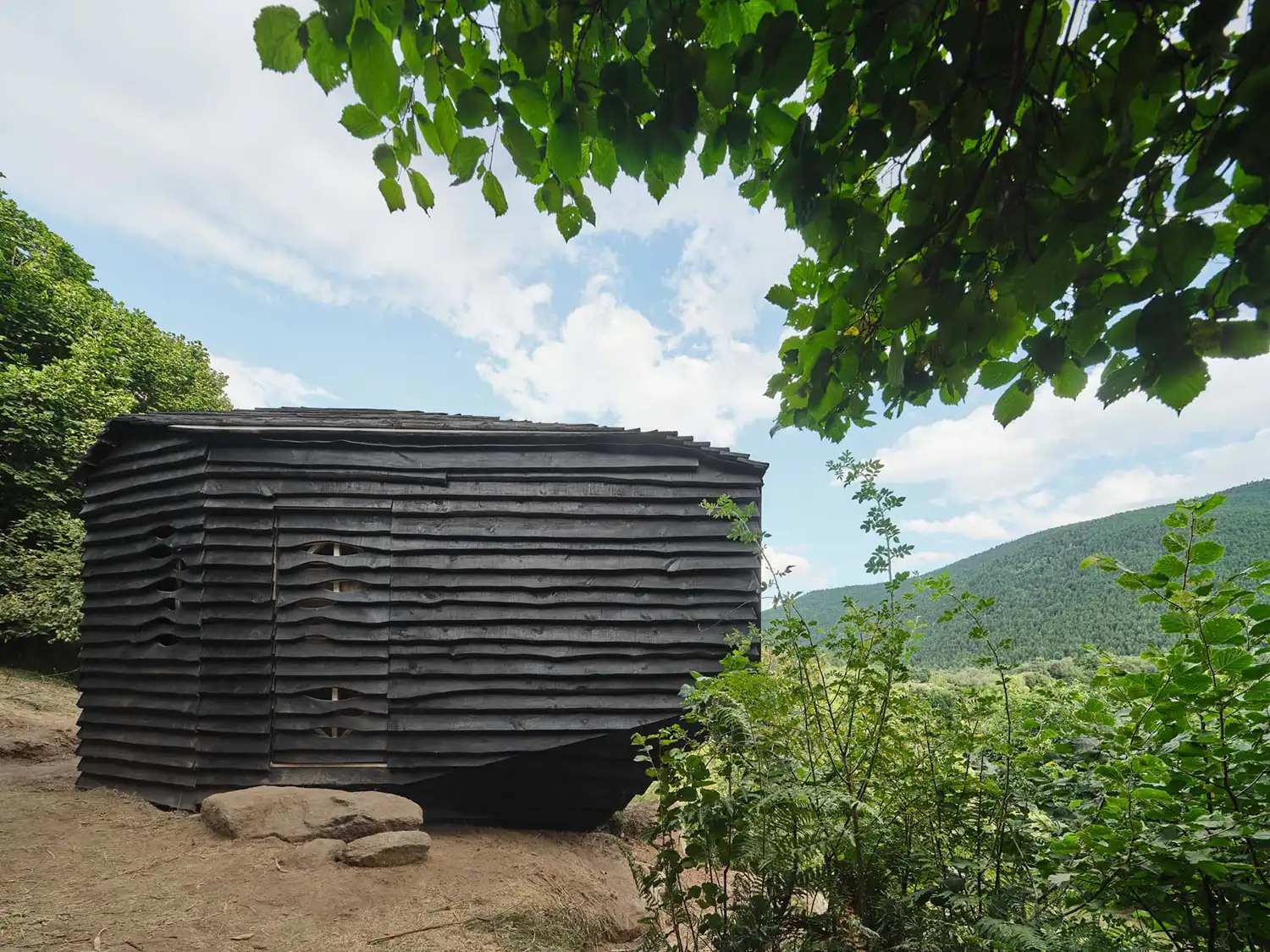
Inspired by the erratic boulders that dot the high-altitude landscape, the structure’s faceted geometry mimics a fragment of stone that has tumbled down the mountain and come to rest on a sloping site. This sculptural approach is far from arbitrary; the inclined walls and pitched roof are a direct response to solar exposure and the harsh climatic shifts of Lleida. Inside, the compact 20-square-meter footprint feels surprisingly expansive. The students carefully calibrated ceiling heights to distinguish between the sleeping quarters, a dedicated workspace, and a functional bathroom, while strategically placed apertures frame the surrounding peaks of the Pyrenees like living canvases. At night, operable wooden shutters allow for total darkness, a crucial feature for the site’s astronomical activities, ensuring that human habitation does not disrupt the celestial clarity of the region.
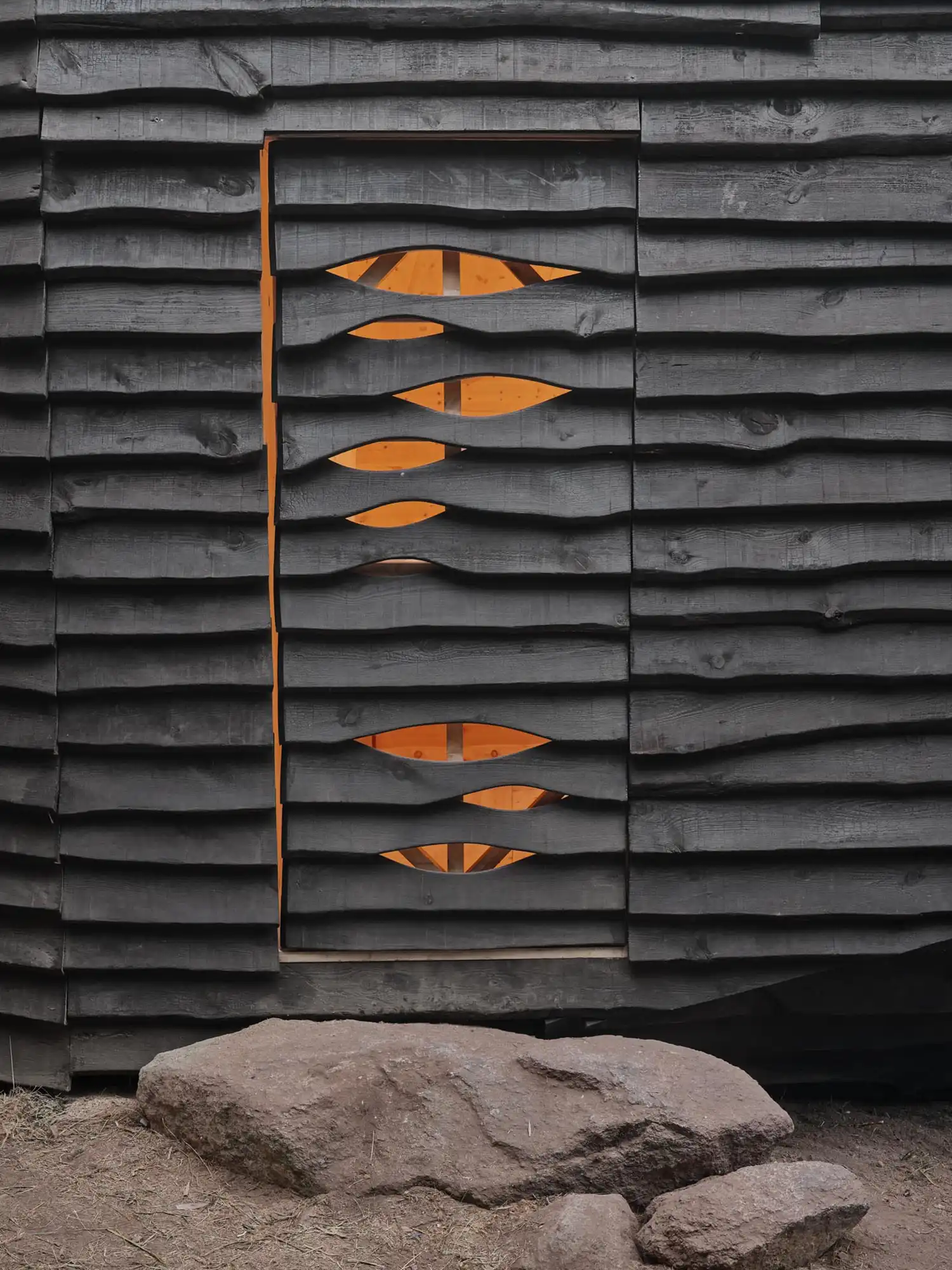
The exterior skin of the cabin tells a story of survival and ancestral wisdom, utilizing the Japanese Shou Sugi Ban(焼杉) technique. By charring the surface of local pine boards, the team created a carbonized layer that naturally resists water, insects, and fire. This choice is deeply symbolic: the very name of the mountain range, derived from the Greek Pyros, means fire. In a region where forest management is vital to preventing catastrophic wildfires, the blackened facade serves as a reminder of fire’s role in the ecosystem. This dark, textured aesthetic echoes the growing trend of black timber cabins that blend into rugged environments, yet here, the material choice is inextricably linked to the specific regenerative forestry practices of the Alinyà mountains.
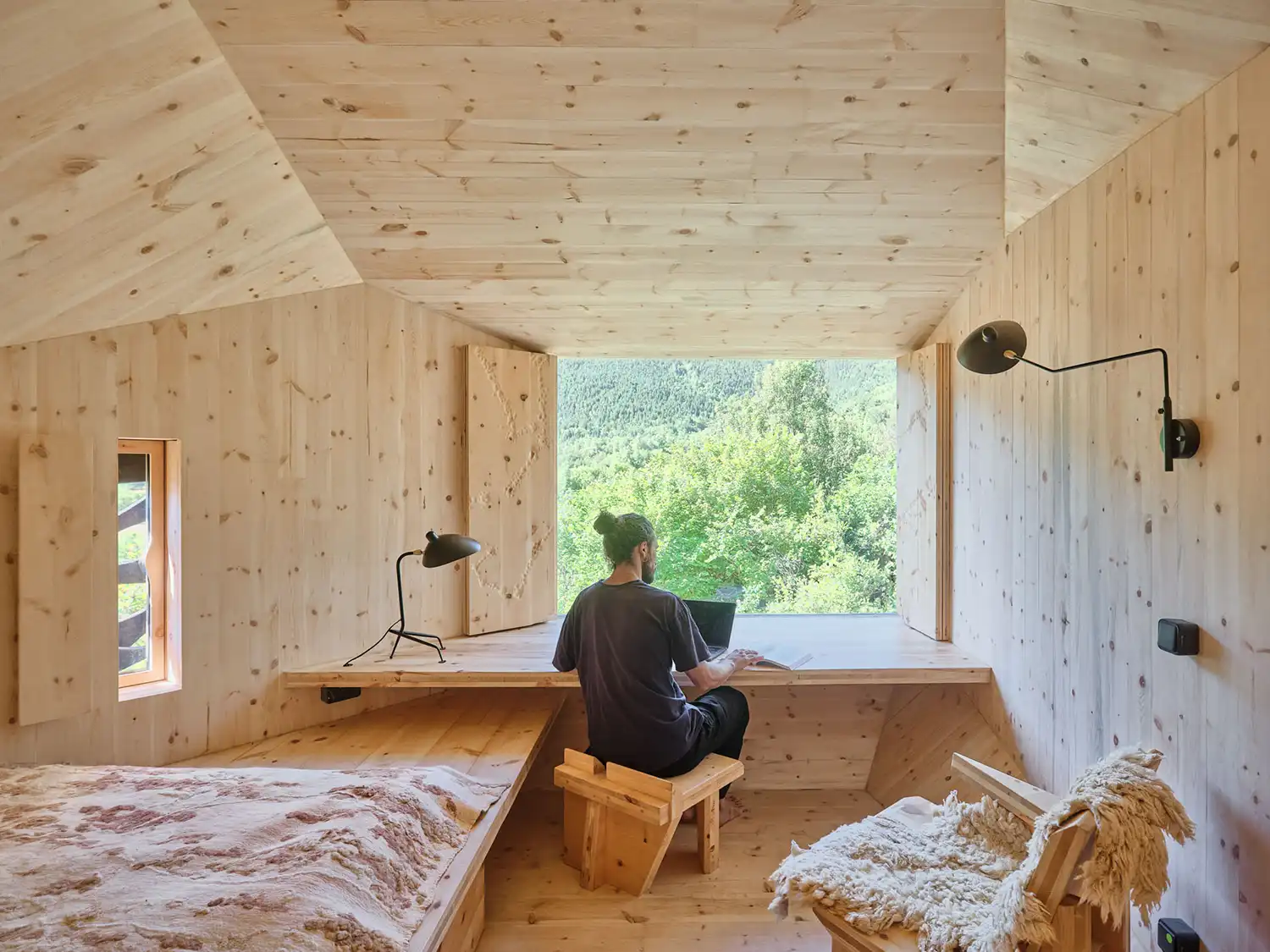
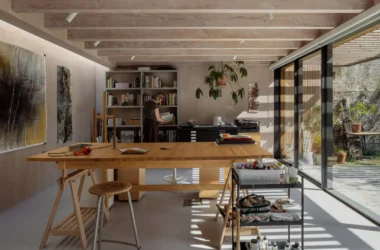
Stepping inside Forestone reveals a tactile, human-centric interior where the distinction between structure and furniture dissolves. The space is a seamless landscape of Cross-Laminated Timber (CLT), with the bed, seating, and shelving integrated directly into the architectural shell. The sensory experience is heightened by the scent of fresh wood and the warmth of hand-felted wool. In a beautiful display of circular economy, the students collaborated with local farmers during the wool festival in Sort, transforming raw sheep’s wool into rugs and pillowcases at Valldaura Labs. This dedication to local sourcing extends to the bathroom, where a singular stone found on-site was manually carved into a bespoke washbasin, grounding the cabin in its immediate geological context.
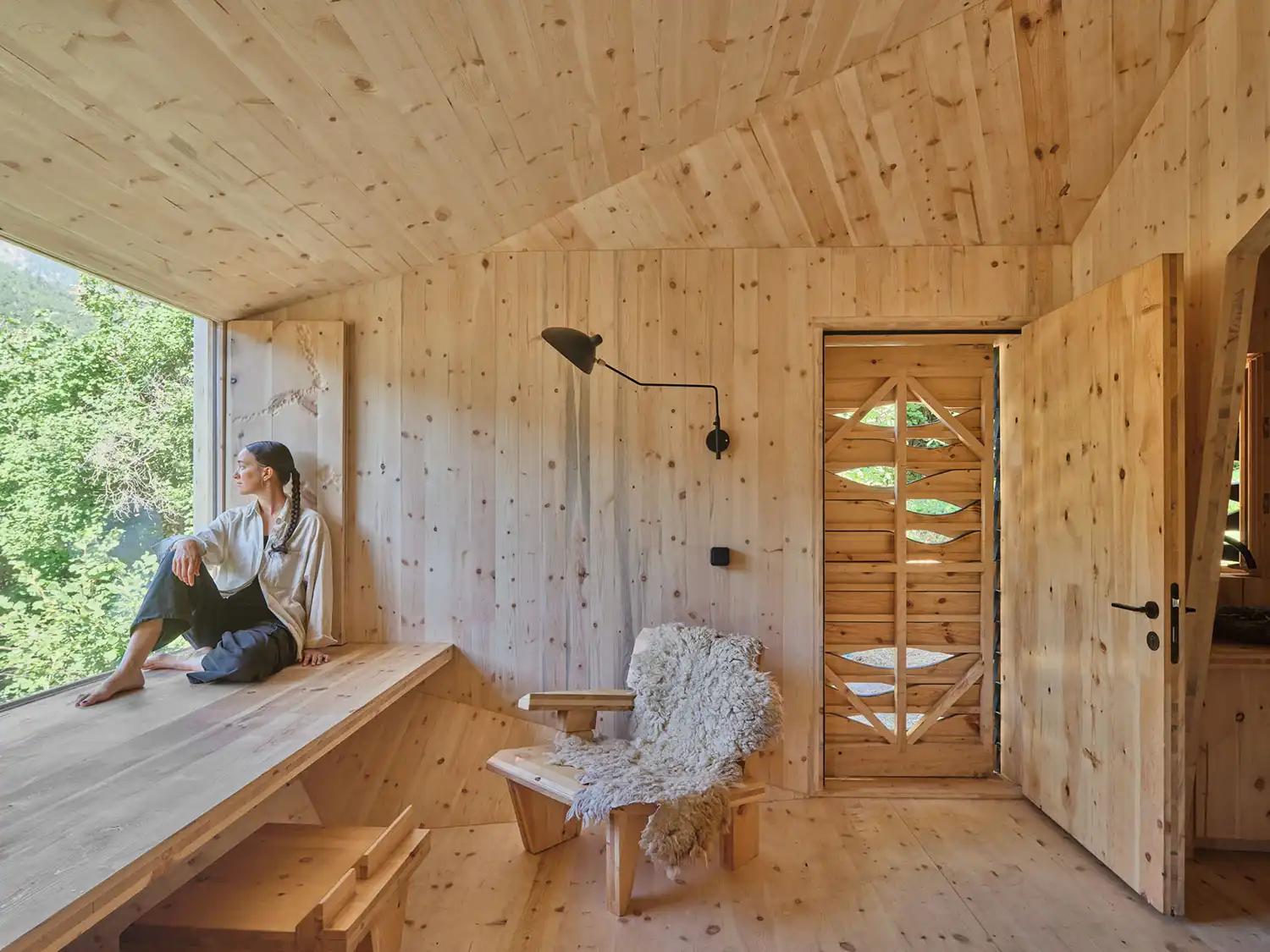
The scalability of the Forestone prototype offers a blueprint for low-impact habitation in protected landscapes. By employing dry-assembly techniques and modular CLT elements, the project demonstrates that small-scale architecture can be both high-tech and humble. It shares a philosophical lineage with other contemporary interventions, such as the Swiss treehouse concepts that elevate the dweller above the forest floor, or public art installations that prioritize the void and the view over material excess. Forestone, however, adds a layer of regional responsibility, proving that the act of building can—and should—contribute to the health of the land it occupies.
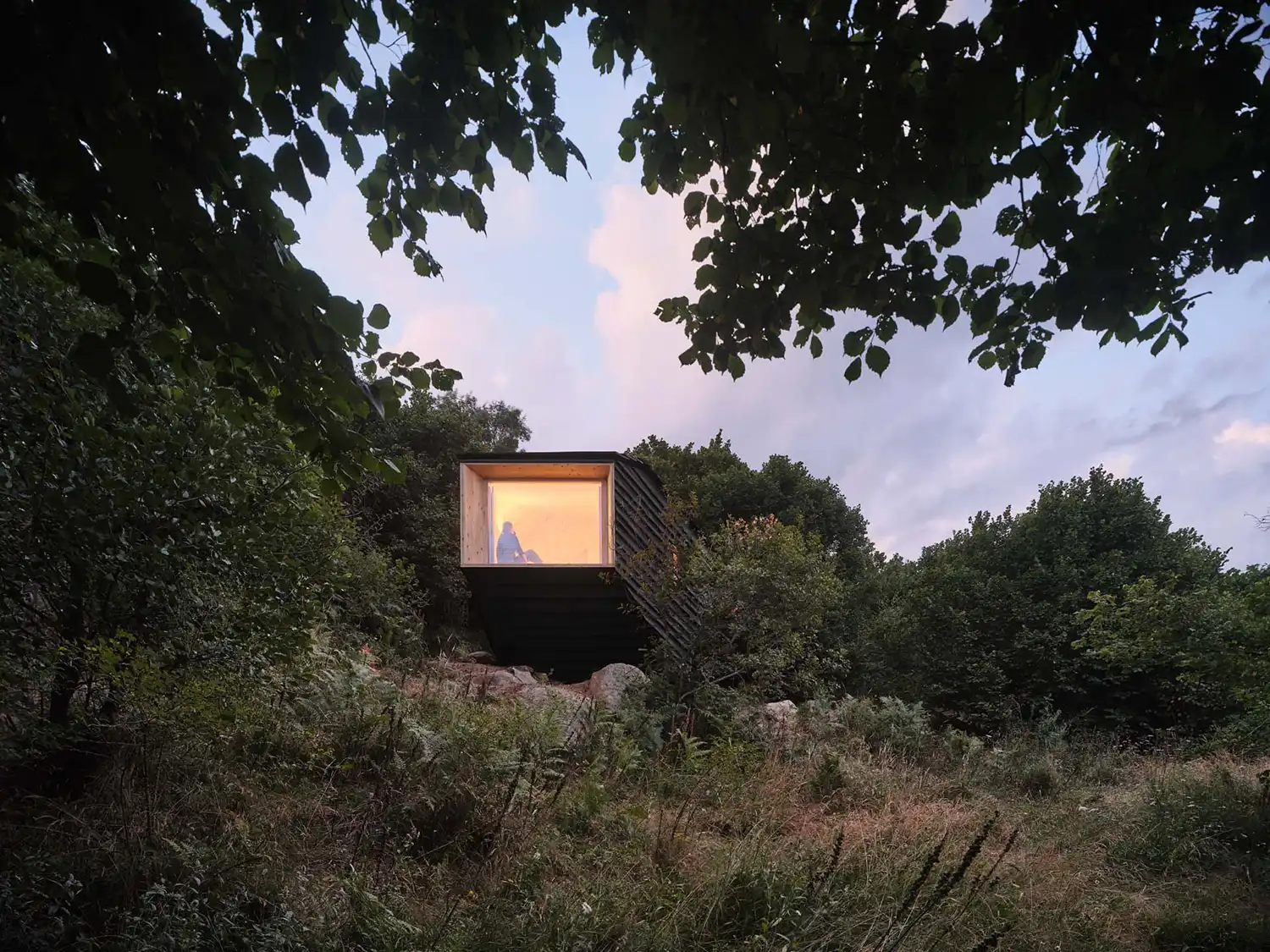
Now open to guests at MónNatura Pirineu from early 2026, the cabin invites visitors to experience a radical form of “living in the woods.” It is an architecture of necessity and poetry, where the “hands-on” educational model of IAACmeets the urgent needs of the Spanish landscape. By merging high-performance digital fabrication with raw, local materials, Forestone stands as a testament to how the next generation of architects is redefining our relationship with the wild, turning a simple shelter into a powerful ally against the changing climate.