



Auga Optical Store in Wrocław represents a departure from the clinical sterility often associated with vision care. Designed by Polish studio Znamy się, the interior functions as a physical manifestation of the act of seeing itself. Rather than merely housing frames on shelves, the space translates the complex biological mechanisms of the human eye into a spatial sequence. It is an exploration of how light, anatomy, and perception can be distilled into a cohesive environment that feels both high-tech and deeply organic.
The conceptual vision for Auga is rooted in the physiological journey of a photon. The architects have treated the floor plan as a metaphorical eye, where the layout mirrors the path light travels from the external environment to the brain’s visual cortex. As customers step inside from the streets of Wrocław, they effectively become the “light” entering the system. This narrative-driven approach ensures that the transition from the bright, public retail area to the dimmed, private consulting rooms feels like a natural progression through successive biological layers.
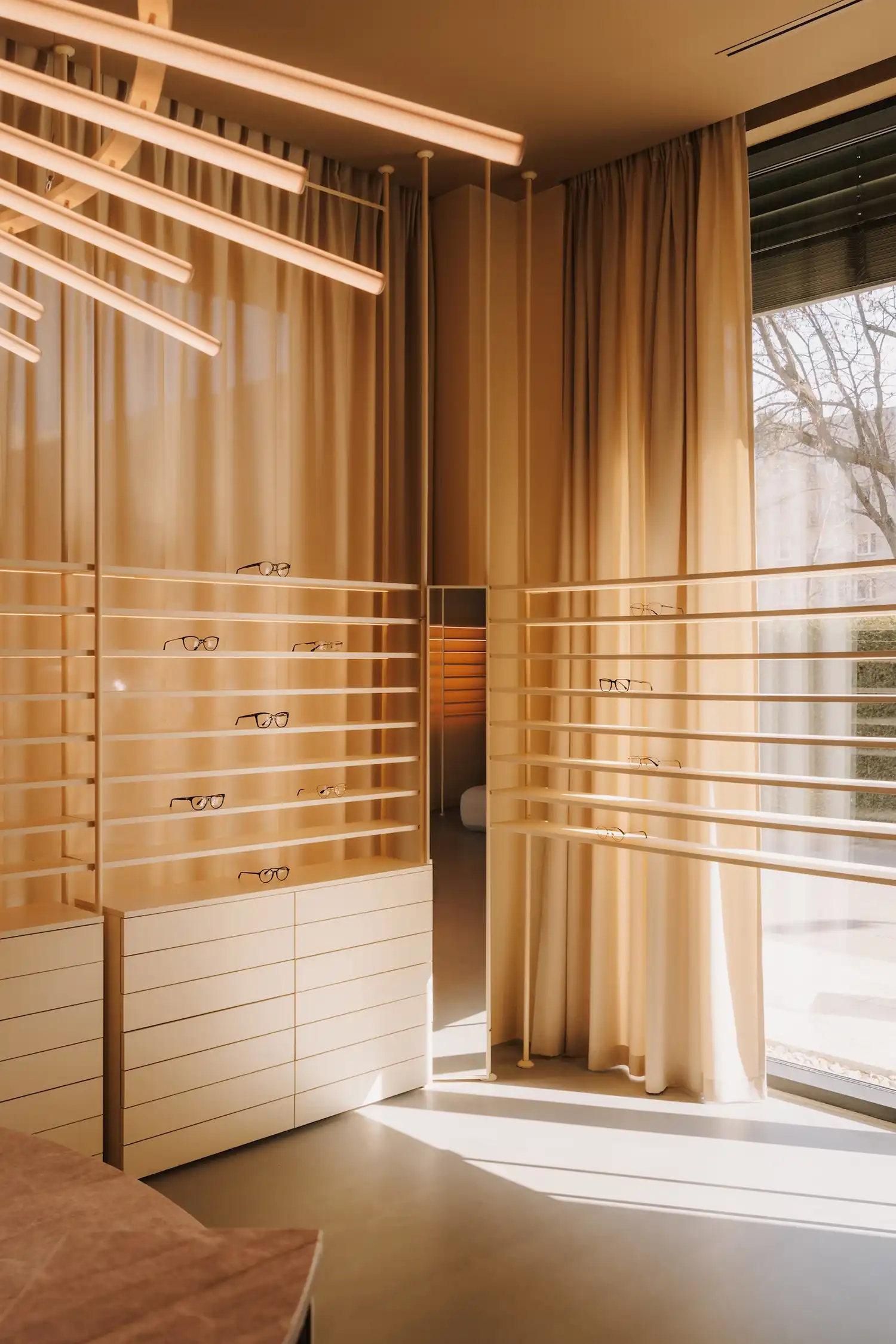
Materiality and light play the role of the cornea and lens within this architectural anatomy. The most striking intervention is a biconvex glass structure characterized by a distinctive ridged surface. Much like the crystalline lens of the eye, this element is not merely decorative; it actively manipulates the environment by refracting and distorting incoming sunlight. The result is a dynamic interplay of shadows and highlights that shifts throughout the day, reminding visitors that vision is a fluid, ever-changing process dictated by the physics of light.
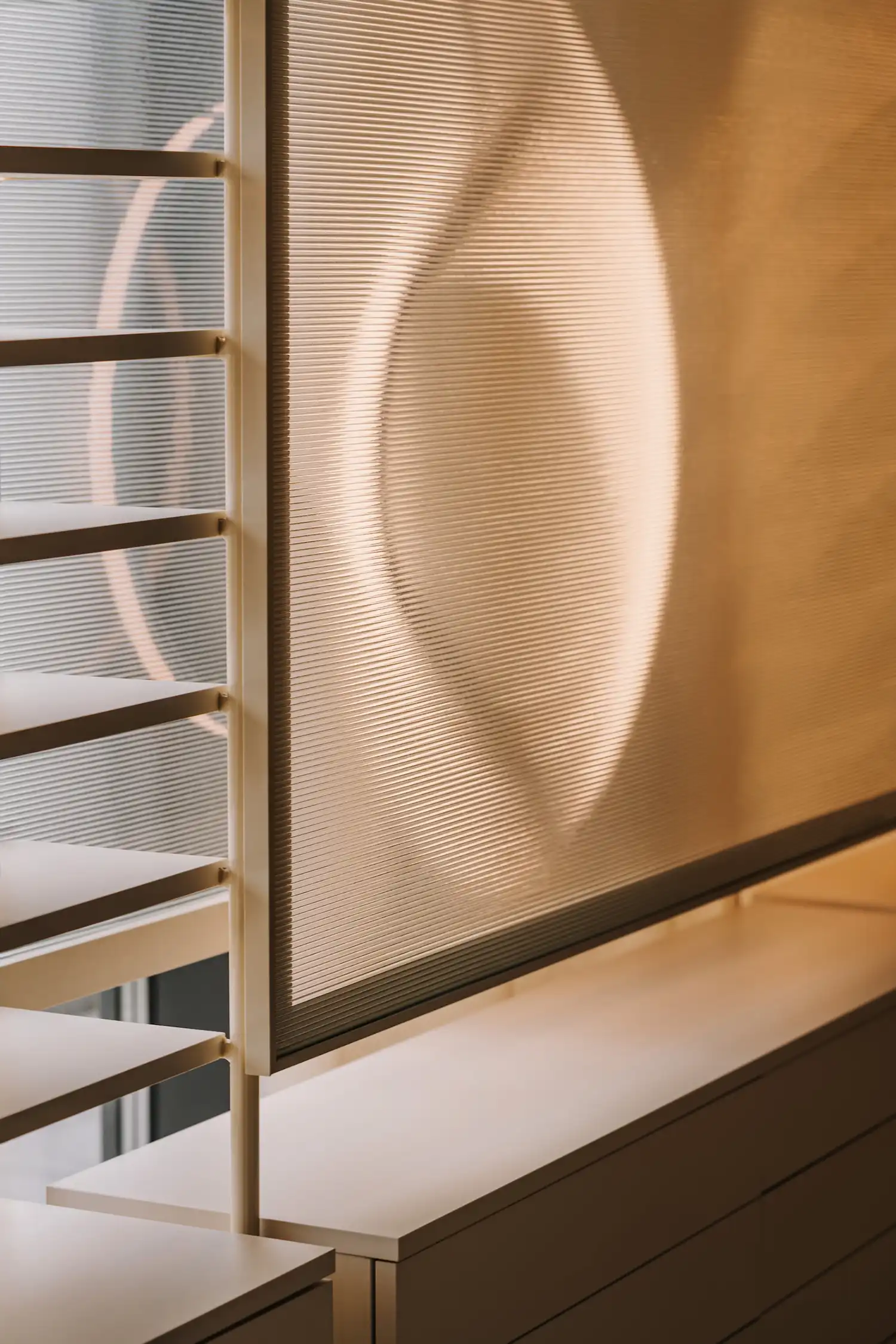
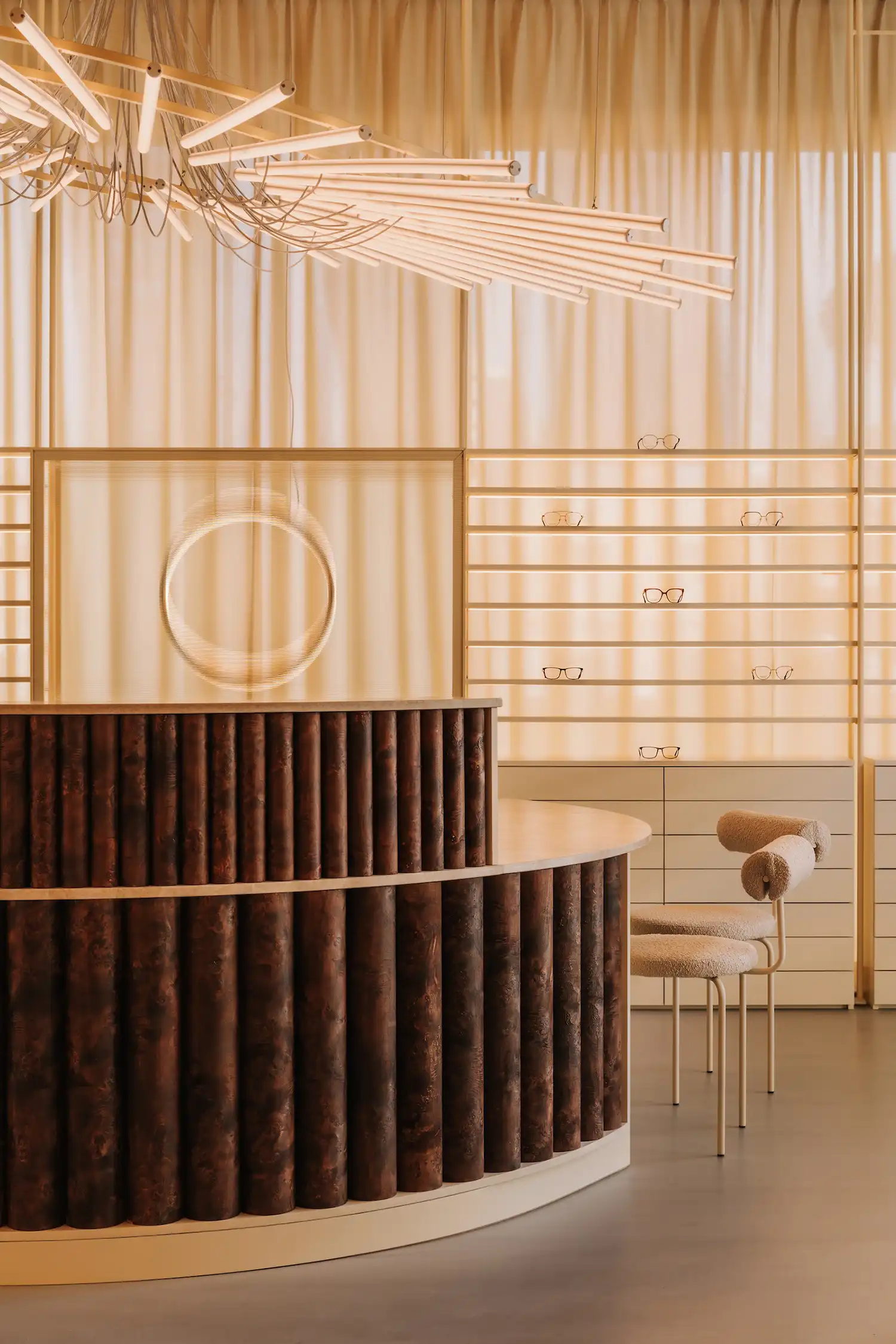
At the heart of the salon, the focus shifts to the macula—the part of the retina responsible for sharp, central detail. This is represented by a monolithic round counter crafted from rich burl wood, positioned directly beneath a high-intensity LED chandelier. The choice of materials here is intentional; the organic texture of the wood provides a tactile warmth, while the concentrated overhead light mimics the way the eye’s cone cells require brightness to function. It creates a natural focal point for consultations, grounding the ethereal qualities of the surrounding glass and metal.
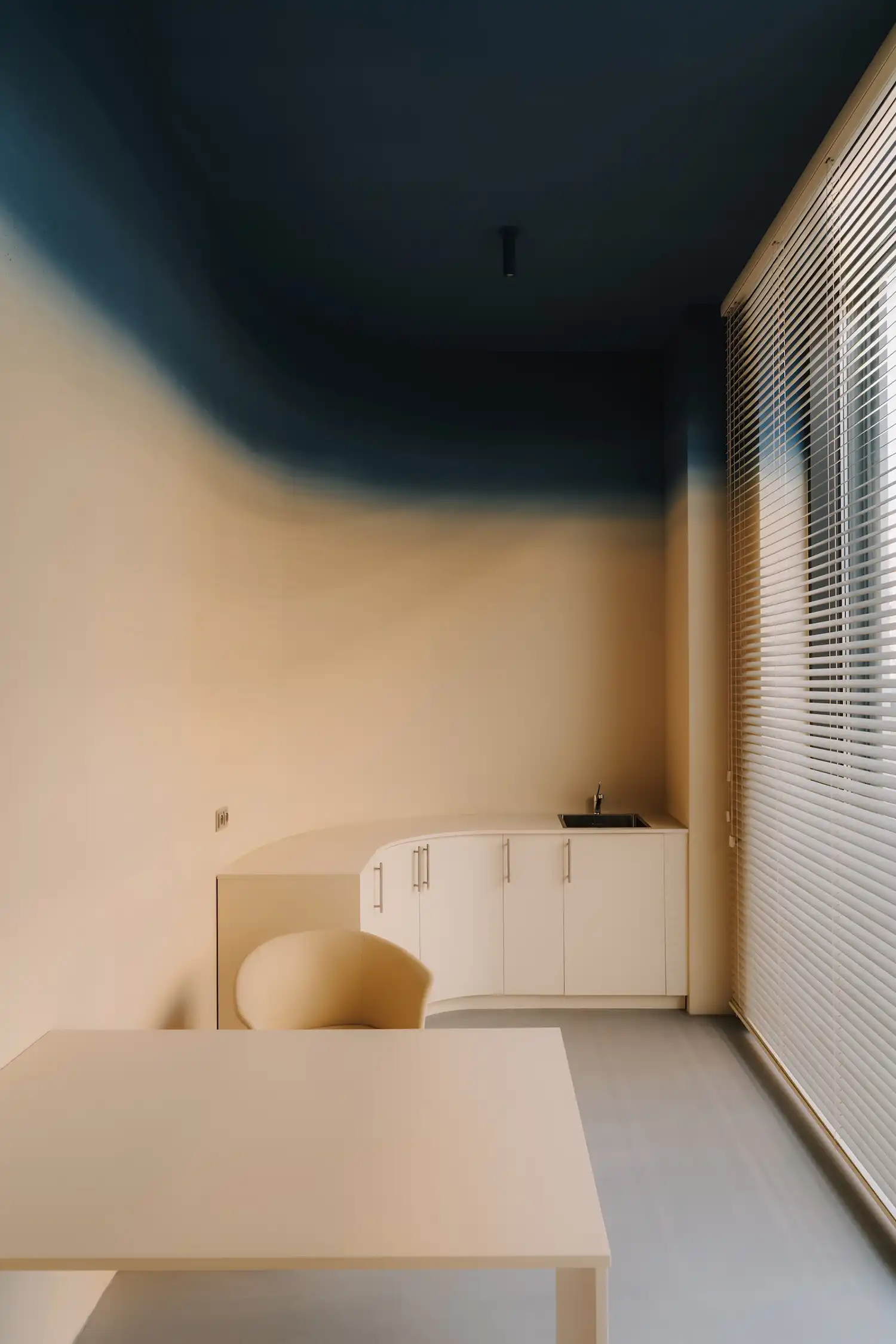
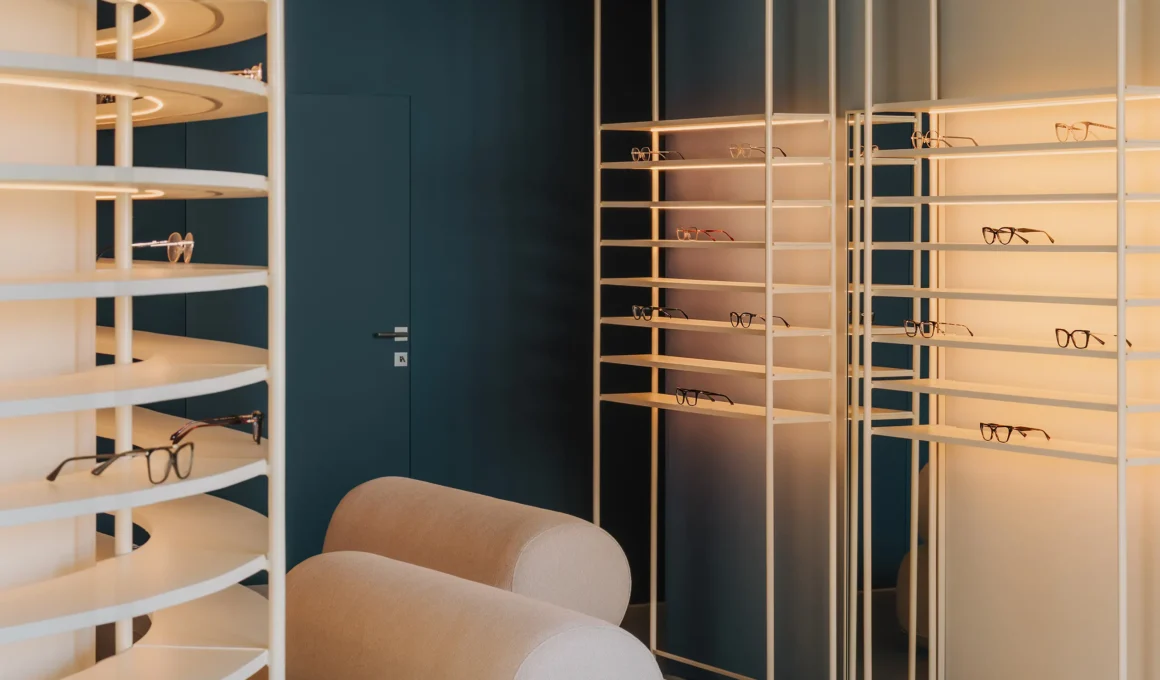
The periphery of the space pays homage to the rods, the photoreceptors that grant us night vision and motion detection. Deep navy blue walls and horizontal shelving units create a sense of rhythmic movement that leads the eye toward the rear of the store. This palette is a sophisticated nod to the Purkinje effect—the tendency of the human eye to shift its peak sensitivity toward the blue end of the spectrum in low-light conditions. The gradient of color creates a sensory experience that feels increasingly intimate as one moves toward the clinical examination areas.
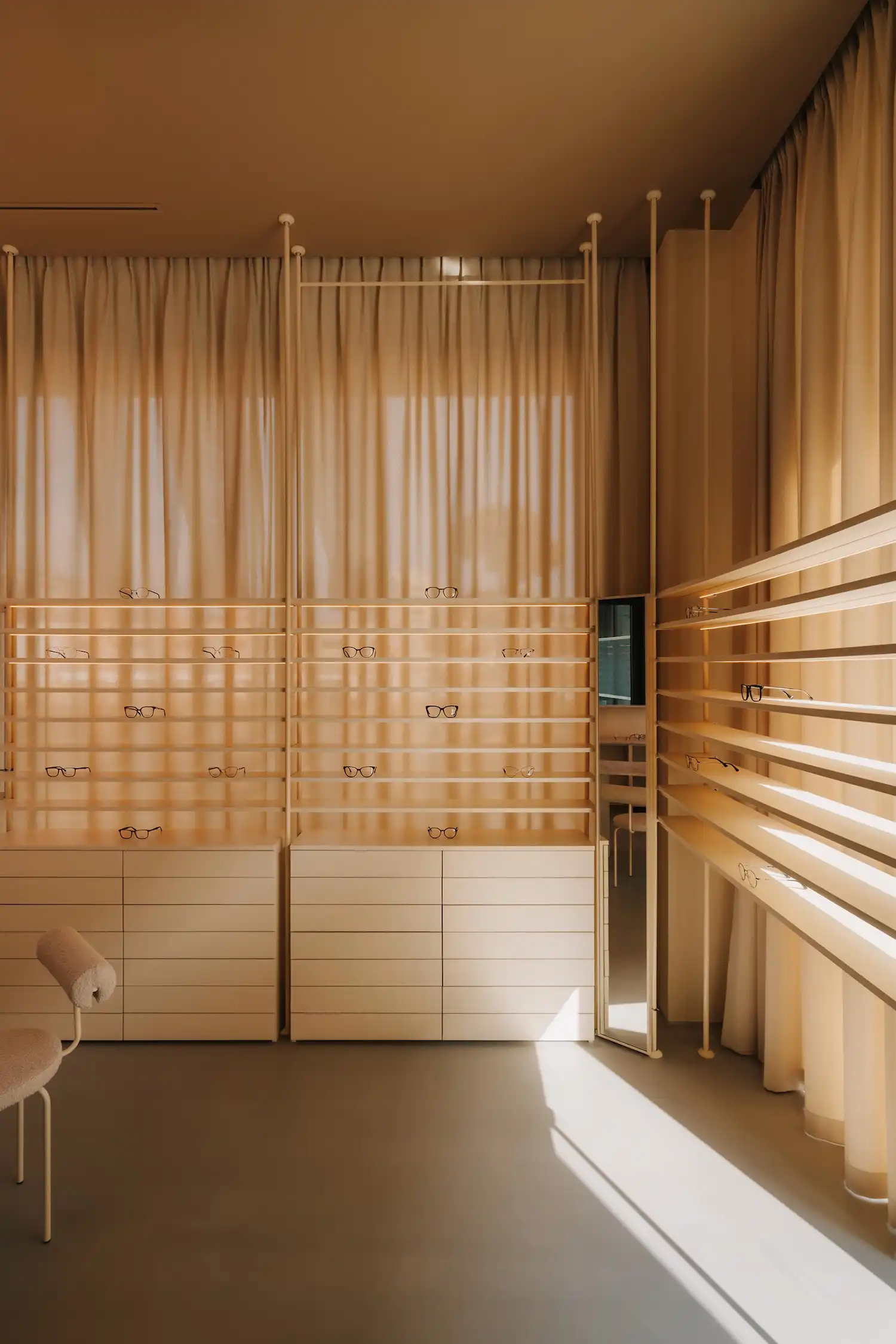
The final impulse of the design is captured by a series of suspended LED light guides that trace a path across the ceiling. These glowing filaments represent the nerve impulses traveling to the brain, serving as a literal and symbolic guide for the patient’s journey. It is a fitting conclusion to a project that treats healthcare not as a transaction, but as a sensory immersion. This level of storytelling through interiors mirrors the ambition seen in other global retail landmarks, such as the experiential eyewear store in Shanghai, where the retail environment is transformed into a destination for discovery.