


In the heart of the “White City,” interdisciplinary studio Zeller & Moye has transformed a dilapidated 16th-century casona into Hotel Sevilla, a striking dialogue between Merida’s colonial heritage and contemporary Brutalist interventions for the renowned Grupo Habita.
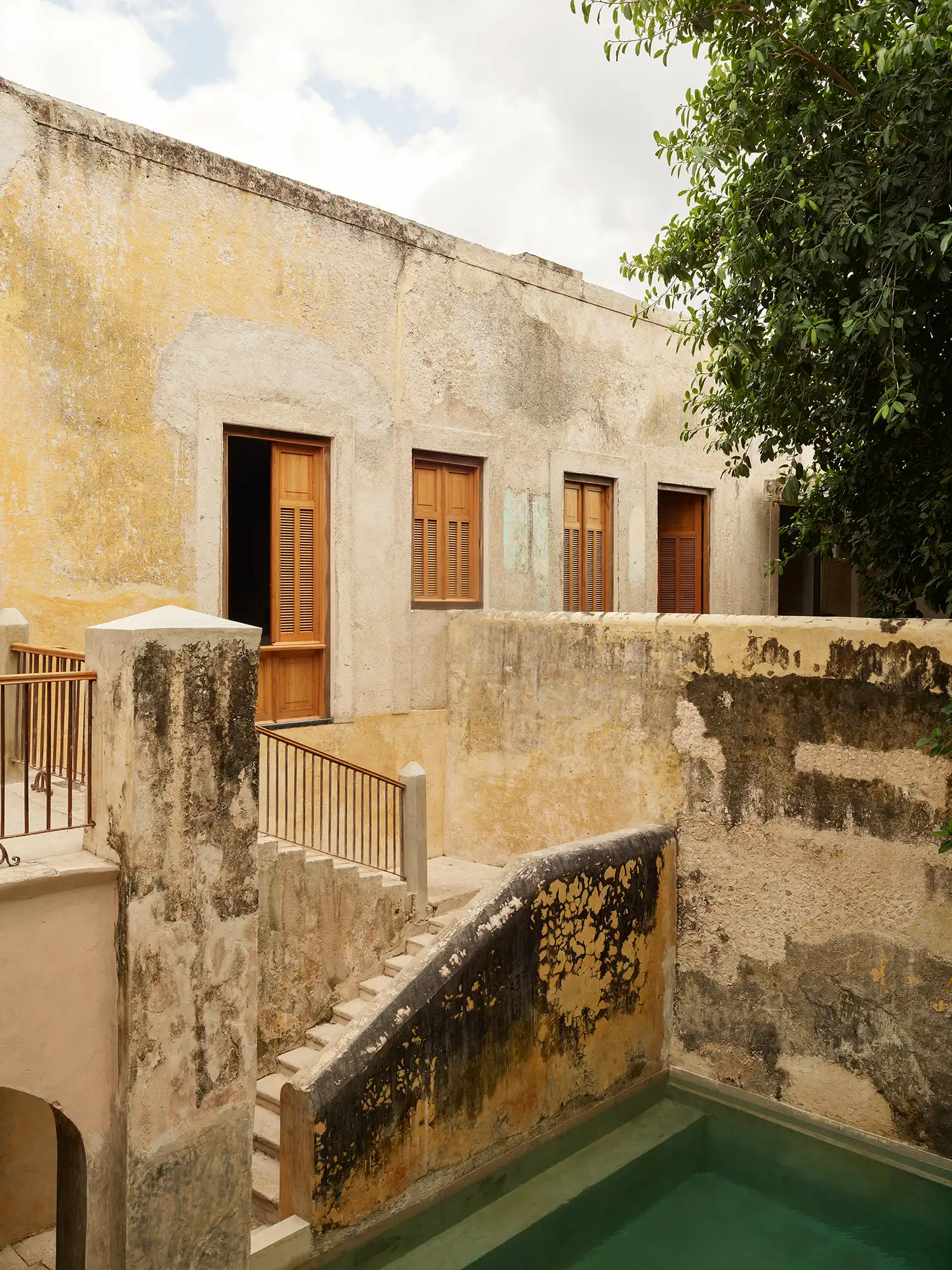
A heritage reimagined through raw materiality. The project began as an exercise in architectural archaeology. Once a private residence and later a functioning hotel, the corner-plot hacienda had fallen into a state of ruin before its seven-year restoration. Christoph Zeller and Ingrid Moye opted for a philosophy of “peeling back,” revealing the original layers of the structure while introducing a clear, modern language. Rather than mimicking the 16th-century stone, the studio utilized in-situ concrete for all new additions, creating a robust, uniform aesthetic that distinguishes the present from the past without overshadowing it.
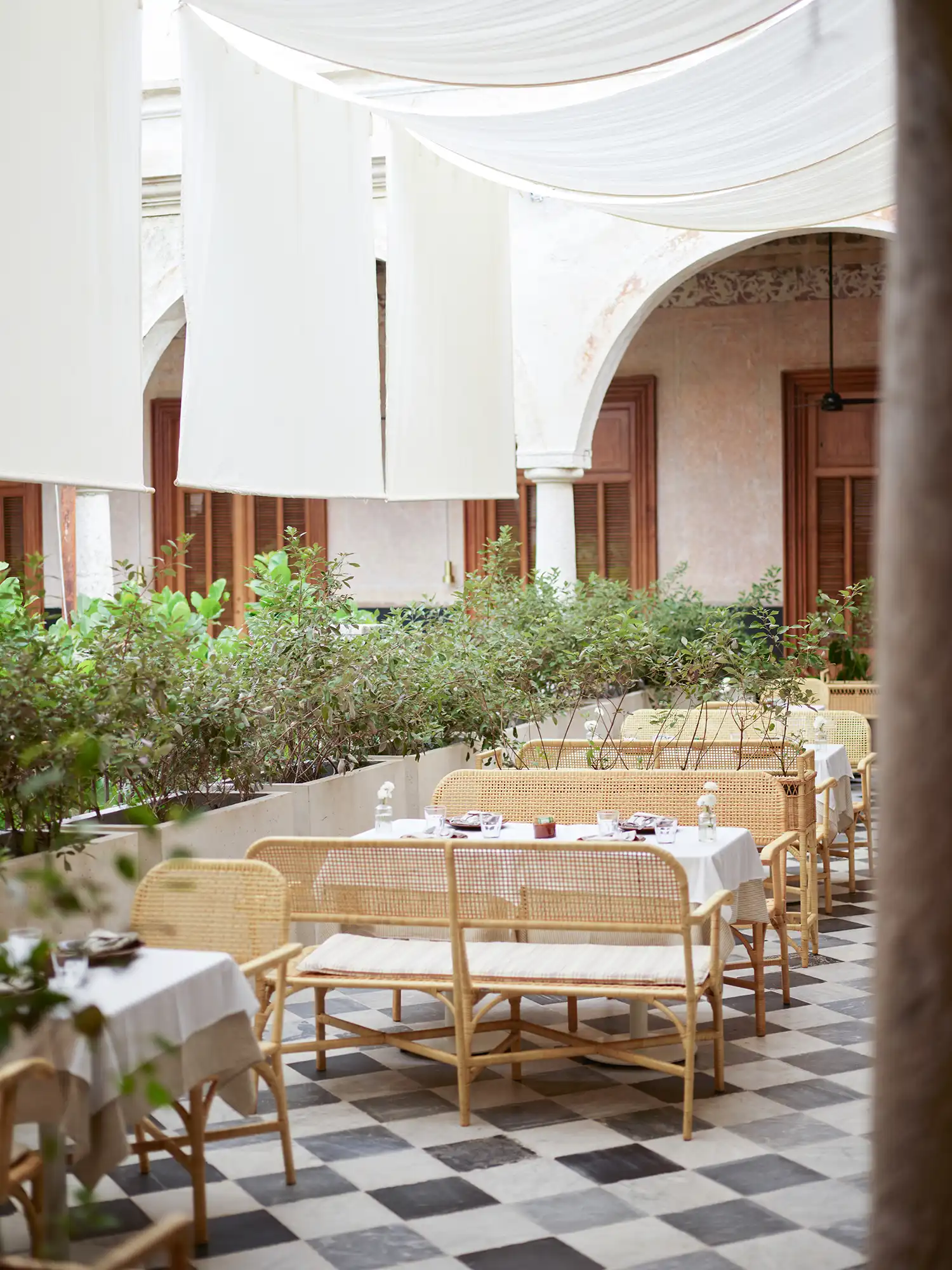
The courtyard as a social heart. Upon entering the light-filled lobby, guests are met with a curated palette of stone floors and limewashed walls. The visual focal point is the central courtyard, where four mature almond trees provide a natural canopy for a casual Mexican cantina. The most dramatic intervention is a sculptural concrete spiral staircase that ascends to a 24-seat bistro. Here, the sensory experience shifts from the heat of the Yucatan sun to a refined culinary setting, where French-Mexican fusion is served under the direction of chef Marion Chateau.
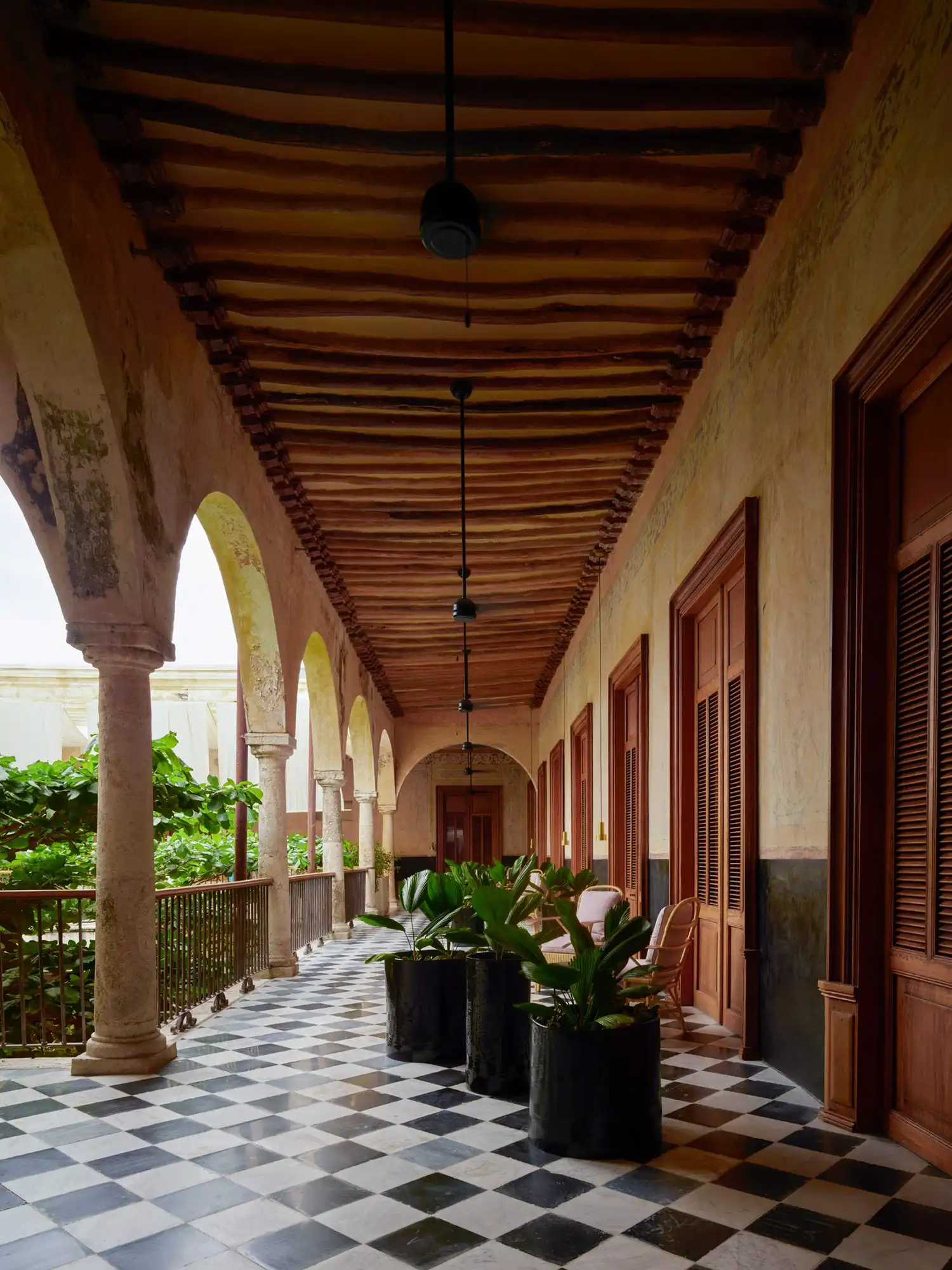
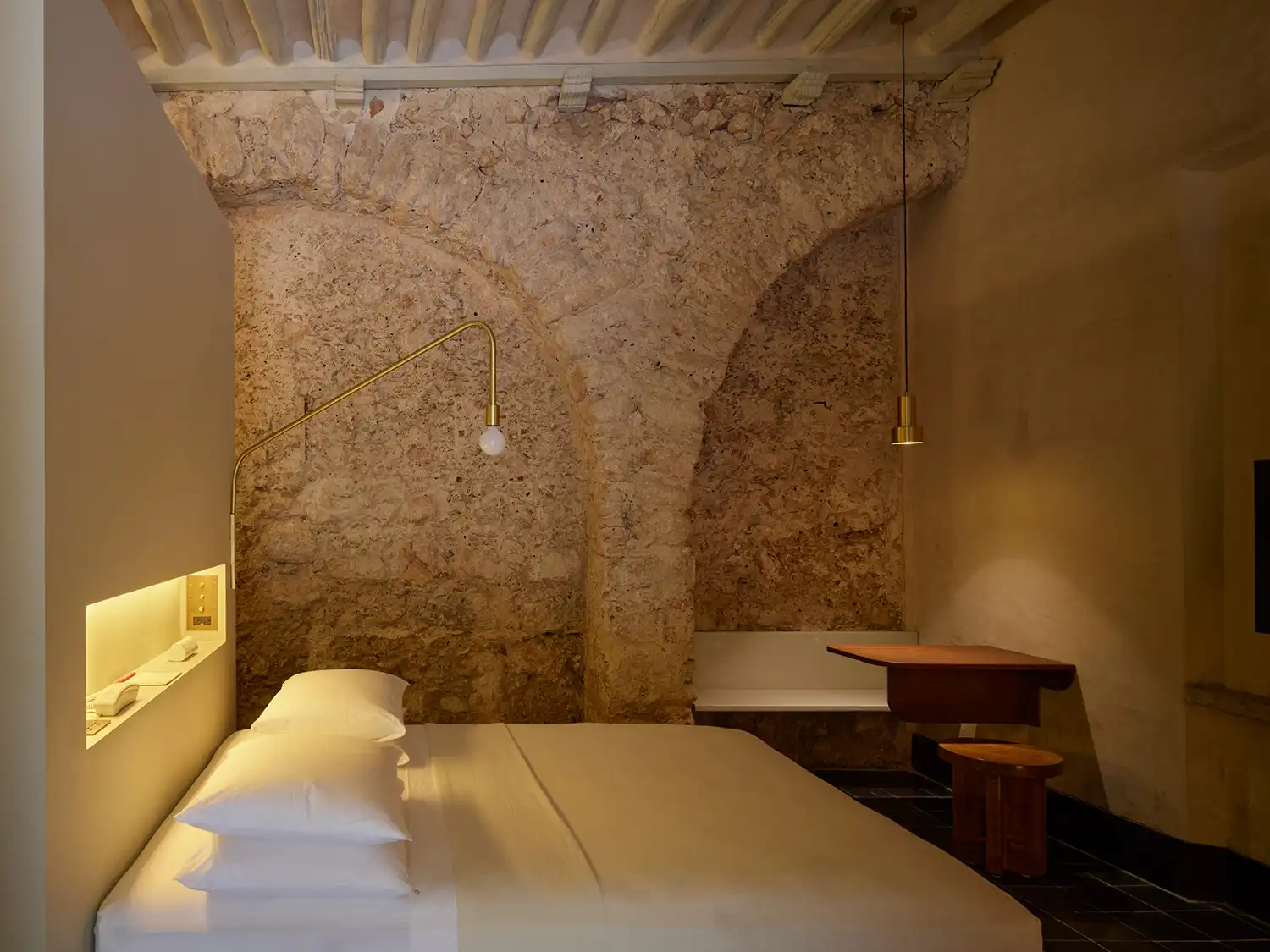
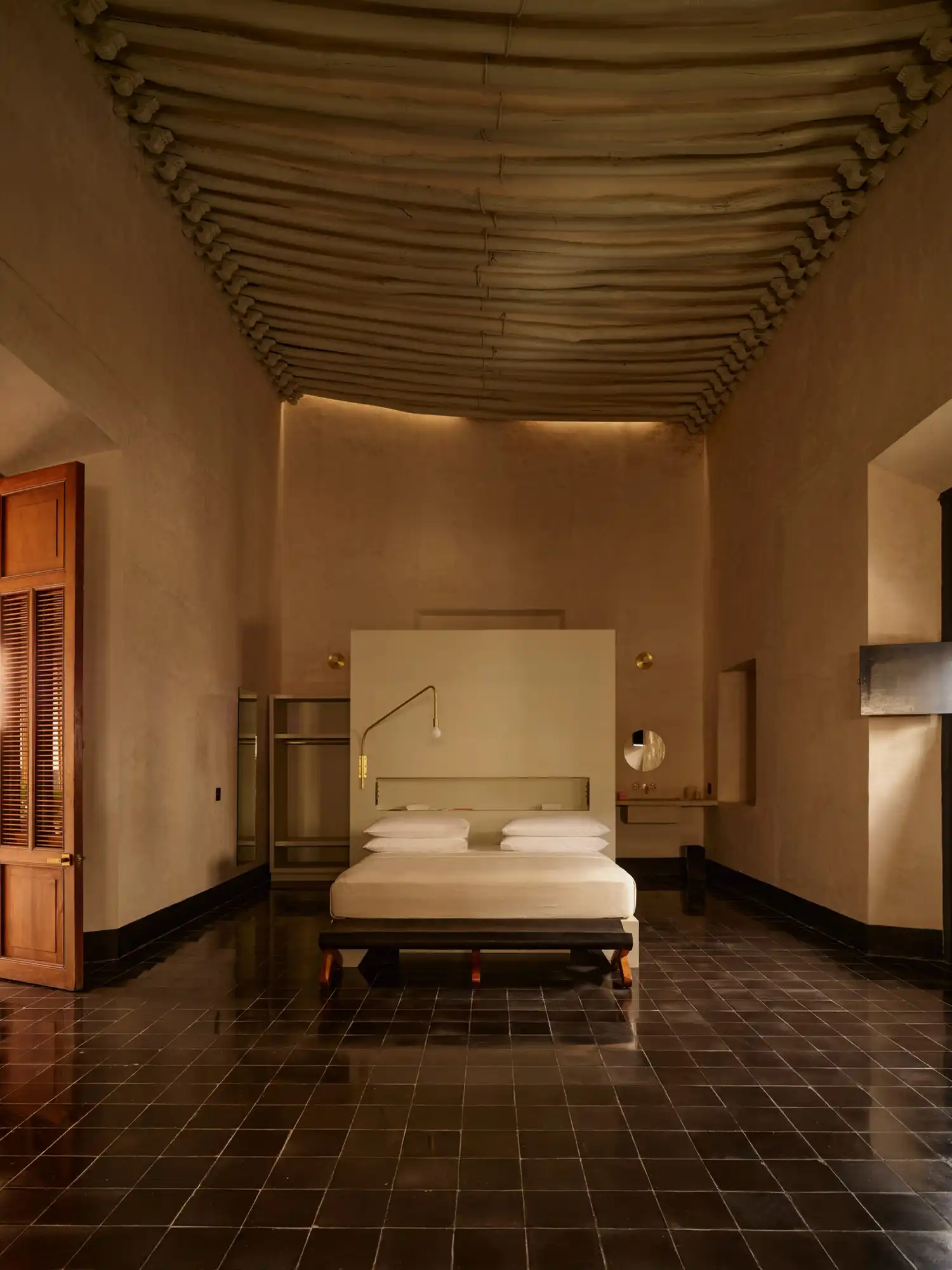
Tactile interiors and local craftsmanship. The 17 rooms and four suites are an exercise in modernist-inspired design, prioritizing local materials over international trends. Polished ceramic tiles—a staple of traditional Yucatecan homes—are reimagined in a deep black finish, providing a moody contrast to the custom furniture carved from regional woods. Lighting by Luca Salas and woven henequen textiles add layers of texture, while the bathrooms feature Brutalist concrete walls and brushed brass fixtures, blending an industrial edge with a sense of handcrafted warmth.
Ancestral wellness and thermal rituals. Beyond the guest rooms, the hotel integrates a spa deeply rooted in the region’s history. Inspired by Mayan wellness traditions, the facility includes a Tuj (an ancestral sauna) and a cold plunge pool. The experience is designed to be immersive, offering DIY kits featuring mineral-rich mud and local sea salt scrubs. This focus on thermal rituals provides a quiet, rhythmic escape from the vibrant, bustling energy of the historic center just outside the walls.
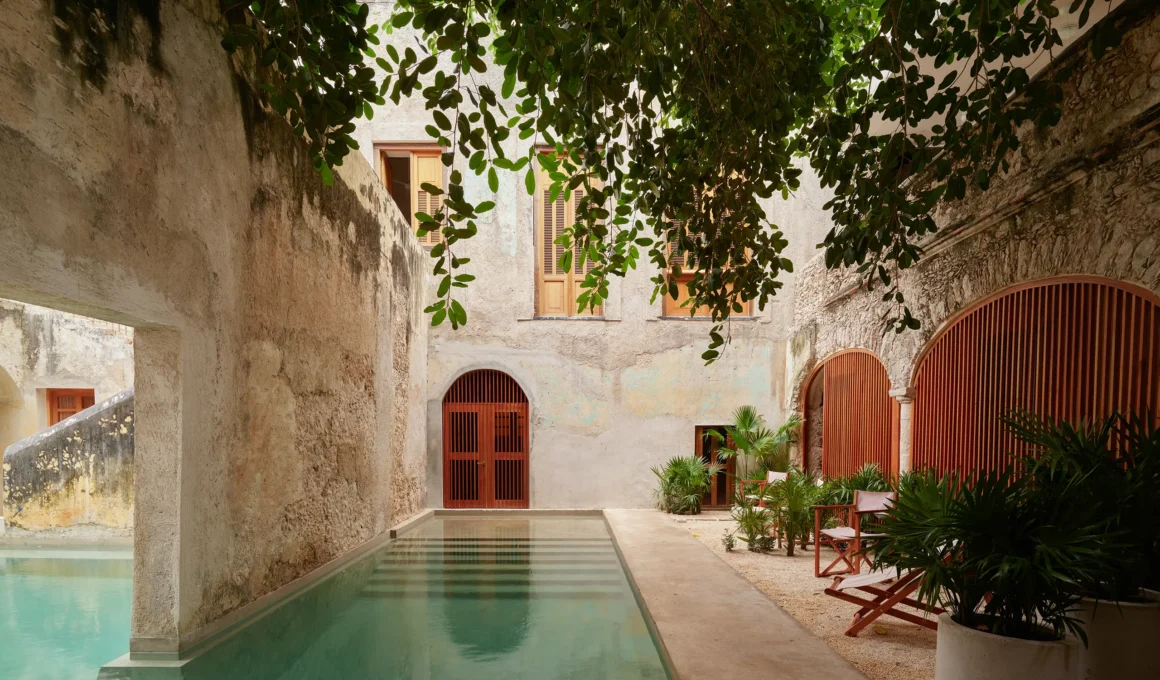
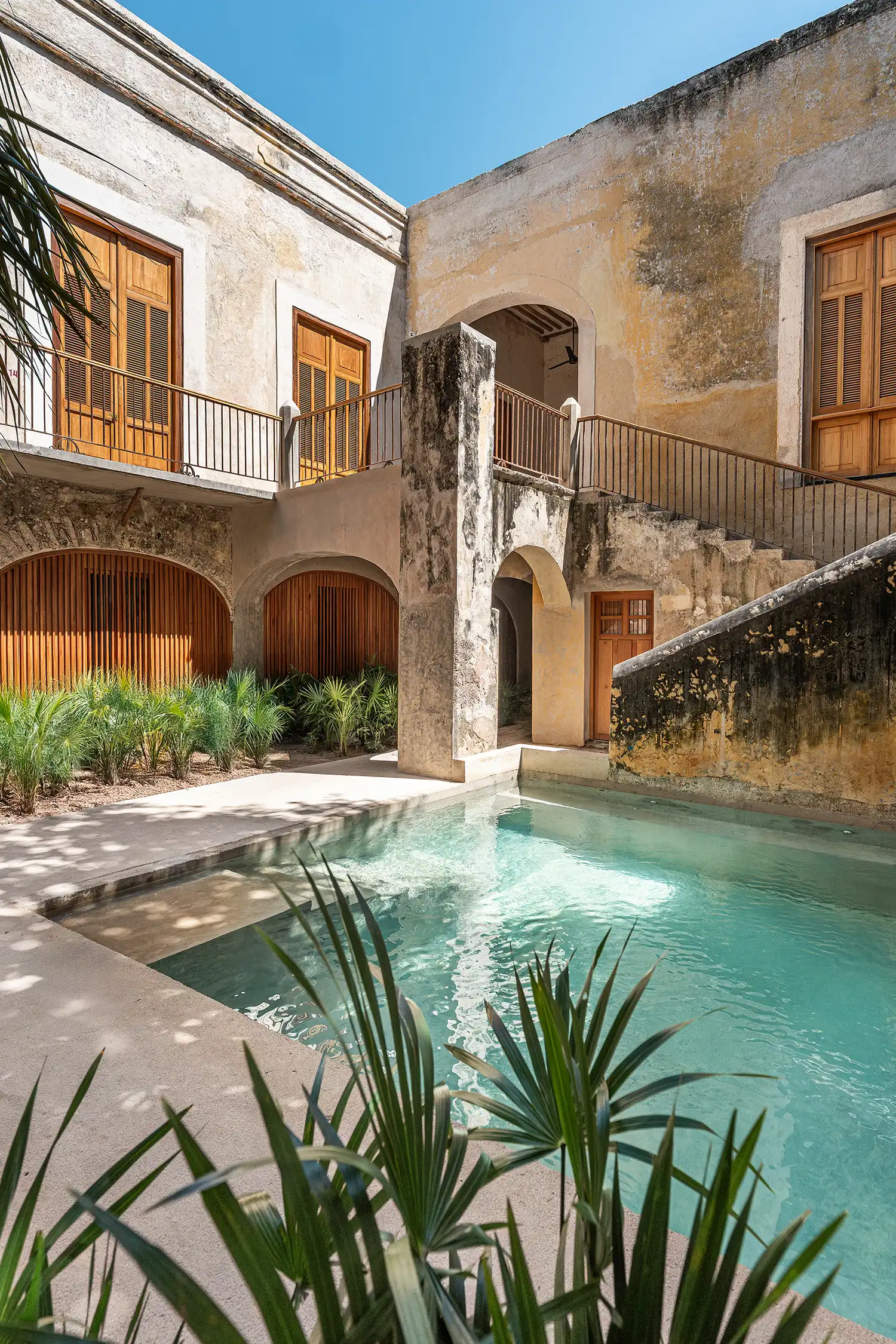
The hidden aquatic retreat. At the rear of the property, where horse stables once stood, Zeller & Moye have carved out a second, more private courtyard. This space is defined by a monolithic concrete pool, split into two zones by a preserved stone wall. An opening in the wall allows guests to swim through the historic fabric of the building, a literal movement between different eras of construction. This area emphasizes longevity and the “soul” of the building, a hallmark of Grupo Habita’s approach to neglected urban spaces.
A gateway to Merida’s cultural landscape. Located just one block from the Plaza Grande, the hotel serves as a strategic base for exploring the second-largest historic district in Mexico. The surrounding streets are a living museum of Spanish colonial buildings and Mayan remnants. To assist with navigation, each room features a digital concierge highlighting a curated selection of nearby galleries and markets, ensuring that the guest experience extends far beyond the physical boundaries of the property.
The evolution of Mexican hospitality. Hotel Sevilla joins a growing movement of projects that prioritize structural honesty and regional context. This approach to revitalizing historic urban fabric can also be seen in other recent openings across the country, such as the innovative hotel in Mexico City by PPAA, which similarly utilizes industrial materials to redefine local living. By embracing the scars and stories of the original hacienda, Zeller & Moye have created a space where history is not just preserved, but actively lived in.