



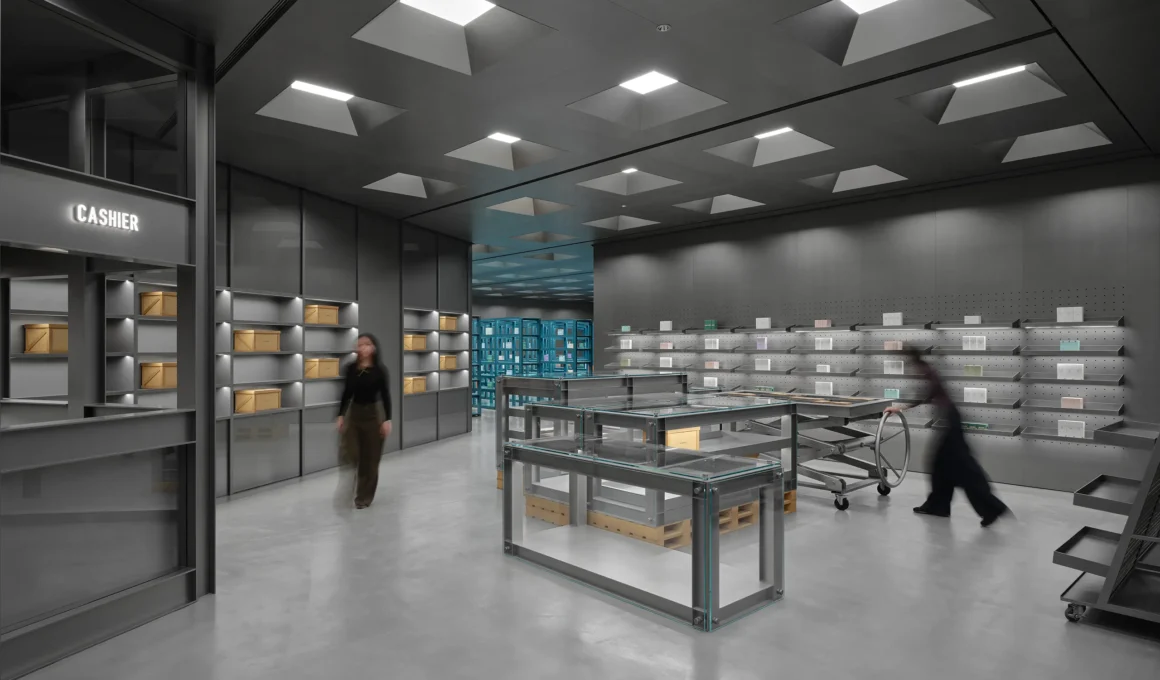
The new HARMAY flagship at Beijing’s Hopson One Mall, designed by AIM Architecture, transforms the utilitarian logic of a high-density storage facility into a sophisticated retail archive that redefines the act of shopping as a curated, artistic experience.
A shift in retail philosophy moves the conversation away from traditional commerce toward a deeper interrogation of how we interact with objects. By adopting the aesthetic of an art depot, the space suggests that beauty products are not merely commodities to be consumed but artifacts to be collected and archived. This conceptual pivot elevates the mundane ritual of browsing into a performative act of self-curation, where the customer takes on the role of an archivist selecting tools for their future identity.
The physical narrative begins with a vertical circulation system that rejects monumentalism in favor of pragmatic, industrial logic. A central metal staircase, seemingly stacked atop functional cargo boxes, connects the two levels while dissolving the typical hierarchies found in a mall setting. This integration of display and movement ensures that the journey through the store feels like an exploration of a working warehouse, where every step reveals a new layer of the “collection.”
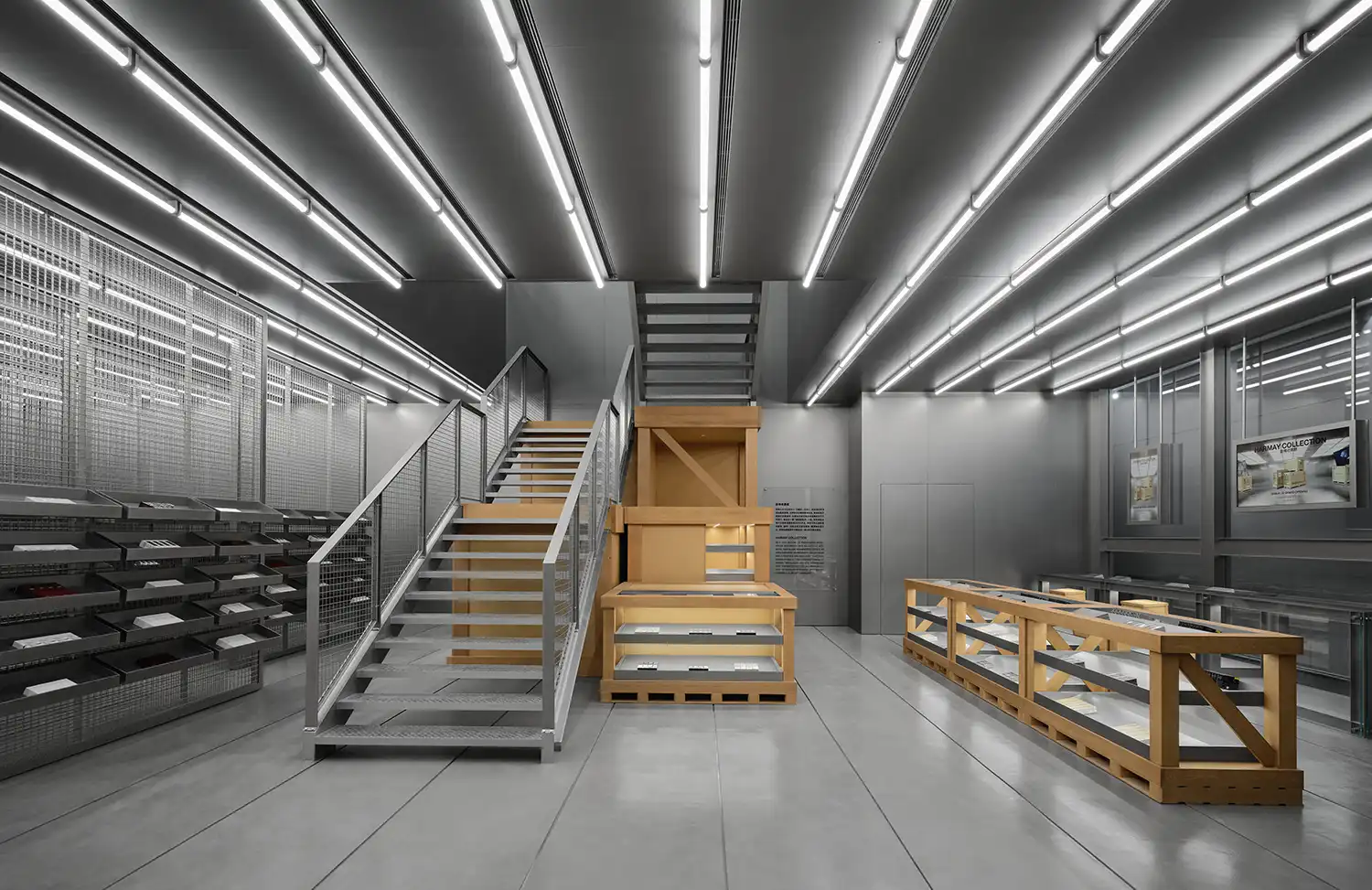
Technical precision and materiality define the sensory experience within the 520-square-meter space. The palette is a restrained composition of stainless steel, glass, polished concrete, and timber—materials that feel raw yet meticulously refined. By stripping back decorative flourishes, AIM Architecture allows the industrial systems to provide the framework, creating a minimalist environment that feels both futuristic and grounded in the reality of logistics.

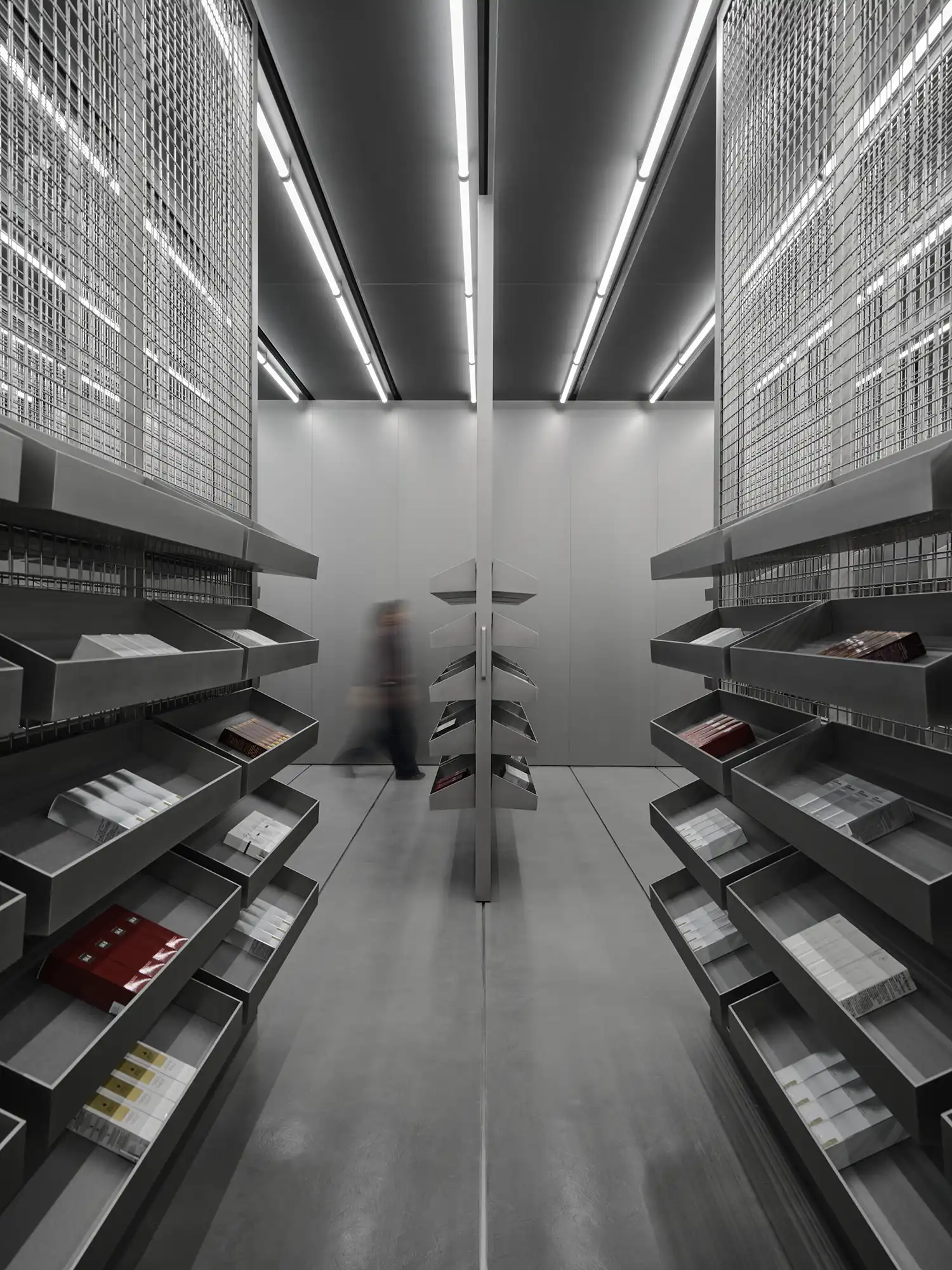
Adaptive spatial systems allow the environment to remain in a state of flux, much like a living archive. Movable metal mesh panels and overhead shelving units create a flexible grid that can be reconfigured as the inventory evolves. This modularity reinforces the idea that the store is a functional repository rather than a static showroom, inviting visitors to engage with the rhythm of a space that feels constantly “in-work.”
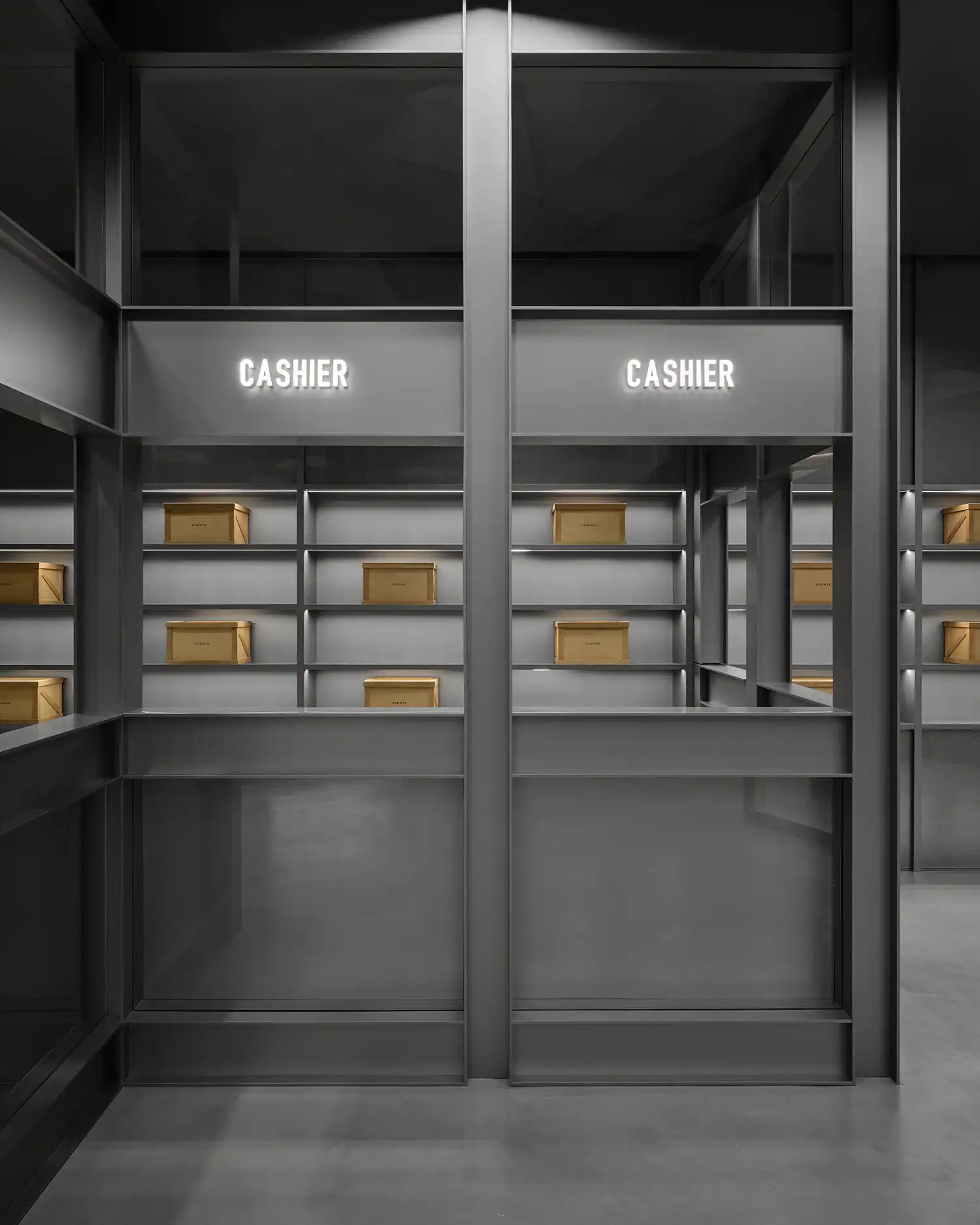
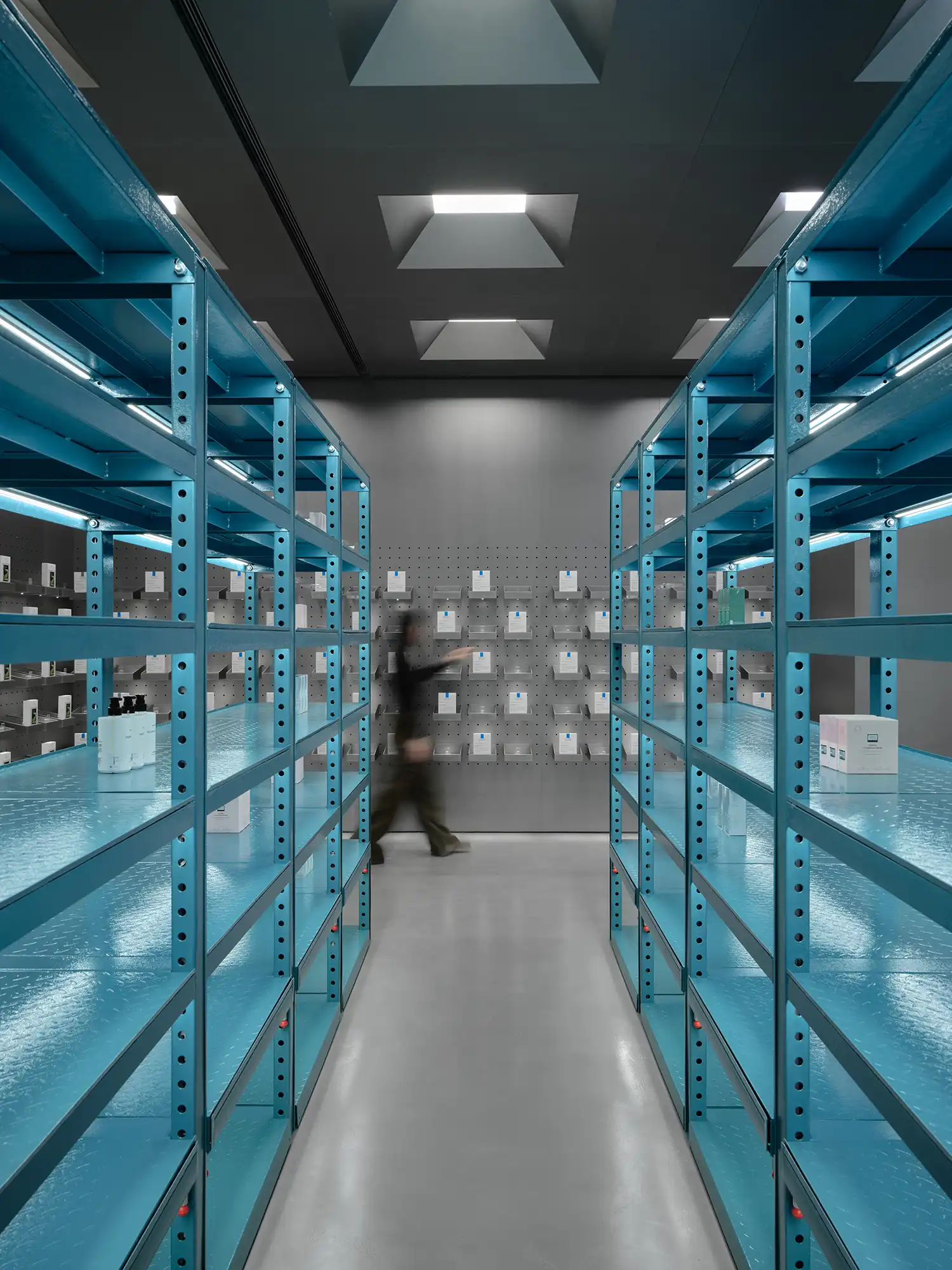
The upper level transitions into a more intense archival experience, featuring long, rhythmic display sequences and dedicated cabinets for specific collections like K-Beauty and face masks. Integrated lighting is used strategically to create depth and clarity, guiding the eye across rows of products with a precision usually reserved for museum storage. This orderly atmosphere fosters a sense of calm and focus, encouraging a more conscious and deliberate selection process.
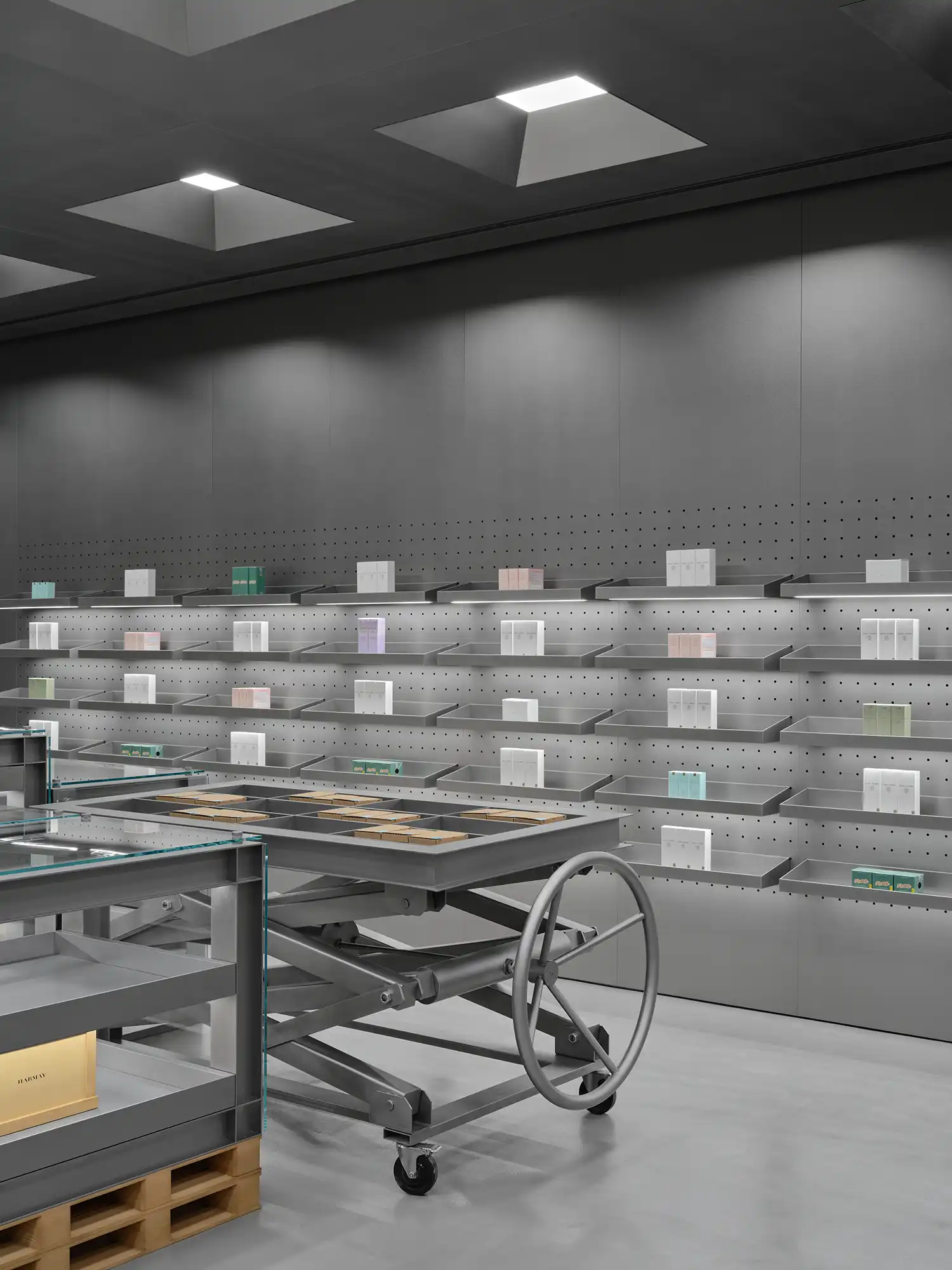
Contextual impact and community are at the heart of the HARMAY brand, which has consistently used its physical locations to foster a unique sense of discovery. By repurposing the language of art handling for a democratic retail setting, the project suggests that the care and order we apply to preserving art can be applied to the way we structure our daily lives. The store becomes a manifesto for intentionality, where the act of “building oneself” is mirrored in the architectural assembly of the space.
This latest Beijing flagship continues a long-standing collaboration that has previously explored diverse industrial themes, from the travel-inspired terminal aesthetics of the Shanghai Hongqiao Airport location to the raw, stripped-back pharmacy vibe of the Hong Kong store. In each instance, the design challenges the status quo of the beauty industry, proving that a rigorous, archival approach can turn a simple transaction into a meaningful cultural exchange.