

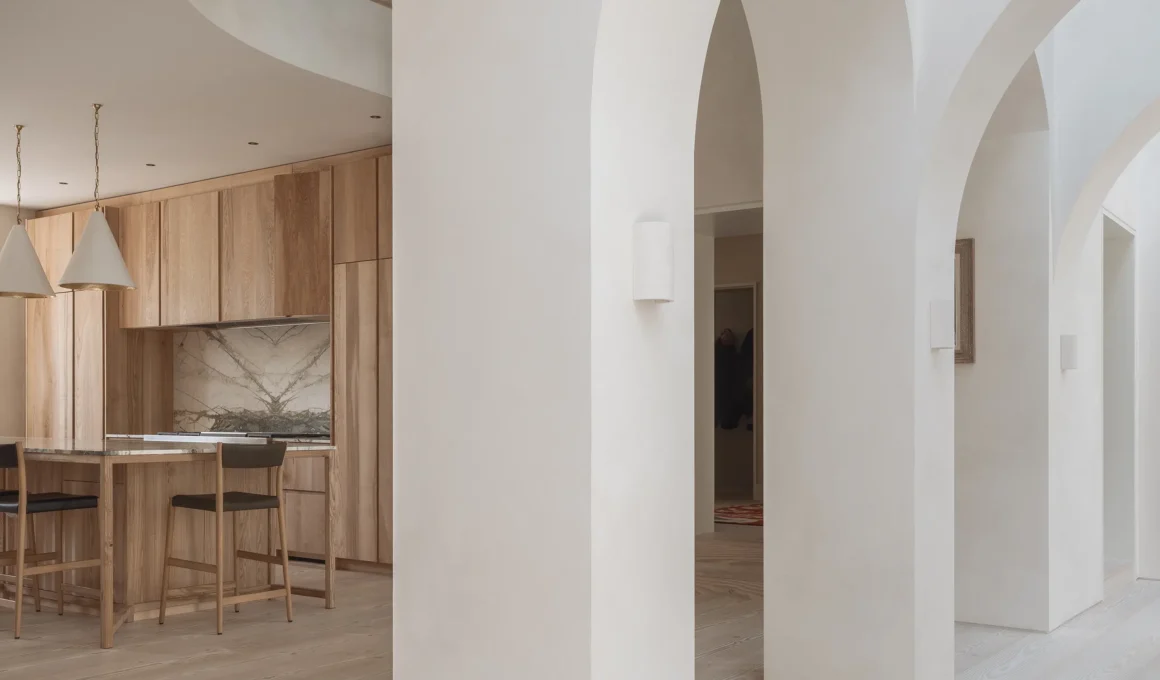
The West London House, a four-story lateral extension and profound transformation of a Victorian end-of-terrace home in Stamford Brook by Goldstein Heather, reclaims a former military site to create a 500-square-meter family residence that balances historical restoration with bold, contemporary geometry.
A vision of permanence guided the collaboration between the homeowners and Goldstein Heather, moving away from ephemeral trends toward a material palette that feels inherently perennial. Faced with a narrow, disjointed Victorian floorplate that often left the family of five feeling isolated within their own walls, the project evolved when the neighboring 1930s “Expedition House” became available. This wasn’t merely an addition; it was a conceptual rethinking of urban living, where the weight of brickwork and the softness of sculpted curves create a sense of grounded luxury.
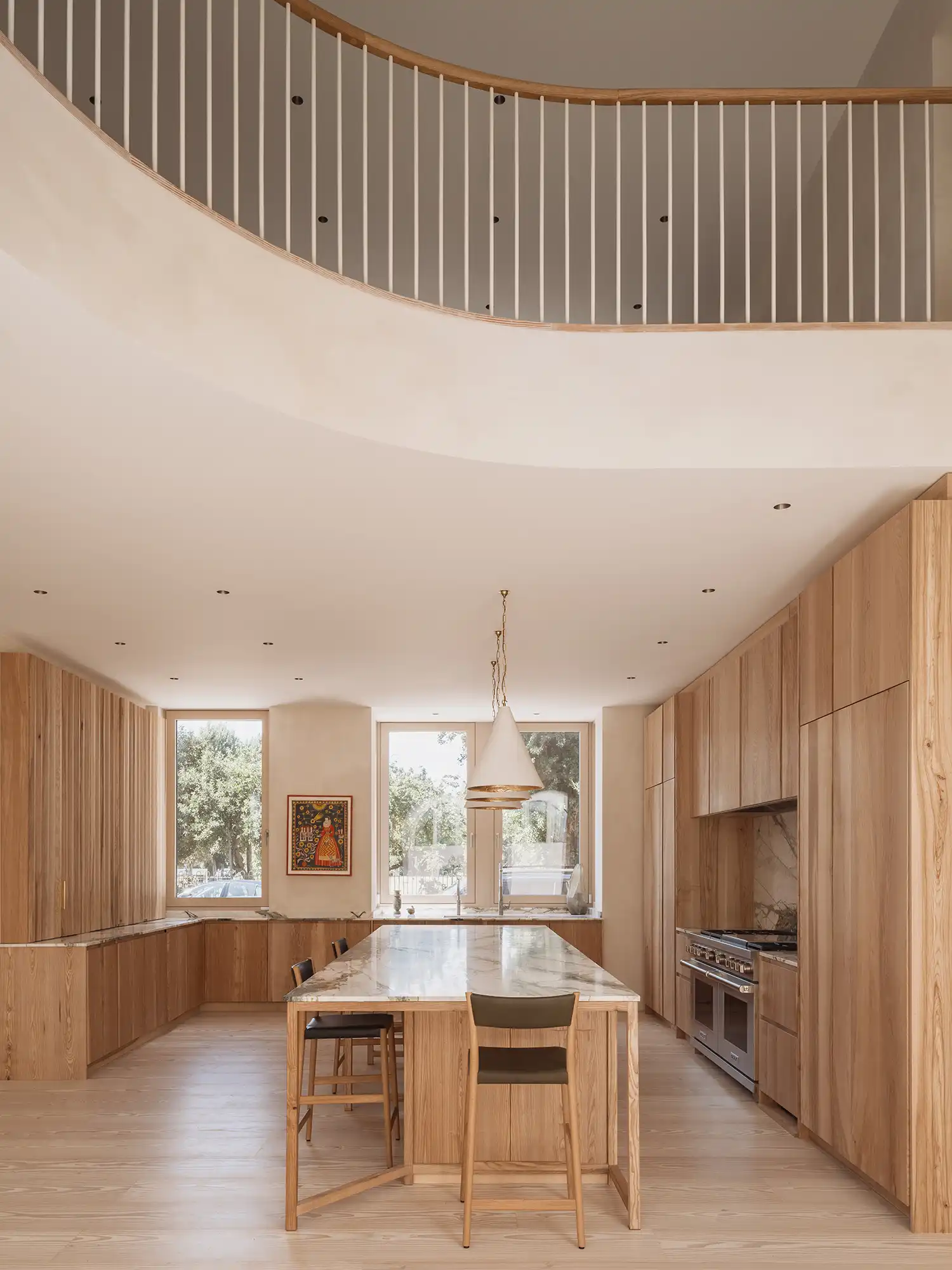
The sensory experience of the home is defined by a sophisticated choreography of light. By utilizing the rare east-west exposure of the site, the architects introduced a soaring double-height volume that acts as the building’s lungs. Standing in the kitchen, one feels the verticality of the space, anchored by a large pendant light that bridges the visual gap between the culinary hearth and the lounge above. It is an architecture of glimpses—tree-tops through high-level skylights and the greenery of the park across the street framed like living canvases.
Technical precision meets artisanal craft in the kitchen, a space developed in partnership with Sebastian Cox. Here, the tactile quality of bespoke ash joinery and a long, green-veined marble island provide a sturdy centerpiece for domestic life. The cabinetry features a distinctive “crinkle” pattern, a subtle textural motif that echoes the accordion-form facade of the building’s third story. This repetition of form ensures that the interior language is inextricably linked to the external skin, creating a unified aesthetic experience.
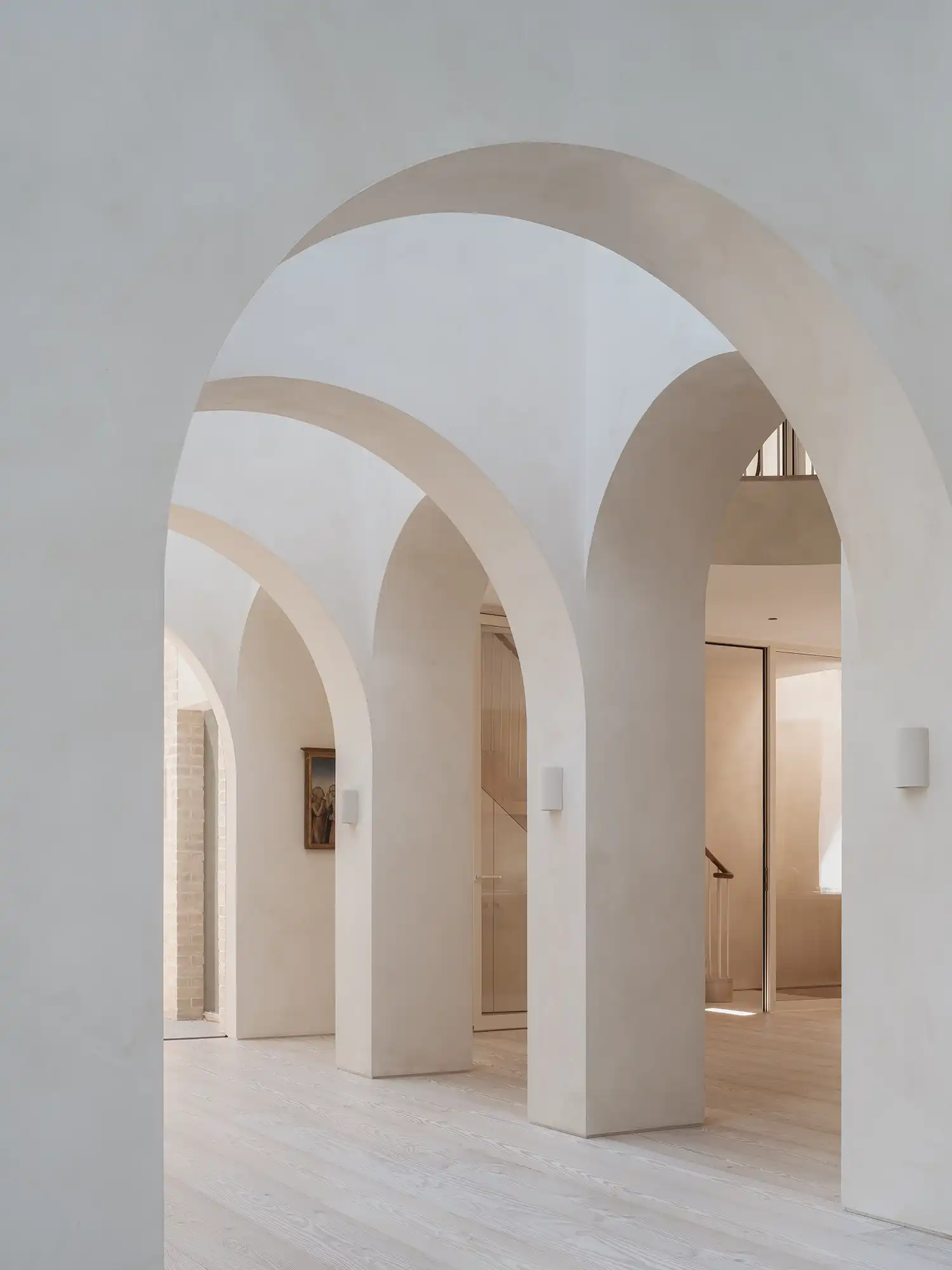
Fluidity and social cohesion drive the layout of the ground floor, which has transformed the way the family interacts. “With Goldstein Heather, we were able to create a light-filled, connected home that suits the way our family lives,” notes client Rowan Bamford. “It’s been designed with the future in mind. A space where our children can stay longer if they choose, and where Angelina’s mum and sisters always have a place to stay.” This multigenerational foresight is reflected in the ability to host twenty-five guests with ease, allowing different age groups to find their own rhythm without feeling disconnected.
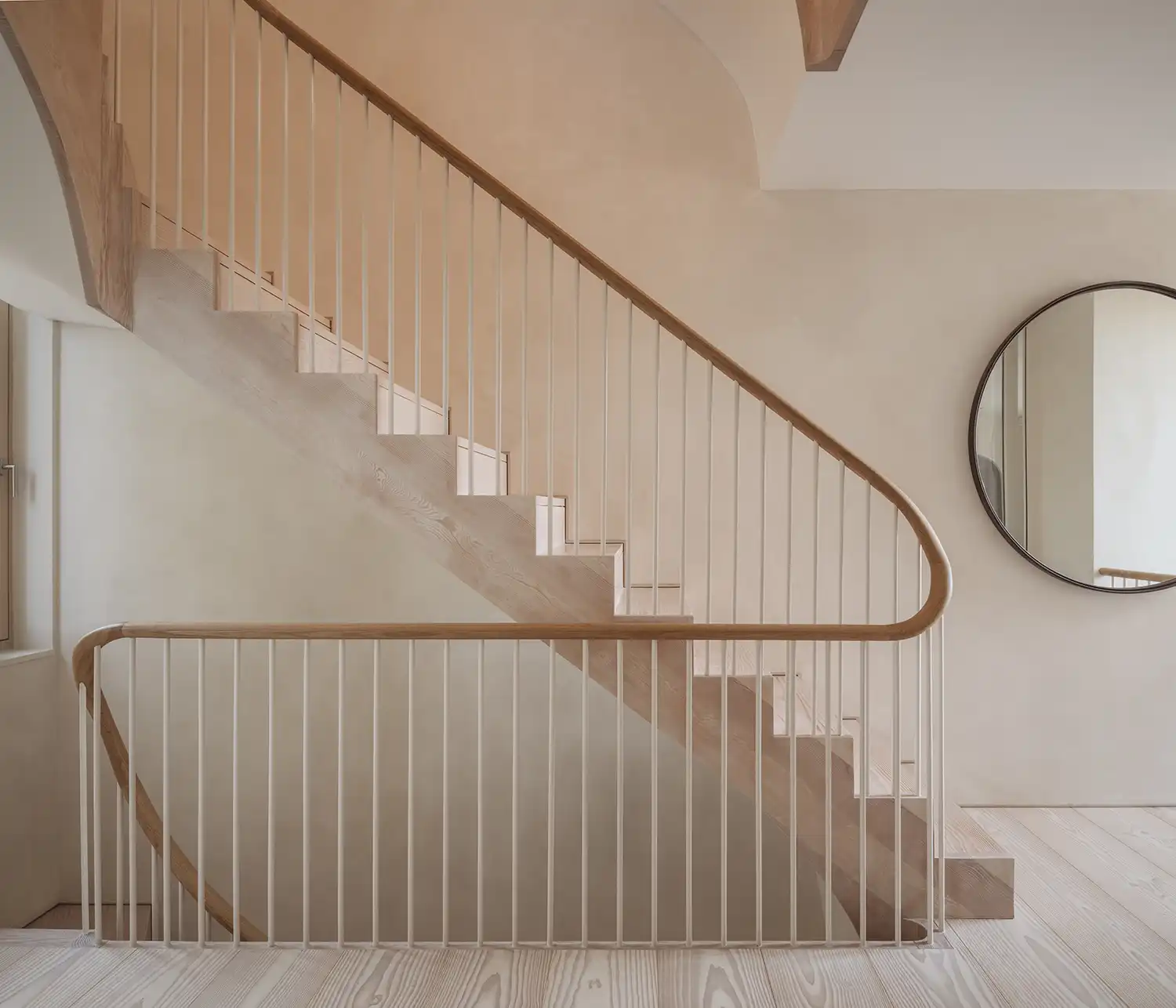
The vertical journey through the house is facilitated by a graceful curving timber staircase that threads through the levels. As one ascends, the landings progressively widen, and the abundance of natural light increases, creating a transition from the communal energy of the ground floor to the quietude of the sleeping quarters. On the third floor, an interconnected suite for the three children spans both the original and new volumes, offering a flexible environment that can be adapted as they seek further autonomy in the years to come.
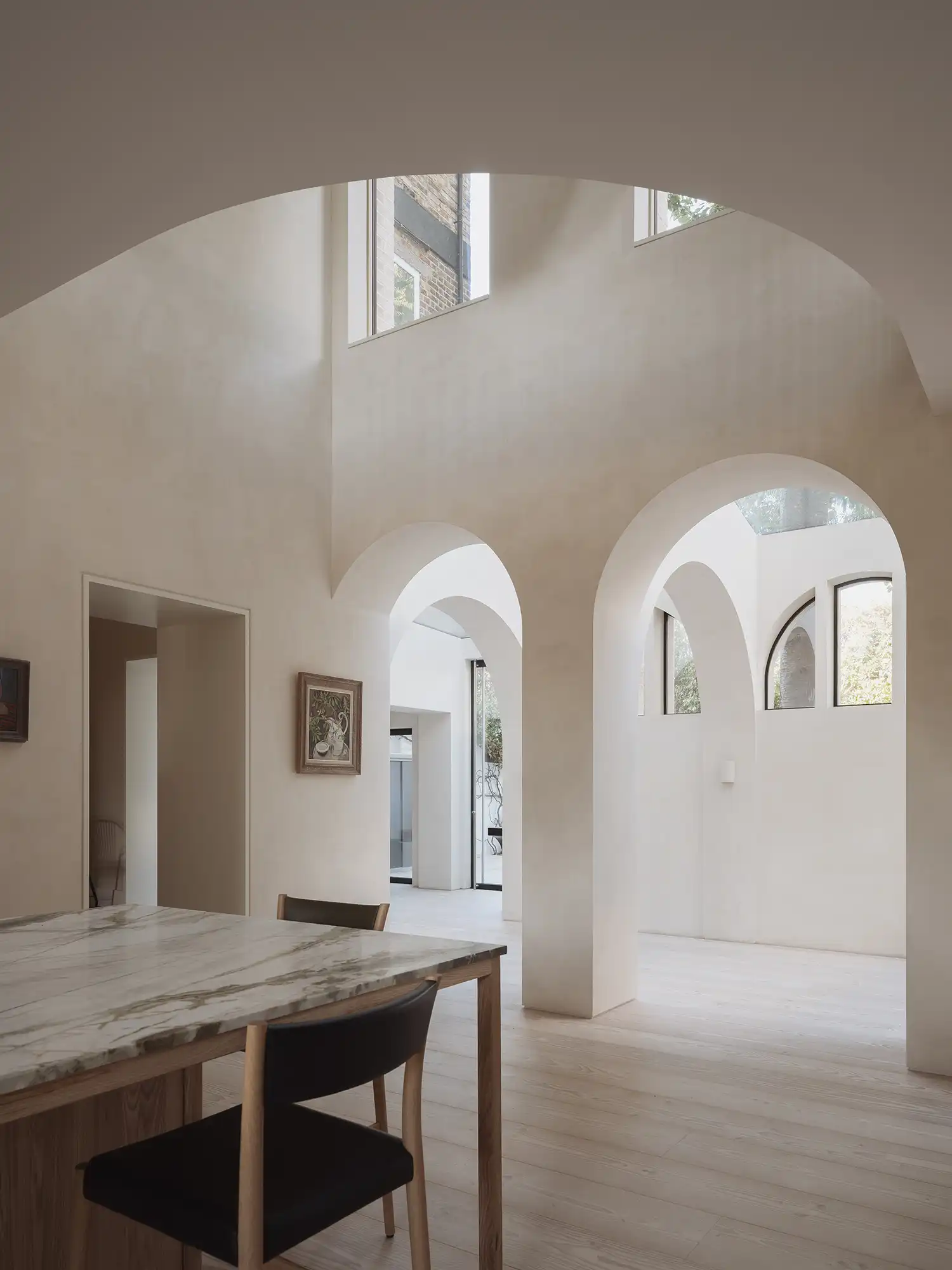
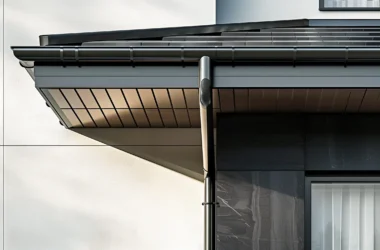
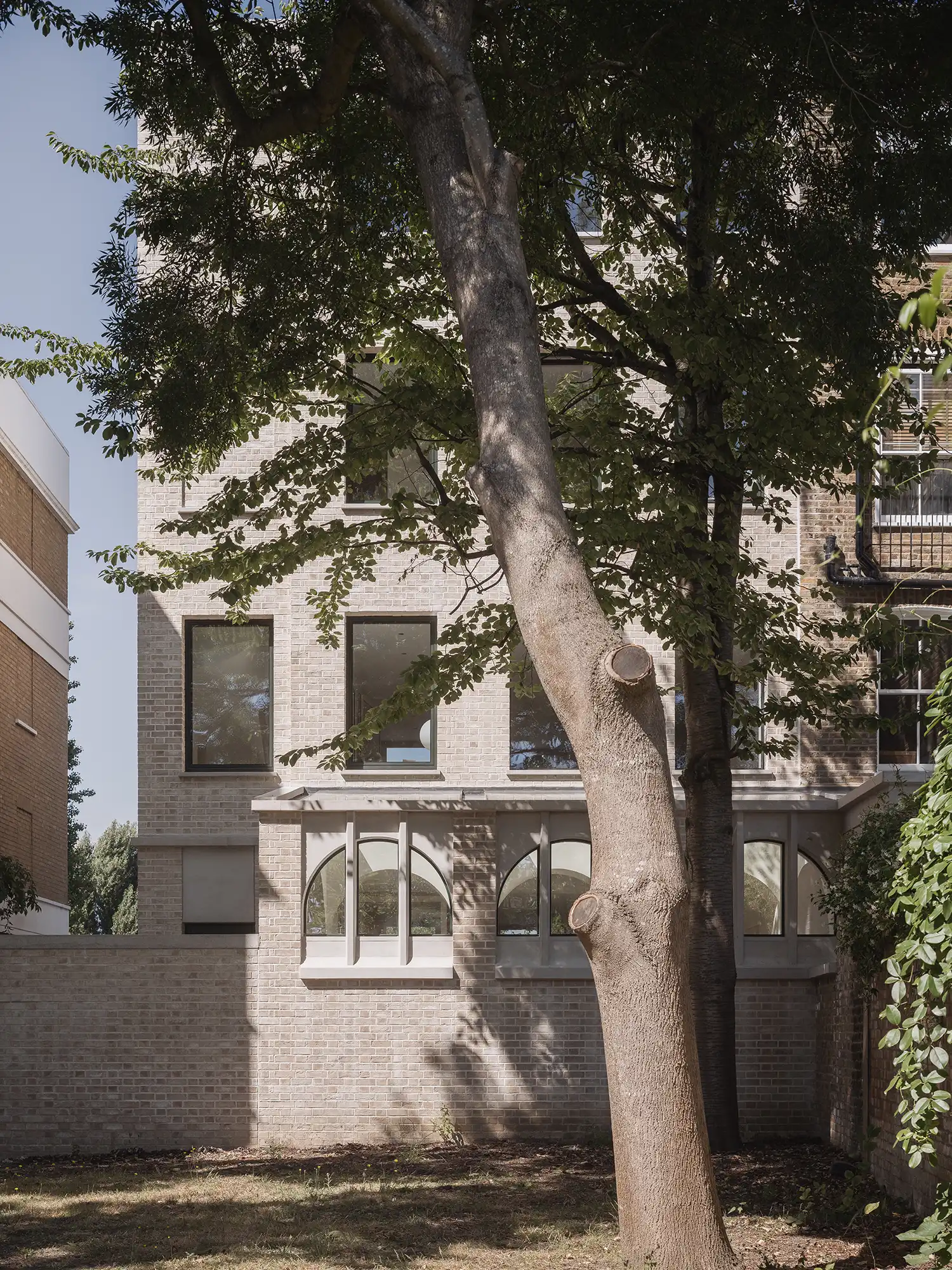
Contextual sensitivity defines the external expression, where the original Victorian facade was meticulously restored by stripping away years of white paint to reveal the honest brickwork beneath. The new extension speaks a different but complementary language, utilizing a lighter yellow brick and a rhythmic, pleated facade on the upper level. This “accordion” geometry successfully breaks down the massing of the large addition, ensuring the structure sits comfortably within the Stamford Brook streetscape while signaling its contemporary soul.
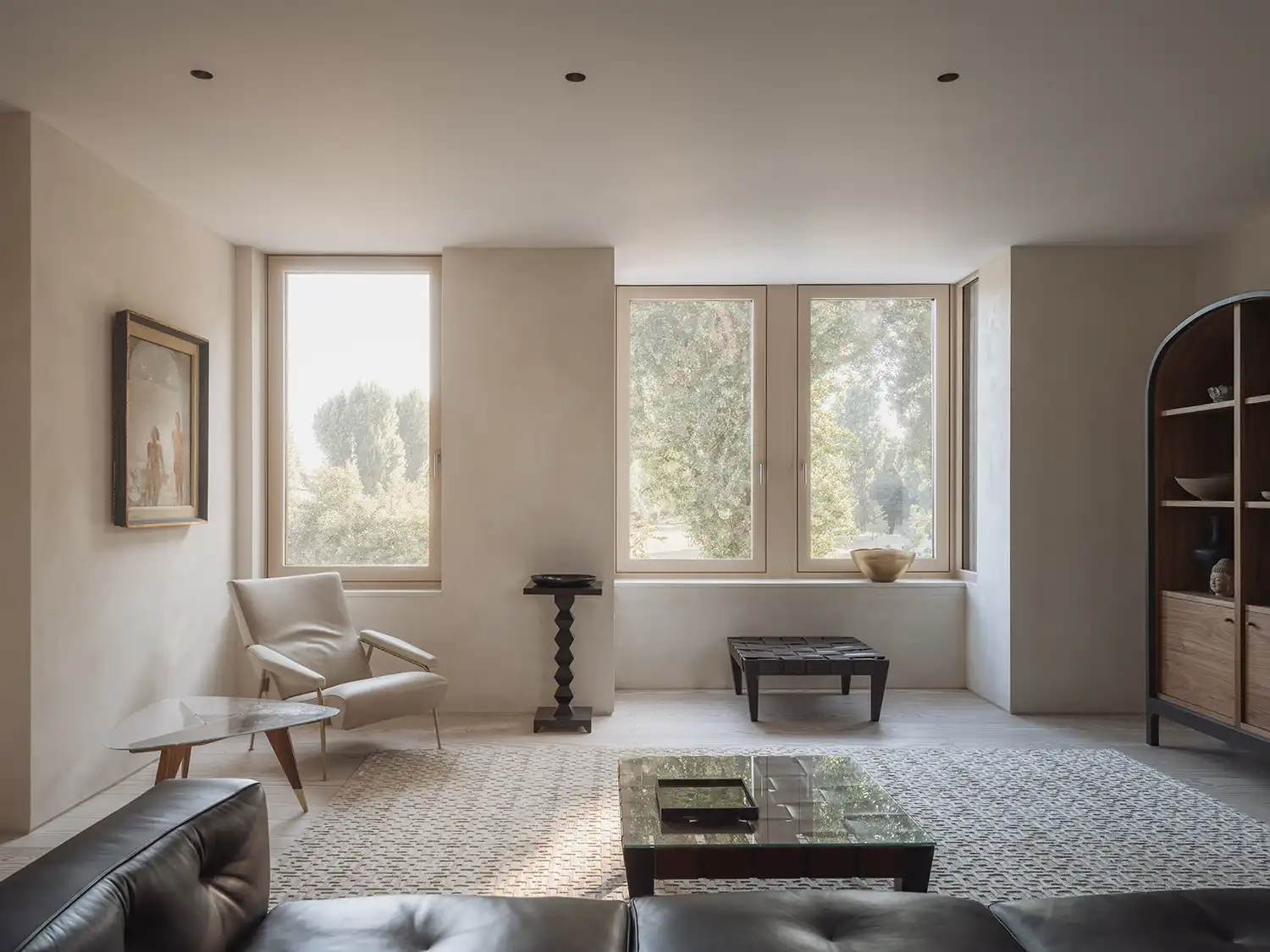
Sustainable performance was integrated into the core of the build rather than added as an afterthought. High-performance insulation and a roof array of solar panels allow the home to operate near carbon-neutral during the summer months. Giles Heather, Director at Goldstein Heather, reflects on the project’s success: “The West London House crystallizes the design ethos of our studio… we have been able to realize a house that is at once completely of its time and yet perennial. We are delighted that we have achieved a unified vision.”
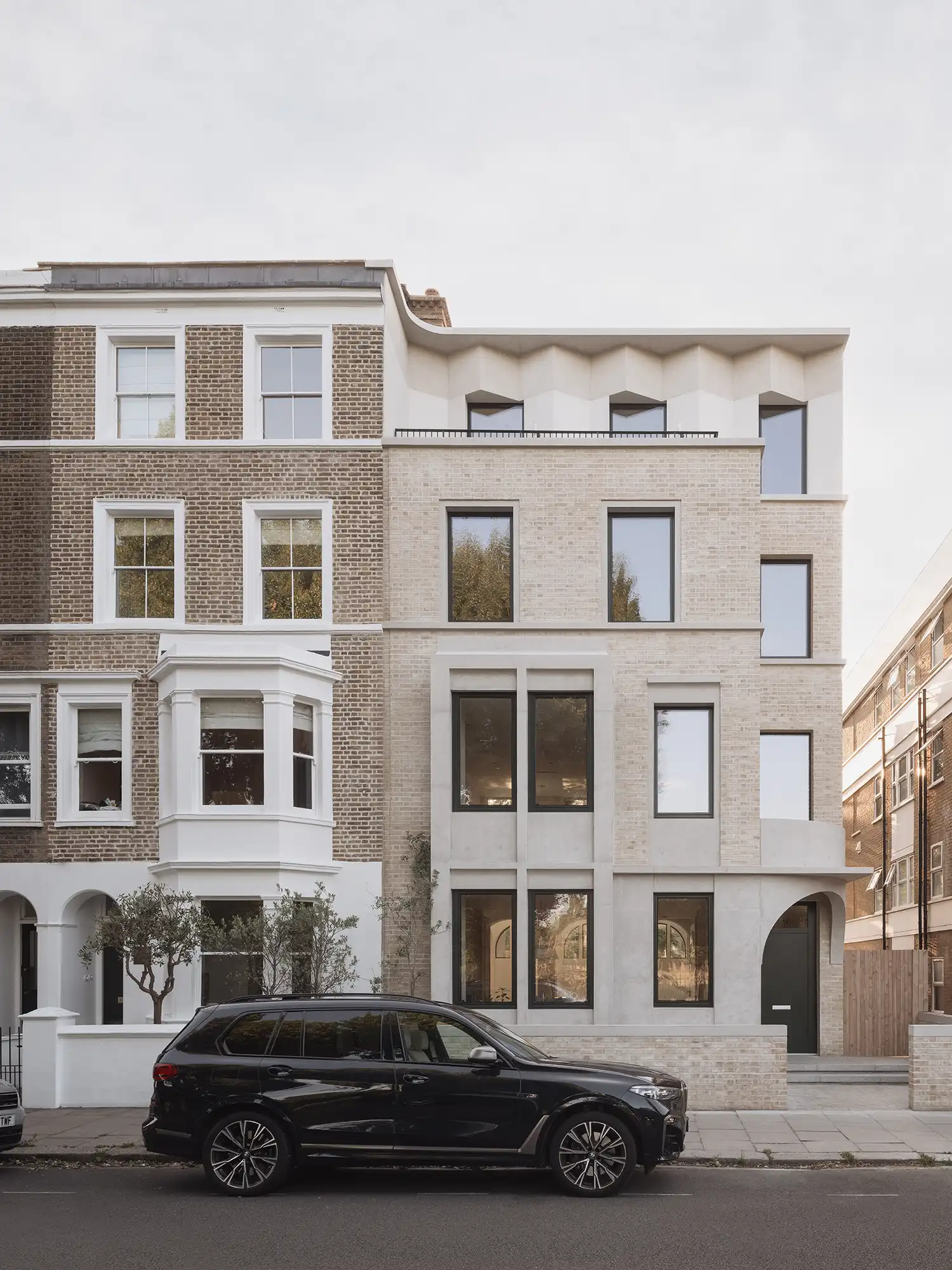
The radical evolution of this Stamford Brook residence is indicative of a broader intelligence in modern urban planning. Rather than adhering to the constraints of a traditional terrace, this project demonstrates the immense potential of ambitious residential renovations to breathe new life into the city’s existing fabric. By choosing to expand and de-carbonize within an established neighborhood, Goldstein Heather and their clients have proven that the most sophisticated path forward is often found by reimagining the boundaries of the homes we already inhabit.