


The spatial recomposition of the Colosseum’s southern ambulatory, designed by Stefano Boeri Interiors in collaboration with architect Giorgio Donà, restores the monument’s ancient base and pedestrian legibility through a meticulous intervention in Rome, Italy.
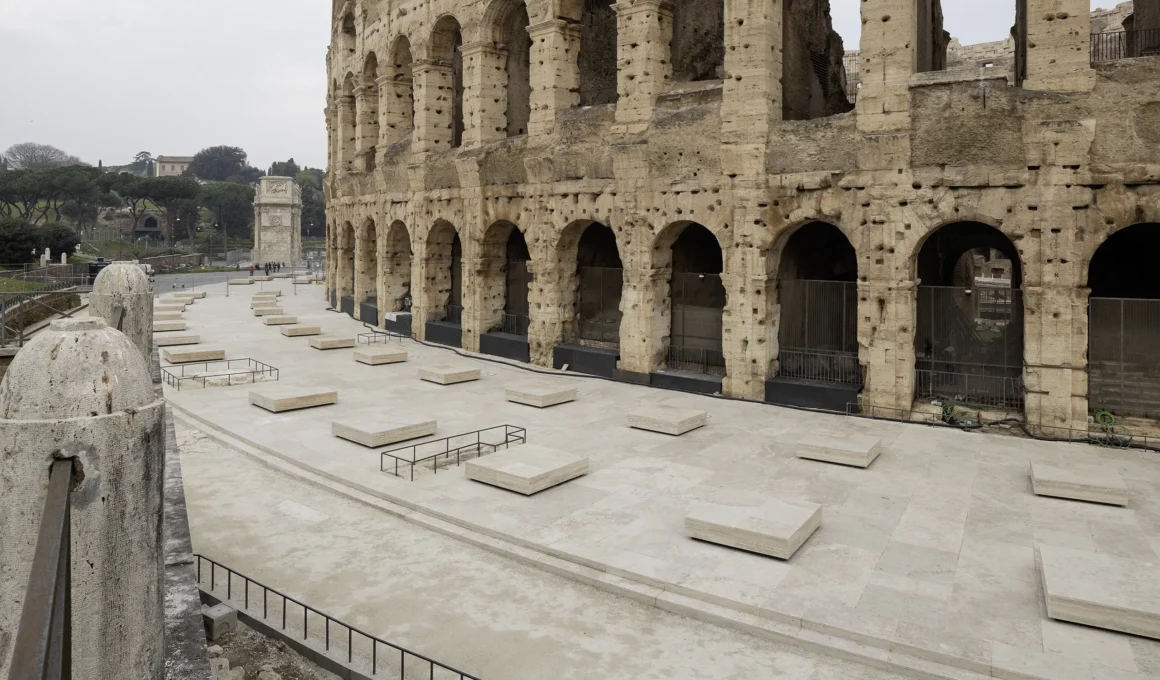
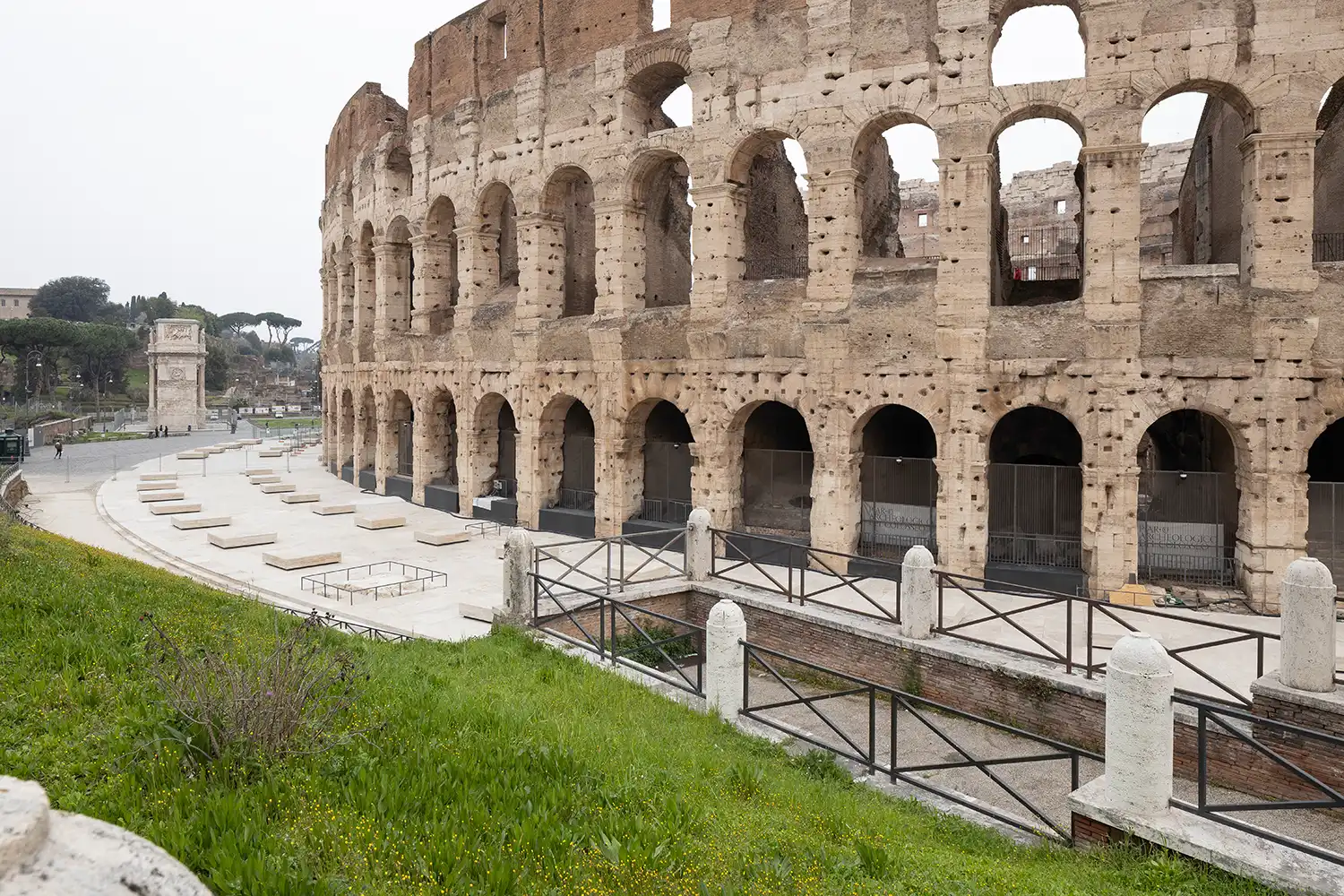
A conceptual vision rooted in history defines the essence of this project, which seeks to reconcile the contemporary urban fabric with the monumental scale of the Flavian Amphitheatre. By lowering the surrounding piazza levels by approximately one meter, the team has unearthed the ancient crepidine—the double-stepped perimeter that originally anchored the structure to the ground. This physical descent into the past allows visitors to experience the monument’s true verticality, moving away from a modern, flattened perspective and toward a more authentic encounter with the Roman stonework and its historical depth.
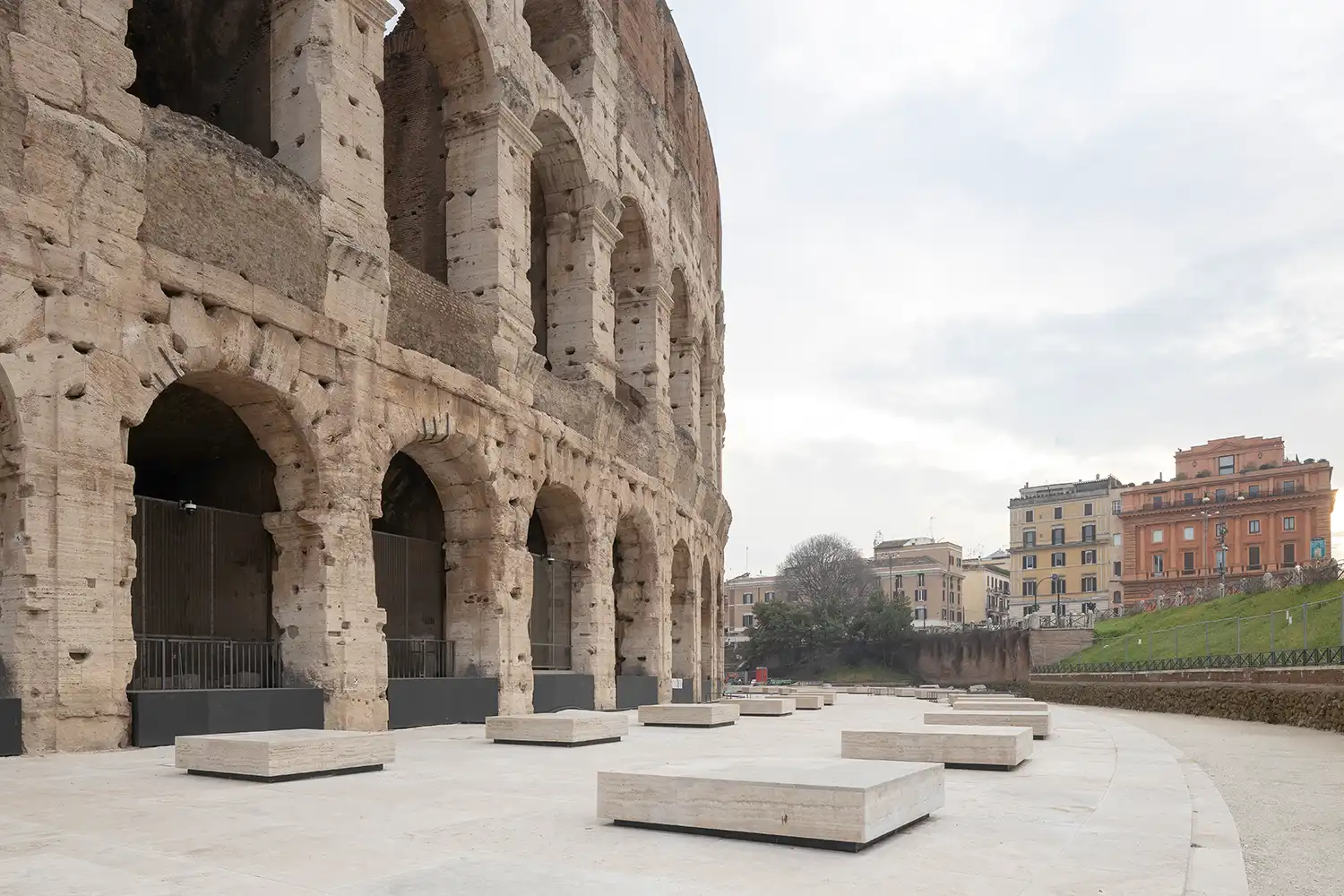
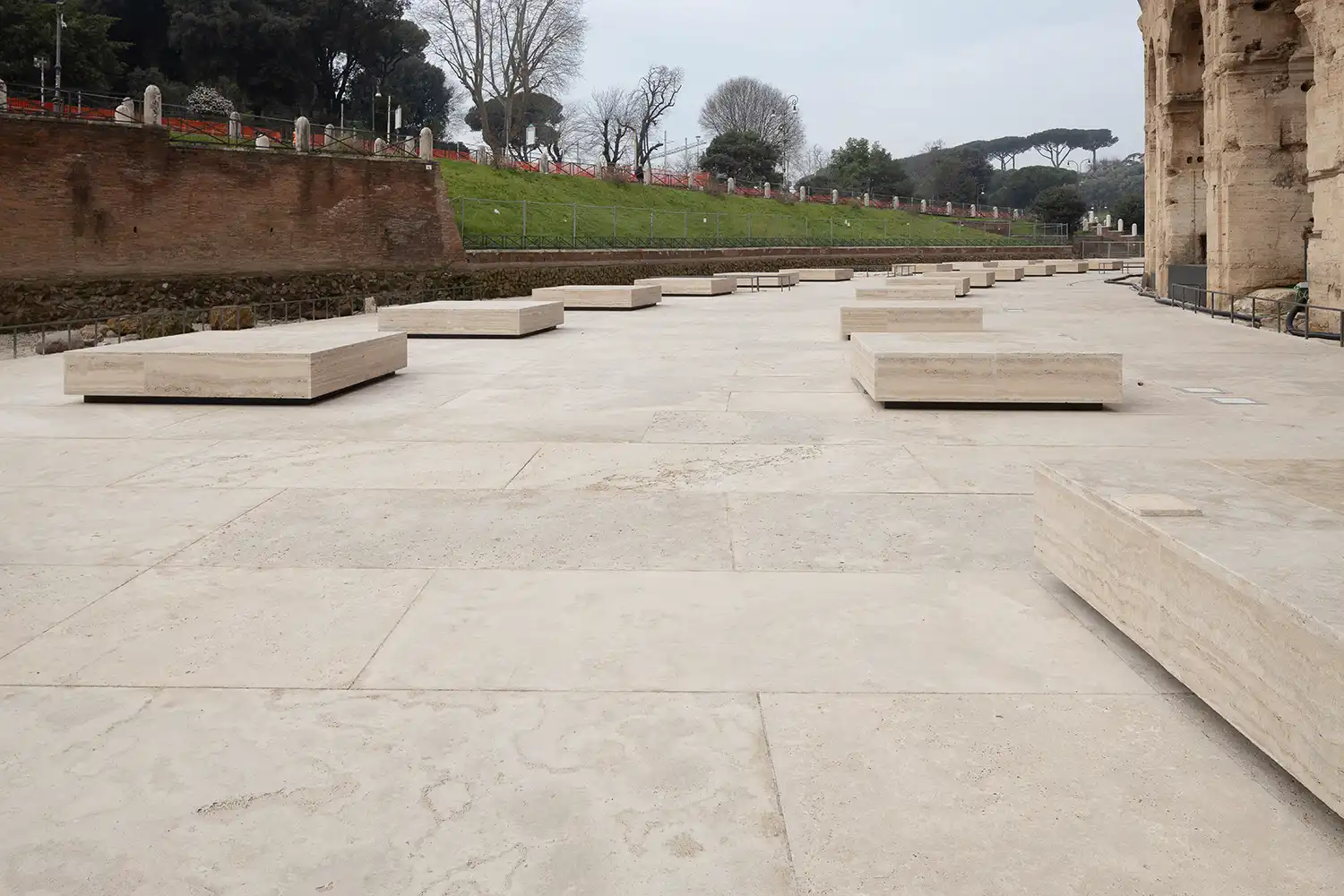
Tactile material continuity is achieved through the extensive use of Classic Travertine from the Cava del Barco, selected and cut along its bedding plane to mirror the chromatic qualities of the surviving Roman surfaces. The ground plane is a sophisticated paving system that interprets the monument’s radial geometry using trapezoidal slabs aligned with the optical axes of the arches. This layout effectively turns the ambulatory into a visual compass, while the technical integration of regular bays and compensation strips absorbs the geometric variations caused by the building’s iconic curvature.
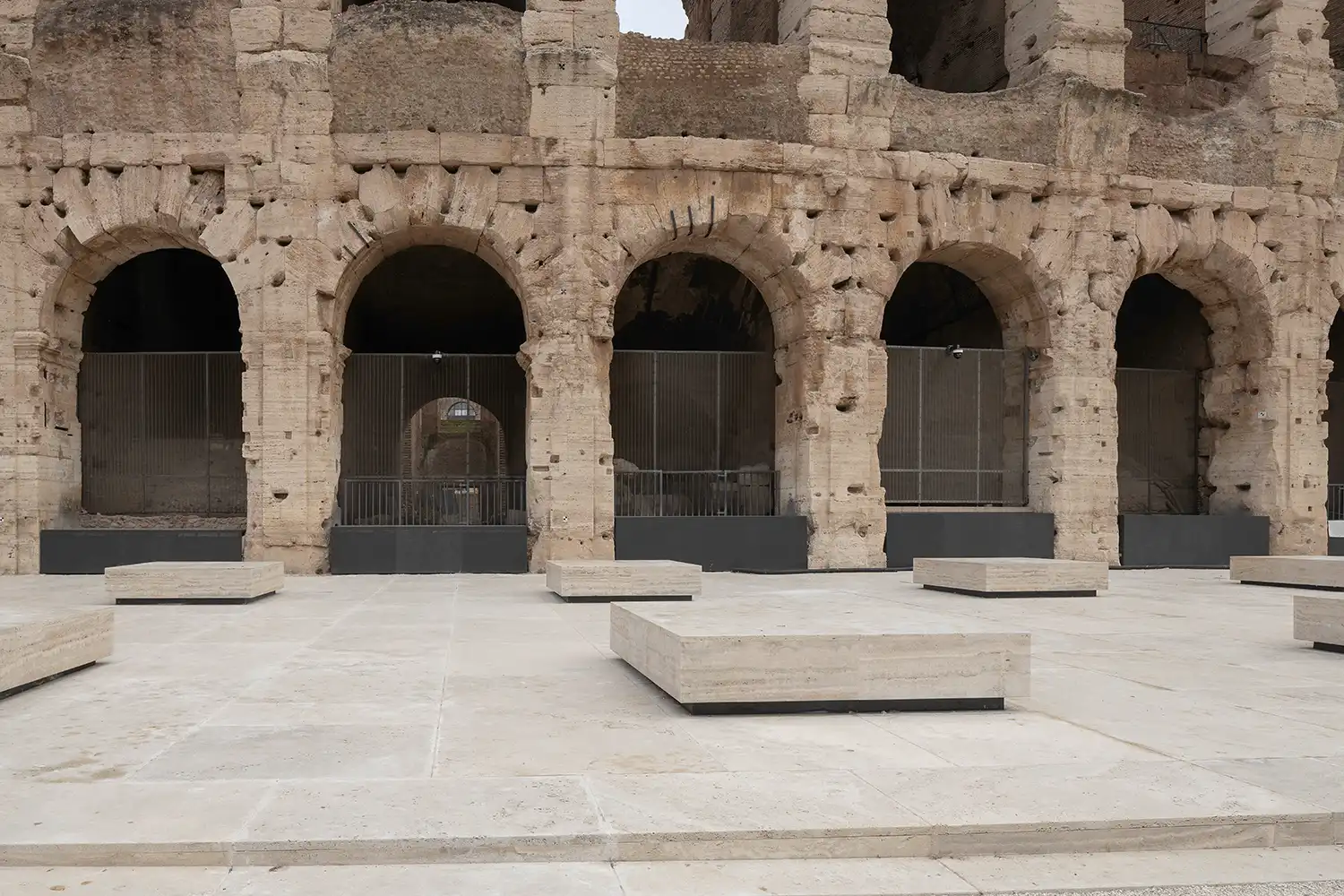
Physical echoes of lost structures are integrated into the landscape through a series of “imprints” that mark the locations of disappeared supporting pillars. Stefano Boeri Interiors has utilized 44 extruded travertine elements that stand 40 centimeters high, acting as both historical markers and public seating. For circulation nodes, flush elements with a bush-hammered finish provide a subtle tactile cue for visitors, ensuring the narrative of the site is felt underfoot without obstructing the flow of the thousands who traverse the piazza daily.
Accessibility and inclusivity have been woven into the historical fabric, ensuring the experience of the southern ambulatory is continuous and navigable for all. New access ramps at the southern annex allow for a seamless transition between the modern street level and the restored historical elevation, treating modern infrastructure as an integrated component of the spatial configuration. This approach to legibility mirrors the visitor route at the Basilica of Maxentiusby Alvisi Kirimoto, where contemporary structures are used to unlock the secrets of complex archaeological ruins.
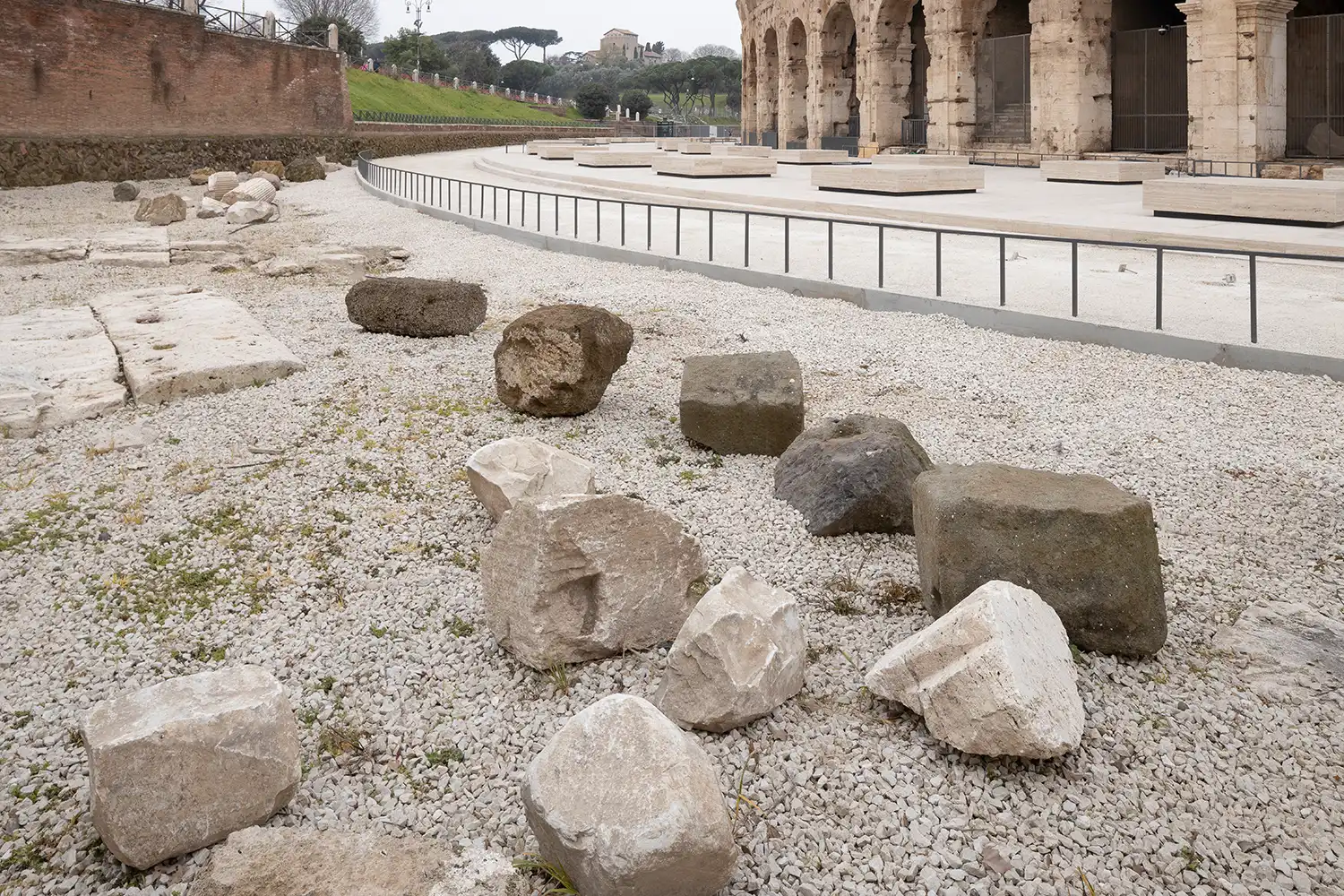
The archaeological window located between arches 65 and 71 offers a rare moment of transparency, breaking the pavement to reveal the foundations and historical stratifications below. This segment, protected by tuff blocks and glass railings, exemplifies the project’s commitment to reversibility, ensuring that contemporary additions can be modified without damaging the ancient masonry. Simultaneously, the reintroduction of progressive Roman numerals on the ground restores a sense of human-scale navigation, mimicking the 40-centimeter height of the ancient characters that once guided spectators to their seats.
Bridging the ancient and the contemporary is a delicate task that proves these sites are not static relics but evolving urban spaces. Much like the recent revitalization of the Gallery of the Kings at the Museo Egizio in Turin by OMA, where modern light and spatial flow were introduced to an iconic setting, this intervention at the Colosseum proves the value of high-profile architectural dialogue. When international studios engage with these landmarks, they provide the technical and narrative tools for the public to engage with history in a way that is profoundly relevant to the present.