



The evolution of the domestic landscape has reached a point of total transparency, where the distinction between interior comfort and exterior exposure is effectively erased. Integrating an outdoor kitchen is the definitive step in learning how to design an outdoor living space that feels cohesive and intentional. This editorial explores the critical infrastructure of the external hearth, examining how the synthesis of marine-grade metallurgy, sintered stonework, and strategic zoning can transform a simple patio into a sophisticated architectural extension capable of weathering the elements while fostering collective ritual.
The Tectonic Stack: Material Science in the Open Air
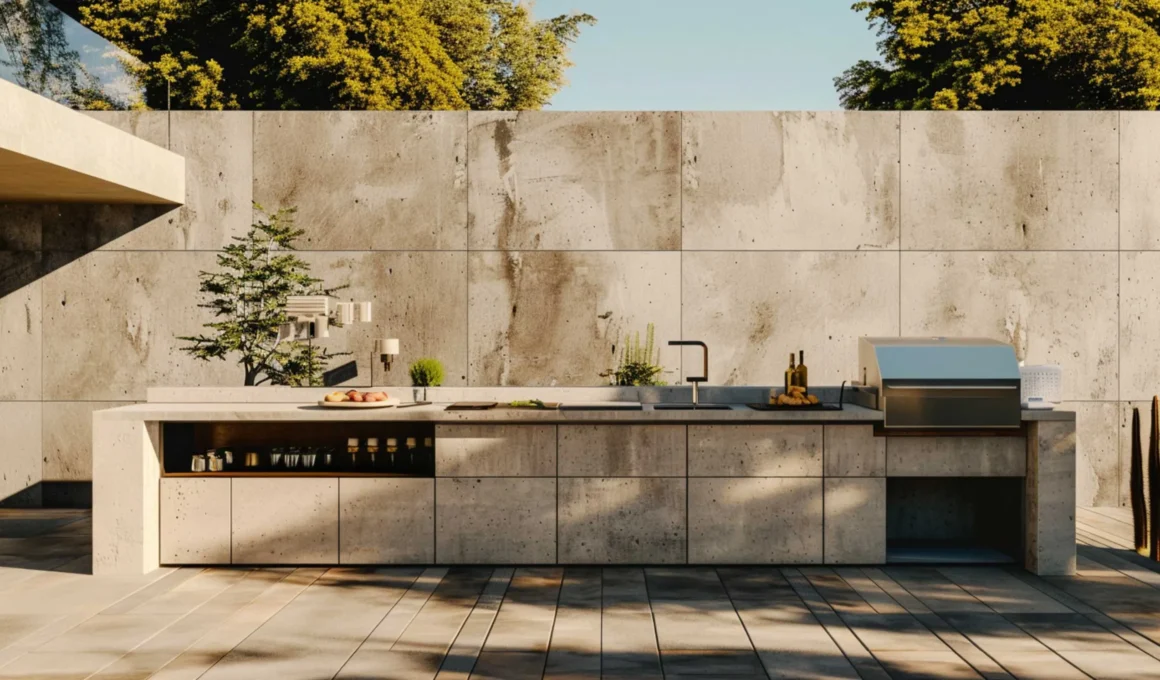
In the open-air environment, materiality is not an aesthetic choice but a structural mandate. The primary failure of many exterior projects lies in the application of interior-grade specifications to a landscape defined by thermal shifts and UV radiation. A professional-grade outdoor kitchen design must prioritize a skeletal framework of 316-grade stainless steelor powder-coated aluminum. This “tectonic stack” ensures that the kitchen remains a permanent volume within the garden, where the weight of the stone surfaces—ideally non-porous sintered stone—provides a grounding presence that resists the freeze-thaw cycles of the changing seasons.
Choreographing the Four Zones
A successful outdoor layout is defined by its “social flow,” a deliberate mapping of movement that prevents the cook from becoming isolated. By organizing the space into four distinct functional zones—Hot, Cold, Wet, and Dry—the kitchen operates with the precision of a professional laboratory. The Dry Zone, often the most underestimated component, provides the essential landing space for preparation and service. When these zones are sequenced correctly, the transition from the “Hot Zone” of the grill to the “Cold Zone” of refrigeration becomes intuitive, allowing the act of cooking to remain a fluid, effortless performance.
Infrastructural Sophistication and Lighting
Beyond the visible surfaces, the longevity of an outdoor kitchen depends on the invisible infrastructure. Precise task lighting is a functional necessity, integrated into the cabinetry to ensure safety after twilight. For kitchens positioned under pergolas, high-capacity ventilation systems are required to manage smoke and grease. Following the latest outdoor kitchen trends, we are seeing a shift toward “hidden” utilities where gas lines and electrical GFCIs are seamlessly embedded within the modular frame, preserving the clean aesthetic of the minimalist design.
The Formal Expression of Utility
The current aesthetic trajectory favors a monolithic formal language, where the kitchen appears as a singular, sculpted object. This approach focuses on clean lines and honest material expression, allowing the kitchen to harmonize with the home’s existing structural geometry. By focusing on modular functionality, these systems offer the flexibility to adapt to specific topographies, ensuring that the final configuration feels like a deliberate, permanent anchor within the built environment.
The Insight Guide: Technical Briefing
How does one determine the ideal location for a culinary gathering space? The placement must account for the “bridge” between the interior and exterior. Proximity to the primary house is essential for logistical ease, yet one must calculate prevailing wind directions to ensure that smoke and heat are naturally diverted away from dining areas and living room apertures.
Why is 316-grade stainless steel considered the industry standard? Unlike standard steel, the 316-grade alloy contains molybdenum, which provides critical resistance to chlorides and saline environments. This level of weatherproof materiality is non-negotiable for coastal projects or any installation adjacent to a saltwater pool, preventing the pitting and surface rust that typically plague lower-grade metals.
Can natural wood be integrated without compromising durability? Wood can be utilized as a tactile contrast to cold metal and stone, provided it is selected from high-density, oil-rich species or subjected to thermal modification. When used for protected elements like drawer fronts or decorative cladding, it adds a necessary human-centric warmth to the tectonic durability of the system.
What is the most effective way to manage maintenance in an open-air kitchen? The key is preventing stasis. Regularly cleaning stainless steel surfaces with specialized oils and ensuring that drainage paths in the “Wet Zone” remain clear of debris will prevent long-term degradation. Selecting non-porous worktops like sintered stone ensures that grease and organic matter cannot penetrate the surface, allowing for effortless sanitization after every use.