



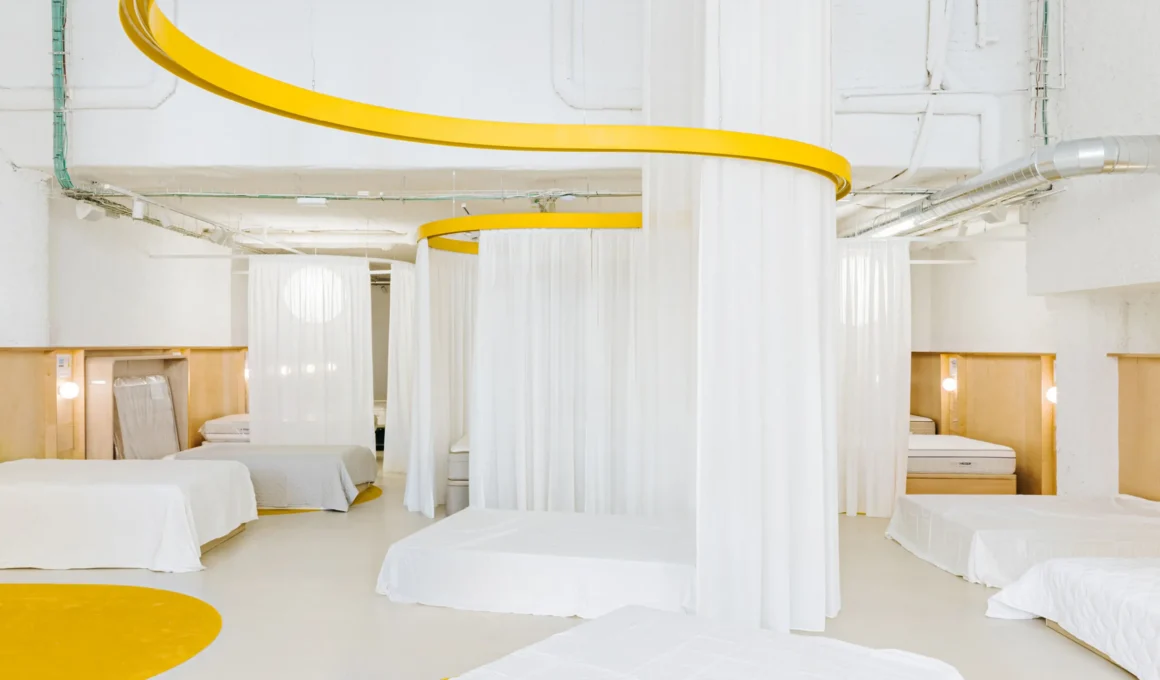
The new Colchón Exprés flagship on Madrid’s Calle Ribera de Curtidores, designed by local practice JOTAJOTA+, redefines the traditional retail showroom by transforming a commercial space into a sequence of domestic fragments where the experience of rest takes precedence over the logic of display.
Domesticity as a retail framework replaces the clinical atmosphere often associated with mattress stores. Instead of a continuous, overwhelming floor of products, the layout unfolds as a series of curated settings. These environments allow visitors to engage with the objects in conditions that mimic everyday life, shifting the focus from technical specifications to the sensory qualities of interior comfort. The result is a space that feels less like a warehouse and more like a collection of private rooms, inviting a slower, more intentional pace of exploration.
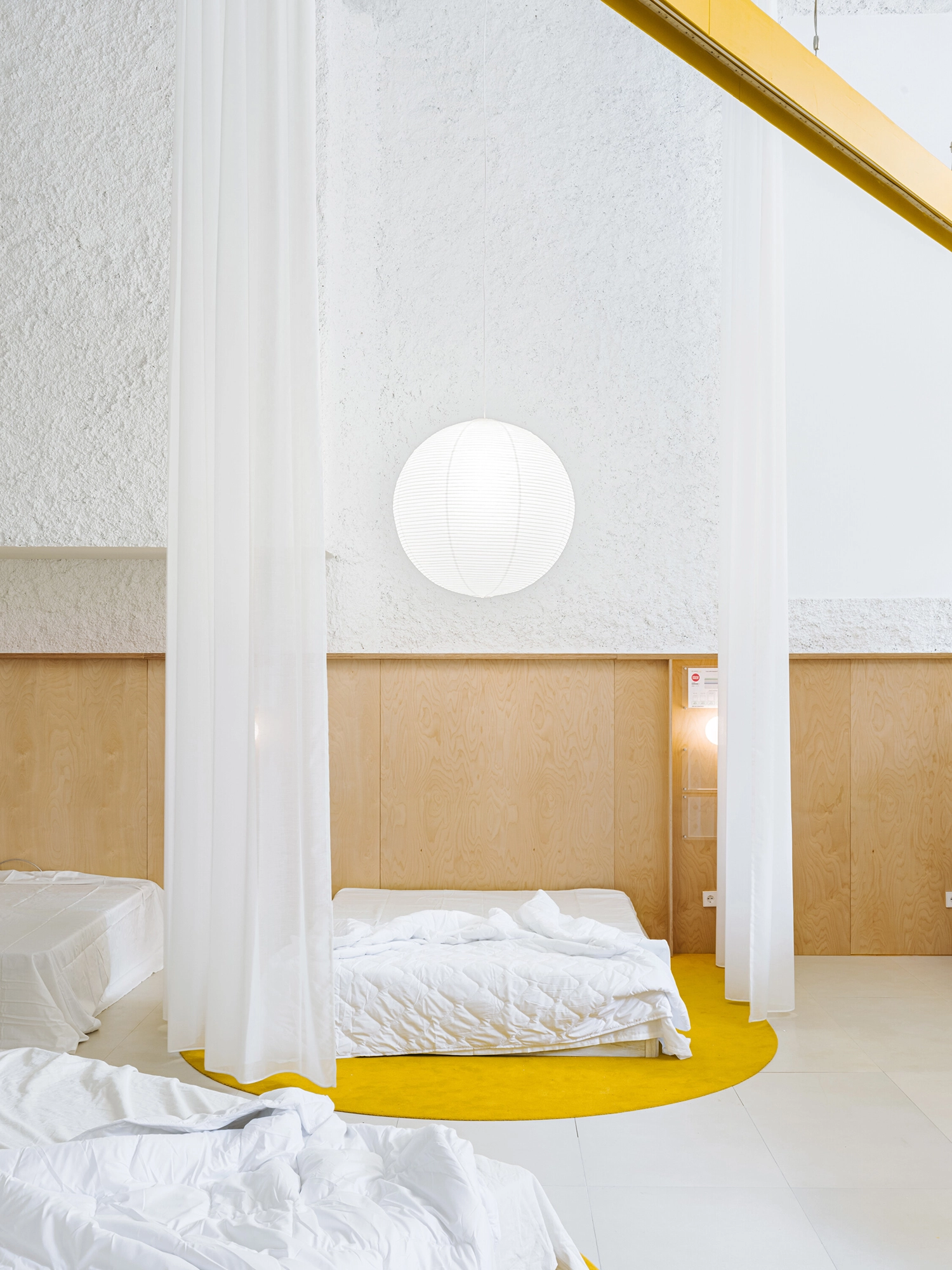
A wooden perimeter system establishes the primary organizational order of the store. This continuous timber element serves a dual purpose: it grounds the headboards of the mattresses while seamlessly integrating commercial information and storage. By wrapping the interior in this natural texture, JOTAJOTA+ creates a warm, tactile boundary that softens the retail environment, providing a cohesive backdrop that allows the specific details of each bed setting to stand out without competing for visual attention.
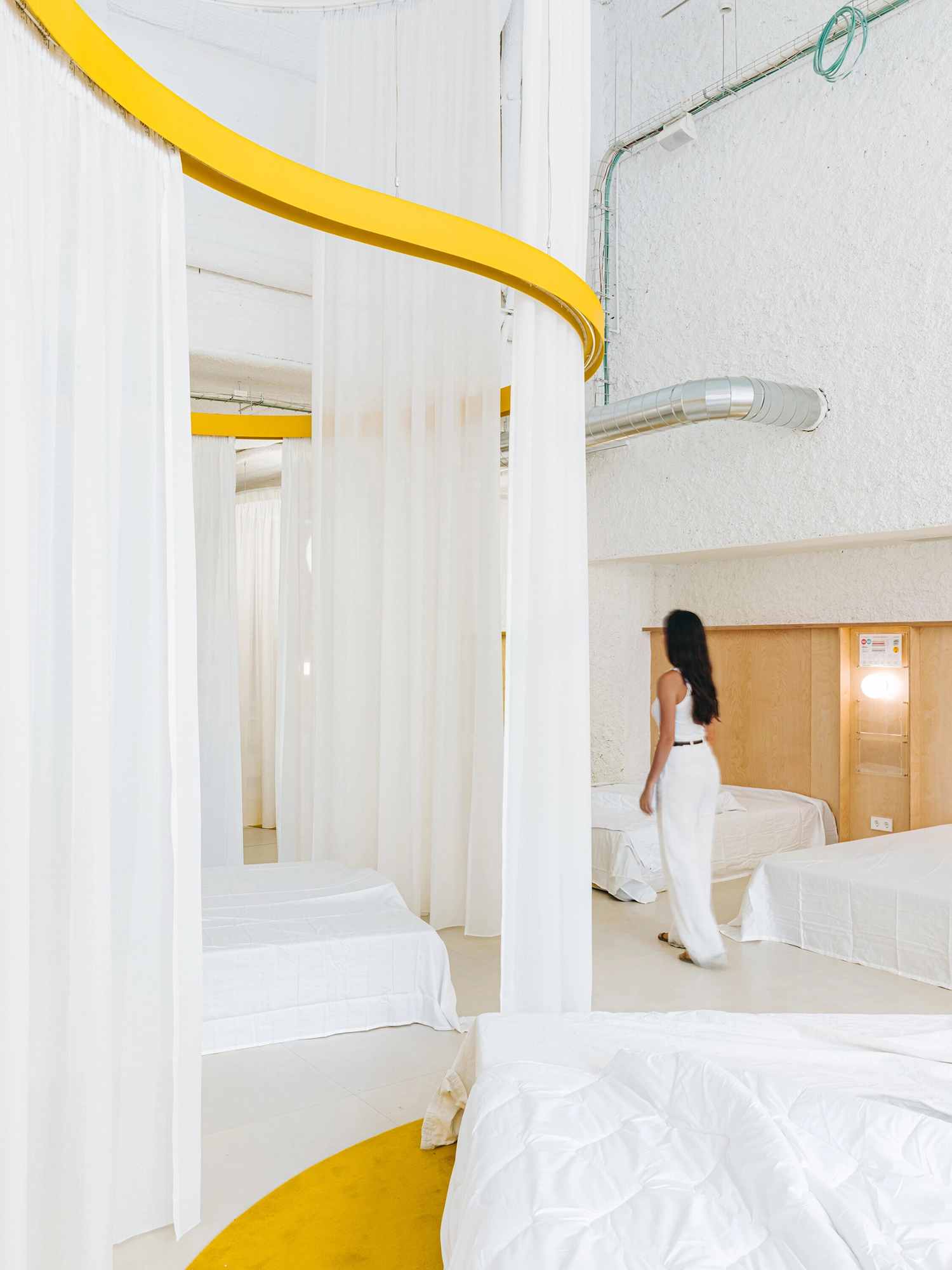
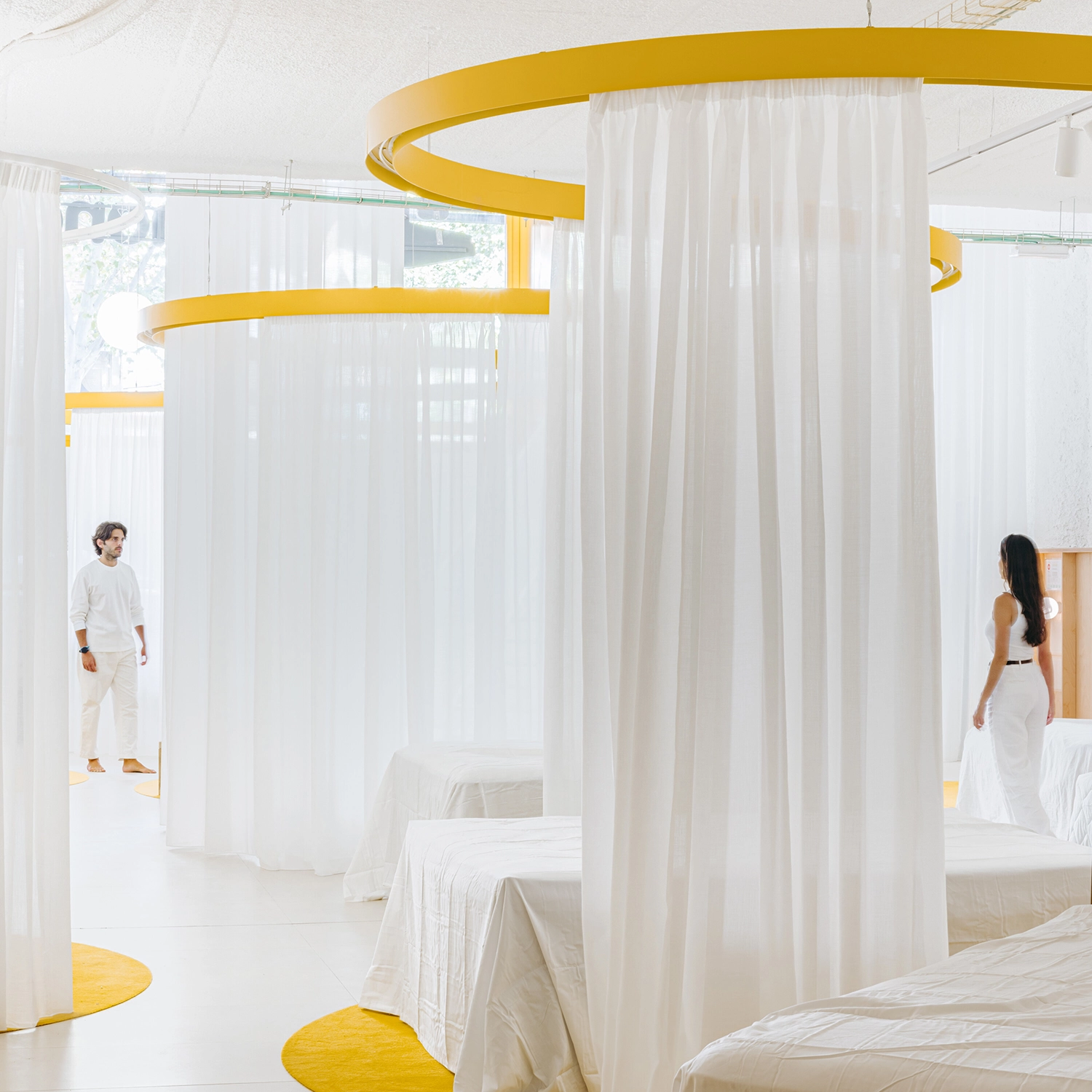
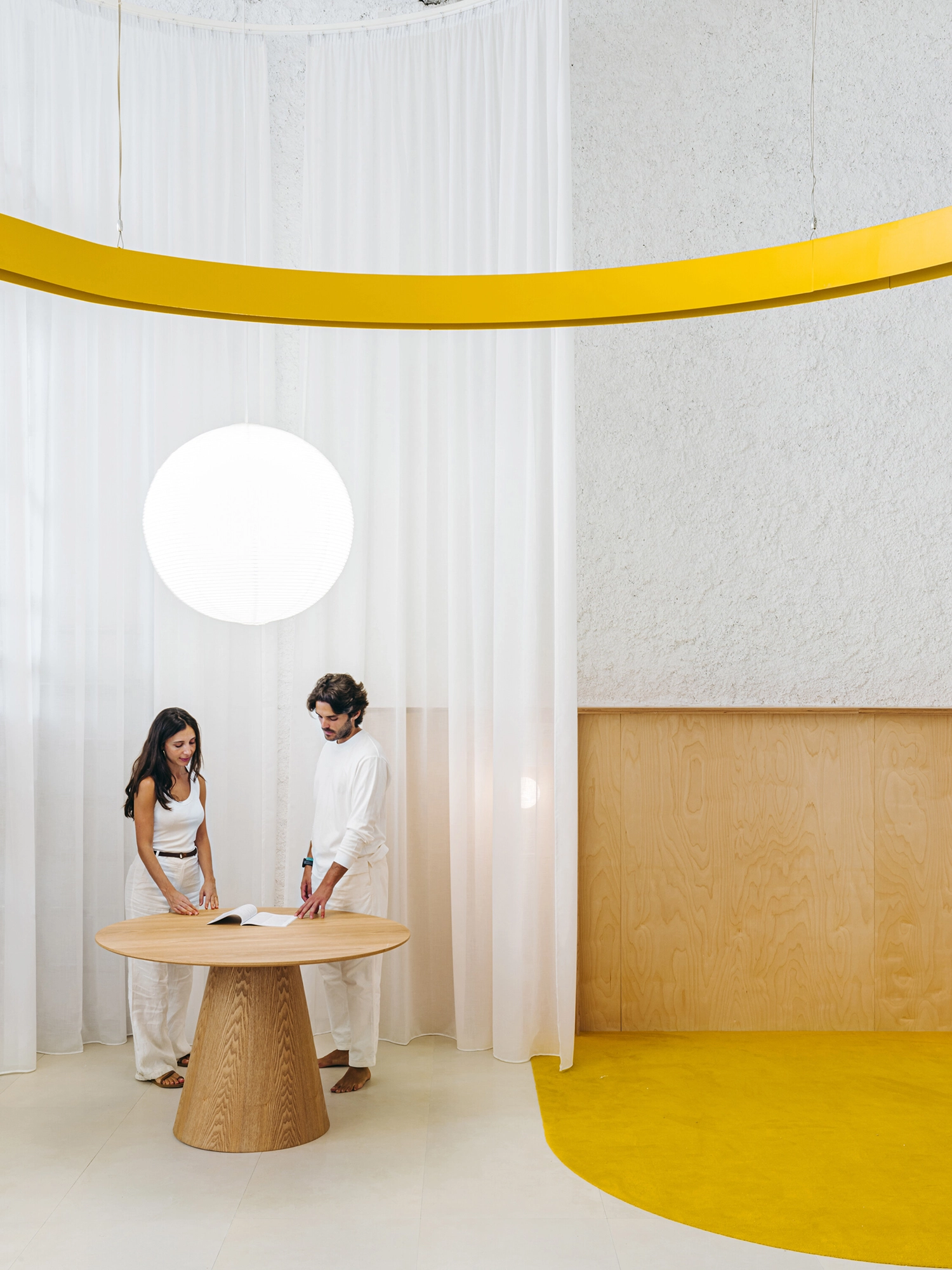
Gradients of privacy are meticulously managed through the use of flexible partitions and shifts in material. Large, heavy curtains and sinuous ceiling tracks allow for the constant reconfiguration of the space, offering visitors a sense of seclusion while they test the products. This layering of soft boundaries ensures that the act of lying down—a vulnerable moment in a public setting—is protected by a “visual filter” that provides spatial intimacy without the need for rigid, permanent walls.
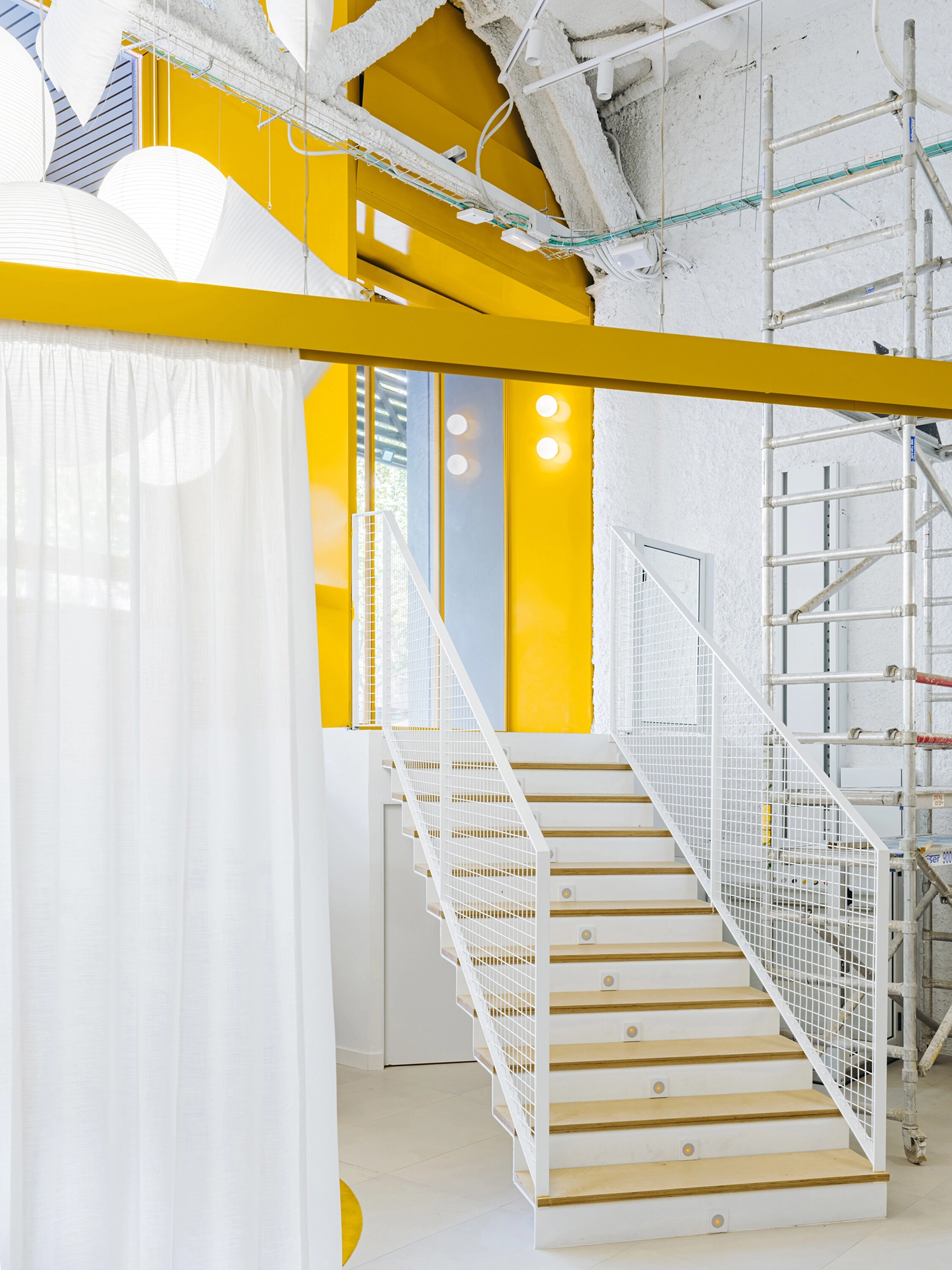
The entrance strategy acts as a bold chromatic attractor within the historic fabric of Madrid. A large, vibrant yellow molding frames the façade, paired with a sheet-metal staircase that introduces a diagonal access point. This gesture serves to physically and visually bridge the street with the interior, drawing the eye toward a transition zone that immediately signals a departure from the traditional commercial aesthetic. The use of yellow accents continues inside, marking thresholds and defining specific zones of activity within an otherwise minimalist white shell.
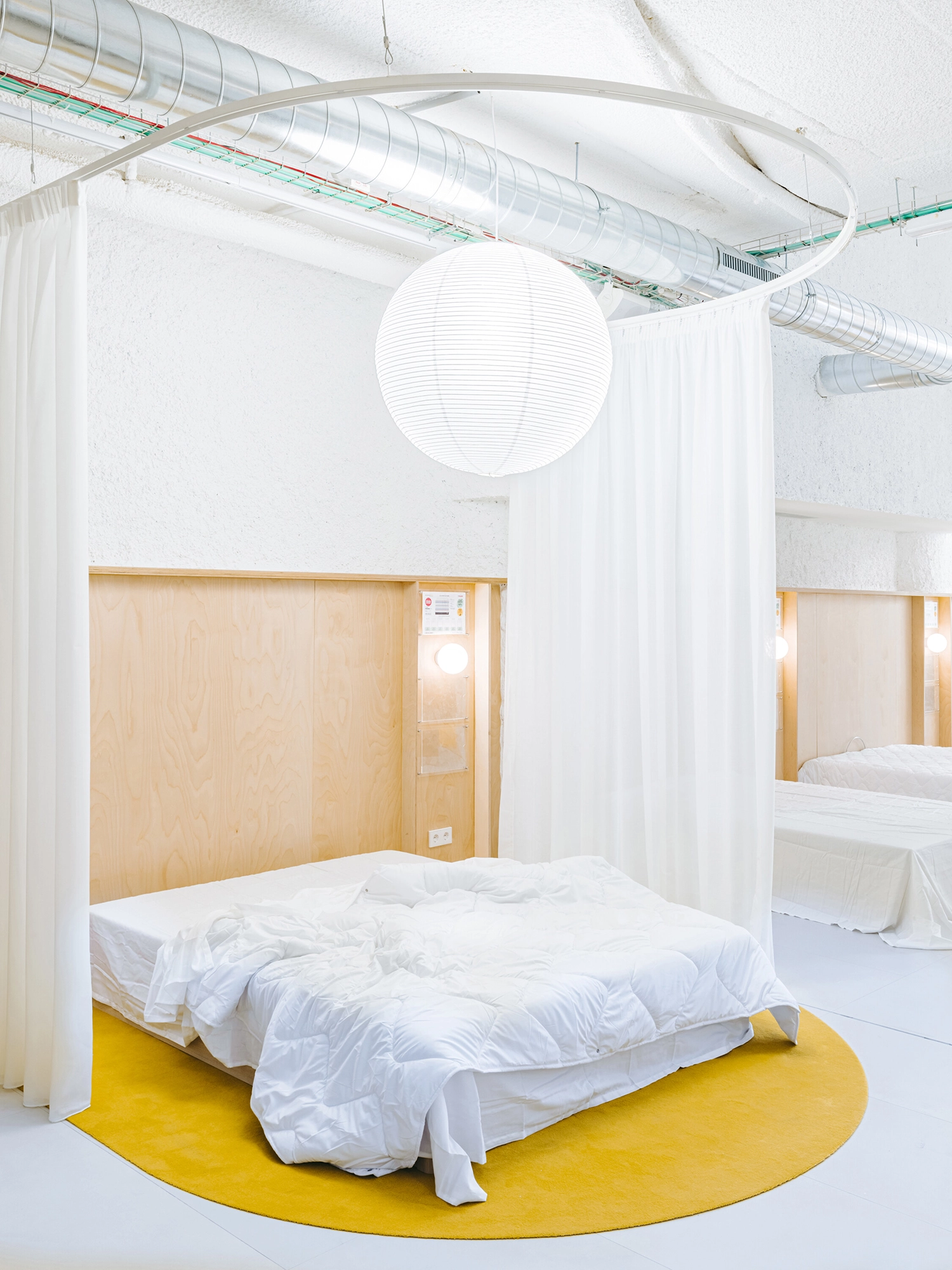
Tactile flooring transitions play a crucial role in guiding the visitor’s perception. The base of the store is composed of large-format neutral tiles, but the “resting zones” are delineated by yellow carpets. This change in texture and color underfoot acts as a psychological cue, indicating a shift from a circulation area to a place of pause. The spatial choreography is never forced; there is no prescribed path, allowing the user to construct their own journey through the store’s various domestic pockets.
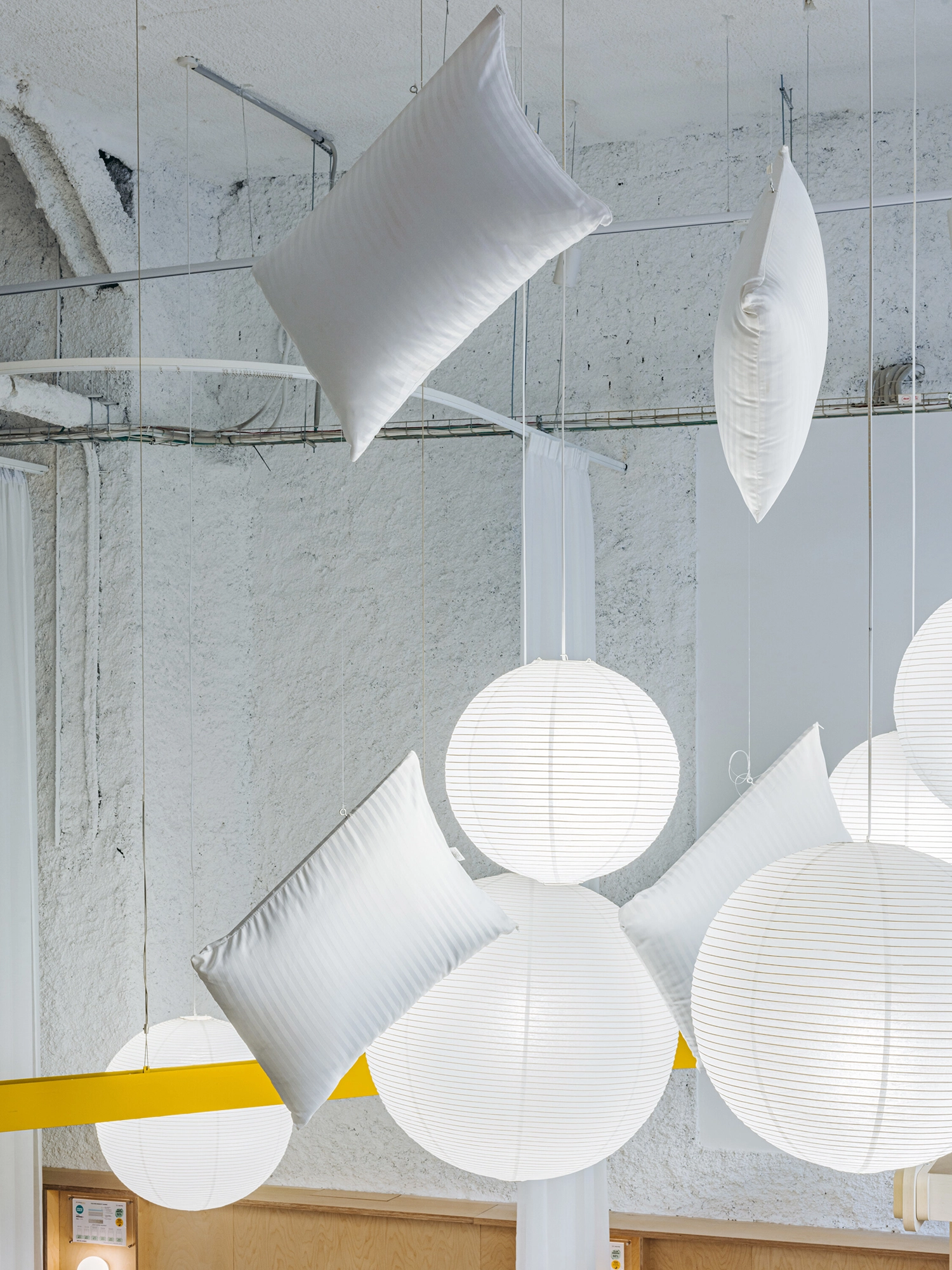
The interplay of light and volume is further enhanced by suspended elements that hang from the ceiling. These structures help to lower the perceived height of the room in specific areas, creating a more human scale that reflects the proportions of a bedroom. By manipulating these vertical volumes, the designers have managed to turn a large commercial unit into a series of intimate settings, where light is filtered and movement is softened, encouraging a deeper, more personal connection with the product.
Beyond the sale of goods, the Colchón Exprés project explores how atmosphere can reshape the relationship between the user and the object. It challenges the “fast-retail” model by prioritizing the quality of the time spent within the space. This approach aligns with a broader shift in the industry toward experiential retail, where the physical store serves as a tangible extension of a brand’s philosophy rather than just a point of transaction.
Redefining the physical storefront has become a necessity in an era where digital convenience dominates. As seen in the industrial, archive-inspired aesthetics of Harmay Beijing by AIM Architecture or the raw, material-driven experimentation of the Camper Shin Maru store in Tokyo, successful retail is moving toward narrative-driven spaces. We see this even in airport contexts, such as the Harmay Shanghai Hongqiao project, and within the evolving Zara retail design strategy. The give-away for the modern consumer is no longer just the product, but the memory of the environment. We are entering an age where the most successful brands are those that stop trying to sell us an item and start offering us a perspective on how we might inhabit our own lives.