


The intersection of Mediterranean heritage and Japanese craftsmanship finds a profound new expression in the Chiyoda ward, where the latest Camper Shin Maru store has opened its doors. Designed by the Madrid-based practice Penadés, this project marks the firm’s first foray into the Japanese market—a territory renowned for its rigorous material culture. Rather than importing a static brand aesthetic, Jorge Penadés has orchestrated a spatial narrative that honors the “Mediterranean DNA” of the Mallorcan footwear giant while bowing to the local precision of Tokyo, Japan. The result is a space that feels both grounded in tradition and radically forward-thinking in its simplicity.
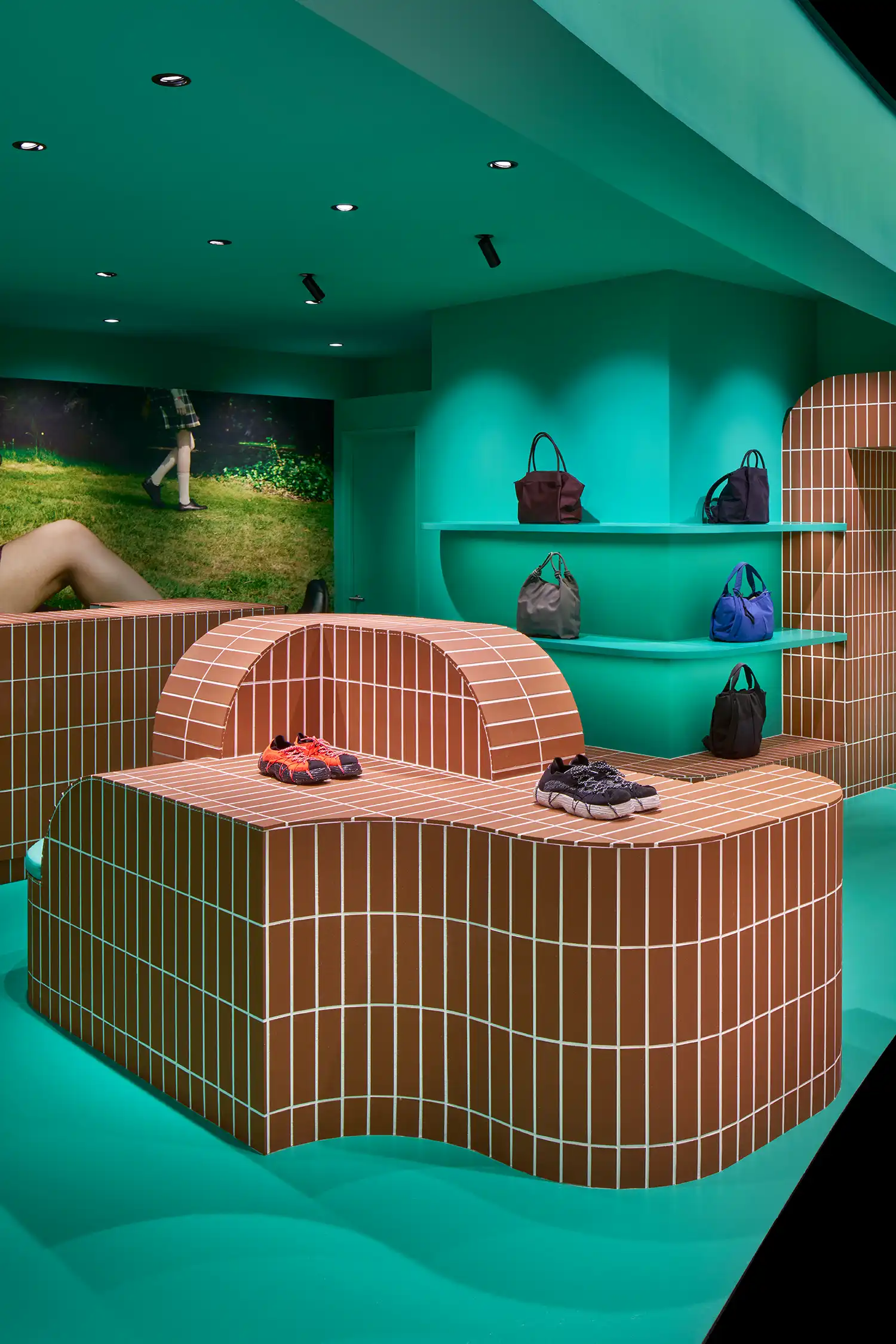
Central to the design philosophy is a humble protagonist: the clay tile. For Penadés, the choice of terracotta is a strategic move toward a global retail system that prioritizes environmental integrity. By utilizing a material that is universally accessible, the studio minimizes the carbon footprint of logistics, allowing the brand to adapt to any geography through local sourcing. This sustainable ethos was previously explored in the Camper store in Málaga, where the studio first began refining this modular, honest approach to materiality. In Tokyo, however, the application takes on a new level of sophistication, where the warmth of the earth meets the sleekness of high-end retail.
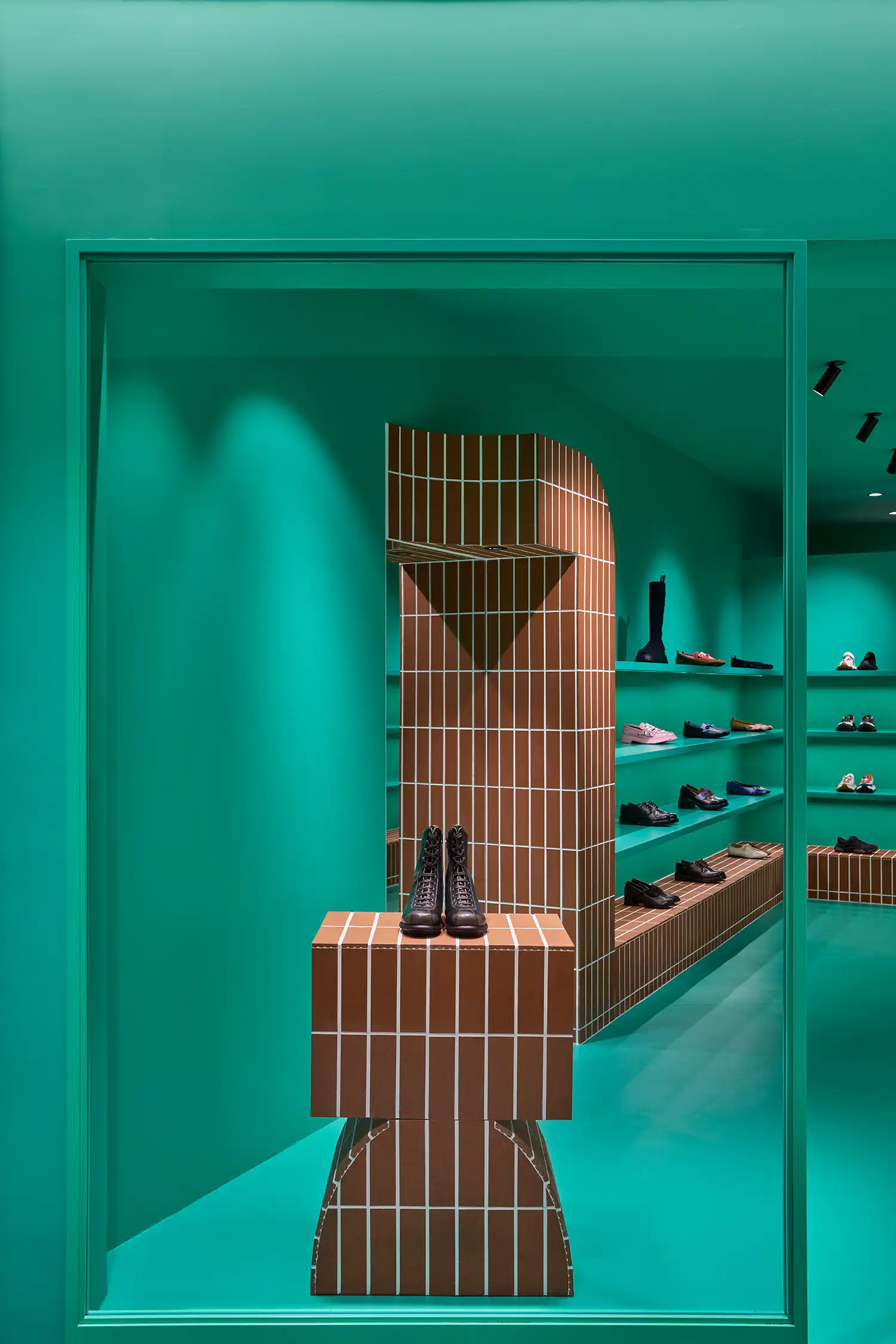
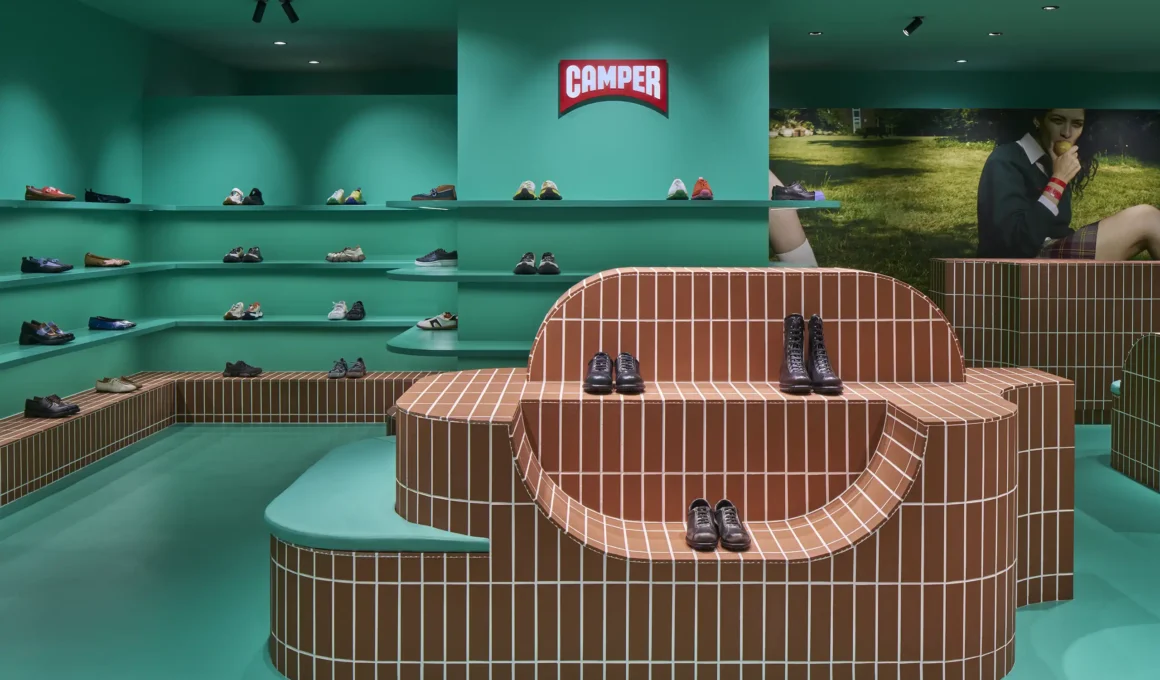
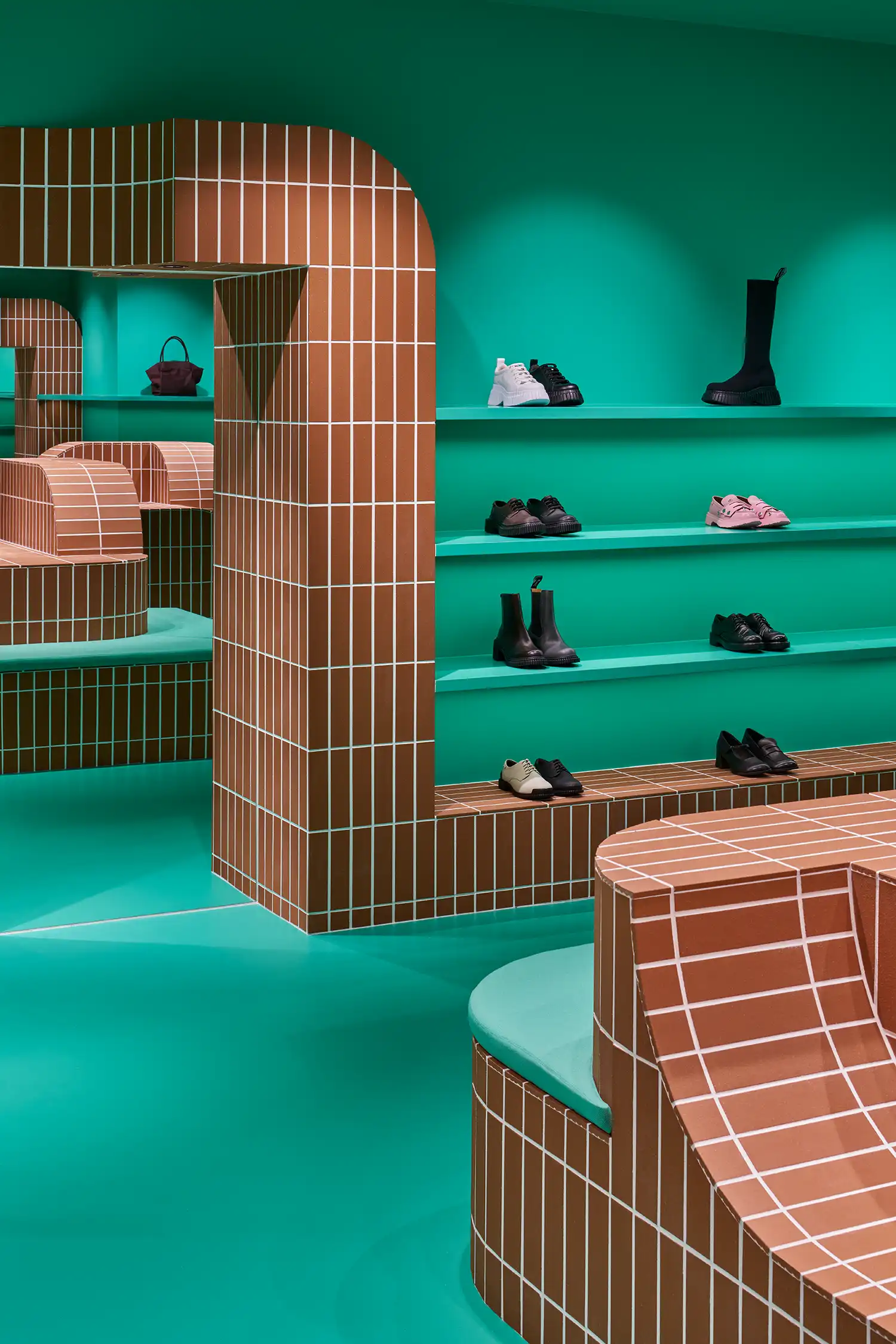
The sensory experience of the Shin-Marunouchi building interior is defined by a bold, monochromatic saturation. Upon entering, the visitor is enveloped in a singular hue that blurs the boundaries between floor, wall, and furniture. This “bold monocolor” strategy serves as a clean canvas, directing all focus toward the product while creating a cohesive, immersive atmosphere. The air feels hushed, the texture of the clay providing a tactile counterpoint to the polished glass and steel often found in Chiyoda’s commercial hubs. It is a masterstroke in brand recognition that avoids the clichés of corporate signage, relying instead on the emotional impact of color and form.
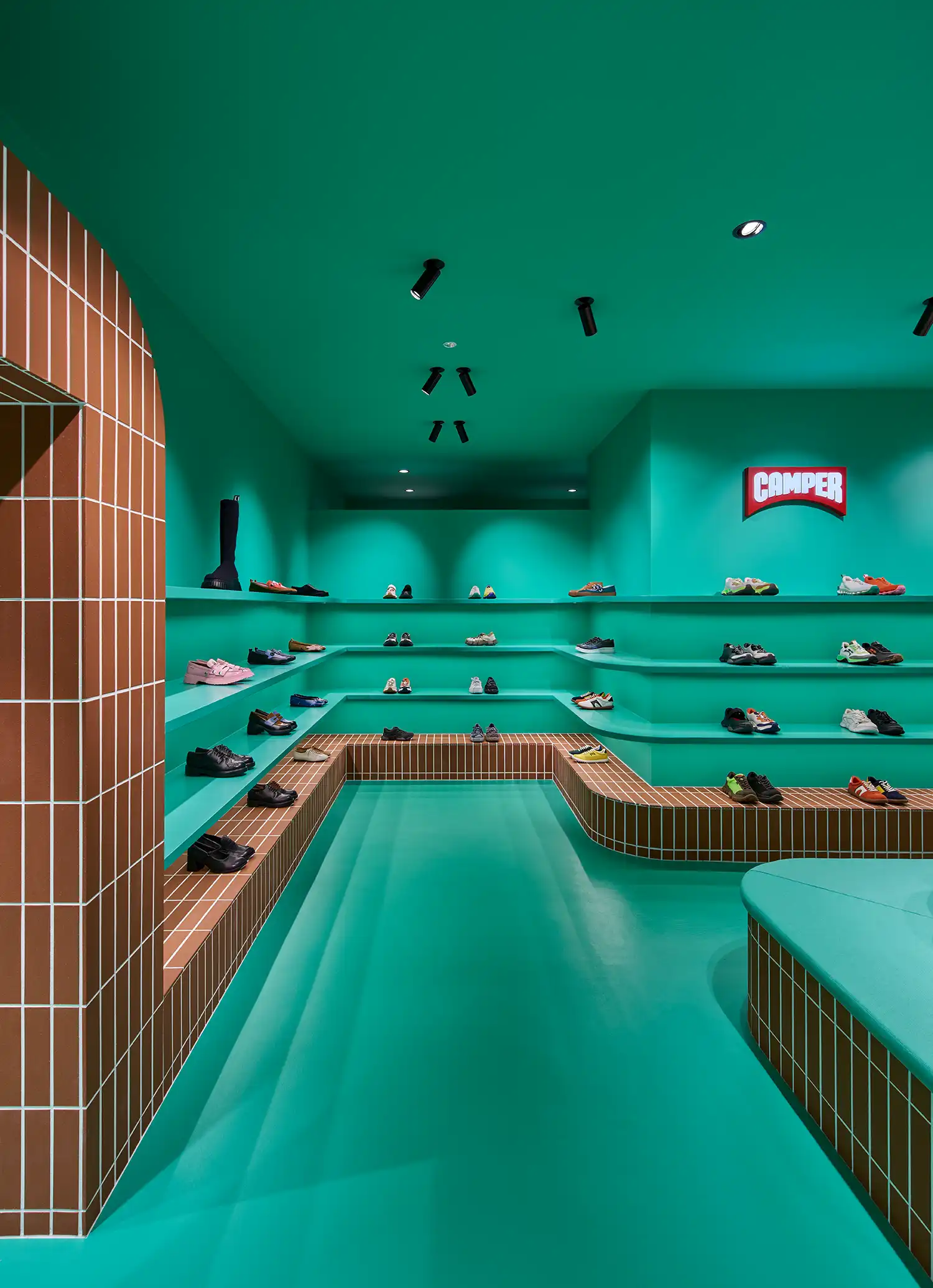
An archipelago of terracotta structures organizes the floor plan, transforming rectangular clay tiles into abstract, multifunctional furniture elements. These clusters of pedestals and seating act as a geometric tribute to Mallorca, the island home of Camper. By stacking and arranging these modular units with surgical precision, Penadés creates a rhythmic flow that guides the customer through the collection. This architectural language of repetition and assembly recalls the intricate timber work of previous collaborations, such as the Camper store on Barcelona’s Paseo de Gracia, though here, the warmth of wood is replaced by the industrial yet organic soul of fired earth.
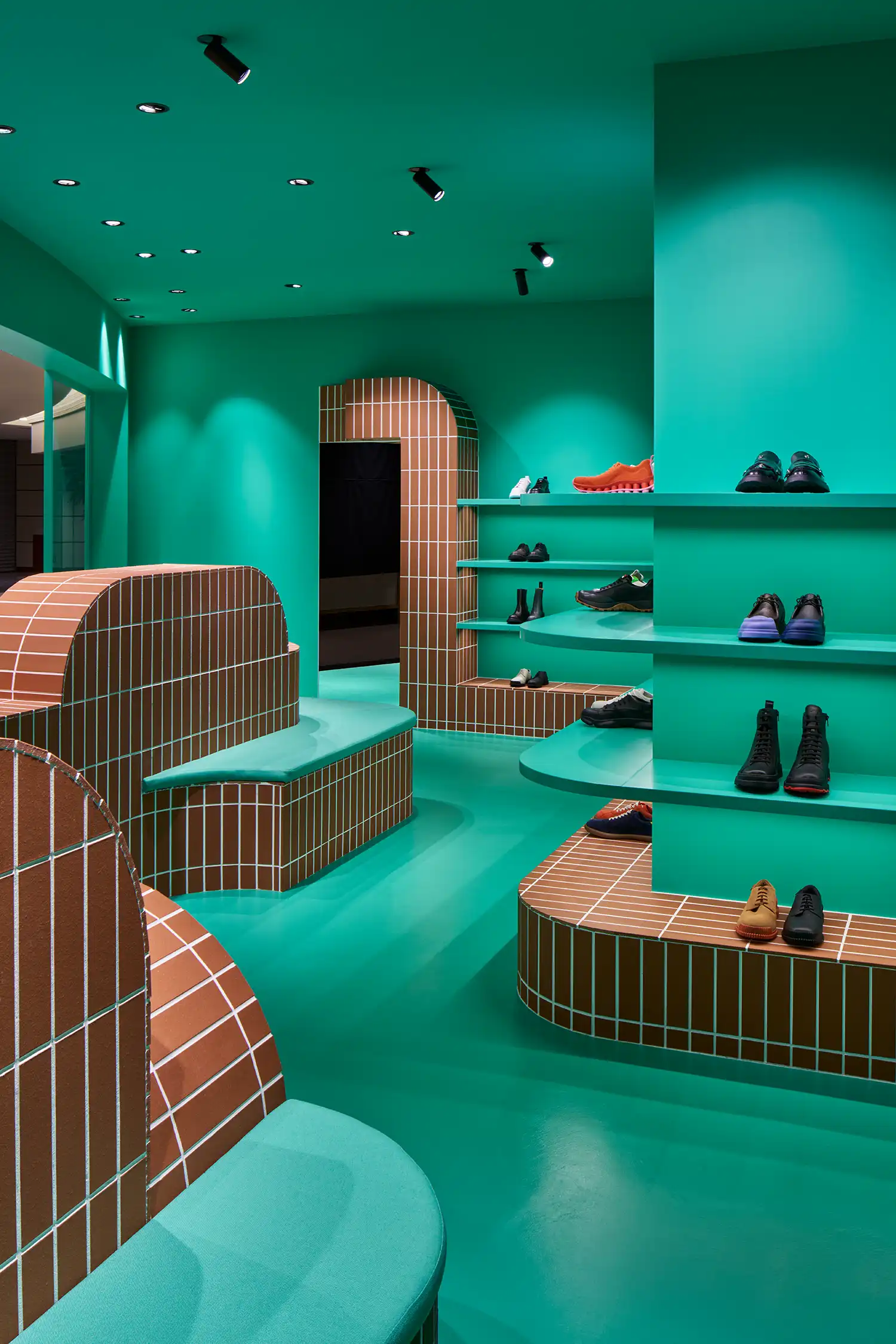
Technical ingenuity meets traditional Japanese precision in the way the tiles are joined and finished. Every alignment is intentional, turning an inexpensive building block into a refined architectural component. The project represents the ninth collaboration between the studio and the brand—following successful ventures in Paris, Hong Kong, and Bangkok—yet it feels uniquely tailored to its East Asian context. The use of the tile is not merely decorative; it is a structural statement on how “low-tech” materials can achieve “high-end” results when handled with an analytical eye for detail and proportion.
The contextual impact of the Camper Shin Maru store extends beyond its physical footprint. It challenges the standard “luxury” retail model of using rare, exotic materials in favor of a circular, localized economy. By elevating an ubiquitous object like the clay tile to a position of elegance, Penadés Studio proves that sustainability is not a constraint, but a catalyst for creative innovation. In the heart of Tokyo, this small intervention speaks volumes about the future of global retail: a future that is local, honest, and deeply connected to the earth beneath our feet.