

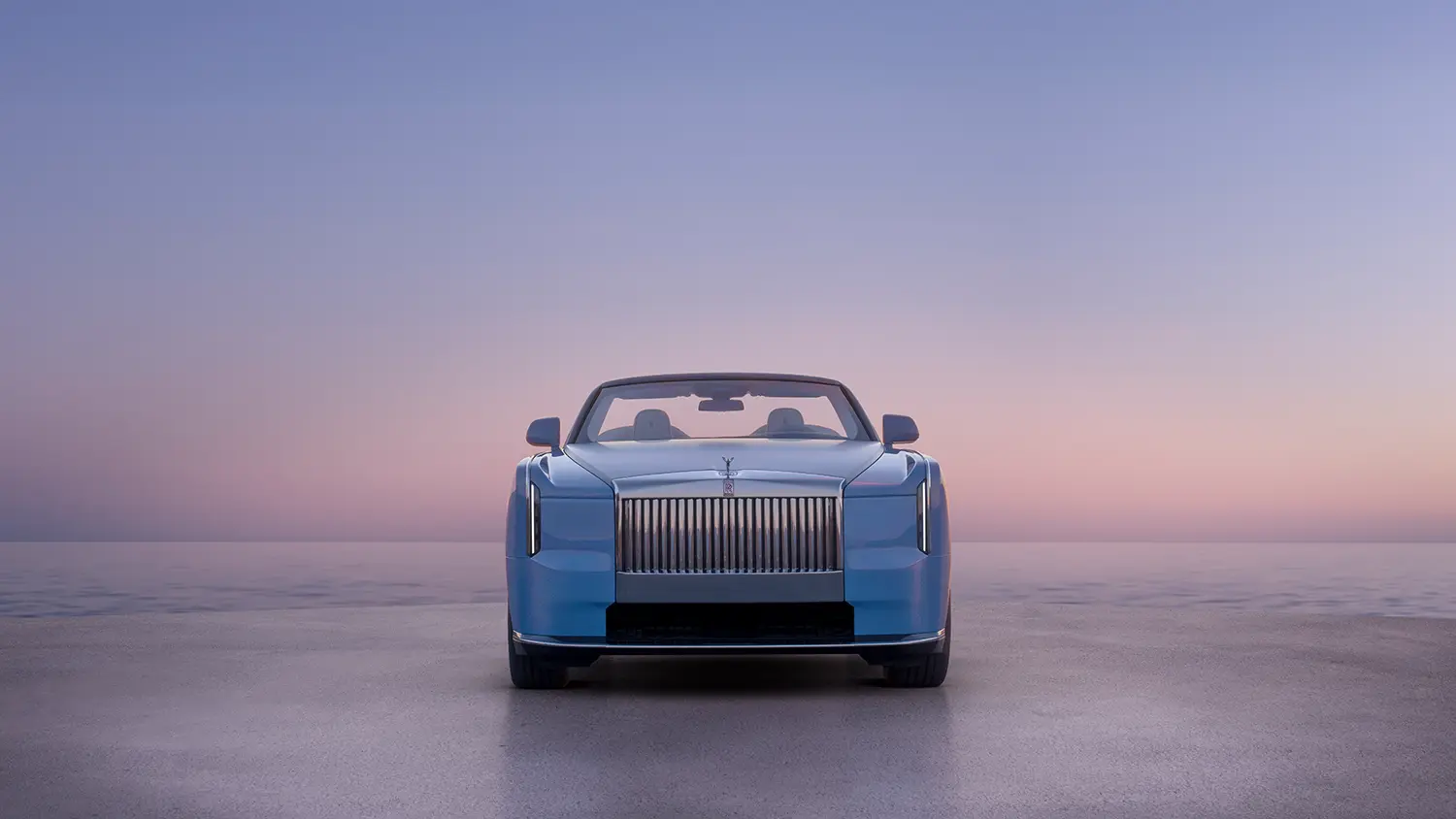
Rolls-Royce Motor Cars has unveiled Project Nightingale, a dramatic two-seat electric motor car and the inaugural masterpiece of the Coachbuild Collection, which blends the audacious experimental spirit of Sir Henry Royce’s 1920s Côte d’Azur era with a silent, near-supernatural electric powertrain. Hand-assembled at the Home of Rolls-Royce in Goodwood, this limited production of 100 examples reimagines the open-top experience through the lens of Streamline Moderne, serving as a landmark expression of the marque’s future creative direction.
A lineage defined by audacity and silent velocity finds its modern successor in a vehicle that is more than a mere machine; it is a manifestation of the “EX” experimental spirit. Named after Le Rossignol, the French residence of the brand’s original engineers, Project Nightingale draws a direct line from the 1928 Jazz Age prototypes to the silent digital age. By removing the internal combustion engine, the visual narrative shifts toward a purity of form where the lack of cooling intakes allows for expansive, uninterrupted surfaces. This shift enables a “central fuselage” aesthetic, where a single, unbroken hull line defines the profile, reminiscent of a high-performance sailing yacht cutting through the Mediterranean.
The sculptural integrity of the exterior is anchored by monolithic volumes and a commanding 5.76-metre length. The front elevation is defined by a Pantheon Grille nearly a metre wide, seemingly carved from a solid block of stainless steel. Here, the Spirit of Ecstasy does not merely sit atop the chrome; she is integrated into a recessed section, her form dissolving into the bonnet as if parting liquid metal. This surface discipline extends to the vertically oriented headlamps and a carbon fibre apron that acts as a structural plinth, grounding the ethereal upper body with a nod to Art Deco skyscraper geometry.
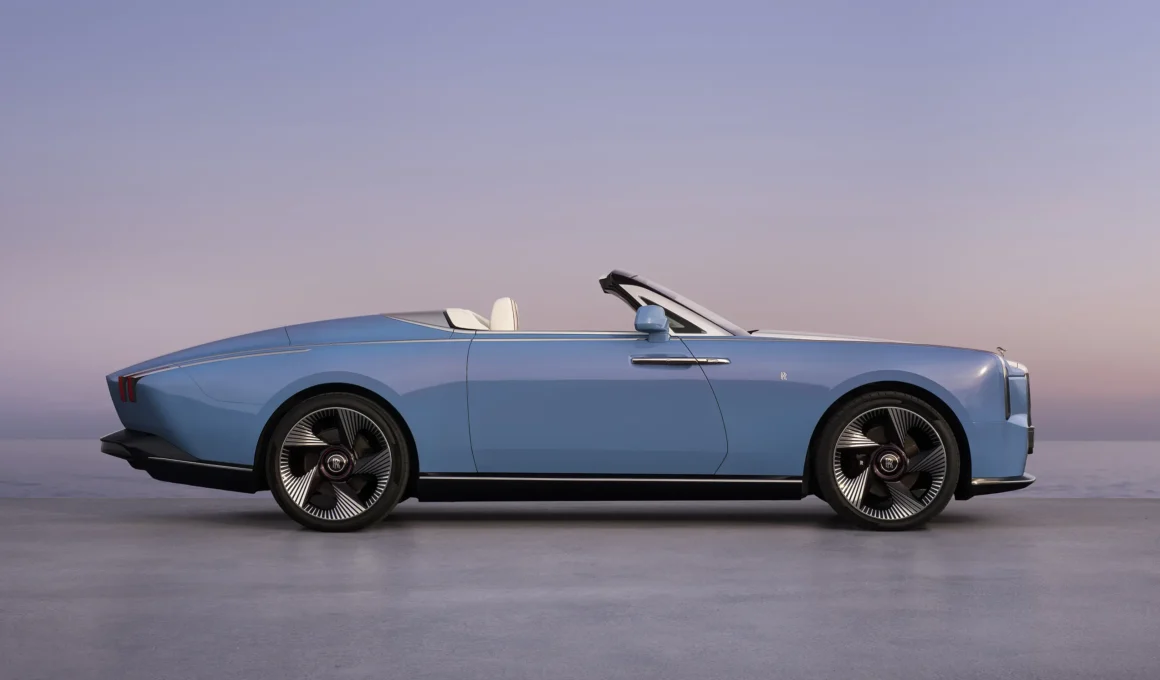
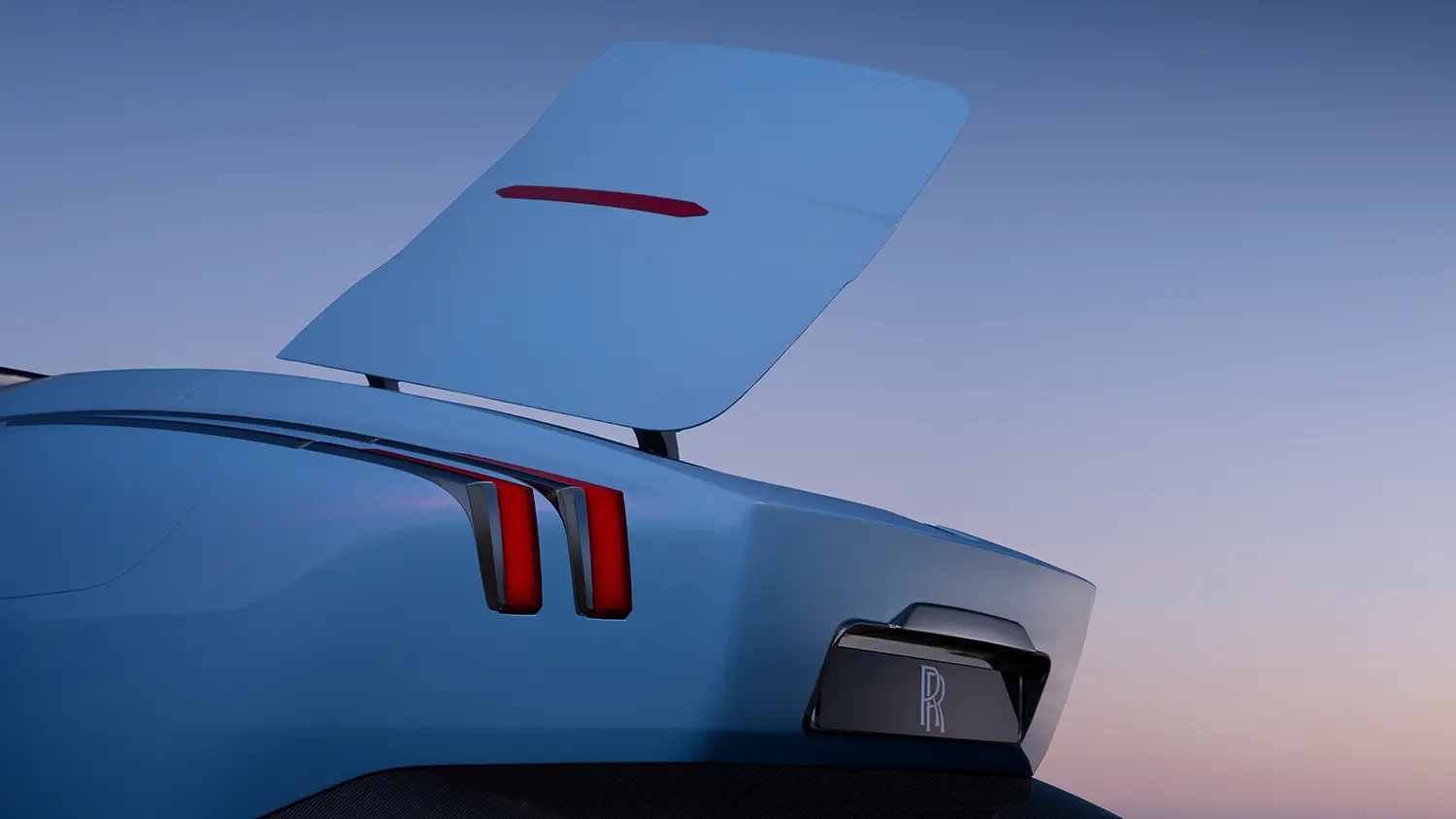
In profile, the torpedo silhouette reveals the full impact of a driver-oriented design, where the cabin is tucked deep within the body, sandwiched between an expansive bonnet and a dramatically tapering rear deck. The aerodynamic silhouette is punctuated by 24-inch wheels—the largest ever fitted to a Rolls-Royce—featuring a directional design inspired by yacht propellers. To maintain the sensory experience of a single-billet sculpture, engineers have hidden the door handles and integrated a discreet locking mechanism, ensuring that the gaze remains fixed on the “flying wings” that pull the eye toward the trailing edge.

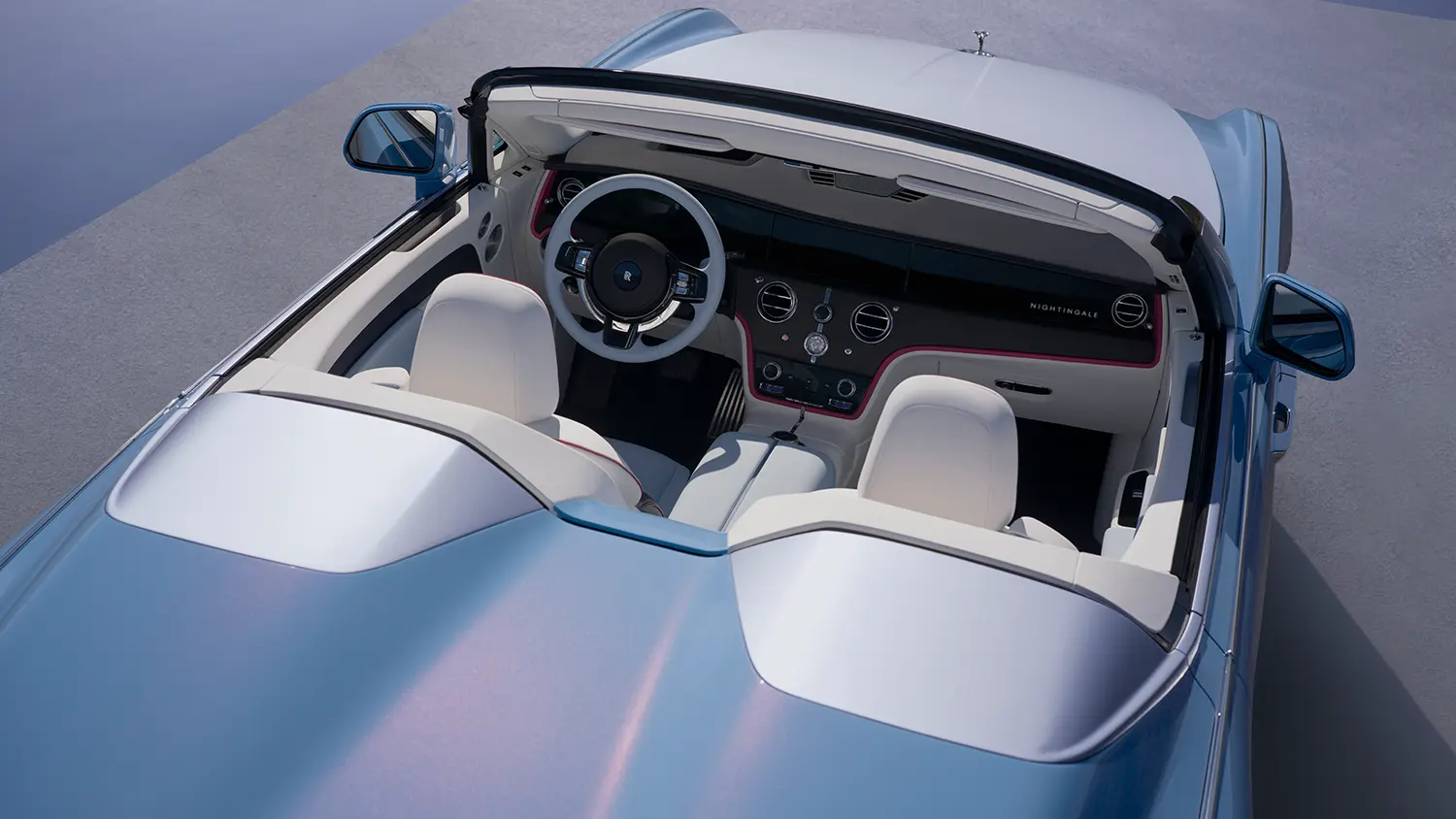
Crafting the sonic landscape of serenity becomes the central challenge when transitioning from the open-air drama of a convertible to the sheltered intimacy of a coupé. This is achieved through a soft top that utilizes a unique composite of cashmere and high-performance textiles. Because the electric drivetrain eliminates mechanical vibration, the acoustic environment becomes a canvas. Designers focused on preserving the “romance” of travel, where the only audible elements are the tactile sound of rain on canvas or the rustle of wind through trees. It is this profound quietude that birthed the car’s name, allowing the occupants to hear birdsong even at cruising speeds.
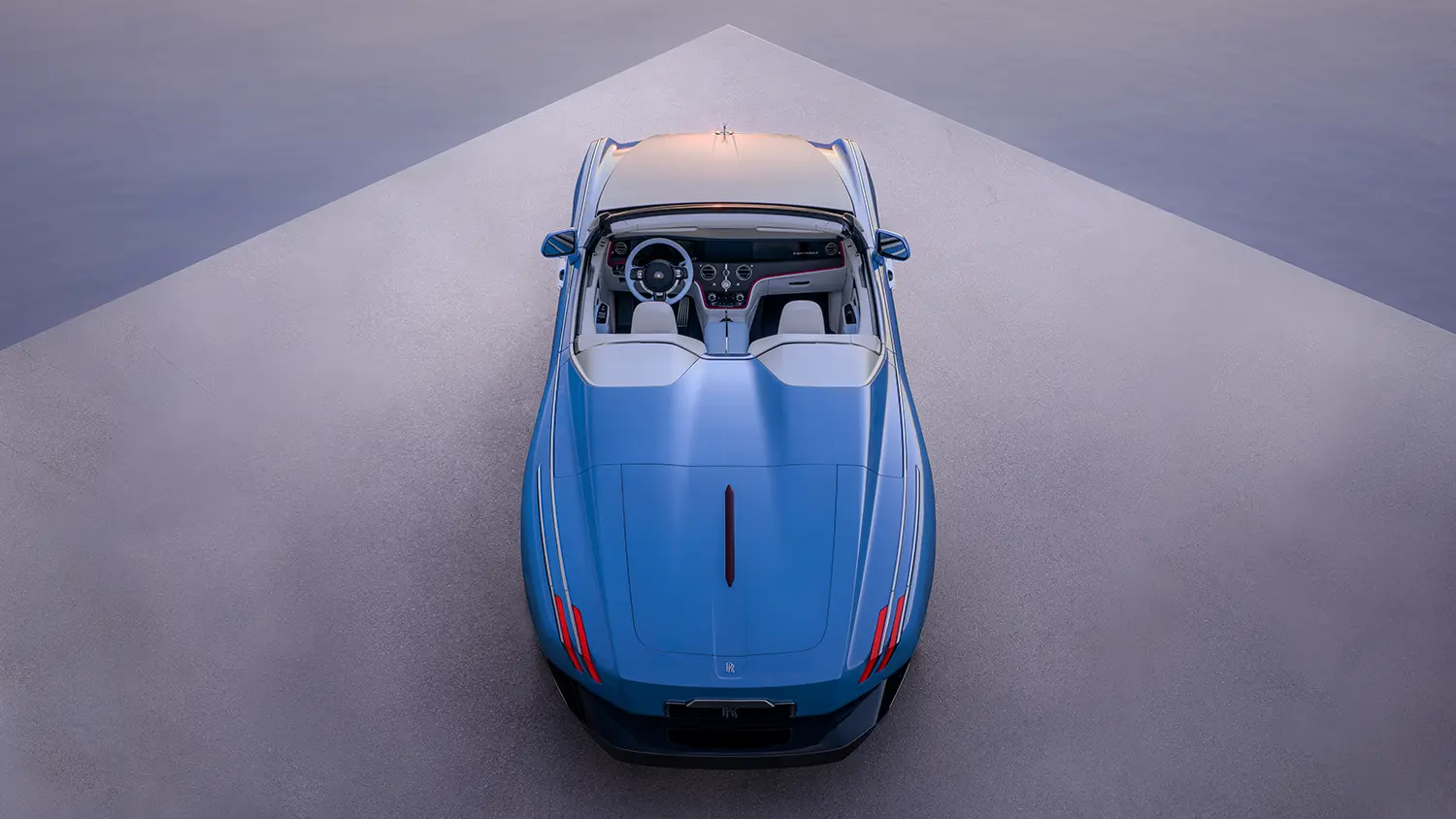
The interior suite translates melody into radiance through the Starlight Breeze installation, an exercise in bespoke luxury that defines the “World for Two”. Inspired by the sound-wave patterns of a nightingale’s song, 10,500 individual “stars” wrap around the cabin in a celestial field of light. This illumination is housed within a “Horseshoe” architectural form that frames the occupants, while a leather-covered saddle armrest glides rearwards to reveal a Spirit of Ecstasy rotary controller. The controller itself is treated with the precision of haute joaillerie, featuring faceted and glass-blasted stainless steel that subdues the high polish into a soft, tactile glow.
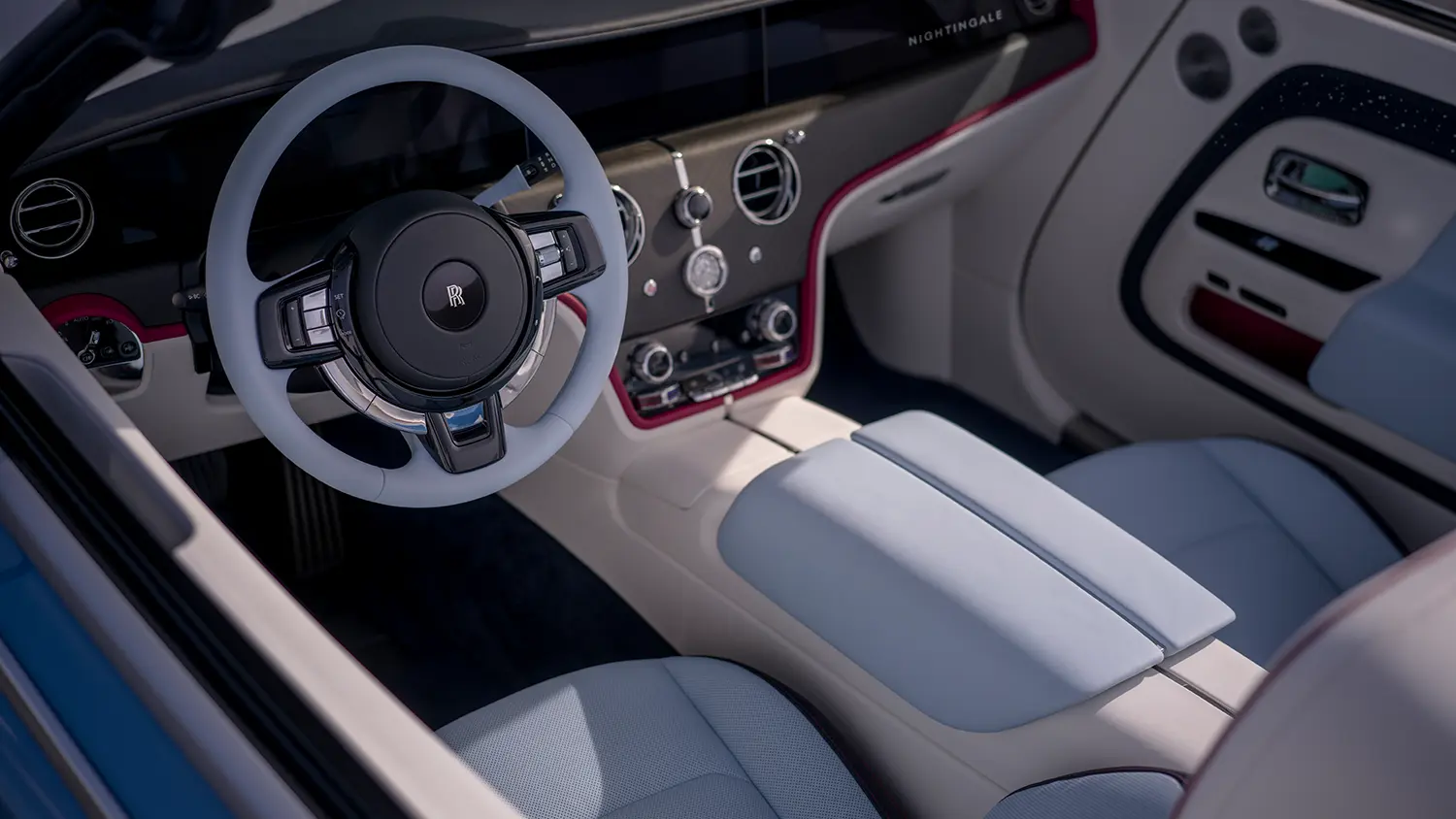
The Côte d’Azur serves as a visual palette for the presentation model, paying homage to the 17EX prototype with its Côte d’Azur Blue paint. This solid hue is infused with red flakes that catch the light—a subtle nod to the red badges reserved for experimental models. Inside, the spatial experience is softened by pastel Charles Blue and Grace White leathers, contrasted by deep Navy inserts and flashes of Peony Pink. This palette is grounded by Openpore Blackwood laid in a “V” shape, a gesture intended to draw the eye upward toward the sky, reinforcing the connection between the machine and its natural surroundings.
Following a path of hand-crafted exclusivity established by previous commissions like the Rolls-Royce Boat Tail and the Arcadia Droptail, Project Nightingale marks a shift toward a more structured Coachbuild Collection. While earlier projects focused on singular expressions of individual identity, this new program invites 100 clients to participate in a multi-year creative immersion. It bridges the gap between the ultra-exclusive “one-off” and the production model, offering a level of technical innovation and material curation that remains entirely off-limits to the standard portfolio.
A visionary bridge to the future is encapsulated by the Aero Afterdeck, a bold carbon fibre transom diffuser enabled by the absence of exhaust pipes. It provides high-speed stability while maintaining a clean, uninterrupted silhouette. As Rolls-Royce prepares for client deliveries in 2028, Project Nightingale stands as a testament to the fact that the future of luxury travel is not merely about the transition to electric power, but about the emotive storytelling and hand-crafted precision that has defined the marque since the 1920s. It is a promise that, even in a silent future, the soul of the motor car remains vibrantly, audaciously alive.