




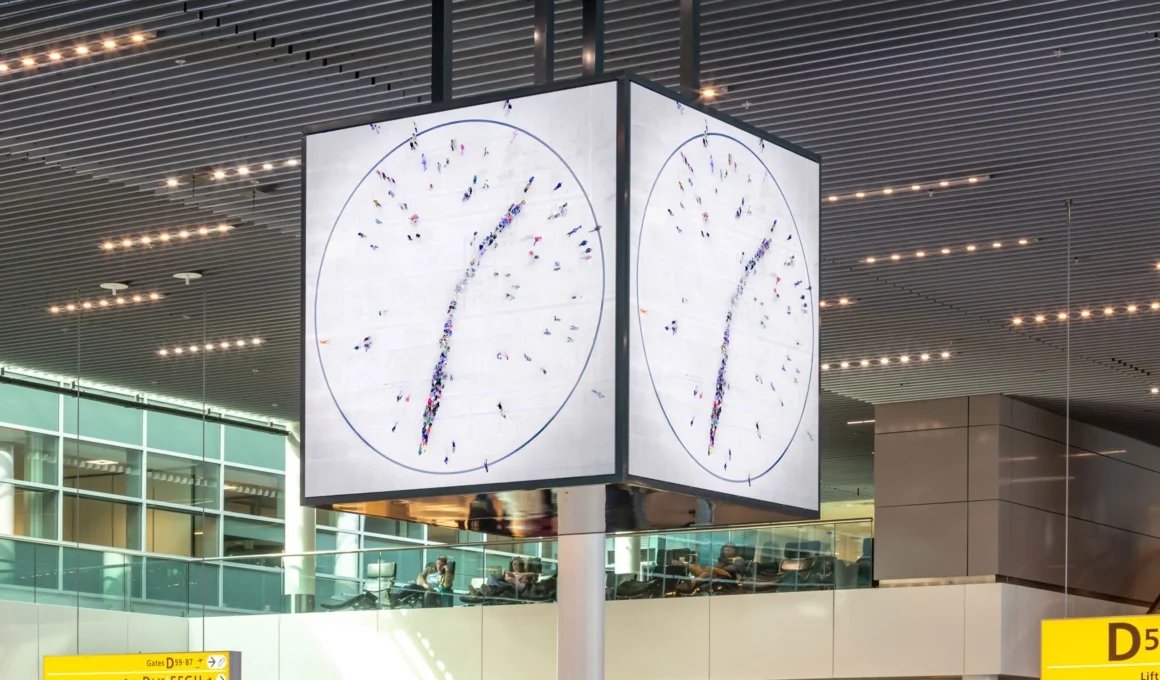
Maarten Baas returns to Amsterdam Airport Schiphol with “People’s Clock,” a monumental video installation in Lounge 1 that transforms the mechanical passage of time into a collective human performance, featuring over a thousand airport employees moving in synchronization to form the clock’s rotating hands.
The evolution of Schiphol’s artistic identity has always been linked to the passenger experience, moving from the 1967 modernist debut focused on tranquility to a contemporary approach of meaningful engagement. A decade of temporal exploration connects this new unveiling to Baas’s previous contribution to the airport’s landscape; in 2016, his Real Time clock established a profound dialogue between digital precision and physical labor, a theme that the artist now scales to an orchestral level with this latest intervention.
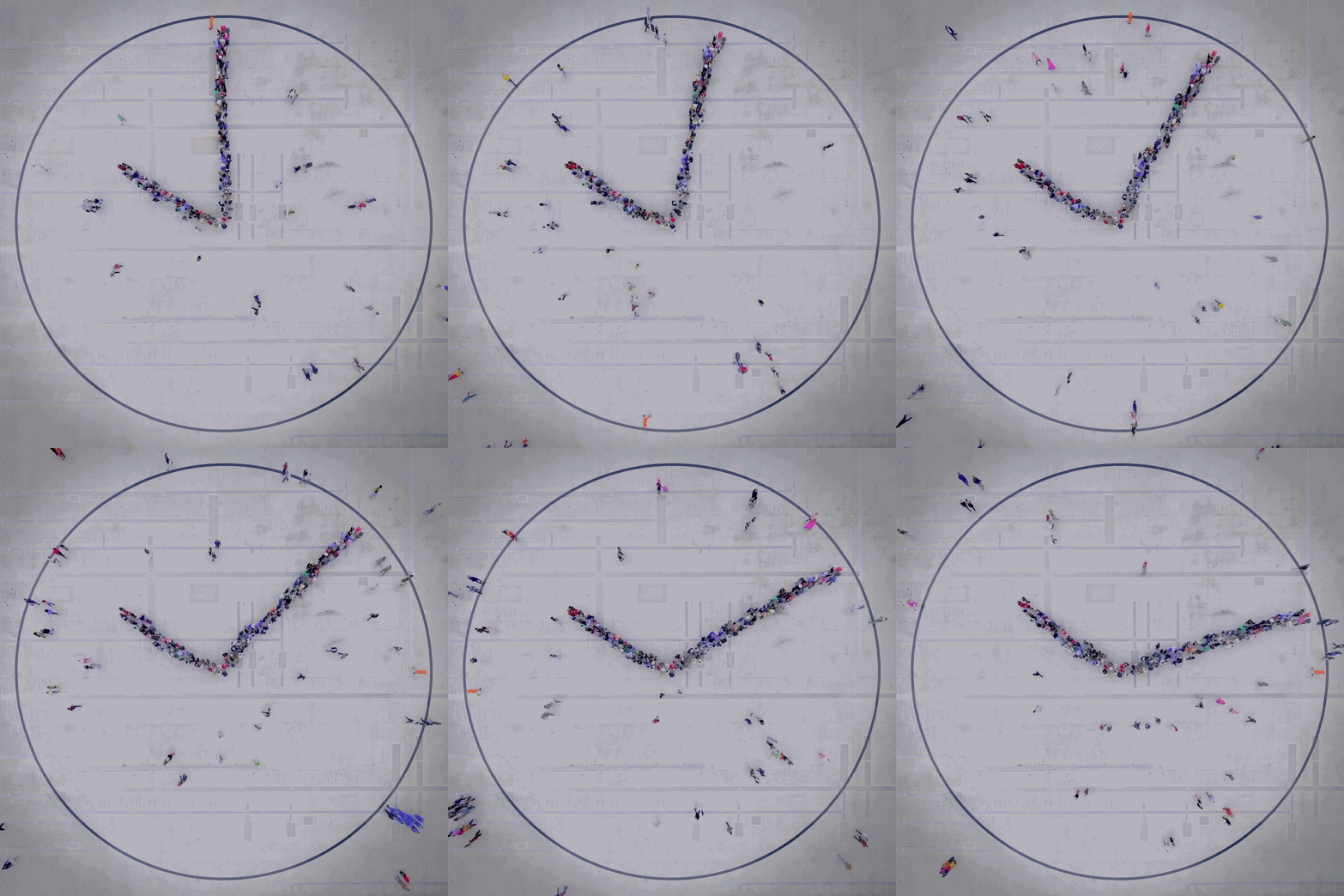
The collective pulse of the airport serves as the conceptual foundation for the “People’s Clock,” where Baas invited over a thousand volunteers—from ground handlers and cabin crew to security officers—to participate in a massive choreographic feat. Filmed from a bird’s-eye perspective in a vast hangar, these individuals formed a living needle, moving in a continuous clockwise direction to represent the relentless flow of the day, effectively putting the human community at the heart of the transit hub.
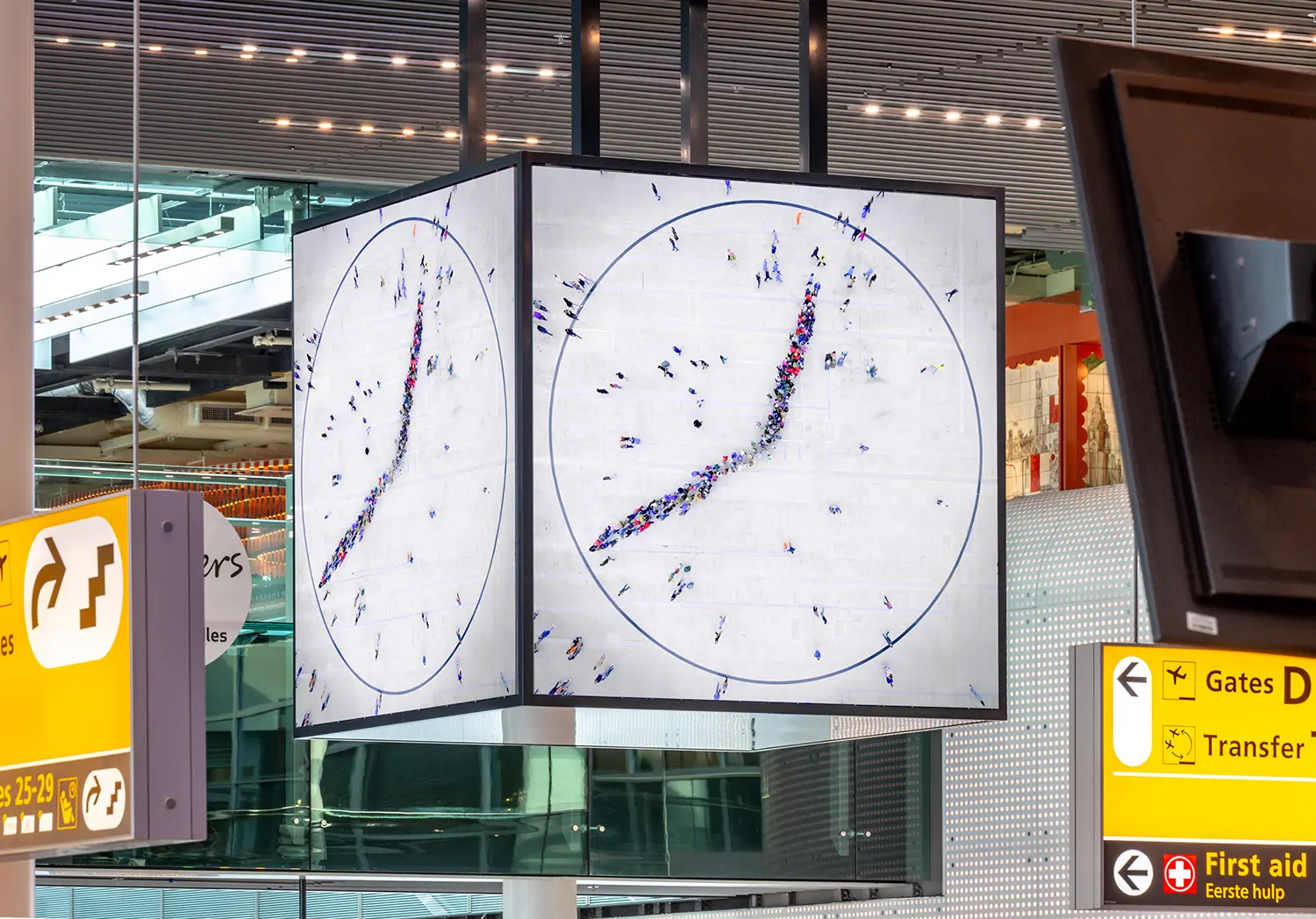
Technical precision meets human effort in the resulting 12-hour video loop, where each frame captures the subtle shifts in posture and the coordinated small steps of the participants. This cinematic installation acts as a mirror to the airport’s daily operations, creating a visual texture far richer than any mechanical movement and reminding us that the seamless flow of travel is only made possible by the quiet, synchronized labor of an invisible workforce.
Transcending the functional necessity of a timepiece, the installation occupies a significant footprint in Lounge 1, a space defined by the inherent tension of waiting. For the traveler, time in an airport is often experienced as a series of stagnant intervals; Baas’s work reclaims these moments, offering a narrative experience that invites passengers to pause and reflect on the human agency required to maintain the momentum of global infrastructure.
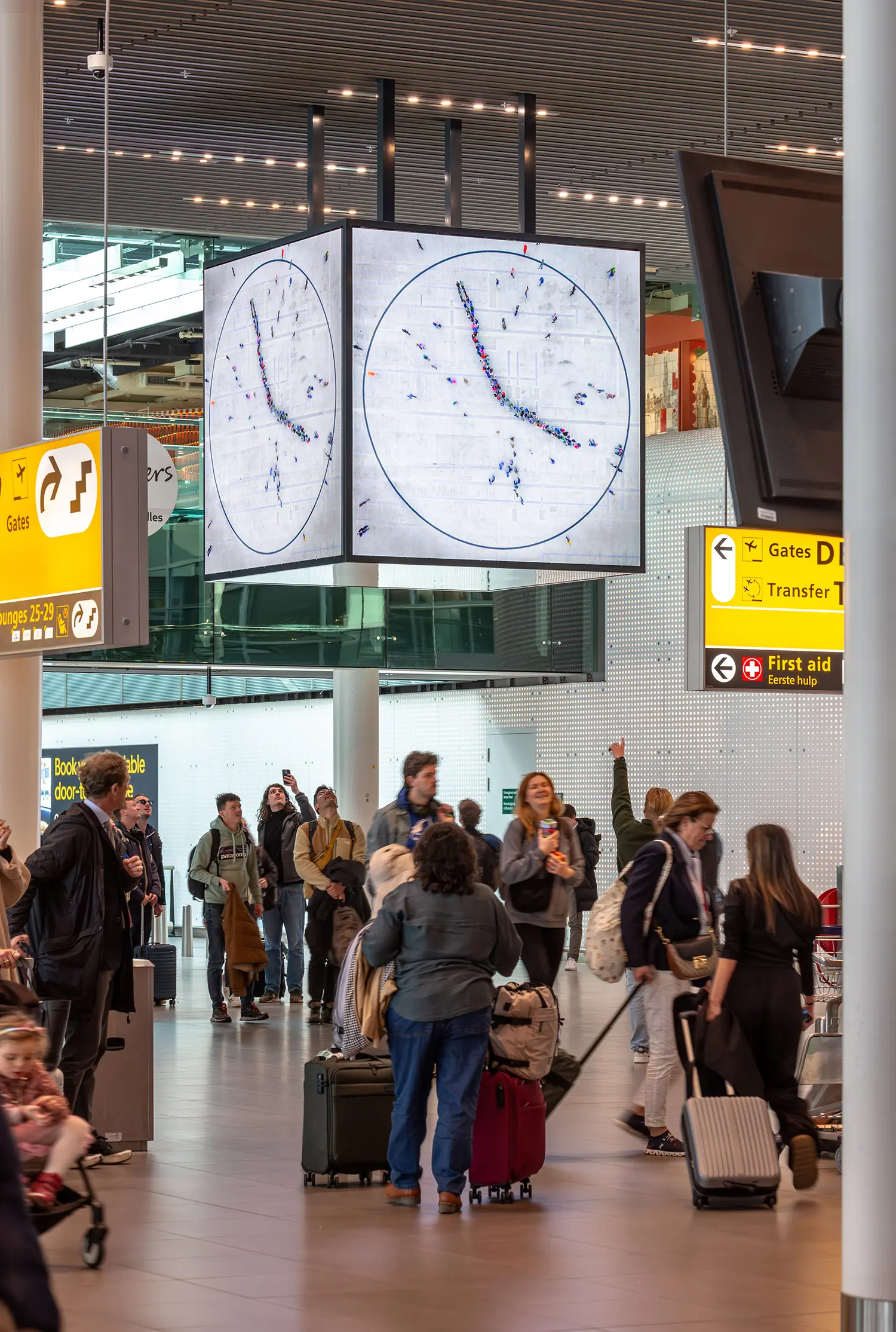
The sensory impact of the scale is striking as the “human hands” rotate across the screen, allowing the viewer to perceive individual figures within the mass. The rhythmic, almost ritualistic movement of the crowd provides a hypnotic counterpoint to the frantic energy of the lounge, grounding the high-tech environment in a relatable reality and transforming the infrastructure of aviation into a tangible social ecosystem.
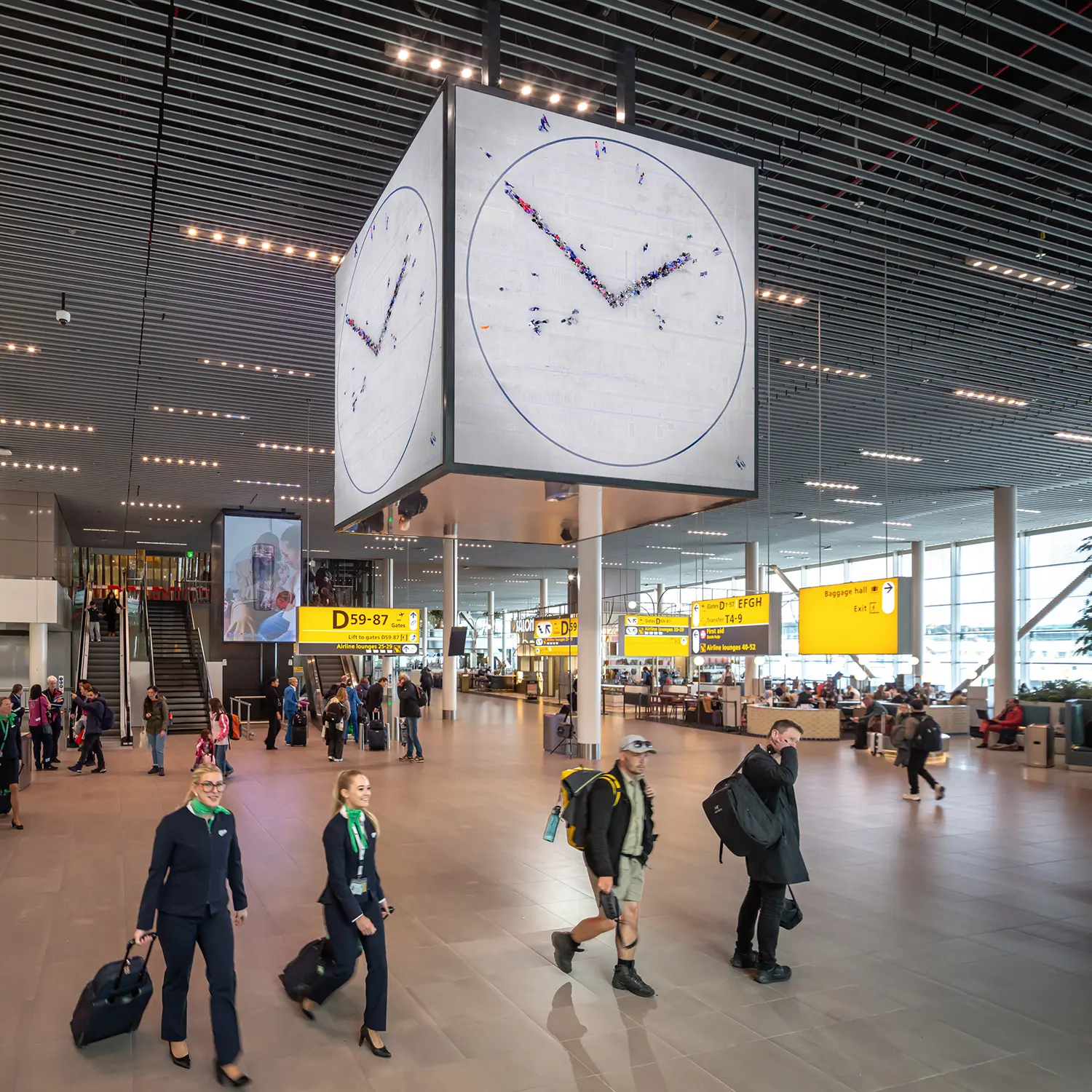
Contextualizing the legacy of public art at Schiphol reveals a commitment to works that challenge the anonymity of “non-places” by celebrating collective identity. By placing employees at the center of the frame, Baas elevates the social fabric of the airport to an iconic status, ensuring that the faces of those who facilitate the journey are permanently etched into the traveler’s timeline, turning a transit zone into a place of shared story-telling.
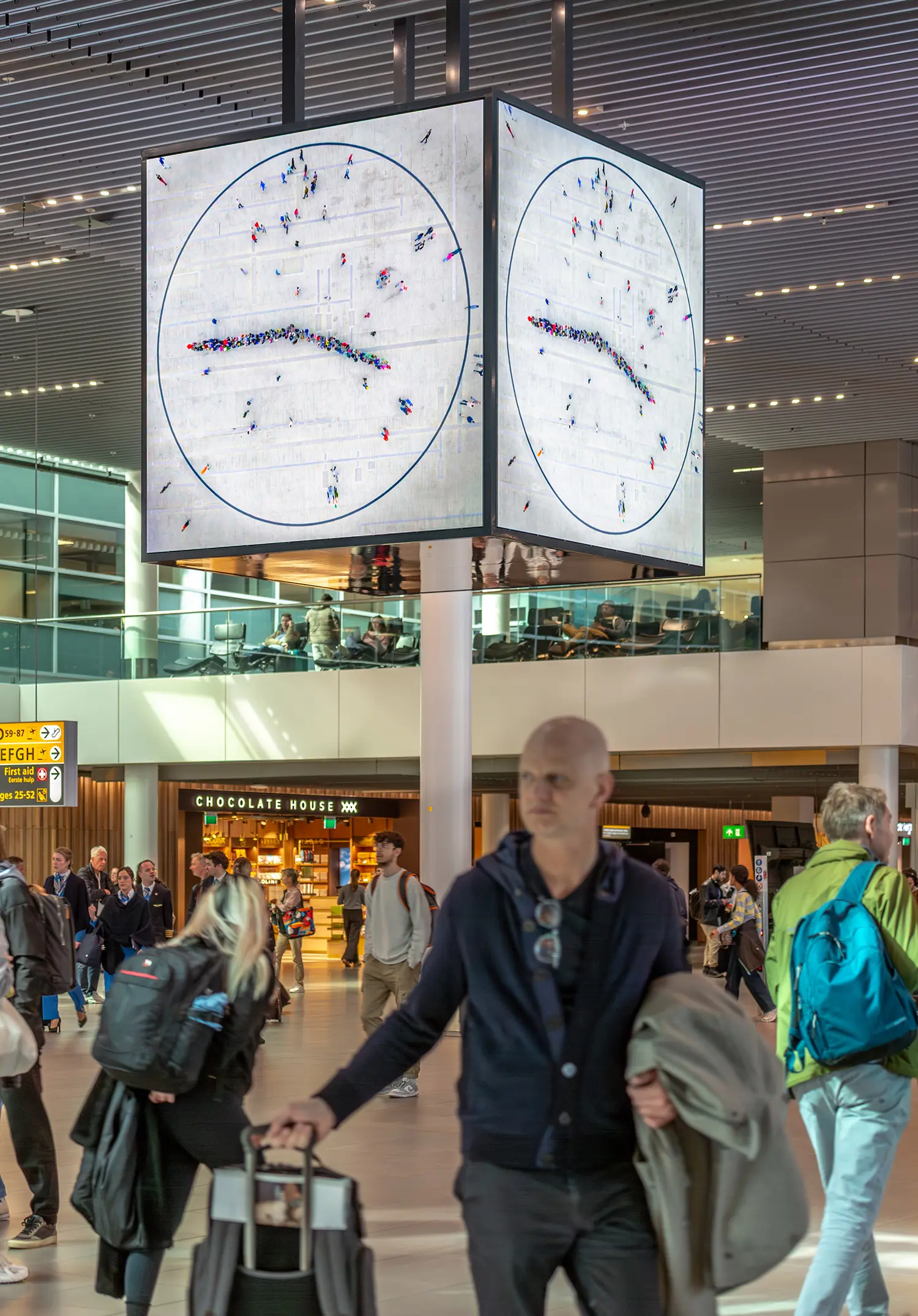
The enduring relevance of the Real Time series lies in its ability to humanize the most rigid of structures, reinforcing the idea that the human element remains the most vital component of our shared spaces. As Schiphol continues to evolve, this collaboration stands as a testament to the fact that while time may be a measurement, the way we inhabit it is an inherently social act, cementing a legacy that has defined the platform’s vision for over ten years.