



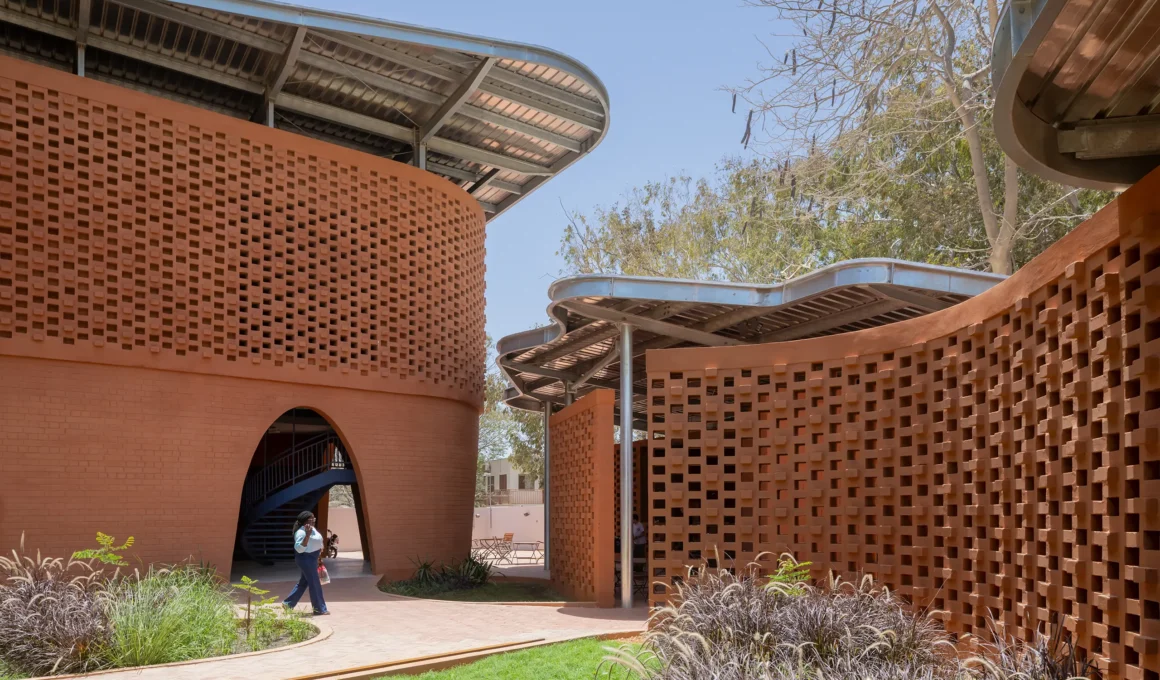
The new headquarters of the Goethe-Institut in Dakar, designed by Kéré Architecture, marks a historic milestone as the institution’s first purpose-built facility in its 75-year history, blending locally sourced compacted earth construction with a permeable, canopy-inspired form that fosters cultural exchange in the heart of Senegal’s capital.
A visionary landmark for West Africa, the project reflects an ambitious shift in how international cultural organizations inhabit urban spaces. Inaugurated on April 18, 2026, in the presence of dignitaries including Minister Amadou Ba and Gesche Joost, the building is not merely a functional hub for language and art; it is a physical manifesto. By selecting Francis Kéré to lead the design, the Goethe-Institut has prioritized a philosophy where sustainable construction and regional identity dictate the form, rather than imposing a Western aesthetic on the Dakar landscape.
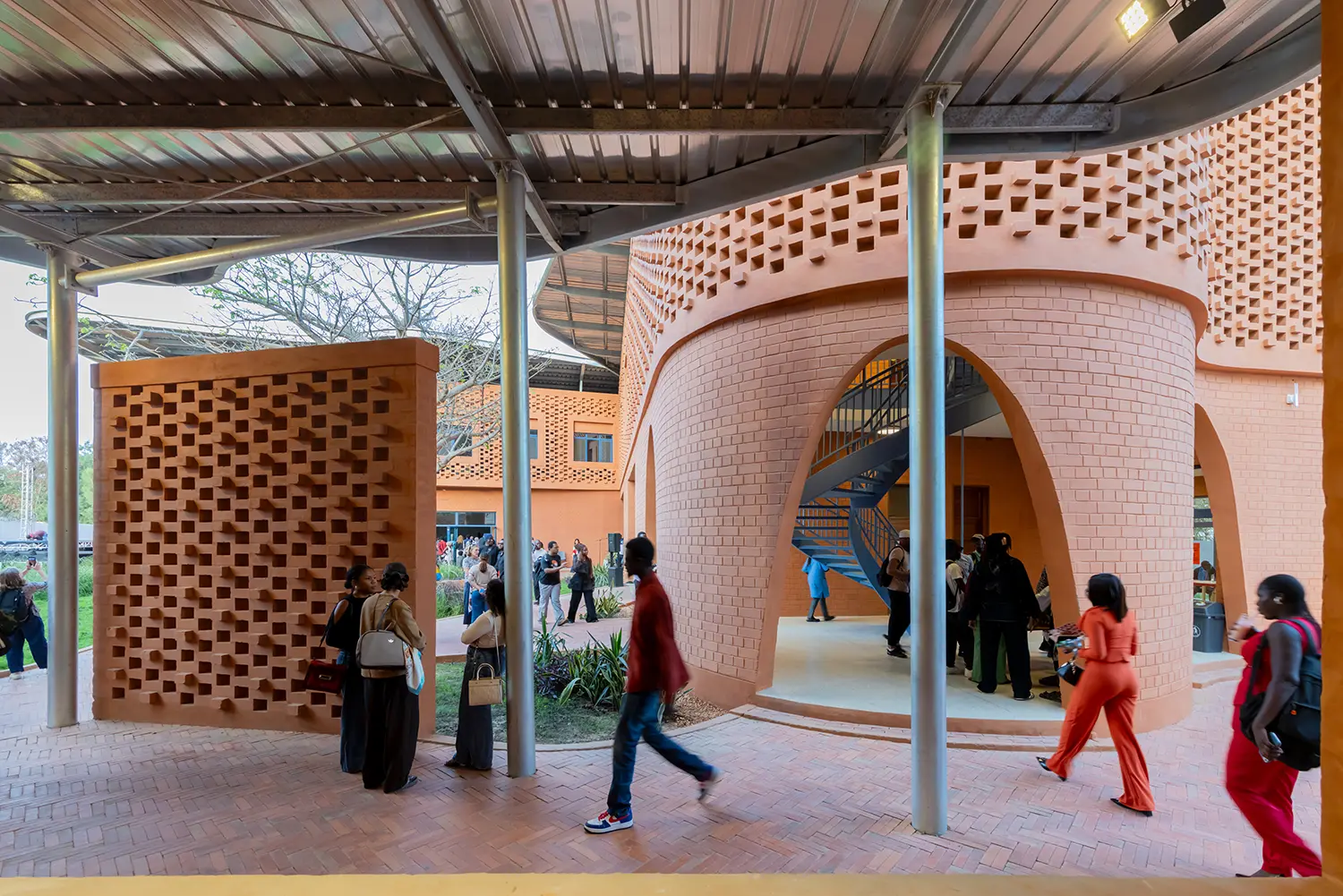
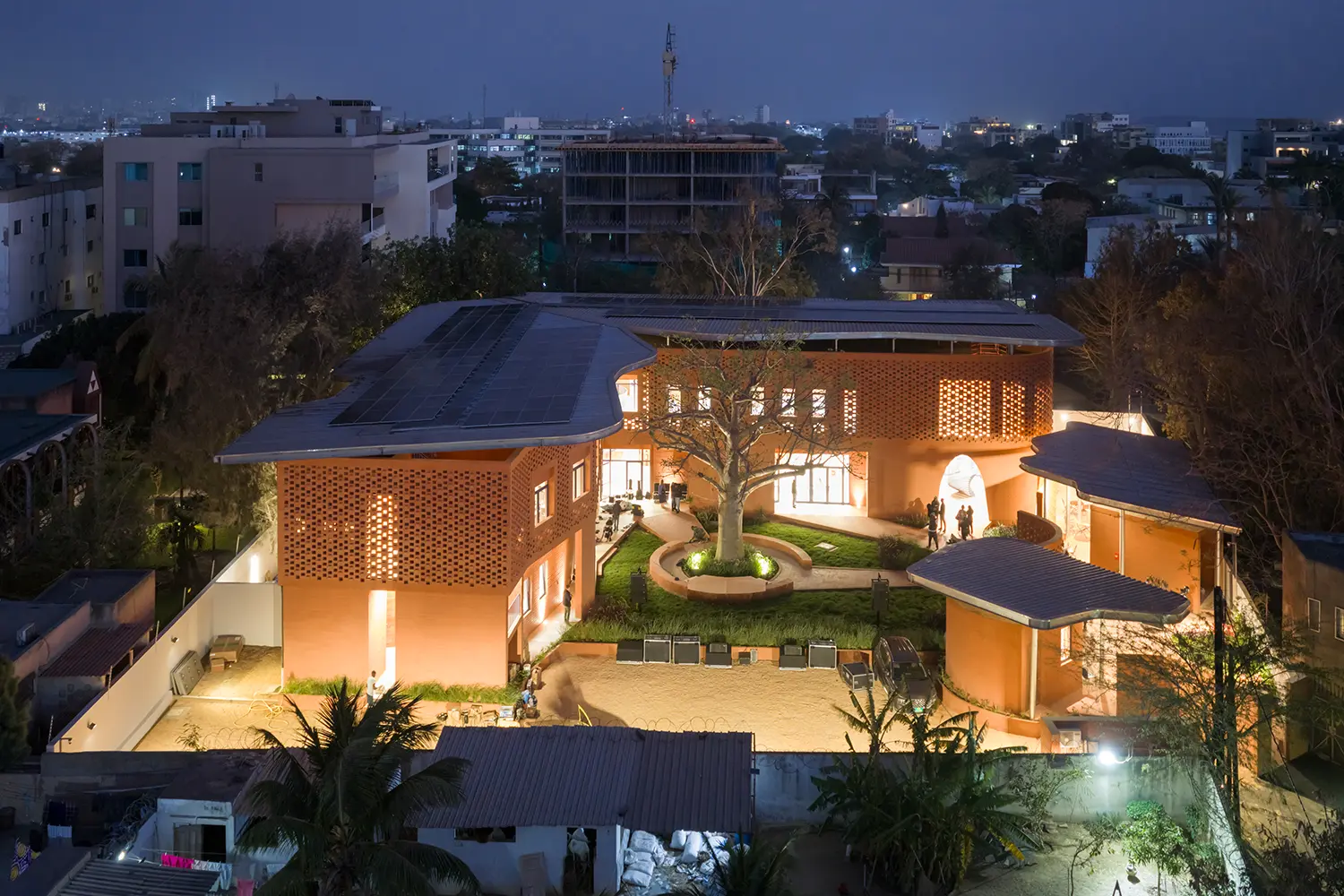
The conceptual soul of the project lies in the dialogue between the built environment and the existing natural ecosystem. Situated in a residential area near the Léopold Sédar Senghor Museum, the structure is shaped by the presence of mature trees. Instead of clearing the site, Kéré Architecture carved the building’s footprint to mirror the canopy outlines, creating a two-story form that feels as though it grew organically within the garden. This rhythmic massing serves a dual purpose: it acts as an acoustic shield for the neighborhood while offering visitors a secluded retreat from the city’s kinetic energy.
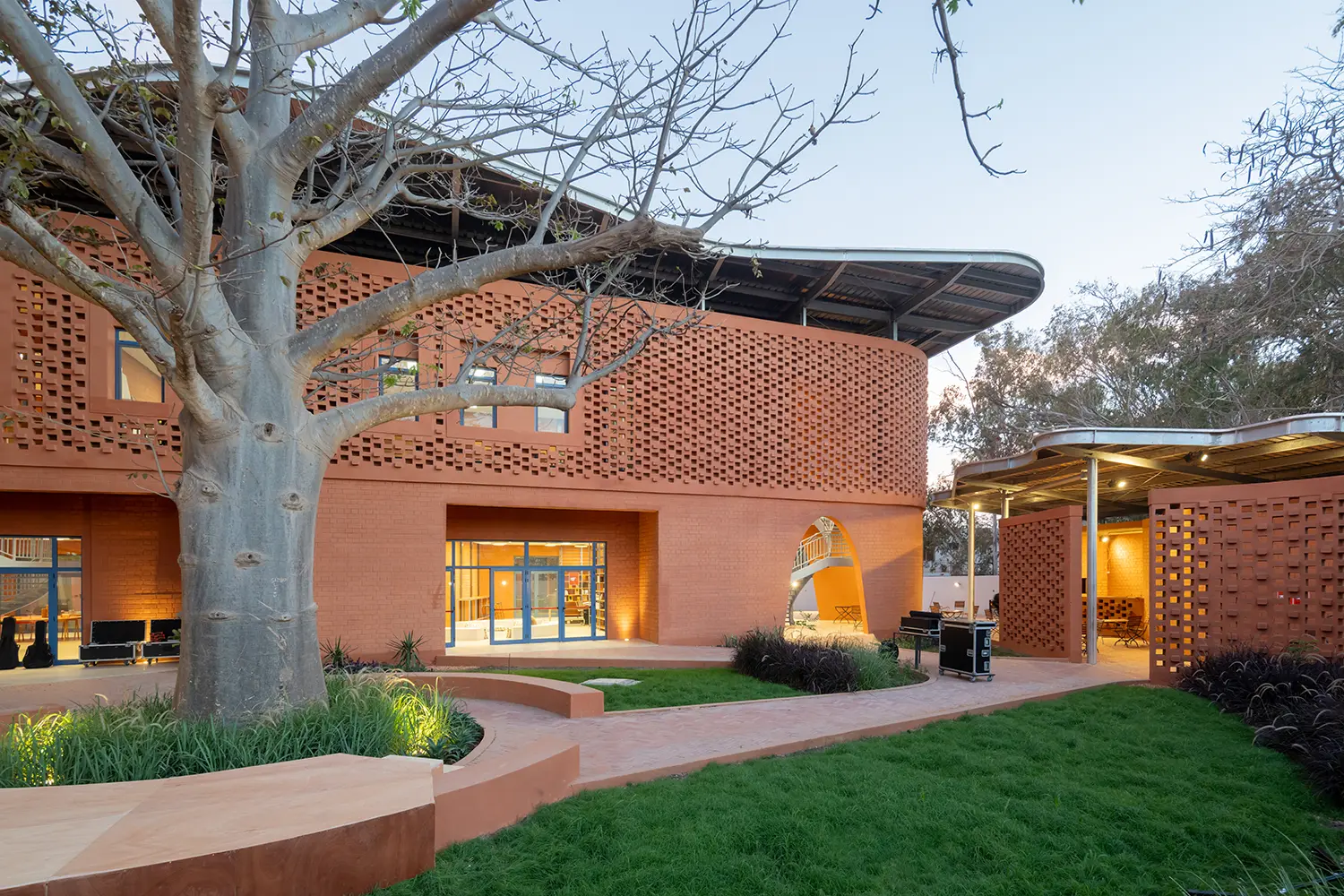
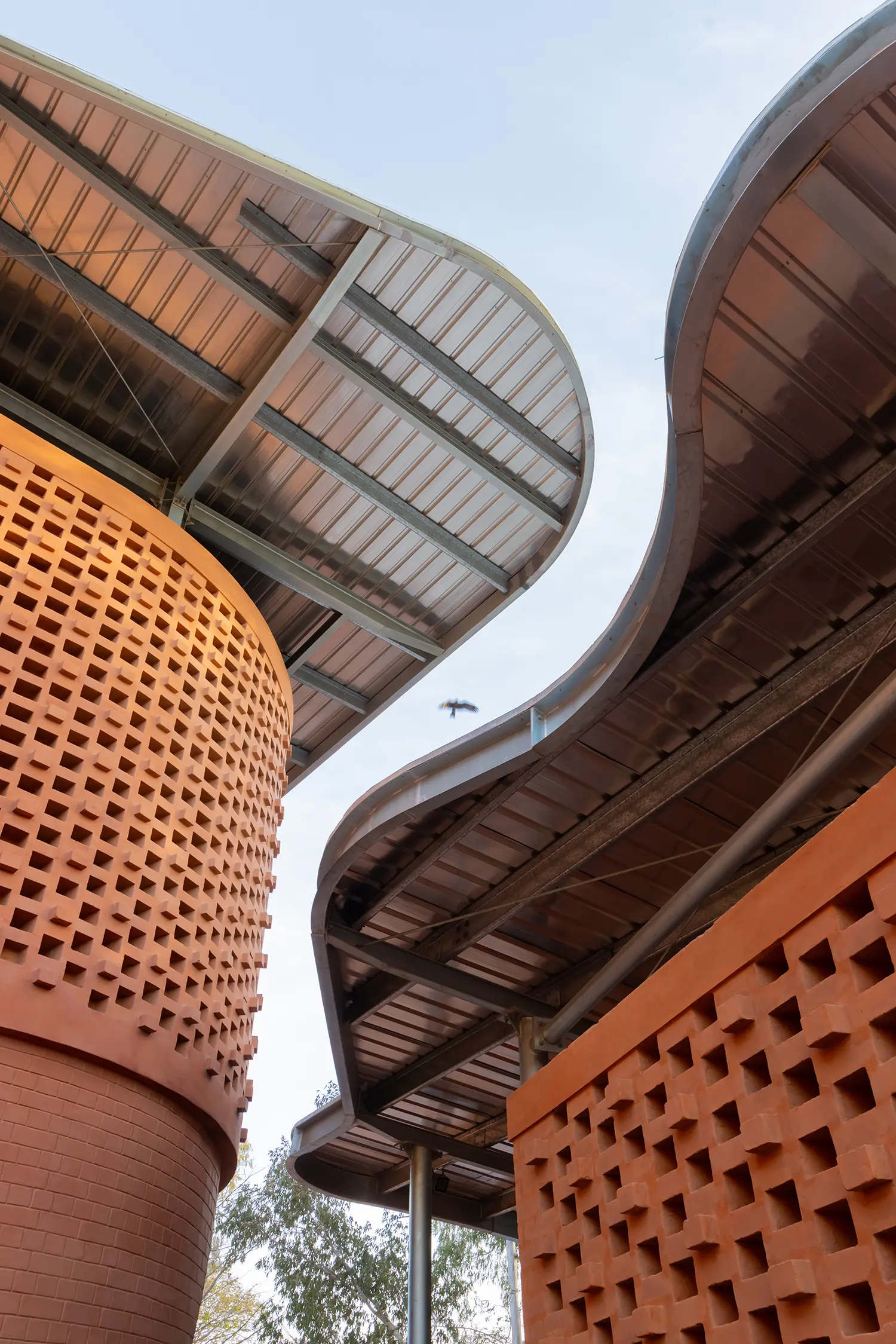
Materiality and tactile resonance define the sensory experience of the site. The walls are composed of compacted earth blocks, a signature of Kéré’s commitment to vernacular resources. This choice lends the building a grounded, thermal mass that regulates the internal climate naturally. Surrounding this solid core is a second, translucent outer skin, a permeable layer that allows the building to “breathe.” As light filters through this veil, it creates a shifting play of shadows, ensuring that the transition between the vibrant gardens and the interior classrooms remains soft and inviting.
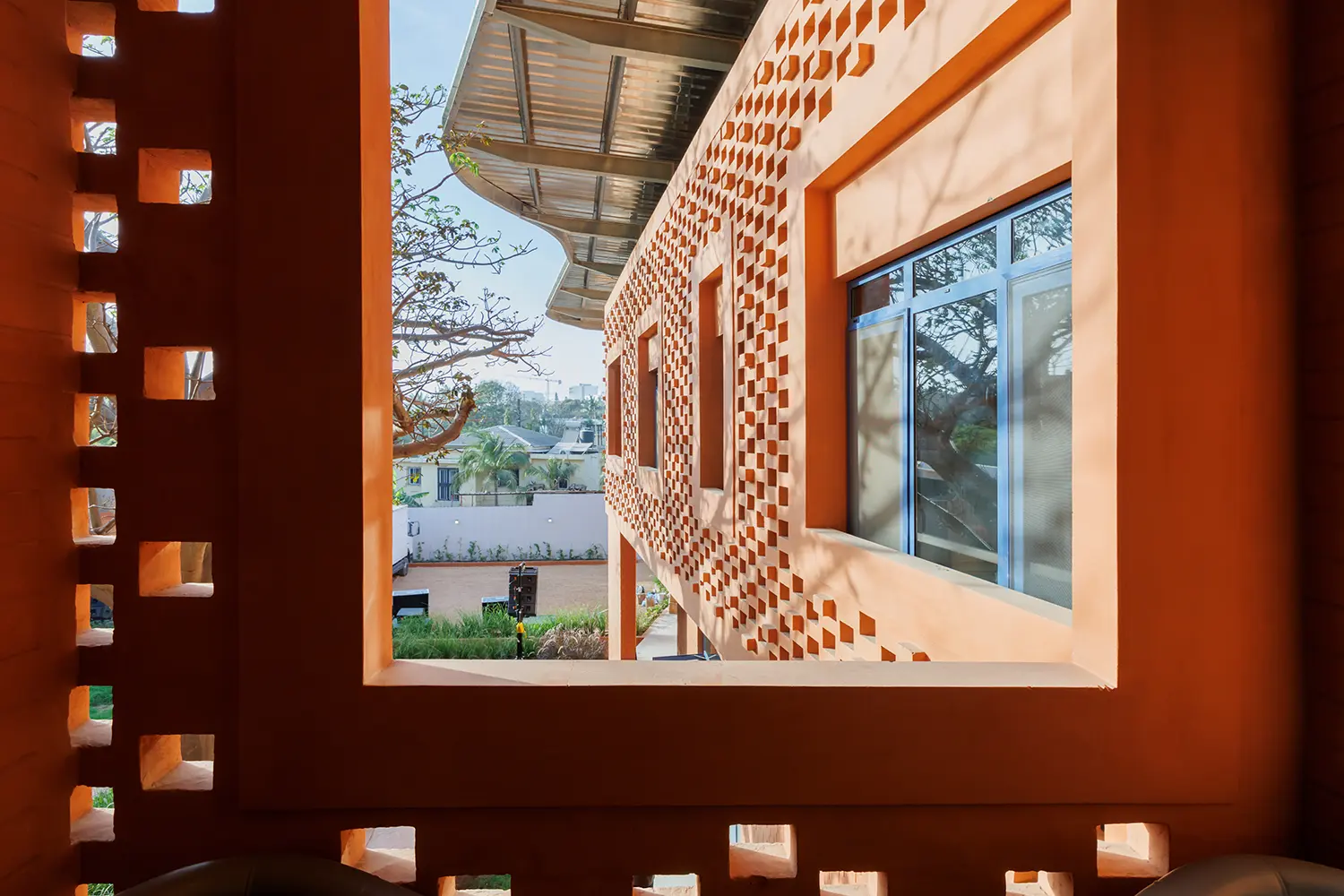
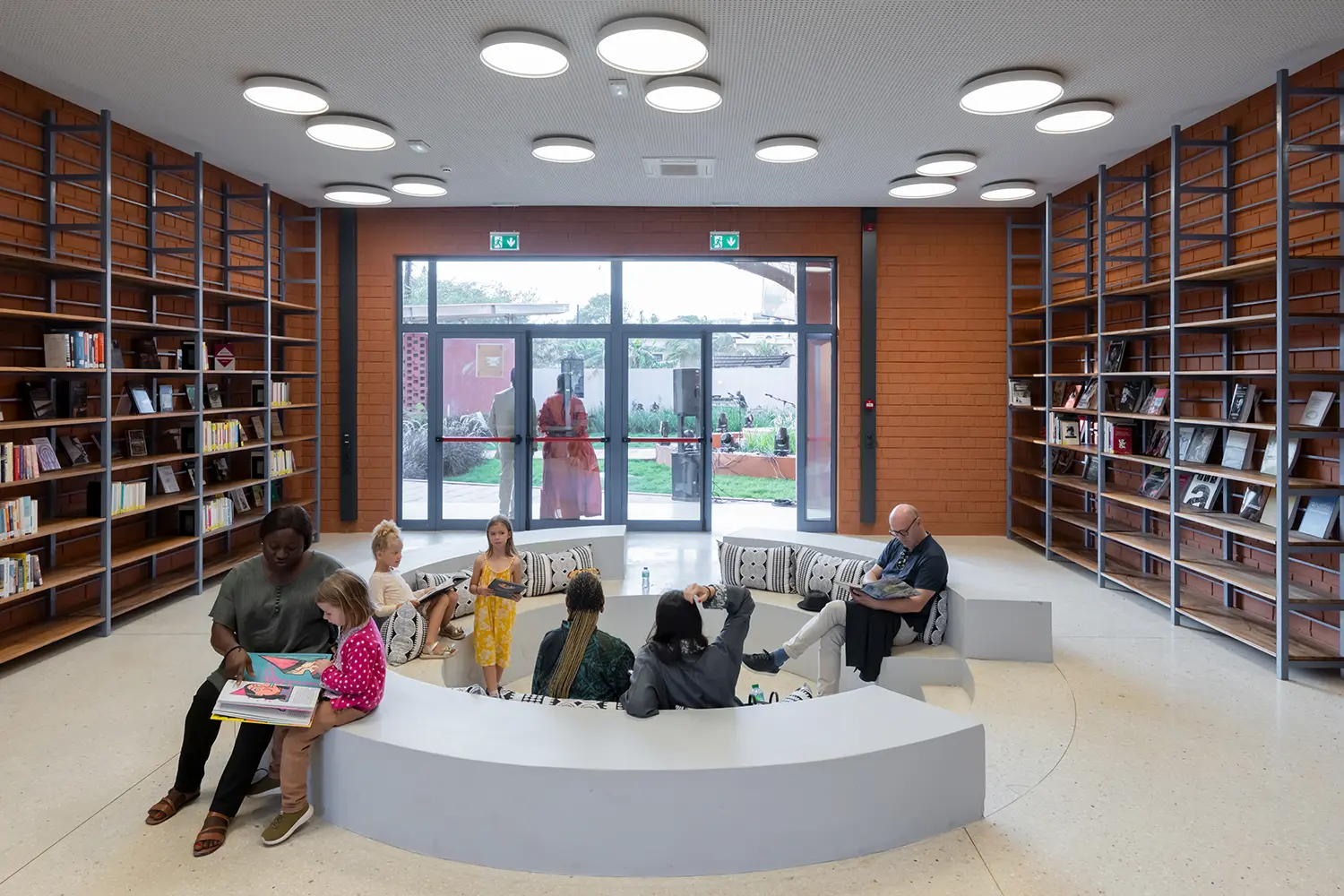
Public-facing vitality is concentrated on the ground floor, where the boundary between the institution and the city intentionally blurs. Here, an auditorium, cafeteria, and library serve as the “living room” of the project. These spaces are designed for informal gatherings and artistic experimentation, moving beyond the rigid structure of traditional classrooms. The air in these common areas feels cool and circulated, a result of the intelligent orientation that harnesses coastal breezes, proving that passive cooling can be both efficient and aesthetically sophisticated.
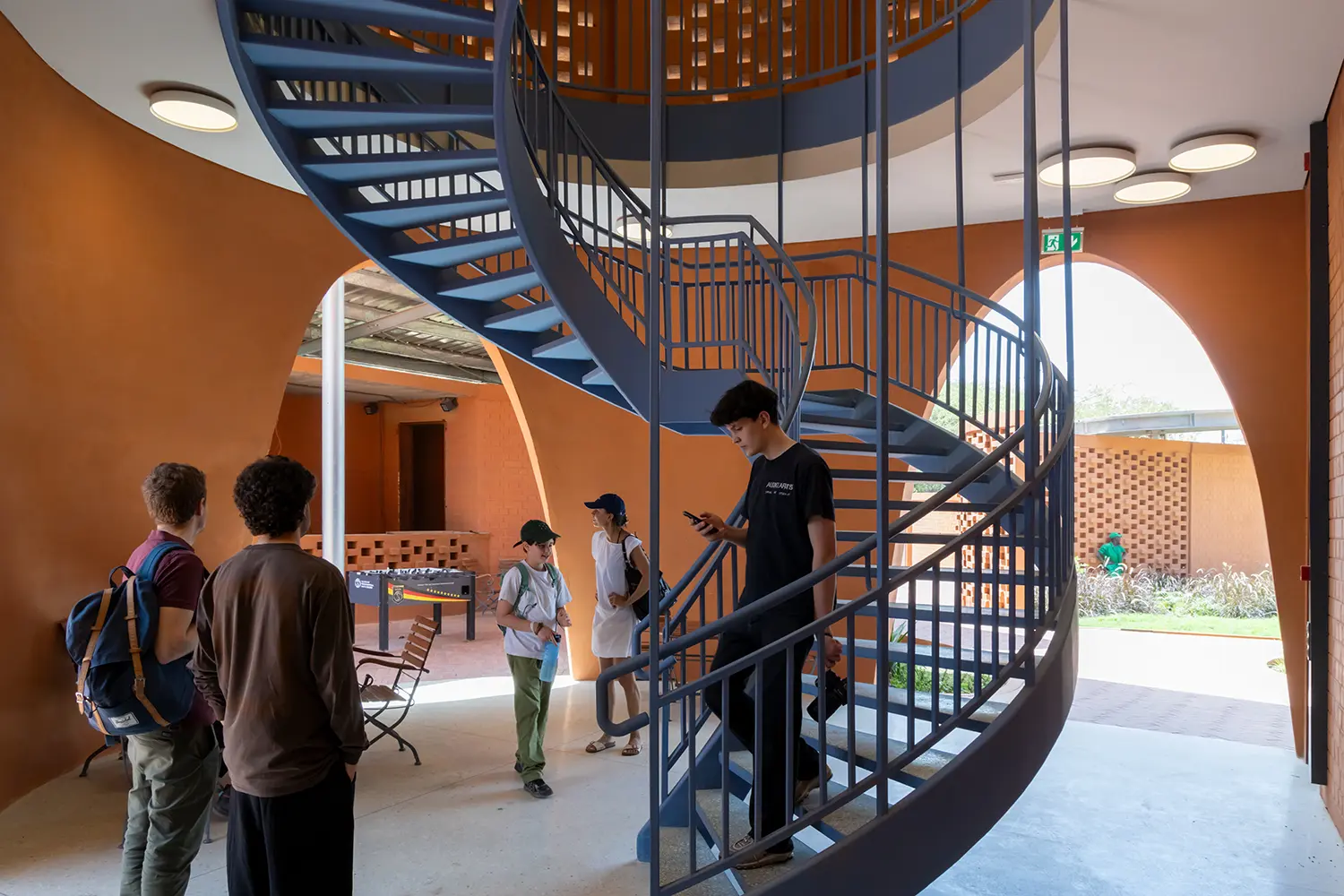
Technical precision characterizes the upper level, which houses administrative offices and language labs. Overarching the entire composition is a sprawling canopy roof, a lightweight technical feat that echoes the sheltering trees below. This roof is the building’s primary defense against the tropical elements, providing deep shade and shedding heavy rains away from the earth-block walls. By separating the protective roof from the functional volumes, Kéré creates a buffer zone of air that significantly reduces the reliance on mechanical ventilation, reinforcing a minimal ecological footprint.
A bridge of translation, the building serves as a site of negotiation between cultures. As Dr. Stefanie Peter noted, the architecture itself facilitates a “translation” of values between West Africa and Europe. It is a space where the act of meeting is as important as the act of learning. The design avoids the cold, institutional feel often associated with diplomatic outposts, opting instead for a rooted and flexible atmosphere that honors Dakar’s position as a global cultural capital.
Community-centric ethics remain at the forefront of the studio’s evolving portfolio. The Goethe-Institut joins a lineage of projects that prioritize local empowerment through sophisticated engineering. We have seen this same sensitivity in the Ineza Clinic in Burundi, where health and community are inextricably linked, and in the Thomas Sankara Mausoleum, which navigates the weight of history with grace. Whether through the expansive vision of a public library in Rio de Janeiro or this latest intervention in Dakar, the focus remains on creating spaces that belong to the people who use them.
The future of cultural diplomacy will likely be measured by the longevity and relevance of its physical presence. In Dakar, the Goethe-Institut and Kéré Architecture have created a template for how global entities can land softly in local contexts. By moving away from imported materials and rigid forms, the project demonstrates that the most impactful structures are those that listen to the soil, the climate, and the community. It is a vibrant, living entity that invites the public to participate in a shared, inclusive future.