



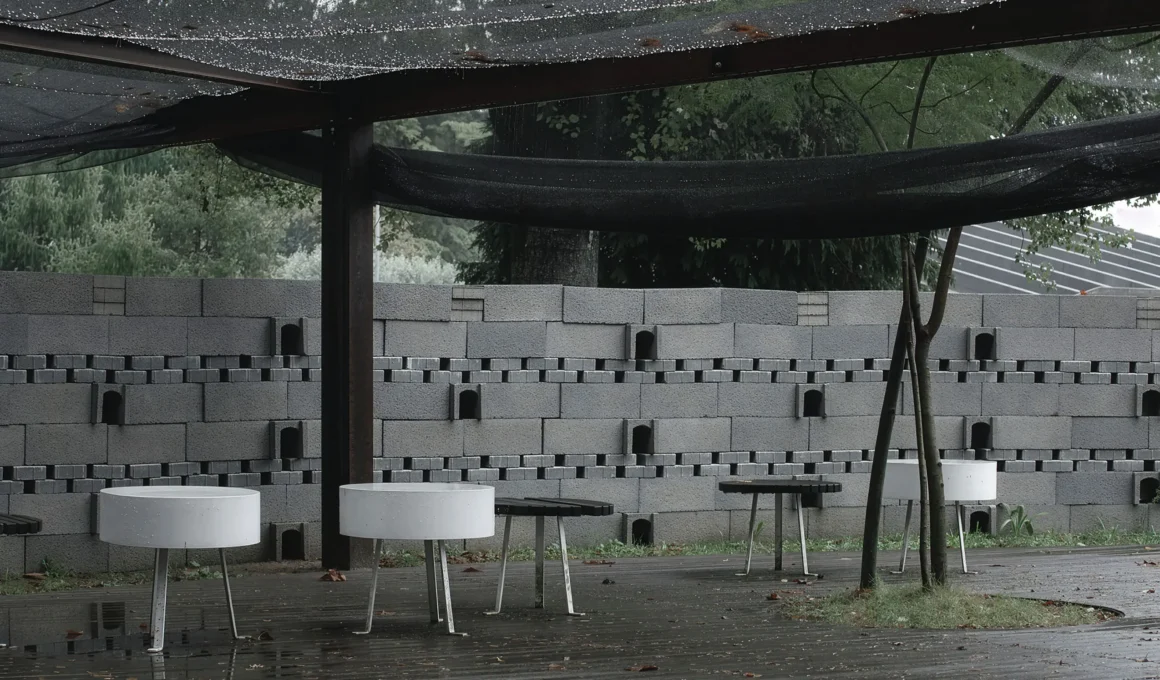
Located within the historical layers of Quinta da Capela in Braga, Portugal, the Rotação pavilion by ATA – Atelier Tiago Antero emerges as a circular intervention that intertwines collective memory with the circular economy of the construction industry. Developed for the Forma da Vizinhança Festival, the project serves as a permanent space of gathering, centered around a jacaranda tree that survived urban redevelopment through the resilience of the local community.
The genesis of the intervention is found in a single, poetic gesture: a tree gifted by the poet Eugénio de Andrade to a resident. This living monument became the anchor for the pavilion’s geometry. By utilizing the symbolism of the circle, Ata Atelier has defined two distinct temporal layers—the pavement and the tree pit—creating a physical dialogue between the site’s past and its newfound public function. The resulting form is not merely an object placed in a garden, but a rhythmic extension of the neighborhood’s shared history.
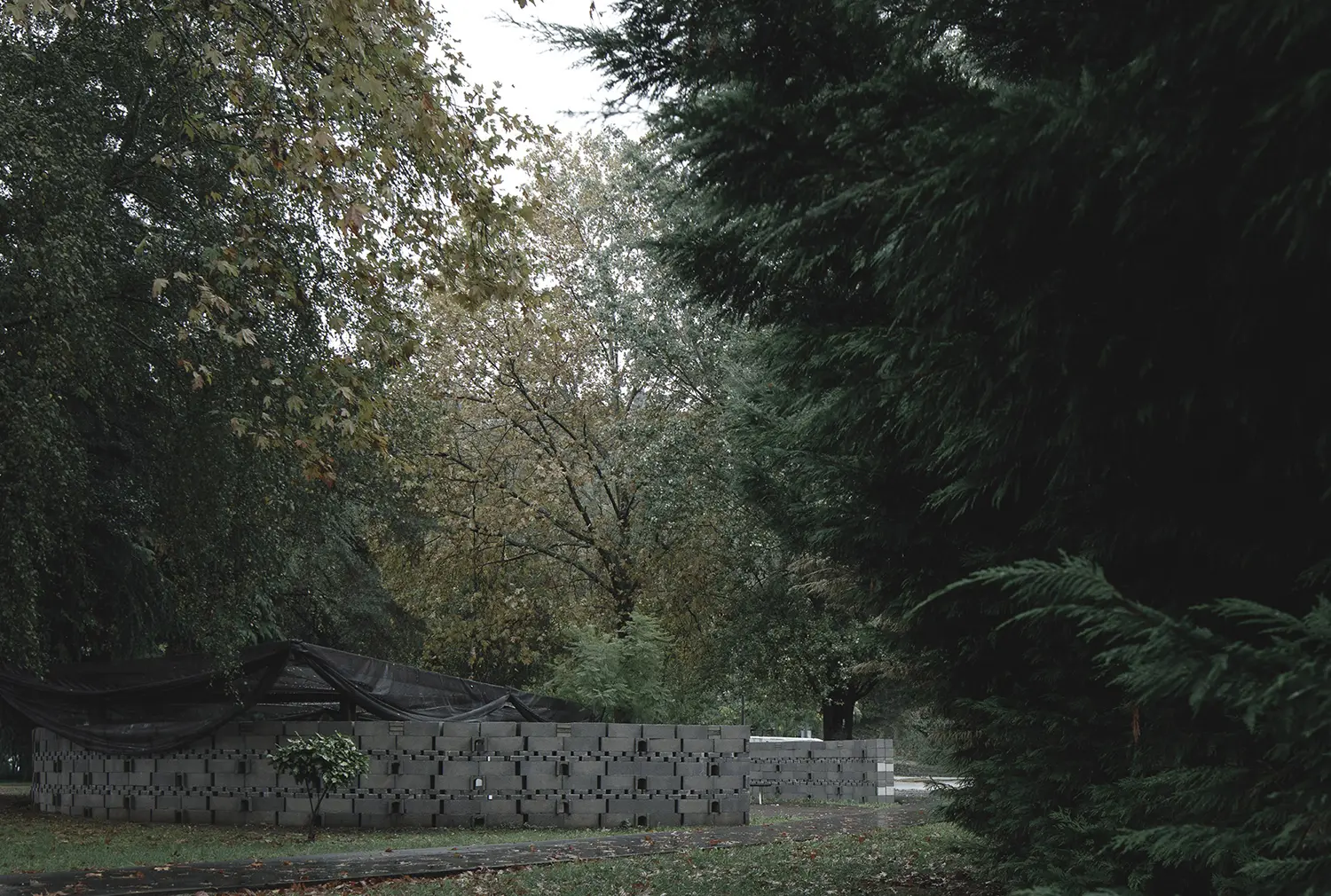
Material honesty and resource rotation define the technical logic of the structure. Braga is a city shaped by the construction industry, a fact the architects chose to embrace by utilizing discarded materials. The pavilion was conceived as a dry-construction assembly of leftovers, entirely devoid of finishes. This approach ensures that the structure is not a finality but a temporary state of matter; it is designed to be dismantled, reconfigured, and reborn in different contexts, echoing the principles of sustainable urbanism.
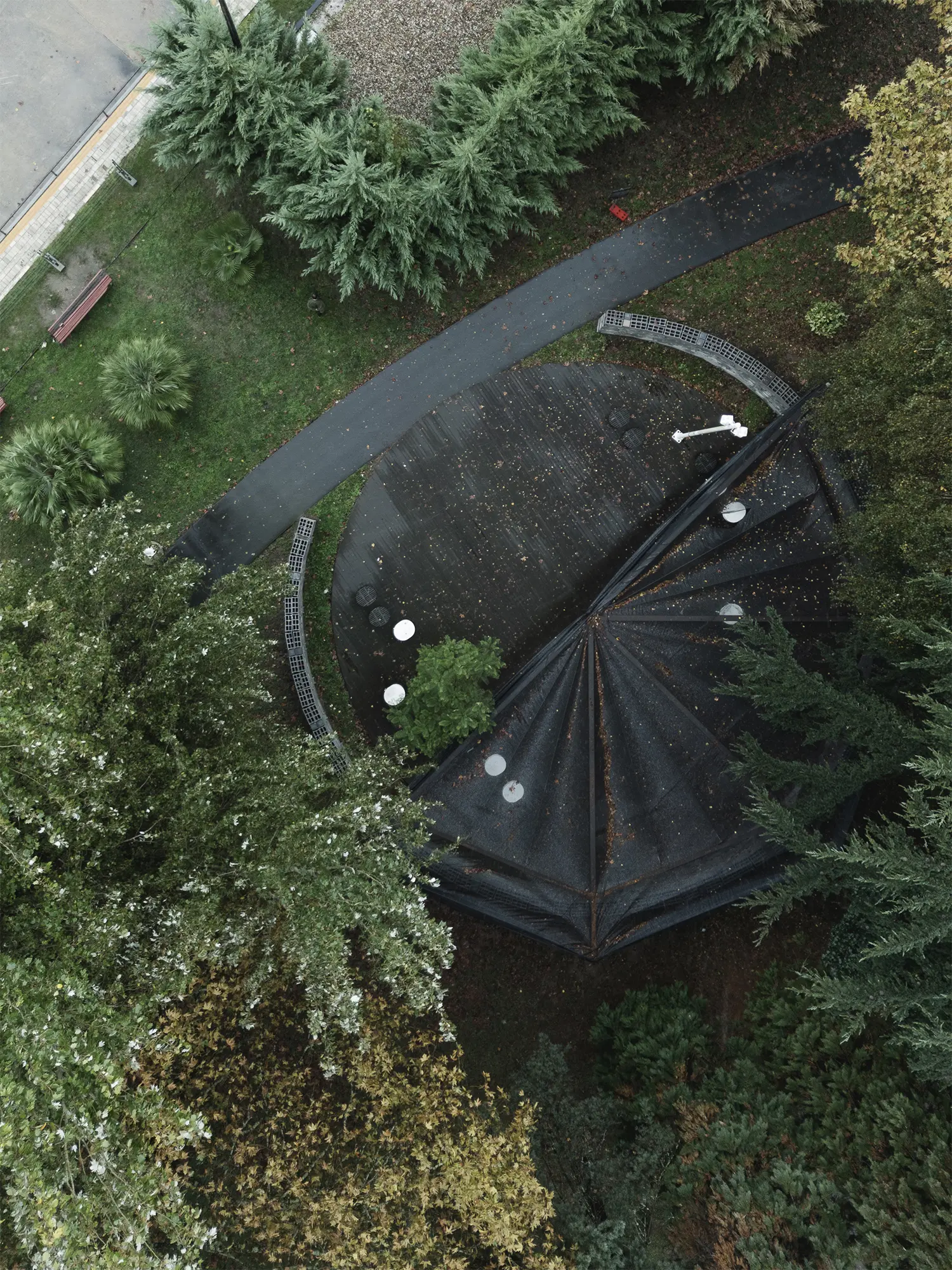
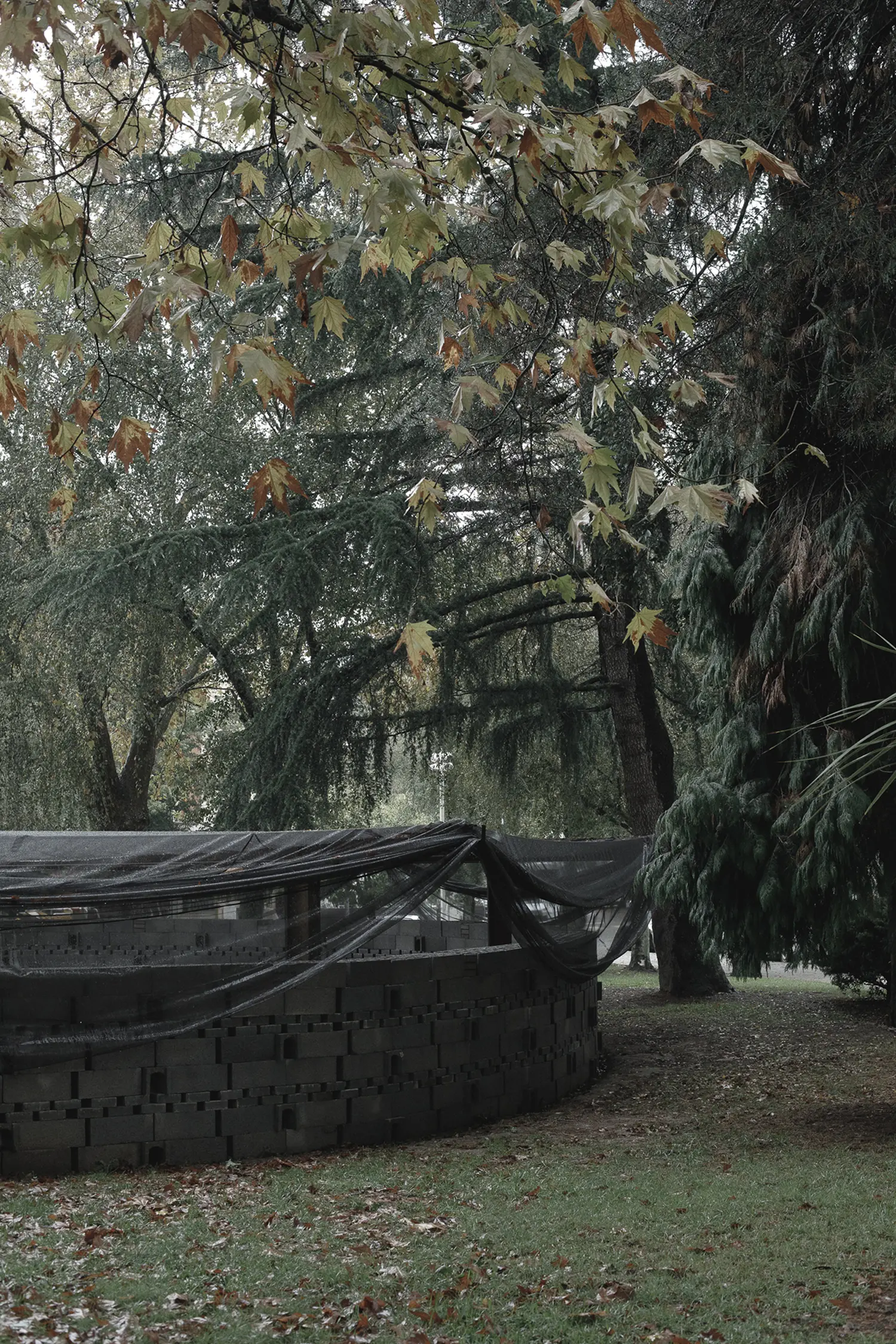
The structural composition is divided into three primary elements: a wall, a metal frame, and a porous roof. The concrete block wall traces a permeable perimeter, its modularity dictating the radial logic of the entire ensemble. These blocks, usually hidden within the guts of residential buildings, are here elevated to a tactile, rhythmic boundary that invites touch and provides a sense of enclosure without isolation.
A found metal structure rises from this masonry base, following the radial metric established by the wall. Salvaged from a local warehouse, the steel components provide a lightweight skeleton that contrasts with the density of the concrete. This industrial reuse highlights the potential of local waste streams, transforming “scraps” into a sophisticated framework that supports the pavilion’s crowning element.
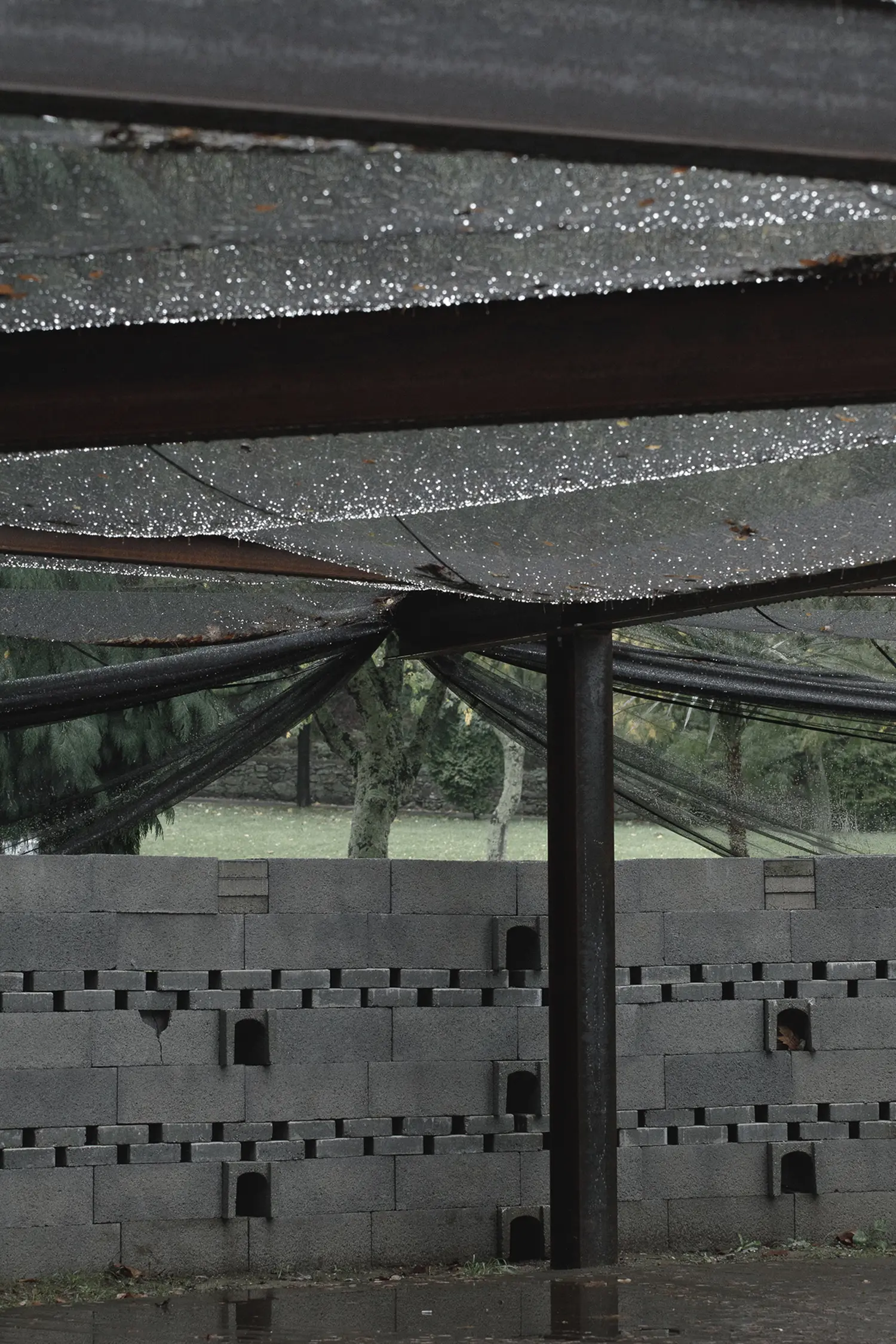
The overhead experience is defined by a porous mesh roof supported by delicate arches. These arches embrace the circular wall without ever physically touching it, creating a tension between the weighted base and the ethereal canopy. The mesh filters the Portuguese sun, casting dynamic shadows across the ground and creating a sensory environment that shifts with the passage of the day, blurring the line between the built interior and the surrounding greenery.
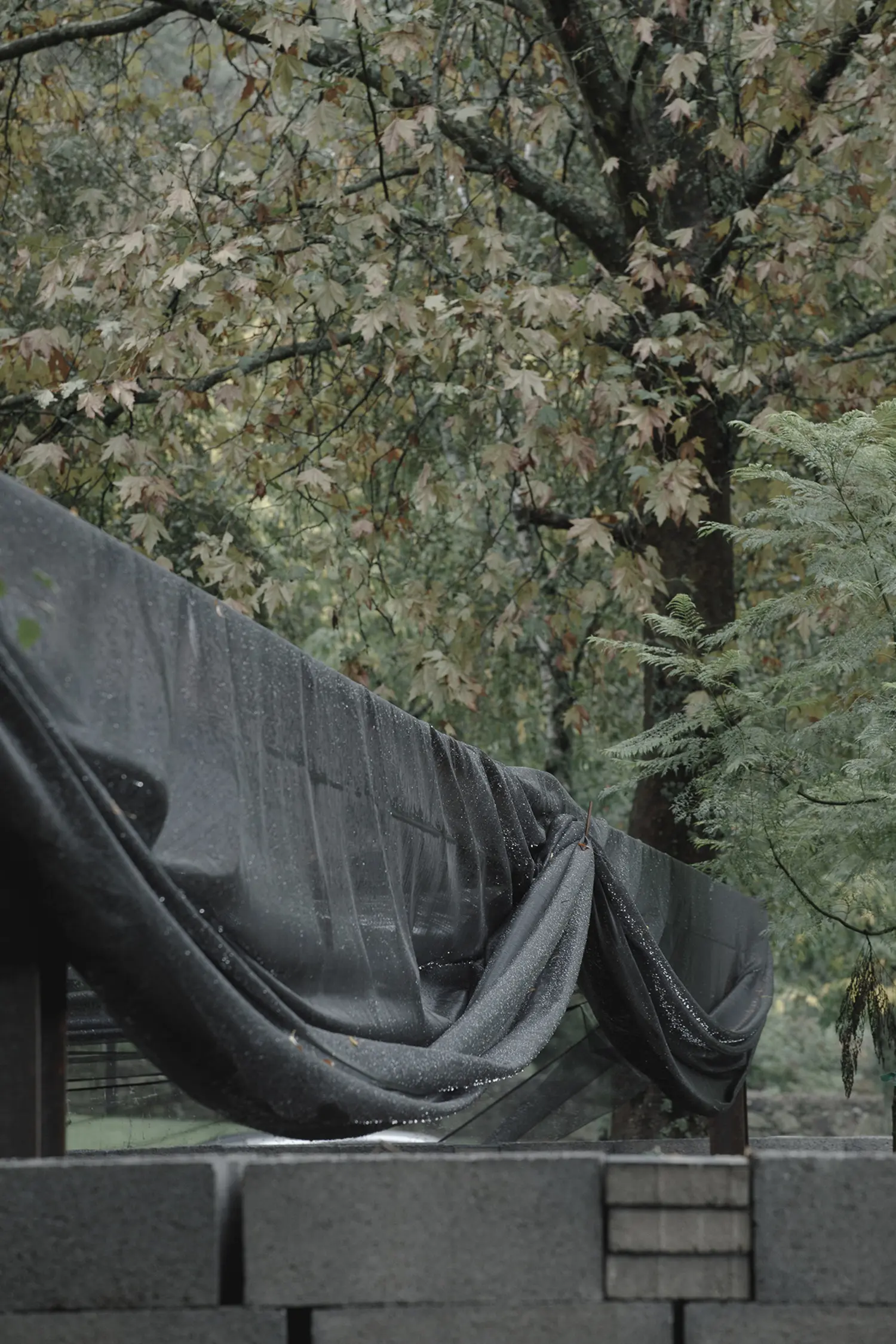
Social interaction and permanence are the true metrics of the project’s success. By creating a public gathering space, Ata Atelier has provided the Quinta da Capela community with a focal point that validates their history. The pavilion acts as a catalyst for conversation, a quiet spot for reflection under the jacaranda, and a testament to how modest interventions can significantly alter the urban fabric of a neighborhood.
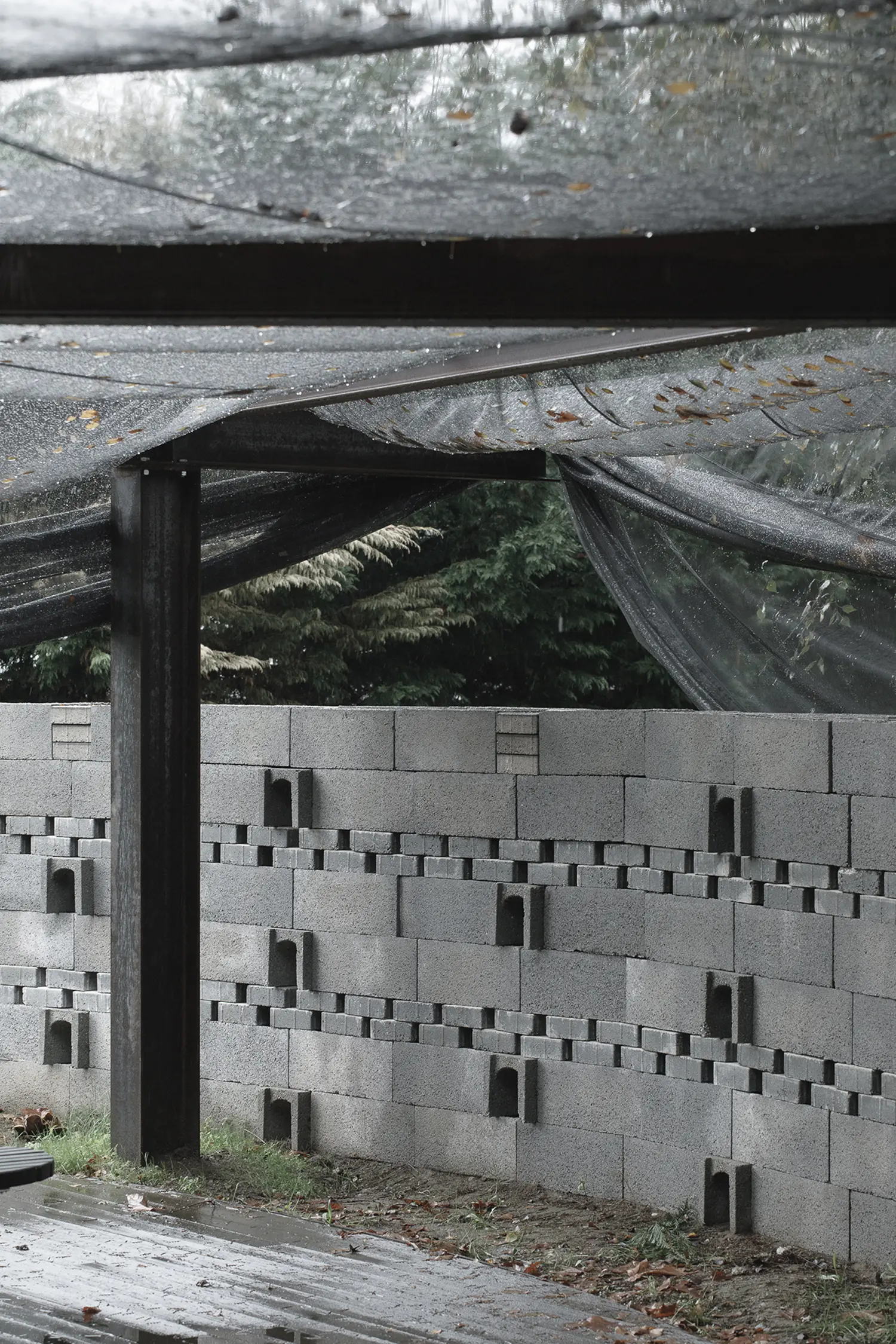
The plastic rotation of these three distinct elements—each with its own origin and function—results in a cohesive whole that feels both ancient and contemporary. It avoids the pitfalls of over-complicating the program, instead focusing on the spatial quality generated by simple geometries and raw materials. The intervention proves that the value of a project lies not in the cost of its components, but in the intelligence of their arrangement.
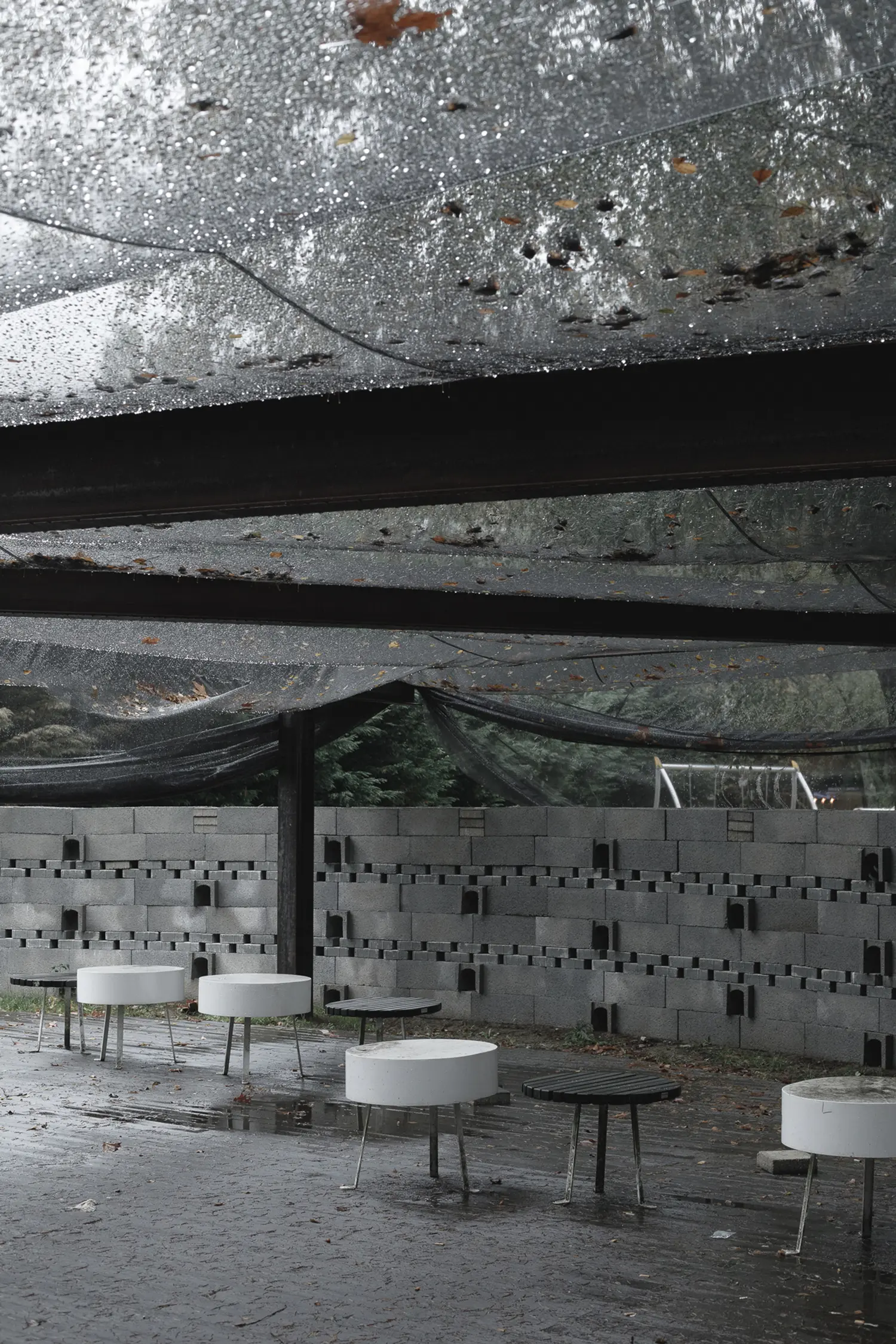
This dialogue between ephemeral pavilions and the natural landscape reflects an evolving trend in global practice, where the structure acts as a medium for environmental and cultural storytelling. Much like the exploration of organic growth seen in OMA’s mushroom-inspired pavilion in Mexico, or the hydraulic sensitivity of the Compluvium Pavilion by PS Estudio in Normandy, Rotação prioritizes the relationship between the built environment and its ecosystem. These projects signal a shift away from static monuments toward interactive, ecological instruments that celebrate the textures of the earth and the persistence of communal memory.