


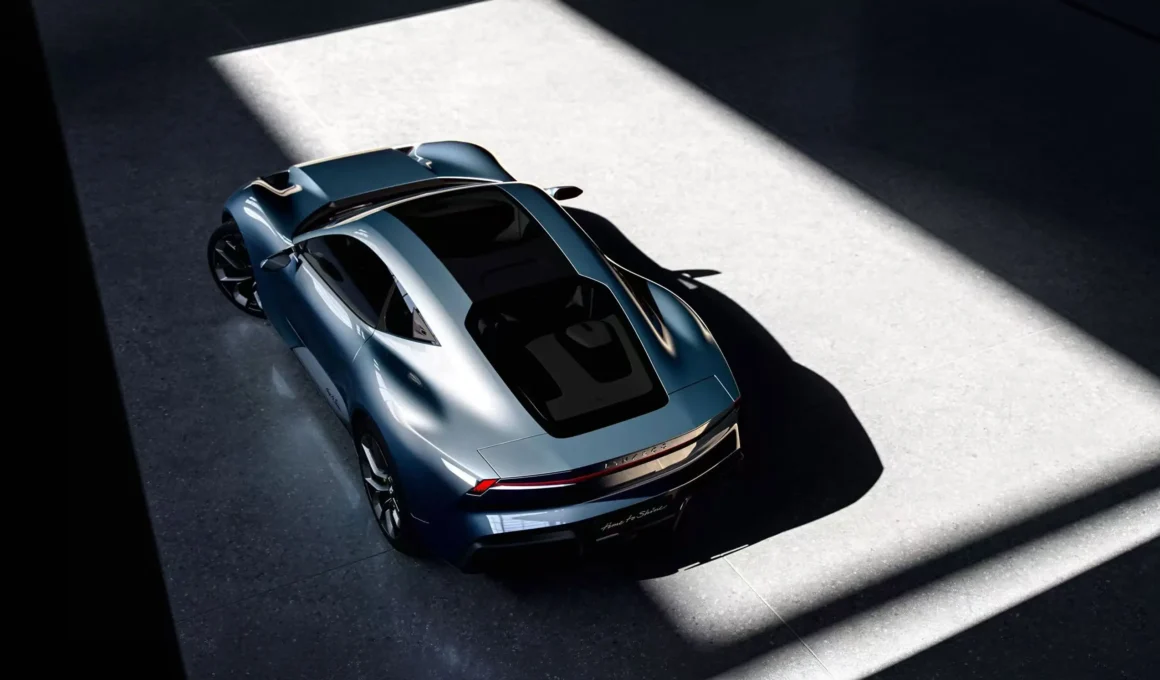
At the 2026 Beijing Auto Show, Lynk & Co has unveiled “Time to Shine,” a two-door Gran Turismo concept car developed by its Swedish design team that merges Scandinavian minimalism with high-performance motorsport DNA to celebrate the brand’s tenth anniversary.
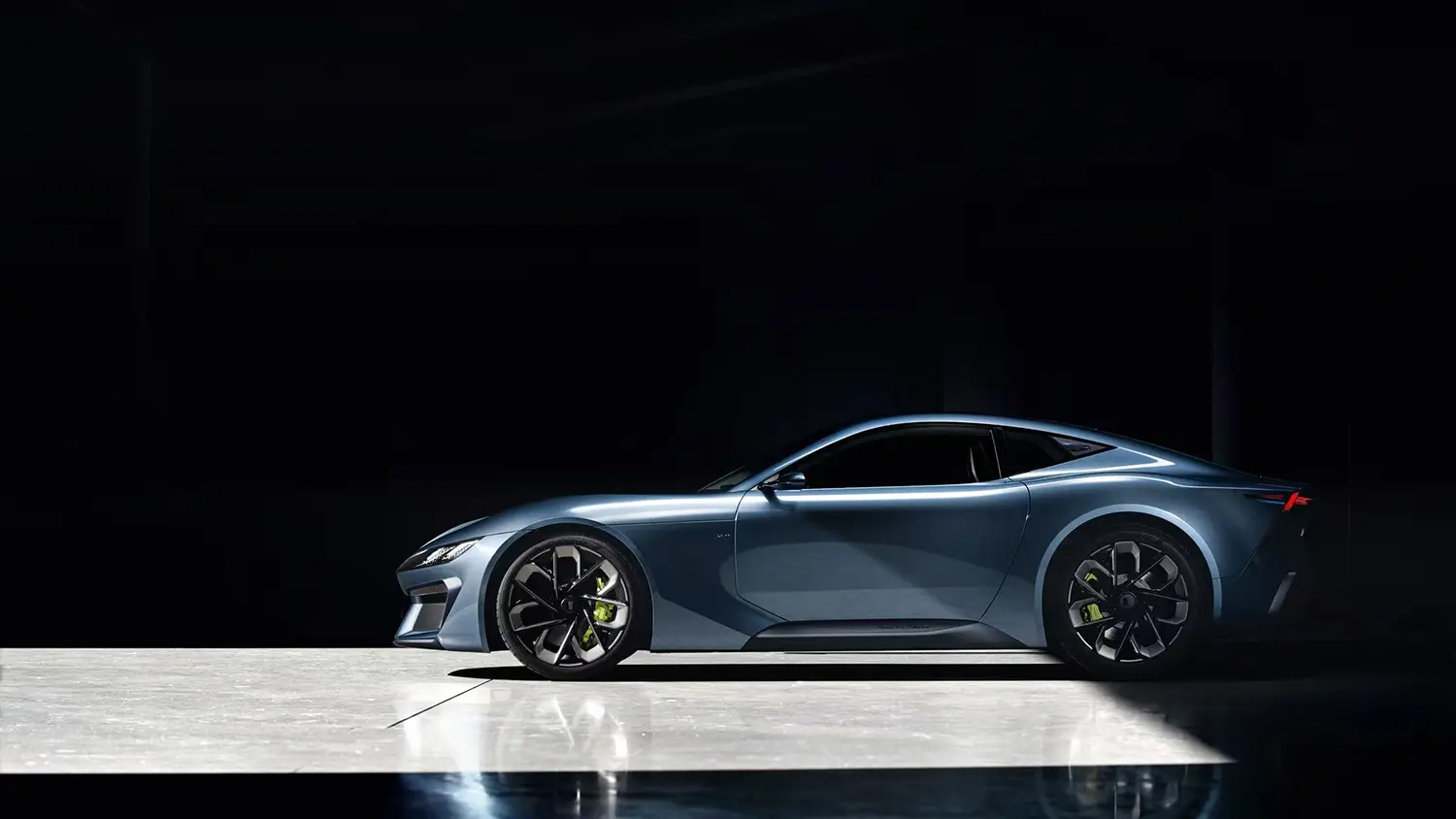
A decade of aesthetic evolution has culminated in a vehicle that attempts to redefine the luxury electric GT segment. Rather than relying on the aggressive, jagged geometry common in contemporary performance EVs, the “Time to Shine” concept adopts a philosophy of “sculpted by light.” The design team has prioritized fluid surfaces that reject static form in favor of a liquid-metal finish known as Apex Blue. This choice of palette and texture allows the car to interact with its environment, creating shifting shadows and highlights that emphasize its wide-body proportions and low-slung, purposeful stance.
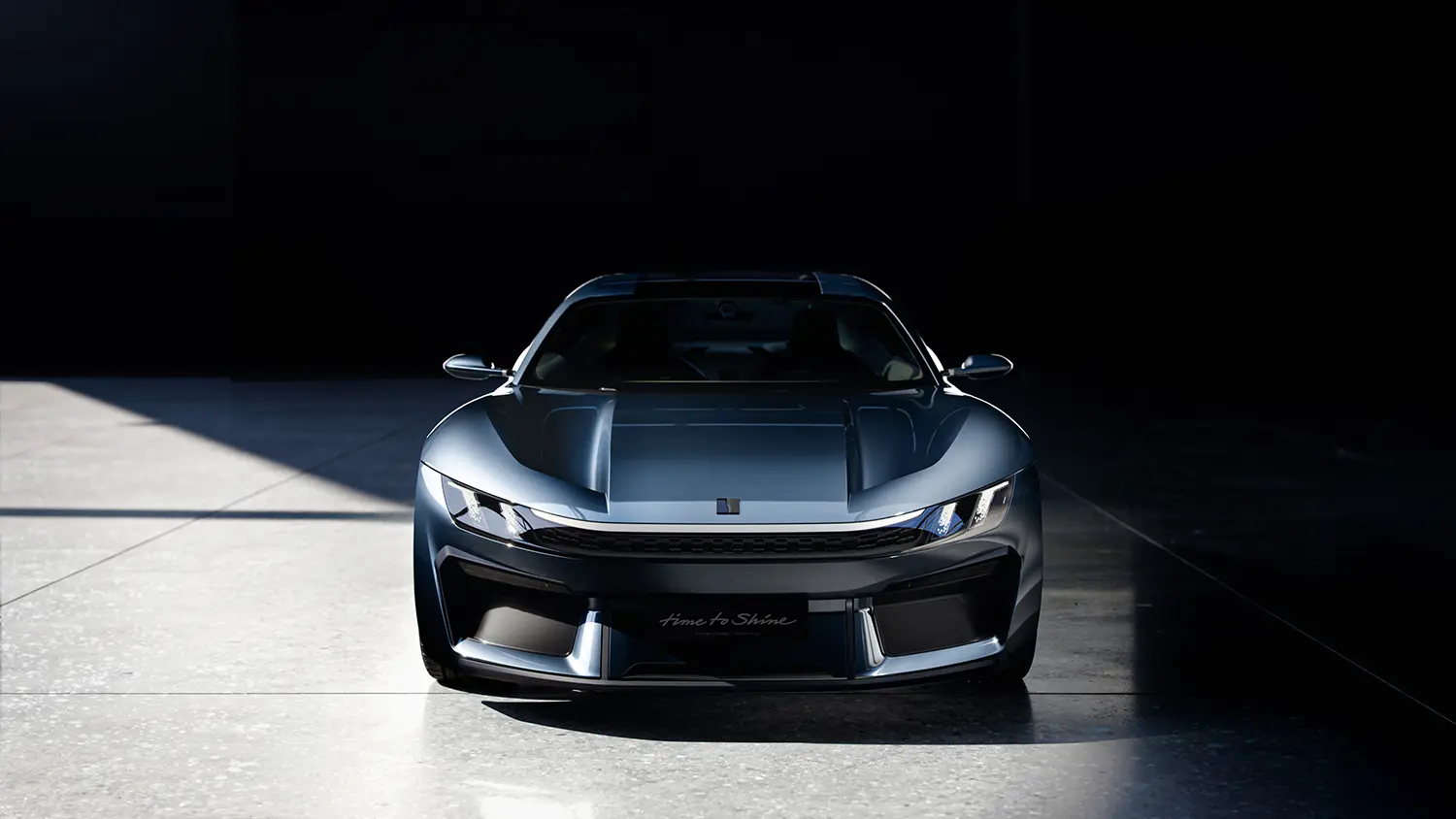
The interplay of light and volume serves a dual purpose, masking the inherent bulk of modern battery-electric platforms. Measuring 4,780 mm in length with a sprawling 2,750 mm wheelbase, the silhouette manages to maintain the classic long-hood, short-deck proportions of a traditional grand tourer. By integrating a halo-like reflection along the bodyside, the designers have created a visual tension that suggests movement even when the vehicle is stationary. This focus on surface manipulation over superficial ornamentation sets the brand apart from competitors who often over-rely on complex LED signatures to define their identity.
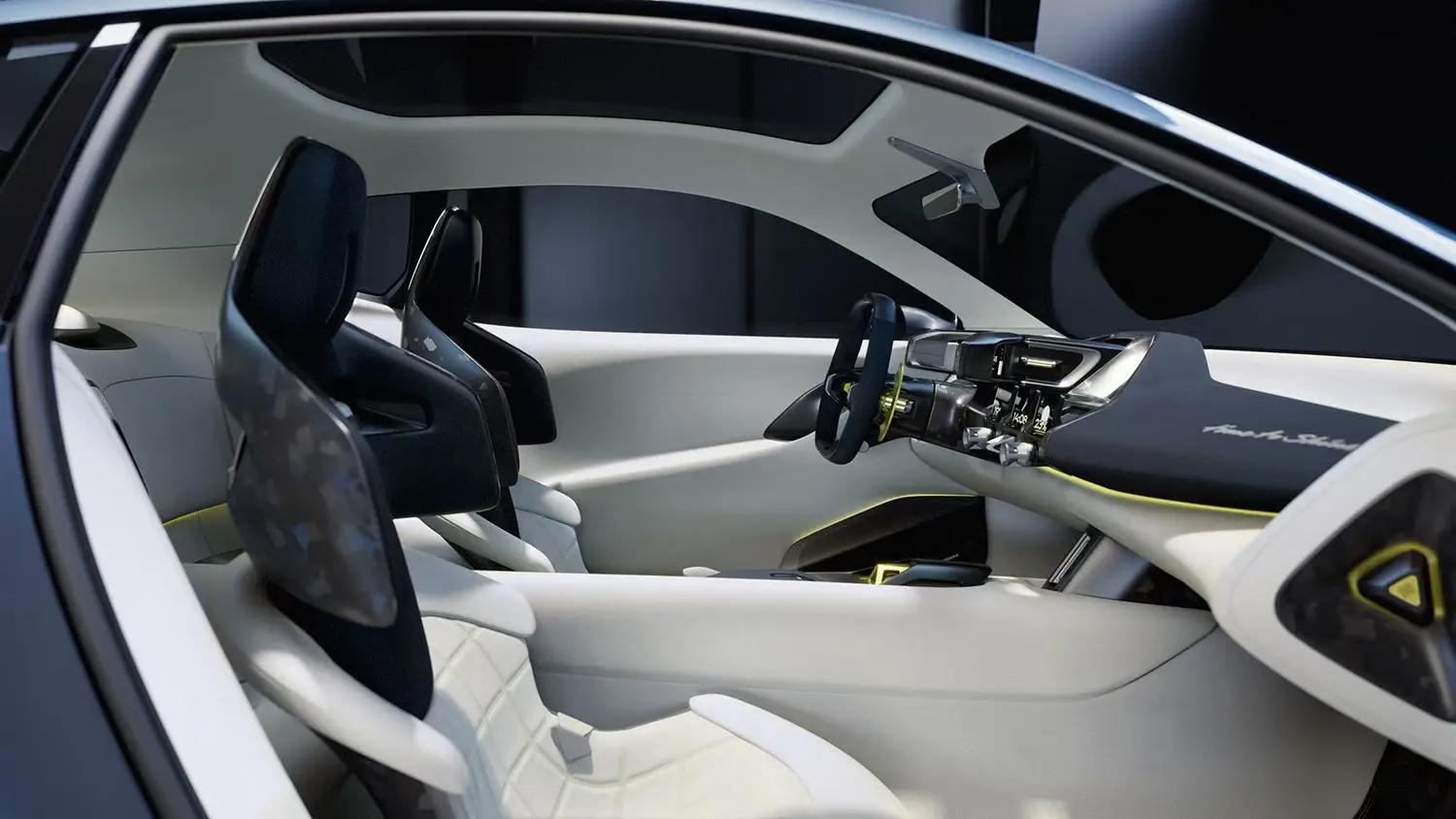
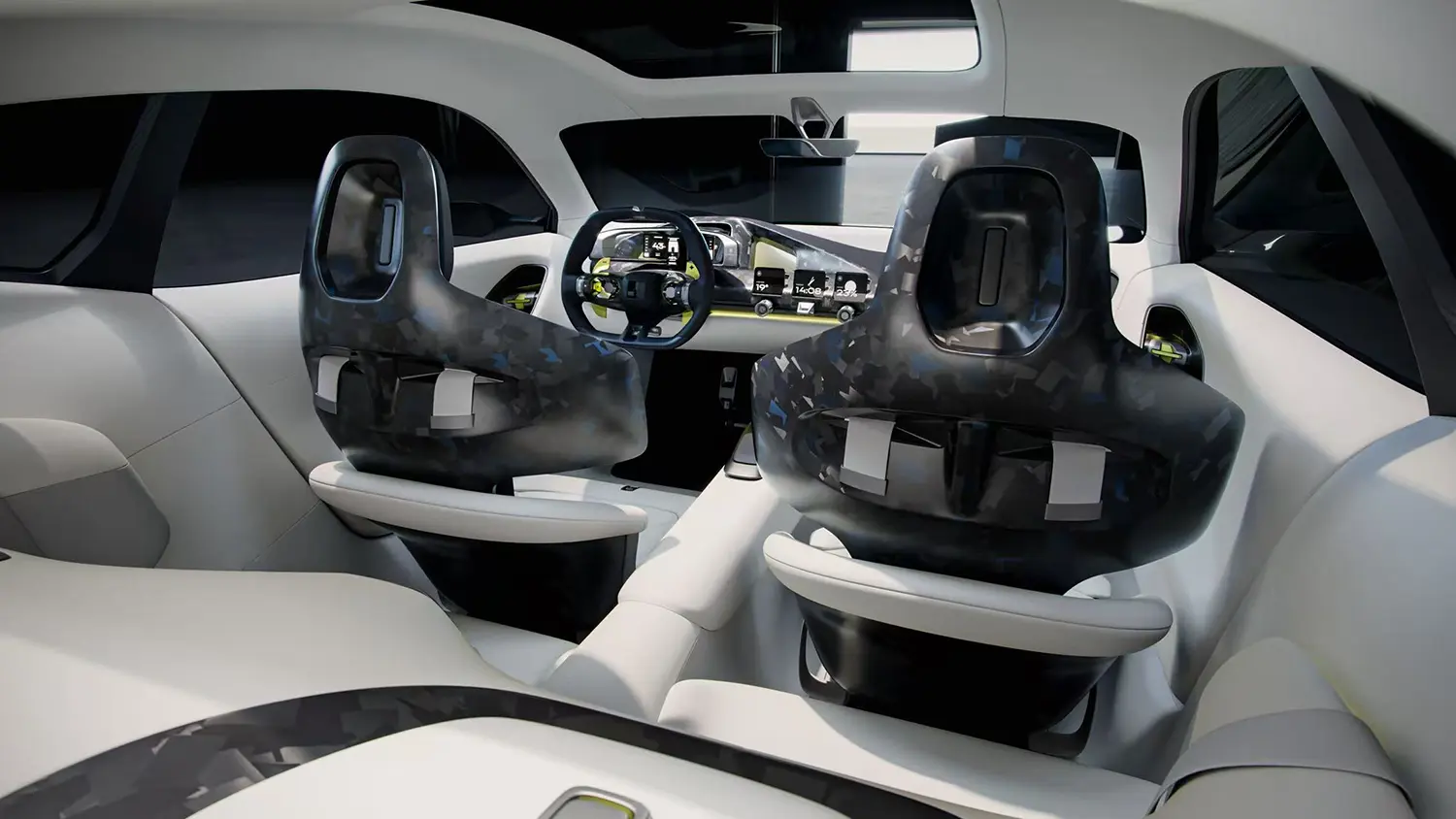
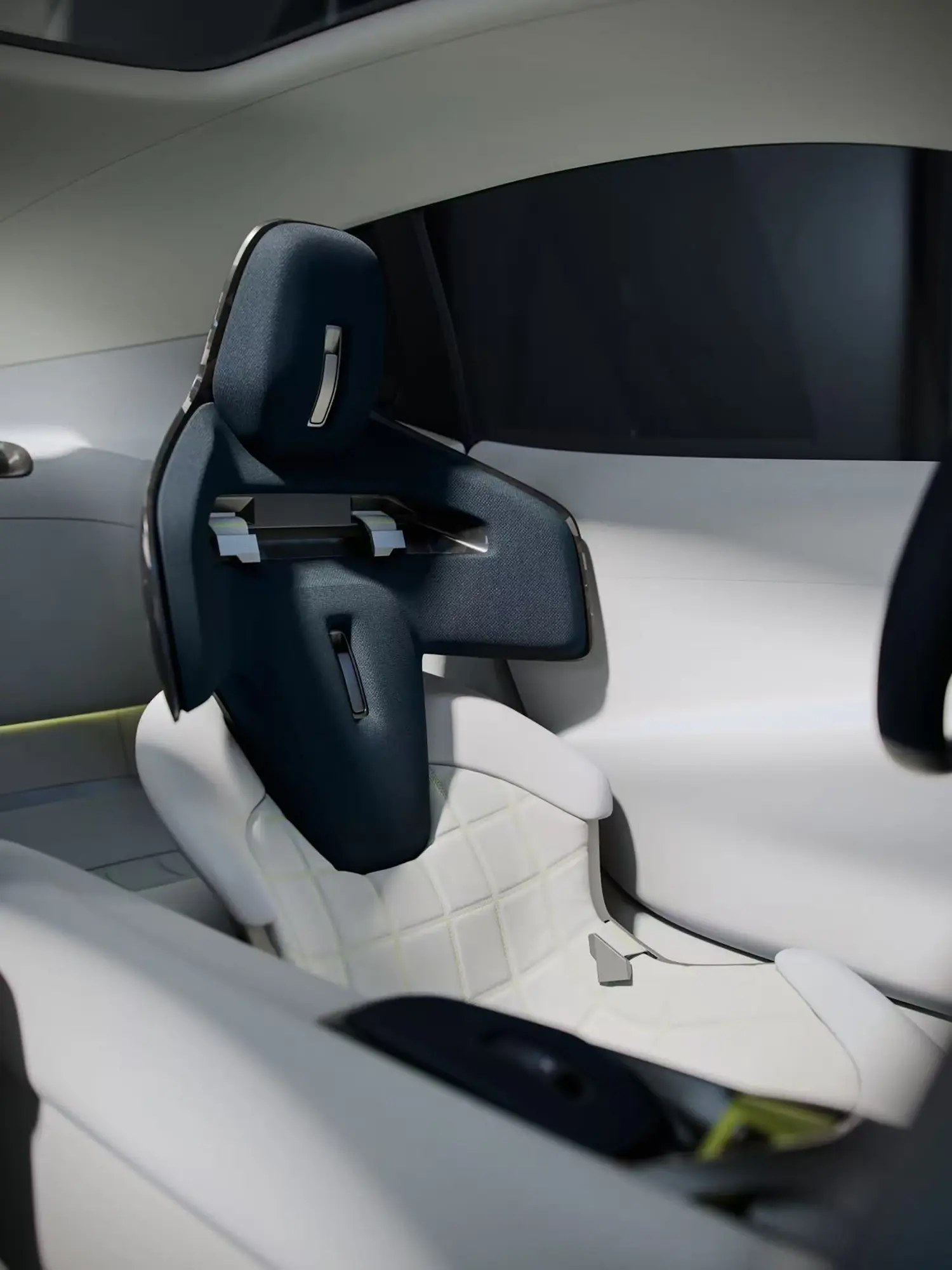
Inside the driver-centric cabin, the narrative shifts from external fluidism to a structured, tactile experience. The 2+2 layout avoids the sterile, laboratory-like atmosphere found in many autonomous-leaning concepts. Instead, it utilizes White Digital Shimmer leather to create an inviting, airy environment. This choice of material reflects a growing trend in high-end automotive interiors where “warmth” is used as a counterpoint to high-tech functionality. The presence of hand-inlaid Textreme 360 carbon fibre—which glimmers like a night sky behind the seats—highlights a sophisticated blend of aerospace technology and traditional artisanal craftsmanship.
The ritual of performance is distilled into a single physical interaction: the Spark Yellow “+” button. In an era dominated by buried touchscreen menus, this tactile centerpiece restores a sense of ceremony to the act of driving. Engaging the button triggers a kinetic transformation of the vehicle’s geometry. The chassis drops by 15 mm, and the body physically extends by 100 mm through active aerodynamic elements. This mechanical choreography is not merely theatrical; it optimizes airflow and downforce, allowing the AI-powered digital chassis to manage the immense power required for a 0–100 km/h (0–62 mph) sprint in just 2 seconds.
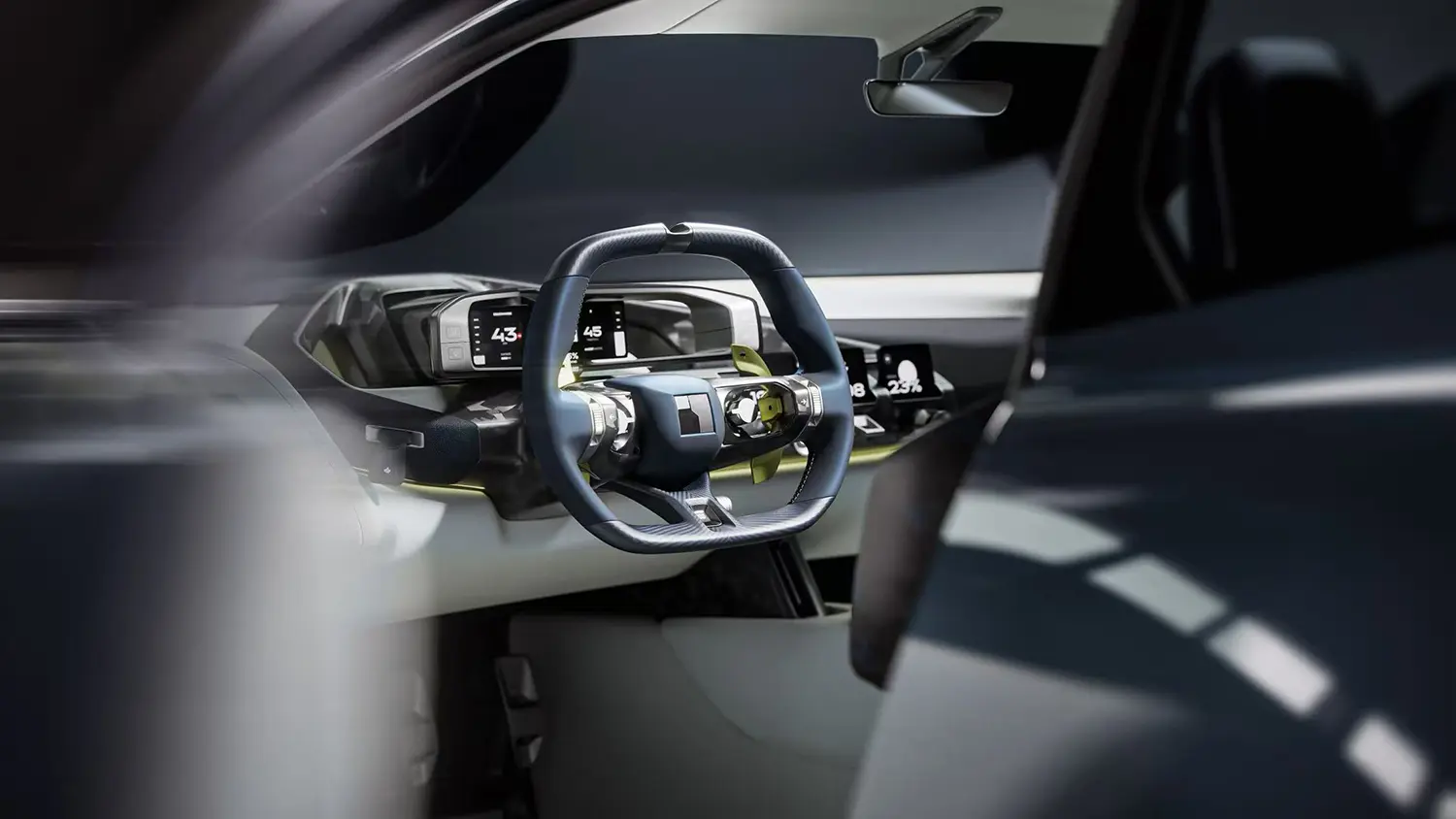
Visual purity through subtraction defines the interface logic during high-speed engagement. As the performance mode activates, the instrument panel and three secondary screens fold away. This minimalist cockpit strategy addresses a common criticism of modern EV design: information overload. By removing non-essential data, the interior reinforces a “connection to the road,” prioritizing the sensory feedback of the rear-wheel-drive platform over digital distractions. It is a bold statement in a market that is increasingly obsessed with screen real estate.
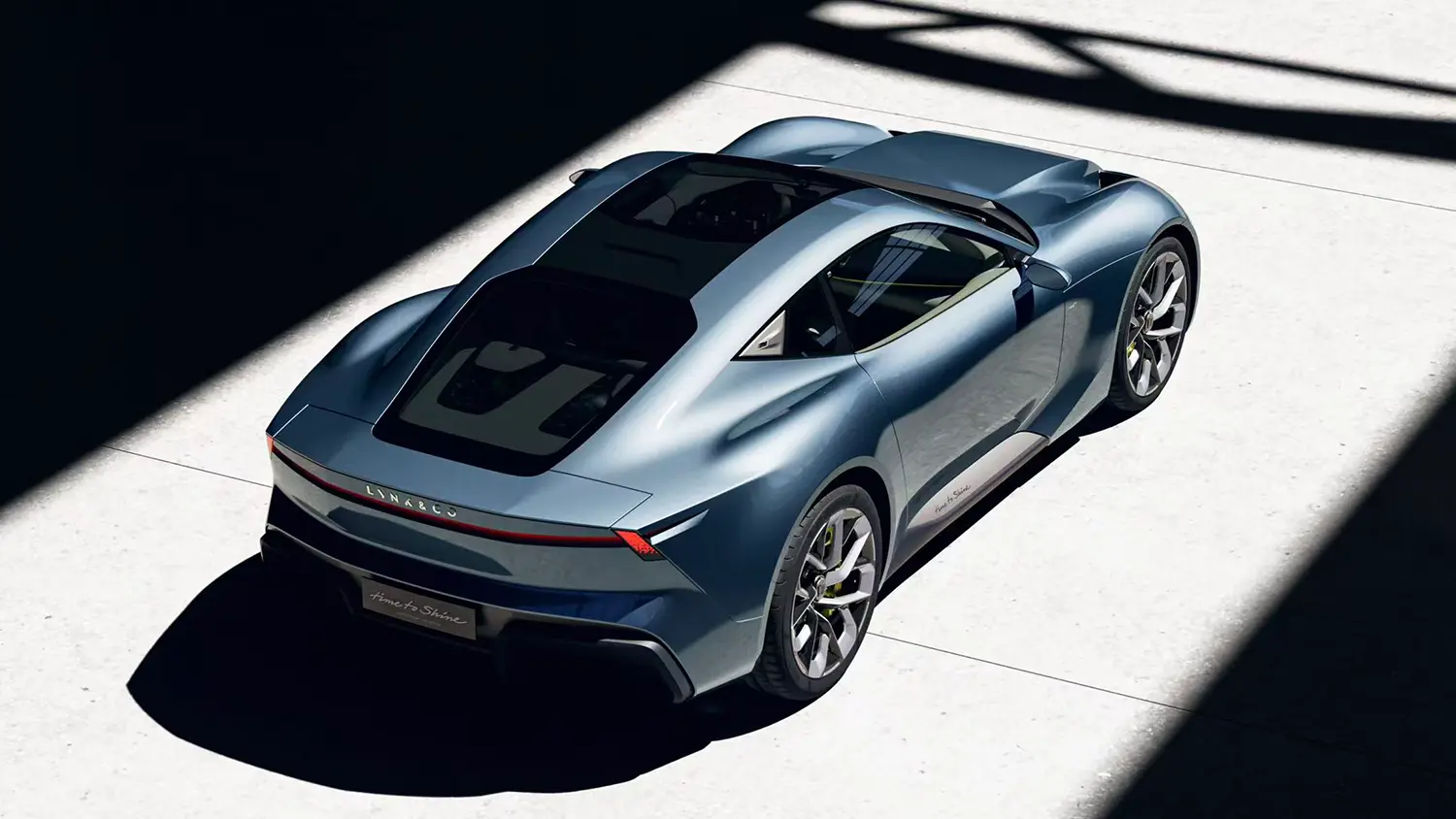
A fusion of global perspectives characterizes the development process, with the project bridged between Gothenburg and China. This cross-continental collaboration allows for a unique synthesis of Scandinavian functionalism and the bold, tech-forward expectations of the Asian market. The use of Spark Yellow accents throughout the build serves as a subtle nod to the brand’s Cyan Racing heritage, ensuring that the concept remains grounded in a history of nine world championships rather than existing as a purely theoretical exercise in styling.
Redefining the GT segment requires more than just raw speed; it requires a distinct point of view on how a vehicle occupies space. Compared to the increasingly crowded field of electric sportscars, Lynk & Co’s entry focuses on “emotional performance”—the idea that the vehicle’s value is derived from the feeling it evokes in the driver. By utilizing an advanced motion control system and a track-inspired chassis, the concept moves away from the “appliance” feel of many modern EVs, positioning itself as a credible alternative to established European performance marques.
The future of mobility on display at the Beijing Auto Show suggests a diversifying landscape of form and function. While “Time to Shine” explores the upper echelons of high-performance grand tourers, other debuts like the Smart #2 demonstrate how these same principles of refined aesthetics and intelligent space management are being applied to the compact urban sector. Together, these projects signal a shift toward a more nuanced, human-centric approach to how we move, where the thrill of the journey is as important as the efficiency of the destination.