

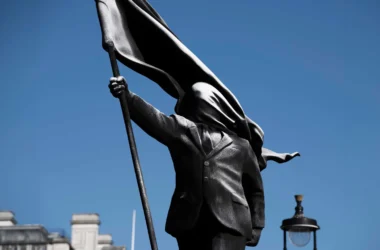



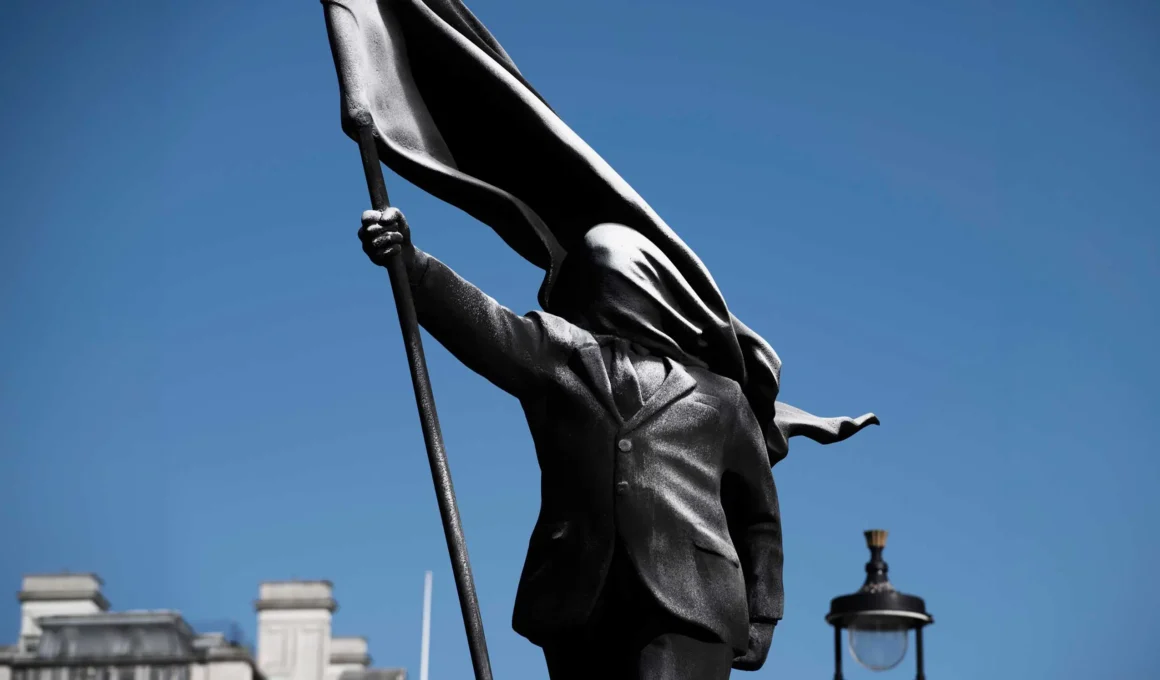
Banksy’s “Anonymous Flag-Bearer” has surfaced in London’s Waterloo Place, claiming a vacant stone pedestal with a faceless, bronze figure that subverts traditional monumentalism and challenges the city’s historical narratives.
The conceptual vision behind this intervention lies in the reclamation of public space within the ceremonial heart of the capital. By occupying a plinth directly opposite the Guards Crimean War Memorial, the artist transforms a site of traditional military tribute into a stage for the unidentified. The figure, holding a flag devoid of insignia, serves as a blank canvas for the collective anxieties and aspirations of a modern society. Unlike the surrounding statues that celebrate specific historical victories, this faceless silhouette honors the anonymous contributor, creating a powerful contrast between the permanence of the establishment and the fluidity of contemporary identity.
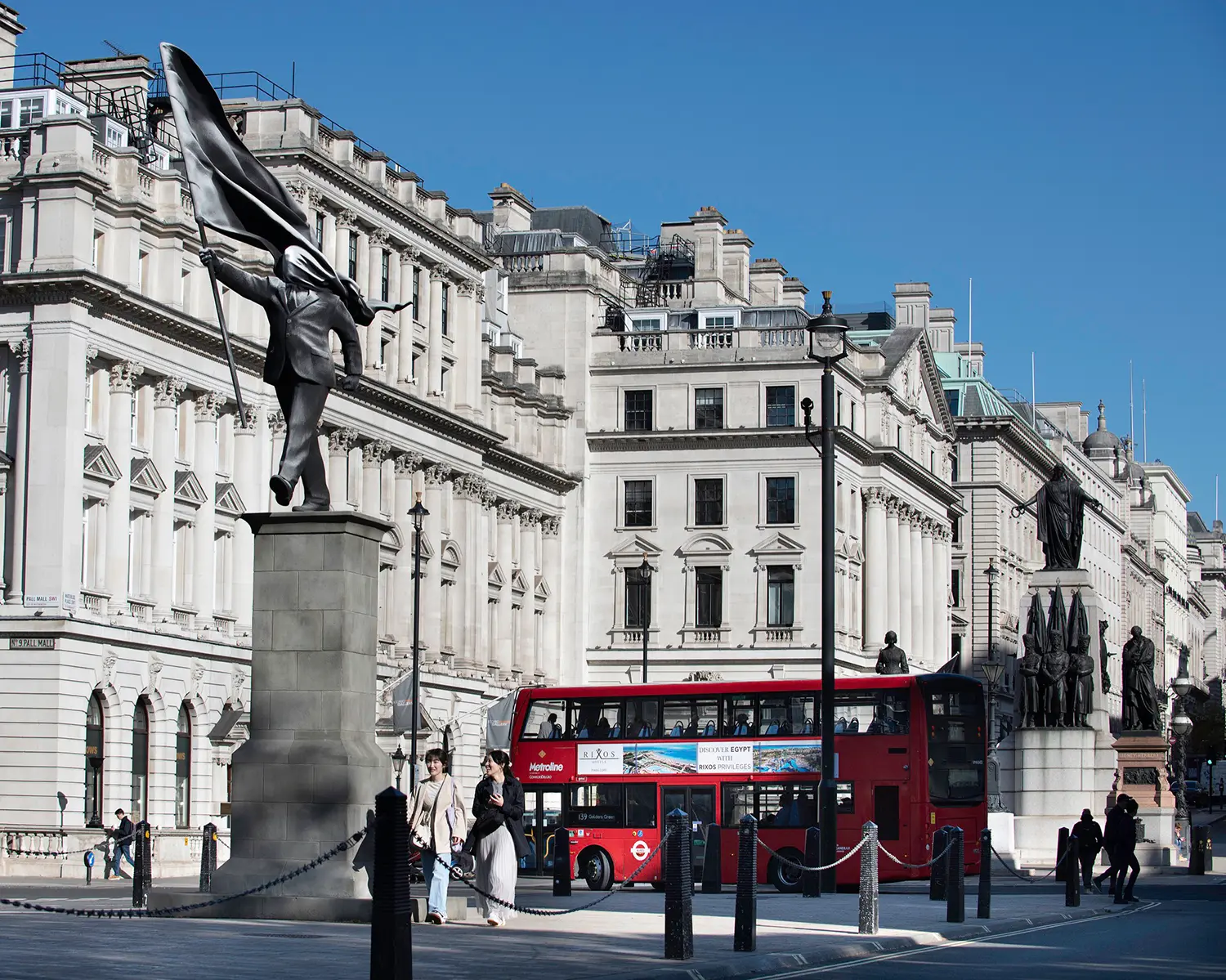
Technical execution and material dialogue are central to the work’s deceptive nature. Unlike the artist’s typical ephemeral stencils, this piece is a substantial bronze casting, finished with a patina that meticulously mimics the weathered textures of the surrounding 19th-century monuments. This visual camouflage is a deliberate strategy; the sculpture doesn’t scream for attention but rather whispers its presence, leading many passersby to mistake it for a legitimate civic commission. The placement on a high stone pedestal at the junction of Waterloo Place and Pall Mall elevates the “everyman” to a status typically reserved for royalty or generals, questioning the criteria for public veneration.
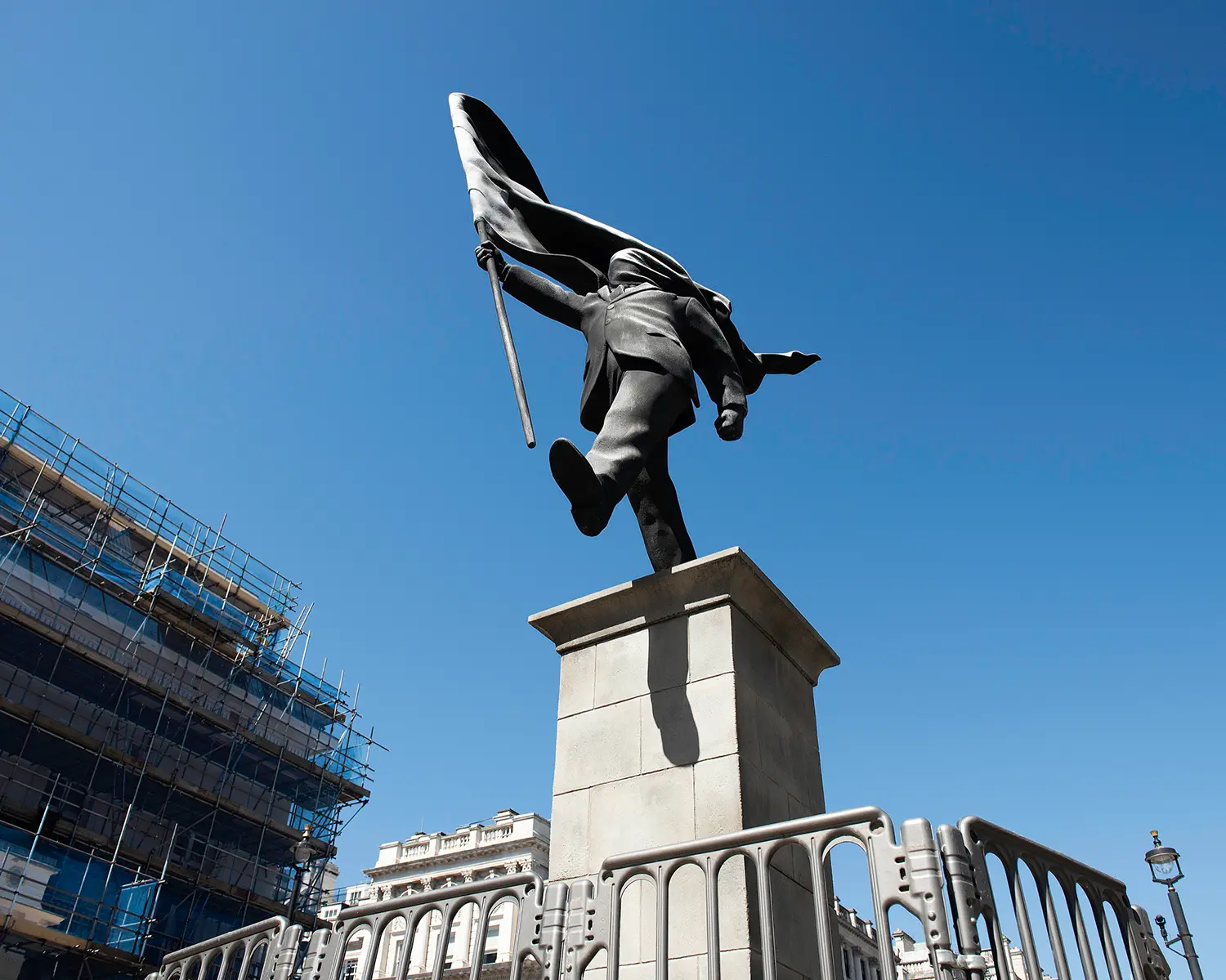
The sensory and contextual impact of the piece is felt in the way it disrupts the rigid, formal atmosphere of the St. James district. There is a palpable tension in seeing a nameless figure holding a silent banner in a location defined by rigid historical hierarchy. The work creates a “pause” in the urban rhythm, inviting onlookers to engage with the void where a face should be. It is a spatial critique that interrogates the architecture of power, turning the stone pedestal into a question mark that challenges who is remembered and who is forgotten in the narrative of the city.
Visualizza questo post su Instagram
Cultural resonance and the public realm serve as the final layers of this urban narrative. By installing the work clandestinely in such a high-profile location, the artist reasserts the role of the street as a democratic gallery. The conversation sparked by the “Anonymous Flag-Bearer” moves beyond the art world, touching on themes of national representation and the evolution of social symbols. As London continues to navigate its complex relationship with its past, such interventions ensure that the urban fabric remains a living entity, capable of reflecting the complexities of the present rather than just the static triumphs of history.