


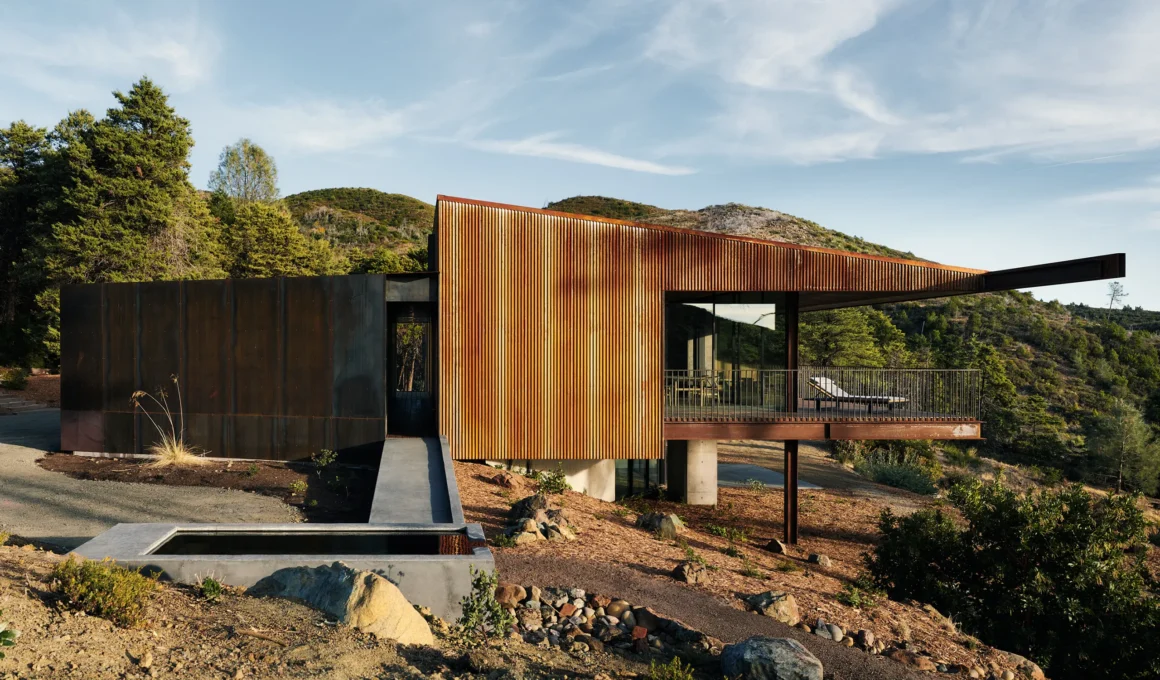
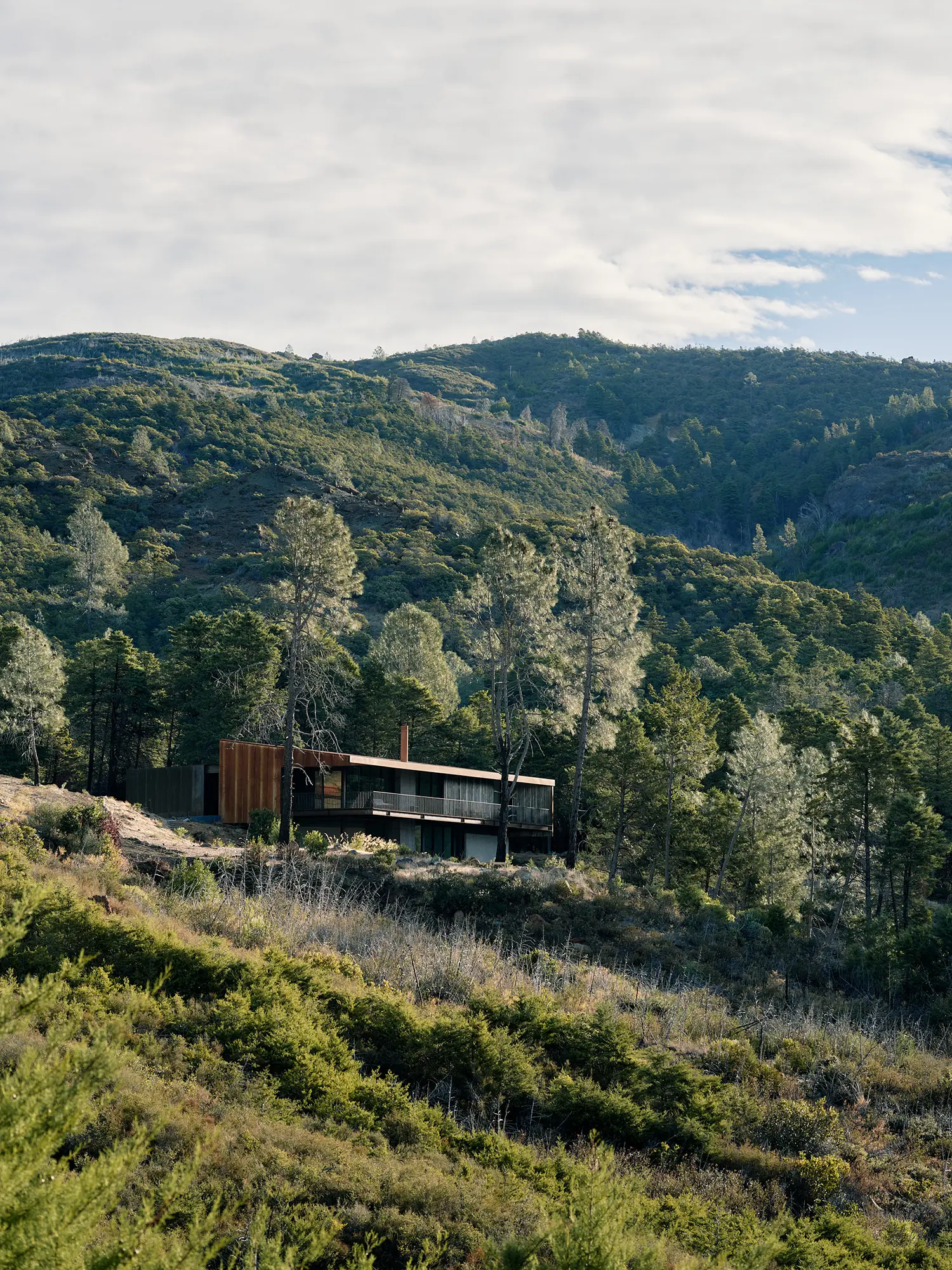
Faulkner Architects has completed Pine Flat, a resilient, off-grid residence perched in the Mayacamas Mountains near Healdsburg, California, which rises from the footprint of a home lost to the 2019 Kincade Fire.
A landscape shaped by memory. The site sits along a winding former stagecoach road, a location steeped in the rugged history of the 1870s mercury rush. Following the devastating wildfire, the clients sought a dwelling that did not merely occupy the land but learned from its volatile nature. The result is a structure that prioritizes environmental stewardship and passive survivability, echoing the resourcefulness of the pioneering communities that once flourished in this remote Californian terrain.
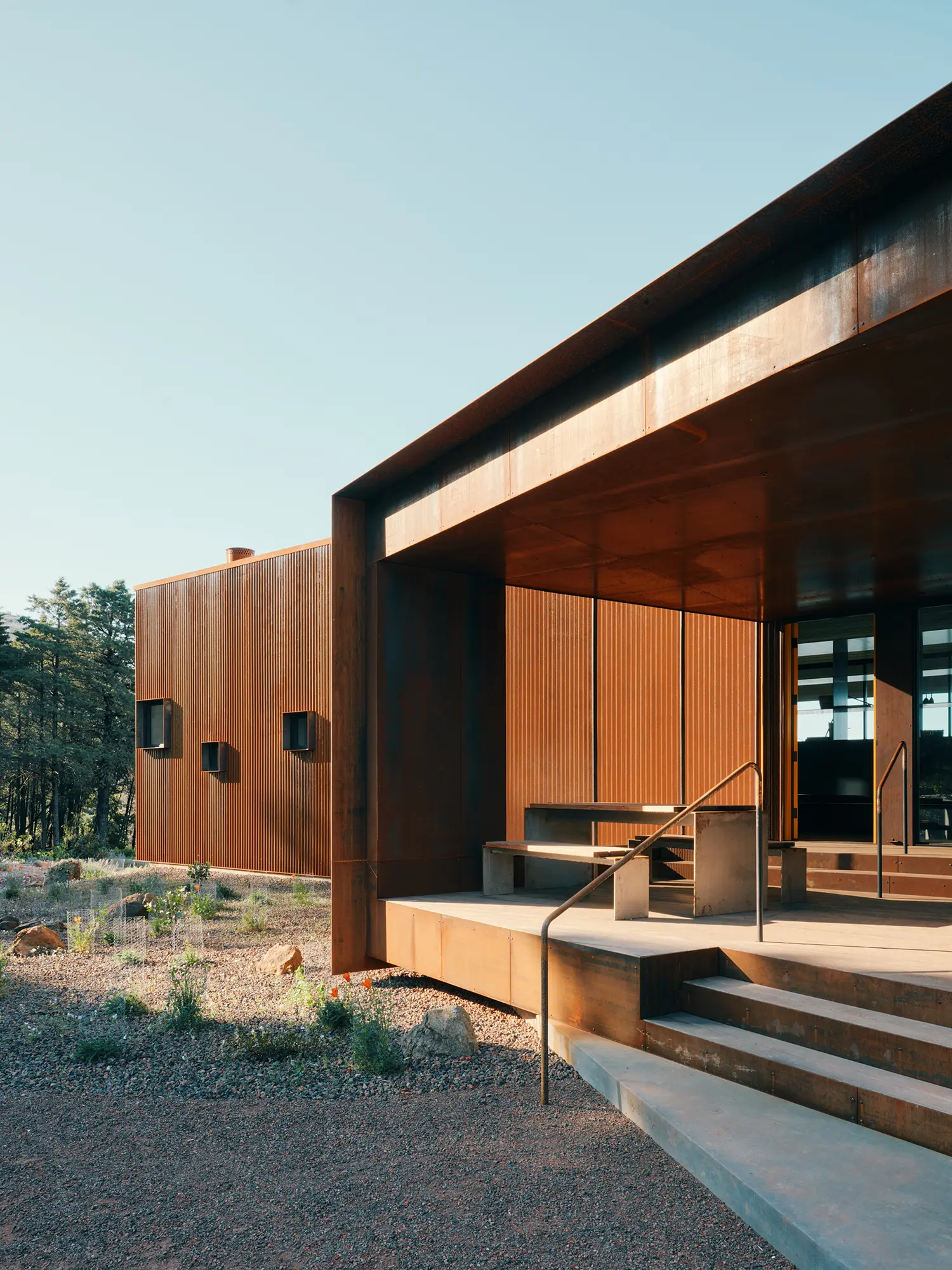
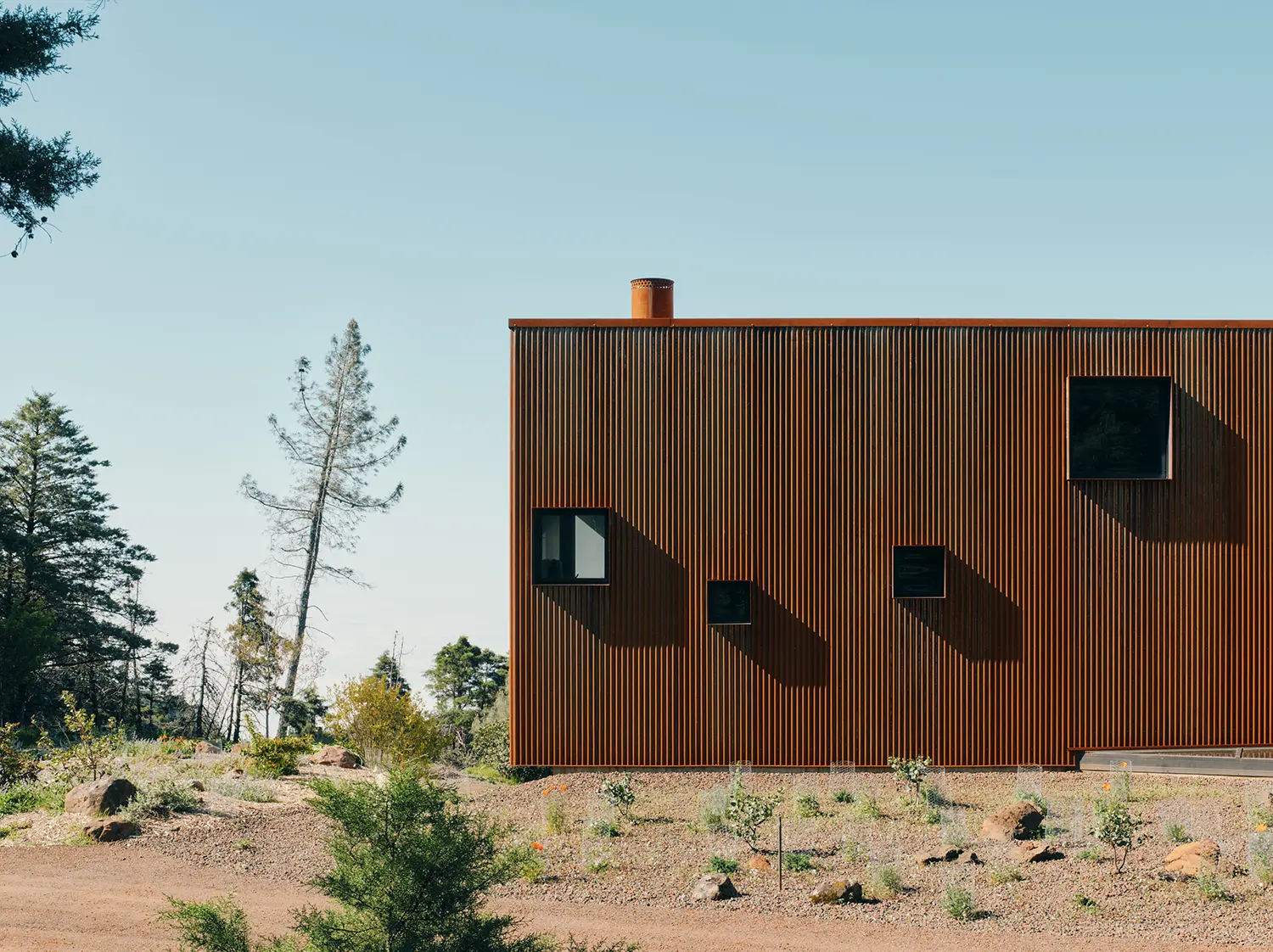
Conceptualizing the fire-resistive shell. To address the immediate threat of future climate events, the design employs a durable material palette dominated by a Corten steel exterior. This weathered metal skin acts as a protective shield, complemented by sliding ember screens and dedicated exterior sprinklers. The aesthetic choice is as functional as it is poetic; the rust-toned panels allow the house to exist as a quiet, oxidized presence that mirrors the earthy tones of the surrounding wildland.
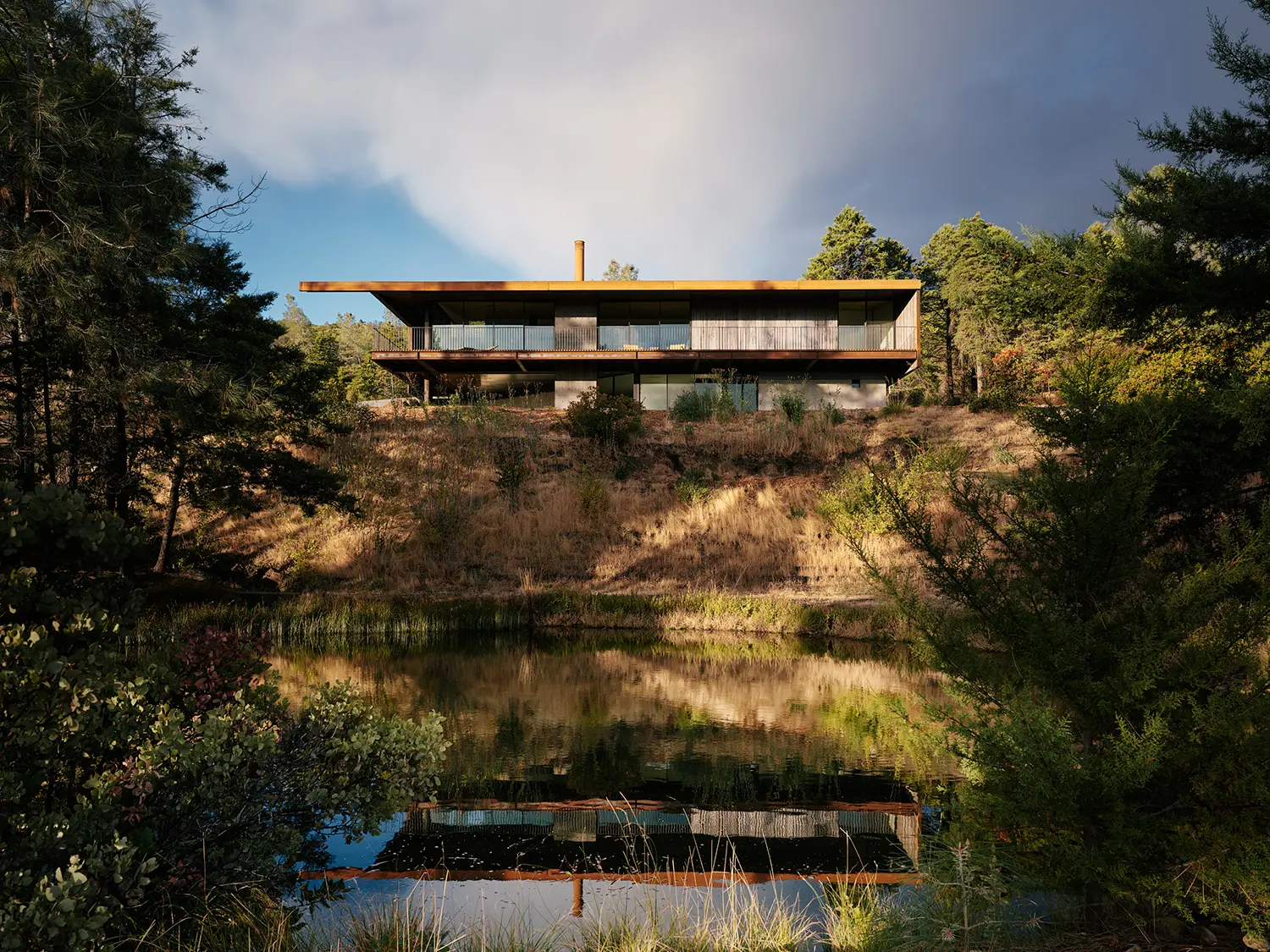
Honoring embodied energy. Rather than starting from scratch, the project retains 90% of the existing concrete foundation and walls. This decision significantly limited carbon emissions associated with new excavation and preserved the embodied energy of the previous structure. A new rectangular shed form now inhabits the original angular footprint, with the geometric tension creating moments of architectural interest, such as a sculptural entry step and a glazed light well where the new volume overshoots the old.
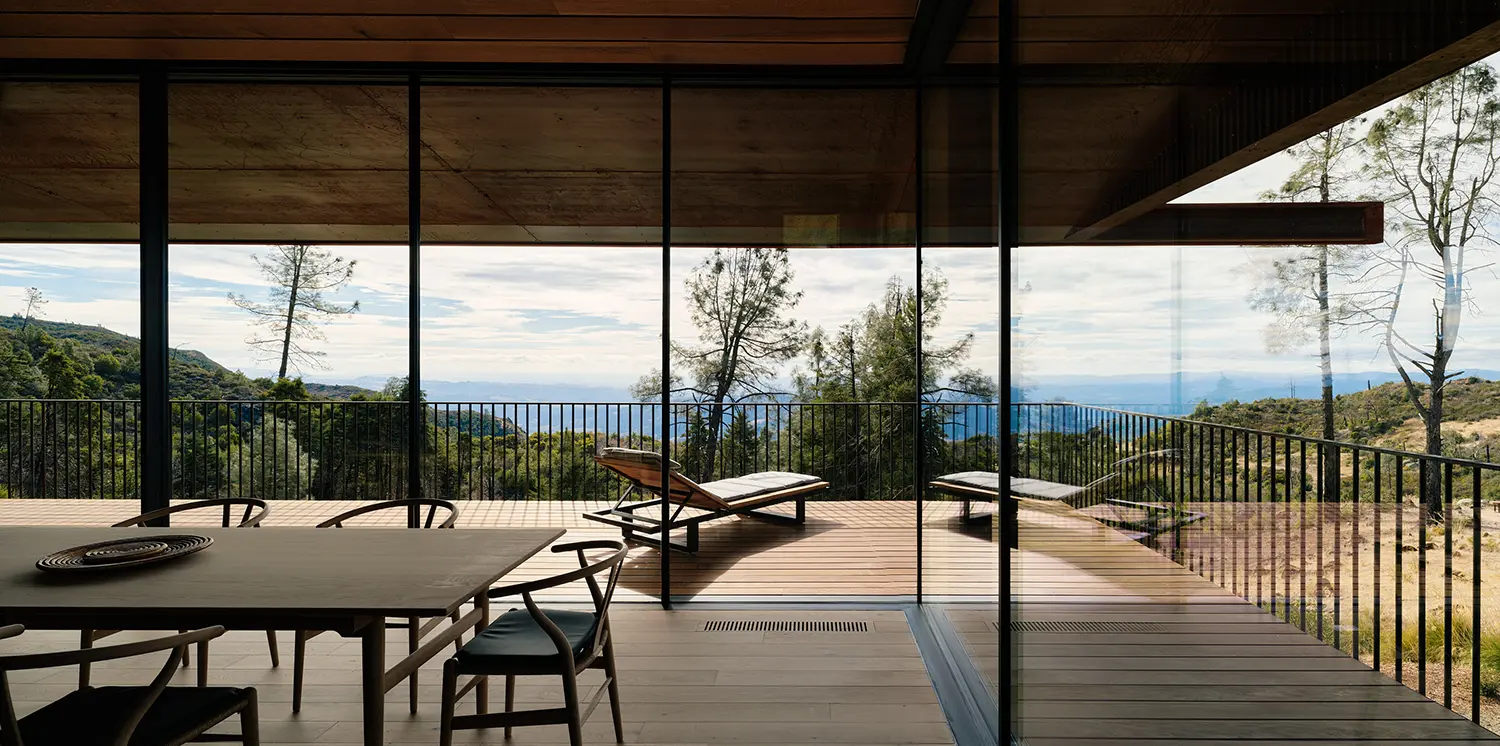
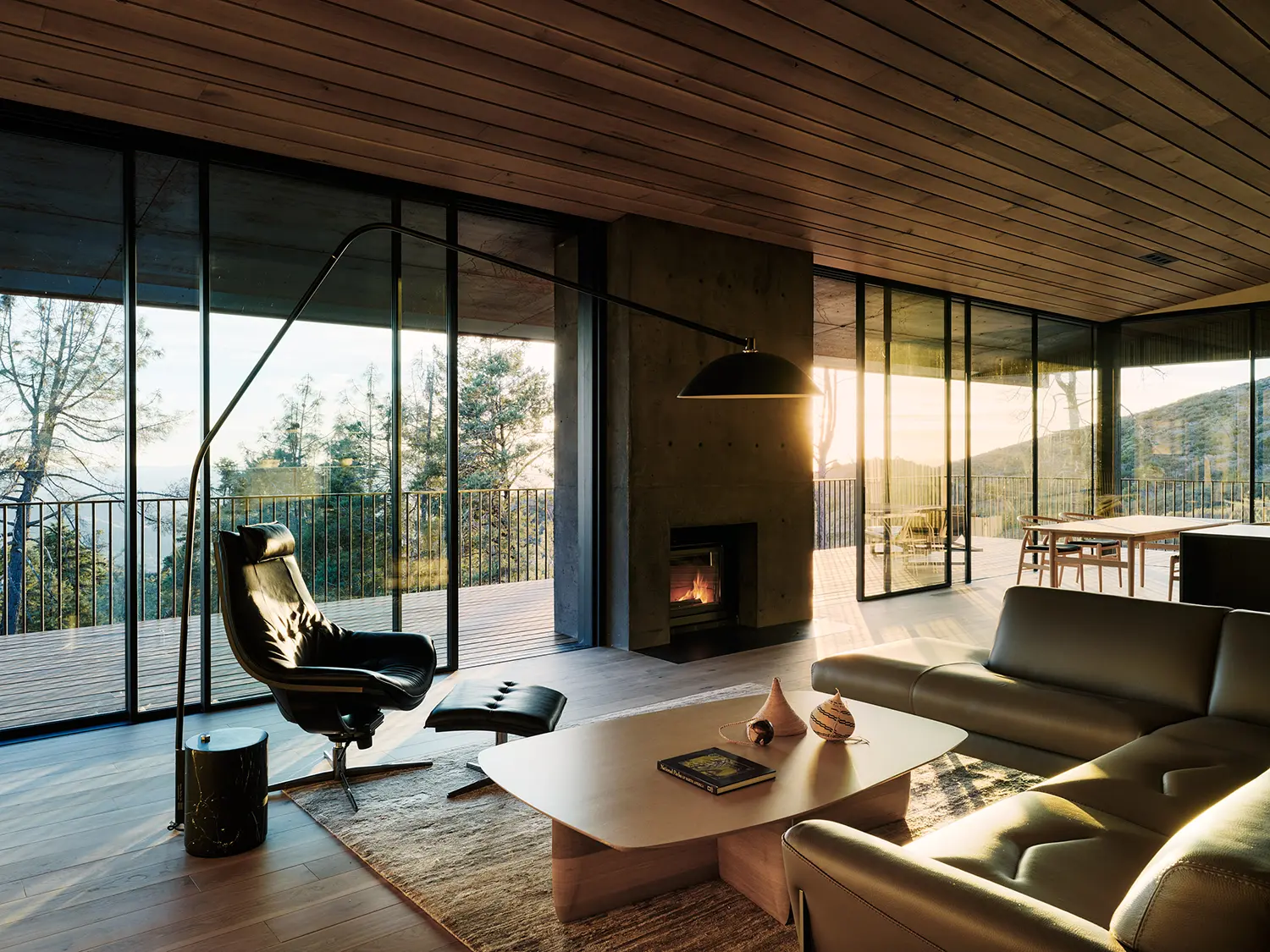
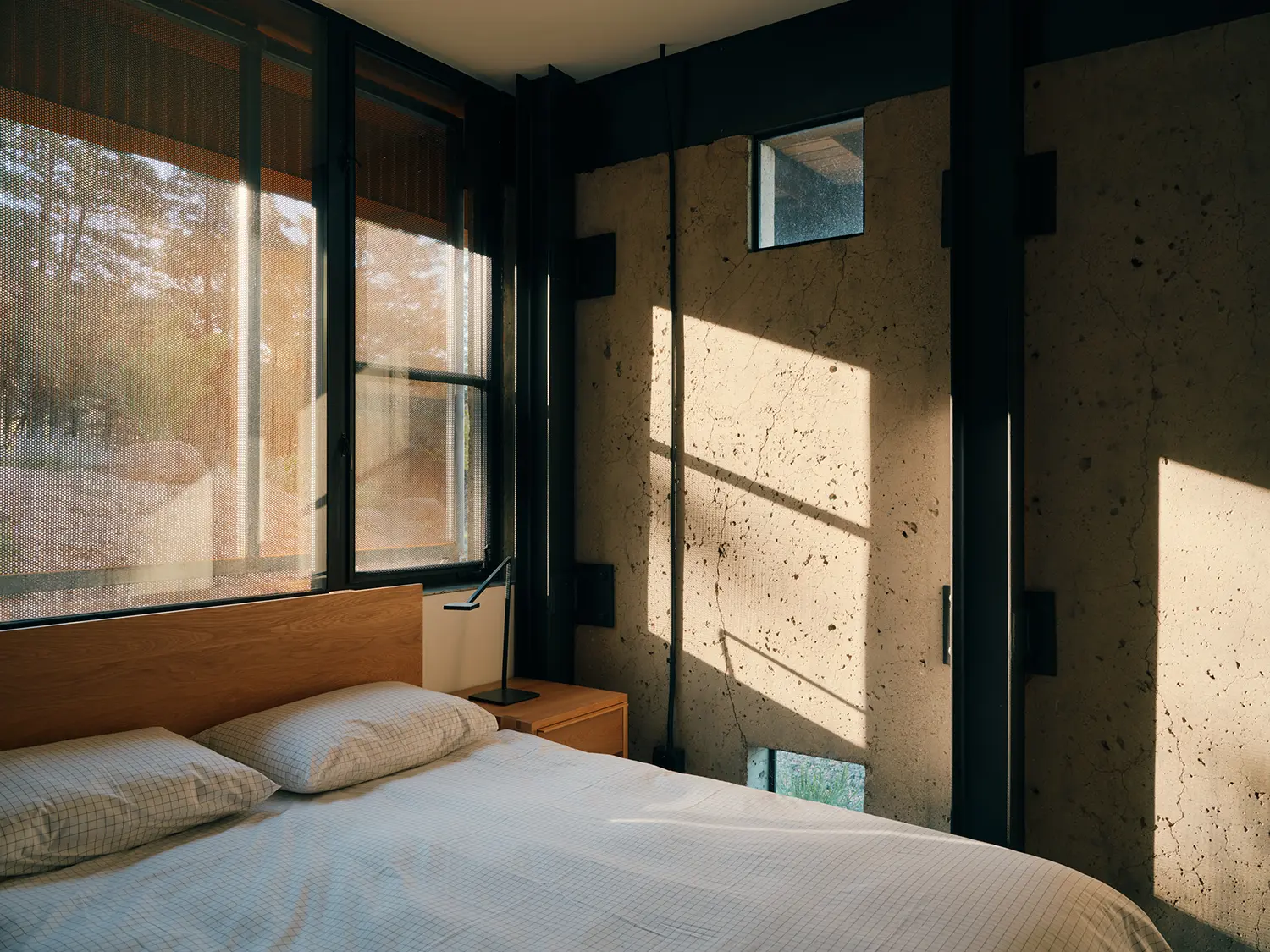
The sensory hearth. Inside, the spatial organization is anchored by a massive concrete chimney, which serves as both a structural stabilizer and a symbolic focal point. Large glazed apertures frame the fire within the landscape, a deliberate visual dialogue that acknowledges the site’s history with flame while offering a sense of security. The interior experience is defined by this contrast between the heavy, cooling thermal mass of concrete and the expansive, sun-drenched views of the ridgeline.
Designing for longevity. Accessibility was a primary driver for the program, ensuring the home remains functional as the inhabitants age. A dramatic entry ramp extends toward the western hillside, providing a seamless transition into the primary living zones. By consolidating the kitchen, dining, and main bedroom on a single level with ample wheelchair clearances and a pre-framed elevator shaft, the studio has created a long-lifecycle home that adapts to human needs over decades.
Water as a vital resource. The site’s remoteness necessitated a sophisticated closed-loop water system. 100% of stormwater is captured via a cantilevered gutter that feeds into a steel basin, eventually diverting to a bioretention areaand a retention pond used for firefighting. Furthermore, an artesian water basin utilizes a Pelton wheel to generate supplementary hydroelectric power, creating a refreshed pool for cooling dips that celebrates the site’s natural spring water.
Energy independence and resilience. Operating entirely off-grid, Pine Flat features an upgraded solar PV array paired with advanced battery storage. The reliance on renewable energy systems ensures that the house remains habitable even when regional infrastructure fails. Every material brought to this remote peak was treated as precious, resulting in a construction process that minimized waste and emphasized the intrinsic value of the hardware used to sustain life in the wilderness.
Materiality and the future of regionalism. The evolution of residential projects in sensitive climates suggests a shift toward a more industrial, honest expression of protection. This methodology aligns with our comprehensive analysis of low-carbon materials, which explores how the intersection of infrastructure and bio-based elements is redefining the environmental footprint of modern living. Pine Flat joins a growing lineage of global projects that utilize raw, expressive materials to navigate their specific topographical challenges. Whether it is the bold use of form in the Mall Kates house in Florida, the industrial silhouette of the Villa Red Steel in the Czech forests, or the rhythmic timber textures of Casa 144 in Spain, there is a shared movement toward structures that are built to endure. These projects prove that when building in the wild, the choice of cladding and frame is far more than a stylistic preference; it is a vital strategy for permanence.