



Located on the Gulf Coast of Florida near the iconic New Urbanist town of Seaside, Kate’s House is a ground-up residential project by architectural designer Jennifer Bonner, founder of MALL, and interior designer Carol Mockbee, which utilizes custom millwork and inventive massing to challenge strict homeowner’s association guidelines through a lens of “playful rebellion.”
A conceptual vision of subversion drives the logic of the 2,650-square-foot residence. Built for Bonner’s own family, the project serves as a tribute to her late stepfather’s dream and a showcase for the family’s carpentry business. In an area where Florida panhandle aesthetics are often governed by rigid symmetry and traditional forms, MALL introduced a design language that Bonner describes as “cute”—a subversive tool that uses softness and humor to push back against the hardness of local building restrictions.

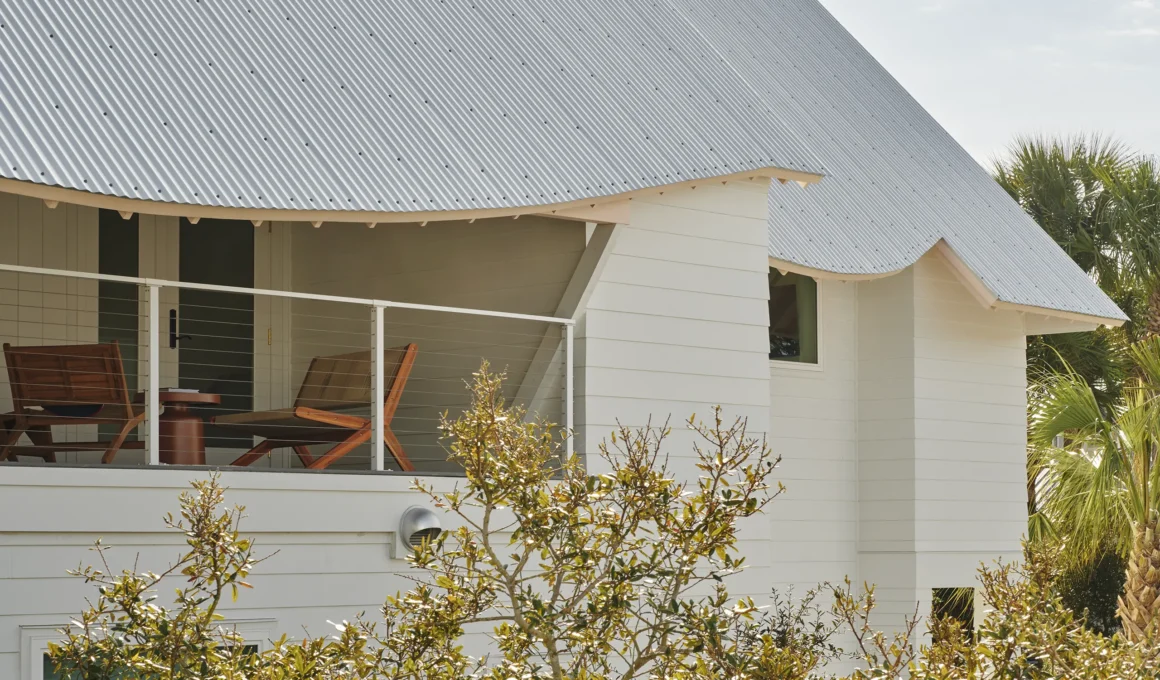
The double-gable massing consists of two slightly offset volumes that appear to piggyback one another. This arrangement creates a silhouette that is at once familiar and uncanny. The high-pitched roofs, set at a 12:12 ratio, feature overscaled overhangs that do more than provide shelter; they act as “swooping edges” that define the home’s profile. These eaves are painted on their undersides in a specific pink hue, designed to mimic the “pink hour” dusk light. This choice ensures that even during the brightest part of the day, the white horizontal siding is bathed in a reflected, warm blush.
Navigating the regulatory landscape required a clever interpretation of “false fronts.” To satisfy the HOA’s demand for a symmetrical facade and front porch, MALL designed a street-facing porch that is intentionally narrow—functional as a walkway but serves primarily as a graphic, sculptural element. Inside, this requirement translates into a series of deep-set nooks and niches within the second-floor bedrooms, turning a restrictive exterior rule into a generative interior feature.
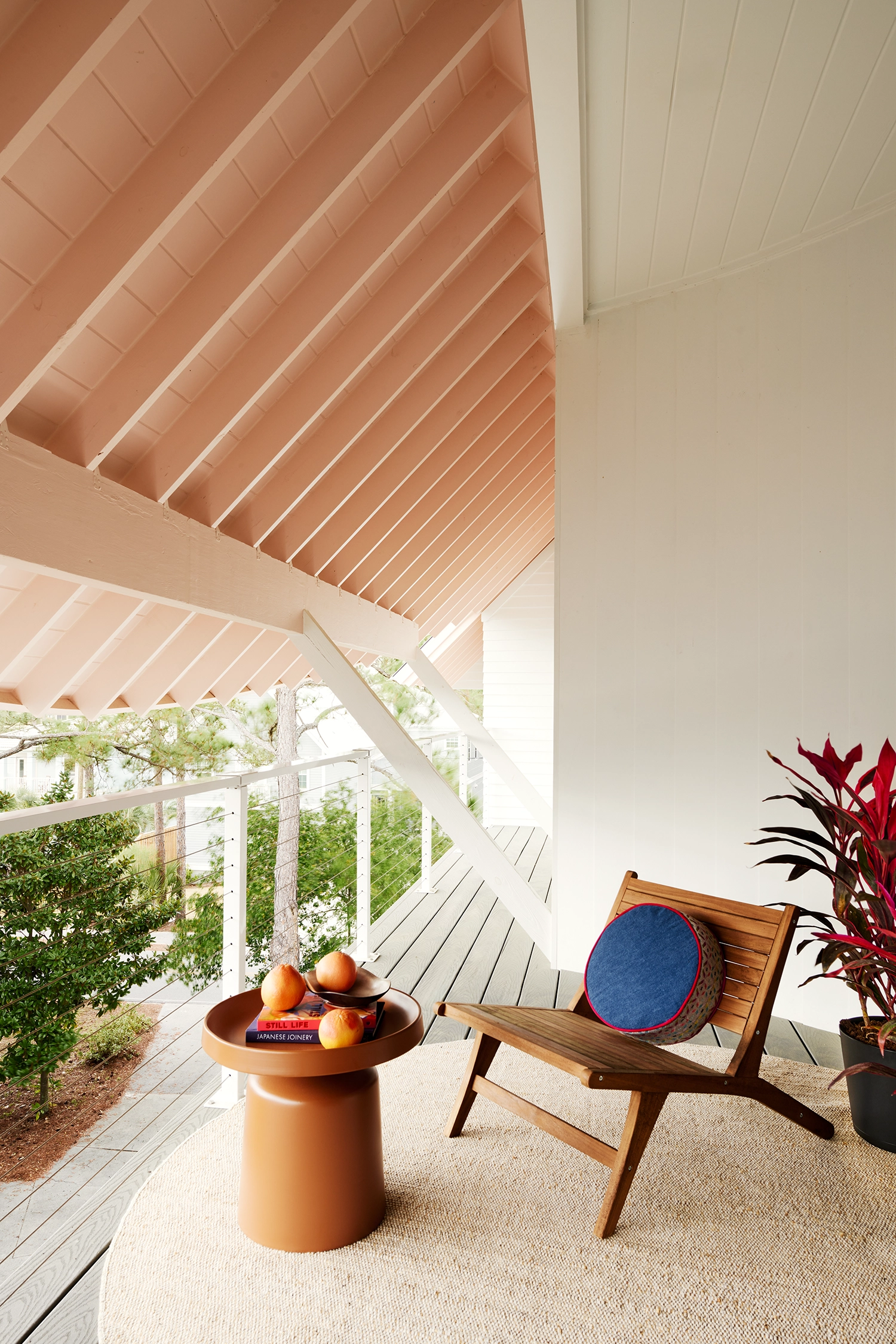
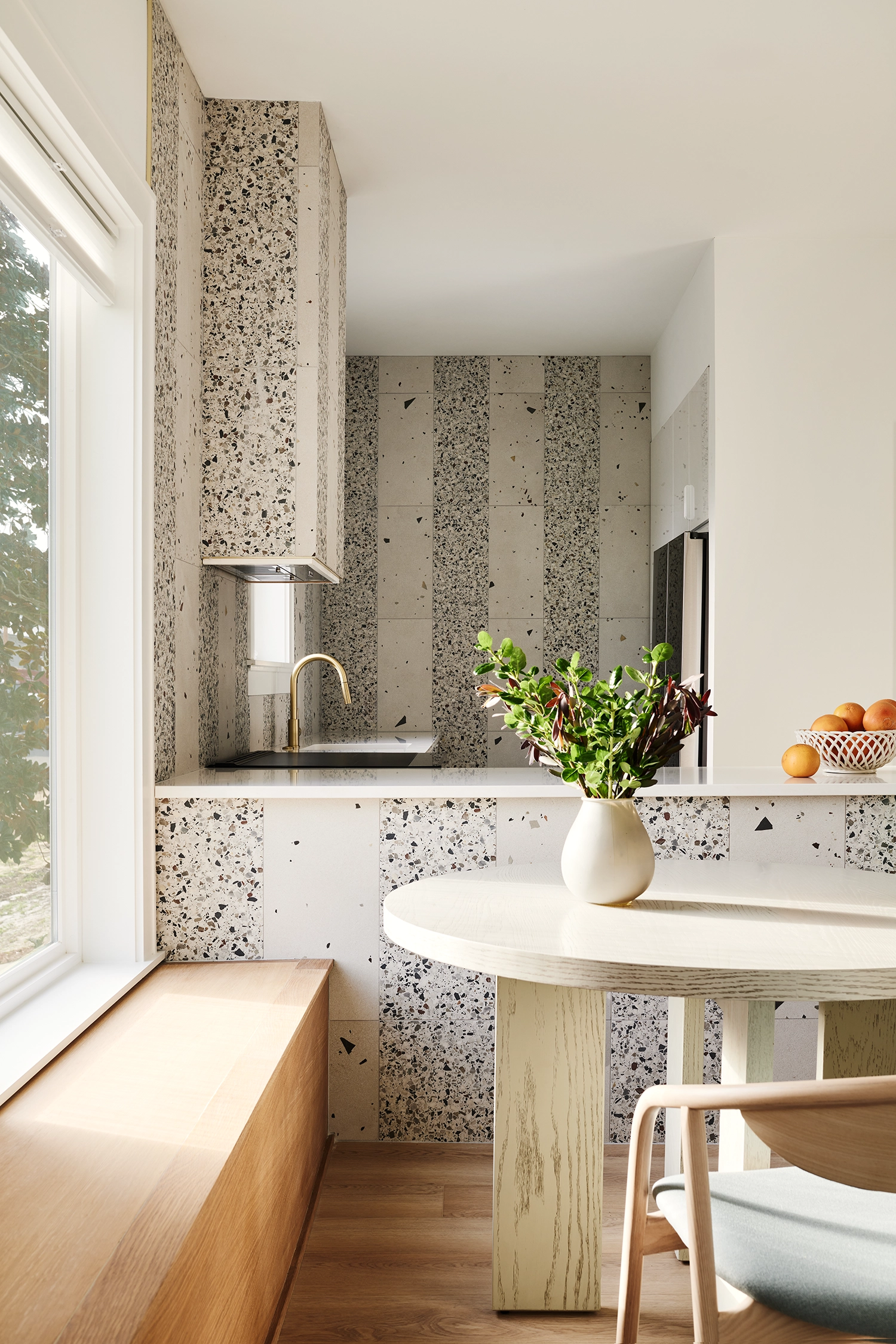
The sensory experience of the interior moves away from literal coastal tropes, opting instead for a conceptual exploration of the beach. Led by Carol Mockbee, the design focuses on themes of accumulation, fragment, and erosion. Rather than seaside kitsch, the home utilizes terrazzo tiles of varying scales to evoke the texture of sand, while mirrored surfaces and convex glass are positioned to capture specific lighting conditions. A blue convex mirror, for instance, washes the living space in a cool indigo during the morning hours, grounding the home in the cyclical rhythms of its environment.

Technical details and material honesty are celebrated through exposed carpentry. In the double-height living area, round-edged white oak accent walls flank the space, their paneling mimicking the framing usually hidden behind gypsum board. This “inside-out” approach to millwork honors the family’s craft, turning structural logic into a decorative motif. The transition between materials is equally considered; a grey stone kitchen floor meets the dining area’s wood flooring along a wide, sweeping curve, echoing the exterior’s rounded geometry.

Subiconic design principles guide the curation of objects and furniture. Mockbee’s philosophy prioritizes restraint and intellectual integrity, choosing pieces that feel intuitive rather than obvious. This is evident in the primary bedroom, where a spherical indigo headboard hovers like a rising sun, and in the selection of art from Southern-based creators. The home avoids the typical pitfalls of high-end coastal developments, looking instead toward the coastal modern design guide for a more authentic, local vernacular that emphasizes sharpness born from constraint.

The contextual impact of the house is felt most at street level, where the structure sits upon a charcoal grey foundation. This dark base creates a visual disconnect that makes the white volume appear to float, reminiscent of a buoy or a bird on the water. It is a modern residential statement that manages to be both a “floating object” and a deeply rooted family home. By leaning into “cuteness” and “subiconicity,” Bonner and Mockbee have created a space that respects the neighborhood’s character while asserting a distinct, rebellious personality.
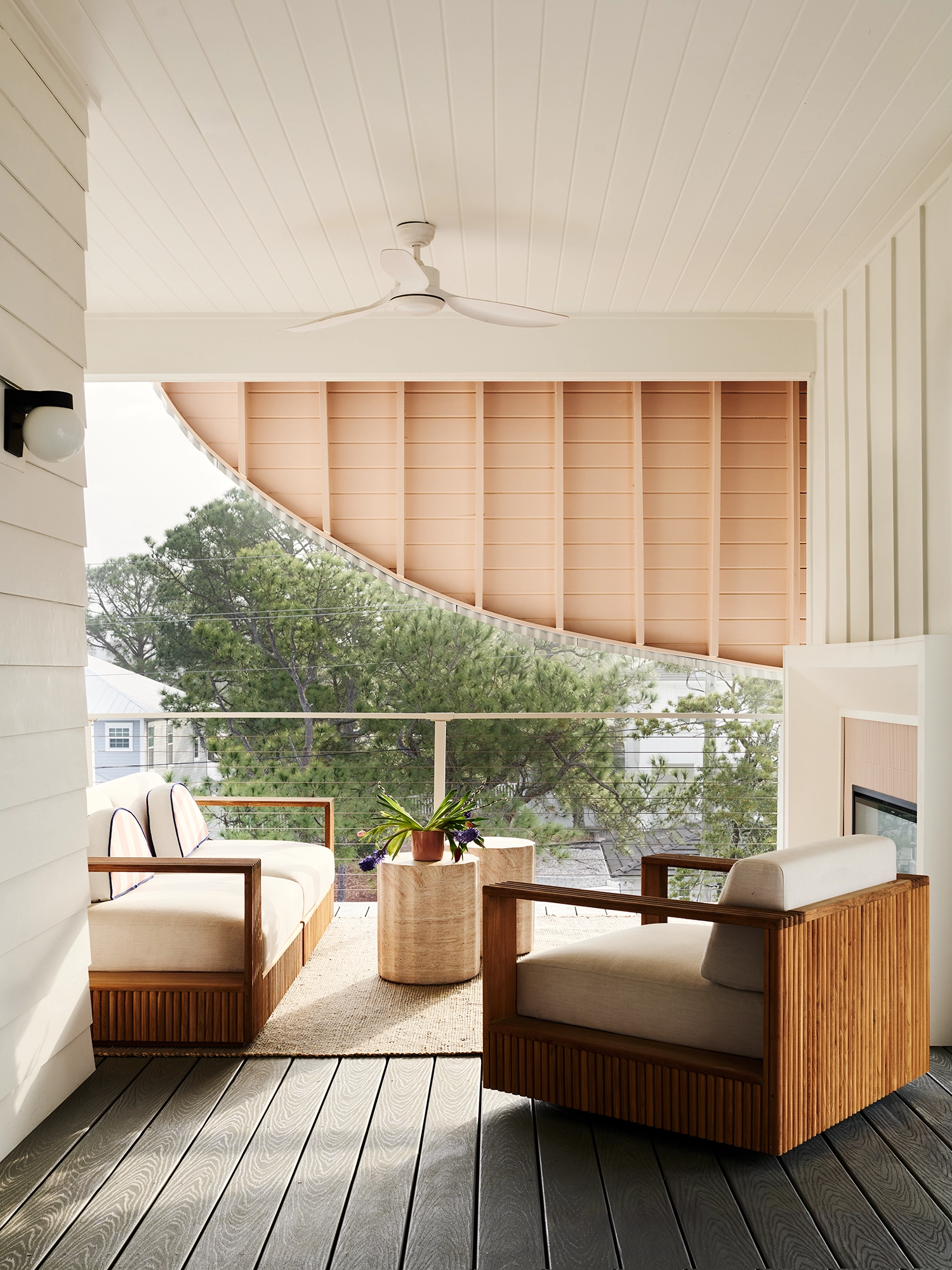
The final synthesis of form and feeling reveals a house that is as much about light as it is about timber. The “side bang” roof overhang at the rear—a cheeky break from symmetry—serves as a reminder that even within the most controlled environments, there is room for architectural wit. By layering gradient lighting effects, ombré walls, and disciplined repetition, Kate’s House stands as a testament to how family history and professional rigour can merge to redefine the contemporary beach home.