



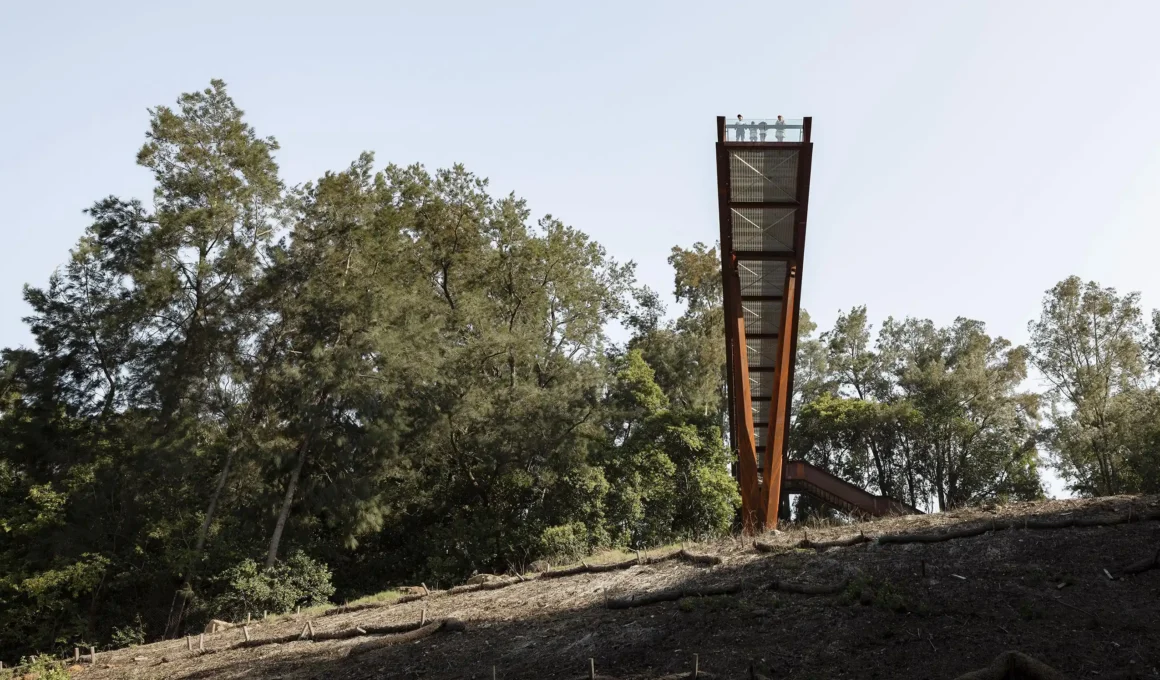
Suspended over the dramatic topography of a former rock quarry in Hornsby, the Southern Lookout by AJC Architects serves as a precision-engineered portal into Sydney’s industrial past and ecological future. Spanning 42 meters through the forest canopy, this weathering steel structure marks the inaugural architectural phase of a 60-hectare landscape-led masterplan, reconnecting the public with a site that remained inaccessible for over a century.
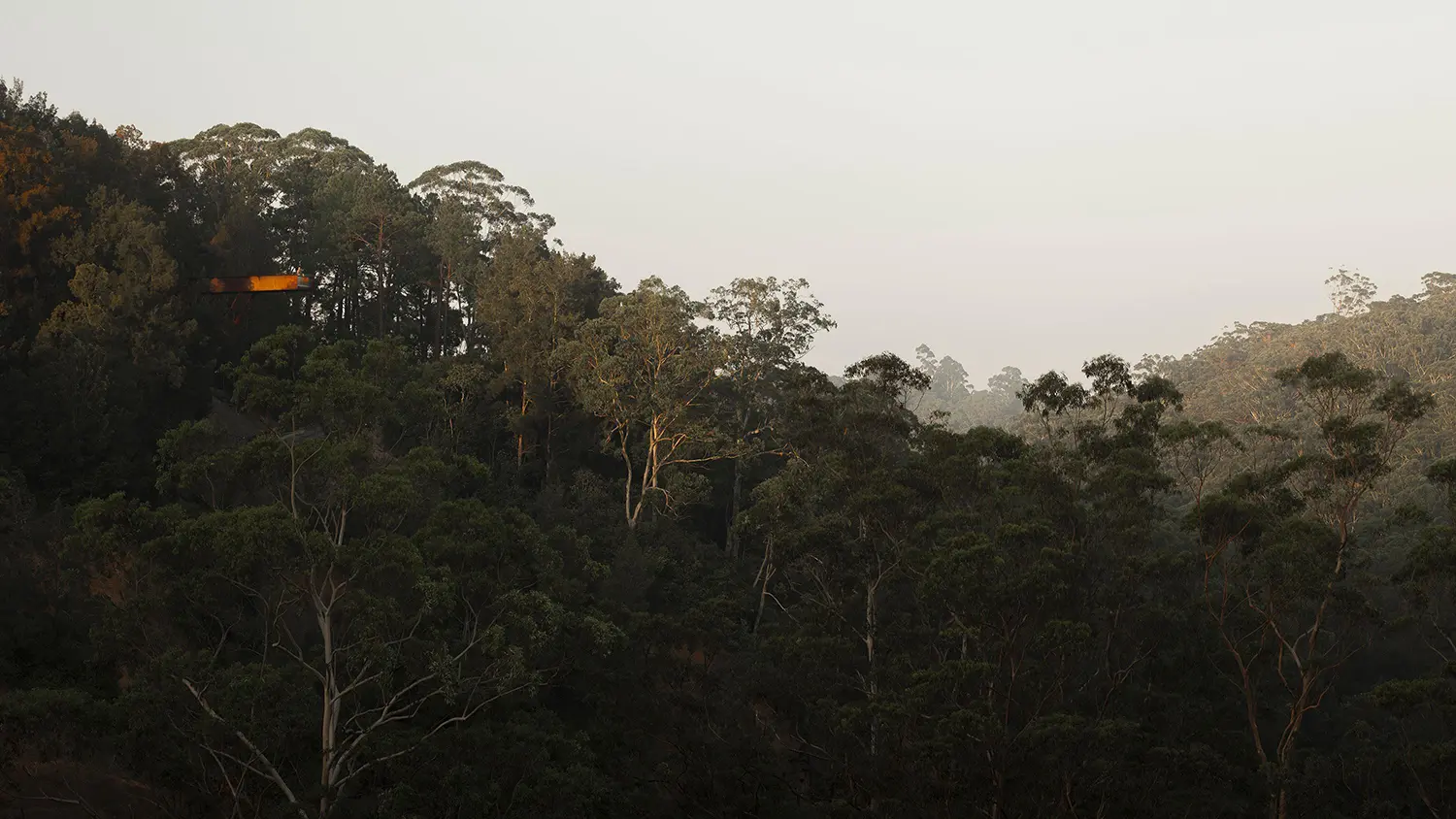
A legacy of extraction informs the robust materiality and geometric clarity of the project. Rather than competing with the rugged scale of the exposed rock walls, the platform adopts an industrial vernacular that feels like a rediscovered relic of the quarry’s operational history. By utilizing weathering steel, the architects ensured that the structure would develop a deep, earthy patina over time, allowing it to recede into the shadows of the surrounding bushland while maintaining a clear, legible form.
The experiential sequence is designed as a gradual transition from the density of the forest to the vastness of the void. As visitors approach the platform, they are led into a choreographed movement that first contains views to emphasize the immediate textures of the eucalyptus trees and the native undergrowth. This intentional narrowing of focus builds a sense of anticipation, transforming a simple walk into a narrative journey through the changing elevations of the site.
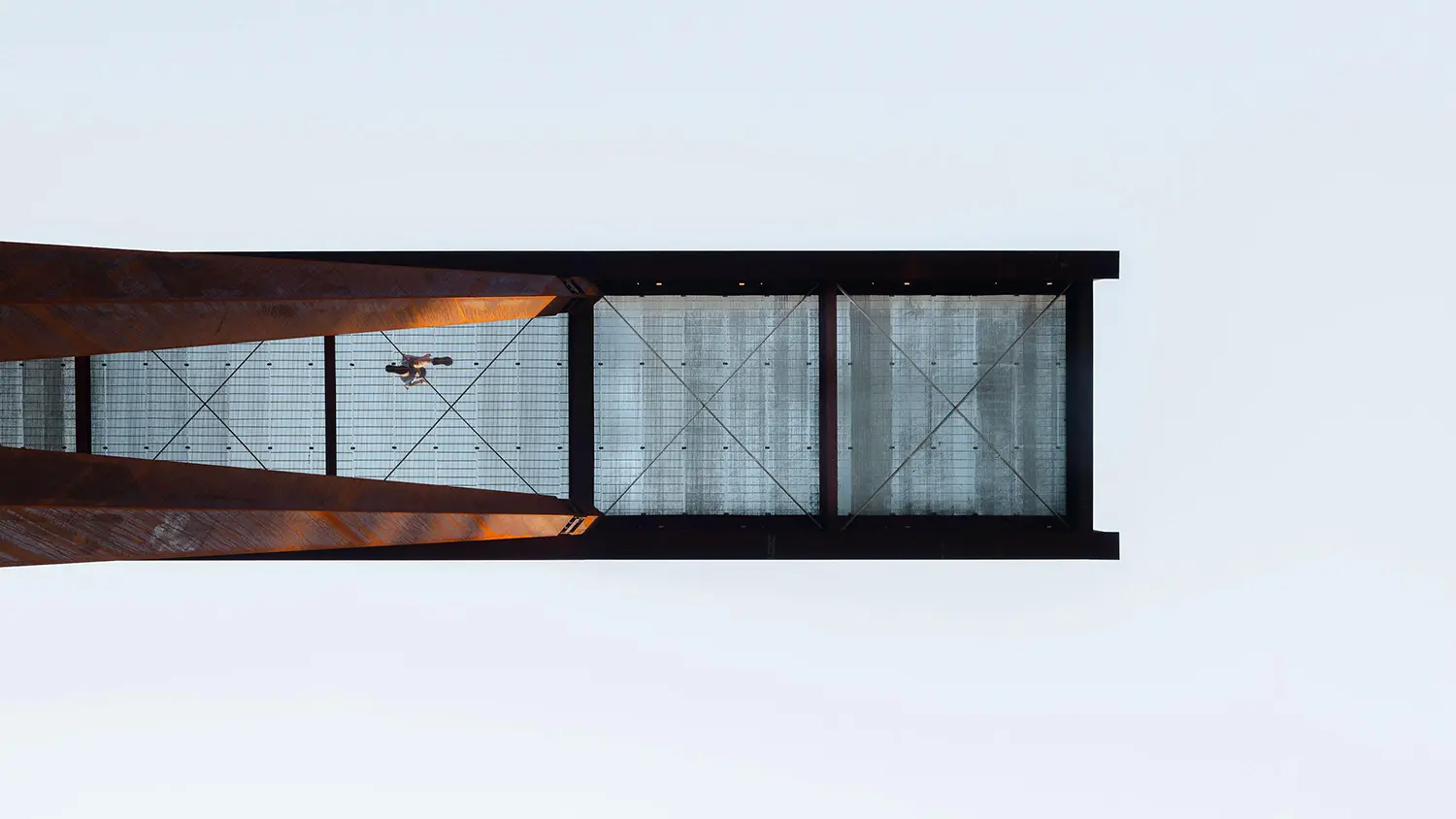
Sensory engagement is heightened through the use of a grated steel floor. This choice serves a dual purpose: it allows light and rain to reach the vegetation below, maintaining the ecological health of the embankment, and it provides hikers with a subtle, visceral awareness of the increasing height. The rhythmic sound of footsteps on the metal and the glimpses of the falling topography beneath one’s feet create a physical connection to the sheer scale of the man-made canyon.
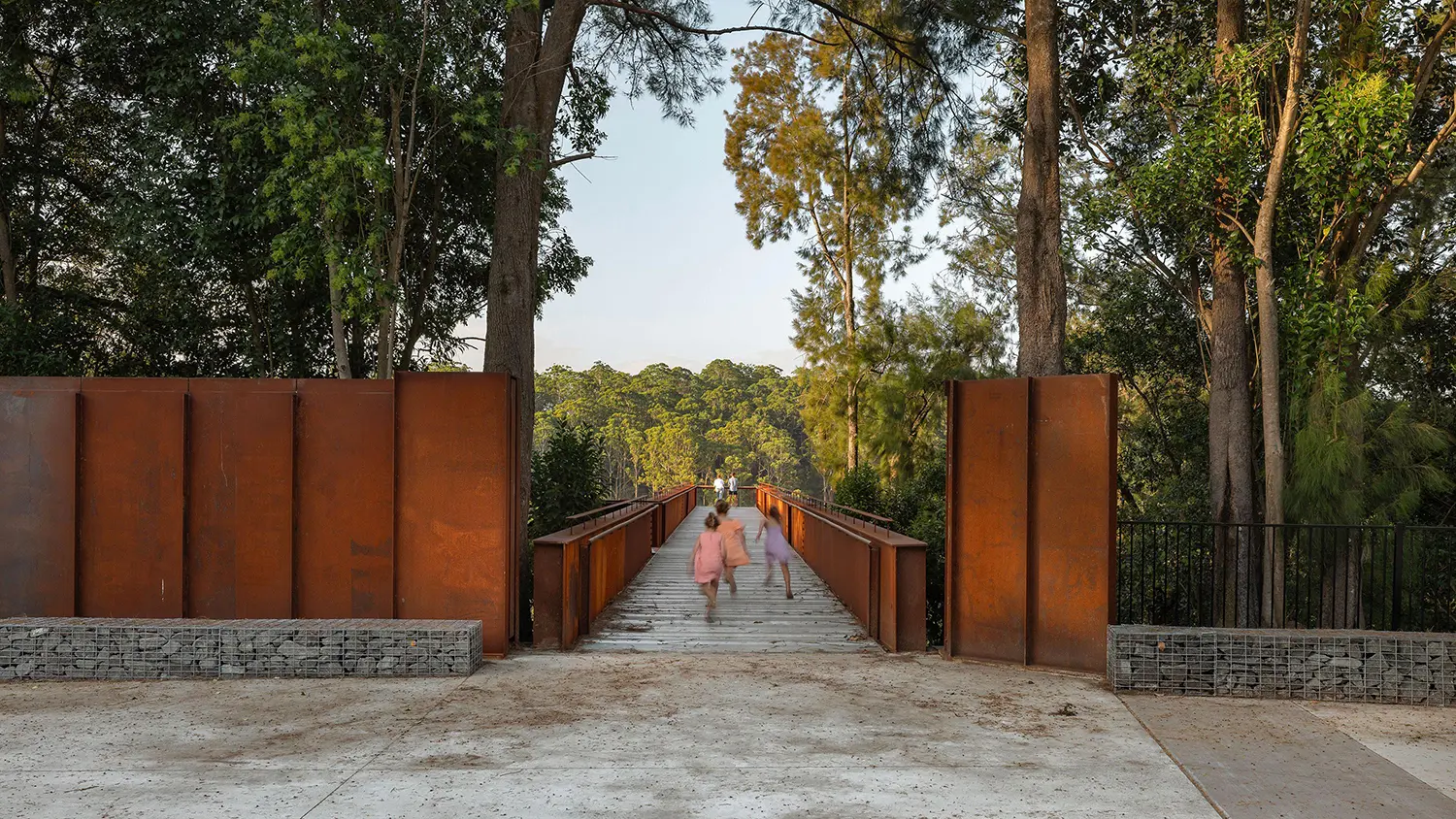
Technical precision defines the structural logic of the platform, which was engineered to minimize ground disturbance on the sensitive slope. The lookout is anchored firmly into the embankment and balanced on four angled columns that converge on a single central footing. This tripod-like arrangement allows for an impressive 18-meter span and a six-meter cantilever, projecting visitors out into the air with minimal structural interference.
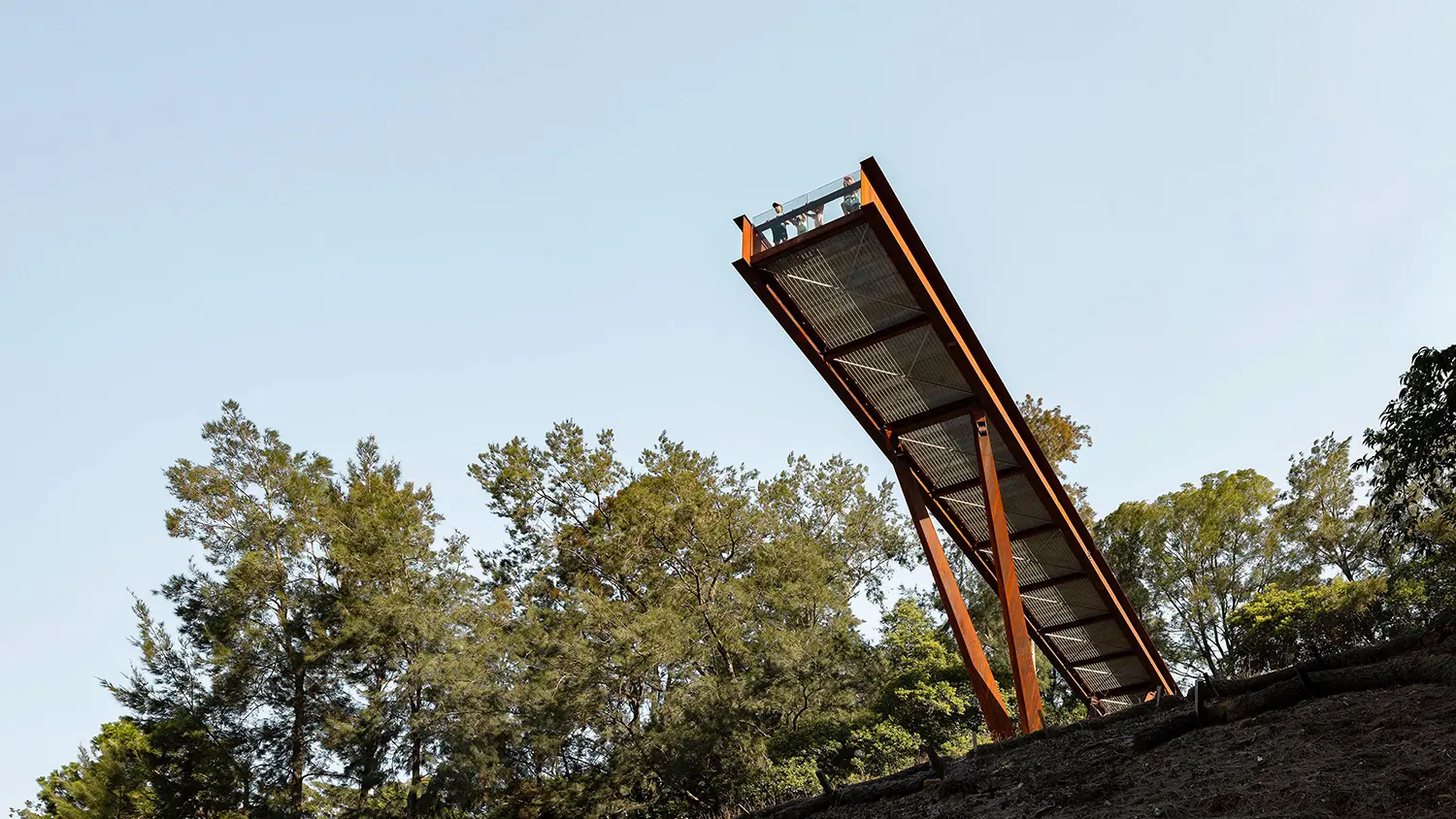
The climactic reveal occurs at the platform’s terminus, where the enclosure of the canopy falls away to expose the full magnitude of the volcanic diatreme. From this vantage point, the relationship between the industrial scars of the quarry and the emerging water body below is framed with cinematic clarity. The lookout does not merely provide a view; it provides a perspective on how the natural landscape recovers and integrates with human-led transformation.
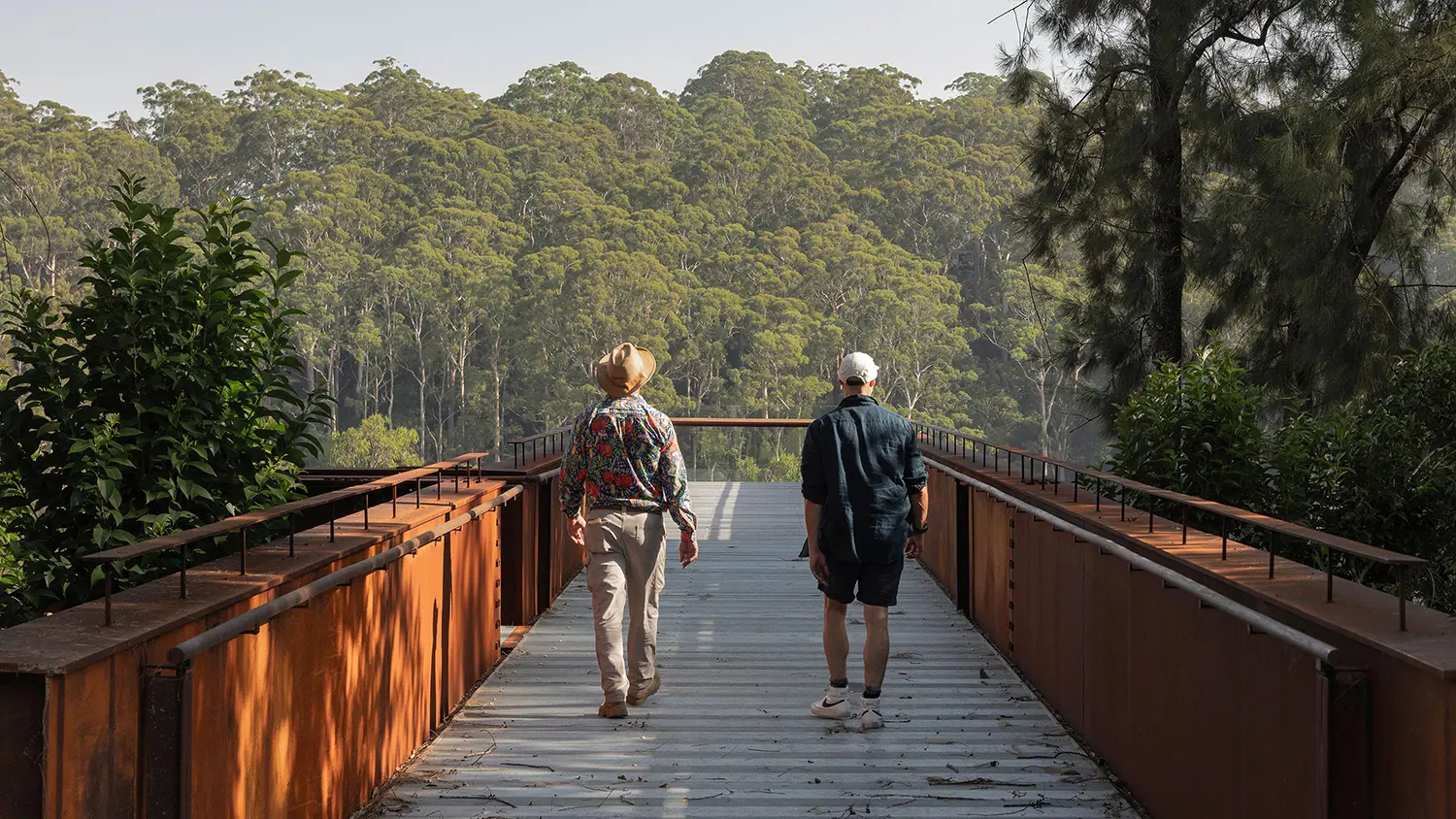
Environmental stewardship guided the site strategy, ensuring that the intervention acts as a light touch on a complex ecosystem. By concentrating the structural loads onto a single point of contact in the lower terrain, the project preserves the integrity of the soil and existing root systems. This approach reflects a broader commitment to the landscape-led masterplan, where the built form serves the terrain rather than dominating it.
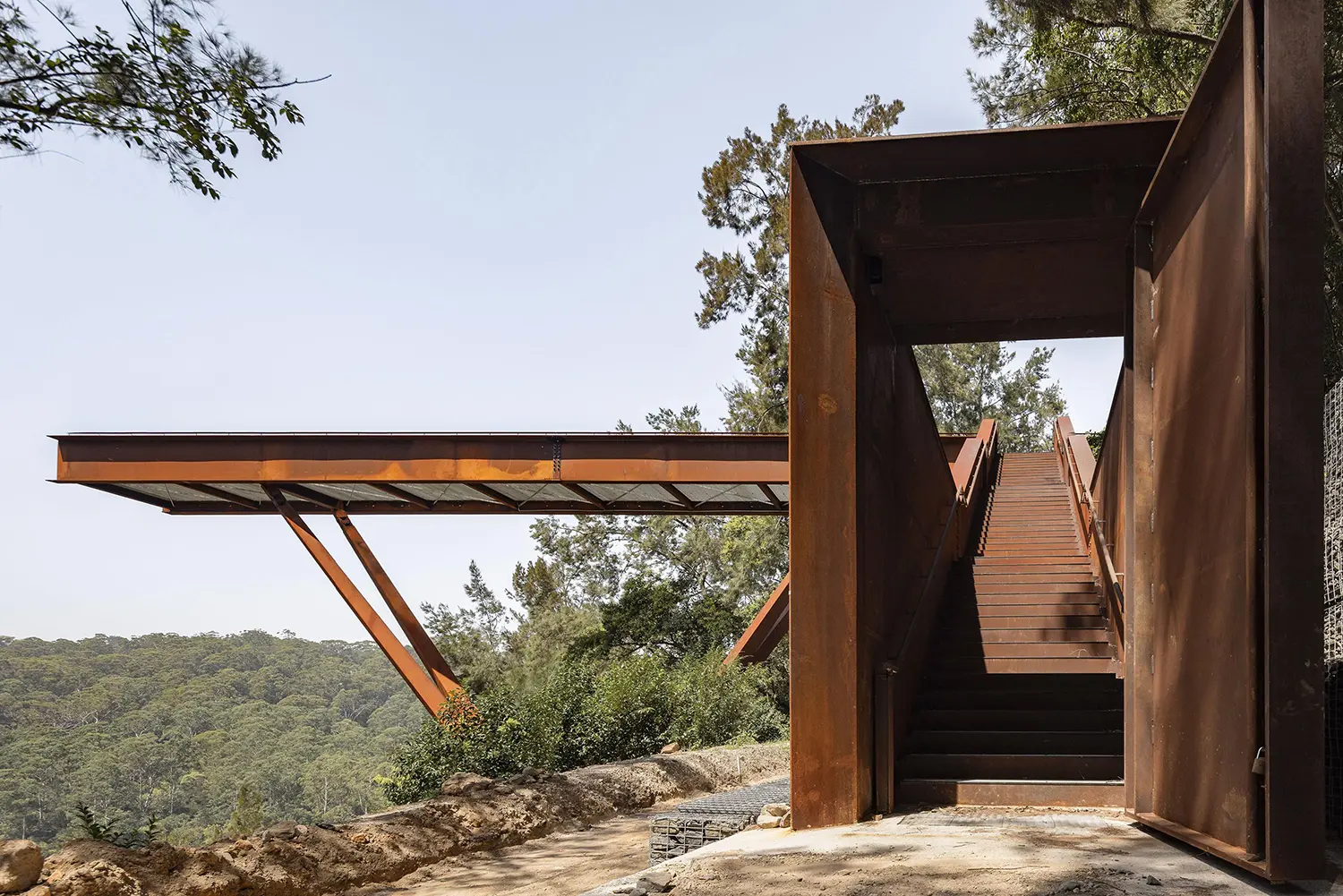
Contextual resonance is achieved through the dialogue between the rusted orange of the steel and the silvery greens of the Australian bush. The Southern Lookout functions as a quiet observer of the site’s evolution from a place of extraction to a regional open space. It stands as a testament to the idea that infrastructure can be both functional and poetic, acting as a bridge between the site’s rugged history and its future as a public destination.
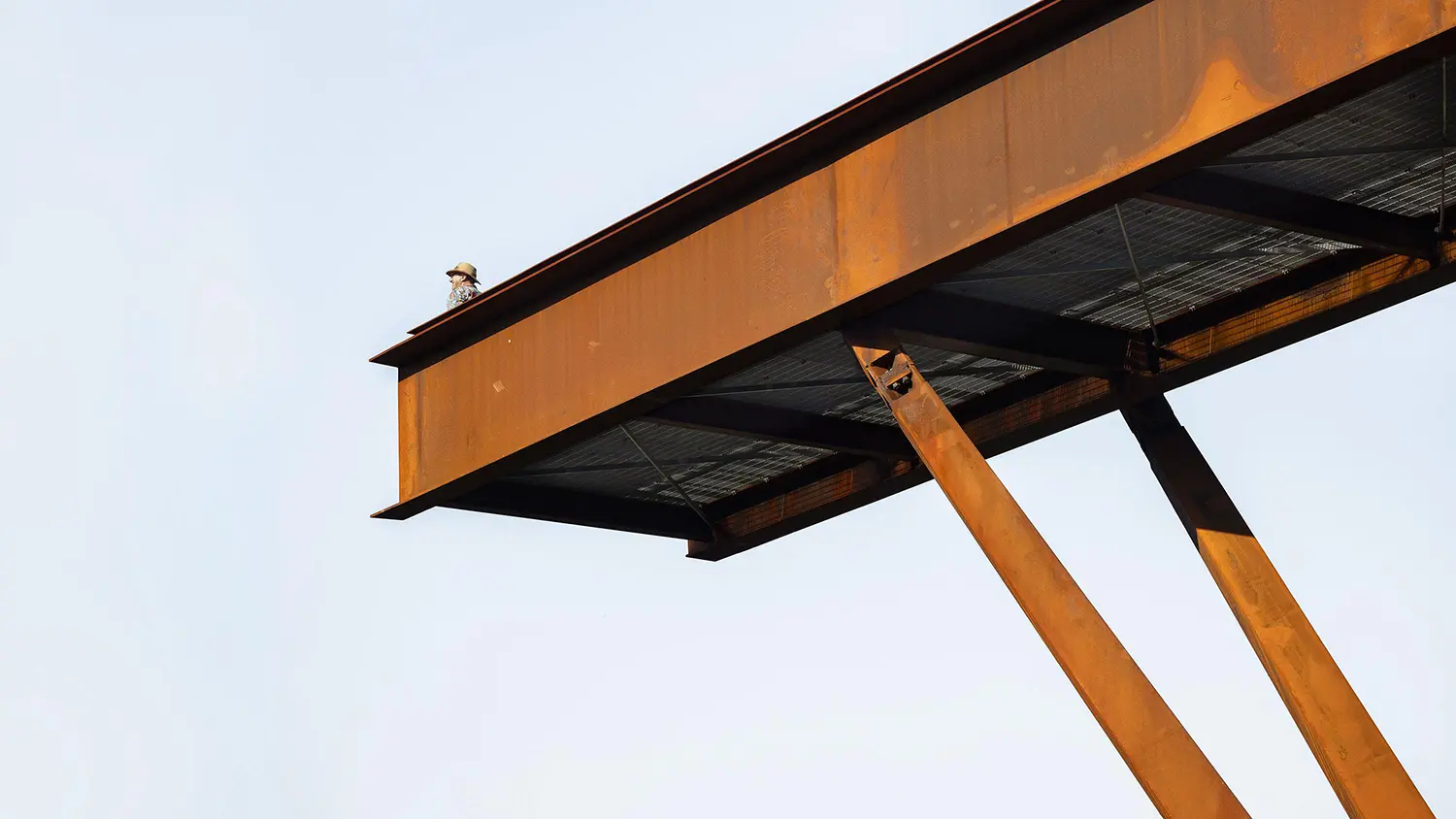
The final resolution of the project lies in its restraint. In an era of grand gestures, this intervention succeeds by being precisely what it needs to be: a durable, honest, and evocative path through the trees. As Hornsby Park continues its metamorphosis into a premier recreational hub, the lookout remains a grounded constant, offering a moment of reflection above the deep history of the Sydney basin.