



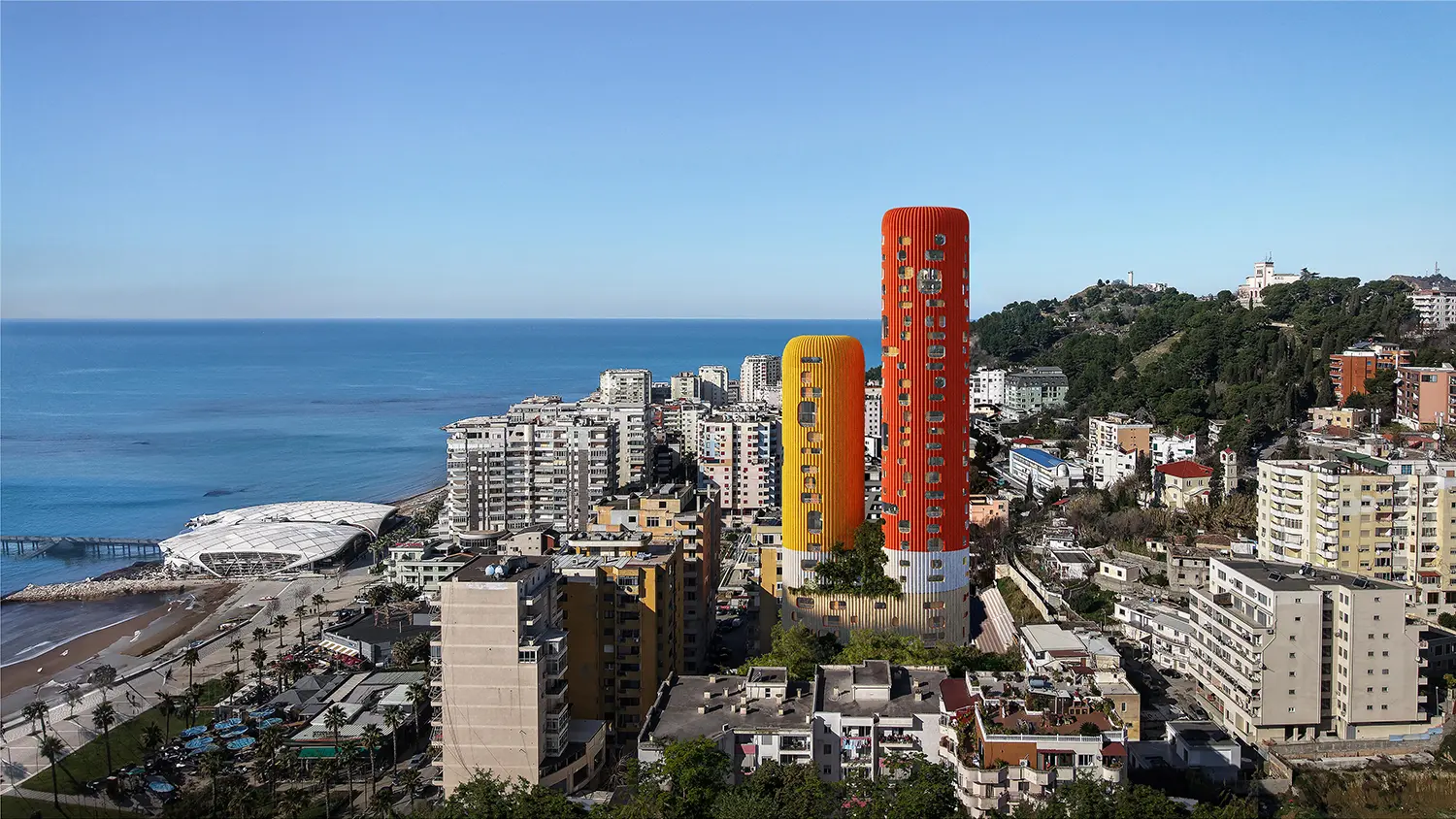
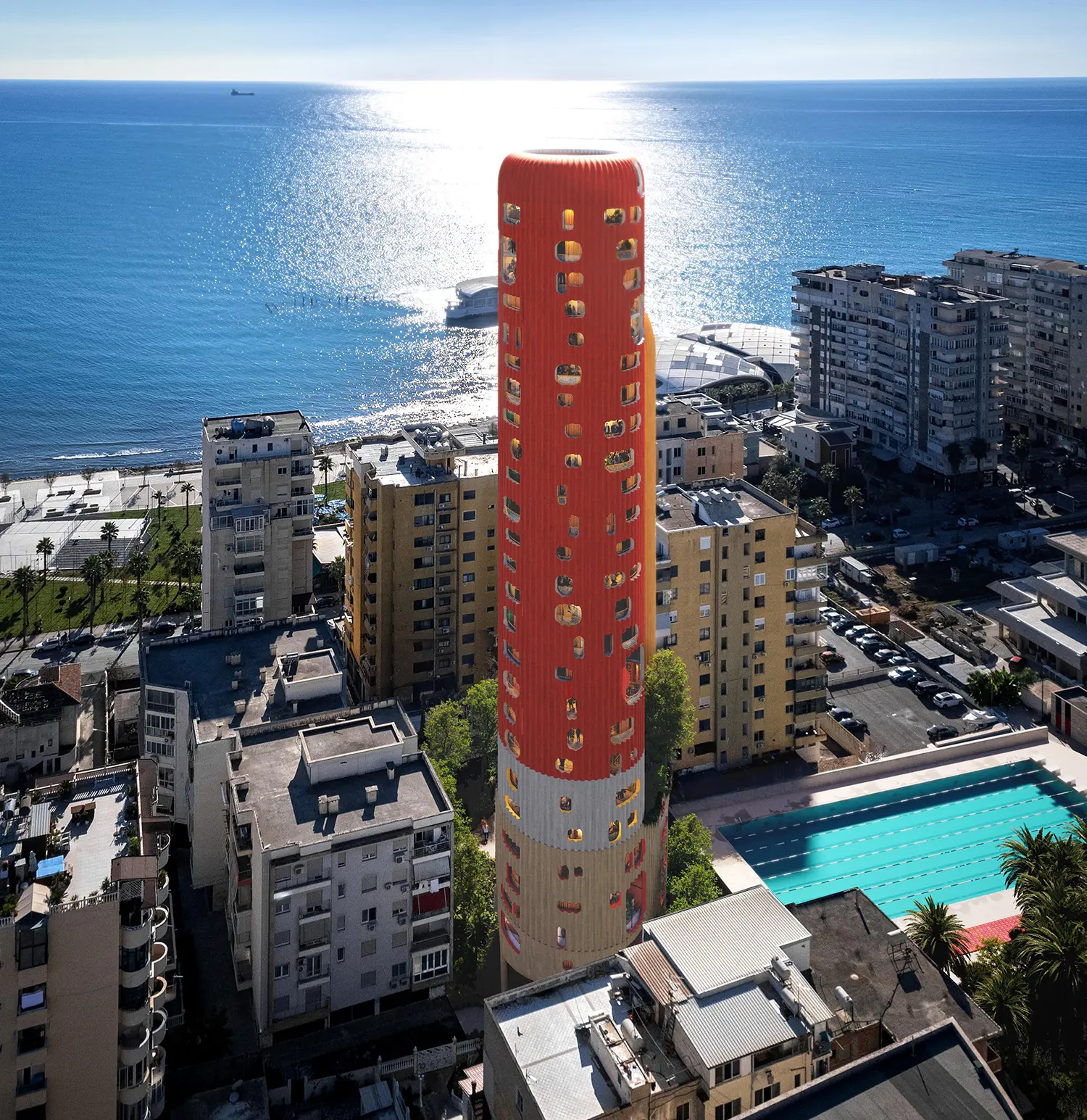
Sky-K is a slender residential intervention in the Mediterranean city of Durrës, Albania, where the Spanish firm Selgascano has introduced two vibrant, chimney-like towers that rise from a communal garden to redefine the coastal skyline.
The project responds to the urban fabric of Durrës, a city defined by its proximity to Tirana and a dense industrial heritage linked to its port. Situated just behind the sea linear park of Rruga Taulantia, the site was treated as a delicate puzzle. Instead of imposing a monolithic mass, the approach prioritizes urban permeability, ensuring that the new addition does not obstruct the light or views of its neighbors. It is a gesture of respect toward the existing community, acknowledging that private development should ideally offer a public gift.
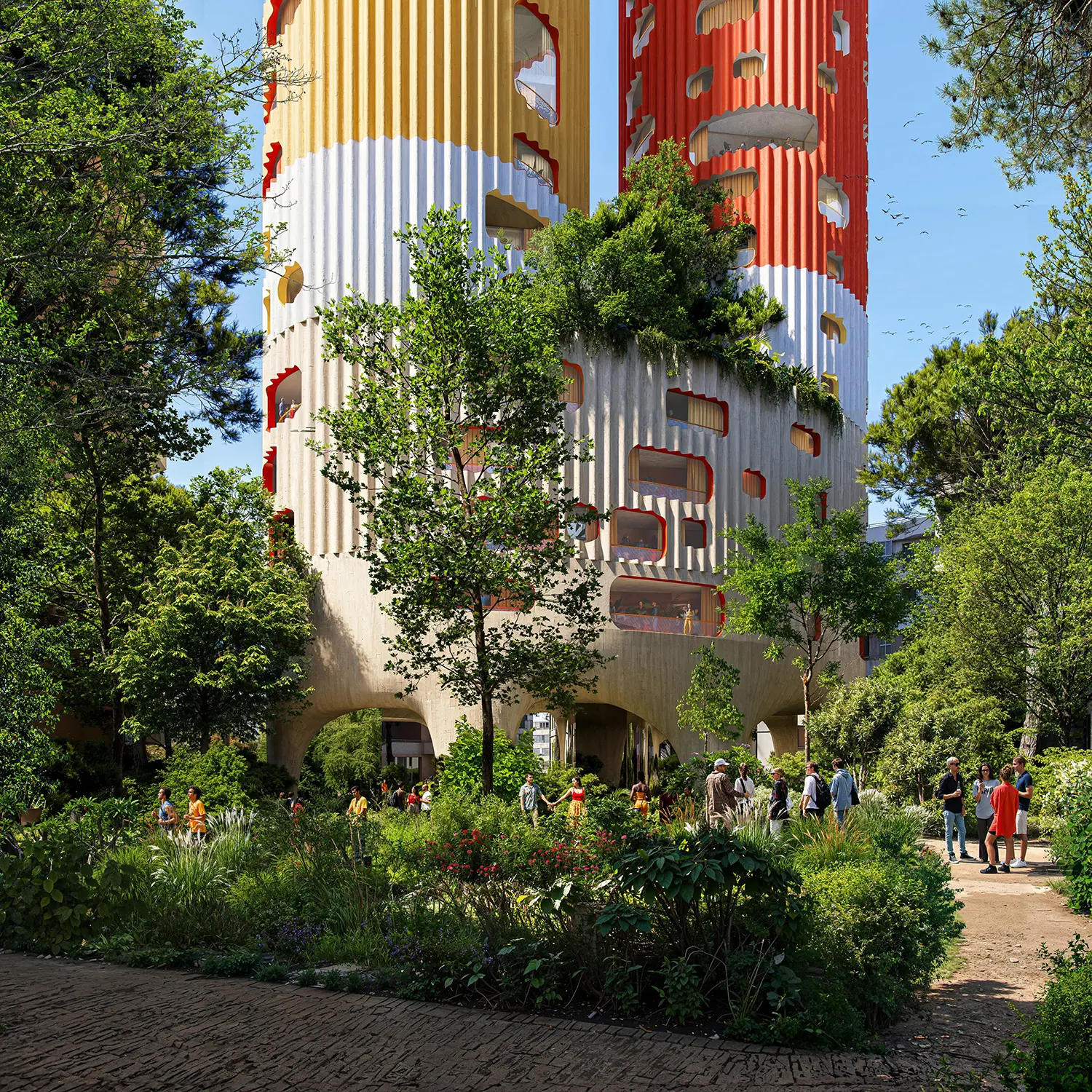
A botanical foundation serves as the primary interface with the street. By liberating the entire ground floor, the project establishes a lush Mediterranean garden that functions as an ecological lung for the neighborhood. This green plinth is not merely decorative; it is a conscious effort to enrich the local microclimate. The building meets the earth through an oval-shaped podium supported by only six strategic concrete columns, creating a covered, shaded void that invites the breeze and the public eye to pass through rather than around it.
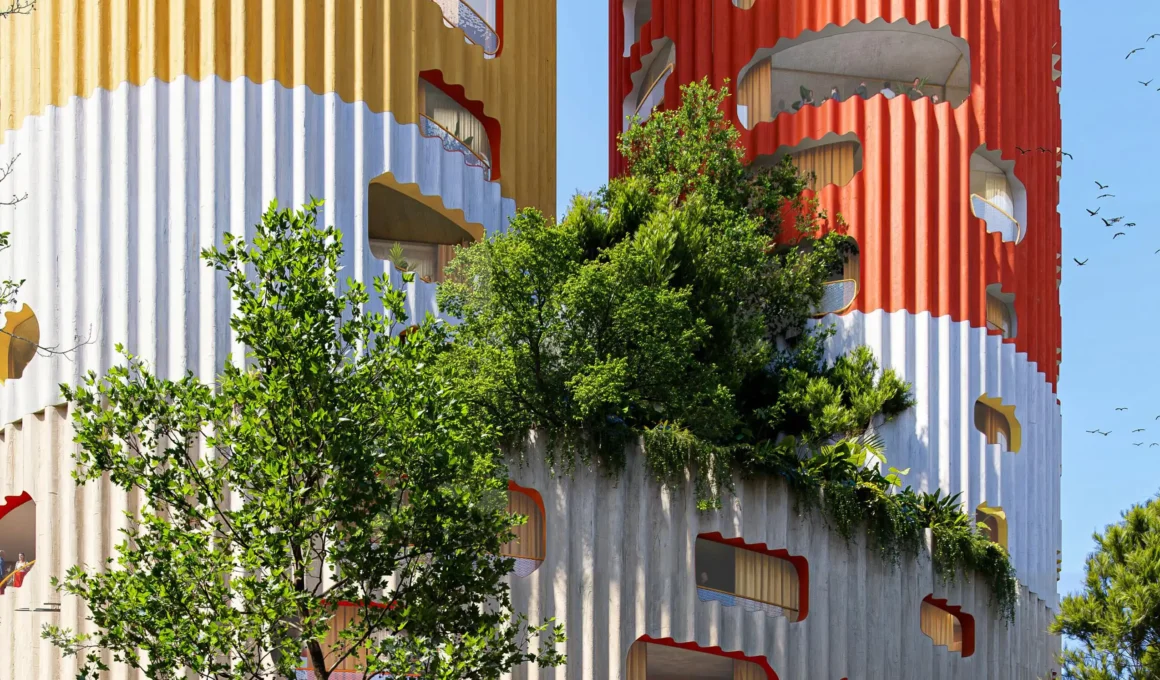
Verticality and texture define the two slender volumes that ascend from the podium. Resembling industrial chimneys—a nod to the port’s history—the towers are finished in distinct, bold colors that break the monochromatic monotony often found in rapid urban expansions. The continuous façade is characterized by an undulating concrete texture, a tactile choice that catches the moving sun and emphasizes the height of the structures. This rhythmic surface creates a play of light and shadow, giving the towers a sculptural presence that shifts depending on the viewer’s vantage point.
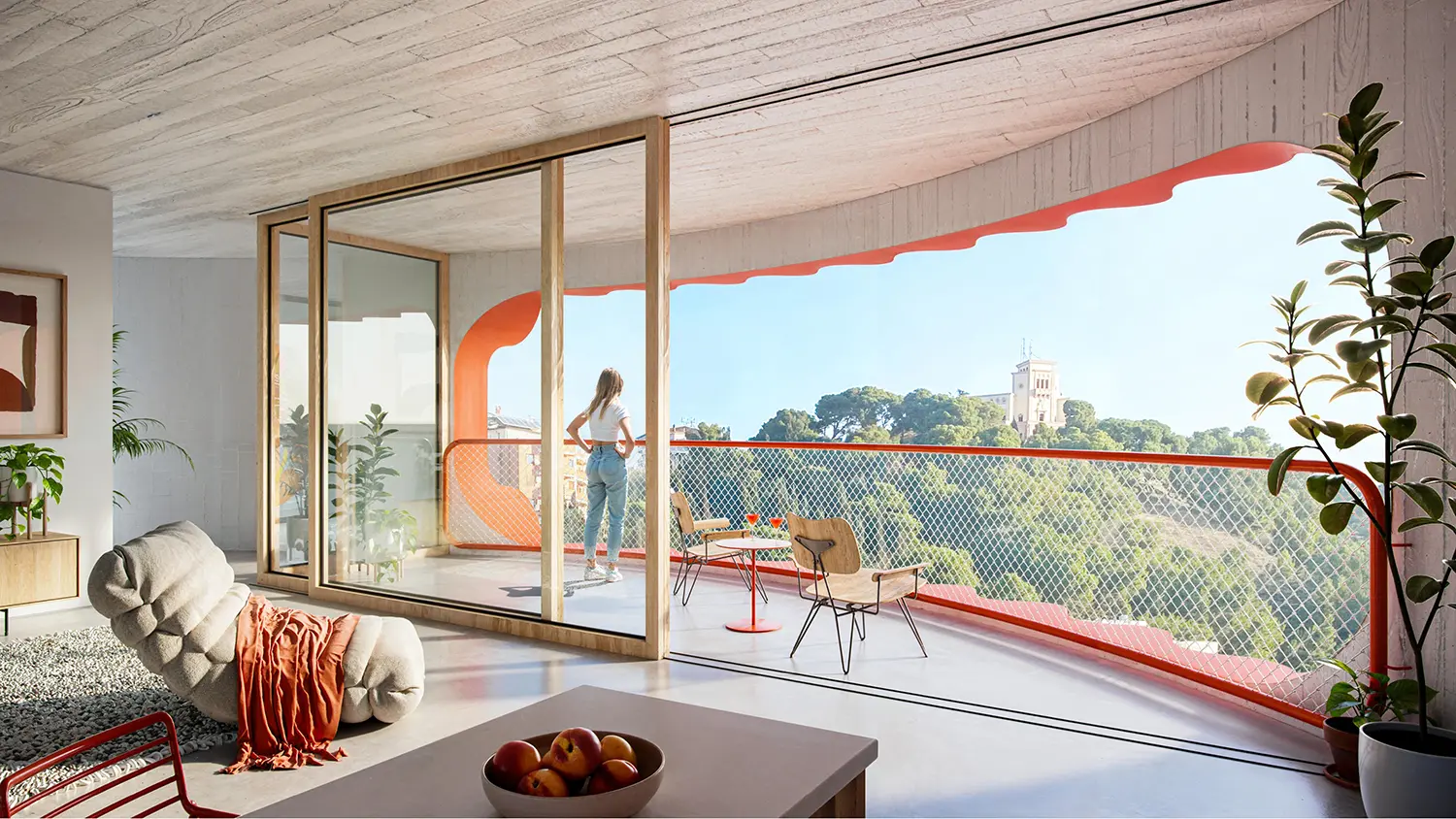
The concept of the threshold is explored through the building’s unique apertures. Rather than traditional windows, the façade is punctuated by varied, circular openings that lead into deep private terraces. By pushing the glass back and making it invisible from the exterior, the architects have created “outdoor rooms” that act as thermal buffers. These voids frame 360-degree views of the Adriatic Sea, the port, and the surrounding hills, allowing the landscape to become a living part of the interior experience.
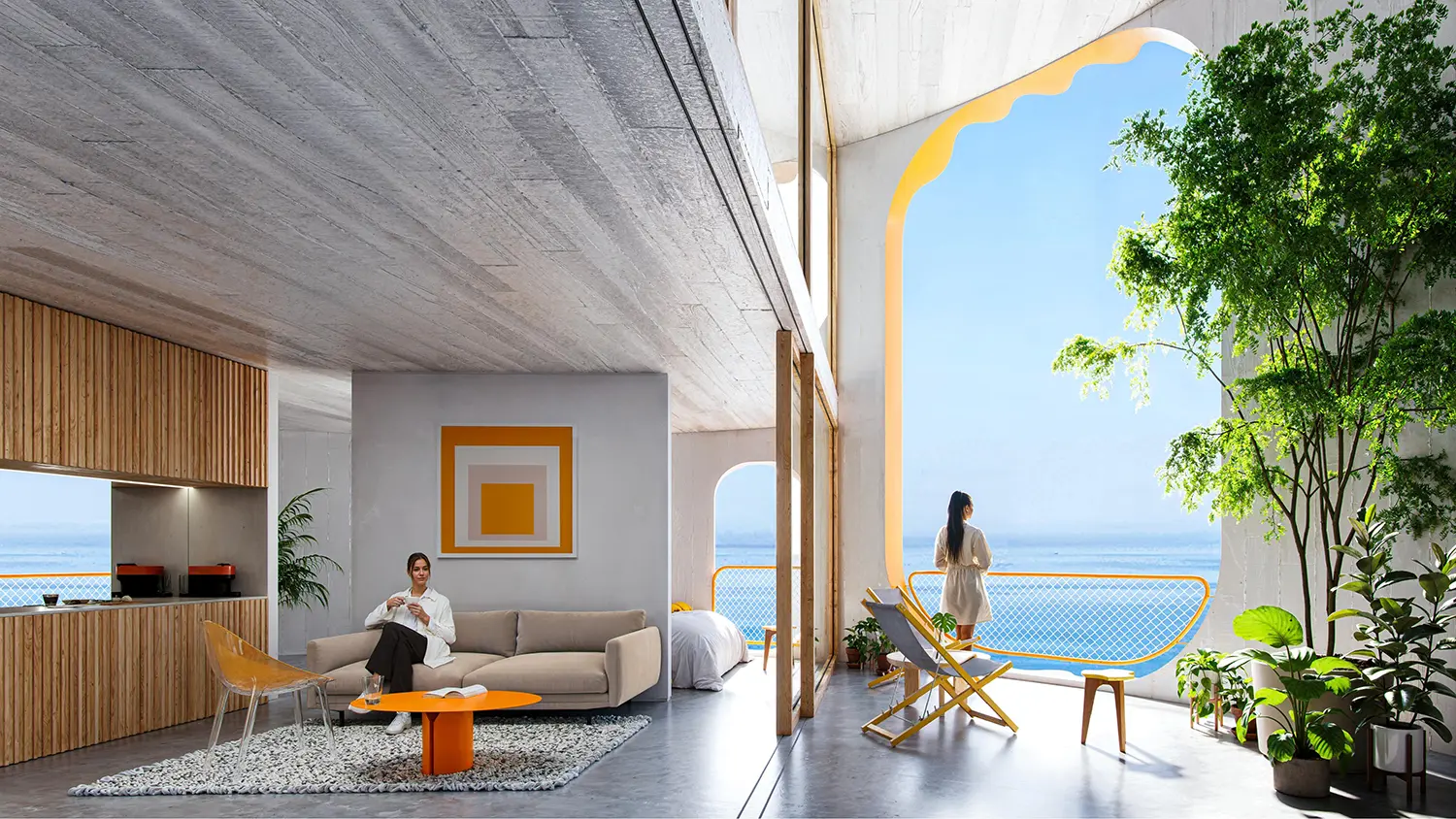
Climatic intelligence is baked into the floor plan. The articulation of the circular openings allows for a diverse range of apartment typologies, ensuring that each unit remains unique. A critical functional benefit of this design is natural cross-ventilation. By positioning terraces on multiple sides of the units, the apartments harness the coastal winds, reducing the reliance on mechanical cooling and fostering a sensory connection to the maritime environment.

An industrial dialogue emerges from the skinny, bright-colored silhouettes of the towers. They do not attempt to disappear into the sky; instead, they claim their place as landmarks that evoke the city’s productive past. This juxtaposition of a soft, green base with a hard, vertical expression creates a narrative of a city in transition—one that remembers its labor-heavy roots while pivoting toward a more sustainable and resident-focused future.
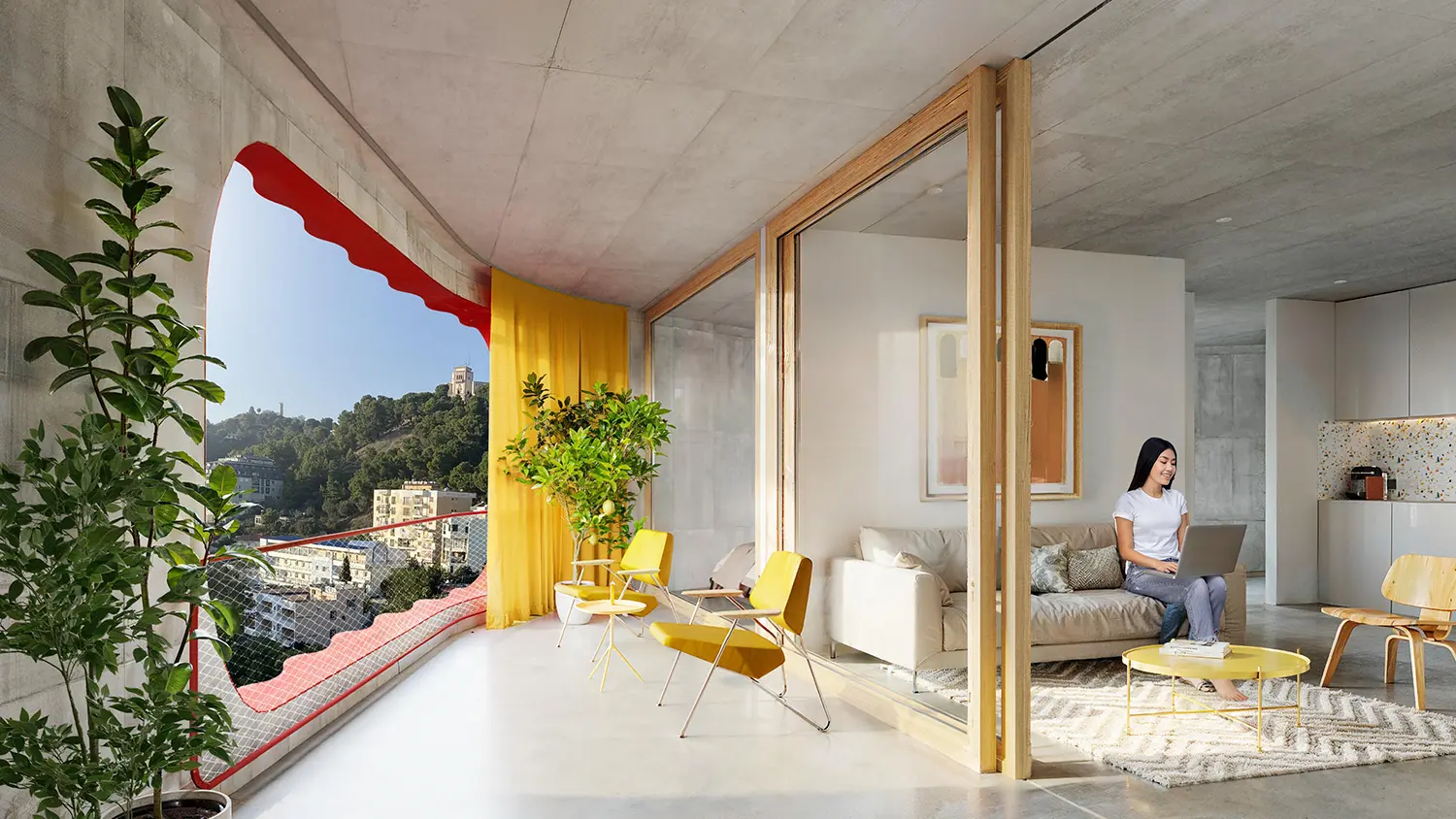
Human-centric proportions remain the guiding light of the project’s execution. Despite its height, the building avoids feeling overwhelming thanks to the careful control of its scale and the “skinny” footprint of the towers. The result is a structure that feels light on its feet, providing high-density living without the typical aesthetic of a high-rise. It reflects a slow, considered evolution of a site, moving away from rapid speculation toward a more thoughtful urban revitalization.
The broader context of the Albanian renaissance places Sky-K within a significant movement of international creativity currently reshaping the country. The Adriatic coast and the capital are becoming a laboratory for experimentation, much like the vertical puzzle designed by noa* in Tirana or the bold spherical arena and hotel proposed by MVRDV. From the ethereal elegance of The Veil by Bofill Taller de Arquitectura to Selgascano’s vibrant chimneys, these projects signal a shift toward an era where the Balkan landscape is defined by high-concept interventions. For the professional and the enthusiast alike, Durrës is no longer just a port of transit, but a destination where the dialogue between the industrial past and a courageous new aesthetic is vividly coming to life.