

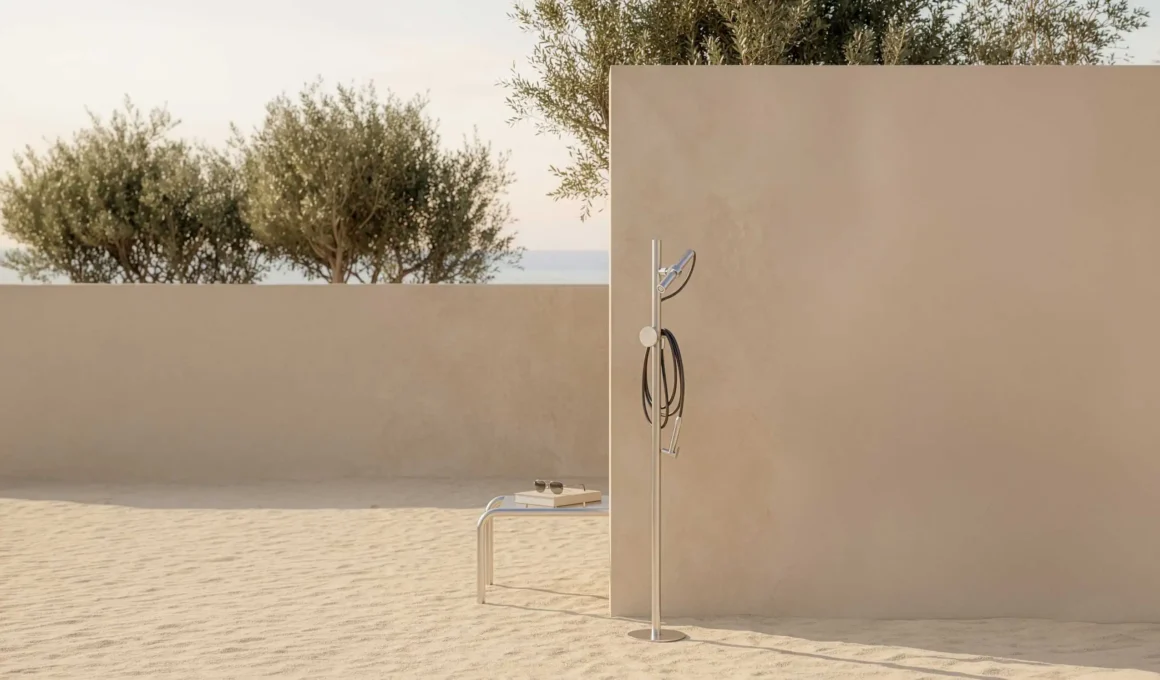
The architectural outdoor shower has transcended its origins as a mere poolside utility, evolving into a sophisticated extension of the domestic interior that challenges our traditional boundaries of privacy and nature. No longer a seasonal afterthought, it is being reimagined by contemporary designers as a permanent structural element—a place where outdoor shower design meets the logic of rooms, and where enclosure, exposure, and the body are held in studied tension.
The Geometry of Seclusion
In the modern residence, the primary challenge of the outdoor bath is the negotiation of visibility. Architects are moving away from temporary screens toward permanent architectural integration, using the building’s own mass or strategic landscape interventions to create privacy. Slotted timber baffles set at precise angles or monolithic stone fins do more than hide the occupant; they calibrate light and shadow. This approach treats the shower not as an object placed in the garden, but as a “void” carved out of the living space, ensuring a seamless indoor-outdoor transition that achieves through geometry what a locked door achieves through hardware. Privacy here is a spatial argument, not a mechanical one.
Material Honesty as a Catalyst
The success of these private spaces relies on a strict adherence to material honesty. Because these structures are exposed to the elements, materials cannot “perform”—they must collaborate with UV radiation, salt air, and freeze-thaw cycles. We are seeing a shift toward living finishes: raw brass that patinates into deep oxides, and untreated teak that turns from honey to silver-platinum over eighteen months. These are not failures of maintenance; they are the material performing its truest self. By selecting indigenous stone or weathered timber—often paired with the minimalist aesthetics of modern water features—the house develops a deep geological resonance, rooting the made thing in the very land where it exists.
The Biophilic Ritual
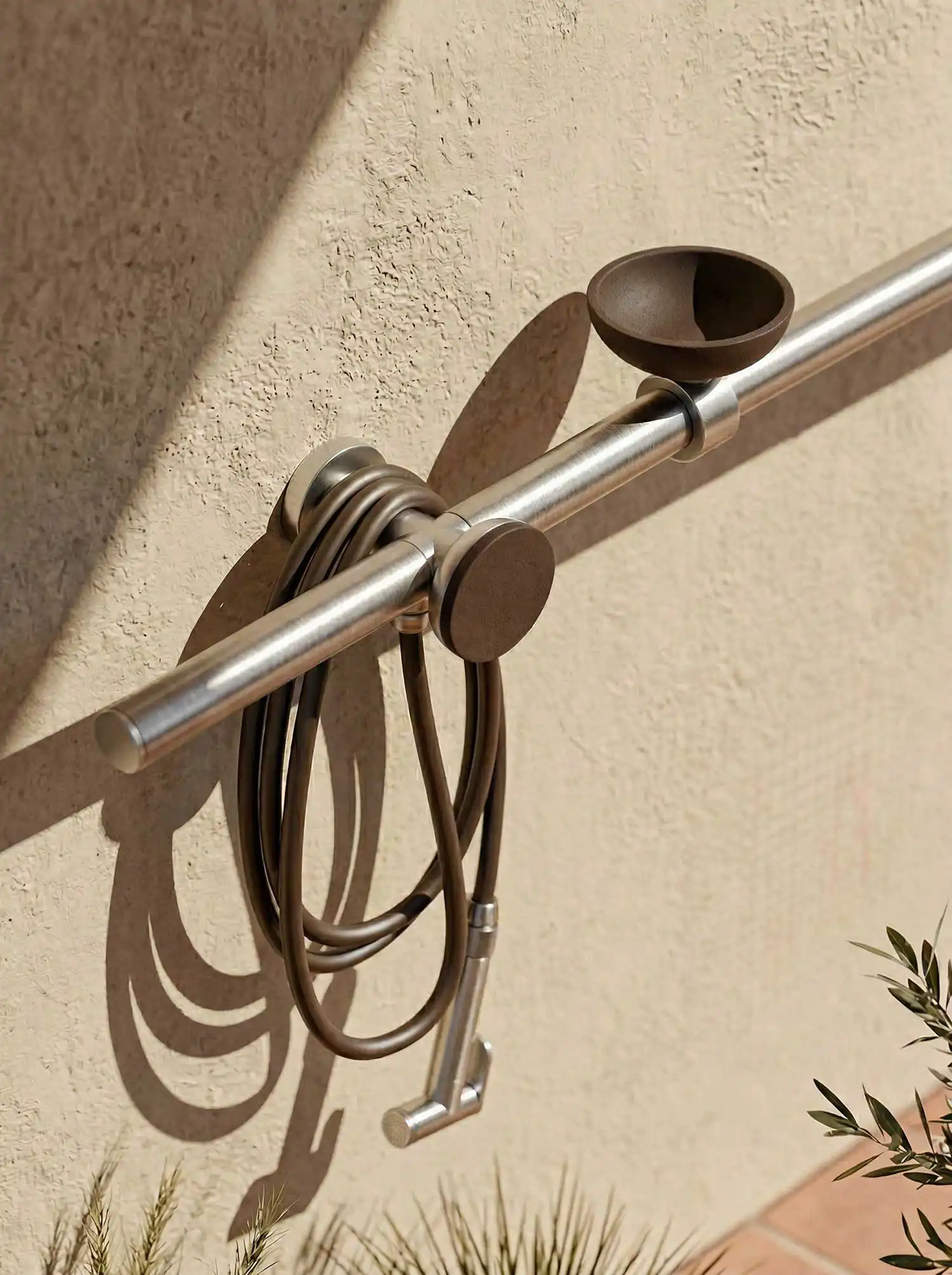
Central to this trend is the application of biophilic design principles that prioritize sensory engagement. The placement of the shower is now dictated by the “view out” and the “sound in”—integrating the rustle of foliage or the specific scent of rain-wet earth into the daily routine. A prime example of this sculptural and sensory integration is the FormaLibera system by IB, designed by Pierattelli Architetture, which treats the outdoor shower as a fluid, organic line that blends into the environment. It is a particular alertness of the body—being simultaneously warmed by water and cooled by moving air—that the indoor bathroom simply cannot replicate.
Engineering the Invisible
Beyond the aesthetic, the most progressive studios are addressing the technical “gap” of sustainability through sustainable drainage opportunities. The traditional drain is being replaced by bioretention beds planted with sedges and iris, allowing grey water to be filtered and reused for sub-surface irrigation. This circular logic often mirrors the thermal sustainability found in dark pool finishes, where energy efficiency and design converge. This transforms the shower from a consumer of resources into a functional part of the contemporary landscape architecture. When combined with solar-thermal logic, the outdoor shower becomes a self-sustaining node of the home, delivering hot water entirely without mechanical intervention.
A New Domestic Threshold
The outdoor shower is, in the end, a question about the nature of domestic space—about where the house stops and the world begins. As the interior of the contemporary residence becomes ever more climate-controlled and insulated, the outdoor bath performs a counter-movement: it insists on the body’s right to be porous and present in the physical world. The private sanctuary of the future does not require a ceiling to provide shelter; it requires only the considered meeting of water, air, and light. In the hands of the studios thinking most clearly about come l’uomo abita lo spazio, what was once a cold tap on an exterior wall has become the most honestly human room in the house.