




The newly unveiled Vision BMW ALPINA made its global debut at the Concorso d’Eleganza Villa d’Este 2026, revealing a rigorous design manifesto that redefines the modern grand tourer through a synthesis of high-performance engineering and monumental proportions. Developed under the creative direction of Adrian van Hooydonk with exterior styling led by Maximilian Missoni, the study marks a pivotal transition for the Buchloe-based brand within the luxury hierarchy of the BMW Group. By pairing an imposing 5,200 mm length with an ultra-low, sweeping silhouette, the vehicle introduces a sophisticated aesthetic language that honors the marque’s core philosophy: an uncompromised balance between extreme capability and serene, long-distance touring comfort.
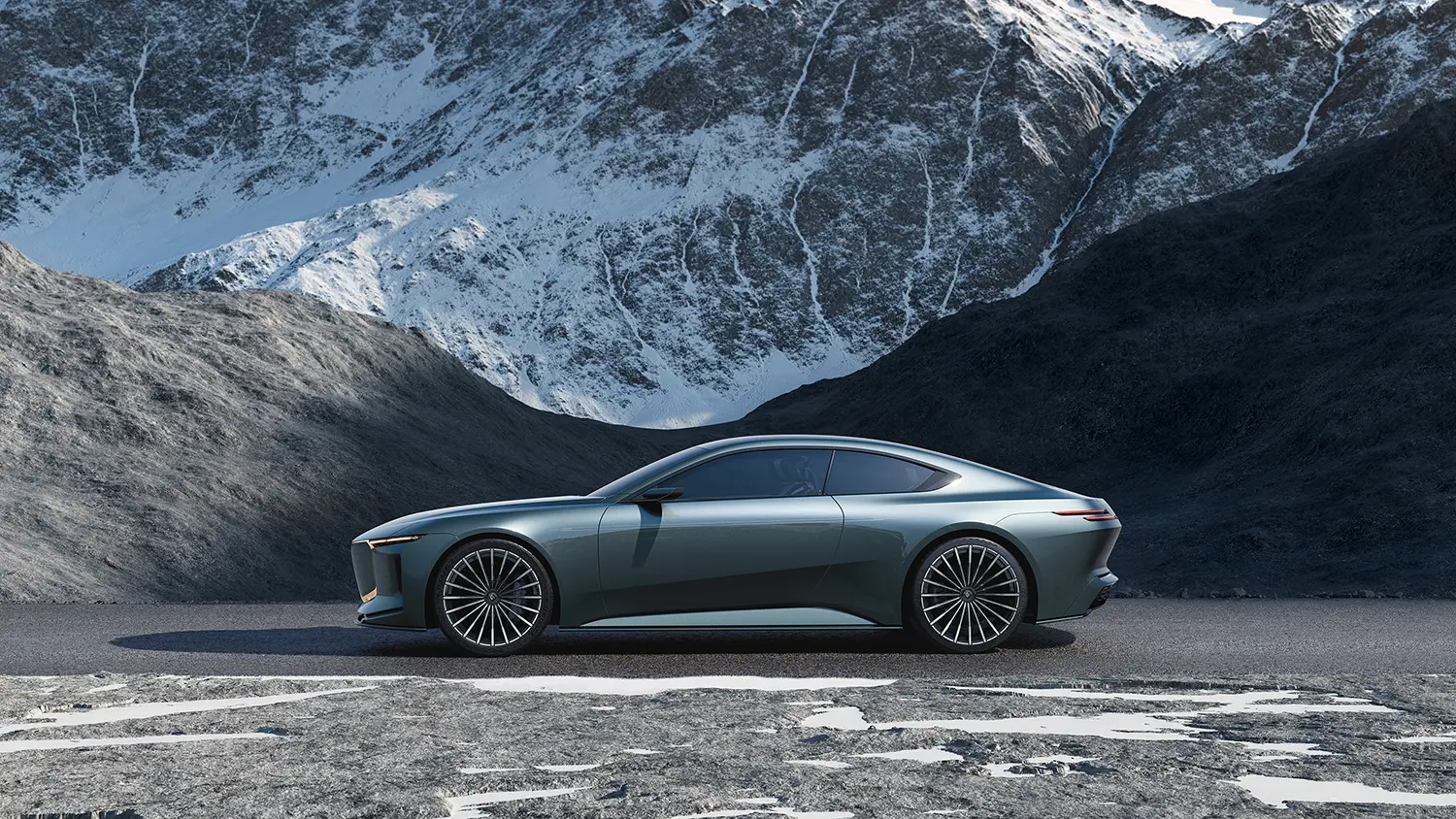
A commanding presence on the gravel of Villa d’Este, the vehicle pushes the boundaries of traditional luxury grand tourer design through monolithic body volumes that reject heavy modern surface contortions. The elongated, fluid coupé roofline stretches gracefully toward the rear deck, a deliberate nod to the iconic Alpina B7 Coupé of the late 1970s that ensures genuine cabin space for four adults. Beneath the expansive hood, the choice of a traditional V8 powertrain establishes a direct link to the brand’s mechanical heritage. The engine’s acoustic signature is tuned as a precise sensory experience: a deep, low-frequency hum at urban speeds that transitions into a clean, disciplined growl under heavy acceleration, grounding the progressive form in tangible mechanical substance.
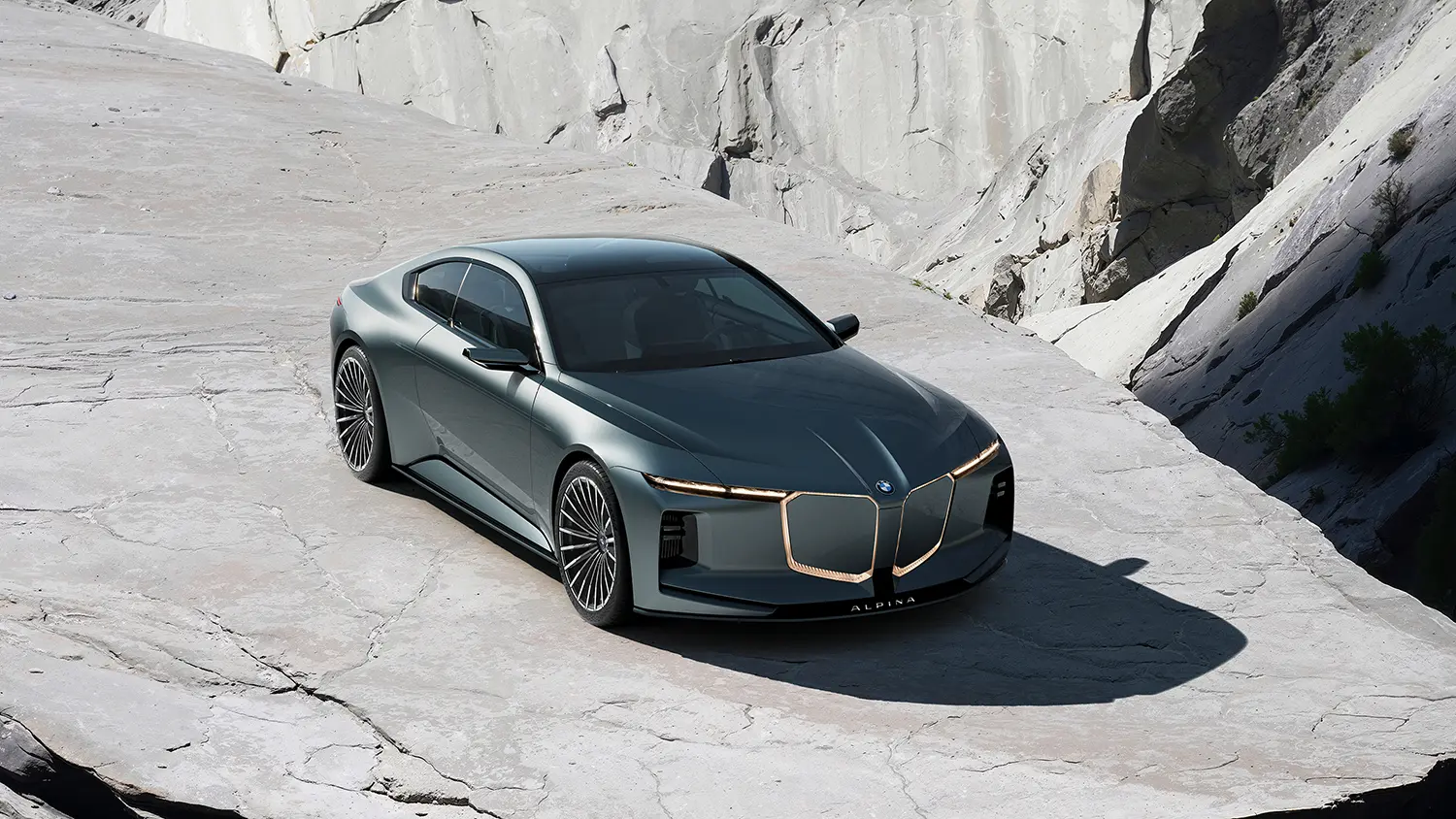
The entire flank is structured around a single geometric axis that redefines current conventions in automotive exterior styling. This razor-sharp crease, known as the speed feature line, originates at the lower corners of the front apron at a continuous six-degree inclination, slicing through the lateral volumes before wrapping around the muscular rear stance to generate an immediate sense of forward momentum. The front fascia resurrects the historic shark nose profile, transforming the classic twin-kidney grille into a deep, three-dimensional sculpture. Rather than relying on overt aerodynamic appendances, the front end achieves its visual impact through powerful, clean volumes, giving the vehicle an authoritative presence completely free of overstatement.
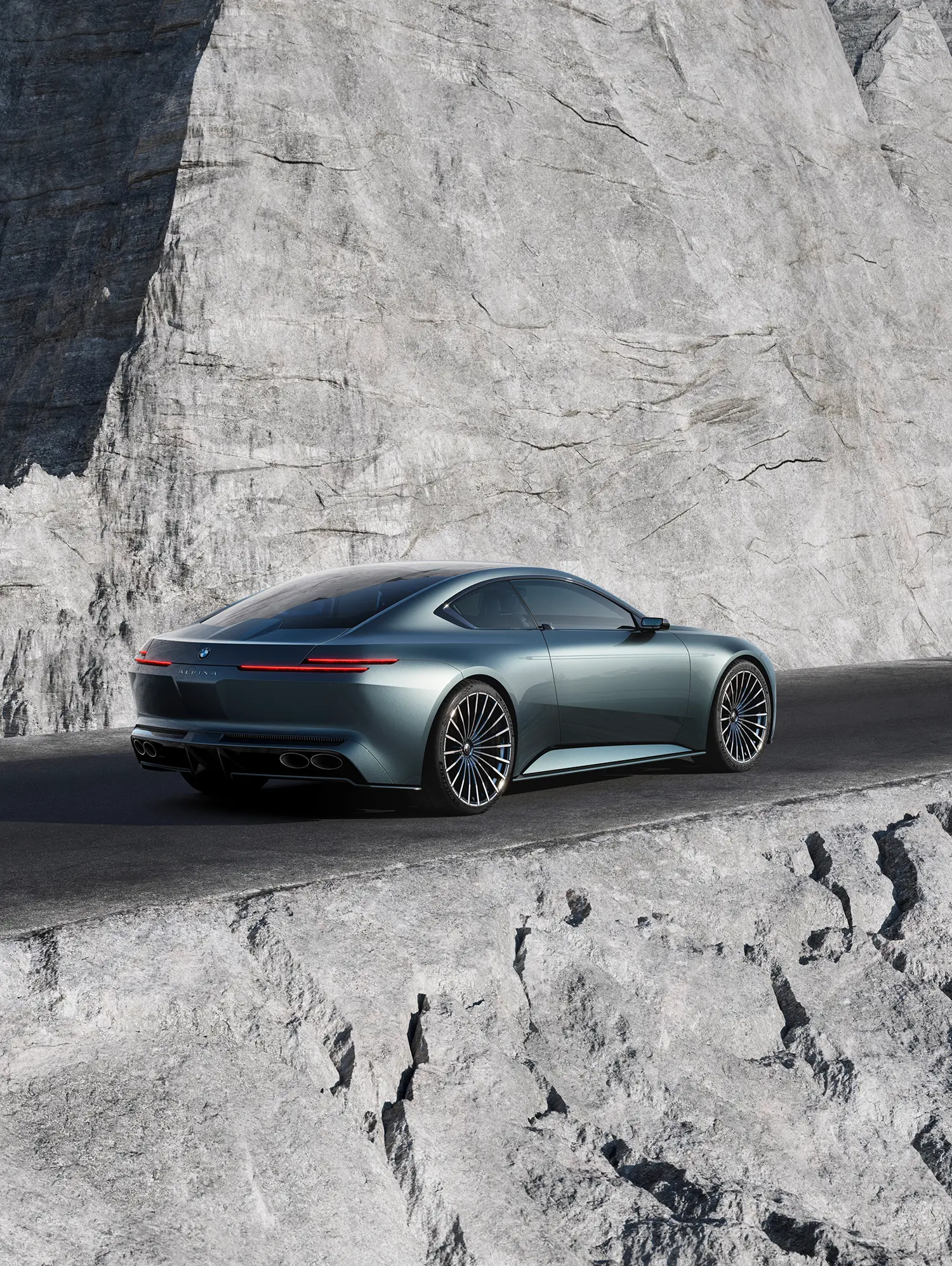
True luxury manifests in subtle elements that reward close inspection, a philosophy that showcases a masterclass in high-end vehicle customization without demanding immediate attention. The famous Deco-lines, an institutional brand hallmark since 1974, have been radically distilled and applied directly beneath the clear coat, reacting to natural sunlight only at specific viewing angles. This restrained approach defines the inner surfaces of the kidney grille, where a microscopic, finely scaled rendering of the geometric graphic is integrated. It is brought to life only by a concealed, softly backlit perimeter that activates when the vehicle is in motion, mimicking the clean surfacing found on historic racing iterations.
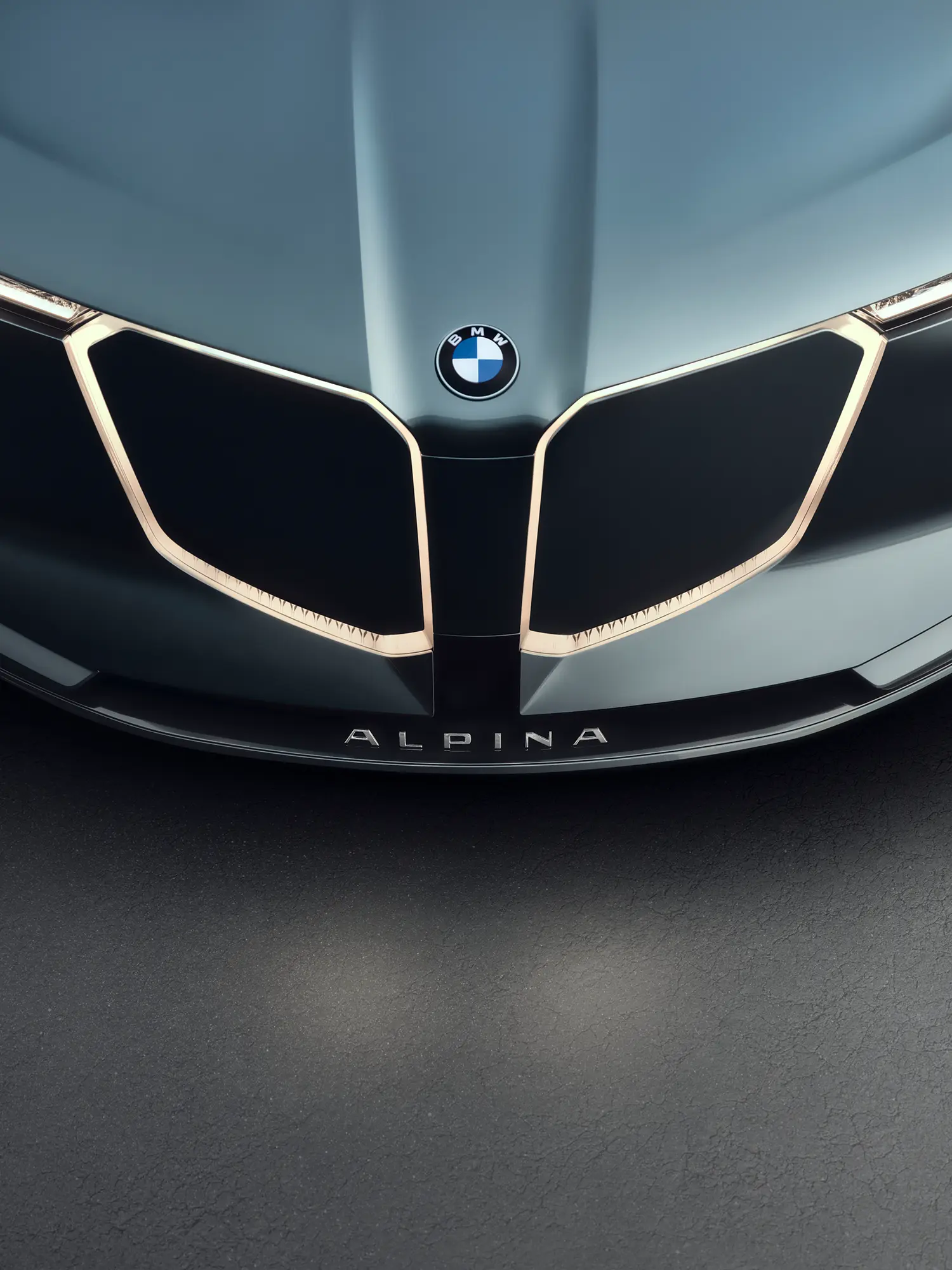
The implementation of advanced illumination introduces a tactile, almost landscape-inspired quality to the exterior, setting a new benchmark for premium automotive lighting. The daytime running lights and kidney surrounds emit a warm white glow, a deliberate creative reference to the first morning light breaking over the Bavarian Alps. Within the slender headlamp clusters, clear-cut illuminated crystals provide sharp points of geometric precision. At the rear, the traditional elliptical four-pipe exhaust system remains firmly integrated into the lower apron, while the vehicle rests on massive 22-inch front and 23-inch multi-spoke wheels, meticulously updating the classic 20-spoke layout that has defined the brand since 1971.
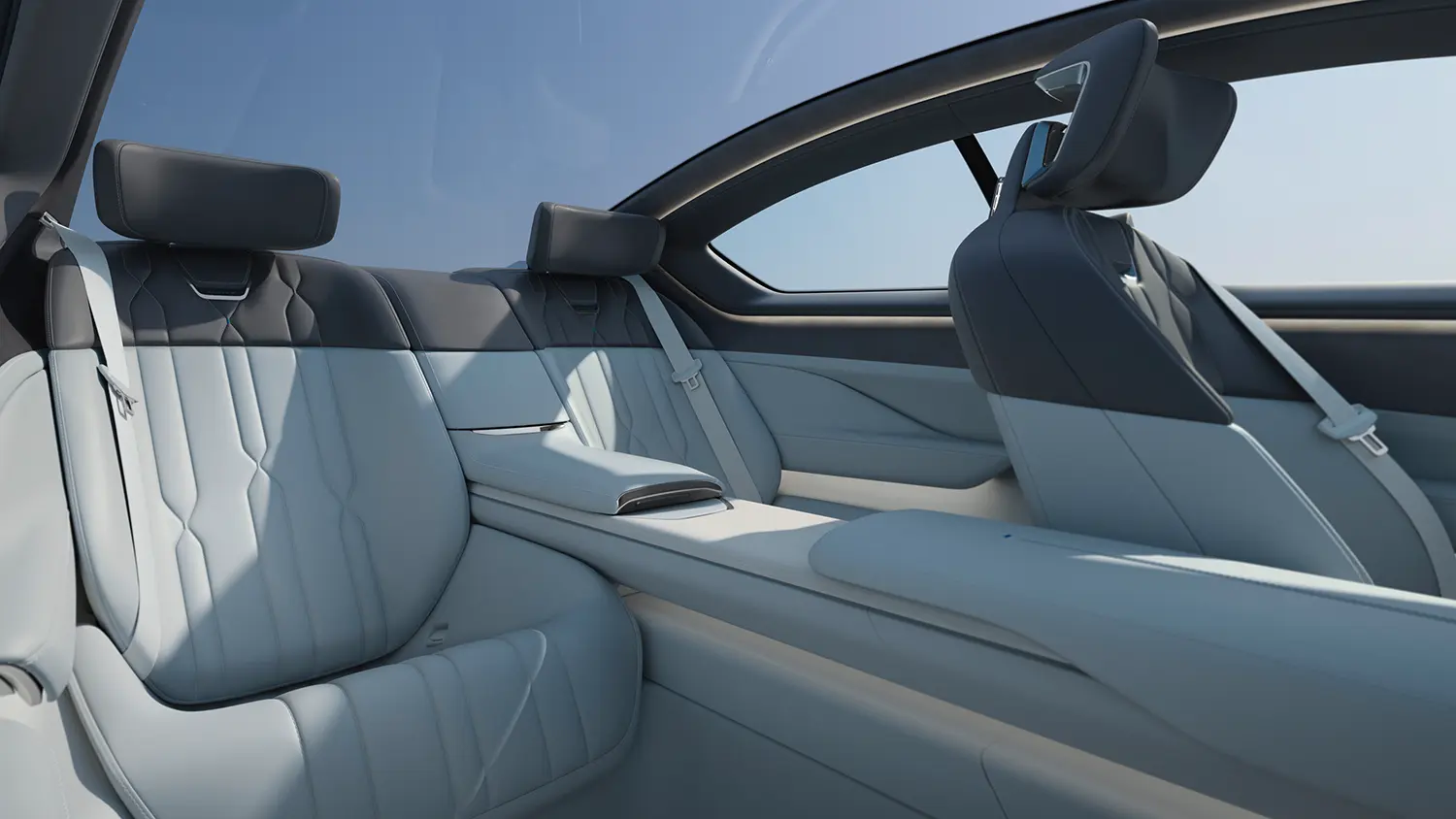
Moving inside the cabin reveals an environment treated as an architectural composition, establishing an entirely new standard for luxury car interior layout. Each component retains its standalone form rather than melting into a singular, homogeneous digital dashboard. The six-degree exterior geometric axis continues its trajectory through the cabin, establishing a strict horizontal horizon line that separates the dark, focused upper cockpit from the lighter, welcoming lower lounge area. Every touchpoint demonstrates absolute material honesty, utilizing premium full-grain leathersourced exclusively from regional Alpine suppliers, bound together by bespoke stitching patterns that mirror the linear geometry of the exterior graphics.
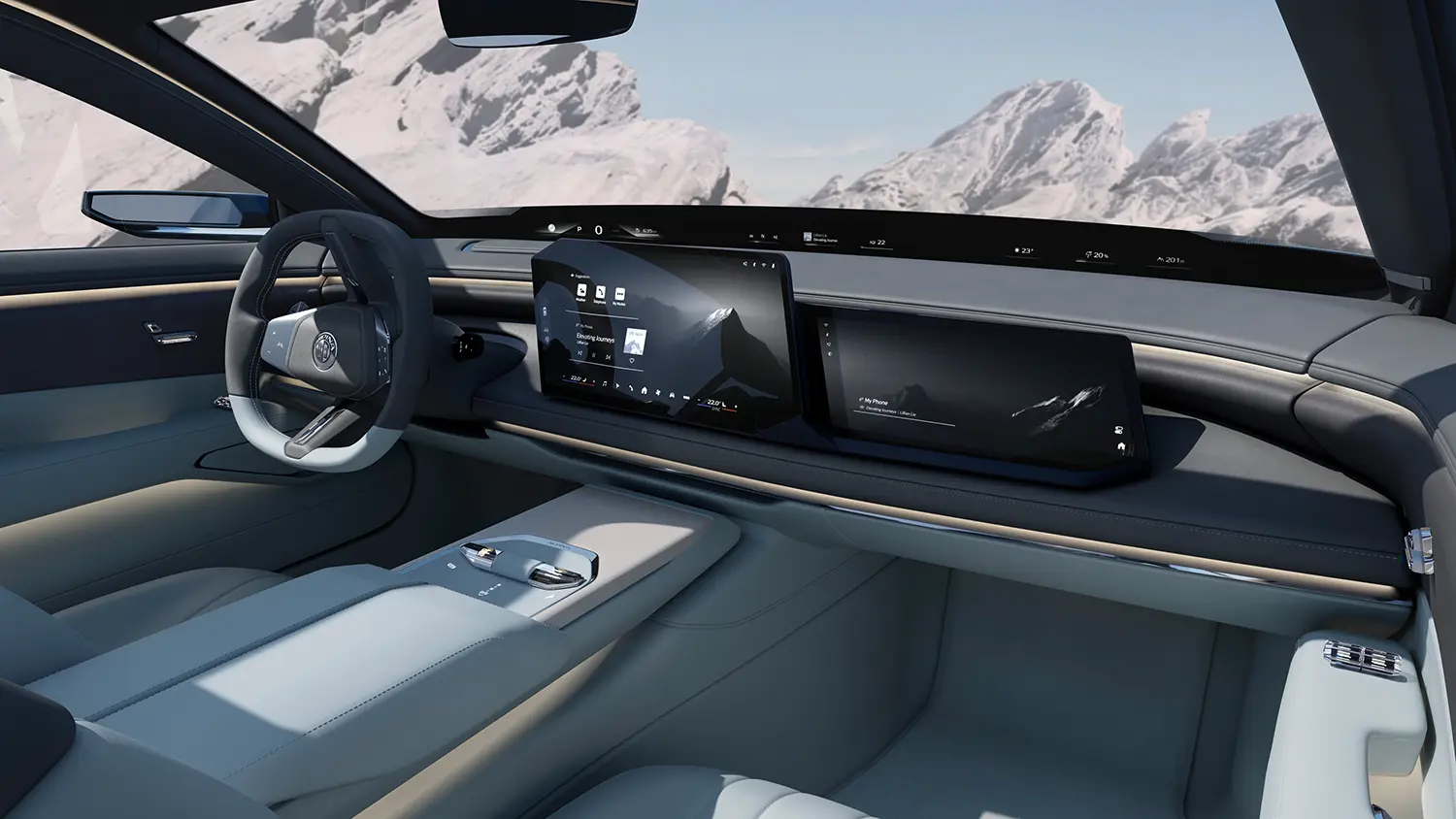
The sensory experience is elevated through highly disciplined tactile details, transforming the cabin through bespoke craftsmanship. A specialized bridge stitch, borrowed from the hand-stitching techniques of vintage racing steering wheels, appears sparingly across the cabin surfaces in traditional heritage blue and green tones. Metal hardware throughout the center console undergoes a watchmaking-inspired beveling process, pairing satin-brushed faces with highly polished facets to catch the light sharply. Pure crystal elements are reserved strictly for primary physical driving controls, while a self-deploying mechanical tray behind the rear console presents custom crystal glasses engraved with matching six-degree rim profiles.
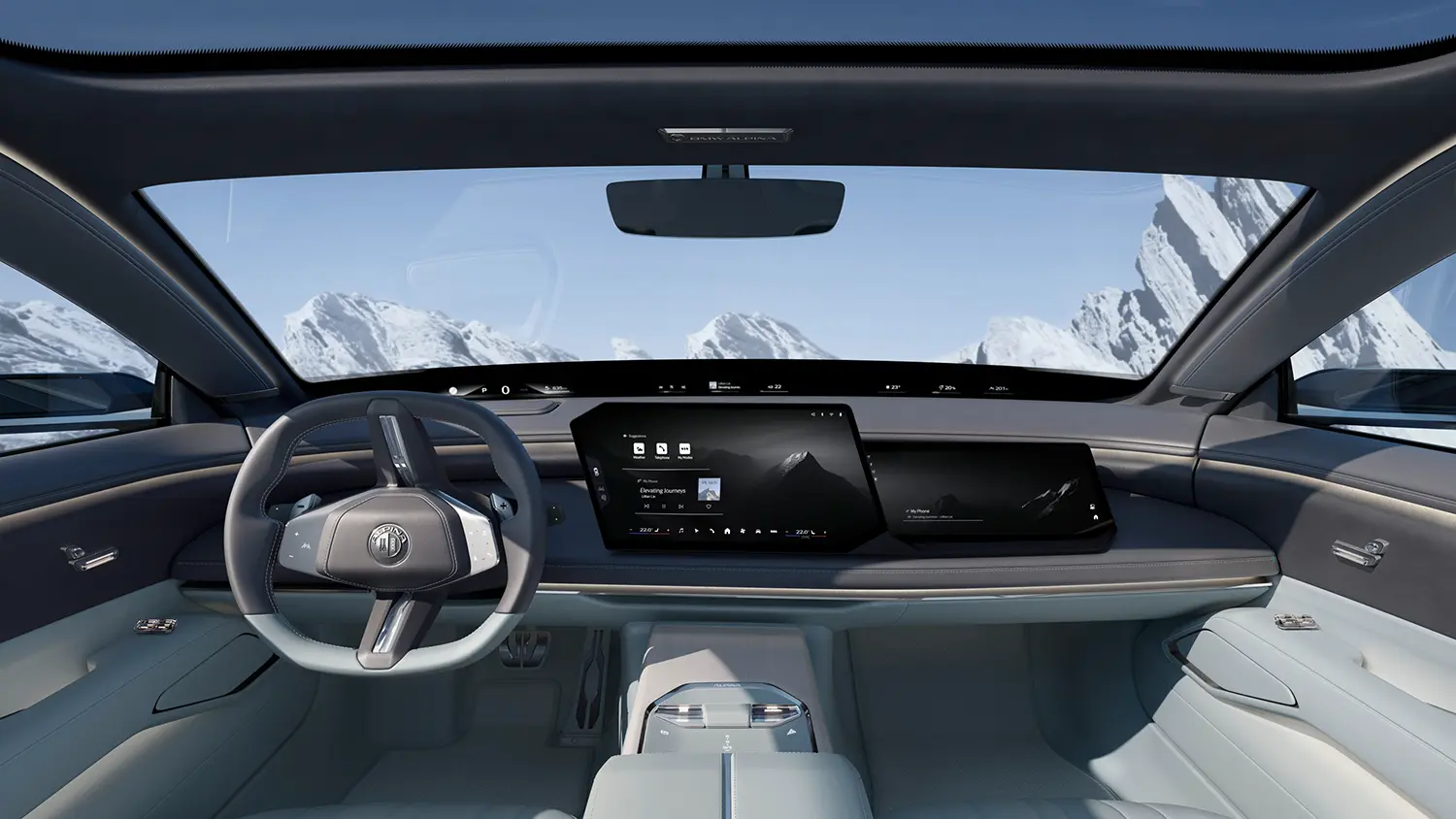
The digital environment operates on the principle that a composed, physically relaxed operator is inherently a more efficient driver, a core philosophy behind the next-generation digital cockpit. The panoramic user interface introduces a custom layout where the traditional heritage blue and green color palette is applied with strict minimalist discipline, intensifying in graphic focus only when switching from Comfort+ to high-performance modes. For this driver-centric environment, the system utilizes the brand’s highly anticipated BMW Panoramic Vision display technology, which seamlessly projects critical trip data across the entire lower edge of the windshield. The digital background imagery avoids abstract patterns, opting instead for an exact digital rendering of the Alpine mountain range visible when looking south from the historic workshop windows in Buchloe, linking cutting-edge technology directly back to geographic origins.
This significant debut positions the brand into an exclusive luxury tier, signaling a profound shift in the group’s future product strategy. By strategically occupying the space between top-tier BMW M models and the handcrafted execution of Rolls-Royce, the studio has honored the core tenets established by Burkard Bovensiepen in 1965—where structural seating comfort, long-wheelbase composure, and effortless high-speed touring took precedence over raw weight reduction. The vision vehicle sets a clear, highly sophisticated benchmark for the upcoming production models slated for next year, demonstrating that true brand evolution relies on translating its most disciplined historical truths for a contemporary era.