



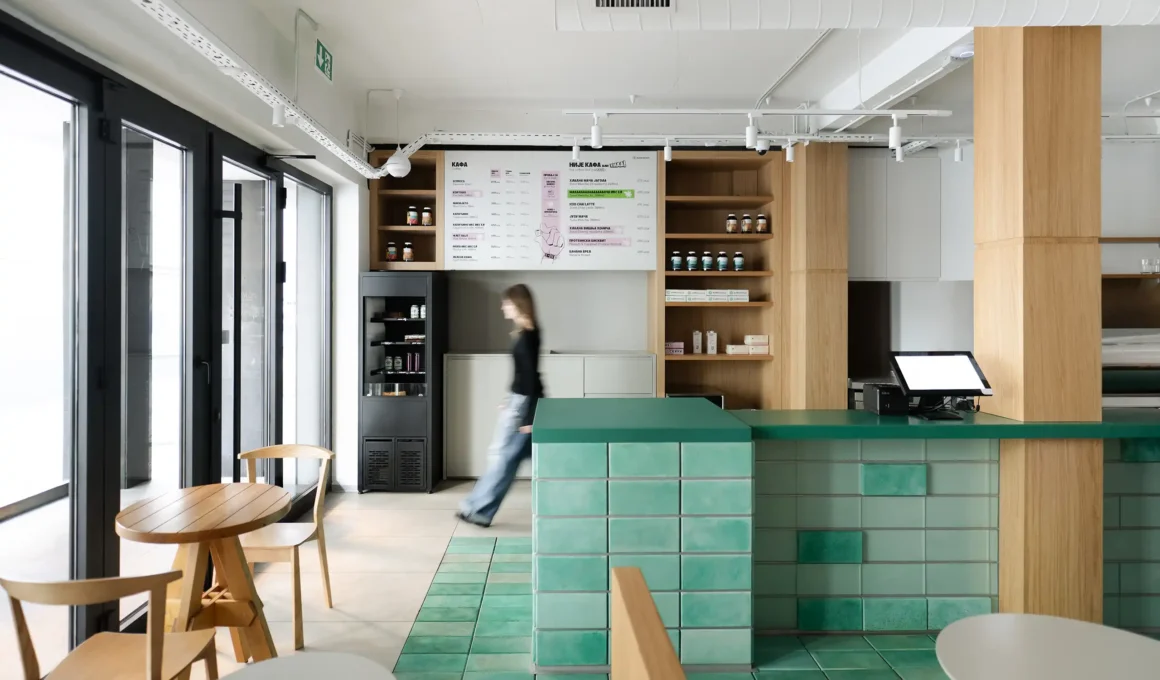
The transformation of an existing Belgrade coffee house by KIDZ Studio establishes a rigorous dialogue between modular pragmatism and fluid social behaviors. Located within the academic and residential fabric of Vračar, the multi-level Kafeterija project eschews static aesthetics in favor of an adaptable design system. By treating the original structural framework as a canvas for temporal interactions, the intervention honors the site’s urban history while shifting its spatial logic to meet the needs of a dynamic, student-centric demographic.
A systemic philosophy of space replaces the pursuit of a singular, dramatic gesture. KIDZ Studio approaches the specialty coffee chain’s fourth iteration not as an isolated project, but as a critical application of a pre-established framework. This structural methodology relies on a controlled manipulation of four architectural vectors: tactility, illumination, seating typography, and a definitive focal point. The resulting hospitality interior behaves less like a commercial venue and more like a responsive domestic layout, proving that brand continuity can coexist with contextual specificity.
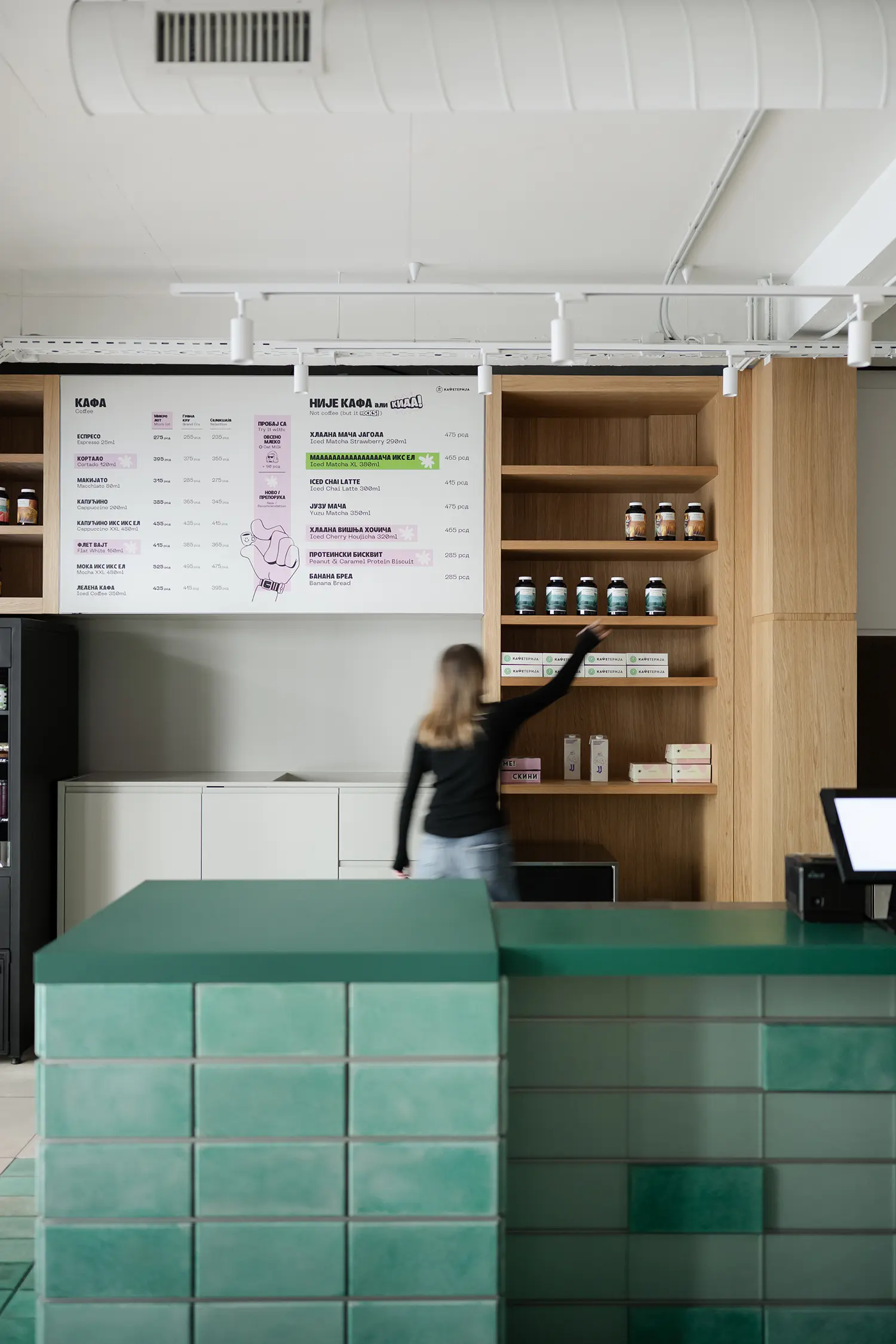
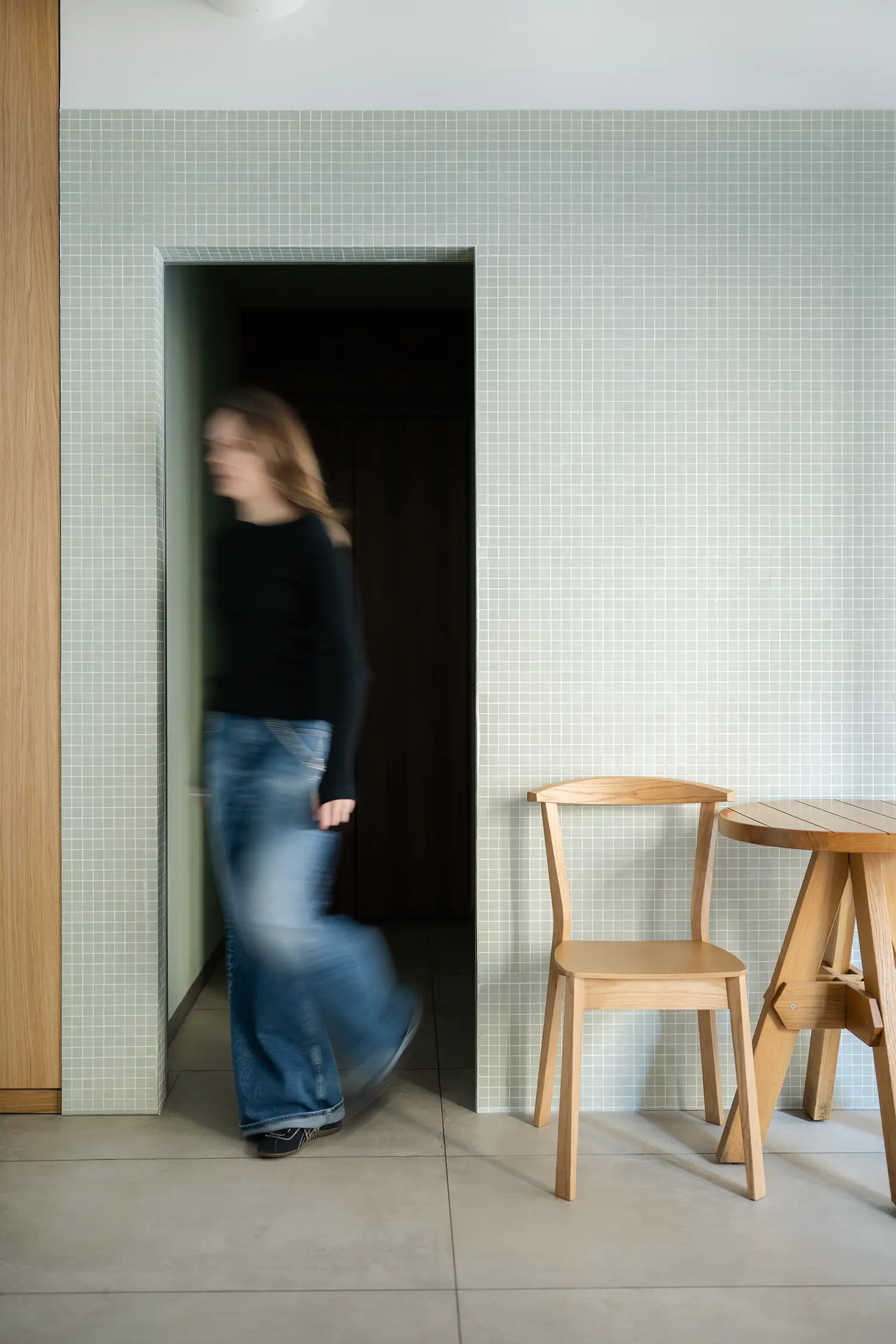
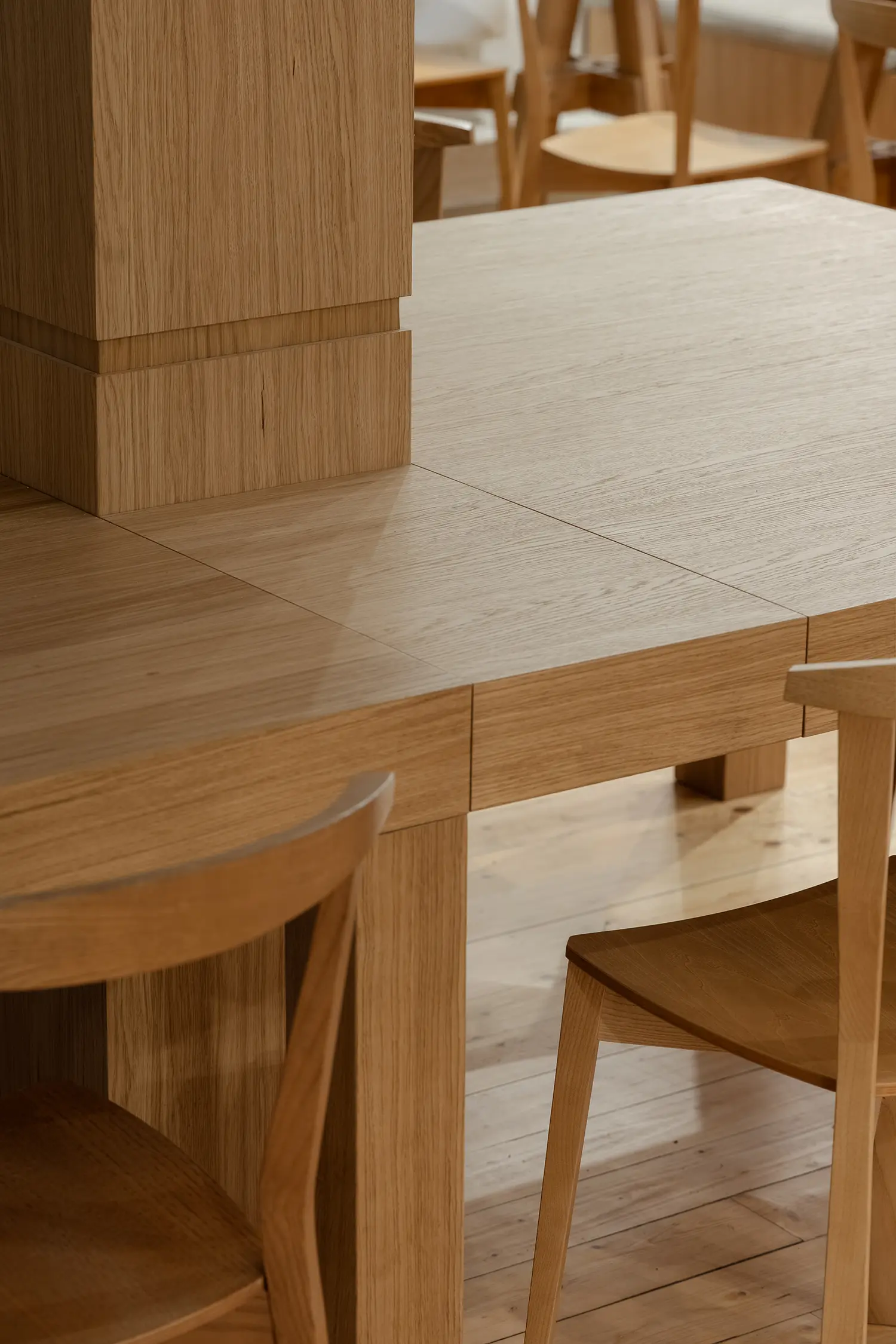
The material palette embraces honesty, deploying a syntax of utilitarian components that resist superficial decoration. Two species of timber establish a grounded warmth, contrasting with metal surfaces that shift from raw, industrial iron to the crisp reflections of polished stainless steel. Rather than concealing the scars and structural realities of the original building, the interior design renovation exposes them, allowing the history of the walls to serve as a textured backdrop. Neutral base tones dominate the envelope, punctuated by precise injections of green and the brand’s signature muted pink, which guide the eye without overwhelming the senses.
Spatial transitions dictate human rhythm, splitting the café into two distinct behavioral zones across its vertical axis. The ground level communicates directly with the street and the outdoor terrace, capturing the hurried energy of the neighborhood through a modern coffee shop layout. Here, light arrives in sharp, shifting poolings through expansive glazing, mirroring the fast turnover and high density of visitors who pause only briefly. The air feels transient, the furniture is arranged for immediacy, and the boundary between the interior volume and Belgrade’s public realm becomes deliberately porous.
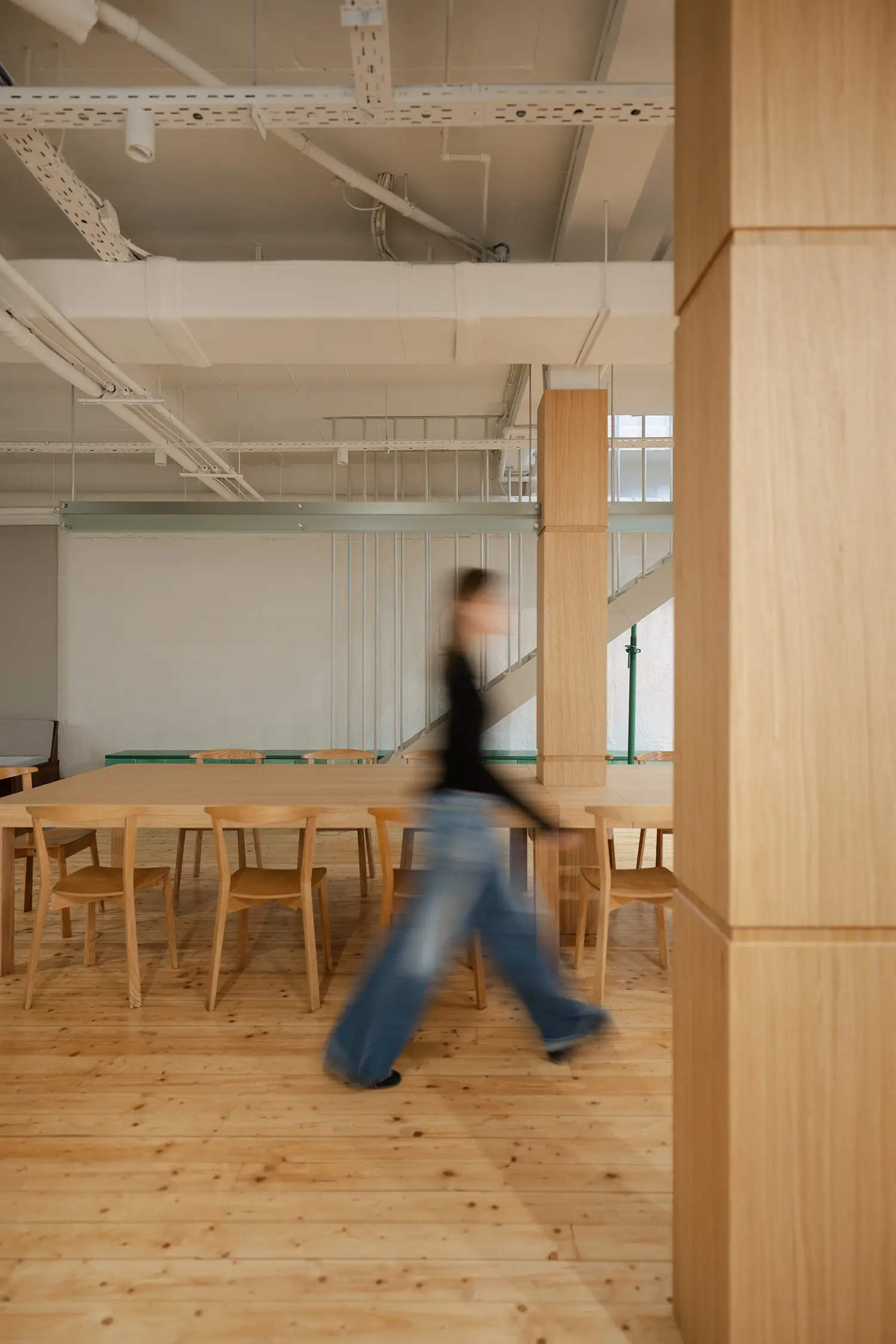
Descending into the lower volume reveals a dramatic shift in tectonic weight and psychological pacing. KIDZ Studio configured this underground level around the organizational logic of an academic campus, fostering prolonged engagement and intellectual focus. A monolithic communal wood table anchors the center of the room, surrounded by an intricate matrix of seating typologies that accommodate both collective discourse and solitary study. In these lower recesses, acoustic dampening and a lower illumination profile invite visitors to settle in, transforming a commercial café into a shared infrastructure for work and thought.
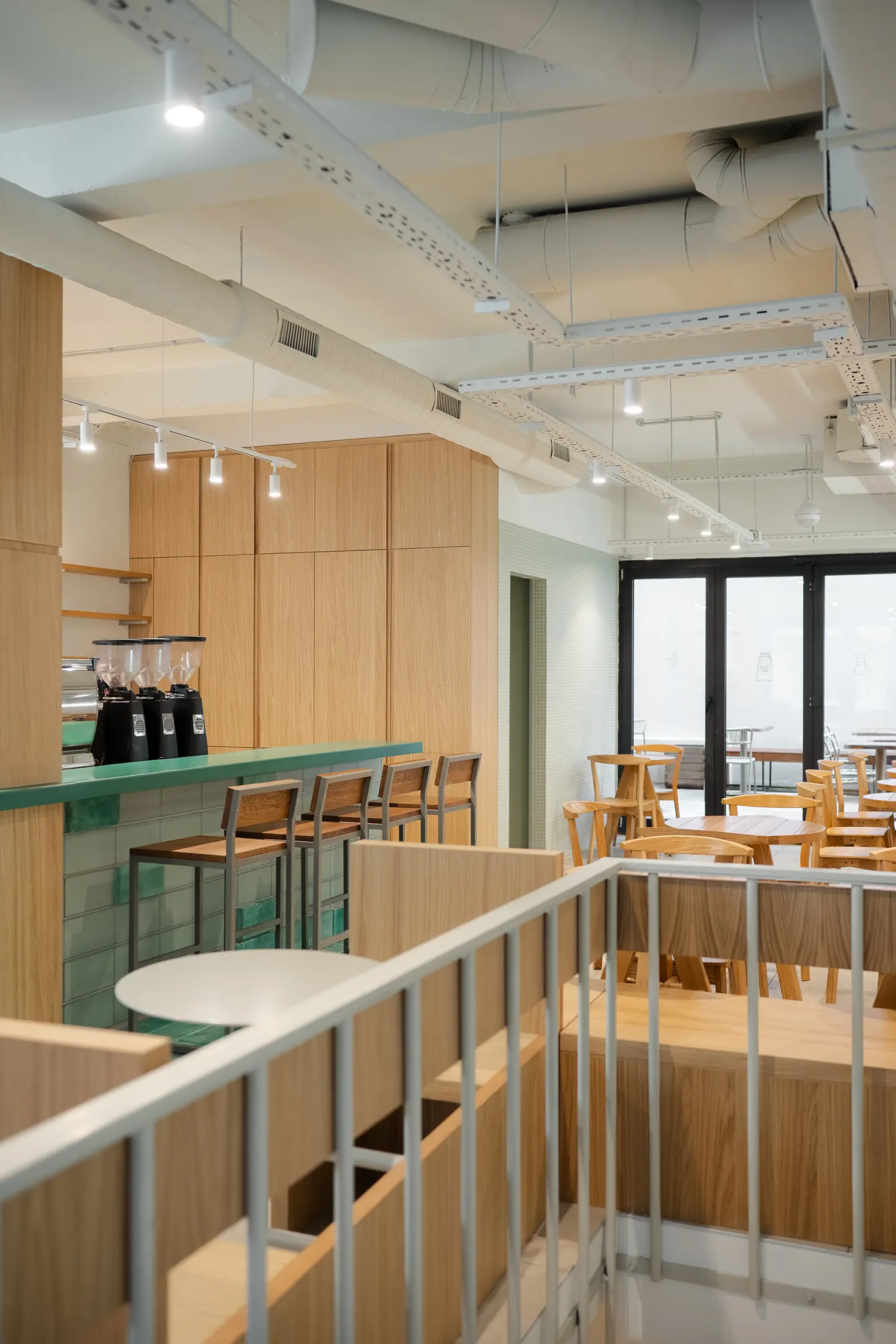
An architectural anchor emerges in the form of a heavily articulated counter that synthesizes the studio’s focus on material contrast. The custom coffee bar design is constructed from deep-dyed concrete masonry units, paired with semi-transparent surfaces that playfully diffuse light from within. Positioned as the structural core around which daily circulation revolves, this counter serves as the primary visual reference point for the entire open-plan layout. Its mass anchors the airy qualities of the surrounding furniture, ensuring that the programmatic choreography of ordering and preparing coffee remains an explicitly celebrated ritual.
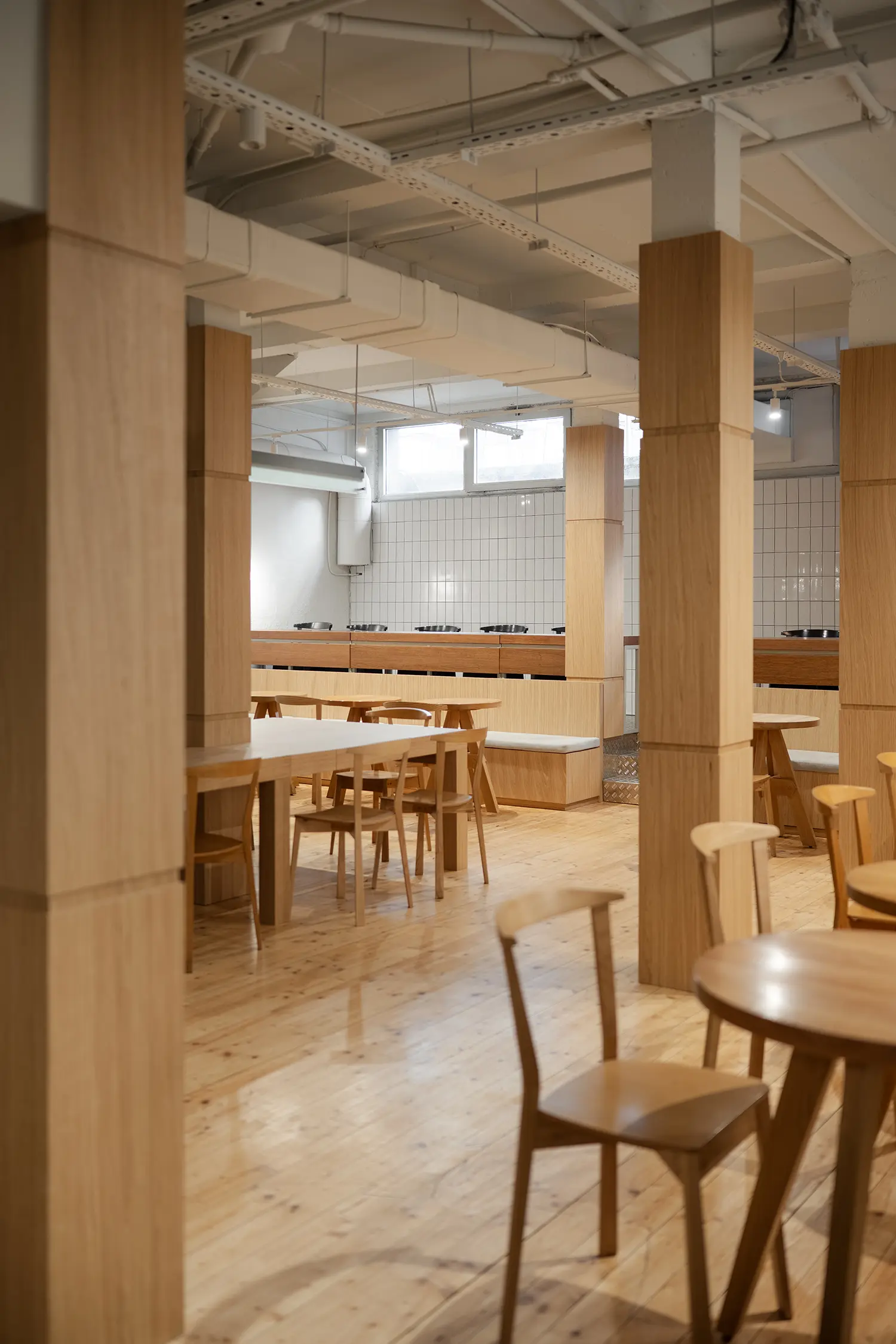
Contextual awareness informs every detail, acknowledging that the success of an interior depends entirely on its real-world constraints. By selecting a pale, light-reflecting envelope over darker, more cavernous alternatives initially considered, the contemporary space planning maximizes the perception of volume within the dual-level footprint. The project succeeds precisely because it rejects the hyper-polished, generic minimalism that frequently sanitizes global coffee culture. Instead, it respects the gritty, intellectual character of Vračar, offering an elastic floor plan where furniture can be reconfigured as student needs evolve throughout the semester.
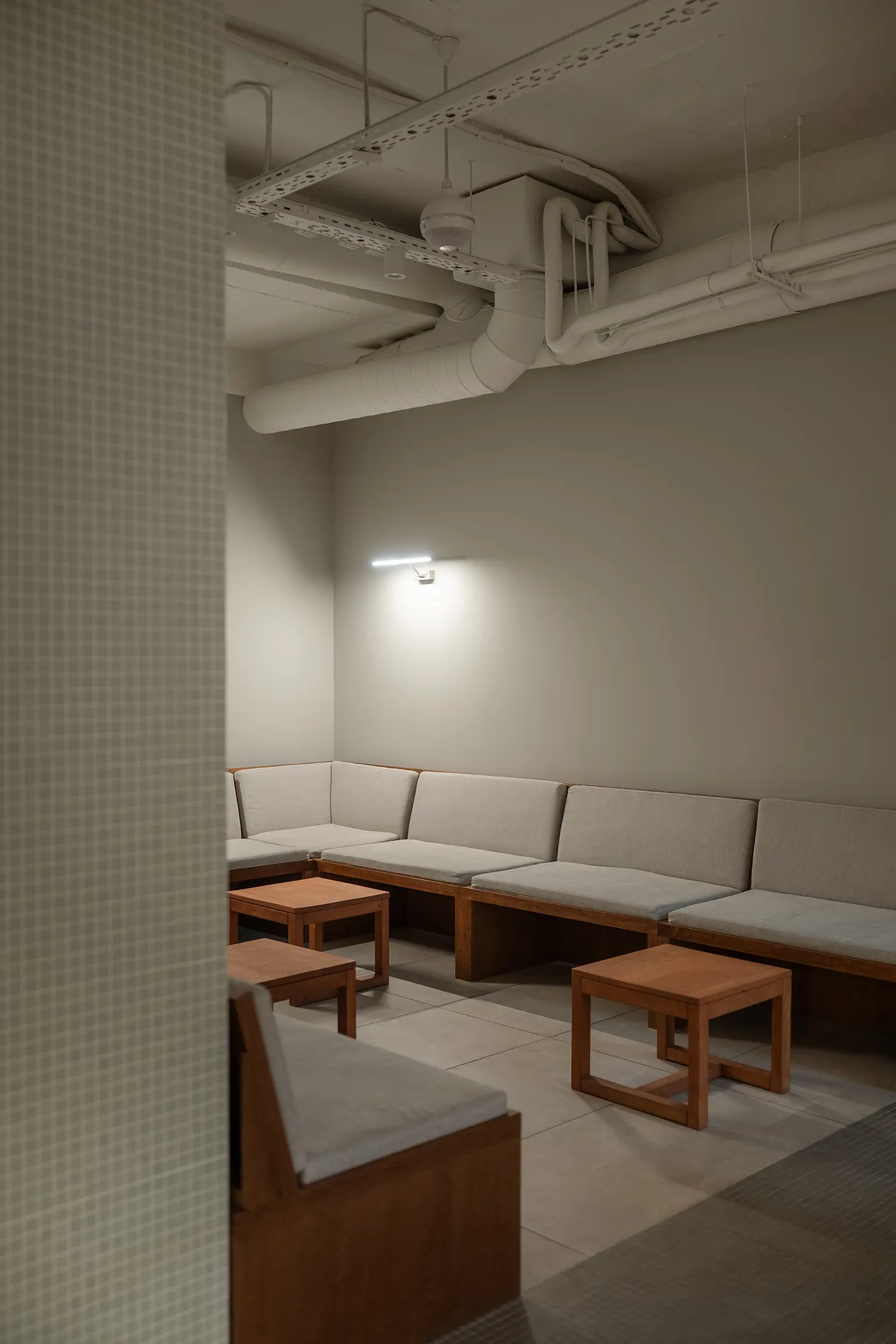
The strength of this framework lies in its refusal to impose a rigid aesthetic, opting instead to provide a toolkit for authentic social engagement through minimalist cafe interiors. The project demonstrates that contemporary commercial design no longer requires grand, theatrical narratives to establish identity. By anchoring the identity in a strict logic of finishes, lighting, and specialized seating, the studio creates a sense of place that feels both highly authored and completely unforced.
This meticulous synthesis of system and site aligns seamlessly with the studio’s evolving international portfolio, which consistently reinterprets local craft through a contemporary lens. The Vračar location reflects the same methodological rigour seen in the graphic materiality of the Cinnamood Café in Barcelona, where color and geometry redefine commercial scale. Similarly, the studio’s talent for balancing structural weight with delicate details mirrors the traditional joinery explored at Daikan Ramen in Dubai, and the celebrated preservation of local textures found at the Sloji Bakery in Belgrade. Through this latest intervention, KIDZ Studio reinforces its ability to transform everyday urban spaces into sophisticated studies of material and community interaction.