


In an era defined by circular construction, this study examines how natural thermal modification and ancient carbonization techniques are redefining UK facade design, offering architects chemical-free durability and predictable weathering patterns. Contemporary UK architecture has witnessed a significant shift in how designers approach external cladding specification over the past decade. Two materials have led this shift — charred timber, with its dramatic deep black aesthetic and exceptional durability, and thermally modified ThermoWood, with its warm honey-brown palette and outstanding dimensional stability. Both are produced without synthetic chemicals. Both deliver long service lives with minimal maintenance. And both are fundamentally changing what clients, architects, and developers expect from a timber facade.
Understanding how each performs — and where each is best deployed — is increasingly important for architects and designers working on residential extensions, garden rooms, new builds, and commercial facades across the UK.
Charred Timber: The Architecture of Controlled Fire
The Shou Sugi Ban technique — originally developed in Japan for the preservation of cedar timber — has become one of the most specified exterior cladding finishes in contemporary UK architecture. The process applies controlled flame to the surface of the board, creating a carbonised layer that permanently changes the material’s behaviour. The carbon surface is hydrophobic, biologically inert, and UV-stable — it repels water, provides no nutrition for fungi or insects, and resists the surface degradation that causes untreated timber to grey unevenly and degrade.
The degree of charring significantly affects the visual result. Deep charred boards produce a dense, matte, almost mineral-like black finish with a characteristic cracked texture. Conversely, brushed and stained variants remove the loosest carbon to reveal grain texture beneath, producing a warmer result that suits contemporary detailing where a softer aesthetic is required. Deep charred installations demonstrate service lives of 25 to 40 years with minimal maintenance, making them an excellent choice for high-exposure elevations where maintenance access is difficult.
For current project sourcing, charred timber cladding boards UK are available in Siberian larch and Nordic spruce across deep charred and brushed finishes — all from UK stock with nationwide delivery.
ThermoWood: Precision and Dimensional Stability
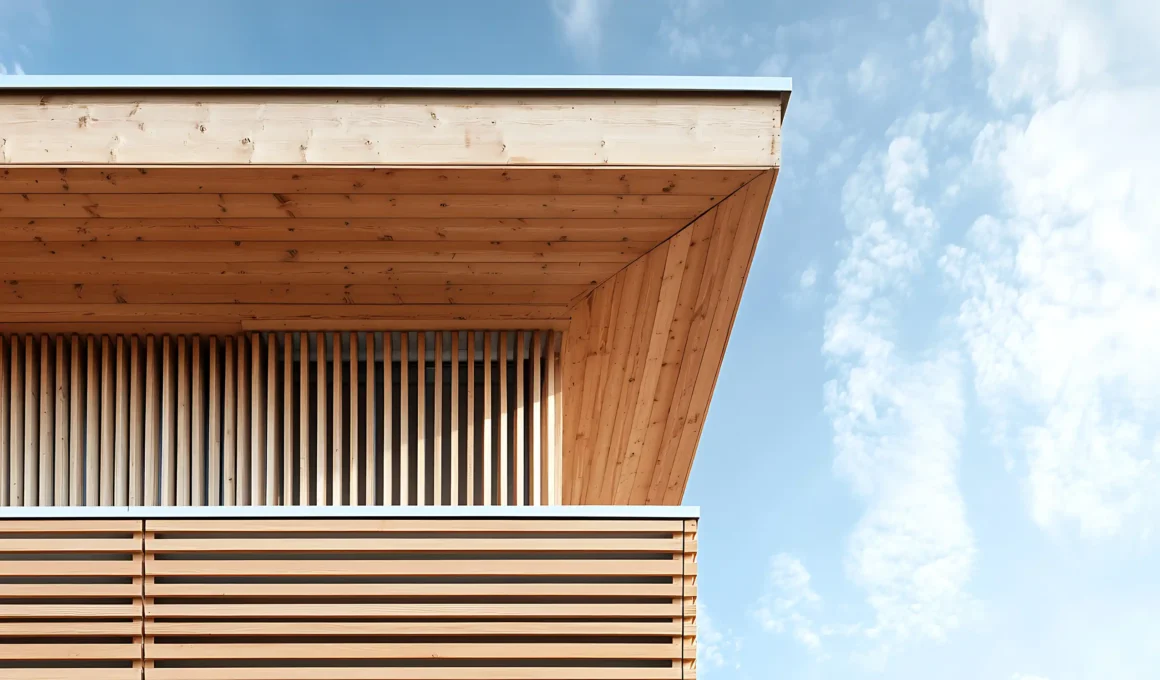
Where charred timber delivers maximum visual impact, ThermoWood delivers maximum specification reliability. The thermal modification process — heating Nordic pine or spruce to 185–215 degrees Celsius using steam, without any chemical input — permanently alters the timber’s cell structure. The result is a material that absorbs up to 50 percent less moisture than untreated softwood, moves significantly less across seasonal cycles, and achieves Durability Class 2without preservative treatment.
For architects working on facades where long board lengths, tight shadow gap tolerances, or precise alignment are part of the design intent, this stability is decisive. Left untreated, ThermoWood weathers to a consistent silver-grey patinaacross the elevation — predictable, even, and architecturally intentional. For a complete technical breakdown of how these profiles perform across UK exposure conditions, including moisture behaviour, movement data, fire compatibility, and maintenance intervals, the ThermoWood cladding performance lifespan UK guide covers the full technical picture — essential reading for architects preparing specifications for projects where long-term facade performance is part of the brief.
Combining Both Materials on a Single Project
Some of the most resolved contemporary UK facades use charred timber and ThermoWood on the same elevation — exploiting the visual contrast between the deep black of charred boards and the warm brown or silver-grey of ThermoWood. The materials are dimensionally compatible in many profile sizes, and both are produced without synthetic chemicals, making them consistent in their sustainability positioning.
On residential extensions, charred timber is frequently used on the primary street or garden elevation as the architectural statement, while ThermoWood covers secondary elevations where a warmer, more traditional aesthetic is preferred. On commercial facades, the contrast between materials can be used to articulate entrances, break up large elevations, or signal different programme elements within a building.
Both materials are available from UK stock with nationwide delivery and can be specified with factory fire retardant treatment where building regulations require Euroclass B classification — making them viable options across a wide range of building types and heights.