




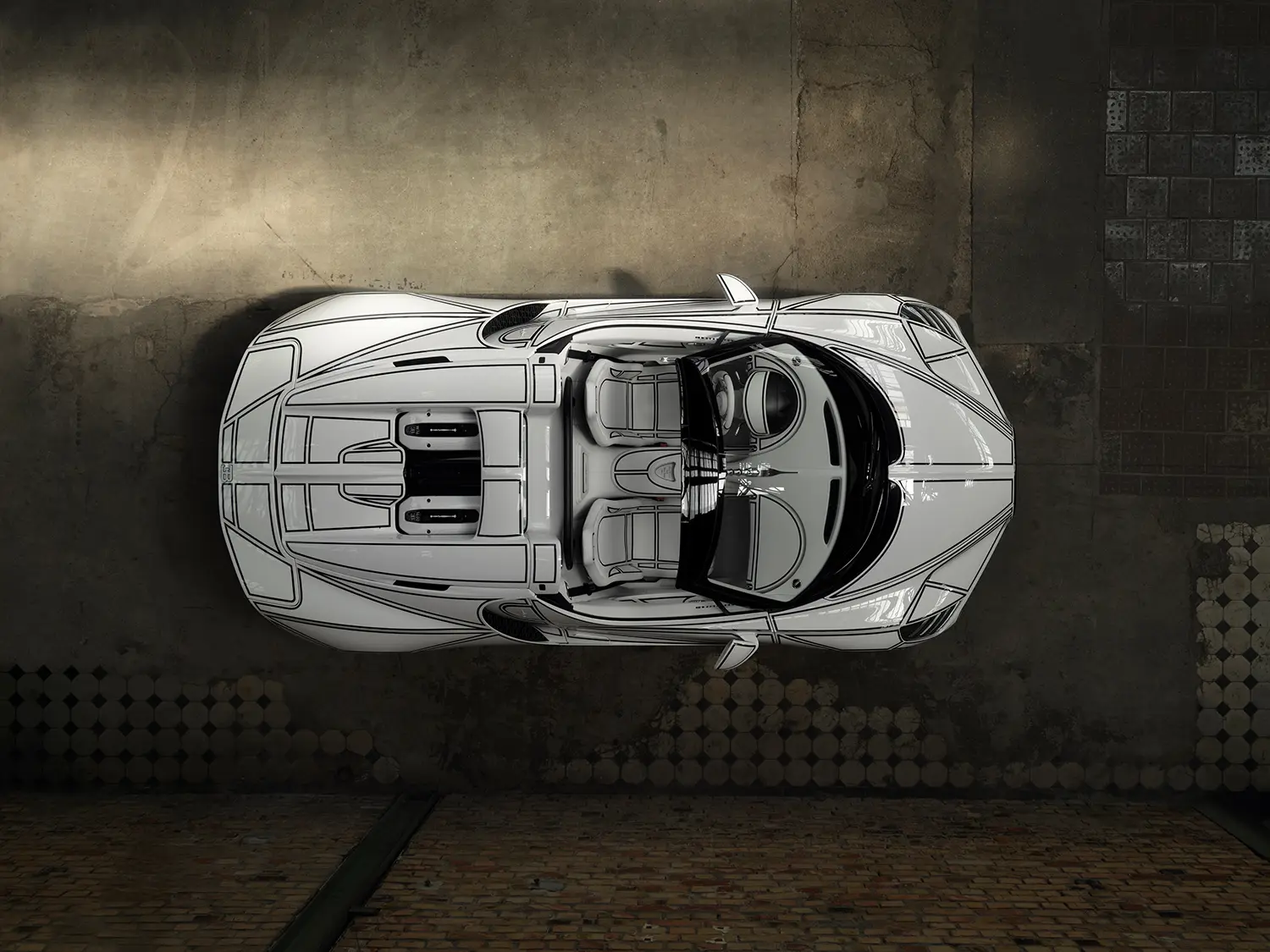
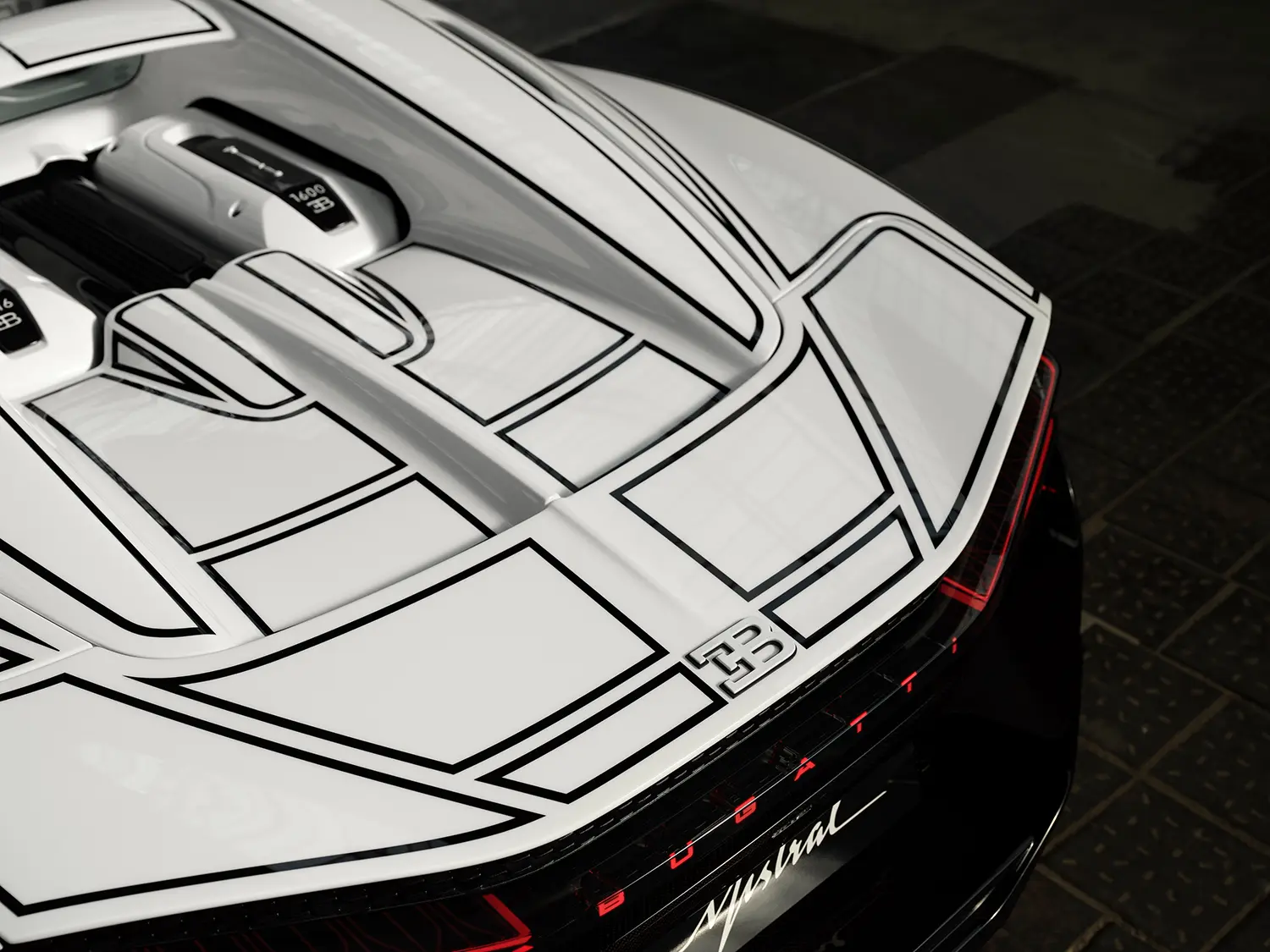
The most elaborate ornament on the Bugatti W16 Mistral ‘Blanc Éternel’ was never drawn to be seen.Commissioned through the marque’s Bugatti Sur Mesure bespoke program and revealed on July 1, 2026 in Molsheim, the one-of-one roadster traces its own invisible digital surface geometry across its bodywork in hand-painted black and white. The result turns a purely technical byproduct of digital design into the car’s entire decorative language.
A fifteen-year callback anchors the project: in 2011, Bugatti and Berlin’s Königliche Porzellan-Manufaktur, KPM, created a porcelain-inspired Veyron Grand Sport known as ‘L’Or Blanc,’ whose flowing blue lines were inspired by a vase KPM produced with Italian designer Enzo Mari. Frank Heyl, now Bugatti’s Design Director, personally traced those lines onto the car by hand. urdesign’s earlier look at the Sur Mesure program’s Brouillard coachbuilt hypercar covers how far the division has since pushed one-off bespoke commissions.
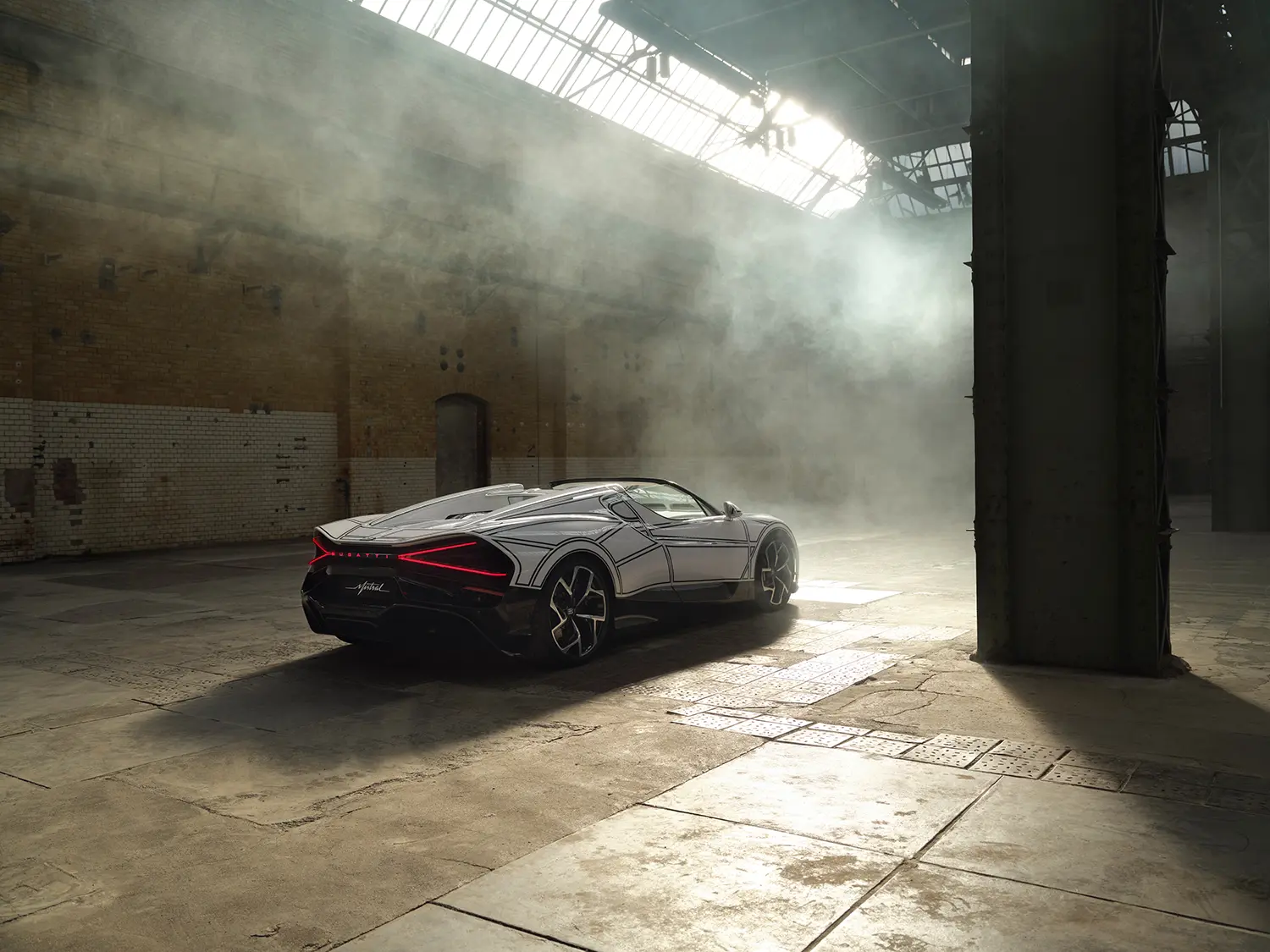
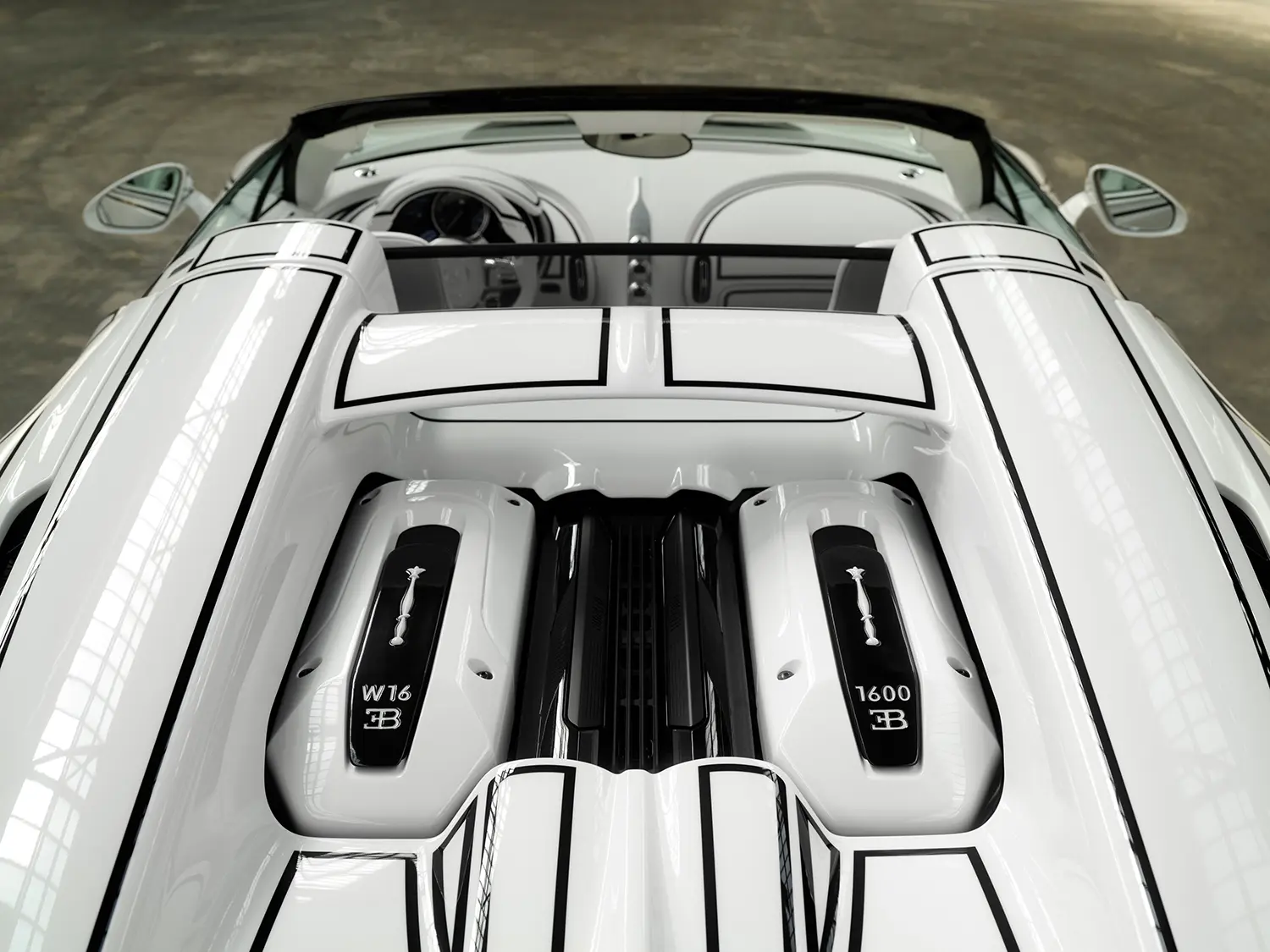
The lines that matter on ‘Blanc Éternel’ aren’t decorative additions — they map the W16 Mistral’s underlying NURBS surface network, the mathematical patches used to sculpt the car entirely inside a digital environment, without a single clay model. Fine black lines trace this normally invisible patch layout across the bodywork, exposing the geometric logic beneath the roadster’s finished form.
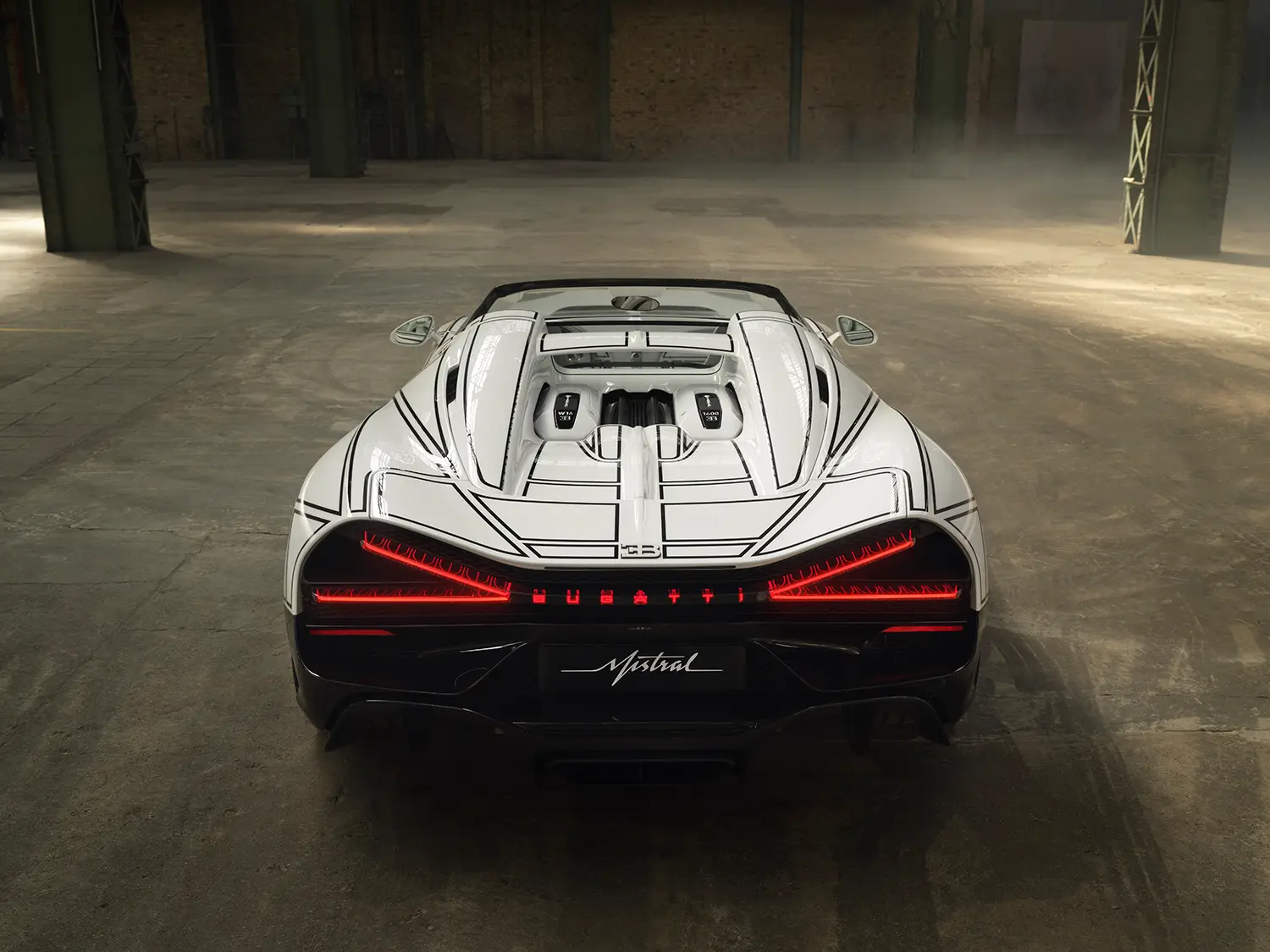
Painted, never printed describes the execution: the body is finished in pure white, sanded, then every line is masked by hand with precisely applied tape before the surrounding areas are counter-masked and the exposed channels sprayed black. Because no clay model exists to guide positioning, each line has to be judged directly on the finished car — a level of hand-painted livery detailing that contradicts the digital origin of the design.
Frank Heyl describes the commission as a continuation rather than a repeat: “The W16 Mistral ‘Blanc Éternel’ is exceptionally beautiful because every line and every material has a purpose,” said Heyl, Bugatti Design Director. The black-and-white graphic pulls the eye across the car’s horseshoe grille and X-shaped taillights, treating each surface as both sculpture and technical diagram.
Porcelain’s exact shrinkage is one of the project’s more demanding constraints: the material contracts by a 17 percent firing shrinkage between its unfired and fired state, meaning KPM’s modelers had to anticipate that change so finished pieces would still fit their exact positions on the car. Porcelain inlays punctuate the exterior at the EB emblem, the fuel and oil caps, and two engine-cover inlays bearing KPM’s royal-scepter mark.
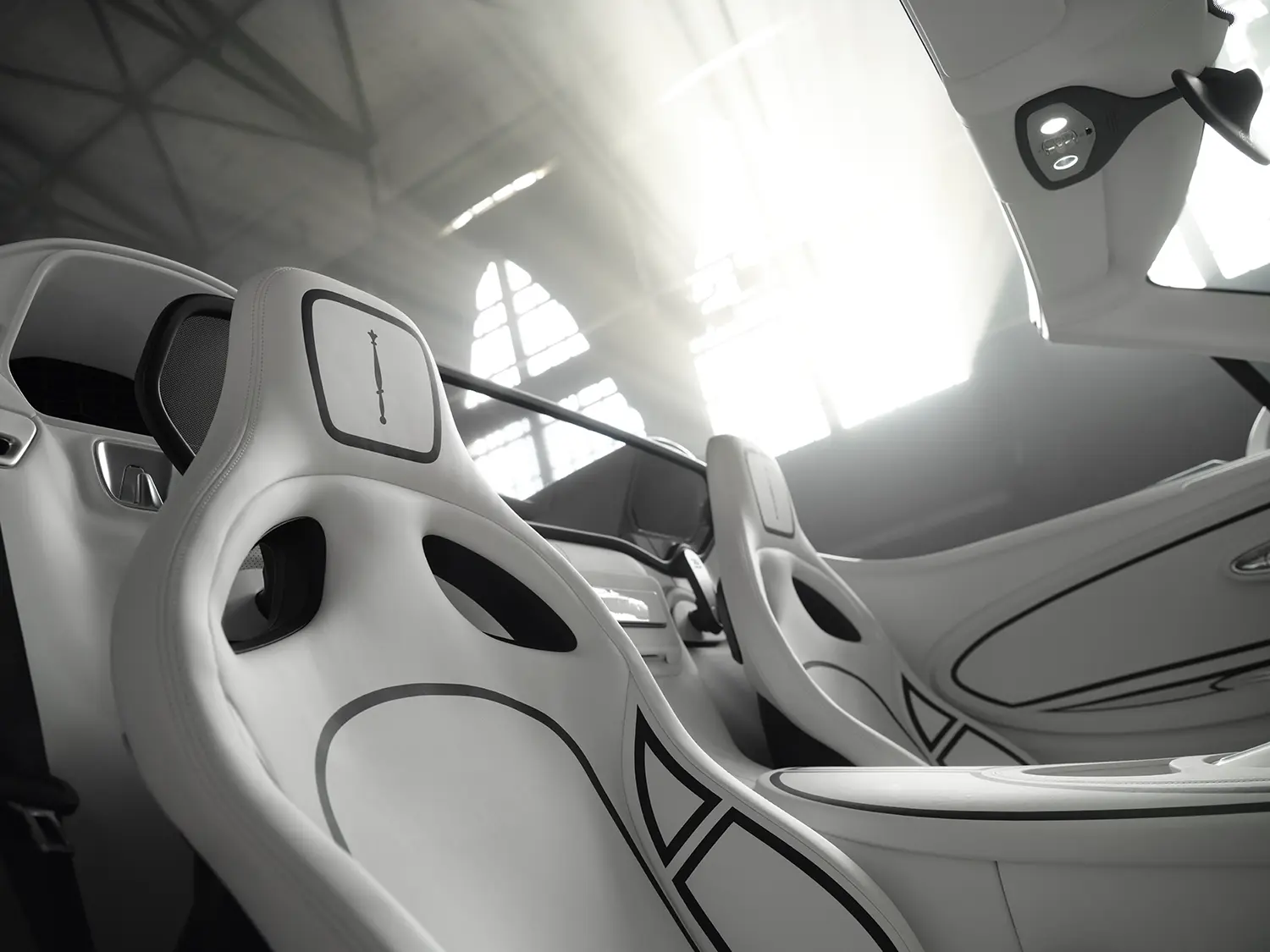
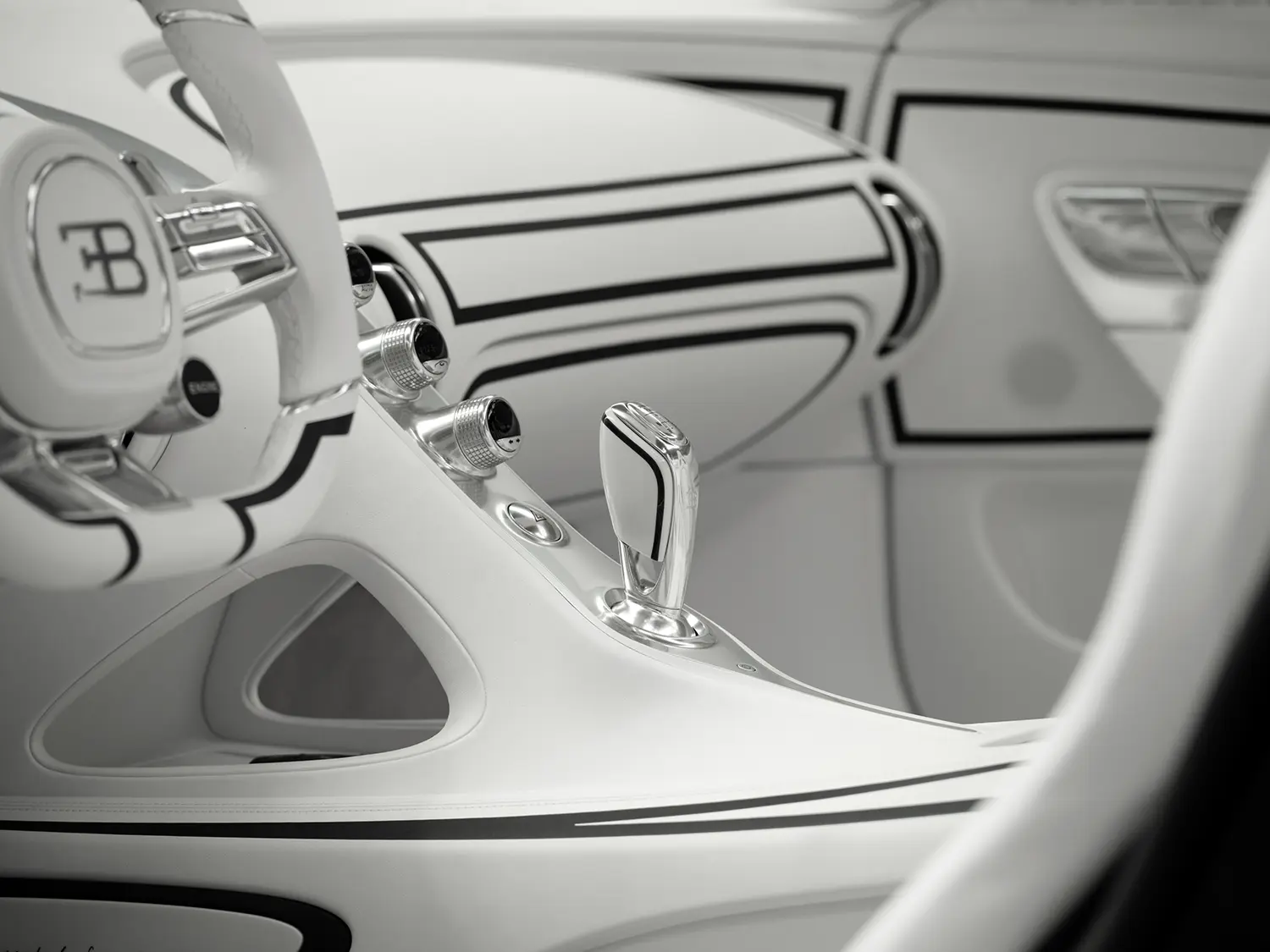
Inside the cockpit, the same graphic language continues onto white leather masked and hand-painted in black, a technique developed specifically for this commission. Porcelain returns as a functional material rather than a decorative one: the speaker cover, kneepad inlays, gear-shifter shells, center-console armrest inlay and window-lifter buttons are all crafted in KPM porcelain, meaning the driver touches it with almost every gesture inside the car.
Thomas Wenzel calls the collaboration a test of both disciplines at once: “The combination of delicate porcelain and uncompromising hypercar performance once again proved to be an extraordinary creative challenge,” said Wenzel, Creative Director of KPM. Refining such a sensitive material for a hypercar-grade porcelain interior represented, he added, a genuine achievement in craftsmanship.
The bolder claim ‘Blanc Éternel’ makes is that a car’s design process is more interesting than any pattern invented to sit on top of it — by exposing its own NURBS geometry as the finished artwork, Bugatti treats engineering data as more honest ornamentation than styling ever could be, a position most bespoke commissions are too cautious to test.