


Studio Francesco Faccin treats a De Cecco flagship store less like a shop and more like a museum built around five raw materials. Opening June 25, 2026 on Pescara’s Corso Umberto I, the Galleria De Cecco is the pasta maker’s first proprietary retail space in nearly two centuries of production, and it was conceived from the outset as a scalable retail concept rather than a one-off showroom. The pilot deliberately avoids competing with De Cecco’s existing distribution network, positioning itself instead as a cultural outpost built to be replicated.
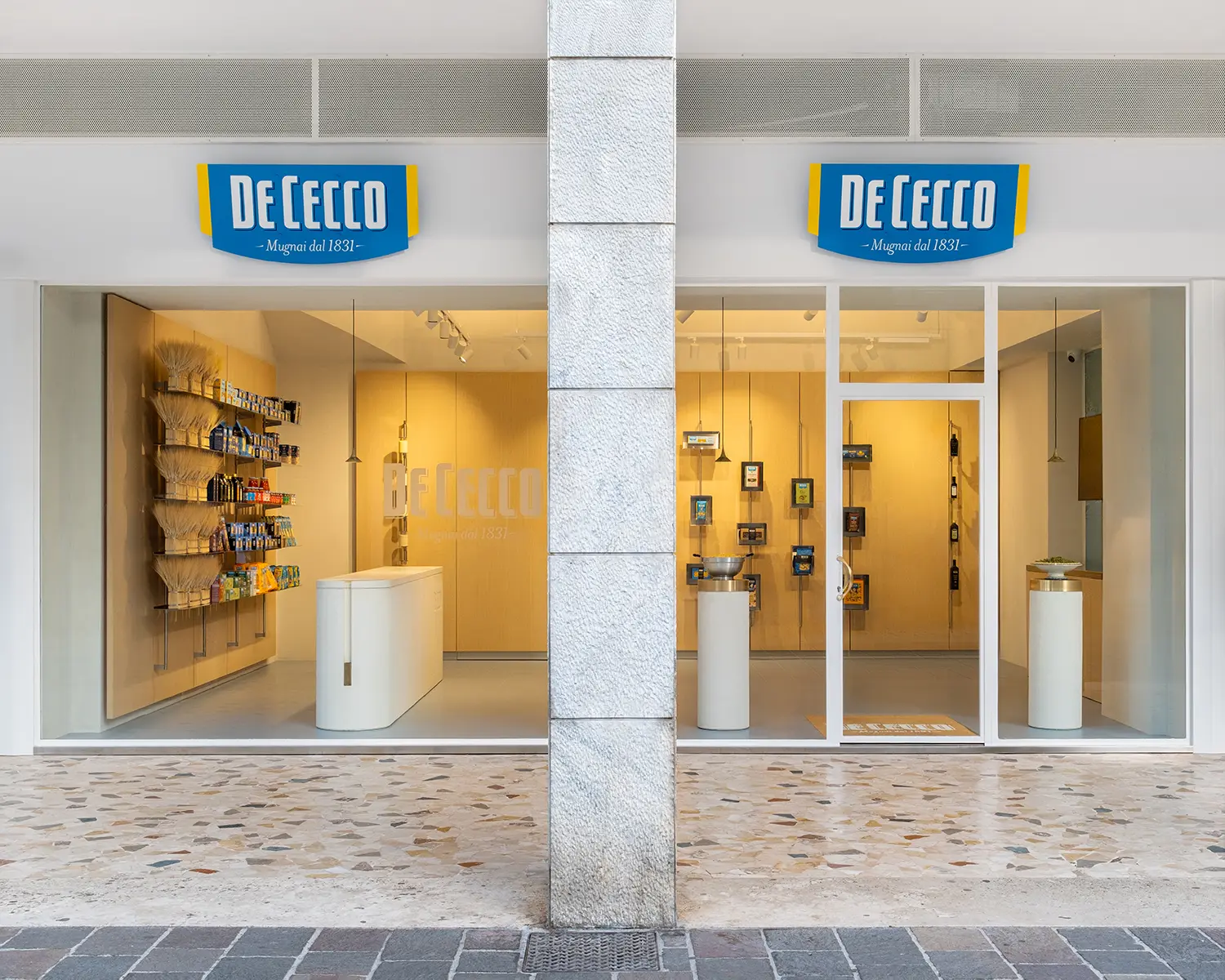
Five elements structure the entire spatial language: water, wheat, steel, stone and bronze. Rather than dressing the store in decorative references to Italian food culture, Faccin’s studio isolates the physical materials and processes behind pasta production itself and turns each one into an architectural gesture, treating industrial pasta production as source material worth exhibiting rather than concealing.
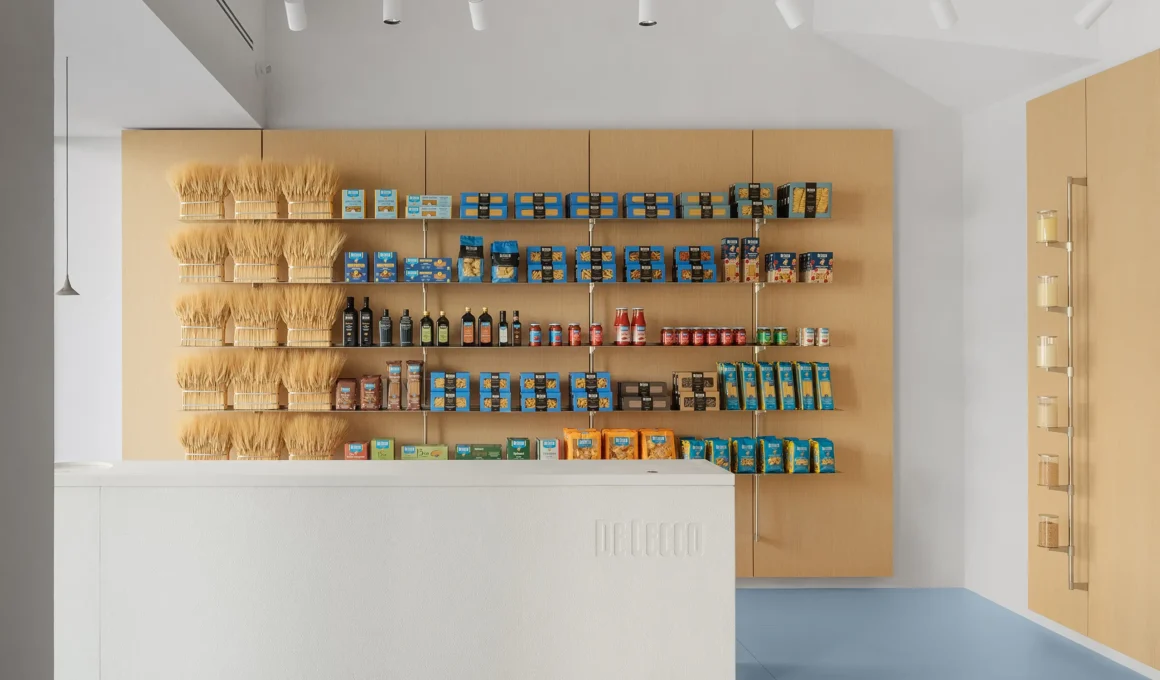
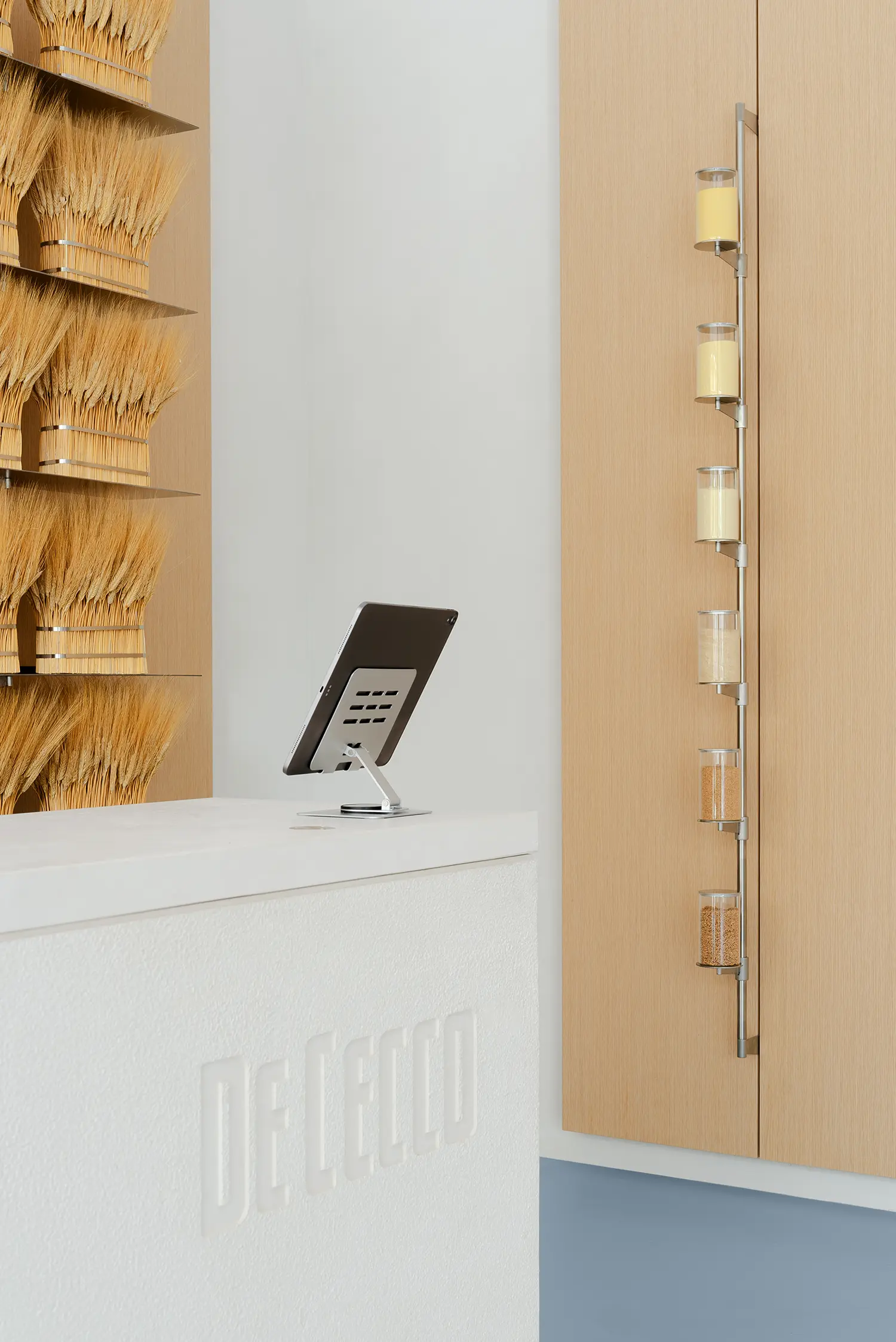
Water flows directly from a monolithic counter carved from white Maiella stone, a detail that pays direct tribute to the natural spring that has fed De Cecco’s historic production site in Fara San Martino since the company’s founding almost two hundred years ago. The counter functions as both service point and narrative centerpiece, physically bringing the spring — the origin of the entire production chain — into the retail floor.
Two entrance plinths in the same white Maiella stone greet visitors before they reach the counter, their circular tops finished not in polished display material but in authentic bronze extrusion dies sourced directly from De Cecco’s own factories. The pairing of raw stone with precision-engineered industrial bronze sets up the store’s core tension early: natural material against manufactured tool, repeated throughout the space.
A vertical wall installation distills wheat milling and refining to its essential steps, deliberately avoiding any nostalgic image of rural farming in favor of showing how industrial-scale production still depends on mastering a handful of fundamental elements. Nearby, a permanently exhibited bronze die — one of the actual tools responsible for shaping De Cecco’s pasta and its cooking performance — turns manufacturing equipment into a museum-style display system object worthy of display in its own right.
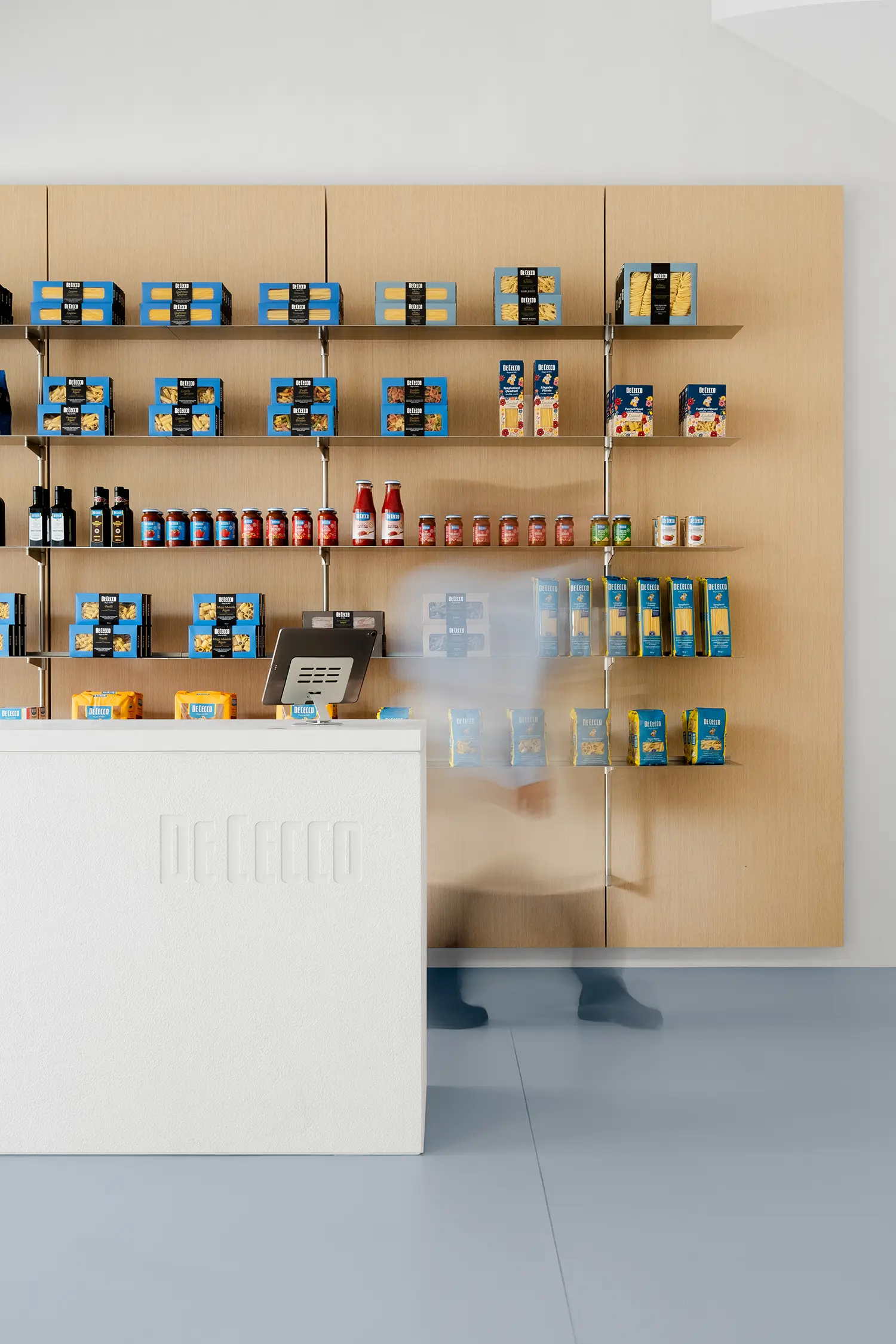
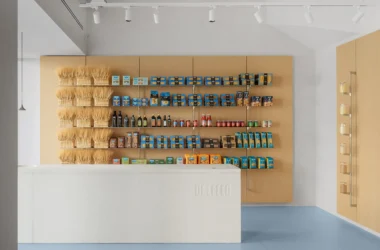
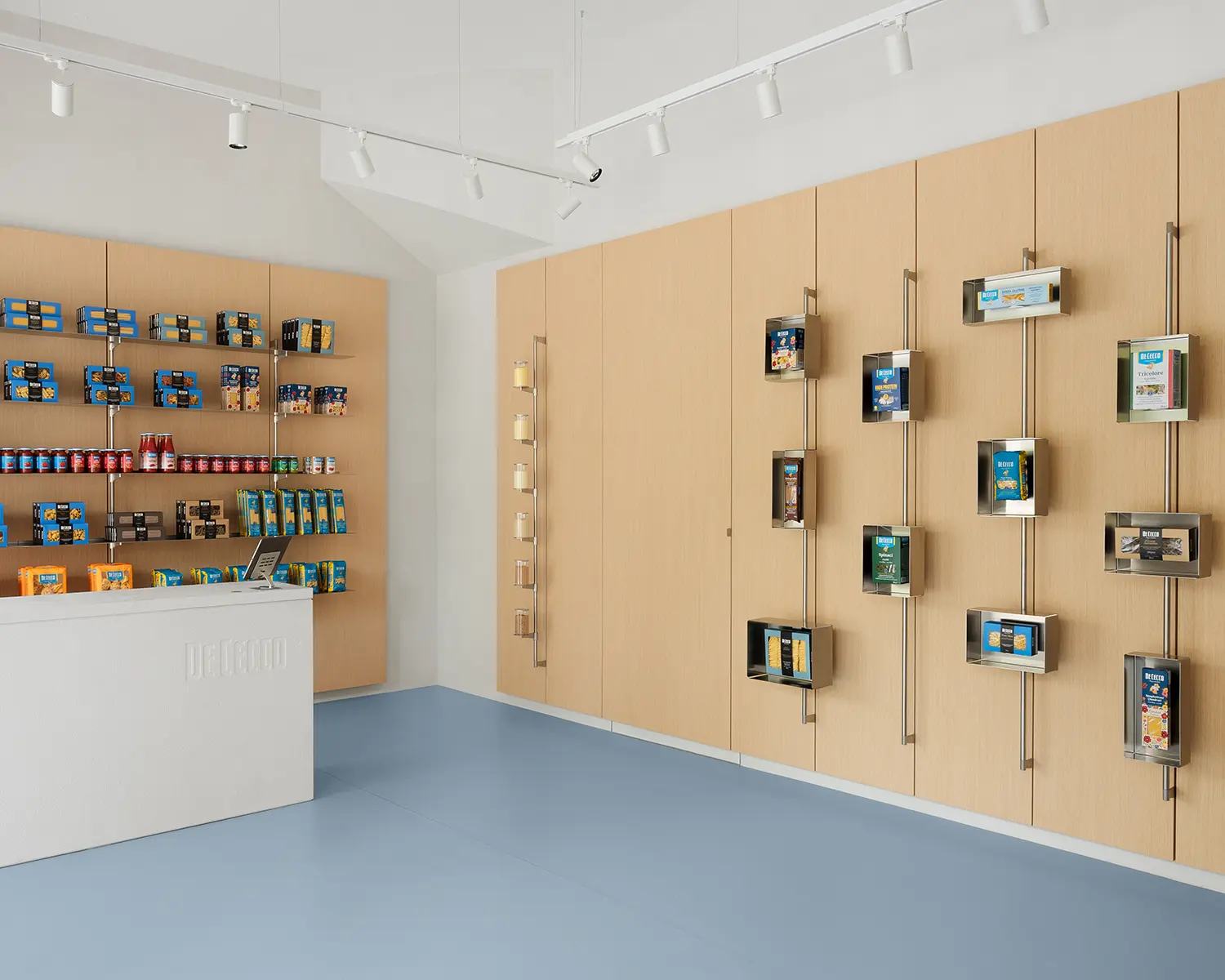
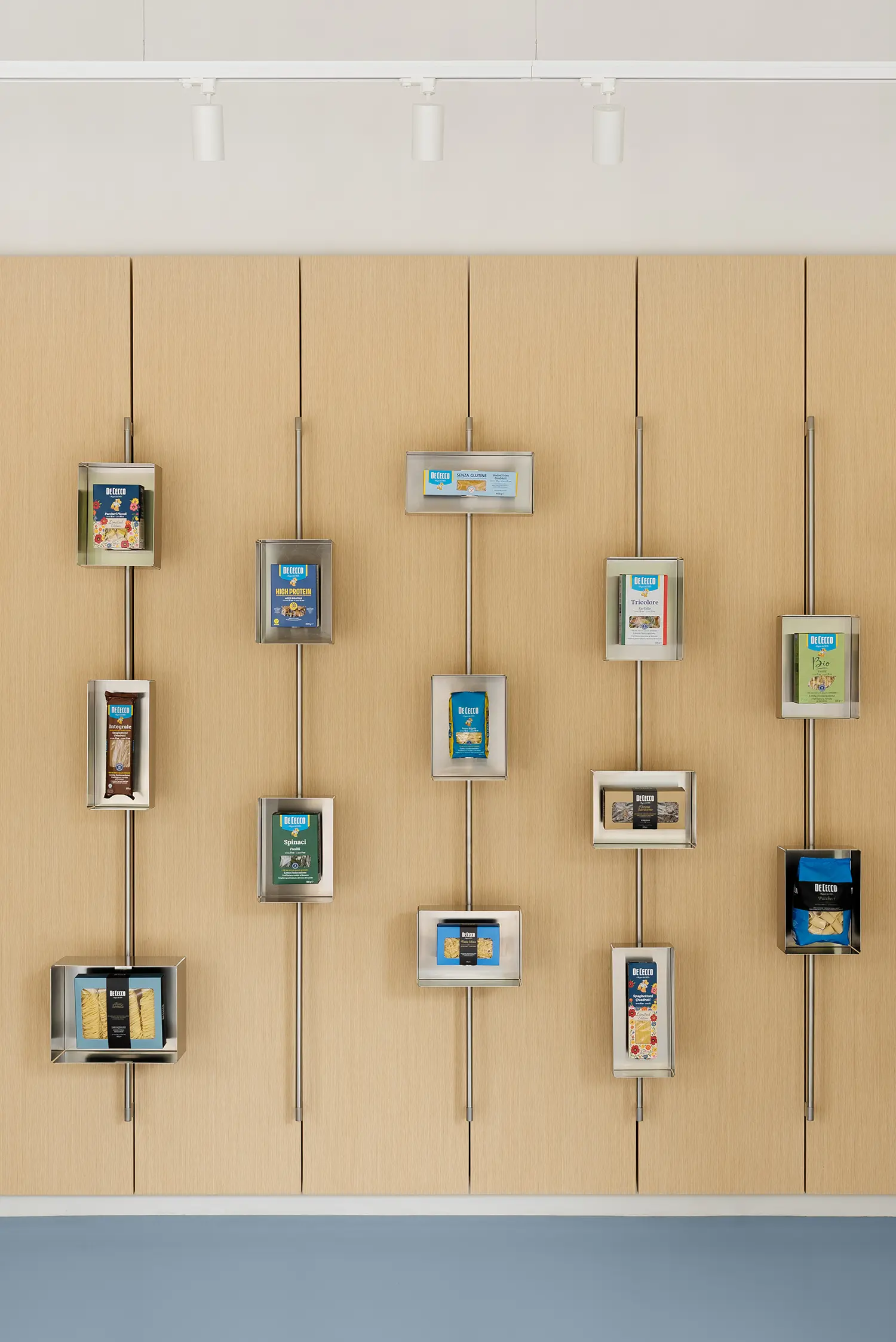
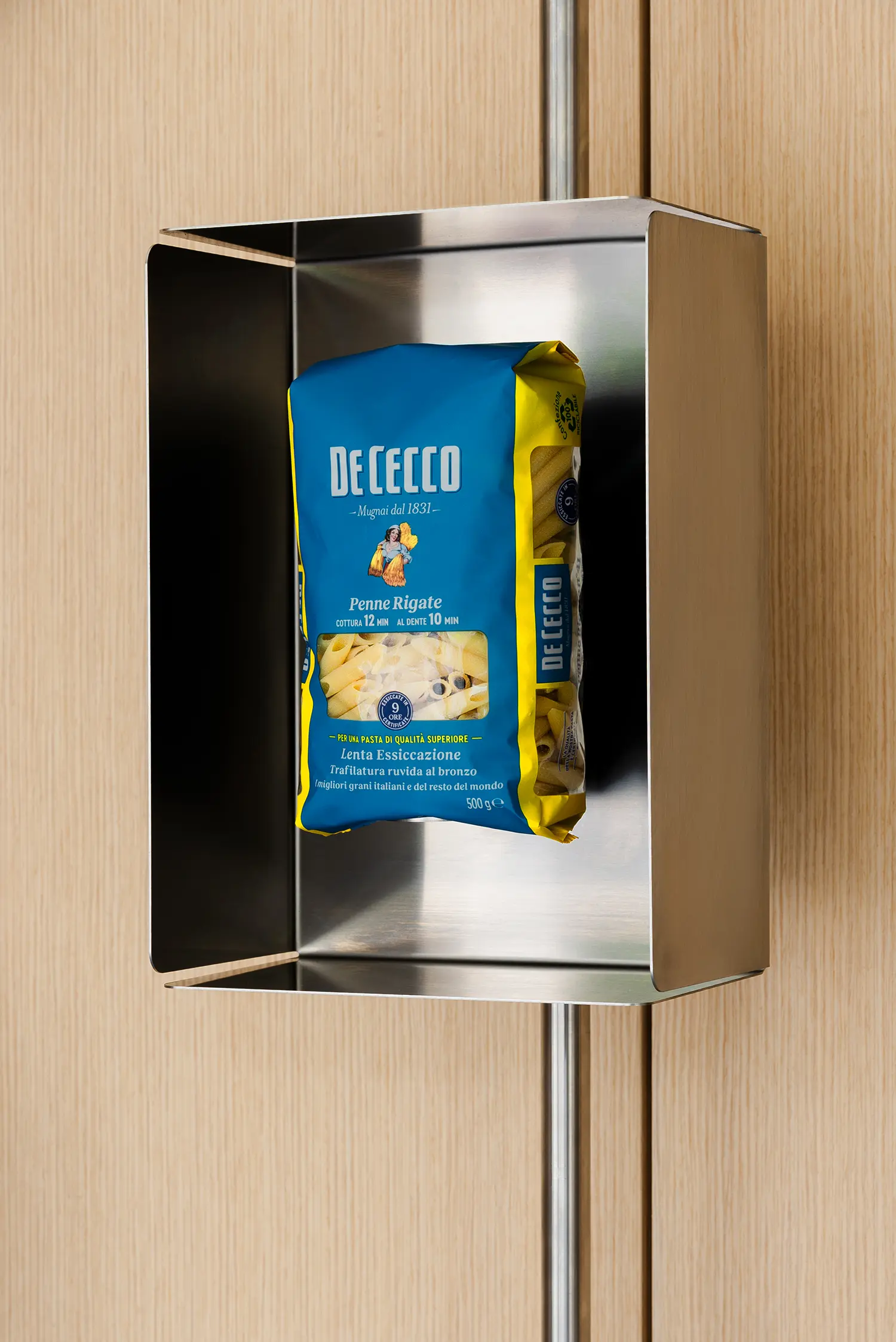
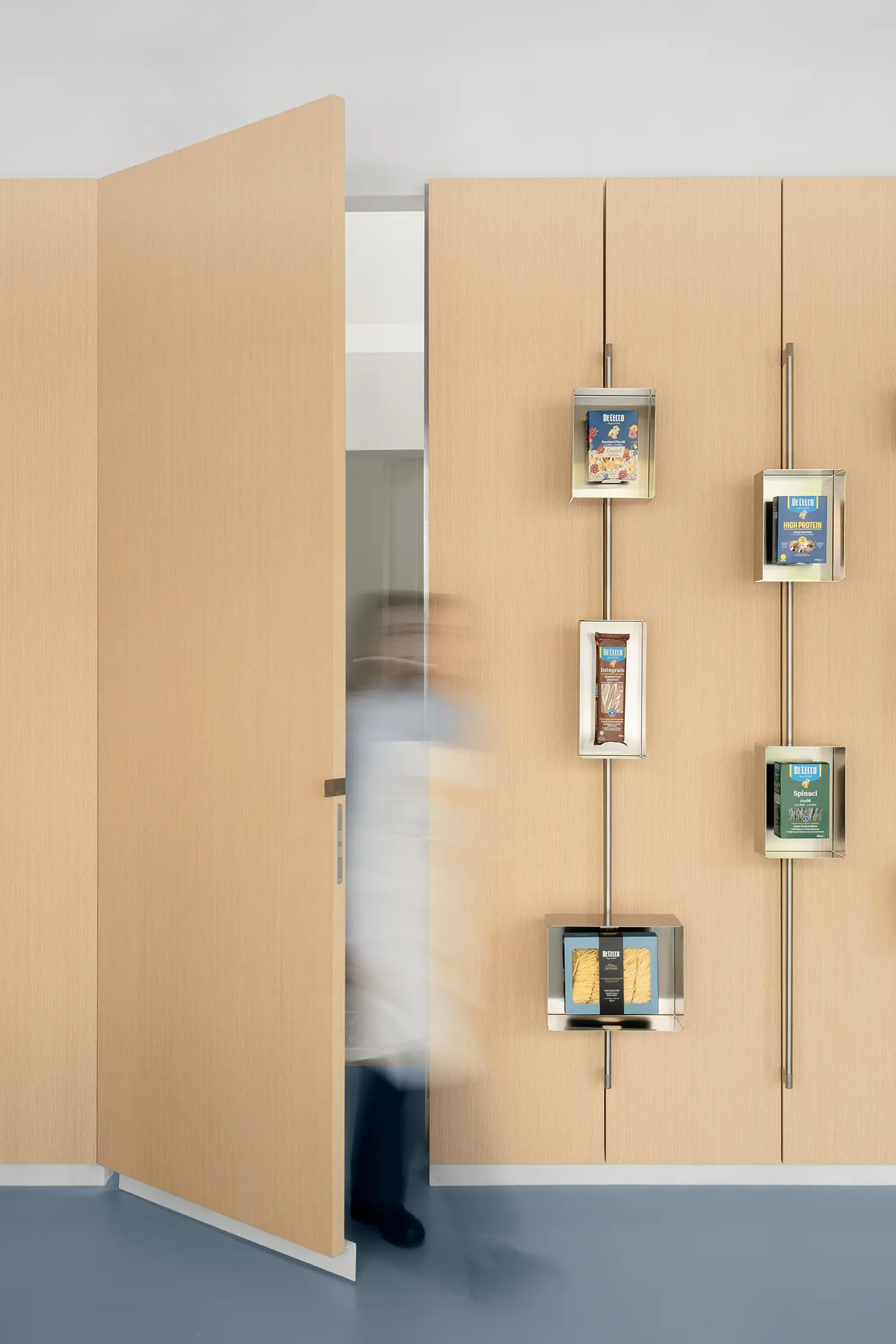
Behind the counter, steel tubing and a modular timber wall support stainless-steel display modules explicitly modeled on museum exhibition design rather than supermarket shelving. Facing the entrance, the modules can be repositioned freely so individual pasta shapes read as standalone artefacts; behind the counter, the same system shifts into a more ordered, geometric configuration for showing the full De Cecco range. Every component was engineered for industrial manufacture, meaning the entire system — not just the products inside it — is designed for controlled-cost replication across future stores.
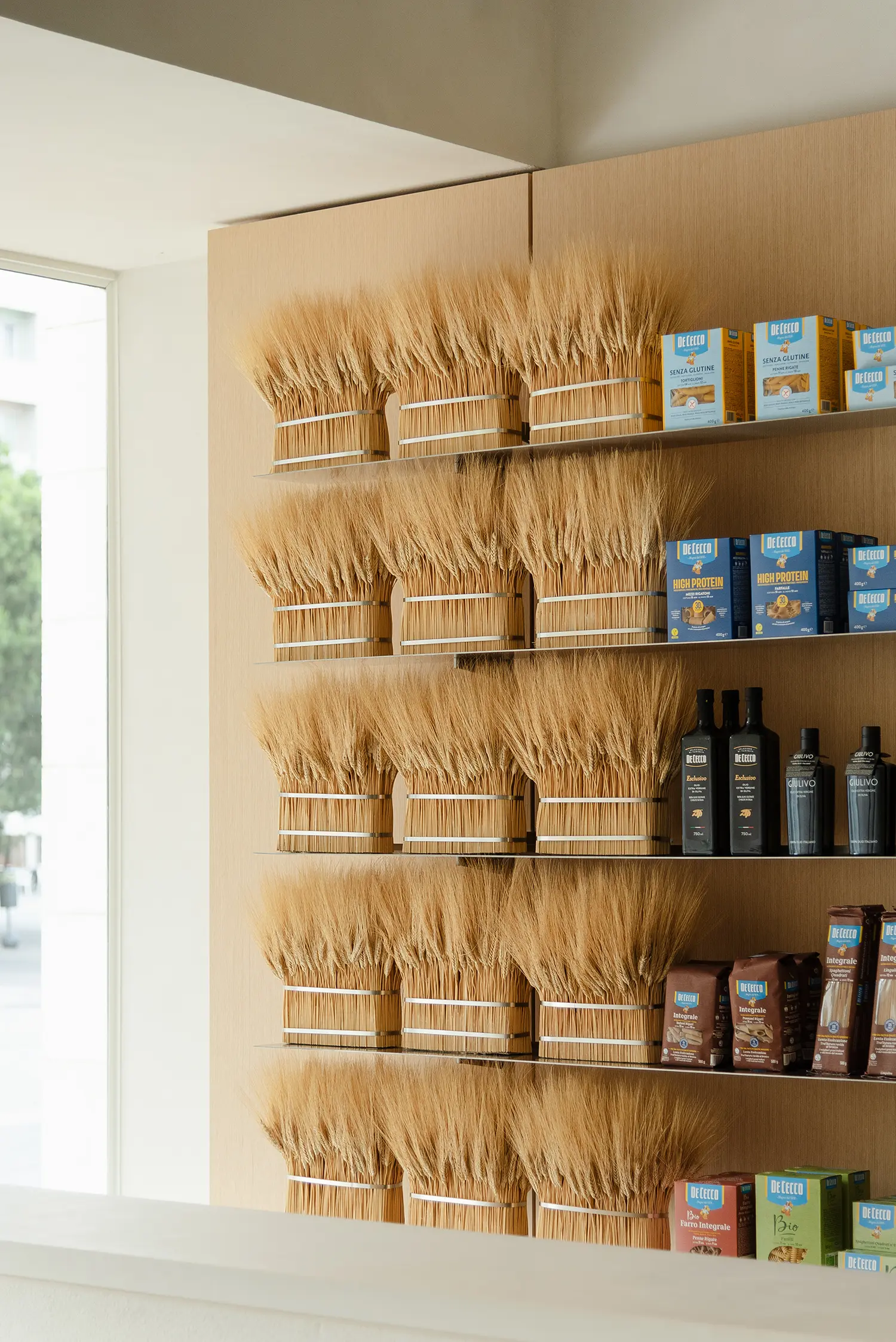
A continuous microcement floor unifies the whole composition in a muted, desaturated tone that references De Cecco’s blue brand identity without stating it literally, translating a corporate color into architectural material rather than signage. Studio Francesco Faccin previously worked in retail concept design for Naturasì, but De Cecco marks a shift toward a single-brand flagship format built specifically for replication rather than a chain-wide store system. Milan’s Mutti House of Polpa took a comparable approach during Fuorisalone 2026, treating a food brand’s raw material — tomatoes, in that case — as the basis for a spatial installation rather than a conventional retail display.
Photography extends the story beyond the store itself: a series shot by Alessio Pellicoro inside De Cecco’s historic Fara San Martino production facility documents the manufacturing steps the retail space only gestures toward, giving customers who never see the factory floor a direct visual link between the bronze die on display and the machinery that uses tools just like it every day.
The location itself carries weight beyond logistics: opening the brand’s first flagship in Abruzzo, rather than Milan or another design capital, ties the store directly to the region where De Cecco originated. The Galleria De Cecco’s real test isn’t whether raw stone and industrial bronze look convincing together — that pairing is now a familiar retail trope — but whether a modular system built for replication can survive being copied into a second, third, and tenth location without losing the specificity that makes this first one feel like a museum rather than a showroom.
De Cecco Flagship Store by Studio Francesco Faccin | Location: Corso Umberto I, Pescara, Italy — Year: 2026 — Key materials: white Maiella stone, bronze extrusion dies, steel display structures, microcement flooring