



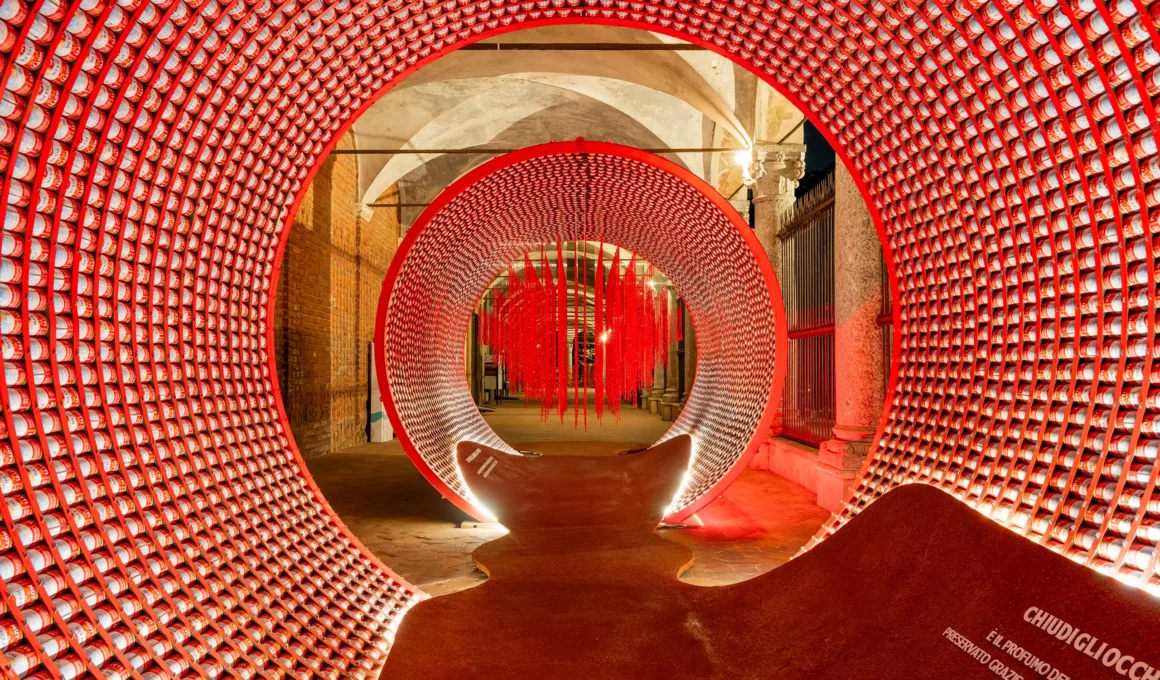
In the historic cloisters of the University of Milan, Mutti unveils “House of Polpa,” a monumental vaulted installation designed for FuoriSalone 2026 that utilizes twenty thousand tomato cans to explore the intersections of industrial heritage, circularity, and the Mediterranean landscape.
A Visual Manifesto of Materiality. The installation, hosted under the Portico Richini as part of the INTERNI MATERIAE exhibition, transforms a household staple into a sophisticated structural component. By using twenty thousand cans of finely chopped tomatoes—a number chosen to reflect the fifty-five years since the product’s debut in 1971—the project elevates a simple commodity into a visual dialogue about food systems and resource management. It is an immersive exploration of how raw materials can be recontextualized to represent collective care and environmental responsibility.
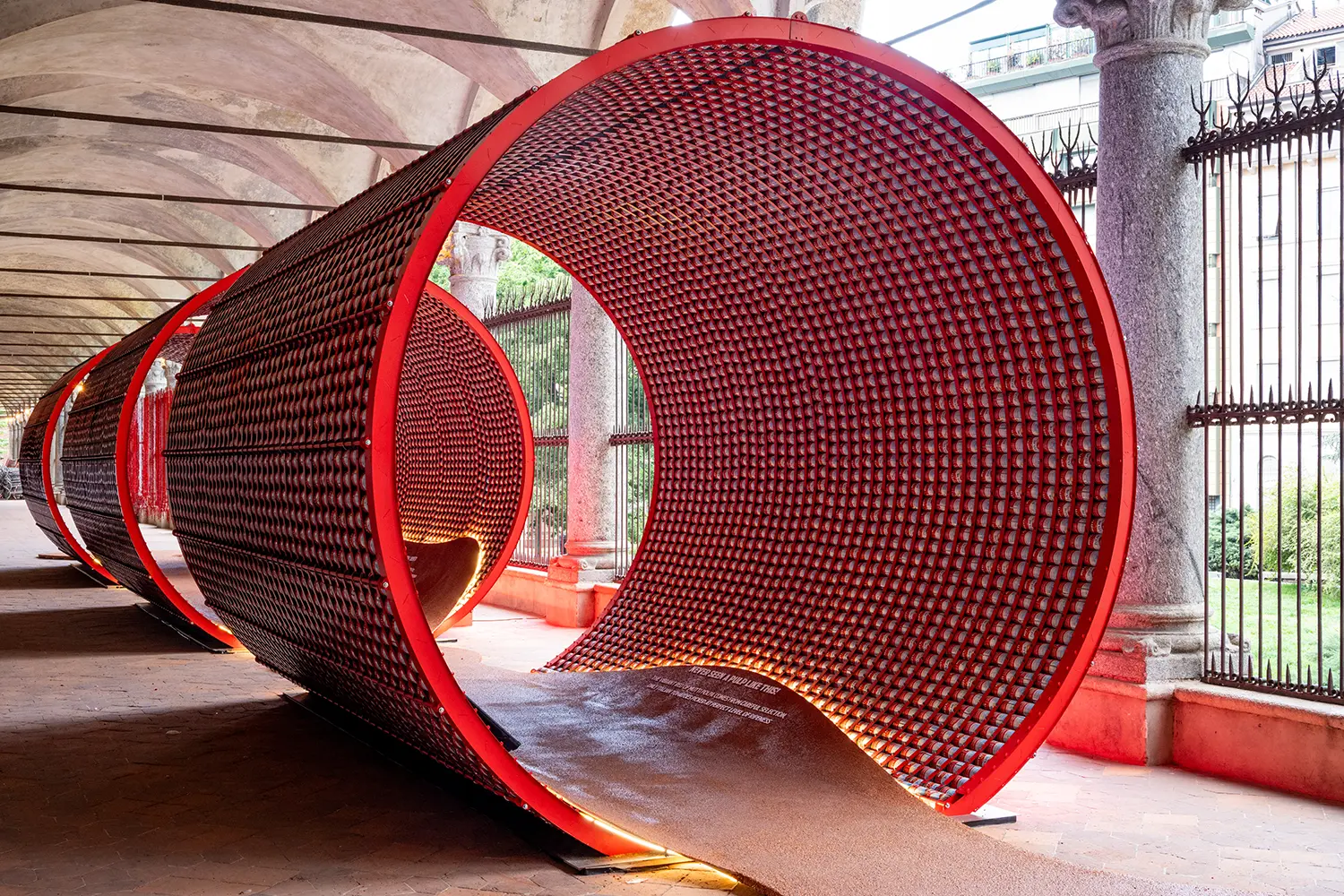
The Geometry of the Harvest. The structure extends over 25 meters, defined by a self-supporting vaulted system composed of three large cylindrical volumes. These forms are connected by a central wooden walkway, creating a rhythmic progression through the cloister. The use of the iconic red-and-gold tins as “bricks” creates a textured, shimmering facade that reacts to the shifting light of the April sun, grounding the industrial product within the classical proportions of the university’s Renaissance architecture.
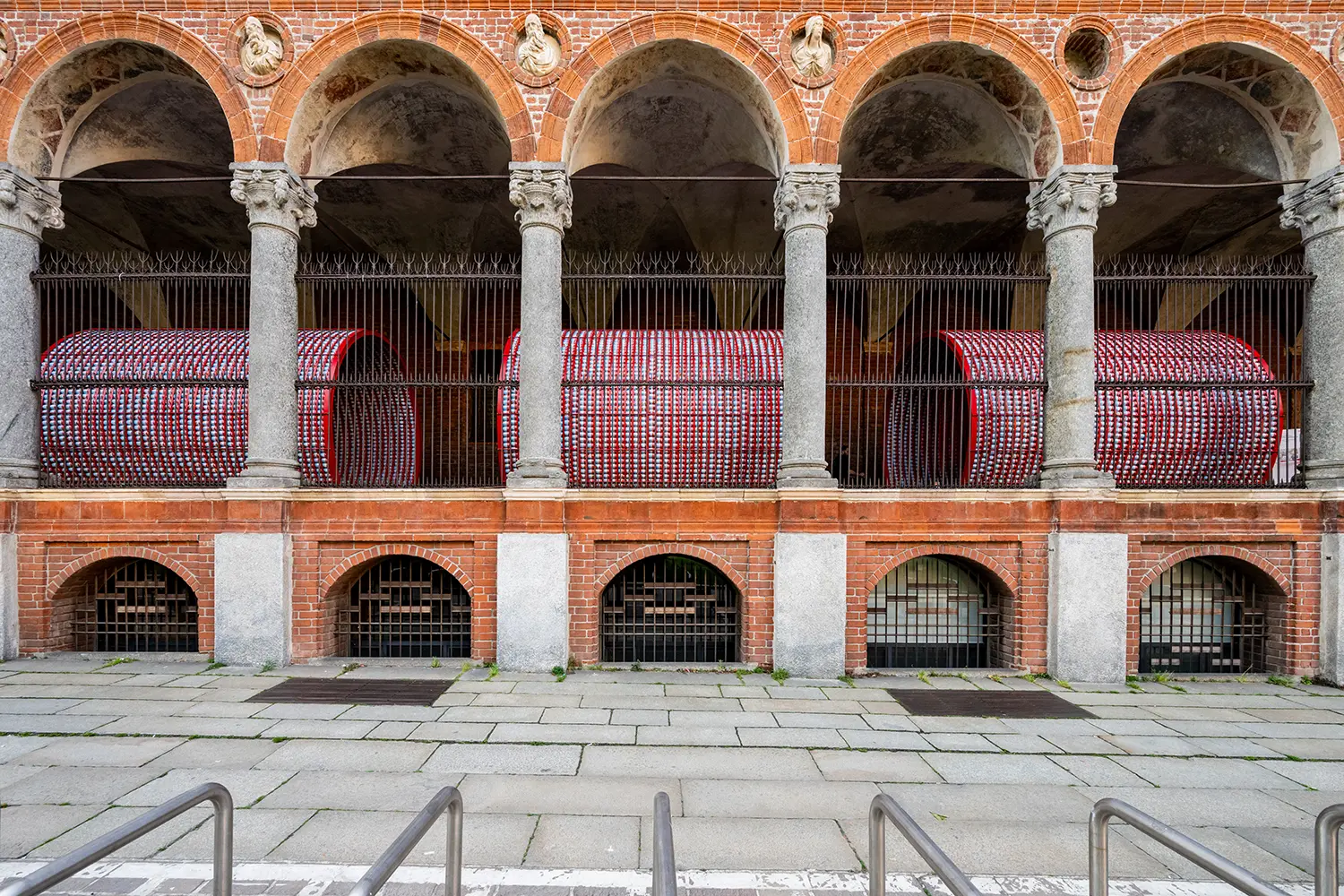
Technological Innovation in Surface Design. Beneath the feet of visitors lies perhaps the most forward-thinking element of the project: a specialized flooring solution developed in partnership with Mapei. This custom resin is derived from tomato skins and production by-products, effectively closing the loop on agricultural waste. The surface serves as a tactile reminder that the future of the built environment may very well be hidden within the waste streams of our food industries, proving that high-performance materials can emerge from organic origins.
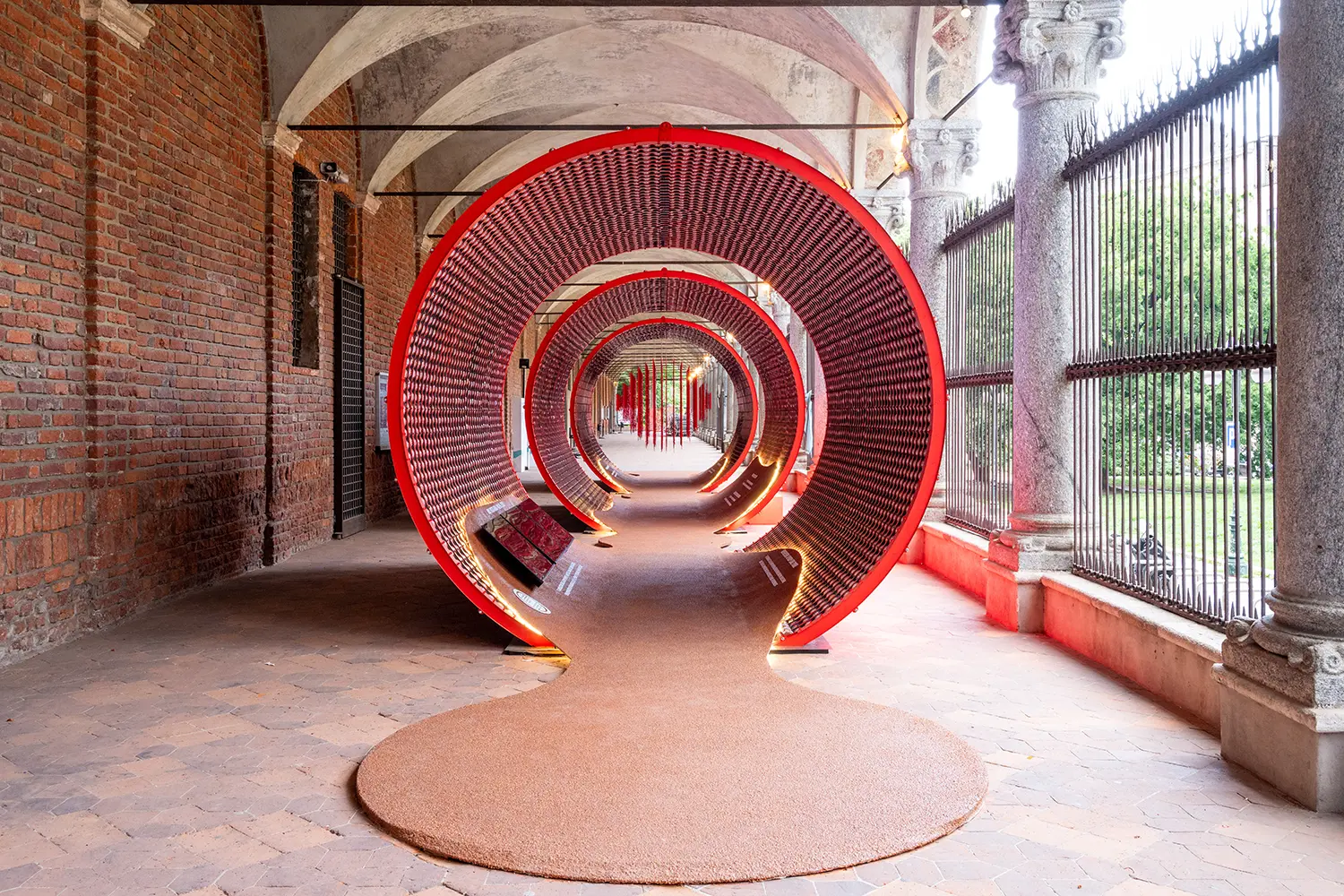
A Sensory Immersion in Red. Moving through the cylinders, the experience shifts from the structural to the atmospheric. The interior is designed to evoke the “sensory soul” of the tomato—its granular texture, deep chromatic intensity, and distinct aroma. It is a space that feels alive, pulsing with the history of the Italian countryside and the rigor of modern processing. The air carries a subtle hint of the harvest, turning a walk through a technical installation into a visceral journey from the field to the kitchen.
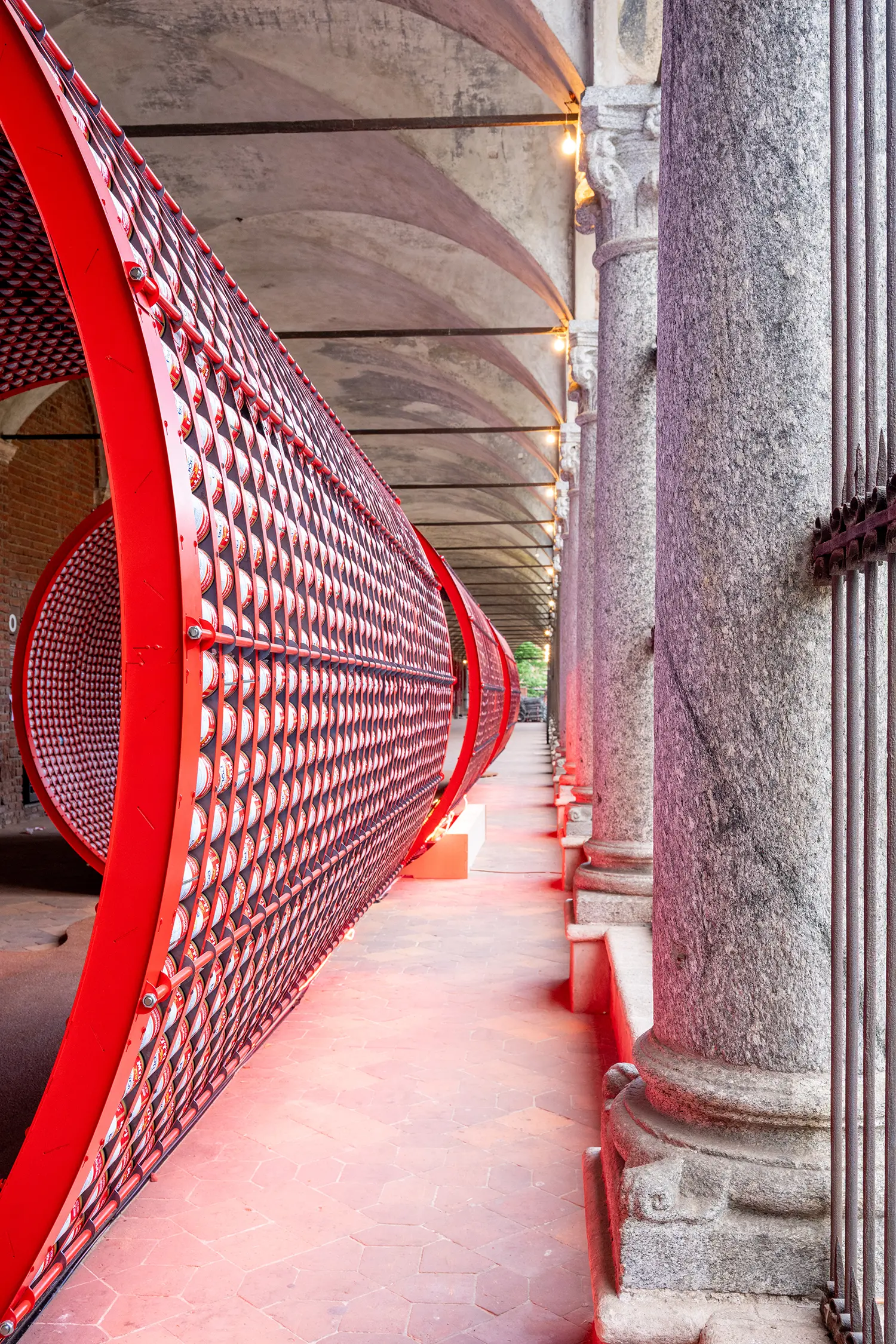
The Engineering of Disassembly. Stability is achieved through a meticulous system of small steel connectors that join the cans into a rigid, load-bearing lattice. This modular construction was specifically engineered for “subtraction.” Unlike traditional temporary pavilions that result in post-event waste, the House of Polpa is designed to be dismantled piece by piece. This technical choice ensures that the individual components remain pristine and functional, transitioning from a wall back into an ingredient without losing their utility.
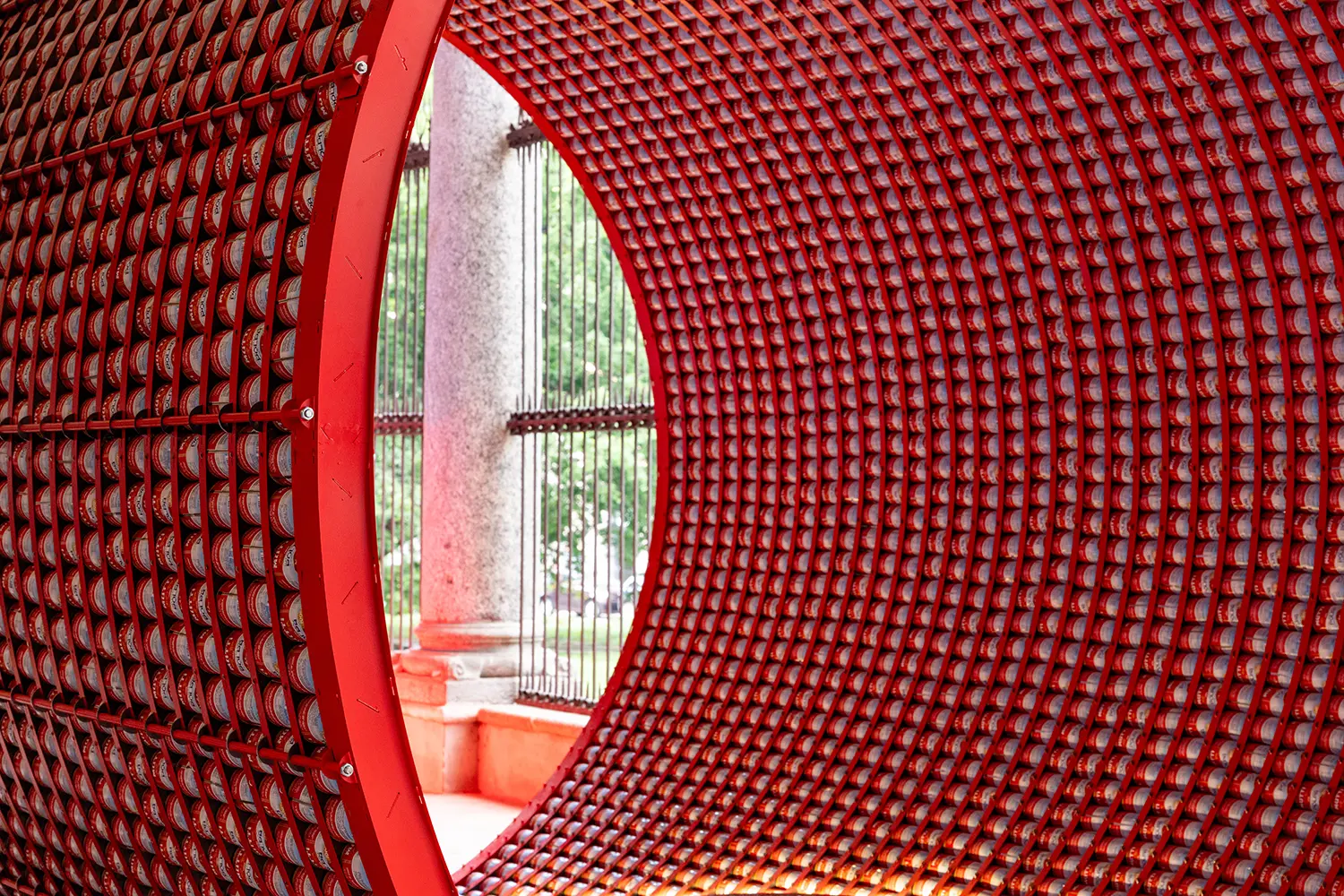
From Architecture to the Pantry. In a brilliant subversion of the typical exhibition lifecycle, the installation is designed to disappear through the hands of its audience. At the end of the week, the structure is dismantled can by can, with visitors invited to take the “building blocks” home. This ensures the architecture completes its journey exactly where it was first imagined 55 years ago: in the kitchen. It is a literal interpretation of zero-waste design, where the ephemeral monument becomes a series of private, culinary moments.
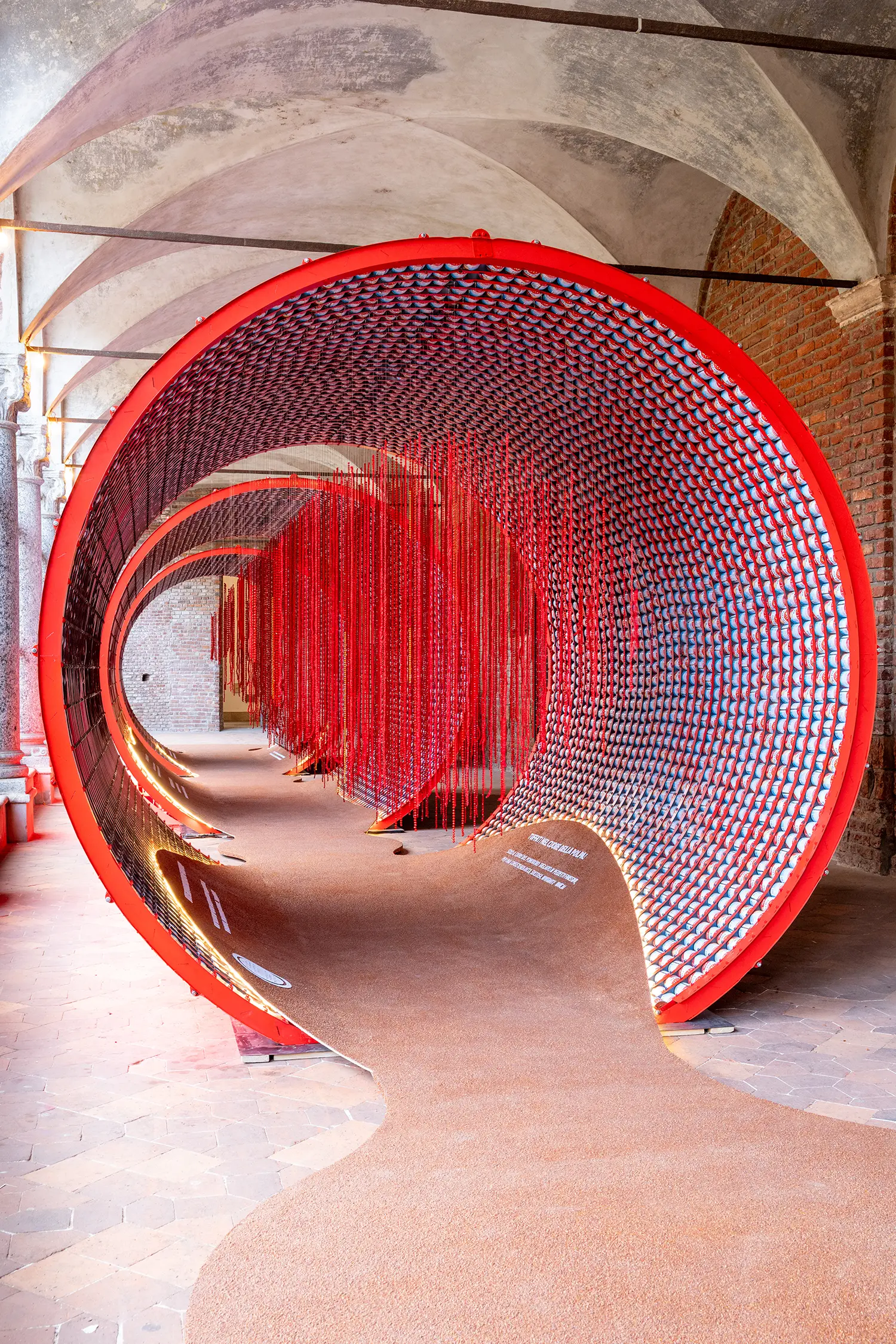
The Poetics of Ephemerality. Inspired by the verses of Pablo Neruda, who placed the tomato at the center of the world, the project treats the product as a vital energy source. Every component follows this circular logic: the metal connectors will be recycled, while the wood base, featuring its unique tomato-skin inlay, is destined to be repurposed as building material. This gesture reinforces the idea of sustainable design not as a permanent monument, but as a temporary gathering of resources that eventually returns to the community.
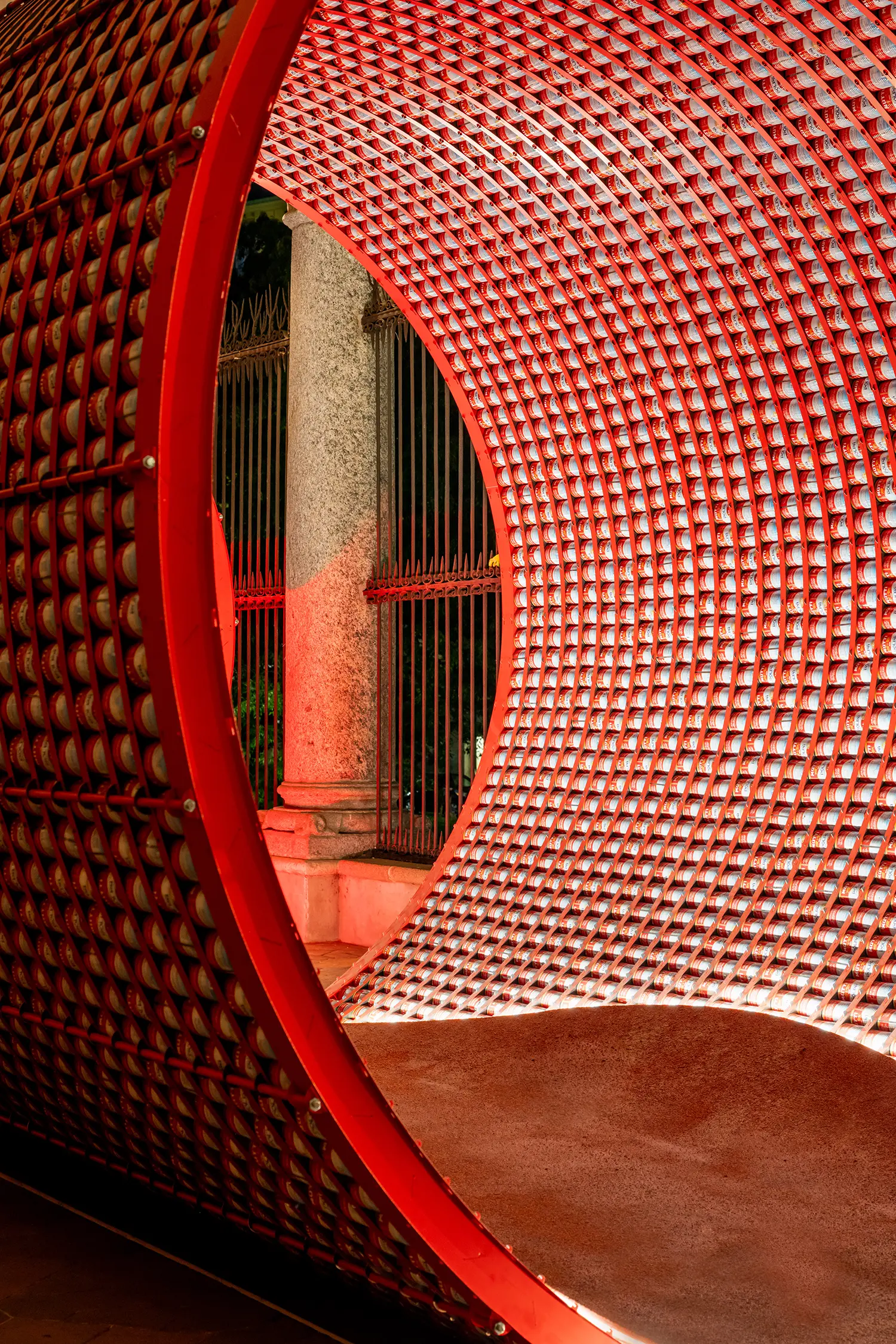
A Landscape of Innovation. The House of Polpa stands as a highlight of a particularly fertile Milan Design Week, where the focus on circularity and modularity has taken center stage. This exploration of ephemeral systems mirrors the adaptable spirit seen in the Eames Pavilion System by Kettal at Triennale, while the experimental use of production by-products finds a spiritual sibling in the Nike Air Lab at Dropcity. Together, these installations suggest that the coming years will be defined by a shift away from static permanence toward a more fluid, responsible way of occupying space.
House of Polpa by Mutti | Where: University of Milan, Via Festa del Perdono 7, Milan – When: April 20 – April 30, 2026