



Margine treats color as a load-bearing decision at Casa Tahiti, dividing a Roman apartment’s private rooms by hue rather than by wall. Commissioned by a young advertising professional for a fragmented, pre-1939 flat between Pigneto and Torpignattara in Rome, the renovation strips the plan back to a single open volume, then reintroduces boundaries through pink, yellow, blue and green surfaces instead of partitions. The result argues that a room’s identity can be built entirely out of paint and tile, without a single new wall.
A neighborhood in flux sets the terms of the brief: Pigneto-Torpignattara is currently attracting a growing community of young creatives, and the client wanted a home that matched that energy — a pop-character apartment capable of functioning as a retreat from the pace of the city rather than an extension of it. The apartment itself worked against that ambition. A series of 1970s renovations had left the pre-war layout narrow, fragmented and difficult to navigate, further obstructed by outdated wallpaper and additions that blocked both circulation and light.
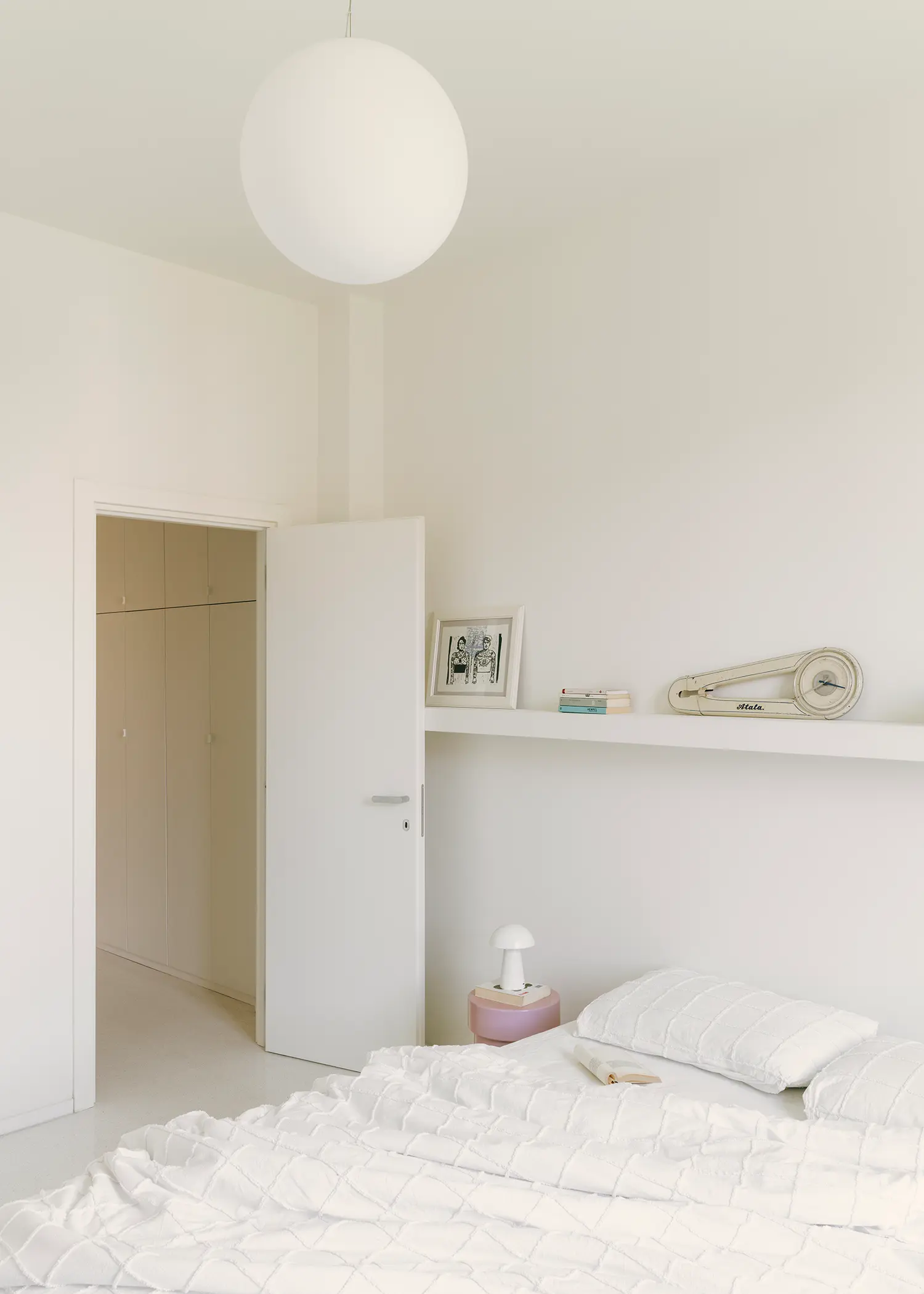
Margine’s response was structural before it was chromatic: removing almost all internal partitions to liberate the floor plan, joining the living room and kitchen into one continuous, open-plan living space. Only after that spatial reset does color enter the project as an organizing tool rather than decoration layered on top of a finished plan.
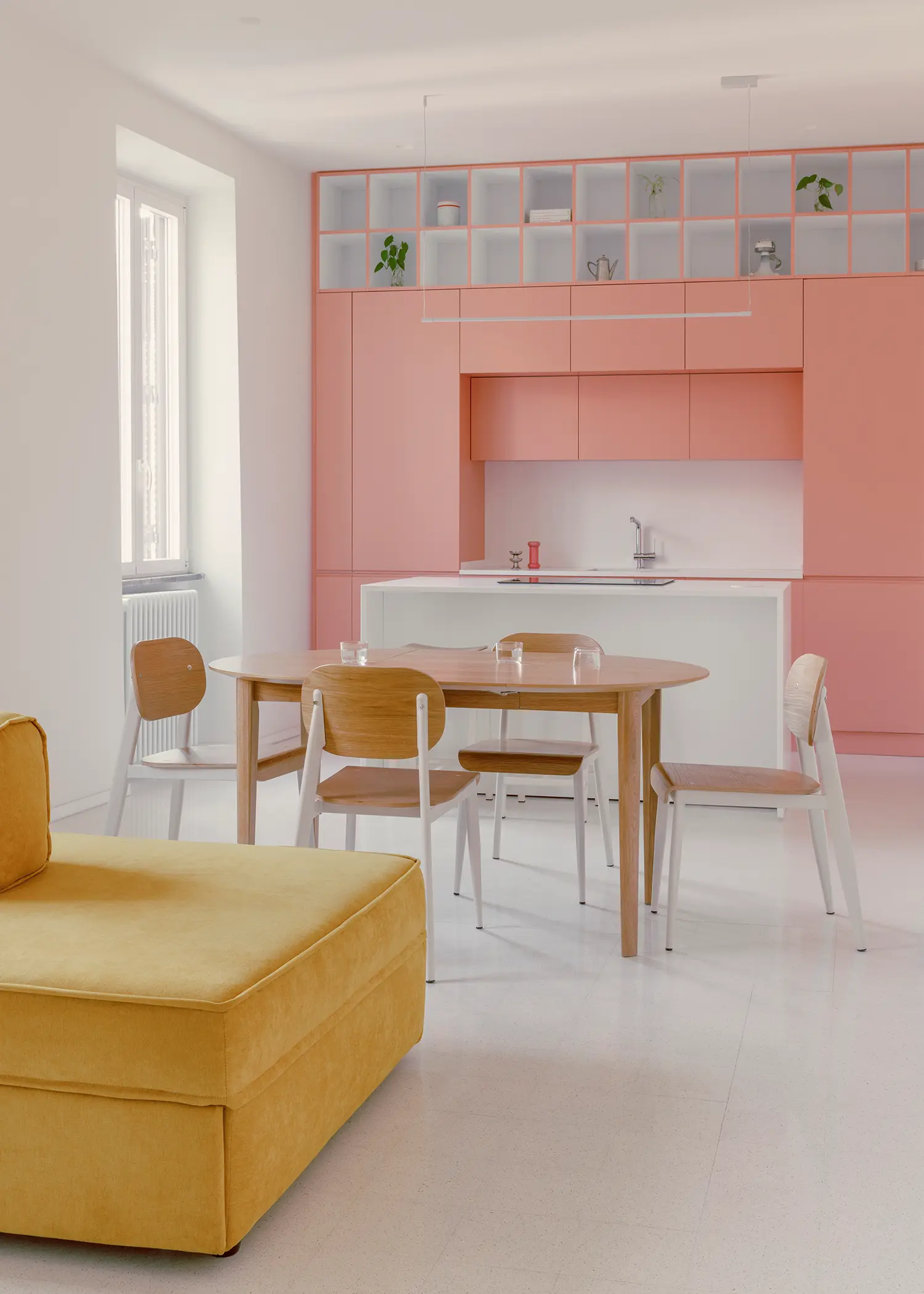
White terrazzo flooring runs underneath the entire open-plan area, acting as the project’s visual thread and a direct nod to Rome’s own building tradition. Set against this pale, reflective terrazzo flooring surface, every subsequent chromatic intervention reads with unusual clarity — the color doesn’t compete with the architecture, it sits on top of a deliberately neutral base.
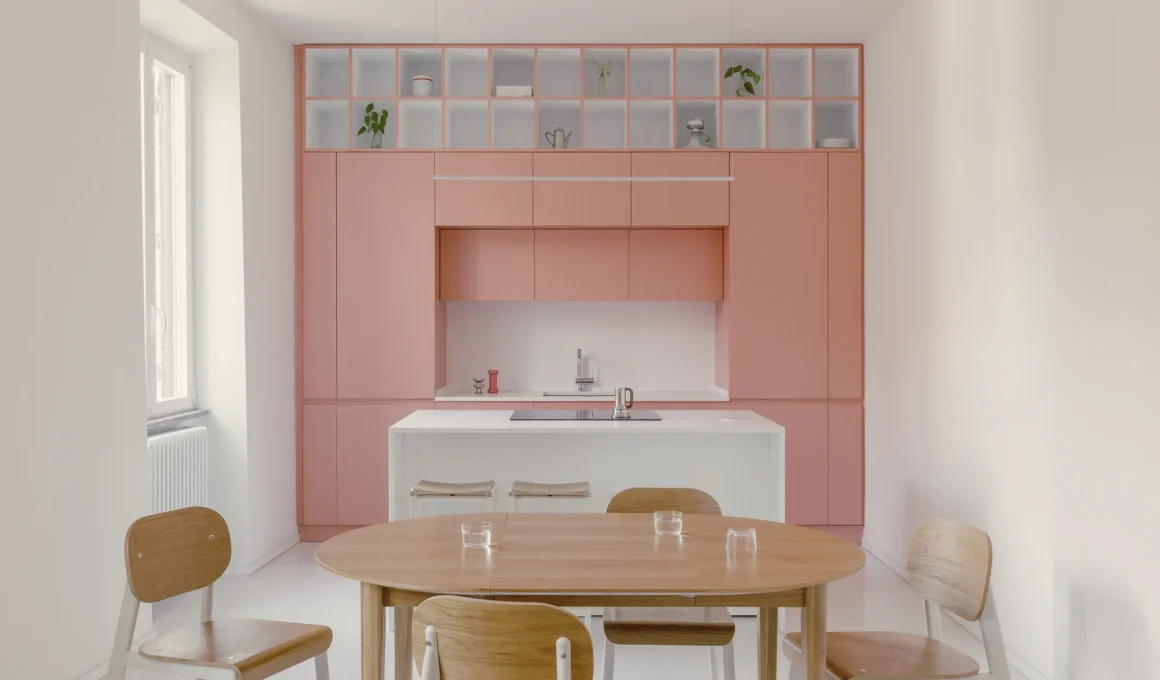
The kitchen becomes the first focal point of the new open space: a full-height pink kitchen volume topped with an open shelving grid in colorful profiles, balanced against a white island, a natural wood dining table and an ochre-yellow sofa anchoring the lounge area. The pink isn’t confined to the kitchen alone — profiles framing the main living room wall extend the color outward, tying the cooking zone to the rest of the plan rather than isolating it.
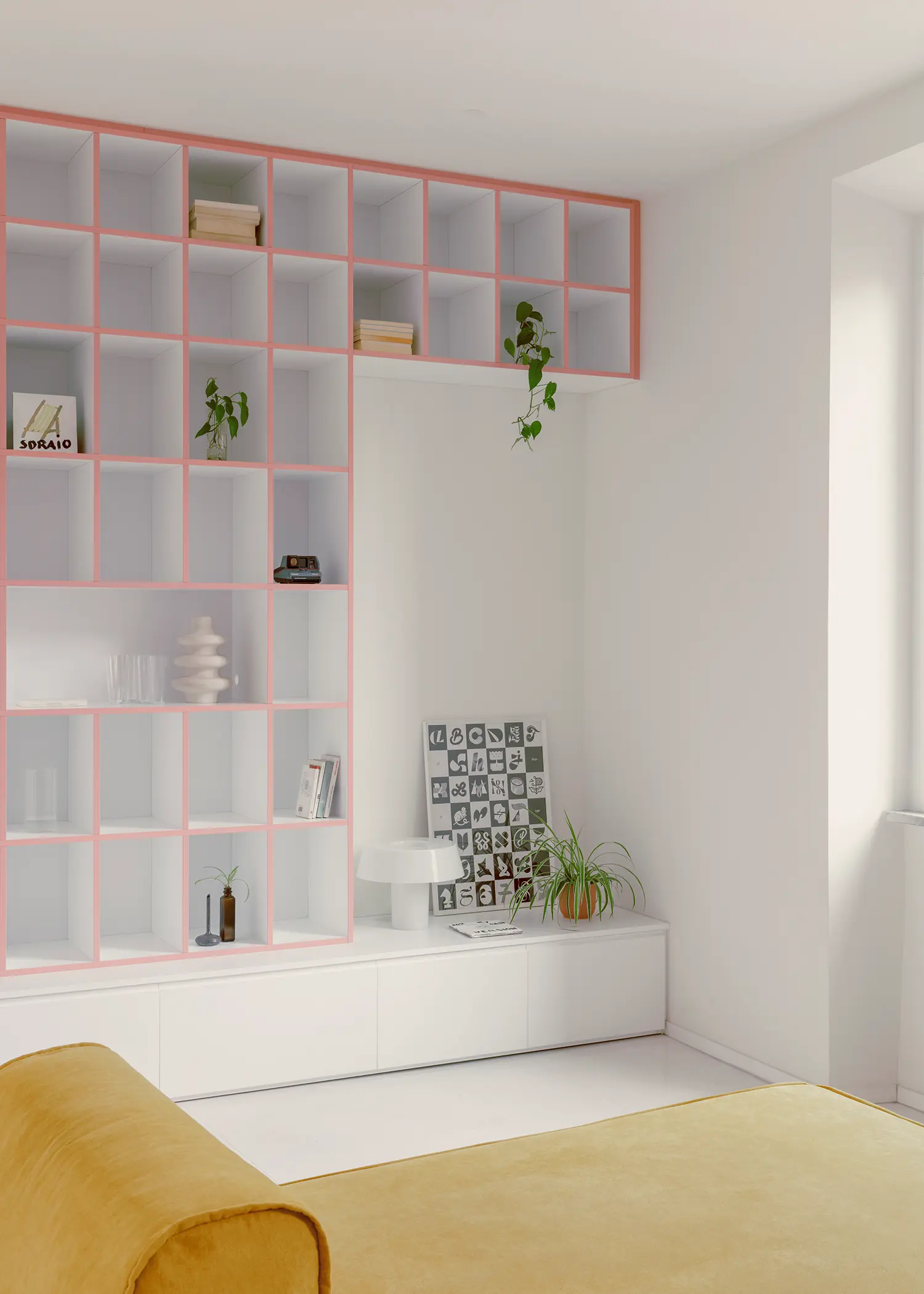
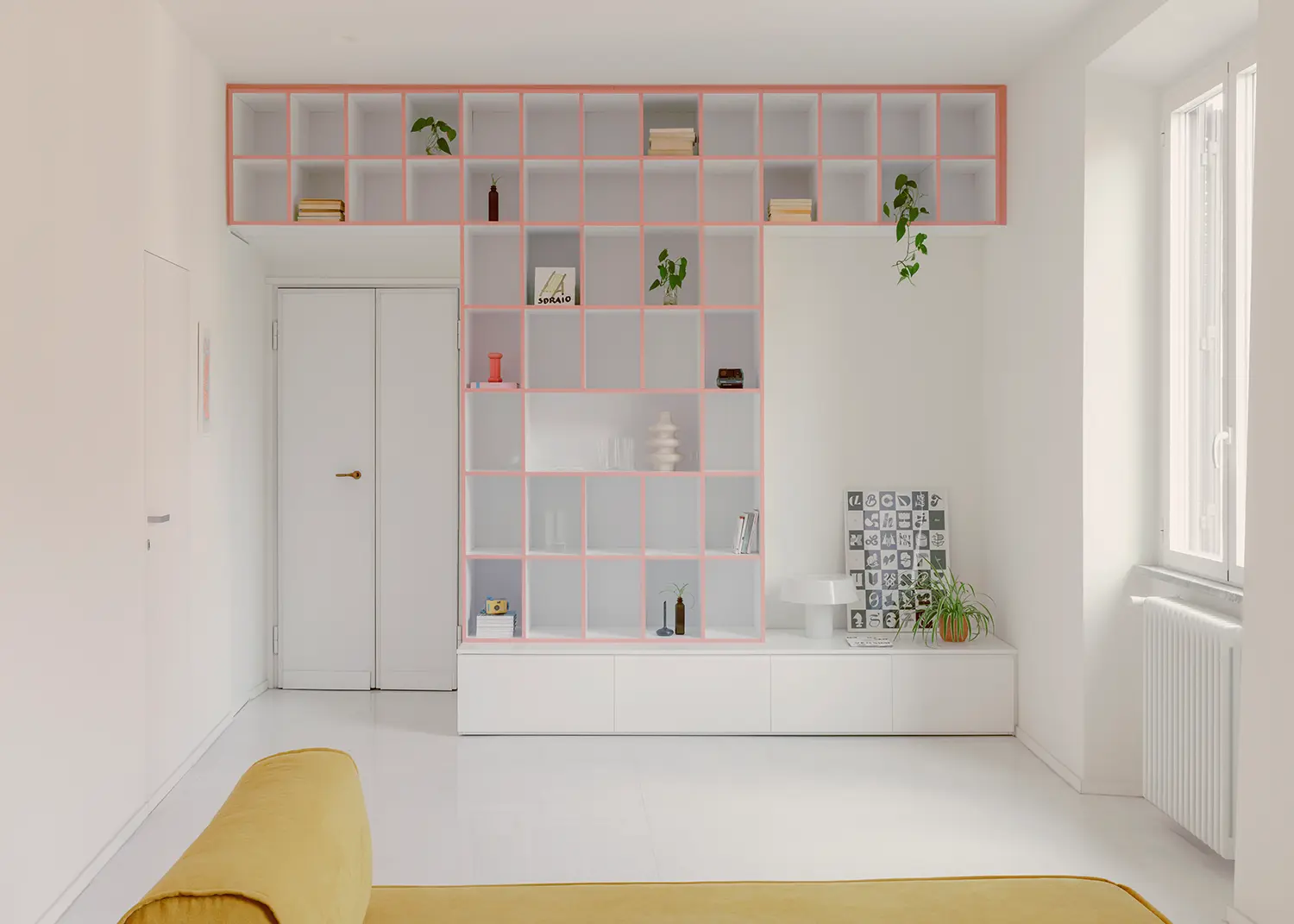
A custom bookcase on the opposite side of the room answers the kitchen directly, repeating its grid pattern and geometric clarity in a different material. The correspondence between the two pieces — one holding pots, one holding books — turns what could have been two unrelated furniture decisions into a single chromatic interior design language running across the entire communal space.
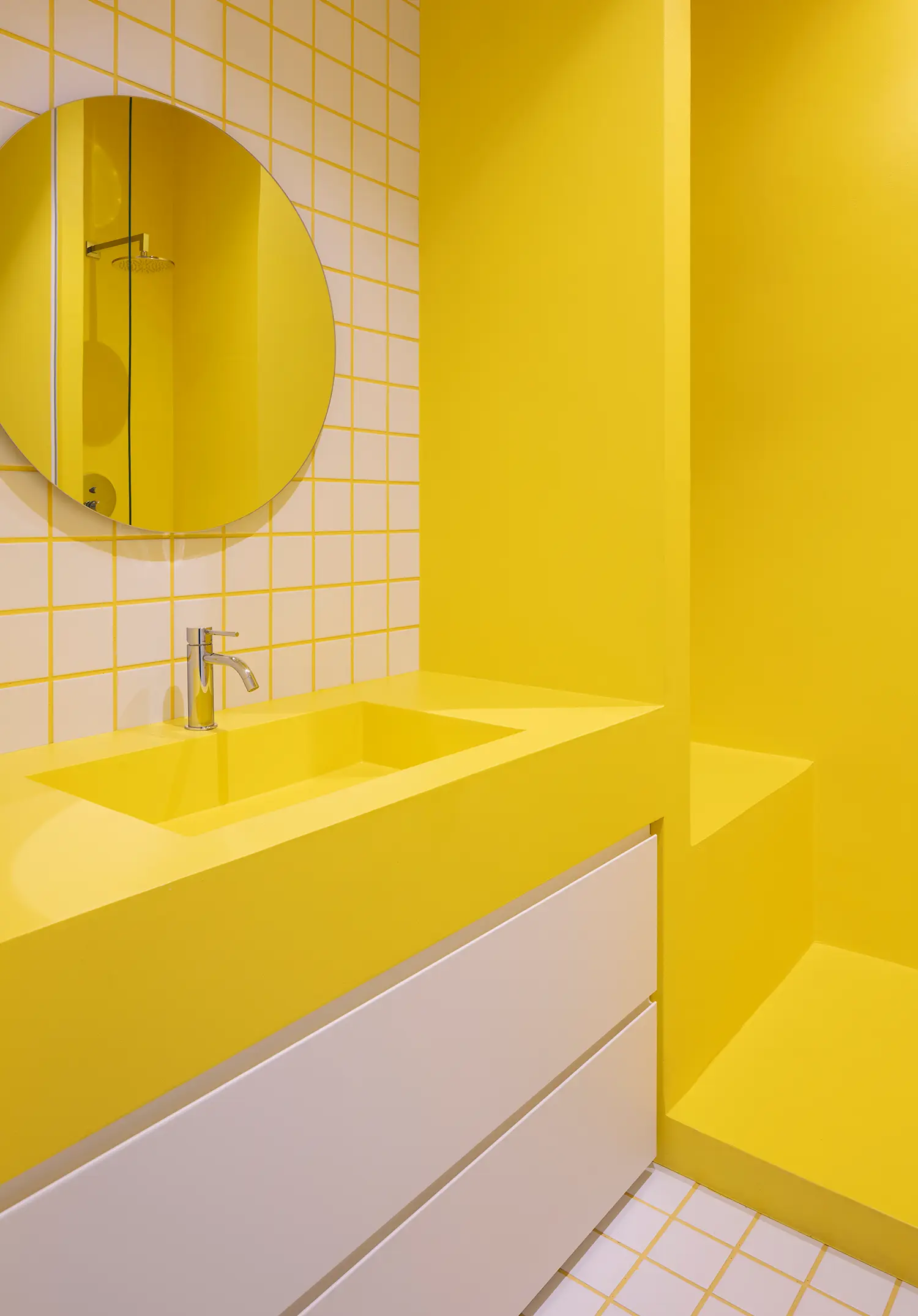
Beyond the living area, color stops being decorative and becomes structural to how the private quarters are divided. Both bathrooms are clad entirely in small ceramic tiles interrupted by contrasting colored grout lines, turning ordinary wall surfaces into graphic, geometric compositions. The master bathroom commits fully to yellow — shower, integrated washbasin and surrounding surfaces are unified into one luminous monochromatic box, with no material break to soften the effect.
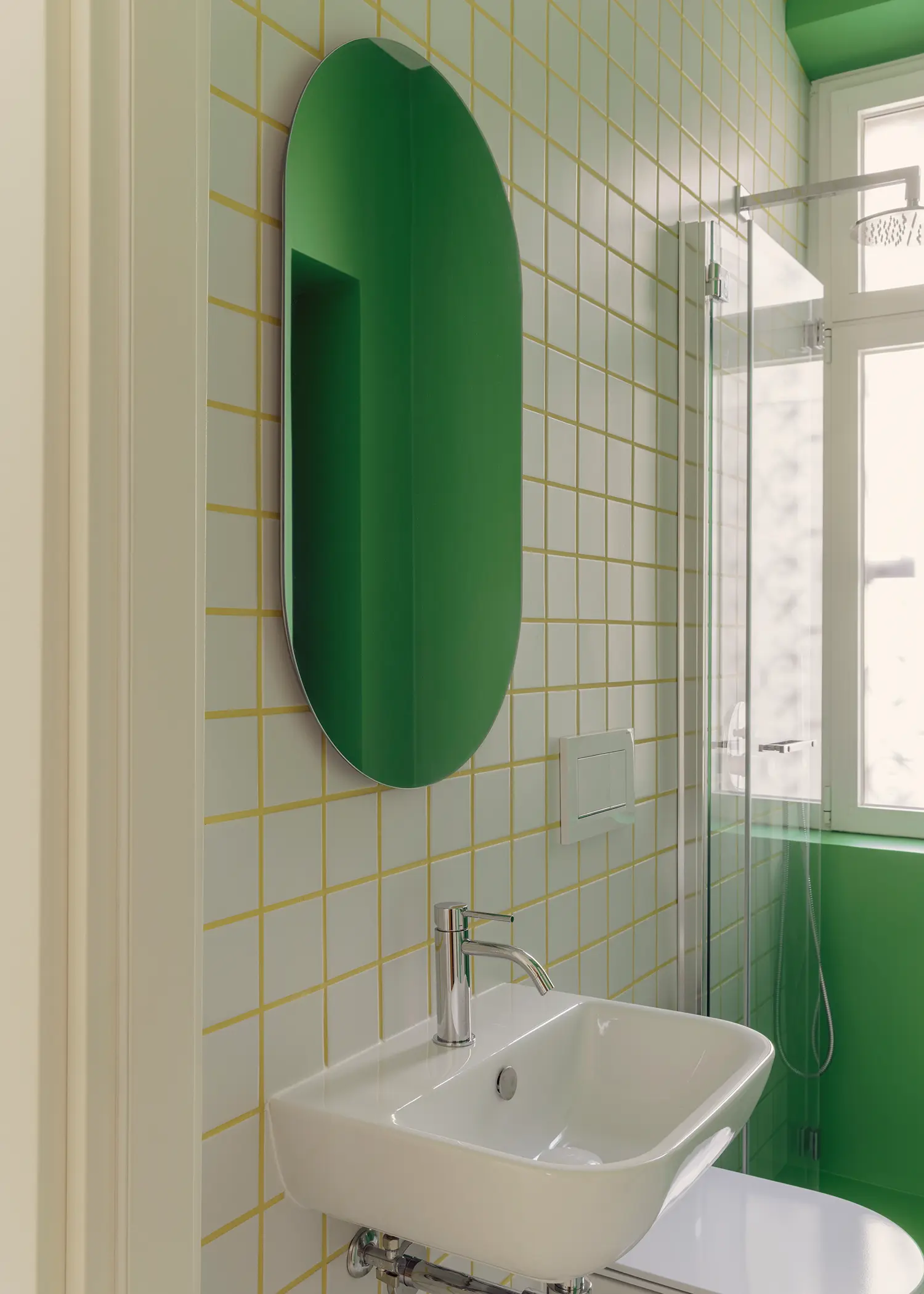
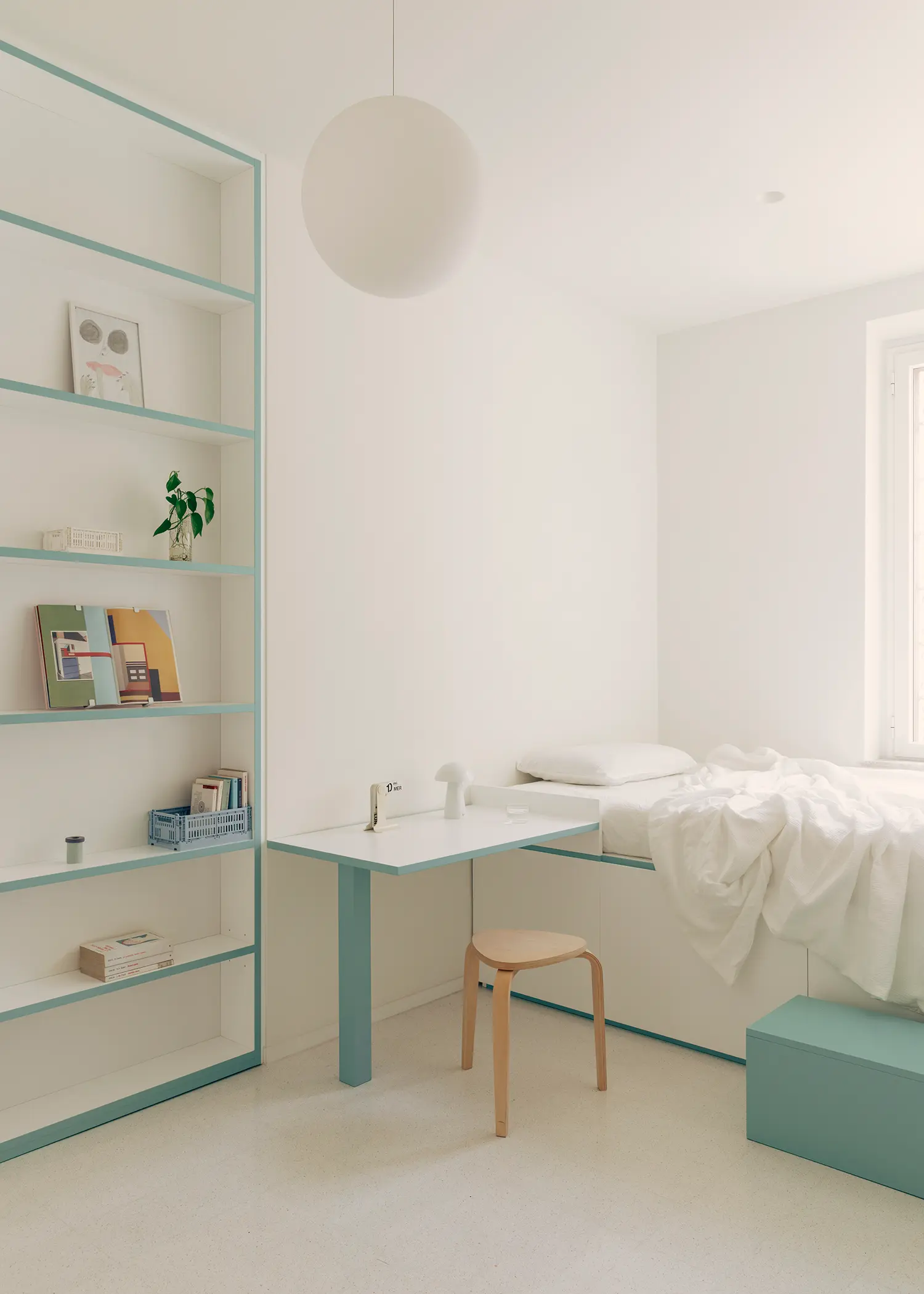
On the apartment’s opposite side, the section built for the client’s daughter functions as a self-contained blue annex: powder-blue geometric detailing defines a custom desk and a sleeping alcove tucked into the available volume, while a second bathroom nearby shifts the palette again, this time into deep green tiles and coordinated grout. Margine’s earlier Puglia villa renovation at Levanzo House shows the same instinct for treating a home as a self-contained microcosm built around one household’s habits, applied here to an urban apartment instead of a rural one.
Casa Tahiti’s real test isn’t whether pink, yellow, blue and green can coexist under one roof — colorful interiors are common enough — but whether removing walls and replacing them with color still produces rooms that feel distinct rather than merely open-plan with paint. On the evidence of the bathrooms alone, where tile and grout do the work walls used to do, it does.
Casa Tahiti by Margine | Location: Via dell’Acqua Bullicante, Torpignattara, Rome, Italy — Year: 2026 — Key materials: white terrazzo flooring (Arabescato Terrazzo, Grandinetti), CE.SI ceramic tiles, Krion (kitchen and island)