



Margine’s renovation of Lèvanzo, a single-family villa in Caprarica, Puglia, strips away 1970s structural excesses to reveal a minimalist interplay of cylindrical volumes and reclaimed Rosa del Garda marble.
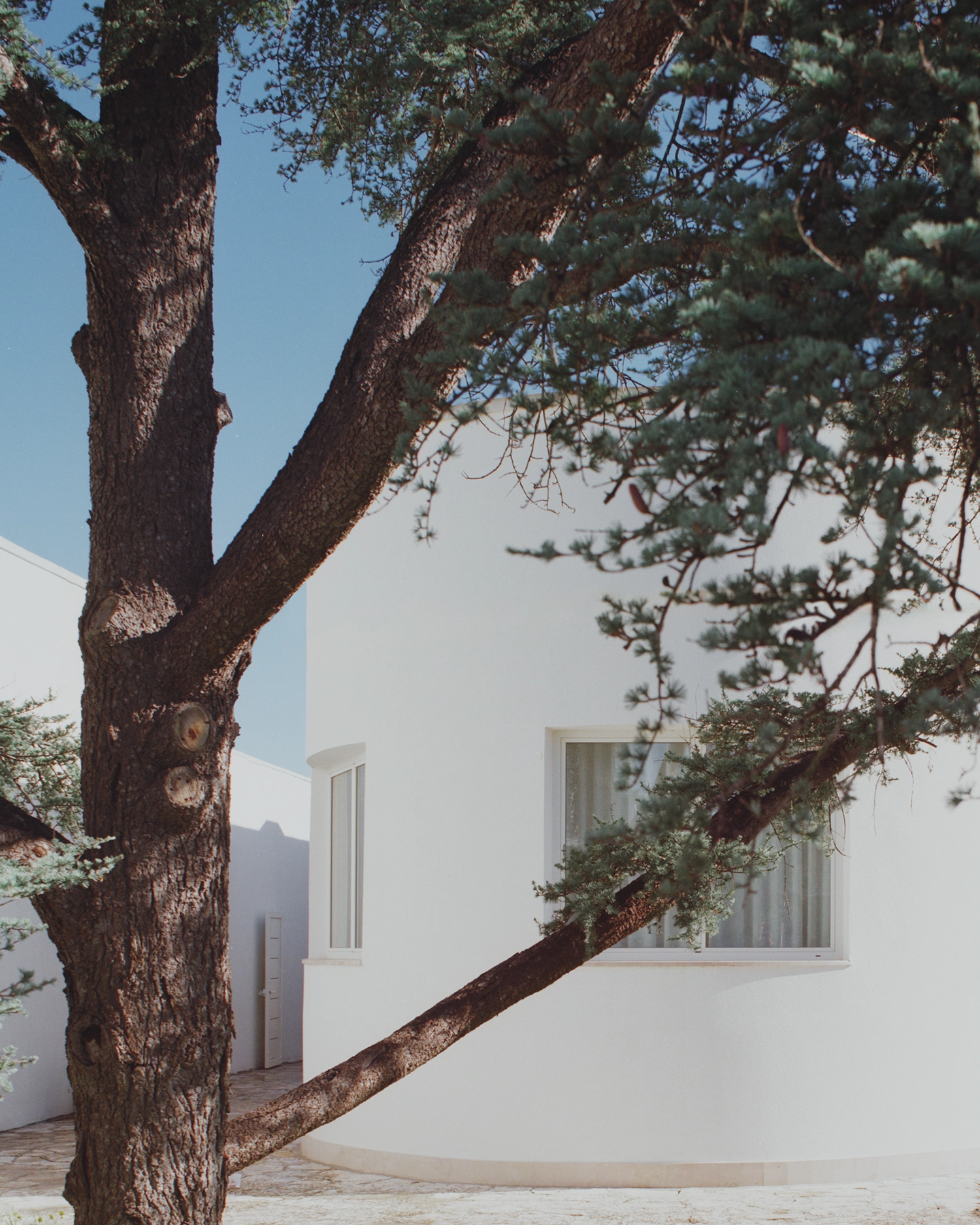
A process of formal simplification defines the exterior transformation, where the architects made the radical choice to remove the original octagonal canopies and heavy overhangs. By shedding these stylistic layers of the past, the building’s core geometry is finally allowed to speak. The result is a striking, essentialist composition where the curved lines of the living area interlock with the sharp rectangular volume of the sleeping quarters, all unified by a seamless white plaster finish that catches the Southern Italian sun.
Material memory acts as the silent protagonist of the interior. The studio recovered and polished the original Rosa del Garda marble flooring, a distinctive feature of the 1970s house that now serves as a warm, sophisticated foundation for the new intervention. This decision creates a bridge between eras, allowing the rose-toned stone to dictate the palette of the renovation while ensuring that the villa’s historical soul remains intact despite its modern evolution.
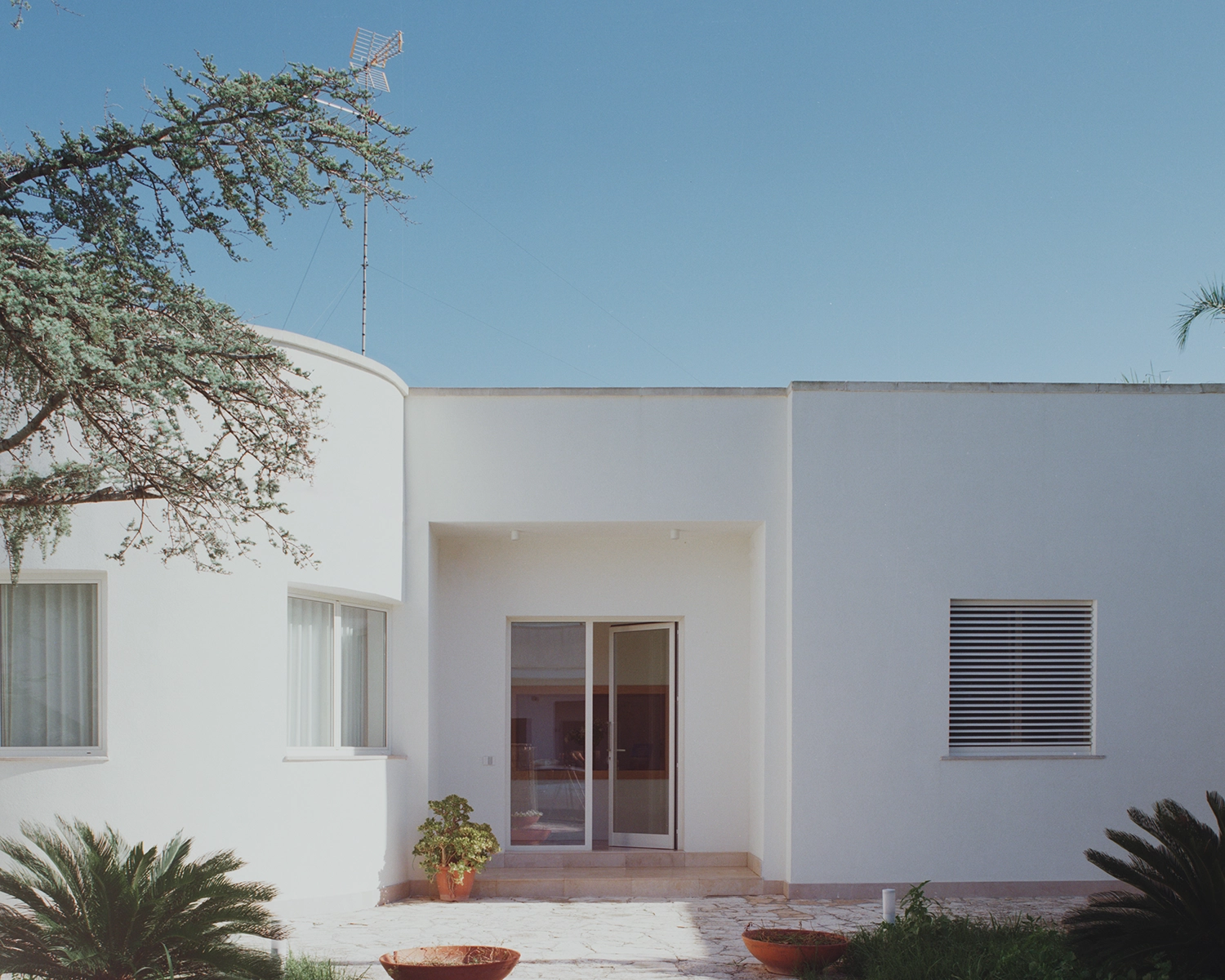
Reconfiguring the domestic flow began with the incorporation of the entrance veranda into the main heated volume. This expansion not only modernized the home’s thermal envelope but allowed for a total spatial redistribution. The once-fragmented layout has been replaced by a logical sequence of rooms tailored to the needs of a young professional couple, turning a series of isolated chambers into a cohesive, breathable environment.
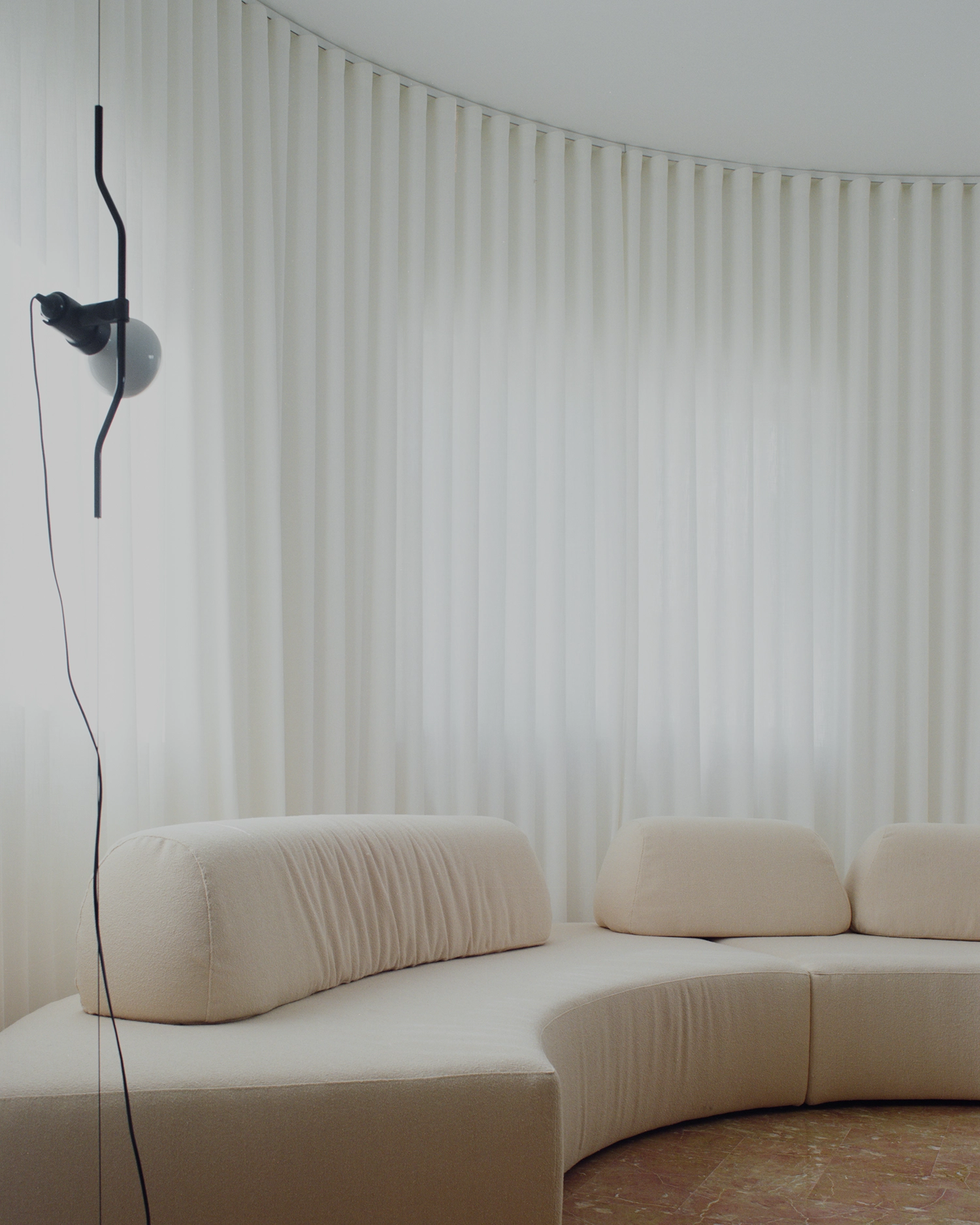
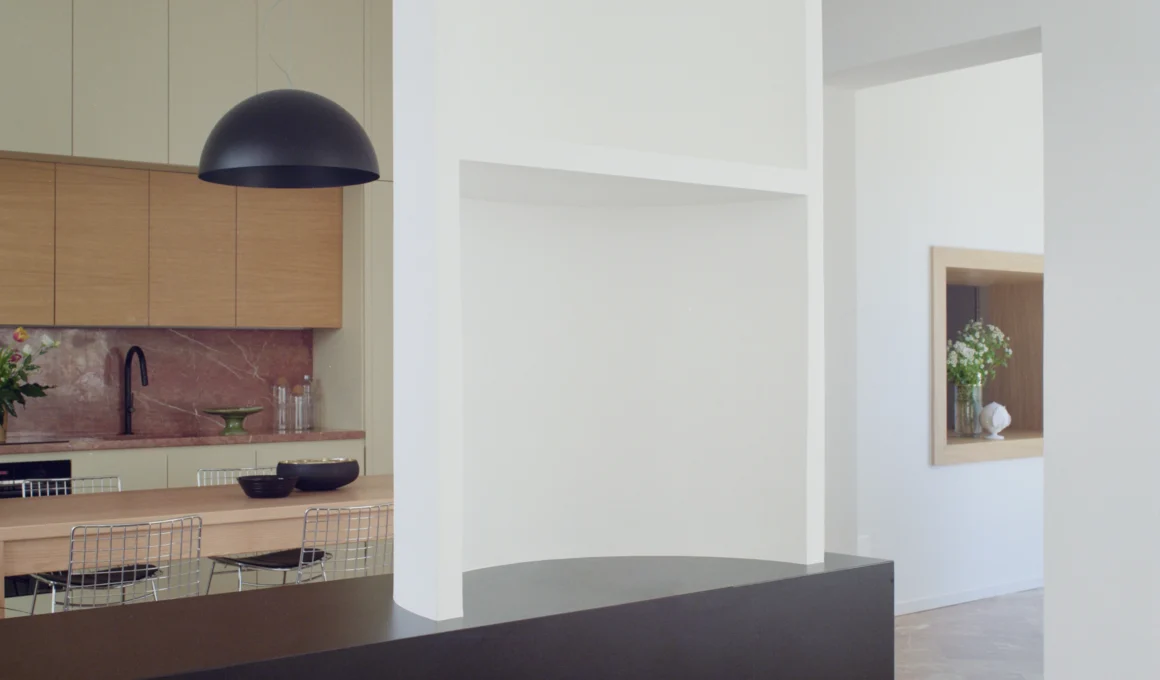
Sculptural organization replaces traditional walls within the living area. The semicircular geometry of the main room is occupied by a custom-designed sofa that follows the architecture’s curve, while the space is anchored by a central fireplace system. Set within a black gres base, a hollow semi-column rises toward the ceiling, functioning as a technical divider that hides the dining area from view without severing the visual connection of the open floor plan.
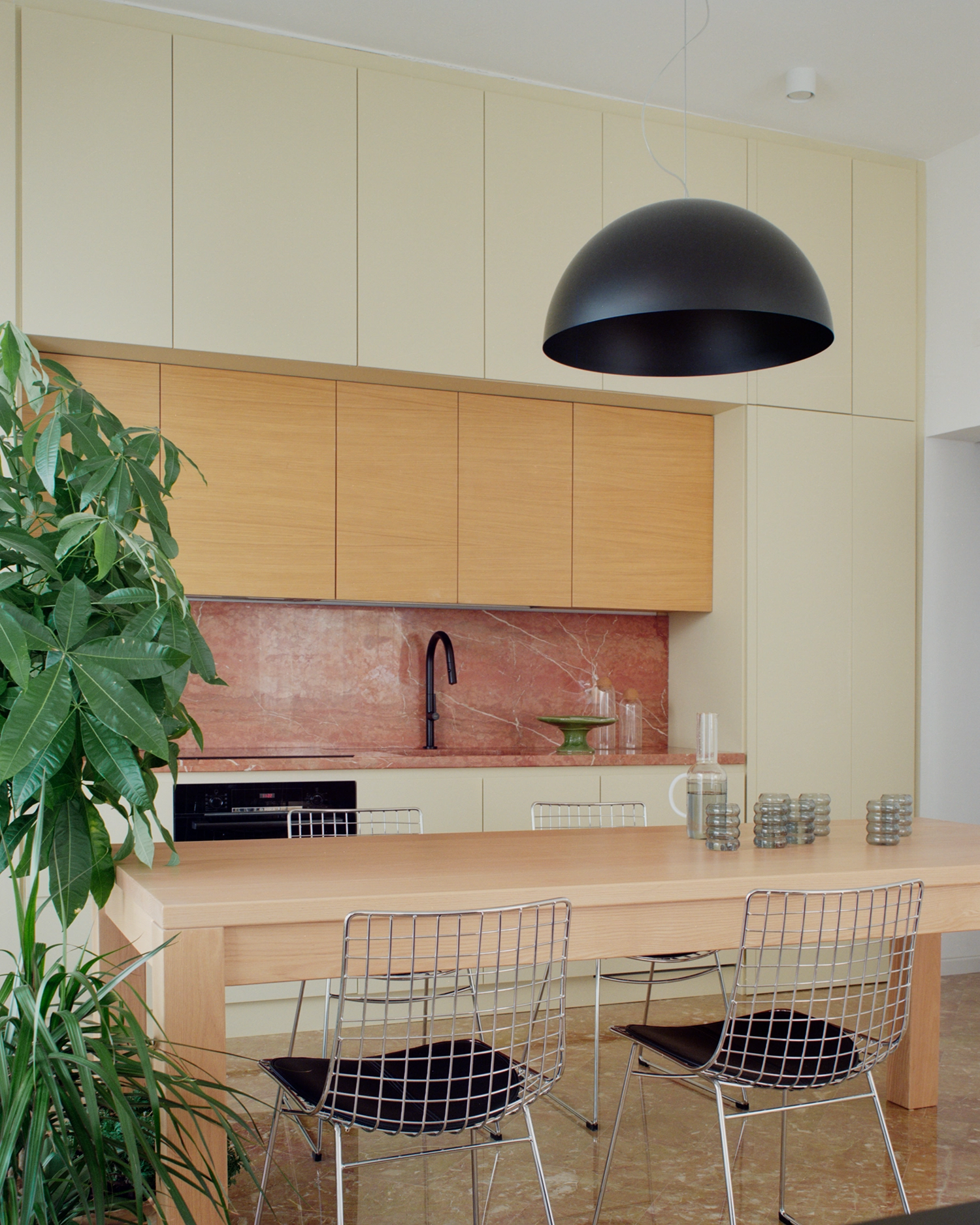
Seamless integration is further explored in the kitchen, designed as a monolithic volume of beige lacquered panels. This “cabinet-wall” effectively masks the entry points to the pantry, a guest bathroom, and the laundry room—the latter carved out of the footprint of the original entrance. By utilizing the same Rosa del Garda marble for the countertops, the architects reinforce a sense of material continuity that avoids the cluttered look of traditional utilitarian spaces.
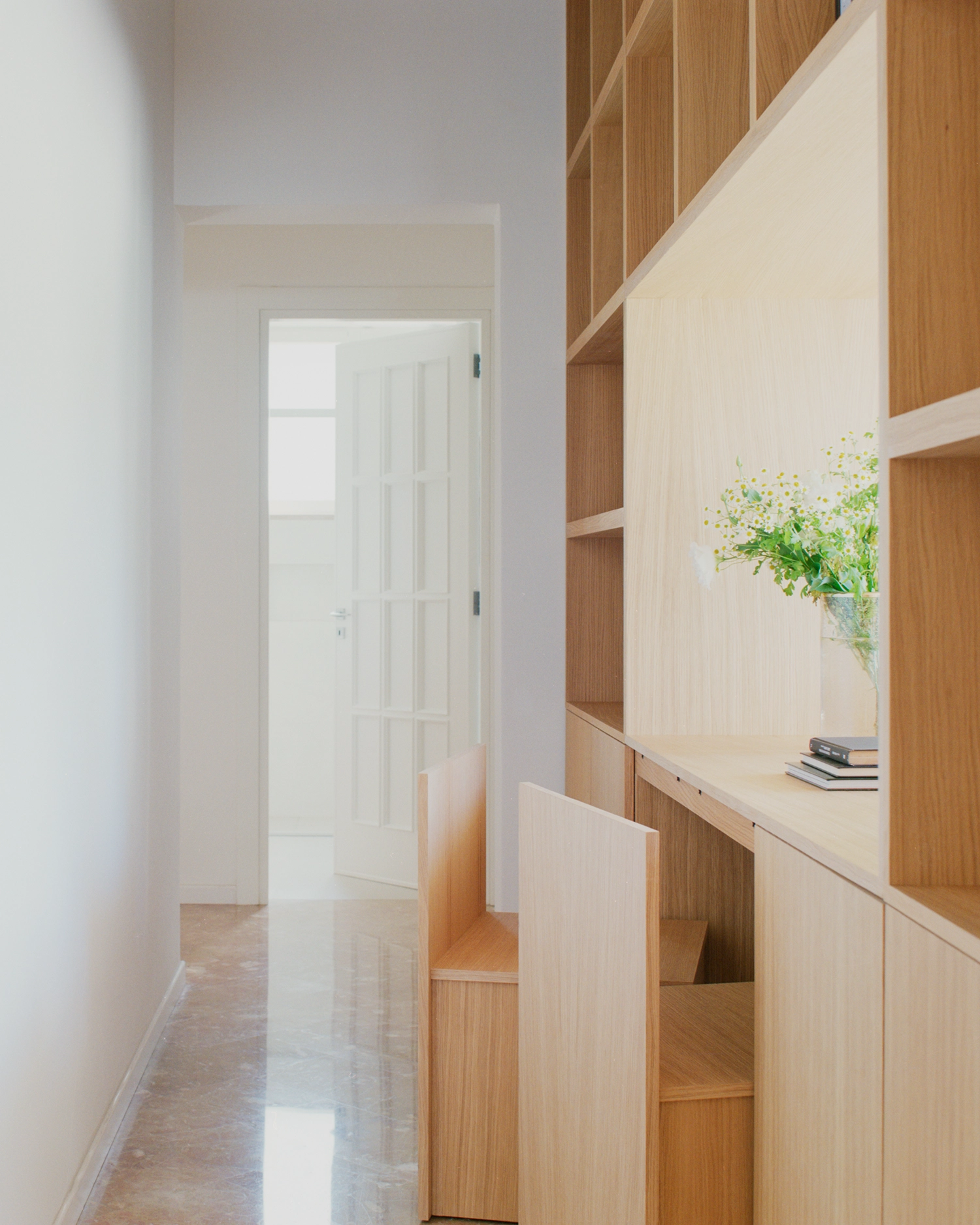
The choreography of natural light plays across the oak carpentry and contemporary furnishings, serving as a primary design tool. In the Salento region, the low-angle, intense sunlight acts as a catalyst, emphasizing the purity of the plastered volumes and creating a high-contrast dialogue between the interior shadows and the bright landscape outside. This atmospheric quality transforms the residence from a static structure into a dynamic sensory experience.
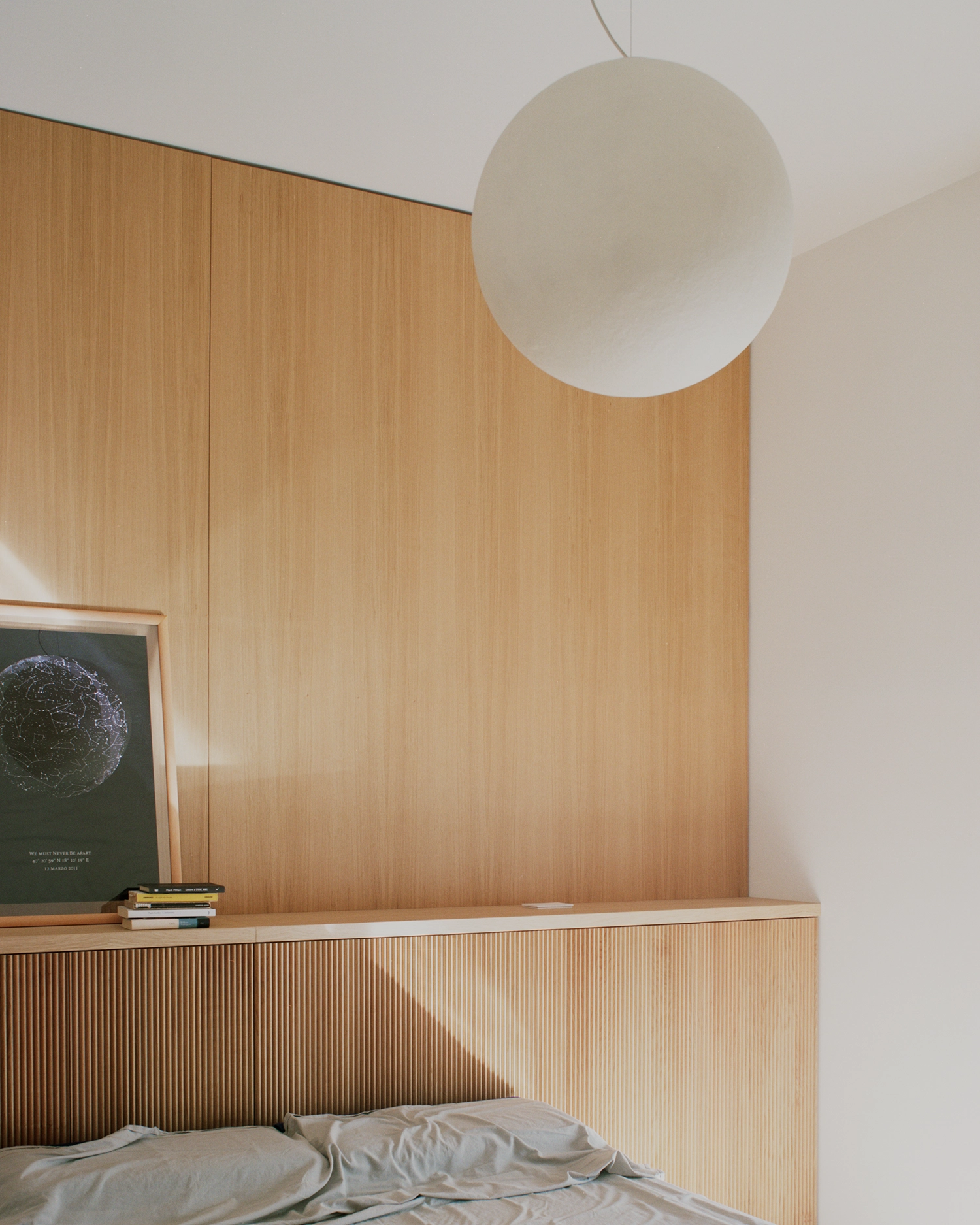
A refined transition leads through a fitted wall to the sleeping area, where the layout was completely reimagined to include a walk-in closet and modernized private suites. This corridor, illuminated by an internal window, ensures that the deep interior of the house never feels disconnected from the external environment. Every contemporary insertion is handled with restraint, ensuring that the focus remains on the quality of space rather than the quantity of ornament.
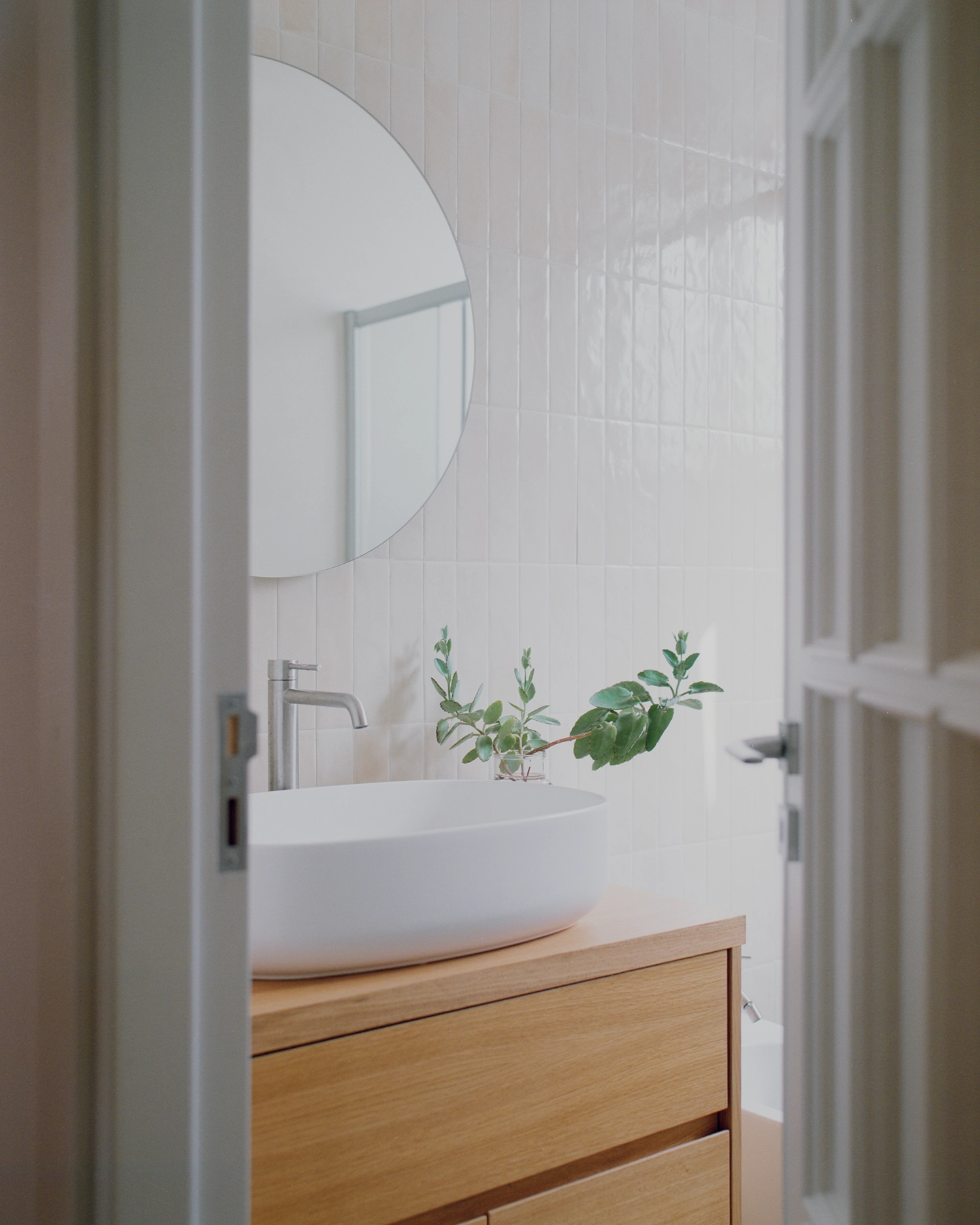
The contemporary Italian renovation is increasingly defined by this ability to synthesize heritage with a clean, analytical lens. Much like the minimalist approach to concrete and rural structures or the strategic replacement of partitions with functional cabinetry in urban apartments, Lèvanzo reflects a sophisticated trend in adaptive reuse. This method of “design by subtraction” offers a compelling blueprint for updating Italy’s mid-century housing stock without losing the tactile richness of the Mediterranean landscape.