



Located in the agricultural heart of Gazzo, Italy, Casa GA by Archiplanstudio reimagines the vernacular of the Po Valley through a minimalist lens, transforming the raw materiality of prefabricated concrete into a sophisticated domestic landscape.
A dialogue with the Po Valley. The project draws immediate inspiration from the elementary volumes that have historically defined the rural Italian countryside. By utilizing simple Euclidean geometries, the studio pays homage to the traditional barns and agricultural outbuildings of the region, yet strips away any ornamental excess. This approach results in a structure that feels both timeless and strikingly contemporary, anchored to its site by a shared DNA with the surrounding landscape.
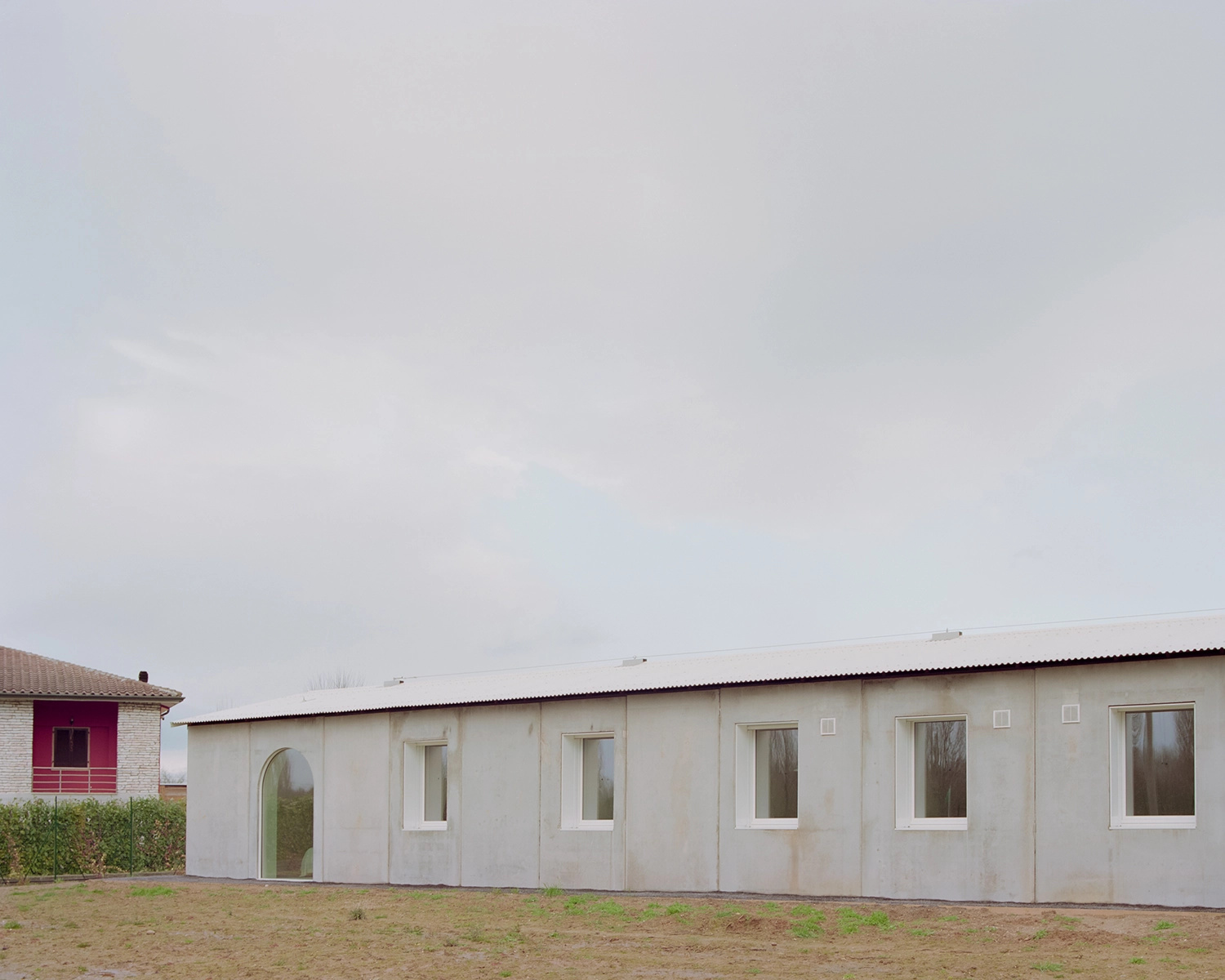
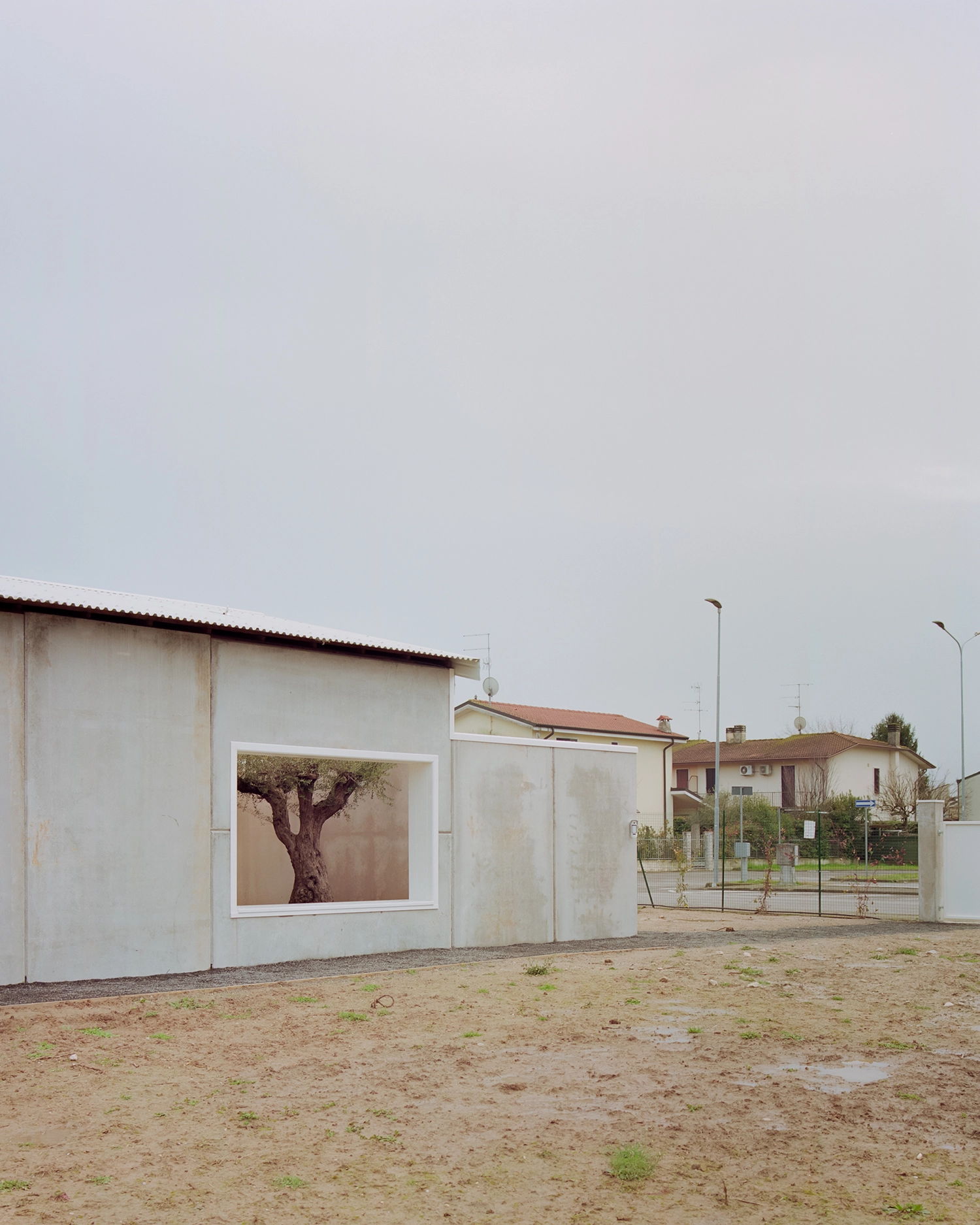
The strength of raw materials. On the exterior, the building presents a rigorous, almost industrial face. The use of prefabricated concrete panels gives the house a sense of permanence and weight, while the white sheet metal roofprovides a clean, sharp silhouette against the often-misty horizon of Northern Italy. This harsh material surface acts as a protective shell, a deliberate boundary that separates the unpredictable elements of the rural environment from the controlled serenity of the internal living spaces.
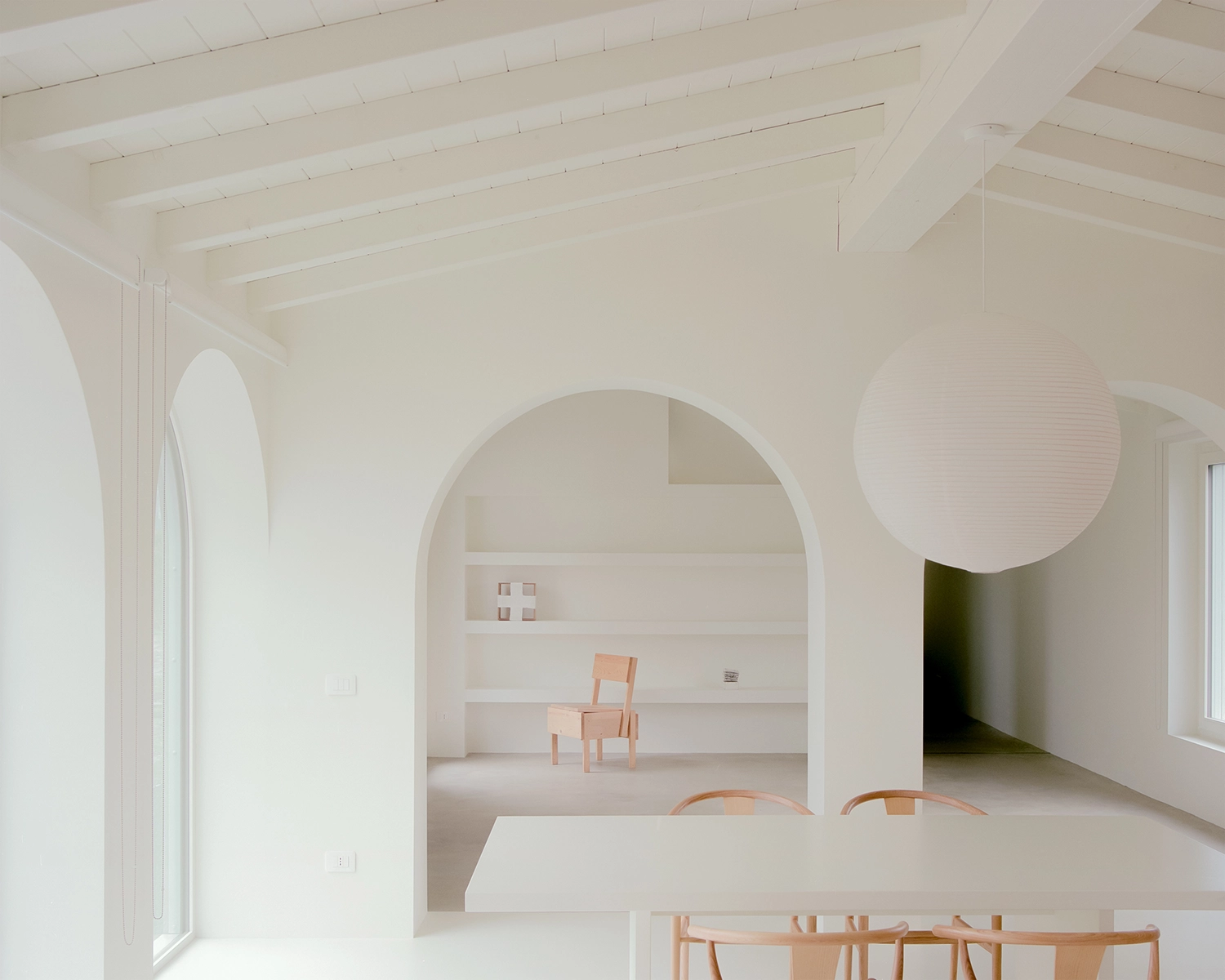
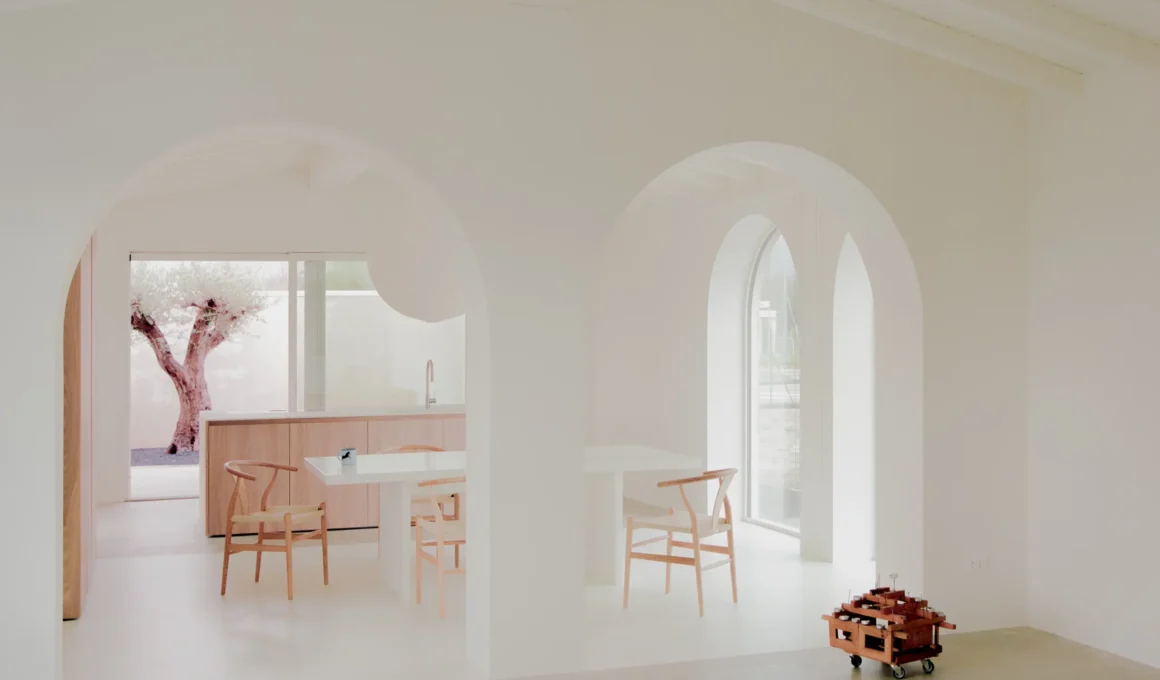
Contrasting internal warmth. Stepping inside, the transition from the rugged exterior to the interior is immediate and profound. The harshness of the concrete gives way to a soft, monochromatic palette where light becomes the primary material. The white-washed wooden beams of the sloping ceiling and the smooth, seamless flooring create a cohesive environment that feels expansive yet deeply grounded. It is a space designed for quiet contemplation, where the architecture recedes to prioritize the human experience.
The geometry of the arch. One of the most distinctive features of the interior is the series of deep, rounded arches that puncture the central load-bearing walls. These are not merely decorative elements; they act as frames for daily life, creating a rhythmic sequence of rooms. By softening the rigid structural grid, these arched thresholds guide movement and sightlines, lending a sense of classical grace to a home built with industrial techniques.
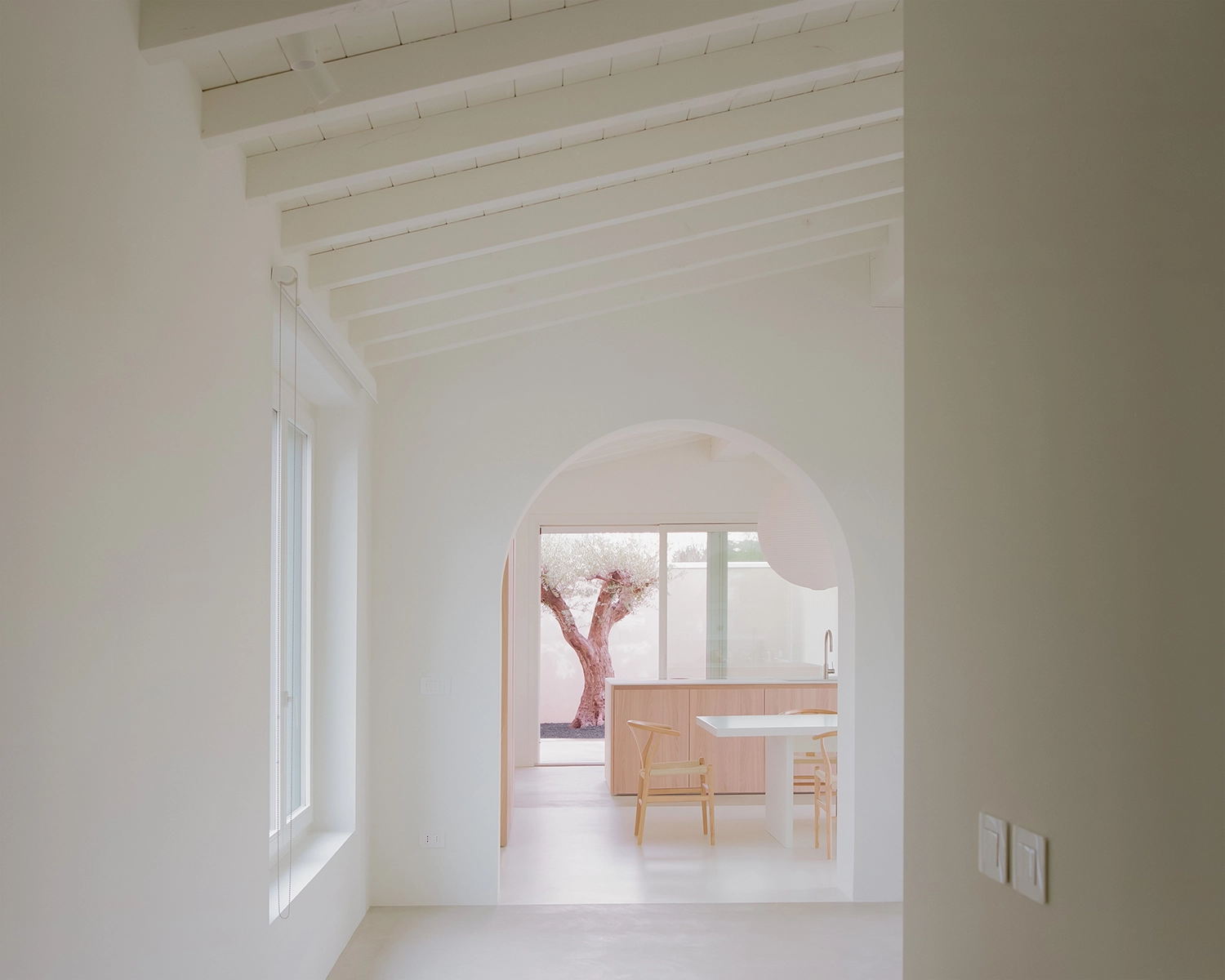
A visual axis of domesticity. The layout is organized along a precise longitudinal axis that serves as both a physical path and a conceptual spine. This corridor connects the most public areas of the house to the private quarters, ensuring a fluid transition between social and solitary moments. By aligning the doorways and openings, the studio creates a “telescopic” effect, allowing the eye to travel the entire length of the building, reinforcing the sense of internal openness.
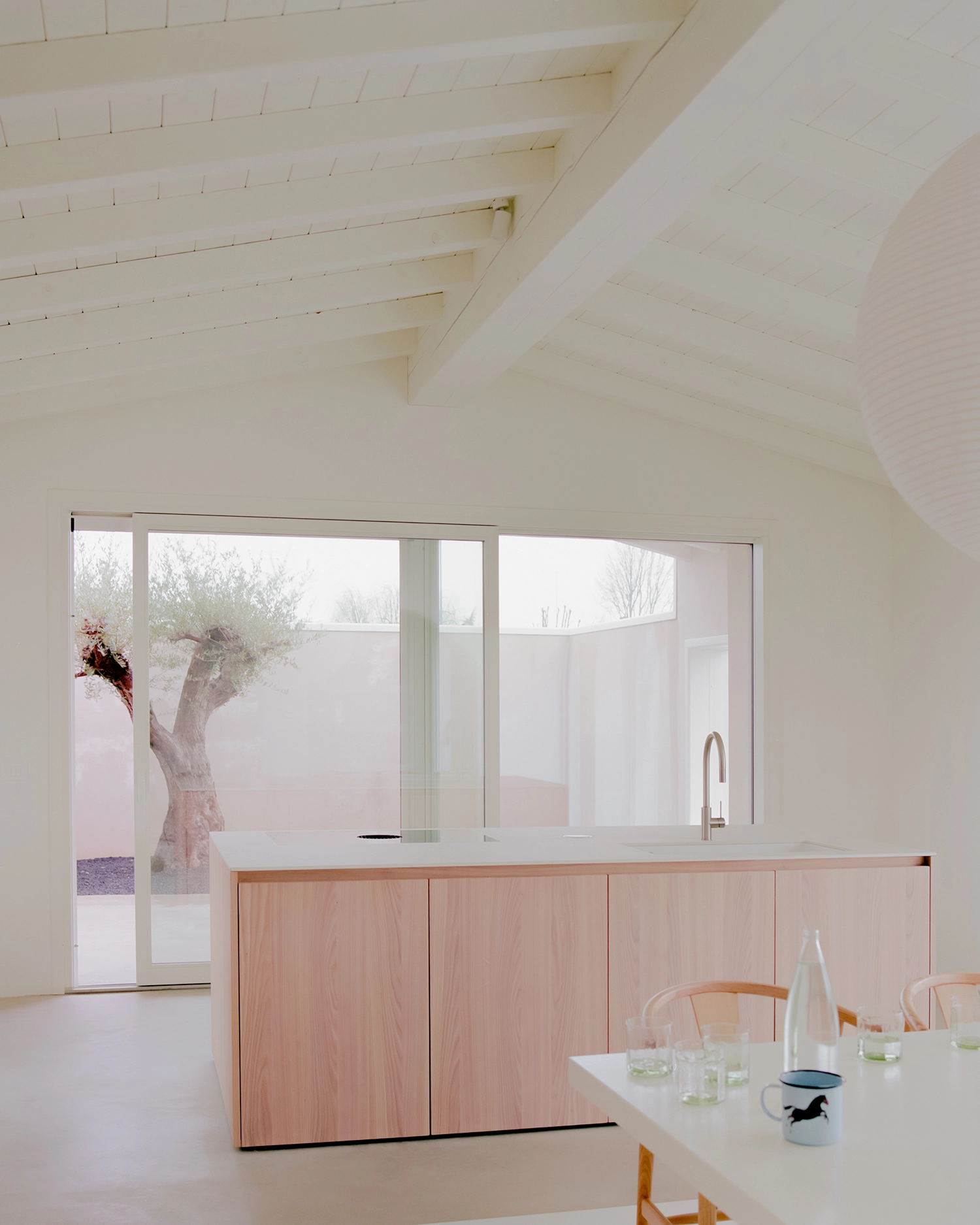
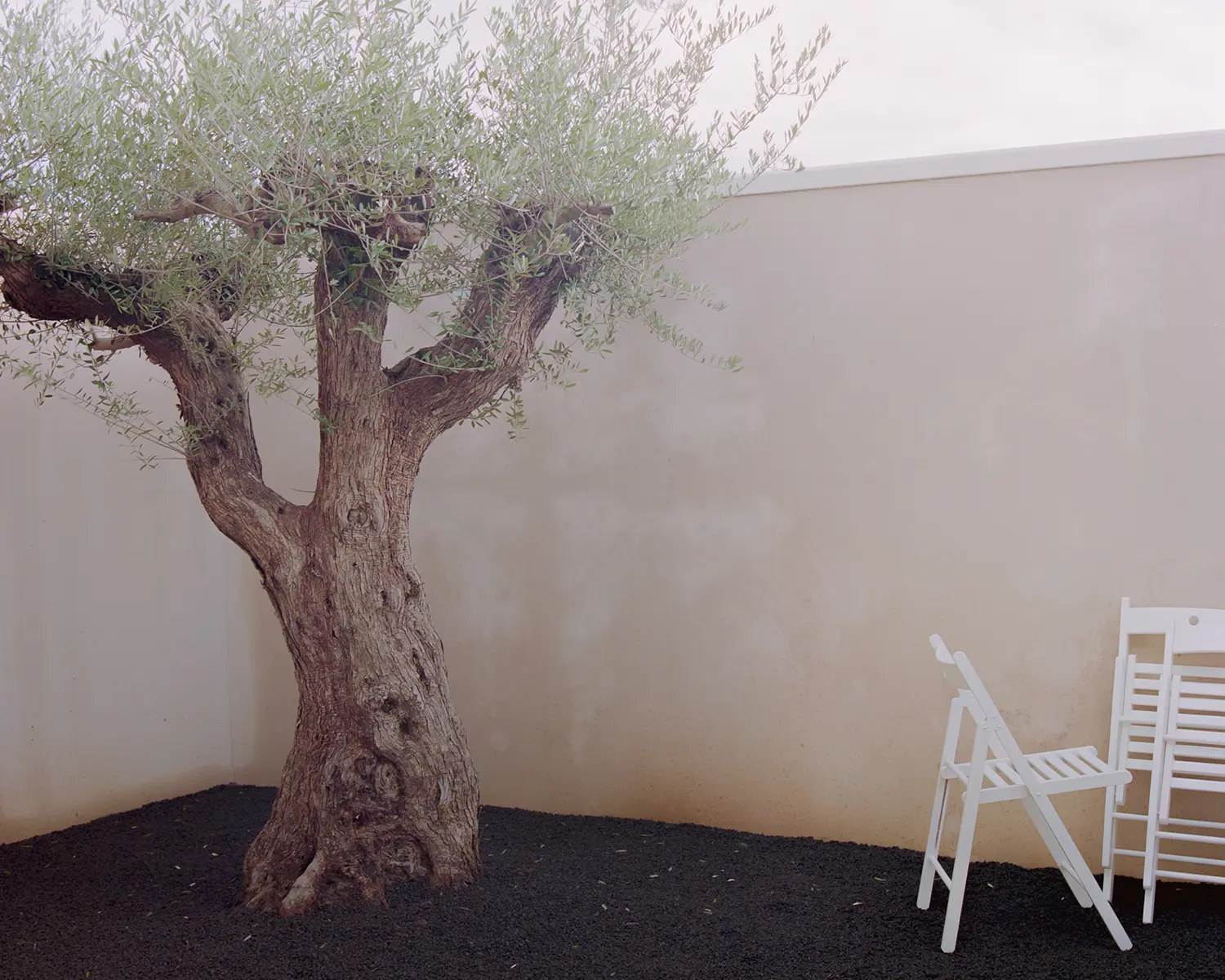
Integrating the natural world. Central to the living experience is the internal patio, an enclosed courtyard that brings a fragment of the landscape into the very core of the home. A single, sculptural tree stands as a focal point, visible through large sliding glass doors. This connection to nature is carefully curated; it is not a panoramic view of the fields, but a controlled, intimate relationship with a specific piece of the outdoors, providing a changing backdrop of light and shadow throughout the seasons.
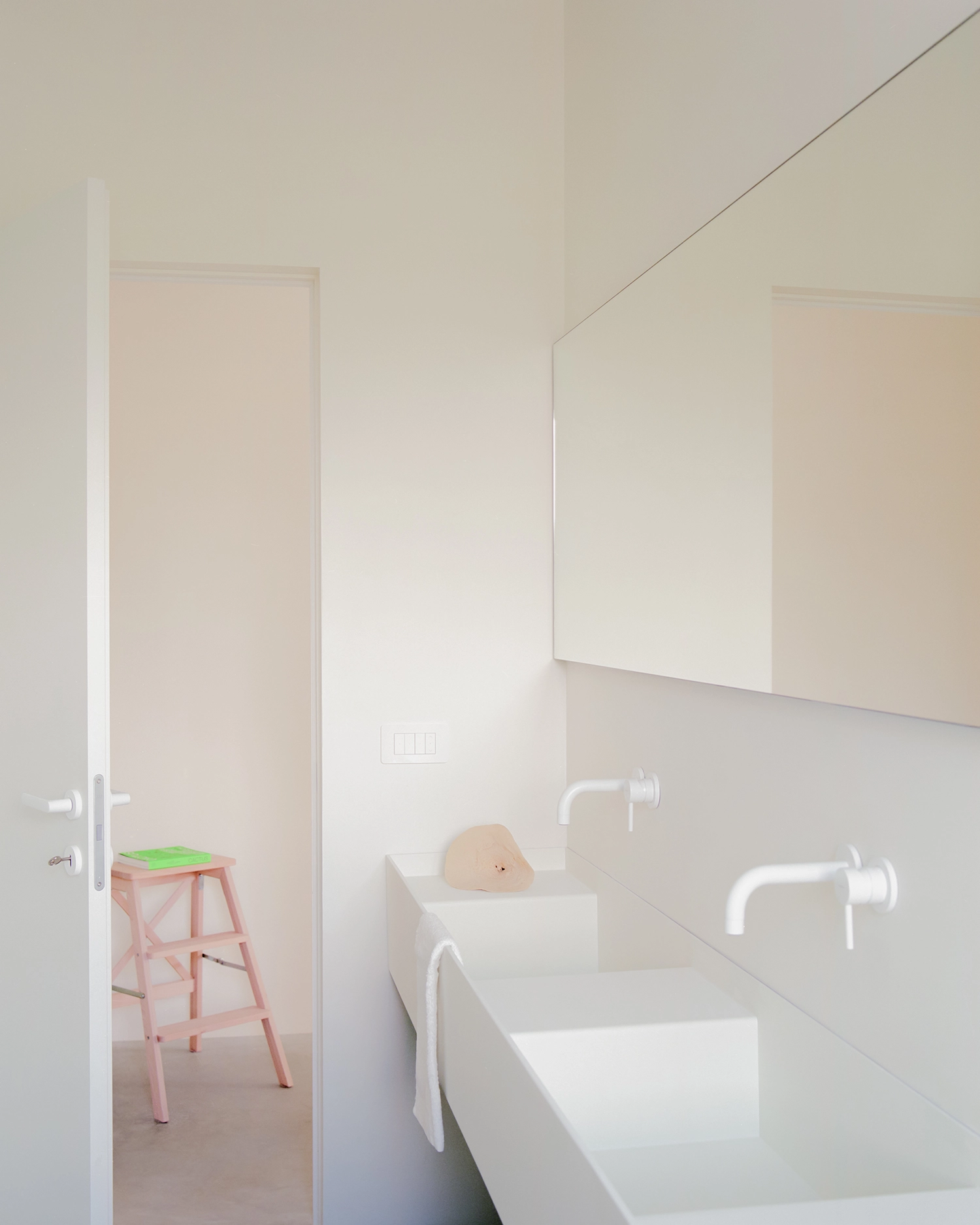
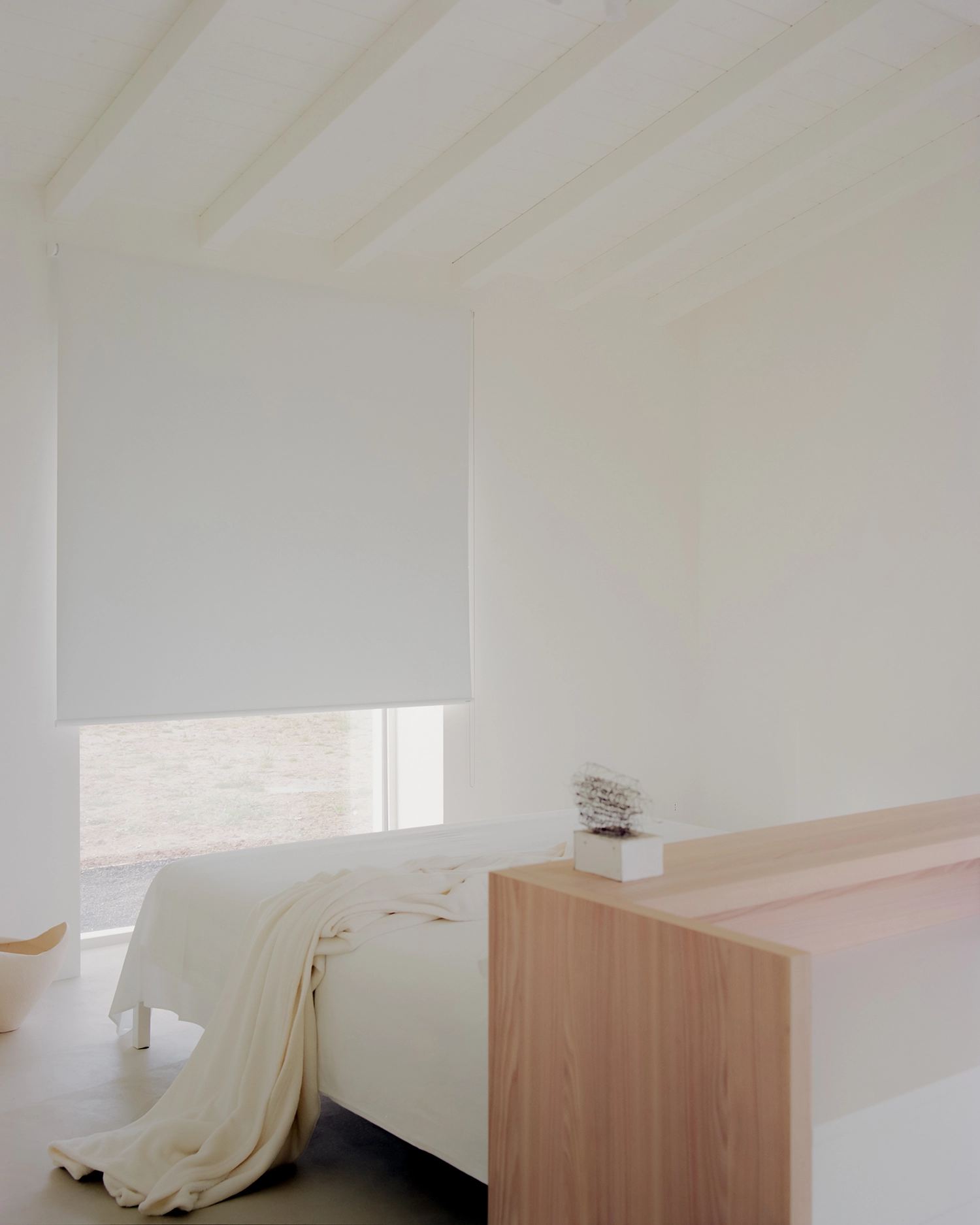
Minimalism as a functional choice. Every element within the home, from the integrated timber cabinetry in the kitchen to the stark, sculptural furniture pieces, has been selected to maintain the visual purity of the space. In the bedroom, the placement of a low wooden partition serves to define the sleeping area without interrupting the volume of the room. This commitment to essentialism ensures that the focus remains on the interplay of light and the tactile quality of the surfaces.
A new Northern Italian vernacular. This architectural approach resonates with a broader movement currently shaping the Milanese urban fabric, where the dialogue between historical archetypes and contemporary materials is being constantly redefined. In the M50 micro-apartment by Atelierzero, for instance, we see a similar obsession with materiality, where a restricted palette is used to expand the perceived volume of a compact space. This same spirit of functional purity is echoed in the San Cristoforo Ciclofficina by Ortus, which utilizes prefabricated elements to create a civic landmark that, much like Casa GA, finds beauty in the honest expression of its structural components.
Refining the essence of home. Even within the more traditional confines of the Dubi Apartment, the reimagining of Milanese tradition through layered, clean lines demonstrates a shared commitment to an architecture of subtraction. By stripping away the superfluous, ARrchiplanstudio and their contemporaries are crafting a visual language where the weight of concrete and the lightness of a single arched opening tell a story of both endurance and grace. The result is a structure that honors its rural roots while establishing a sophisticated benchmark for contemporary living.