



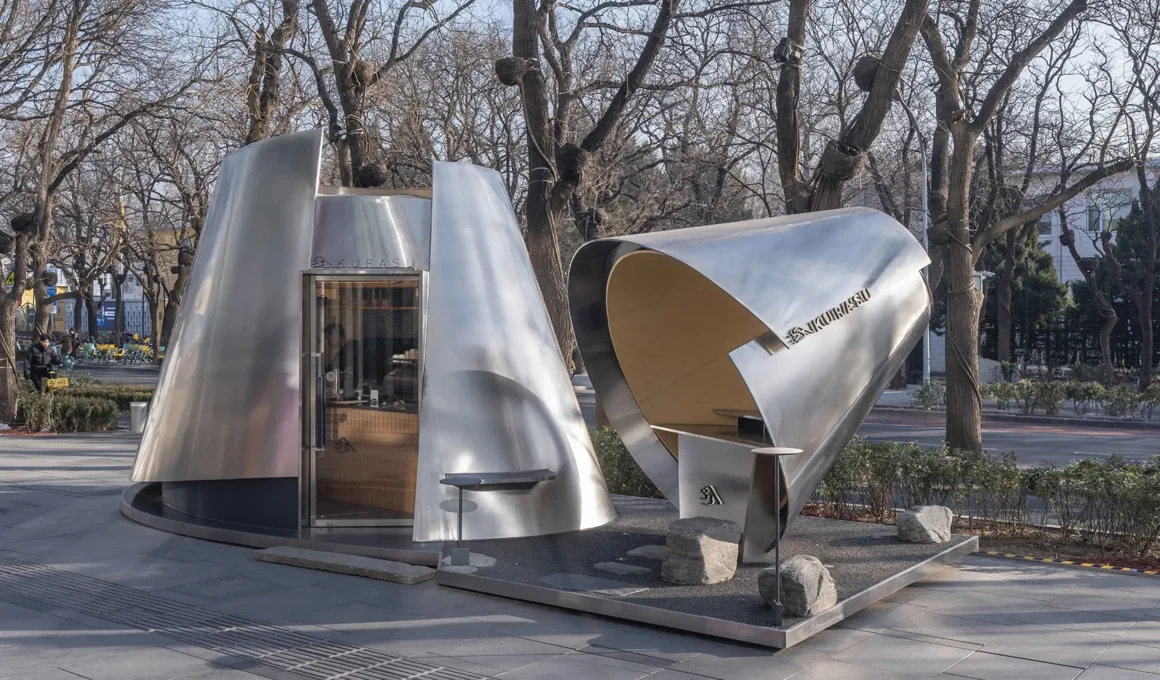
Atelier L has installed a temporary coffee pavilion at Taikoo Li Sanlitun in Beijing, utilizing two interconnected volumes that translate the geometric precision of a pour-over dripper into a lightweight architectural language inspired by origami.
The conceptual vision reinterprets the ritual of brewing into a physical form, where the geometry of a coffee dripper is scaled up to create a functional environment. By dividing the program into two distinct “vessels,” the designers have established a rhythmic dialogue between the brand and the urban fabric. The larger volume serves as a private, inward-facing enclosure for the craft of coffee, while its smaller, tilted counterpart projects outward, acting as a cantilevered interface that invites the city into the experience.
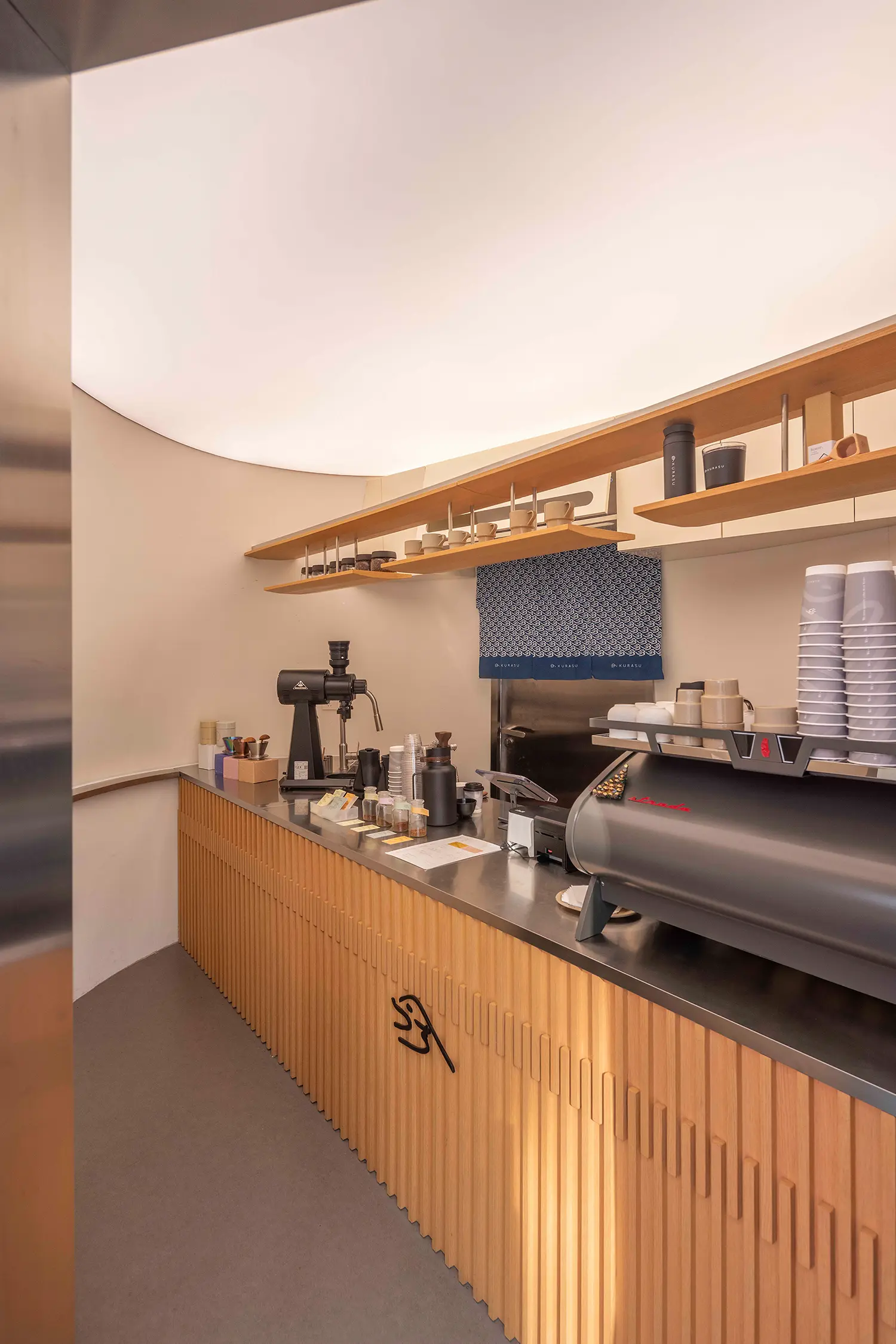
Regarding the technical details, the structure occupies a modest footprint of 8 meters by 3.5 meters, maximizing spatial efficiency through a rigorous linear layout. The “inverted vessel” form of the main structure provides a natural acoustic and visual buffer, shielding the interior from the surrounding Beijing bustle. To optimize the workflow, the interior walls tilt at varying angles: a slight lean in the service area grants the baristas more movement, while a deeper curve on the customer side expands the perceptual volume, making the compact interior feel surprisingly airy.
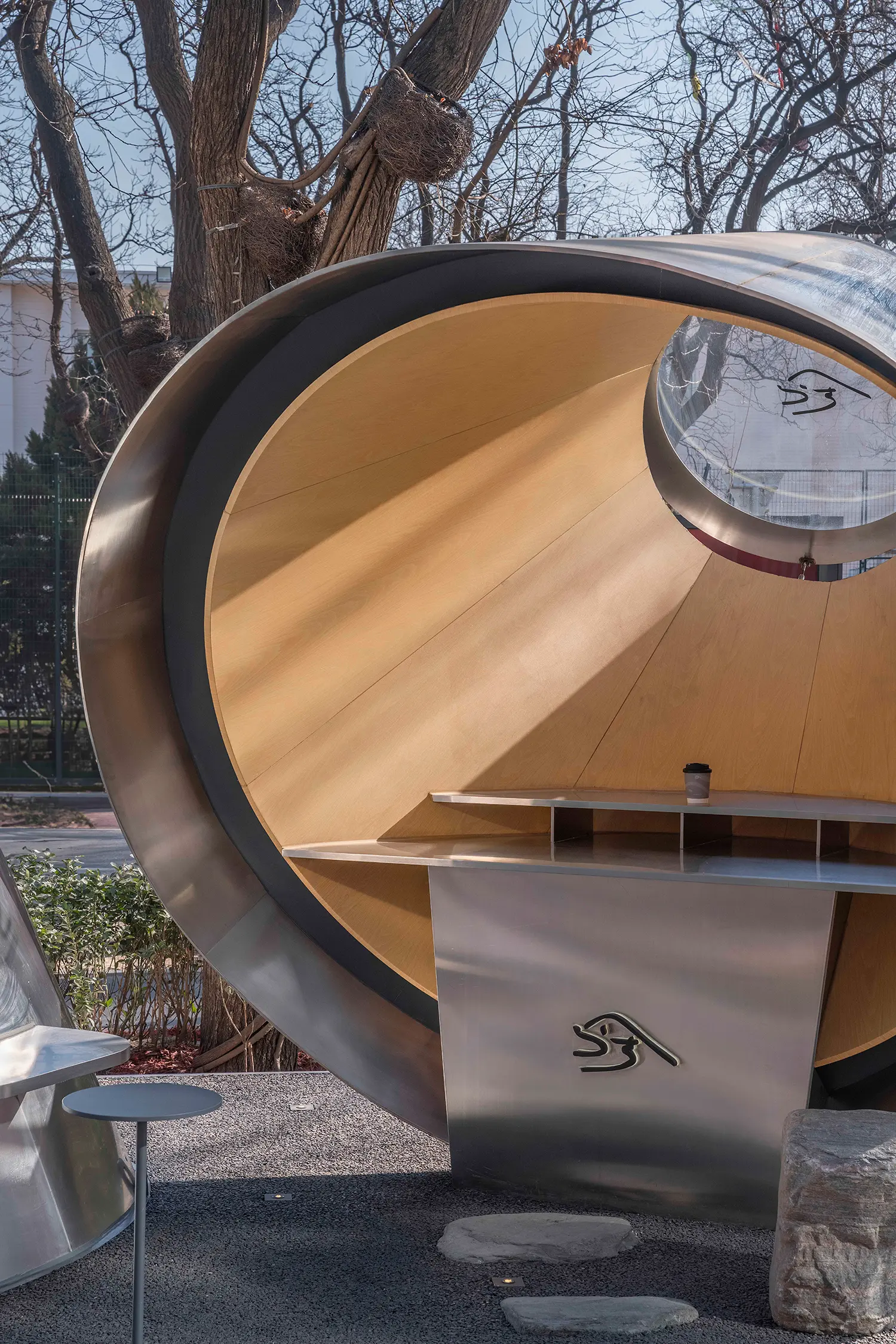
A multisensory experience draws inspiration from the intimate atmosphere of a Japanese izakaya, where the space prioritizes a close-knit connection between the maker and the guest. The subtle folds and curves of the walls soften the ambient light, creating a focused environment where the aroma and sound of brewing take center stage. An operable glass roof allows the space to breathe, turning the guest’s gaze toward the sky and the shifting shadows of the trees, ensuring the interior remains attuned to the seasonal rhythms of the city.
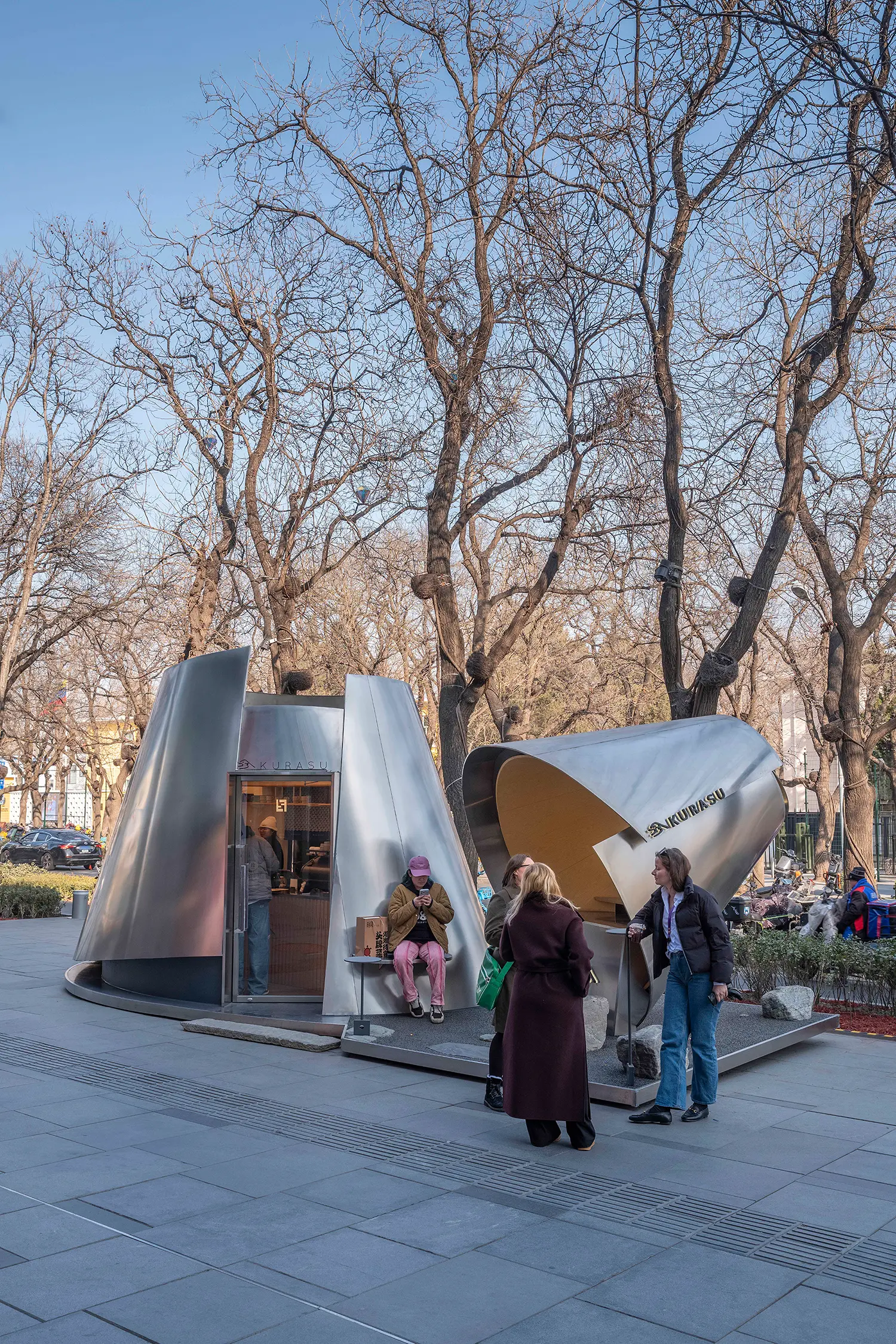
The contextual impact is felt through the smaller volume, which functions as a micro urban gallery, providing a moment of pause within the high-traffic environment of Sanlitun. Its cantilevered form doubles as an outdoor display, allowing the pavilion to contribute back to the public realm rather than merely occupying it. This gesture transforms the pop-up into a social landmark, offering a place for passersby to rest and observe the intersection of craft and city life.
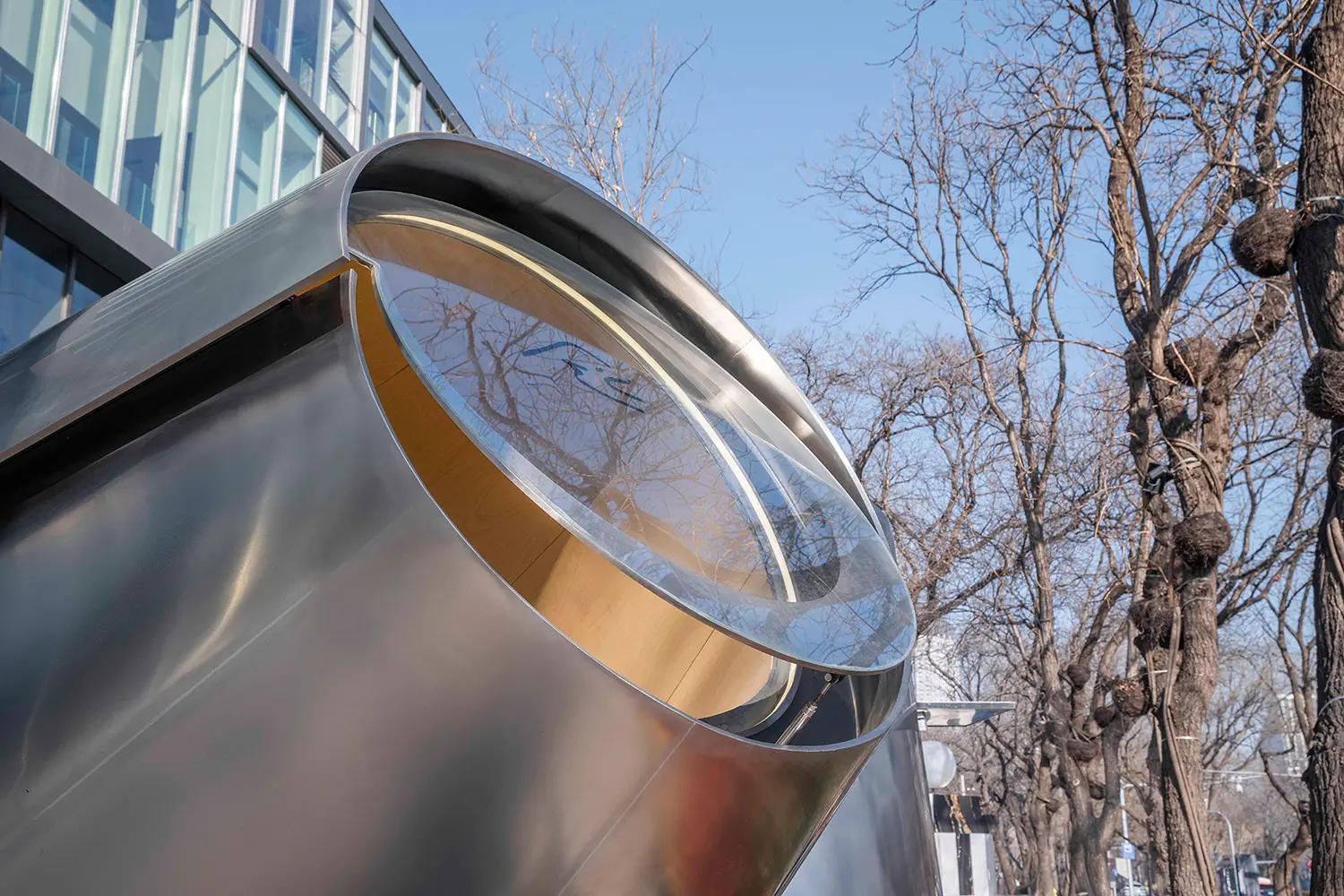
On materiality and craft, the palette emphasizes a balance between industrial durability and artisanal warmth. Brushed stainless steel and wood-grain aluminum are used to create a cool exterior facade that reflects the urban lighting, while beige textured finishes provide a tactile, grounded feeling within. These choices reflect a ritual sensibility, utilizing prefabricated components to ensure a high level of precision and construction efficiency for a temporary installation.
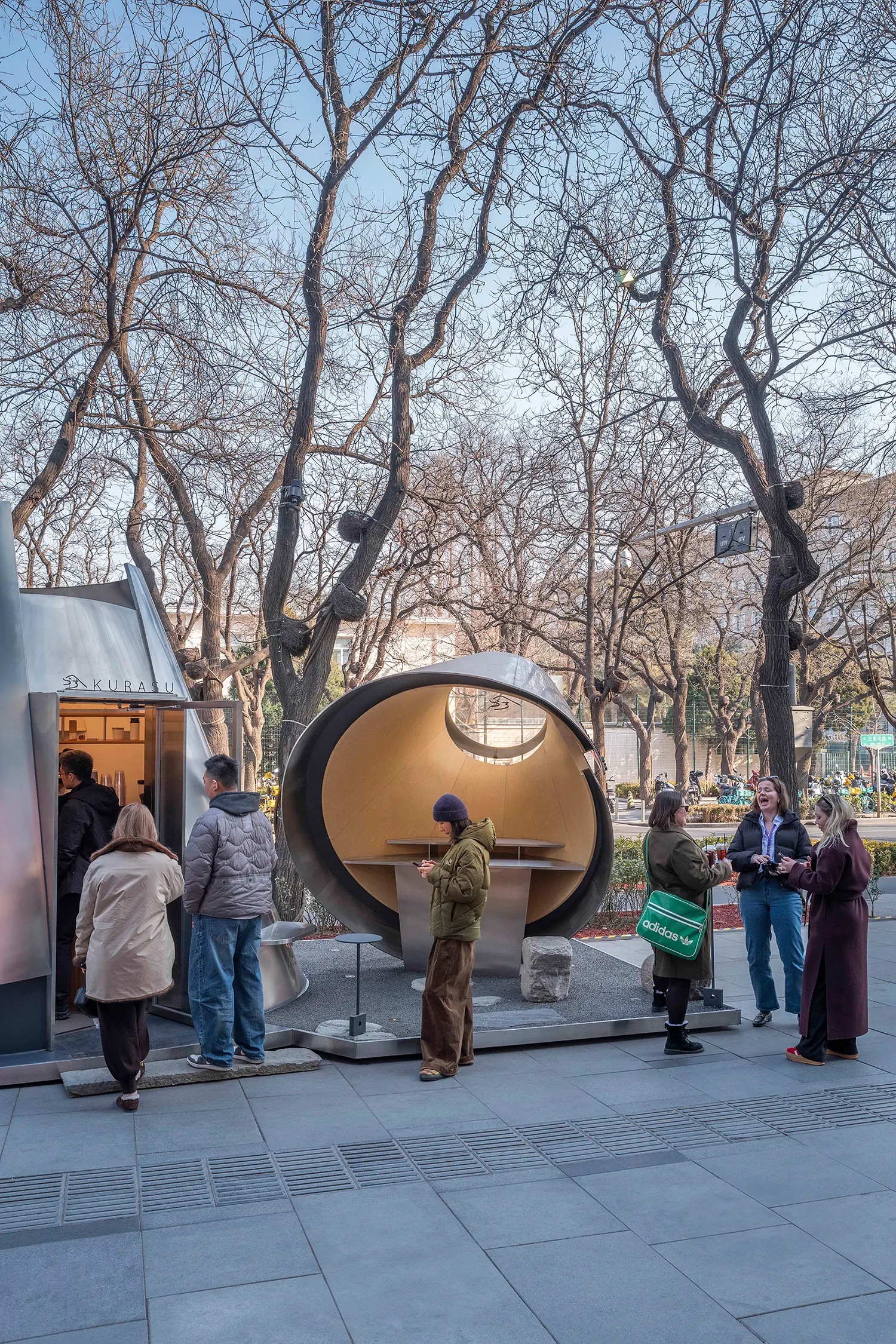
In terms of structural lightness, a steel base anchors the two volumes, yet its corners are slightly lifted to maintain the illusion of paper-thin lightness. This base sits atop a meticulously composed landscape of dark gravel and natural stone slabs. This courtyard-like setting acts as a threshold, grounding the structure and defining a clear transition from the hectic street to the curated stillness of the interior.
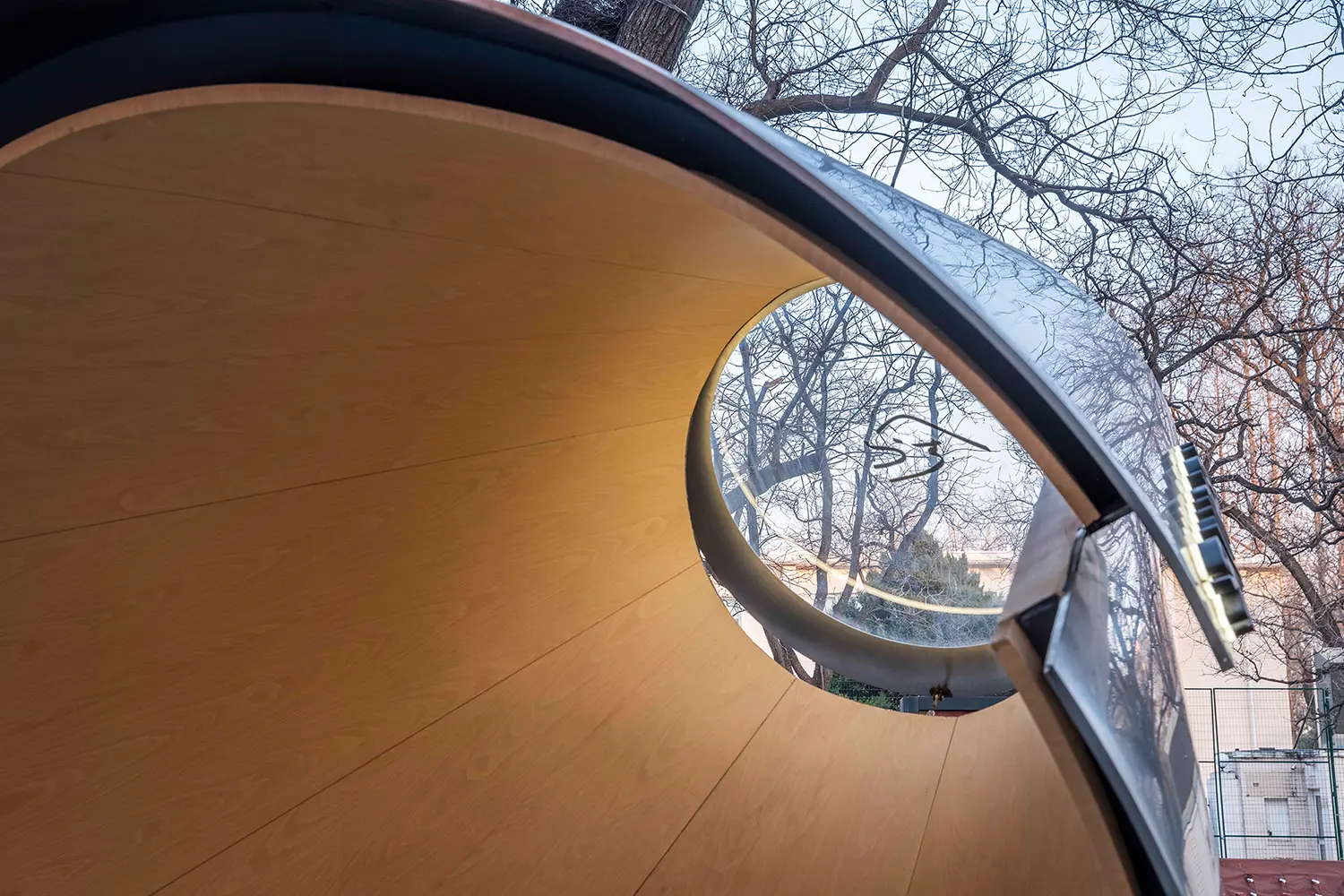
An atmospheric shift occurs as the pavilion acts as a seasonal chameleon. In winter, the frosted stainless steel skin captures the shifting colors of the street, while the interior light infuses the space with a quiet warmth. The interaction between the textured surfaces and the diffused lighting creates a glow that highlights the honest expression of the materials. It is a space that rewards the curious observer, offering a journey that extends far beyond the simple act of purchasing a drink.
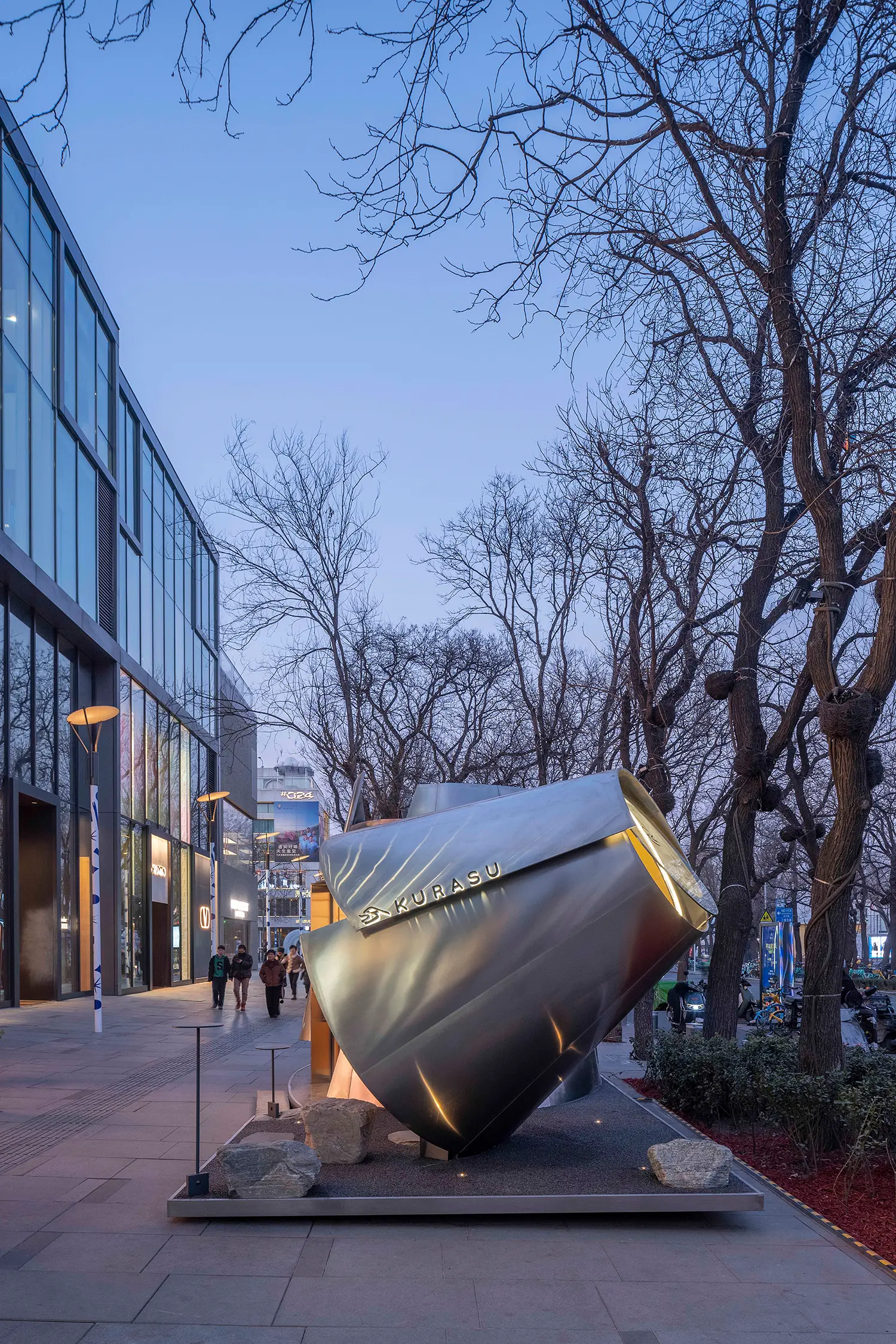
The narrative conclusion by Atelier L demonstrates that even within a strict height and footprint limit, a temporary structure can offer a deep experience. By focusing on the intersection of geometry and ritual, the project provides a sophisticated template for modern cafes that seek to engage with their surroundings. This installation is a quiet reminder that the most impactful spaces are often those that find a way to harmonize technical requirements with the human need for a meaningful, sensory pause.