


In 2025, the global hospitality landscape underwent a profound transformation, moving beyond the concept of “accommodation” toward the creation of immersive cultural destinations. The year was defined by a dual approach: on one hand, the rise of monolithic architecture integrated into extreme natural landscapes; on the other, a sophisticated revival of historic heritage through bold, contemporary lenses. These hotels are no longer just places to stay; they are architectural manifestos that prioritize emotional resonance and site-specific storytelling.
From the stainless-steel orbs of the Red Sea to the quiet luxury of renovated Apulian palaces, the selection for 2025 highlights a shift toward material honesty and high-concept interiors. Designers have moved away from generic luxury, opting instead for bespoke environments that celebrate local craftsmanship and avant-garde technology. Here are the ten projects that pushed the boundaries of hospitality design this year.
Celadon Suite at Mandarin Oriental London by Uchronia
Uchronia and Pantone Plunge Mandarin Oriental London into an Aquatic Dreamscape of Celadon Green
Uchronia has introduced a vibrant, chromatic narrative to the Mandarin Oriental London with the Celadon Suite. Moving away from traditional hotel palettes, the design studio utilized a singular Pantone shade to create a monochromatic sanctuary that feels both historic and contemporary. It is a masterful study in how color theory can be used to redefine the “luxury suite” typology, turning a classic interior into a bold piece of modern art.
The suite is defined by custom-made furniture and undulating forms that soften the rigid geometry of the historic building. By focusing on textural variety—from lacquered surfaces to plush fabrics—Uchronia ensures that the single-color theme never feels flat. This project represents the trend of bold escapism, where the guest room becomes a curated gallery of contemporary craftsmanship and French flair.
Desert Rock by Oppenheim Architecture
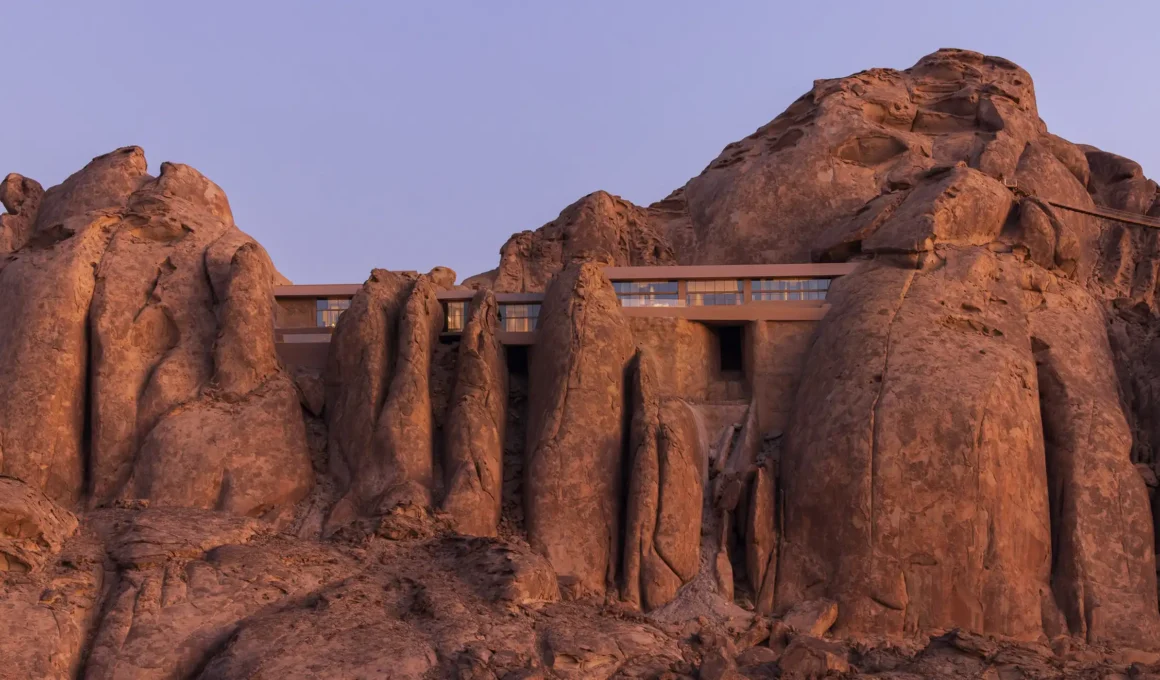
Earth-Rising Elegance: Oppenheim Architecture’s Desert Rock Redefines Luxury in the Saudi Wilderness
Desert Rock is perhaps the most significant example of excavated architecture in 2025. Oppenheim Architecture literally carved the resort into the ancient granite mountains of Saudi Arabia, creating a seamless dialogue between the built environment and the wilderness. The project challenges the traditional “object-building” approach, opting instead for a subterranean luxury that prioritizes environmental preservation and panoramic stillness.
The interiors utilize natural stone and earth-toned materials to mirror the surrounding landscape, ensuring that the human intervention remains secondary to the mountain’s majesty. This “earth-rising” elegance demonstrates how regenerative tourism can be achieved through site-specific engineering and a deep respect for the geological history of the site.
Shebara Resort by Killa Design
Shebara Resort: Killa Design’s Stainless Steel Oasis Redefines Eco-Luxury in the Red Sea
On Sheybarah Island, Killa Design has created a futuristic archipelago of stainless-steel eco-villas. These floating “orbs” are designed to reflect the movement of the sea and the sky, acting as mirror installations that disappear into the horizon. It is a pioneering project in sustainable luxury, utilizing modular construction to minimize the impact on the delicate coral reef ecosystem.
Beyond their sci-fi appearance, the villas are powered by a dedicated solar farm, integrating renewable energy into the core of the design. The interior spaces follow a minimalist aesthetic, allowing the panoramic views of the Red Sea to take center stage. Shebara stands as a testament to how avant-garde technology and environmental responsibility can coexist in the future of coastal hospitality.
Vela be Siam Hotel by ASWA
Bangkok’s Vela be Siam Hotel by ASWA Weaves Thai Heritage into Vibrant Contemporary Stay
In the heart of Bangkok, ASWA has designed the Vela be Siam as an exercise in urban porosity. The building’s facade is characterized by rhythmic openings that filter the chaotic city light into soft, controlled glows. This architectural skin not only defines the hotel’s visual identity but also provides a buffer between the guests and the bustling streets, creating a sense of secluded sanctuary within the metropolis.
The interior design focuses on spatial fluidity, utilizing a neutral palette and natural wood to evoke a sense of calm. By prioritizing functional minimalism and clever light-play, ASWA has created a “breathing” hotel that reflects the modern spirit of Bangkok—a city that constantly balances high-energy urbanism with quiet, private retreats.
NOT A HOTEL Minakami Toji by Suppose Design Office
Copper Vessels on the Mountain: Suppose Design Office’s Water-Wrapped Retreat for NOT A HOTEL
Suppose Design Office has reimagined the traditional Japanese onsen experience with the Minakami Toji villa. The structure is defined by its dramatic copper roof and its integration into the mountainous landscape of Gunma. It represents the rise of the “not a hotel“ movement—private villas that function as part-time hospitality hubs—focusing on exclusivity and architectural purity.
The design centers on the ritual of “Toji” (hot spring healing), with a layout that flows toward the central onsen bath. Utilizing raw materials like exposed concrete and dark wood, the architects have created a meditative atmosphere that encourages a deep connection with nature. It is a project that honors Japanese heritage while pushing it toward a new, minimalist future.
Palazzo San Vito by Valari Studio
Palazzo San Vito: Valari Studio Transforms Crumbling Puglian Heritage into Sanctuary of Quiet Luxury
In Puglia, Valari Studio has executed a delicate historic renovation of Palazzo San Vito, transforming it into a bastion of quiet luxury. The project avoids the clichés of rustic design, opting instead for a sophisticated dialogue between the original limestone vaults and contemporary bespoke interventions. It is a celebration of “slowness,” where the architecture dictates the pace of the guest’s stay.
The material palette is strictly local, focusing on pietra leccese and hand-applied plasters that enhance the natural light of the Mediterranean. By integrating modern furniture into the centuries-old rooms, the architects have created a space that feels timeless yet current. Palazzo San Vito is a masterclass in heritage preservation for the 2025 traveler.
Kimpton Los Monteros by El Equipo Creativo
Kimpton Los Monteros Hotel Reimagines Mediterranean Luxury with EL EQUIPO CREATIVO’s Vision
El Equipo Creativo has breathed new life into the legendary Los Monteros in Marbella through a bold redesign that celebrates the spirit of the Costa del Sol. The project moves away from the stuffy luxury of the past, introducing a vibrant materiality inspired by the surrounding landscape—from the terracotta of the earth to the azure of the sea. It is a joyful reimagining of the resort lifestyle.
The interiors feature custom-made ceramics and rhythmic patterns that pay homage to Spanish artisanal traditions. The layout encourages social interaction, with fluid transitions between the lush gardens and the eclectic bar areas. This redesign demonstrates how a historic property can be modernized through narrative-driven design without losing its iconic soul.
Capri Suites at Jumeirah Capri Palace by Patricia Urquiola
Patricia Urquiola Designs Five New Suites ‘Between Sea and Sky’ at Jumeirah Capri Palace
Patricia Urquiola has brought her signature eclectic elegance to the Capri Palace Jumeirah. The new suites are a tribute to the island’s light and sea, utilizing a curated selection of textures and forms that evoke the Mediterranean summer. Urquiola’s work here is a lesson in soft luxury, where every piece of furniture feels like a bespoke sculpture designed for comfort.
The design utilizes high-end materials like iridescent glass, handmade tiles, and soft linens to create a layered, sensory experience. By focusing on transparency and reflection, the suites feel like an extension of the Capri horizon. It is a project that defines contemporary Italian luxury through a lens of sophisticated femininity and spatial intelligence.
Maison Heler Metz by Philippe Starck
Philippe Starck’s Dreamscape: Maison Heler’s Monolithic Marvel in Metz
Philippe Starck’s Maison Heler in Metz is a surrealist exploration of urban hospitality. The hotel is famously topped by a traditional Alsatian house, creating a “habitable sculpture” that challenges the skyline. This project is a pure architectural provocation, blending Starck’s whimsical storytelling with the industrial history of the French city.
Inside, the design is a collage of historic references and futuristic details, creating a space that feels both nostalgic and avant-garde. The hotel functions as a cultural hub, with social spaces that encourage curiosity and surprise. Maison Heler is the ultimate expression of Starck’s belief that architecture should be a theatrical experience for the guest.
Hotel Ulysses in Baltimore
A Baltimore Rhapsody: Hotel Ulysses Harmonizes History, High Camp, and Literary Whispers
Hotel Ulysses stands out in 2025 as a triumph of maximalist storytelling. Located in Baltimore’s historic Latrobe building, the interior design is a fever dream of Baroque textures, velvet drapery, and saturated colors. It rejects the “beige” trend of modern hospitality, opting instead for a cinematic atmosphere that feels like a journey through different eras and cultures.
The project utilizes ornate detailing and vintage-inspired furniture to create a series of intimate, theatrical rooms. By embracing eclecticism and grit, Hotel Ulysses offers a unique form of “rebel luxury” that honors the city’s quirky identity. It is a reminder that the most memorable hotels are those that dare to have a strong, unapologetic personality.
As we look back at the hospitality landscape of 2025, it is evident that the industry has reached a turning point where architectural integrity is valued as much as service. These ten hotels demonstrate that the modern traveler is no longer seeking a standardized escape, but rather a profound spatial narrative that connects them to the history, geology, or cultural grit of a destination. Whether through the subterranean stillness of Desert Rock or the organic fluidity of Sou Fujimoto’s earth-integrated structures, the common thread is a move toward “slow hospitality”—an approach where the built environment dictates a more conscious, intentional way of inhabiting a space. In 2025, the hotel has evolved into a vital cultural laboratory, proving that the future of luxury lies in the seamless fusion of avant-garde vision and deep-rooted site sensitivity.