

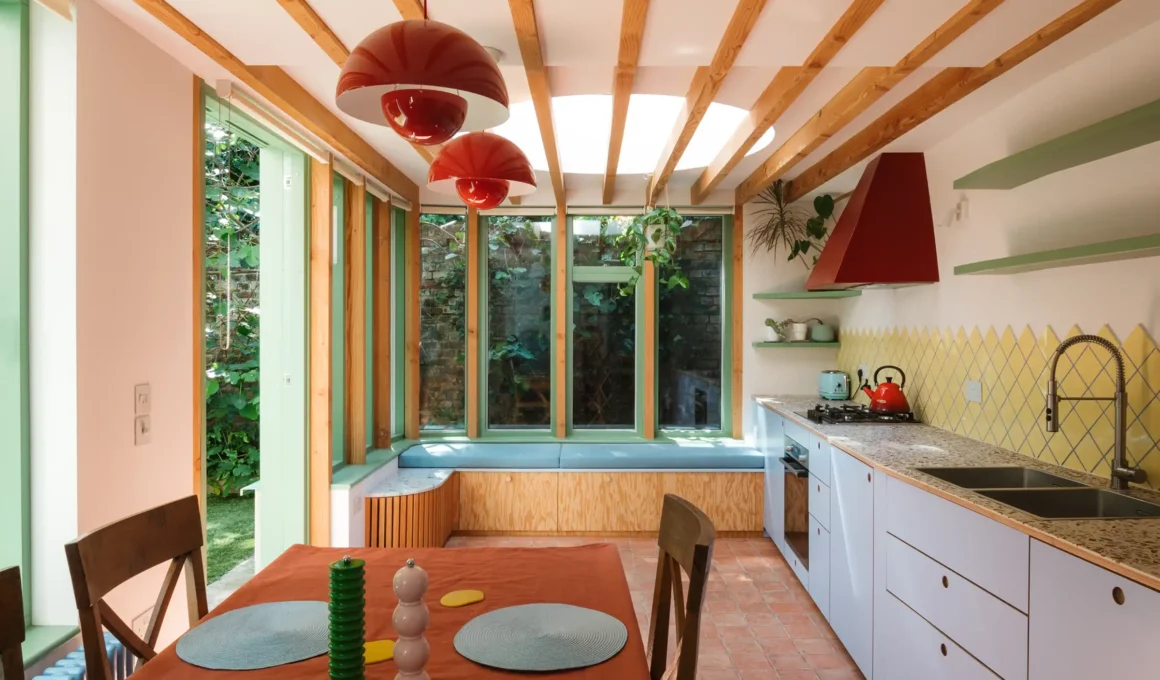
The residential landscape of 2025 has been defined by a deep-seated desire for connection—not just to nature, but to the history of the structures we inhabit. Rather than starting from scratch, the year’s most compelling projects looked backward to move forward. These extensions prove that the most innovative solutions often emerge from the constraints of existing walls, heritage overlays, and tight urban footprints.
This selection highlights a shift toward high-concept domesticity, where the goal isn’t merely to add square footage, but to introduce a new atmosphere. We see a mastery of materials, from the raw honesty of exposed brick and flint to the ethereal lightness of cantilevered glass and perforated metal. Each of these ten projects tells a story of transformation, turning quiet bungalows and historic terraces into vibrant, light-filled sanctuaries that cater to the evolving rhythms of modern life.
In this retrospective, we revisit the extensions that challenged our perceptions of volume and boundary, setting a high bar for the future of residential growth.
Saint-Ferréol Residence by Jérôme Lapierre
Minimalist Timber Extension “Slips Between the Trunks” of a Canadian Woodland
In Quebec, Jérôme Lapierre reimagined the Saint-Ferréol Residence through a vertical lens. The intervention is a striking exercise in contrast, where a sharp, contemporary volume rises to meet the sky, wrapped in a skin that reflects the changing Canadian light. It’s a project that prioritizes the view, turning the act of moving between floors into a curated experience of the surrounding landscape.
The interior is characterized by a minimalist rigor that allows the texture of the materials to speak. By opening up the core of the home, the project successfully bridges the gap between the intimate scale of the original dwelling and the grand proportions of its natural setting.
Bob’s Bungalow by Blair Smith Architecture
Bob’s Bungalow: A Story in Architecture by Blair Smith Architecture
Bob’s Bungalow is a masterclass in modest, thoughtful expansion. Located in Melbourne, Blair Smith Architecture avoided the temptation of the “big box” addition, opting instead for a series of subtle interventions that honor the original home’s character. The project is defined by its craftsmanship, utilizing timber and brick to create a warm, tactile environment that feels both fresh and deeply familiar.
The flow between the old and new sections is seamless, guided by a sophisticated use of natural light. It is a reminder that the most successful extensions are often those that listen to the existing house, enhancing its soul rather than overwriting it.
Itaúna House by Siqueira + Azul
Itaúna House: Siqueira+Azul’s Modern Expansion of a Niemeyer Masterpiece in Rio
Expanding a masterpiece by Oscar Niemeyer is a daunting task, yet Siqueira + Azul handled the Itaúna House in Rio de Janeiro with remarkable grace. The new addition acts as a respectful dialogue between two eras of Brazilian modernism. Horizontal lines and expansive glass walls echo Niemeyer’s original vision while introducing a contemporary sense of transparency and fluidity.
The project emphasizes the “indoor-outdoor” lifestyle, with living spaces that bleed into the lush gardens. It stands as a testament to the idea that heritage should be a living, breathing entity, capable of evolving without losing its iconic identity.
Park House by Office S&M
Office S&M’s Park House: A Victorian Terrace Reimagined for Cats & Writers in Hackney
Office S&M is known for its bold use of color and geometry, and Park House is no exception. This London extension breaks away from the monochrome status quo, using a playful palette and inventive shapes to bring a sense of joy to the domestic sphere. The project utilizes circular windows and unexpected angles to frame views of the adjacent park, effectively pulling the greenery inside.
Beyond the aesthetics, the plan is highly functional, solving the typical “dark middle room” problem found in many terraced houses. It’s a vibrant, light-filled intervention that proves personality and practicality are not mutually exclusive.
Tree House by Retallack Thompson
The Tree House extension by Retallack Thompson is an exercise in restraint and environmental empathy. Built around a magnificent existing tree, the new structure bows to nature, allowing the landscape to dictate the form of the building. The use of slender frames and a muted material palette ensures that the architecture remains a backdrop to the play of shadows and leaves.
Inside, the atmosphere is one of profound tranquility. By prioritizing the connection to the garden, the architects have created a space that feels significantly larger than its physical footprint, offering a quiet retreat from the density of urban living.
Peckham Rye House Extension by Pensaer
Oak and Concrete: Pensaer London’s Sculptural Extension in Peckham Rye
In South London, Pensaer transformed a traditional Victorian home with a sophisticated brick and glass extension. The project stands out for its meticulous masonry work, which creates a rhythmic facade that feels grounded and permanent. Large-format glazing at the rear opens the kitchen and dining areas to the garden, creating a social hub for the family.
The interior features exposed structural elements that add an industrial edge to the warm domestic spaces. It’s a balanced project that manages to be both robust and delicate, perfectly suited to the eclectic energy of its neighborhood.
Healy Ryan (Thornbury House) by Heritage Extension Melbourne
Melbourne Heritage Meets Modern Living: Healy Ryan Crafts Light-Filled Thornbury House Extension
The Healy Ryan project is a brilliant example of how to handle strict heritage constraints with modern flair. Heritage Extension Melbourne preserved the decorative front of the original Thornbury house while adding a dramatic, light-filled volume at the rear. The silhouette of the new addition is a contemporary nod to the traditional gable roof, rendered in modern materials.
The heart of the home is now a soaring, open-plan space where the family can gather. The project successfully navigates the tension between preservation and progress, ensuring the home’s history is celebrated even as it looks toward the future.
Brighton Cantilever Extension by Banfield Wood
Banfield Wood’s Brighton Cantilever: A Daring Room for All Stages Where Engineering Meets Heart
Engineering meets elegance in the Brighton Cantilever Extension by Banfield Wood. By lofting the new living space above the ground, the architects preserved the garden area while creating a dramatic “floating” aesthetic. This cantilevered form provides a sheltered outdoor space below, perfect for the coastal climate, while the upper level enjoys panoramic views.
The interior is characterized by a “room for all stages” philosophy, offering flexible spaces that can adapt as the family grows. It’s a clever, high-impact solution for a site where space was at a premium.
Sobremesa House by Studio MCW
Studio McW Crafts London’s Sobremesa House, a Temple to Effortless Hospitality
Named after the Spanish tradition of lingering around the table after a meal, Sobremesa House by Studio MCW was designed specifically for entertaining. The London renovation and extension focused on creating a “social heart” that flows effortlessly from the kitchen to the garden. Warm timber tones and soft, natural textures define the aesthetic, making the space feel instantly inviting.
The project is less about grand gestures and more about the quality of the moments spent within its walls. It’s a beautifully executed renovation that understands that a home is, above all, a place for gathering.
Flint Farm by Will Gamble Architects
Knapped Flint and Folded Steel: Will Gamble Architects Resuscitate a Hertfordshire Heritage Gem
Will Gamble Architects is renowned for their sensitive treatment of historic ruins, and Flint Farm is a stunning addition to their portfolio. By incorporating the crumbling remains of old farm walls into the new structure, the extension feels like it has always been there. The use of flint and weathered steel creates a tactile, earthy palette that sits in perfect harmony with the countryside.
The interior is a celebration of raw materiality, with heavy timbers and polished concrete providing a backdrop for modern living. It’s a poetic project that proves that the past can be the most powerful inspiration for contemporary design.
As we reflect on these projects, it becomes clear that the residential extension has moved beyond a simple add-on. It has become a medium for storytelling, a way to breathe new life into our heritage, and a laboratory for sustainable, light-filled living. These ten homes demonstrate that with a clear vision and a respect for context, even the most traditional house can be reimagined for the modern age.