



When you’re remodeling a kitchen, the debate between built-in and freestanding appliances is about more than just a “look”. It’s a decision that dictates how your kitchen flows, how much flexibility you’ll have down the road, and most importantly, how much of a headache it will be to fix things when they break.
To get a real-world perspective, we sat down with Sergey, a Master Technician at Appliance EMT. With over 15 years under his belt servicing everything from high-end wine coolers to standard dishwashers, Sergey has seen these machines in every imaginable layout.
According to Sergey, it’s easy to get swept up in the sleek aesthetics of a luxury kitchen, but you can’t ignore the “unsexy” details like ventilation, installation quirks, and long-term repair costs. Whether you’re planning an upgrade in Buckhead, Midtown, Sandy Springs, or Decatur, here is what you actually need to know before you pull the trigger on new appliances.
Expert Insight from Sergey
“Many homeowners in Atlanta focus on the style first, especially in high-end builds. But you have to think about the ‘what if.’ If a built-in refrigerator has a compressor issue, the repair is often more complex because of how it’s integrated into the wall. My advice? Always prioritize access and ventilation.”
If you are currently navigating a remodel in the Atlanta area or anywhere else in the country, keep reading to see which path fits your lifestyle (and your budget) best. Choosing between built-in and freestanding appliances is one of the most important decisions in a kitchen remodel. The choice affects not only how the kitchen looks, but also how the space functions, how much flexibility homeowners have in the future, and how easy the appliances are to repair.
Quick Answer: Built-In or Freestanding Appliances?
- Built-in appliances are best for homeowners who want a seamless, custom, high-end kitchen design. They are often ideal for luxury remodels, open-concept kitchens, and homes where aesthetics are a top priority.
- Freestanding appliances are best for homeowners who want flexibility, easier replacement, simpler repairs, and often lower installation costs. They are usually easier to move, access, and replace than built-in models.
For many homeowners, the right choice depends on the kitchen layout, budget, appliance type, and how long they plan to stay in the home.
What Are Built-In Appliances?
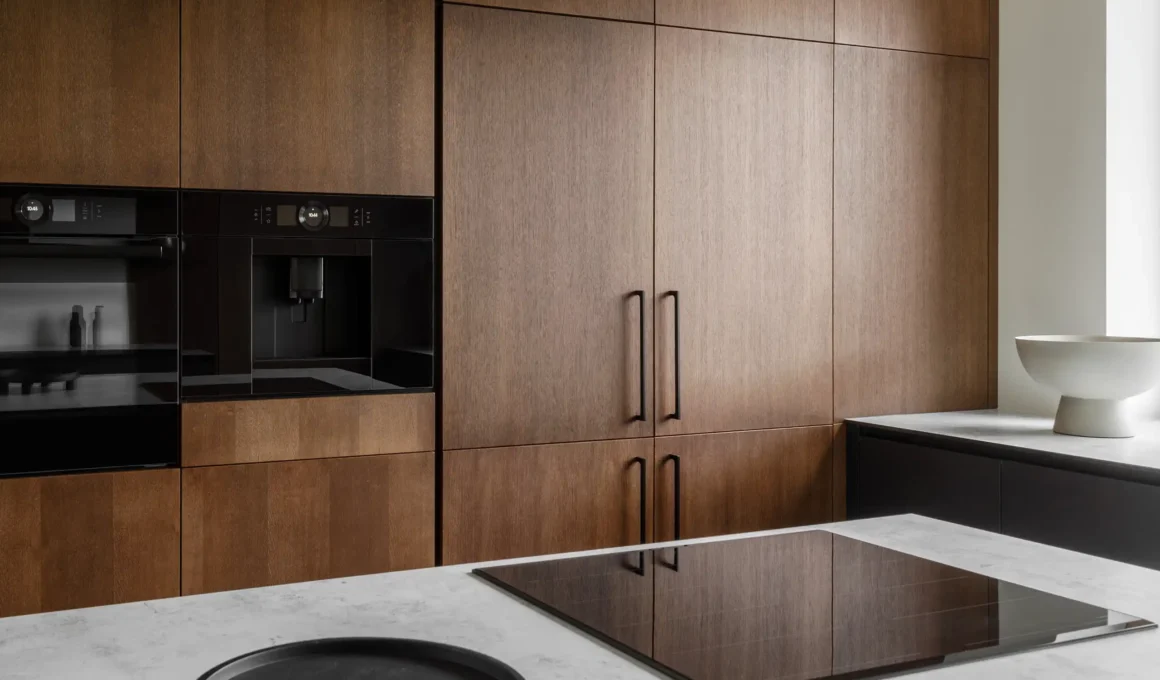
Built-in appliances are designed to be integrated into cabinetry, walls, counters, or custom kitchen layouts. They often sit flush with surrounding materials and may be installed behind matching cabinet panels.
Common built-in appliances include:
- Built-in refrigerators
- Wall ovens
- Built-in microwaves
- Panel-ready dishwashers
- Undercounter wine coolers
- Built-in coffee systems
- Cooktops
- Warming drawers
- Column refrigerators and freezers
Built-in appliances are especially common in high-end kitchens in neighborhoods such as Ansley Park, Midtown Atlanta, Virginia-Highland, and Brookhaven, where homeowners often prioritize a polished architectural look.
What Are Freestanding Appliances?
Freestanding appliances are standalone units that can usually be moved, replaced, or accessed more easily than built-in models. They are not permanently integrated into cabinetry in the same way built-in appliances are.
Common freestanding appliances include:
- Standard refrigerators
- Freestanding ranges
- Portable or standard dishwashers
- Freestanding wine coolers
- Washers
- Dryers
- Standalone freezers
Freestanding appliances are common in many homes, condos, apartments, and townhouses because they offer flexibility and are often easier to install.
Built-In Appliances: Main Advantages
1. They Create a Seamless Kitchen Design
The biggest benefit of built-in appliances is visual appeal. They can blend into cabinetry and create a clean, custom look. Panel-ready refrigerators and dishwashers can disappear into the kitchen design, making the space feel more refined and less appliance-heavy.
2. They Can Increase the Luxury Feel of a Home
Want to give your kitchen an upscale edge? Built-in appliances are the secret. Swapping a standard fridge for a hidden one or adding a sleek wall oven makes the whole space feel more intentional and high-end. If you’re looking to sell in competitive areas like Morningside or Midtown, that polished aesthetic is often exactly what it takes to stand out from the crowd.
3. They Save Visual Space
Because built-in appliances are integrated into the design, they can make a kitchen feel less cluttered. This is especially useful in open-concept layouts where the kitchen is visible from the dining room, living room, or entertaining space.
4. They Allow More Custom Layout Options
Built-in appliances give homeowners more control over the kitchen layout. For example, a wall oven can be placed at a more comfortable height, a cooktop can be installed separately from the oven, and a wine cooler can be built into a bar area or island.
Built-In Appliances: Main Disadvantages
1. They Usually Cost More to Install
Built-in appliances often require custom cabinetry, precise measurements, special panels, dedicated electrical or plumbing connections, and professional installation. This can increase the total cost of a remodel.
2. They Can Be Harder to Repair
While they look stunning, built-in appliances can be a pain to repair. Because they’re tucked tightly into your cabinetry, even a simple fix might require a technician to disassemble panels or safely pull the unit forward without scratching your woodwork. For Georgia homeowners going the premium route, it pays to do your homework early. Make sure you know who handles certified appliance repair in Atlanta before a minor glitch becomes a major project.
3. They May Require Brand-Specific Knowledge
Many built-in appliances are high-end or specialty models. They may have advanced electronics, custom panels, specialized parts, or detailed installation requirements. Sergey notes that built-in units often require a more careful diagnostic process because access is limited and the appliance may be connected to surrounding cabinetry, panels, or trim.
4. They Are Less Flexible
Once a built-in appliance is installed, replacing it may not be simple. A new model may not fit the same opening, panel size, venting setup, or utility connections. This can become a problem years later when the original appliance is discontinued or the homeowner wants to upgrade.
5. Poor Installation Can Lead to Long-Term Problems
Built-in appliances need proper clearance, ventilation, leveling, and access. If they are installed too tightly, blocked by cabinetry, or placed without enough airflow, they may wear out faster or become more expensive to repair.
Freestanding Appliances: Main Advantages
1. They Are Easier to Install
Freestanding appliances usually require less custom work. A standard refrigerator, range, washer, dryer, or dishwasher can often be installed with fewer modifications than a built-in model.
2. They Are Easier to Replace
If a freestanding refrigerator, stove, dishwasher, washer, or dryer fails, replacing it is usually more straightforward. Homeowners can often choose from a wider range of sizes, brands, and price points.
3. They Are Often Easier to Repair
Freestanding appliances are usually easier for technicians to access. Sergey explains that easier access can reduce labor time, especially when servicing appliances such as refrigerators, washers, dryers, ovens, stoves, and dishwashers.
4. They Can Be More Budget-Friendly
Freestanding appliances often cost less upfront than built-in appliances. Installation may also be less expensive because there is usually less cabinetry and finish work involved.
5. They Offer More Design Flexibility Over Time
Homeowners who like to update their kitchens every few years may prefer freestanding appliances. They are easier to change as styles, finishes, features, and household needs evolve.
Freestanding Appliances: Main Disadvantages
- They May Not Look as Seamless: Freestanding appliances can create visible gaps between cabinets, counters, and walls.
- They Can Take Up More Visual Space: A large freestanding refrigerator or range can dominate the room visually.
- They May Offer Fewer Custom Layout Options: With freestanding appliances, homeowners may have less flexibility in appliance placement.
- They May Not Add the Same Luxury Appeal: While many freestanding appliances are attractive and high-performing, they may not create the same custom look as built-in appliances.
Built-In vs. Freestanding Comparison
Built-In vs. Freestanding Refrigerators
- Built-In Refrigerators: Create a high-end, flush appearance. Best for luxury kitchens, open-concept homes, and custom cabinetry.
- Freestanding Refrigerators: Easier to install, move, repair, and replace. Best for budget-conscious remodels, smaller kitchens, and rental properties.
Built-In vs. Freestanding Ovens and Ranges
- Built-In Wall Ovens and Cooktops: Allow homeowners to separate cooking zones. Best for large kitchens, luxury remodels, and aging-in-place designs.
- Freestanding Ranges: Combine the oven and cooktop in one unit. Best for traditional kitchens, smaller spaces, and faster remodels.
Built-In vs. Freestanding Dishwashers
- Built-In and Panel-Ready Dishwashers: Standard in most modern kitchens. Best for seamless designs and luxury remodels.
- Freestanding or Portable Dishwashers: Useful in apartments, smaller homes, or temporary setups.
What Homeowners Should Consider
Your home’s layout is often the biggest factor in deciding which appliances to choose. A compact condo might have limited square footage, while an older, historic house often comes with outdated electrical or plumbing systems. Larger luxury homes might prioritize a fully custom look, whereas a modern townhome often requires a balance between high-end design and easy access for future repairs.
Decision Checklist:
- Kitchen size
- Cabinet layout
- Utility locations (Gas/Electrical/Water)
- Ventilation
- Appliance repair access
- Local service availability
Final Verdict: Which Is Better?
There is no single best choice for every kitchen.
Choose built-in appliances if you want:
- A seamless luxury look
- Custom cabinetry and integrated design
- More control over appliance placement
Choose freestanding appliances if you want:
- Easier installation and repairs
- Lower upfront costs
- More replacement flexibility
For many homeowners, the best kitchen includes a mix of both. The right combination depends on the home, the kitchen design, and the homeowner’s long-term plans.
FAQ
Are built-in appliances better than freestanding appliances?
Built-in appliances are better for a seamless, custom kitchen design. Freestanding appliances are better for flexibility, easier repair access, and simpler replacement.
What appliances does Appliance EMT repair?
Appliance EMT repairs major household appliances such as washers, dryers, stoves, ovens, refrigerators, wine coolers, and dishwashers.
What should homeowners consider before buying appliances?
Atlanta homeowners should consider kitchen size, ventilation, cabinet design, service access, utility connections, appliance brand, and local repair availability.