


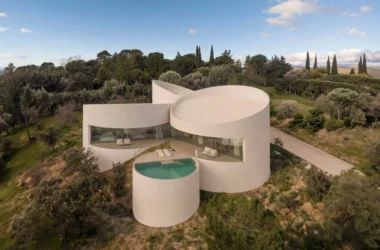

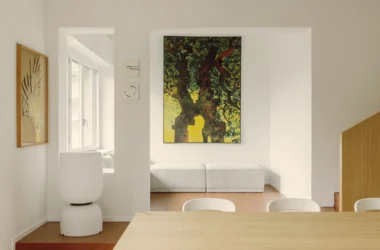
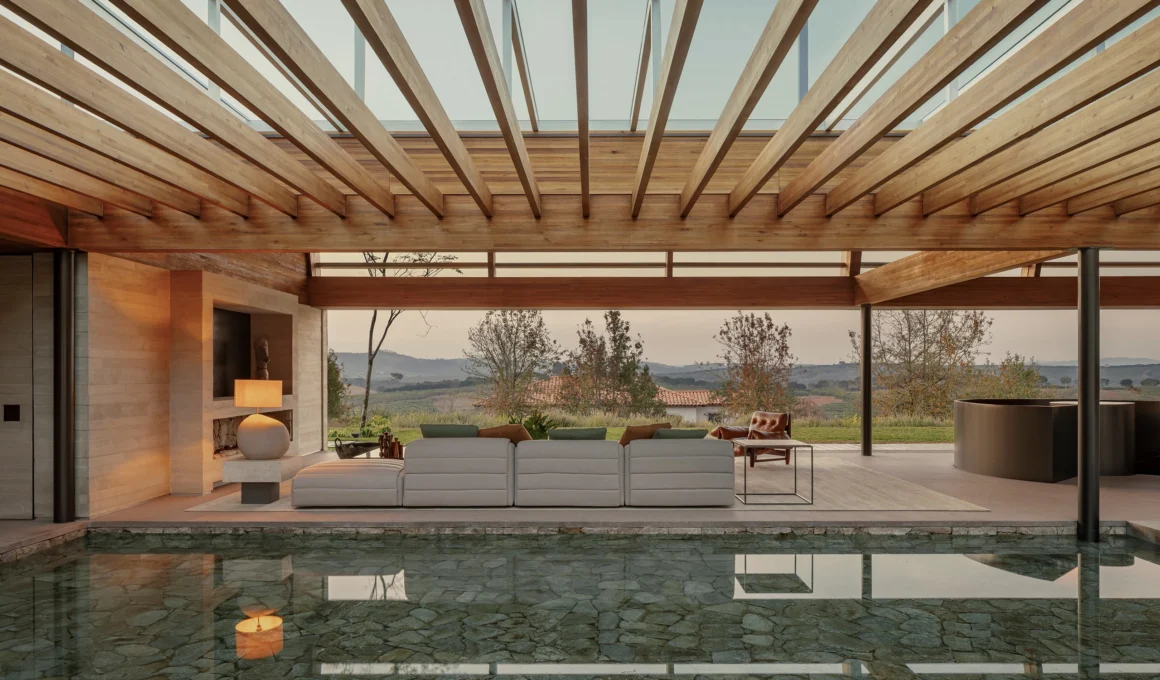
The contemporary patio has transitioned from a site of passive leisure to a zone of climatic sovereignty, where the boundary between the architectural envelope and the wild environment is actively negotiated through high-performance engineering.
Post-Threshold Architecture: The Death of the “Backyard”
The traditional notion of the “yard” is becoming an architectural anachronism. In its place, we are seeing the rise of Post-Threshold Architecture, where the patio is treated with the same structural rigor as the interior core. This shift is driven by a need for environmental resilience; as exterior conditions become increasingly erratic, the outdoor space must function as a controllable extension of the home. By utilizing monolithic flooring systems and integrated thermal breaks, designers are erasing the physical friction of the doorway, effectively turning the patio into a primary living volume that happens to lack a ceiling.
Tectonic Durability as a Design Language
True luxury in 2026 is defined by material permanence. Much like the industrial-grade resilience found in modern outdoor kitchen design, the modern adaptive space rejects the ephemeral nature of seasonal “decor.” Brands such as Kettal and Flexform are now producing elements that function as external skeletal systems. These are not mere chairs; they are structural interventions. When paired with overflowing surface pools and thermally optimized dark finishes, the patio becomes a cohesive, self-regulating ecosystem.
Atmospheric Intelligence: The Invisible Interface
The most advanced patios are those where the technology is felt but never seen. We are entering the era of Atmospheric Intelligence, where sensors drive motorized louvers and invisible drainage tracks to maintain a static level of comfort regardless of external pressure. This is the invisible interface—a combination of Molteni&C’s structural versatility and aerospace-grade material science. The objective is total environmental autonomy: a space that breathes, drains, and shades itself, ensuring that human occupancy is never dictated by the forecast.
Season-Fluid Adaptive Patio: FAQ for 2026
How does “Climatic Sovereignty” impact property valuation?
Climatic Sovereignty refers to the ability to control an outdoor environment’s temperature and usability. In high-end real estate, this translates to 100% floor-plan utilization, effectively increasing the sellable “conditioned” space of a home without increasing its carbon footprint or traditional square footage.
Why is “Tectonic Durability” replacing “Weather-Resistance”?
“Weather-resistance” implies a defensive stance against the elements. Tectonic Durability implies that the materials are an intrinsic part of the site’s geography. We are seeing a move toward stone, high-performance alloys, and carbonized woods that age with the landscape rather than deteriorating against it.
What is the significance of the “Zero-Friction” transition?
The Zero-Friction transition uses hidden recessed tracks and continuous material planes to eliminate the step-down. This is a psychological hack: when the eye perceives no change in floor level or material, the brain registers the outdoor space as “safe” and “internal,” doubling the perceived scale of the architecture.