

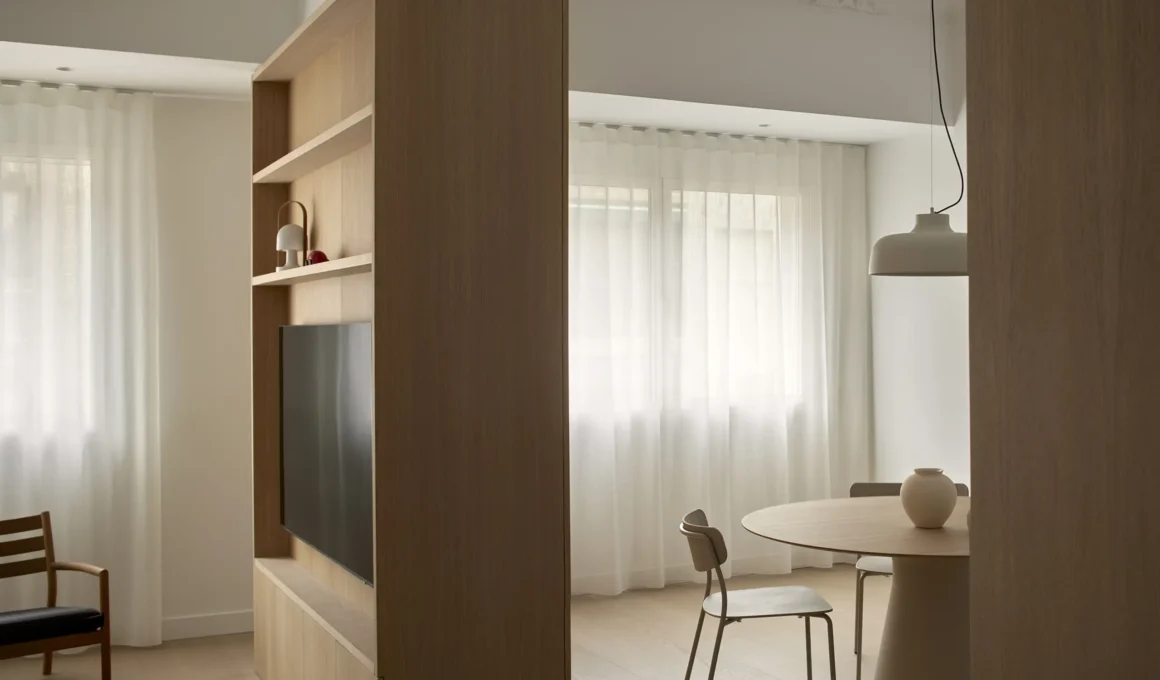
DG Arquitecto has transformed a cramped 1952 apartment in Valencia’s La Petxina neighborhood into Casa Zam 12, a 135-square-meter family residence defined by three oak volumes that bridge the gap between historic ceiling moldings and a contemporary, fluid layout.
A departure from itinerant living serves as the emotional foundation for this renovation. After years of moving, the clients—a young family—sought a permanent anchor near the Túria Garden. The challenge lay in stripping back a rigid, fractured floor plan to reveal the soul of the original structure. Rather than a total erasure of the past, the intervention focuses on a respectful dialogue where only the most significant decorative elements, specifically the intricate plaster moldings, were preserved to act as a rhythmic counterpoint to the new geometric insertions.
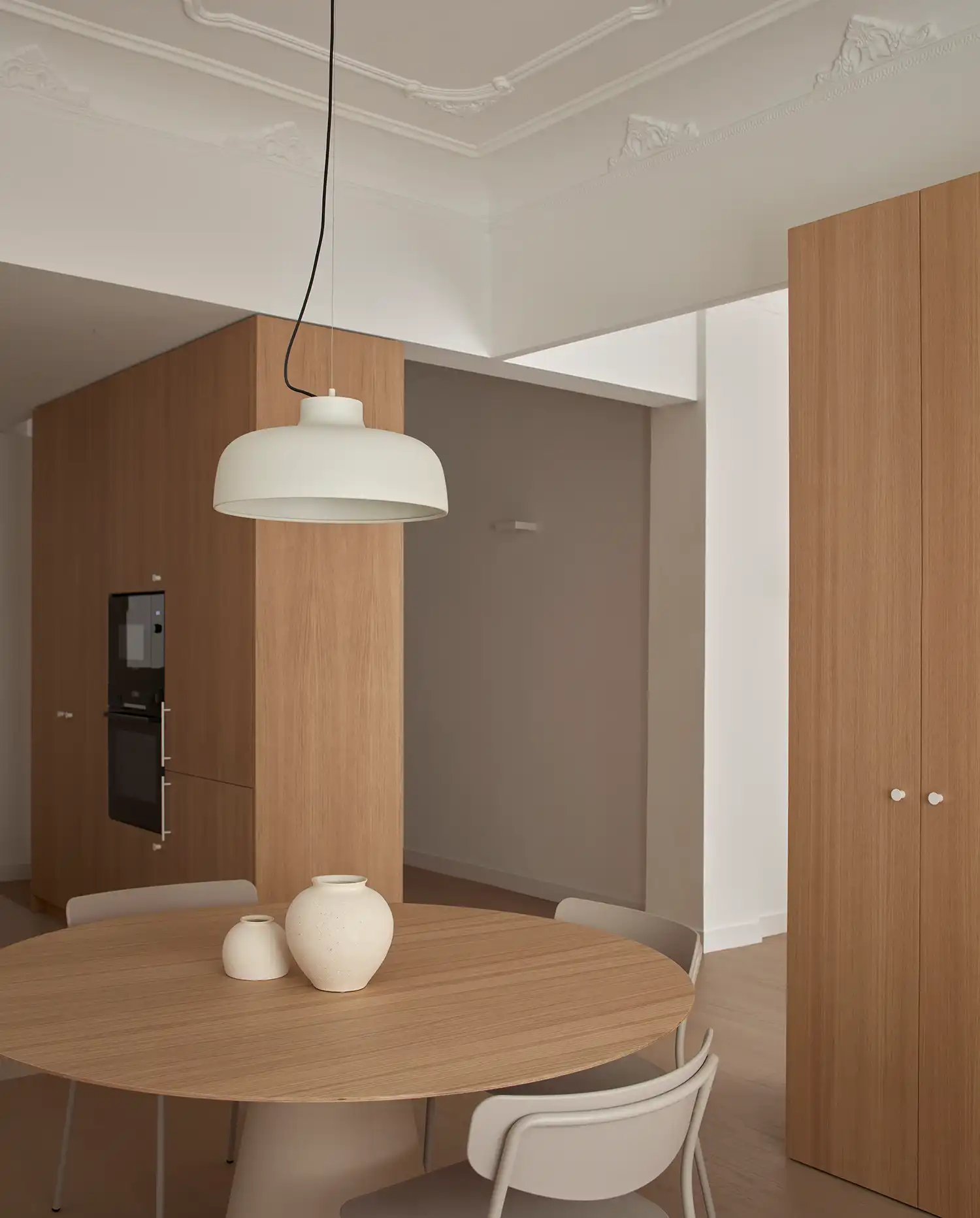
The conceptual vision centers on sobriety and the rejection of loud statements. There is an intentional restraint in the palette, favoring natural materials that allow the passage of time and the accumulation of personal objects to define the home’s character. By avoiding a dominant aesthetic, the studio has created a backdrop that is “silent” yet incredibly warm, ensuring the space feels honest and unpretentious from the moment one crosses the threshold.
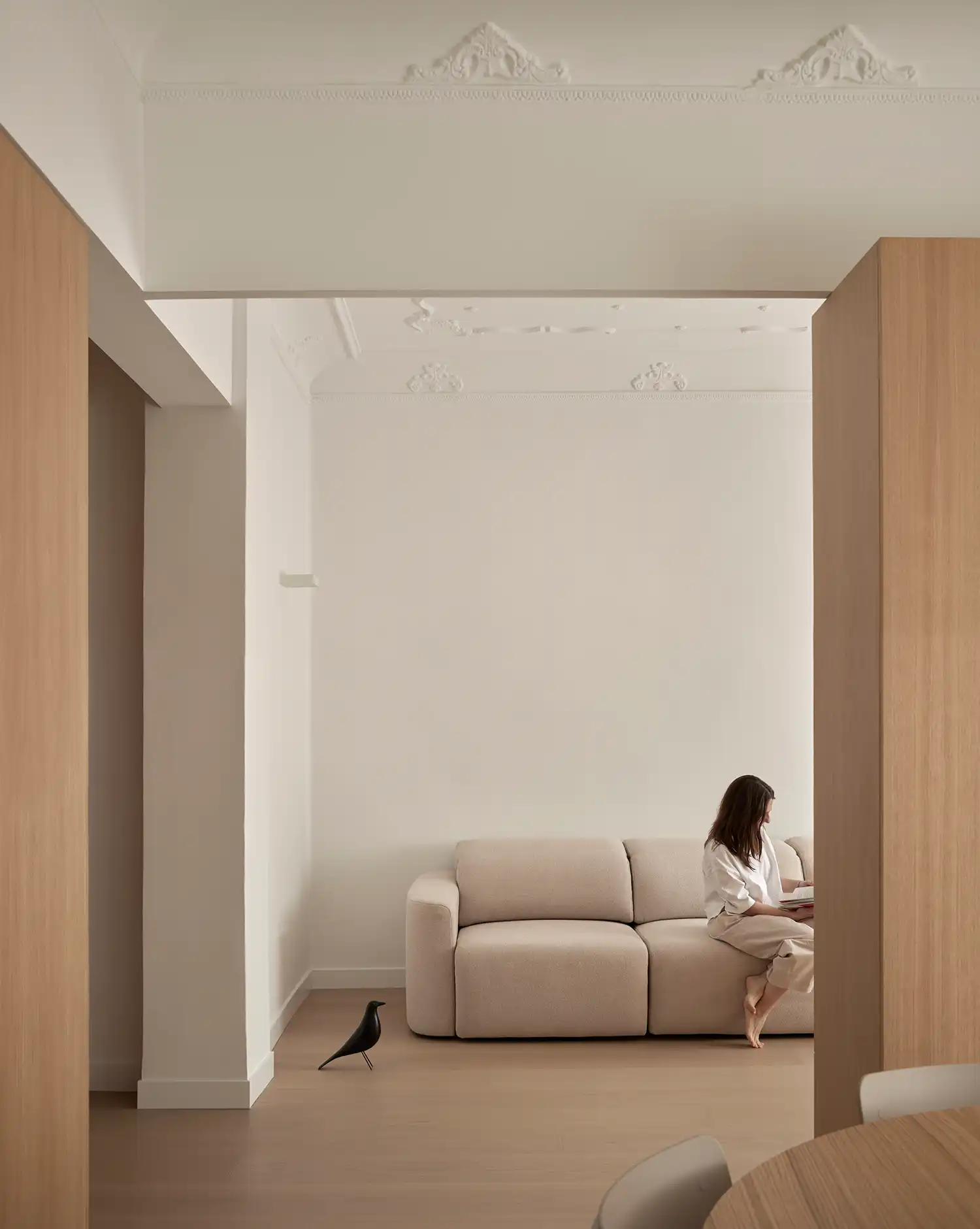
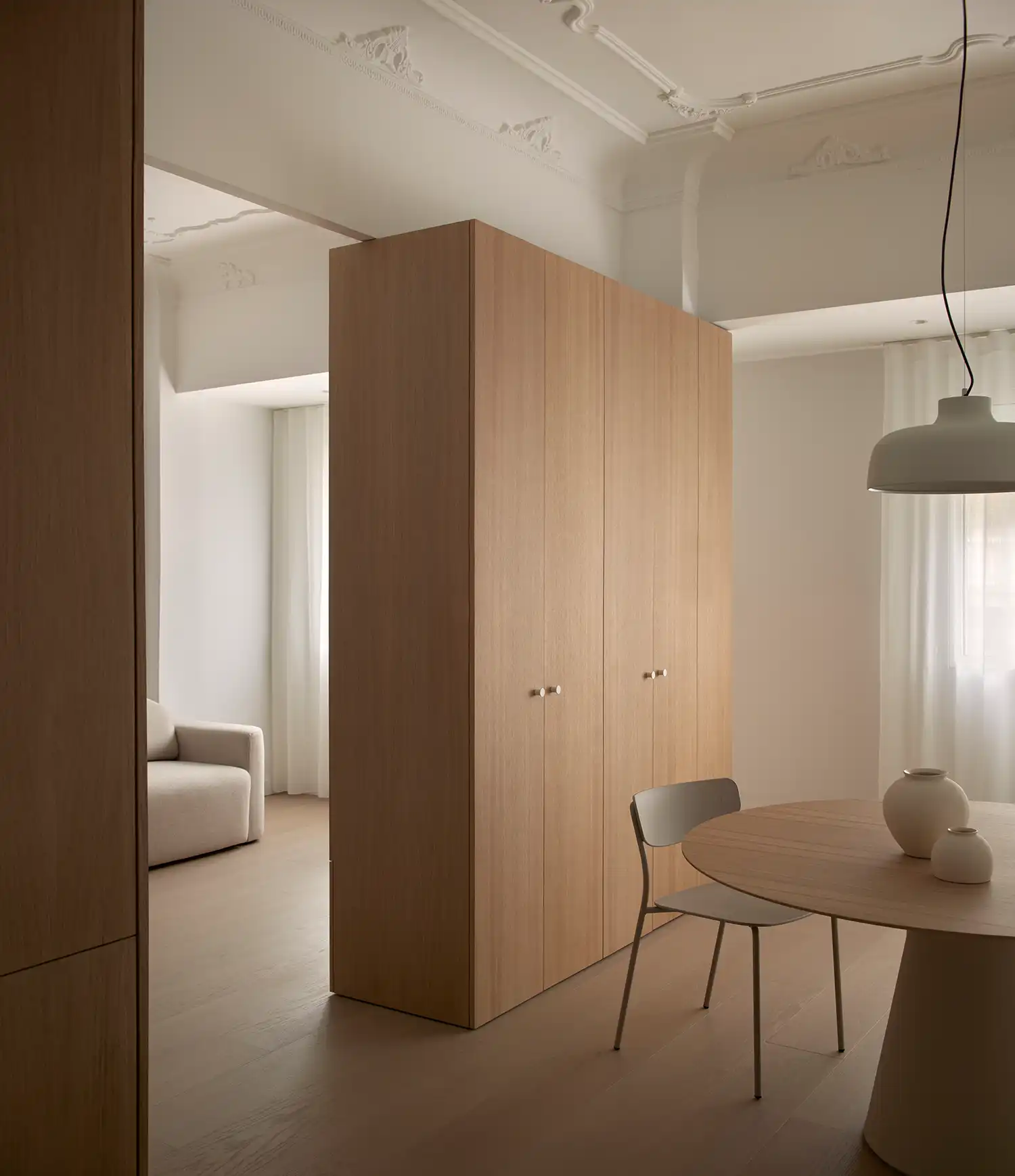
Three distinct oak volumes serve as the primary organizational tools, functioning as pieces of large-scale furniture that structure the program without the need for traditional walls. These timber interventions do not reach the ceiling, allowing the original moldings to float uninterrupted across the white expanse of the upper plane. This gap between the old and the new creates a sense of airiness, emphasizing the contrast between the heavy, grounded wood and the delicate, historic craftsmanship above.
The first volume anchors the social core, defining the boundaries of the living and dining areas while discreetly housing the media infrastructure. There is a tactile continuity here, as the natural oak of the cabinetry bleeds into the flooring, creating a monochromatic base that reflects the soft Mediterranean light pouring in from the windows. The experience is one of cohesion, where the furniture is not merely placed within a room but is the room itself.
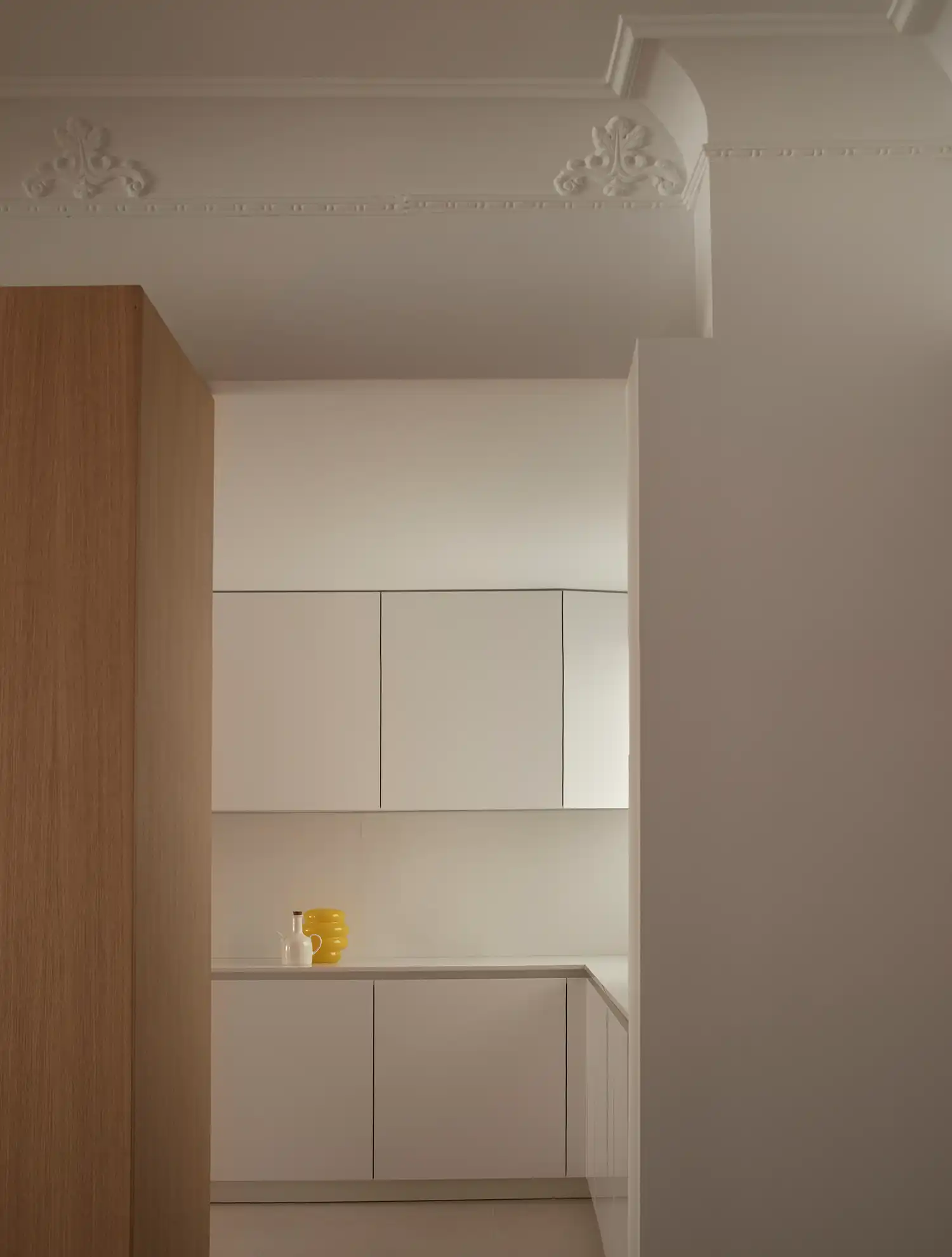
A second volume mediates the transition from the public entry to the culinary heart of the home. By separating the foyer from the open-plan kitchen, this element provides a sense of arrival and privacy without sacrificing the visual connection to the common areas. The kitchen becomes an extension of the living space, encouraging a lifestyle where cooking and socializing overlap naturally, supported by clean lines and hidden storage that minimize visual clutter.
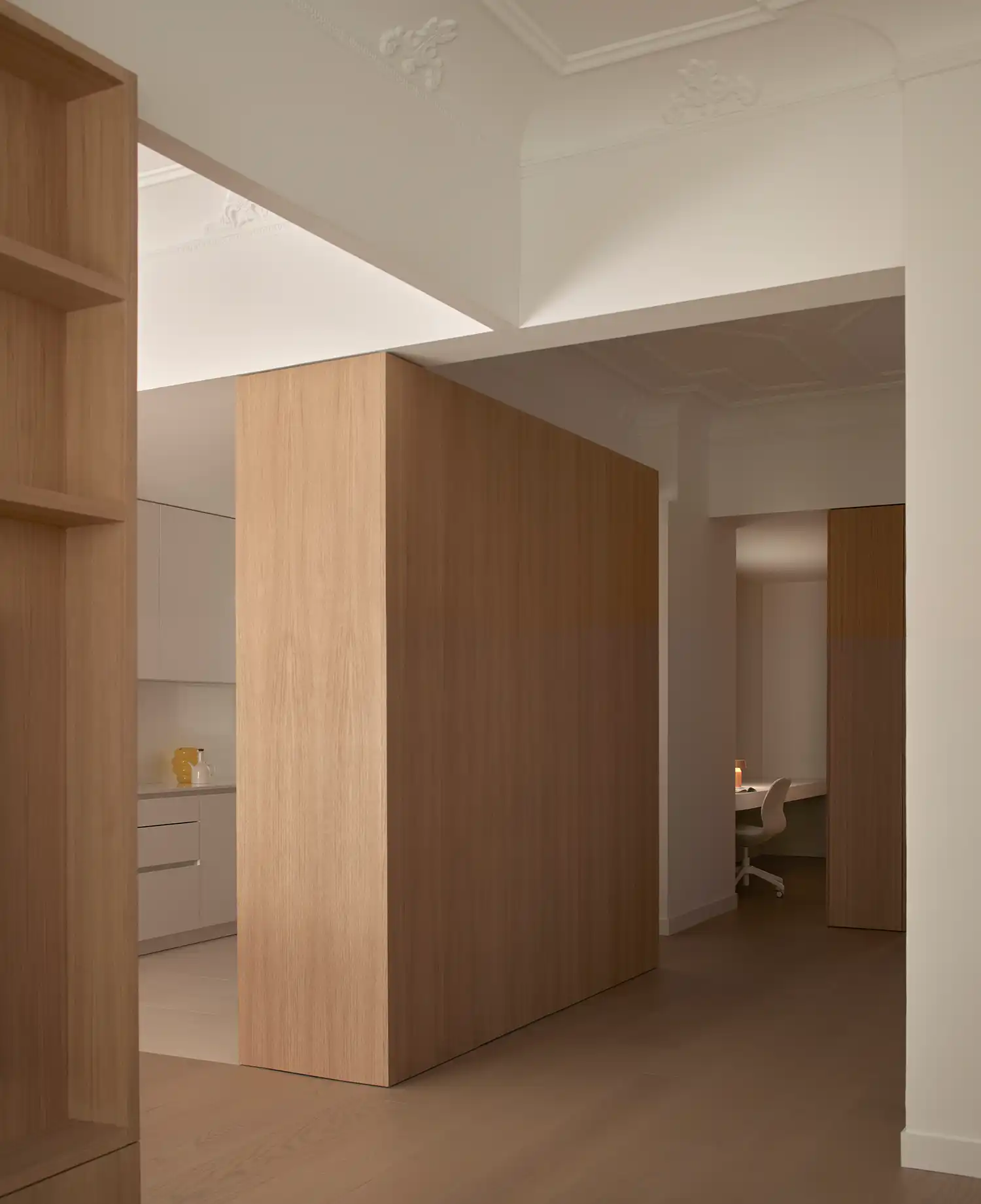
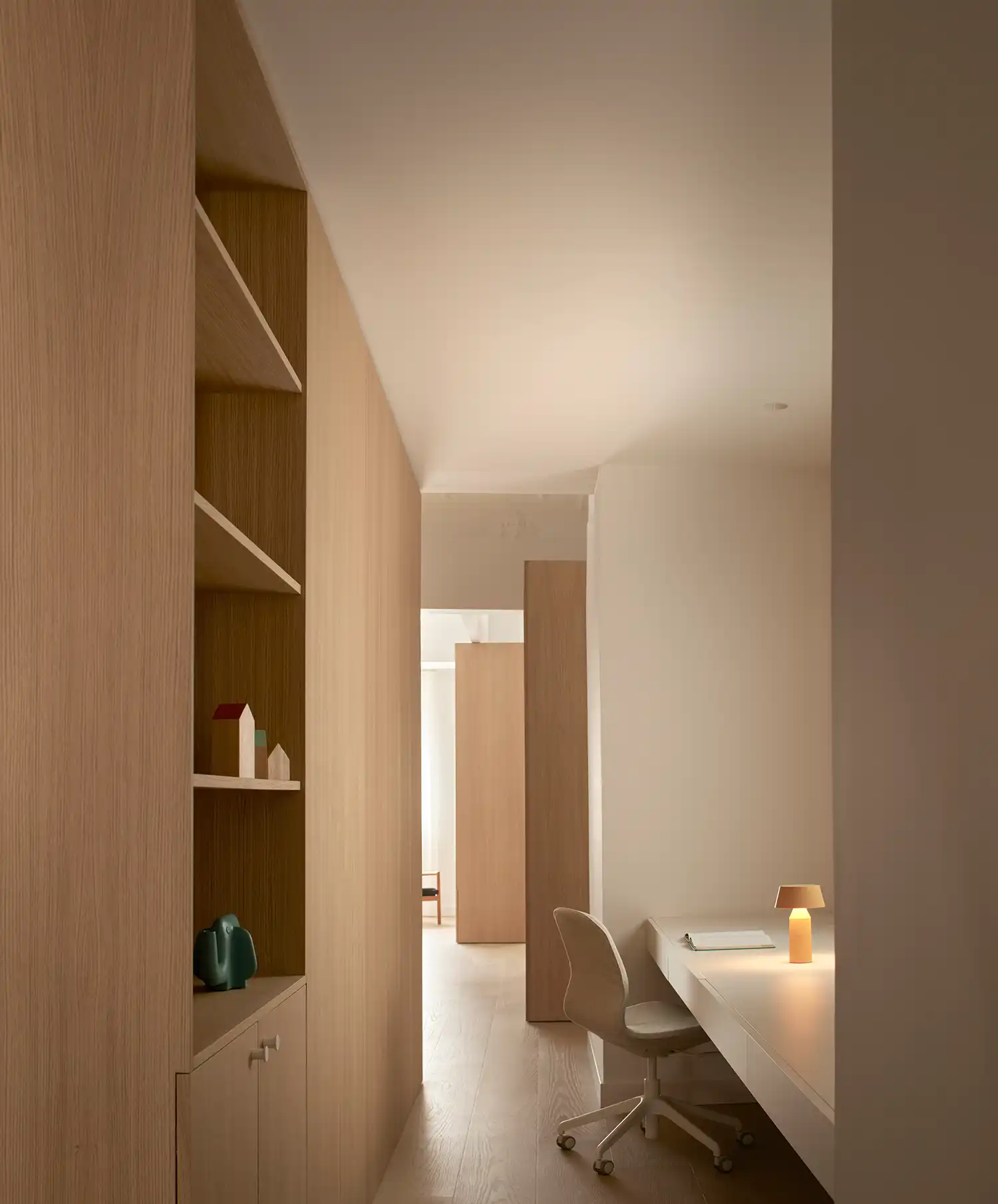
Redefining the domestic corridor was a priority for the third volume, which organizes the study and circulation zones. Moving away from the concept of “dead space,” the studio eliminated conventional hallways in favor of a habitable distributor. This wide, active artery is large enough to host play, work, or spontaneous encounters, transforming a purely functional transition into a vibrant part of the daily routine.
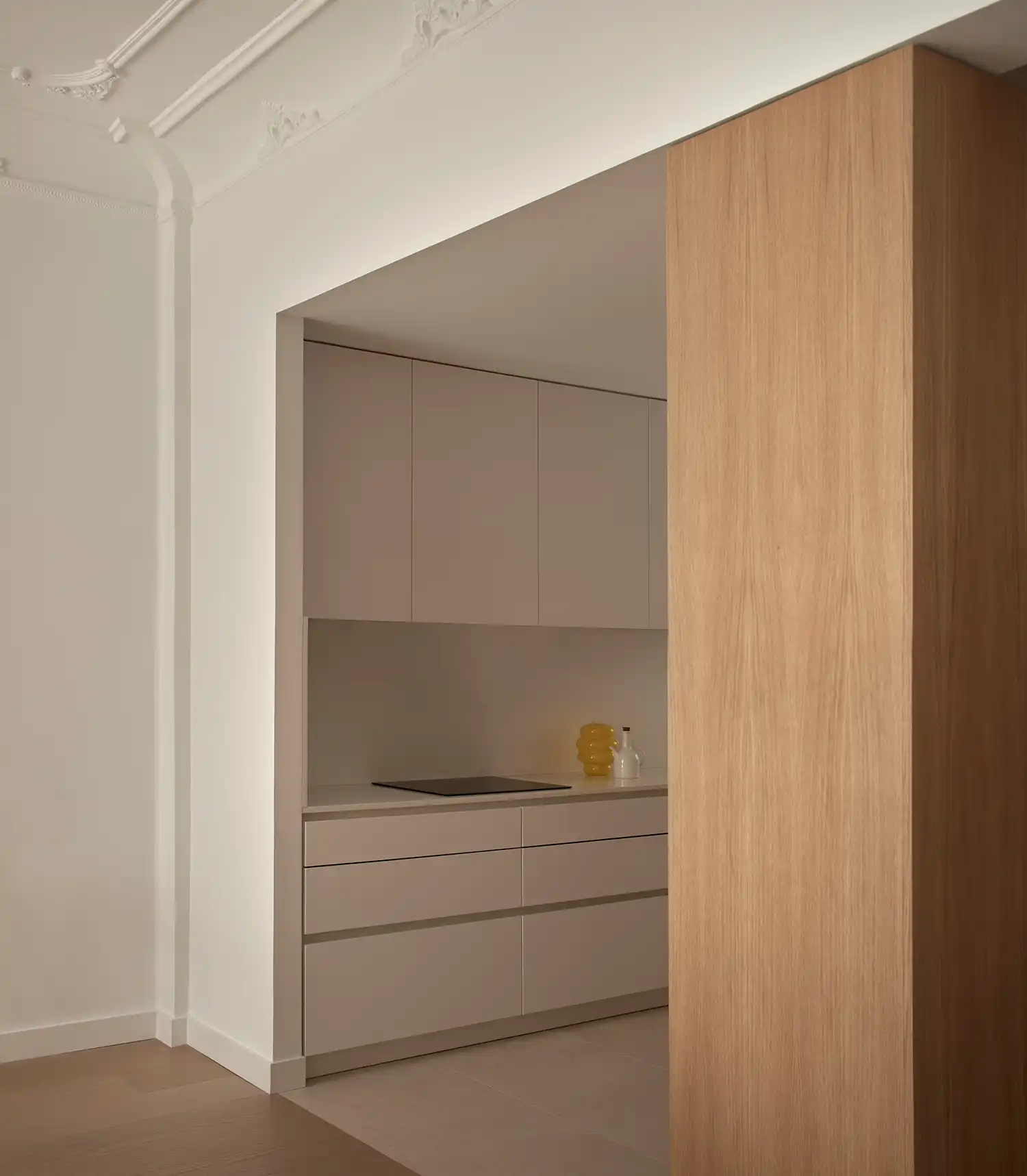
Technical precision meets domestic flexibility in the way these volumes handle the home’s services. By concentrating storage and structural needs within these wooden blocks, the rest of the floor plan remains open and adaptable to the changing needs of a growing family. The use of white lime-wash walls and minimalist joinery ensures that the natural light—a key protagonist in Valencia—is maximized, bouncing off the pale surfaces to reach the deepest corners of the apartment.
Refining the balance of heritage and modernity is a hallmark of the studio’s work in the city. Casa Zam 12 continues a trajectory of sensitive renovations, echoing the material palette and clean-lined geometry seen in previous projects like Casa Chanchs or their historic Valencia apartment transformation for a New York-based family. In each instance, the studio demonstrates that a home can be contemporary without losing its sense of place, providing a timeless stage for the complexities of modern life.