


It is often said that great design challenges yield groundbreaking ideas. In the eighth year of a highly successful cooperation, Electrolux Group recently partnered with Umeå Institute of Design (UID) to explore an essential question: What solutions might we need for the Future Home? Students from the school’s esteemed Advanced Product Design program were tasked with imagining and realizing the next generation of domestic innovations in a high-intensity, four-week project. To focus their creative energies, the students divided into teams, each tackling a specific facet of the future: The Mindful Home, The Agentive Home, The Hearthscape, and The Resilient Home.
The tight deadline aimed to simulate the pressure of professional product development, forcing the students to rapidly iterate on complex problems. This approach, as Timo Mashiyi-Veikkola, Head of Design Research at Electrolux Group, notes, is intentional. “We wanted to challenge these students as we challenge ourselves to imagine the Future Home,” he says. “The students’ ideas help us think differently.” This exchange of expertise is a vital part of the enduring partnership, providing the global appliance leader with fresh perspectives while giving the students exposure to industry-level rigor.
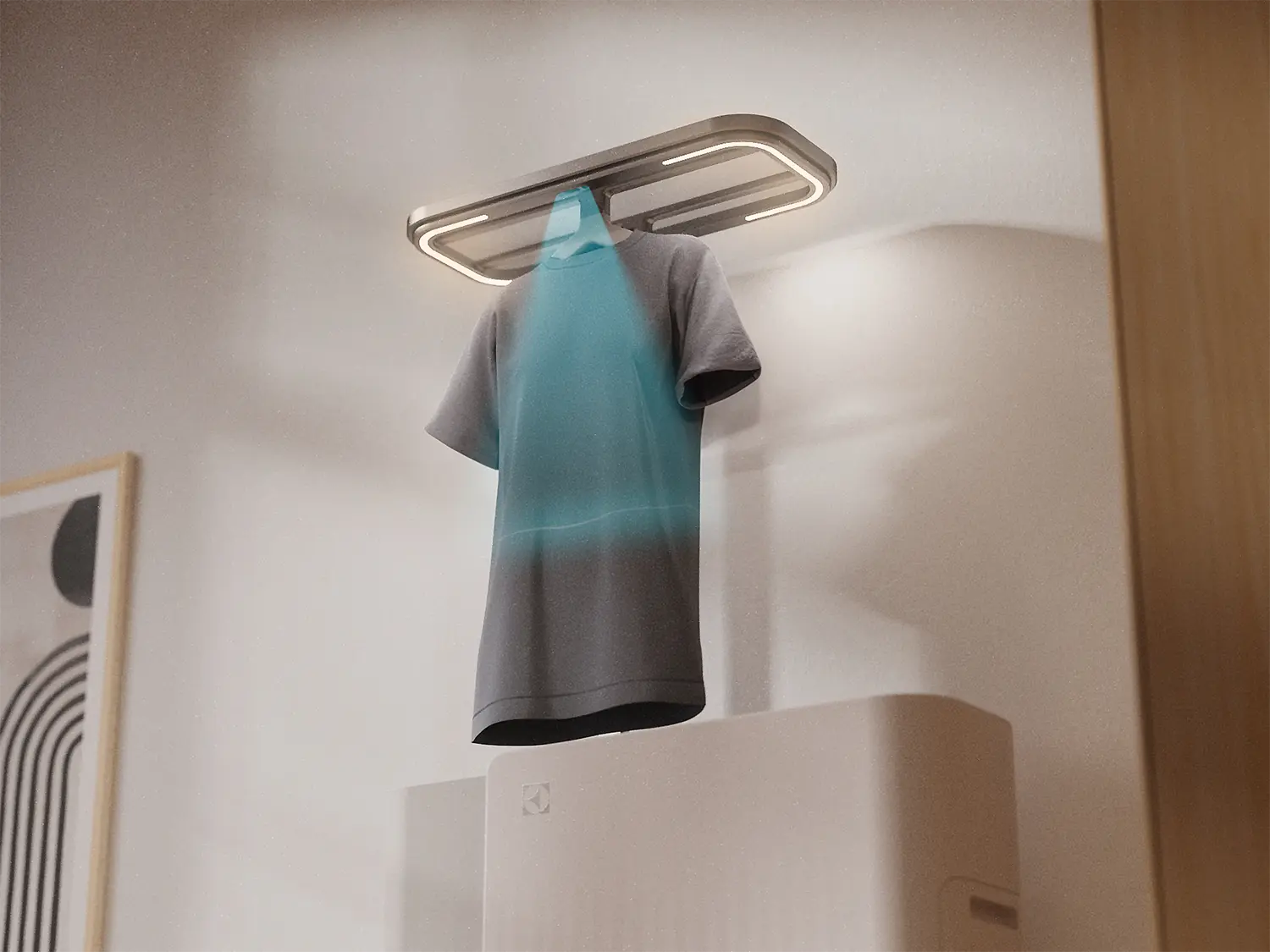
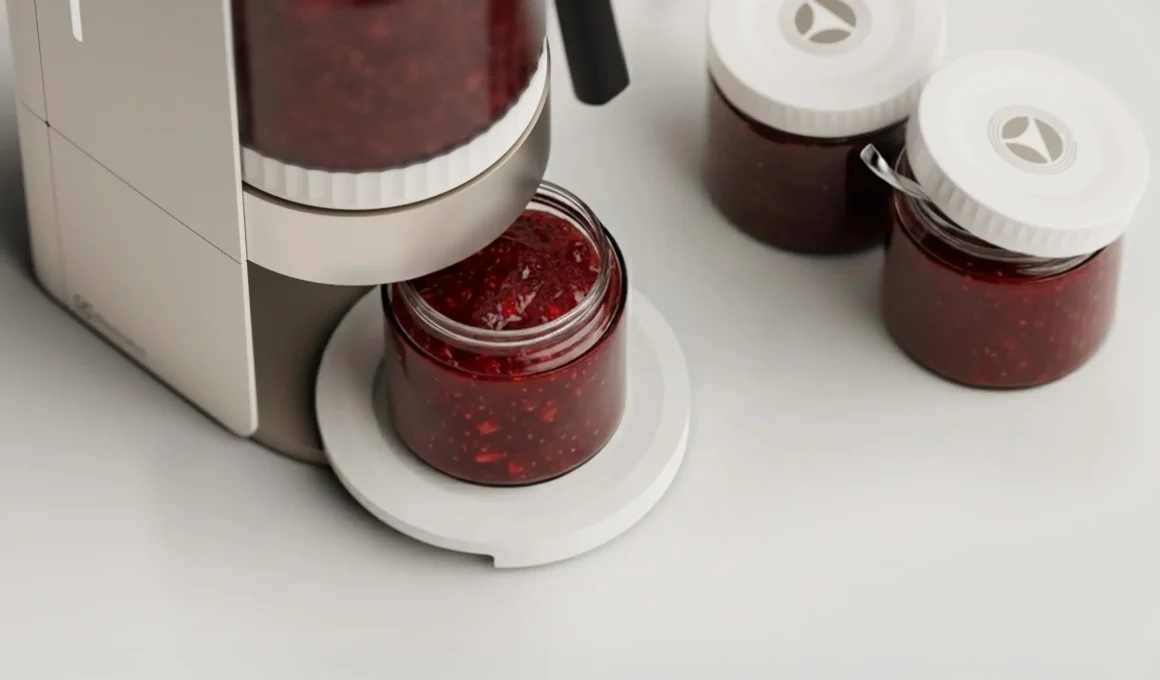
One of the most evocative concepts to emerge was NIBBL, created for The Resilient Home. Inspired by the rich tradition of preserving food, the team imagined a scenario in a Swedish summer home where a family engages in the ritual of jam making (image above) to reduce waste and keep food fresh. NIBBL is a smart jam maker that streamlines this process, recognizing the fruit, cooking it perfectly without constant stirring, guiding the user on sugar content, and then automatically sterilizing and marking the jars with the date. Separately, addressing the need for non-intrusive aids in The Agentive Home, the OWL team developed a sleek, intelligent laundry product. Sized and designed for use outside of the utility room—in a bedroom or walk-in closet—OWL uses smart technology to scan clothing, detect fabric types and stains, and then steam, deodorize, and scent garments to refresh them and extend their life, complemented by a smart wand for precise spot cleaning.
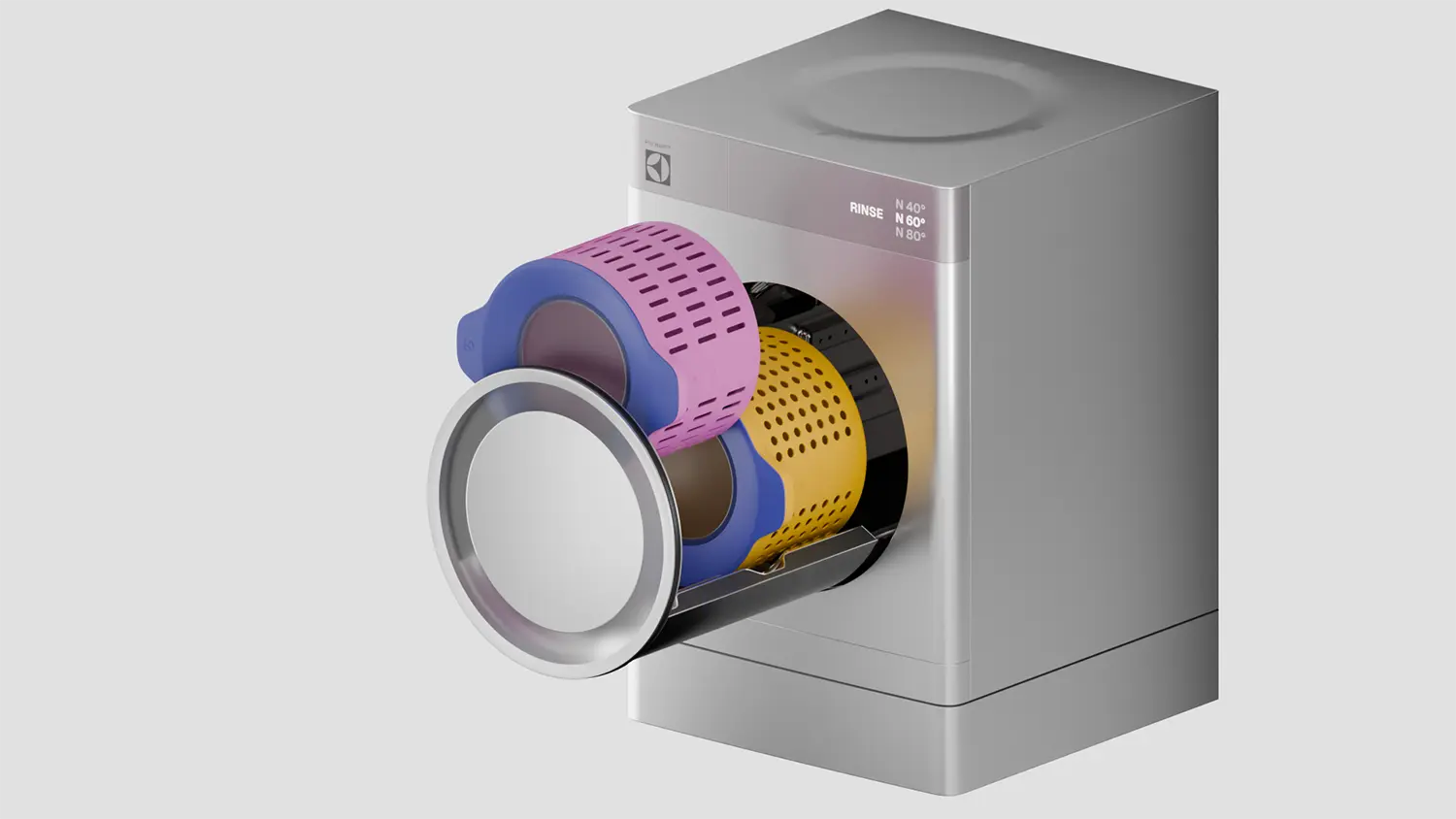
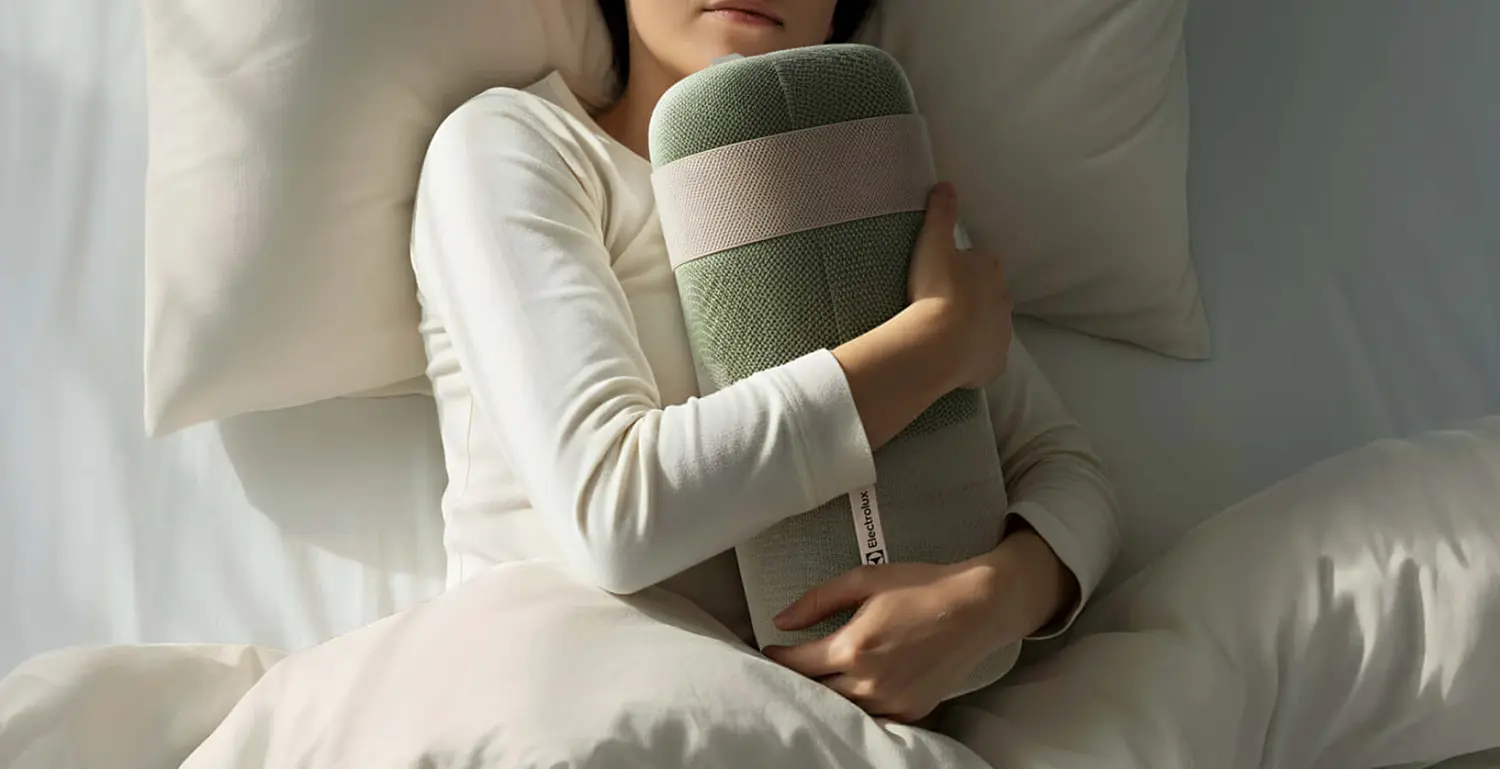
For The Hearthscape focus, the CL-35 team shifted the concept of laundry from an isolated chore to a shared, social ritual. This reimagined community laundry system is designed to save water, energy, and time by enabling residents to collaborate. The system ensures items are kept separate via stackable, color-coded baskets, while a ‘Pod’ accessory facilitates access, alerts, and interaction. CL-35 successfully turns a mundane task into an act of trust and shared responsibility, fostering connection while promoting sustainability. Meanwhile, the HUG team, tackling The Mindful Home, focused entirely on comfort and relaxation. They developed a suite of personalized cooling and heating solutions utilizing advanced smart textiles—specifically, wires woven into threads—that feel soft and natural. The weighted Turtle product mimics the feeling of a sleeping cat; the flexible Koala can warm or cool a user at a desk or on the couch; and the large, soft Bear is designed for complete, end-of-day decompression.
The intensity and scope of the work have a profound effect on the student body. As Thomas Degn, Associate Professor and Director of the MFA Advanced Product Design Program at UID, explains: “This project with Electrolux Group sets the bar high for our students. To develop a new product for the Future Home in just four weeks, with feedback from Electrolux experts, puts them on track for success in design.” This rigorous mentorship ensures that graduates are ready to navigate the complexities of real-world product development upon graduation.
The visionary concepts that emerged from the four-week sprint—including NIBBL, OWL, CL-35, and HUG—offer vital insight into how we will live, interact, and care for our possessions in the years to come. From community collaboration to individual mindfulness, the students from Umeå Institute of Design have provided compelling blueprints for a more resourceful, responsive, and comfortable Future Home, continuing a tradition of innovative collaboration that previously tackled designs for people with disabilities, AI-assisted robots, and multi-generational homes.