



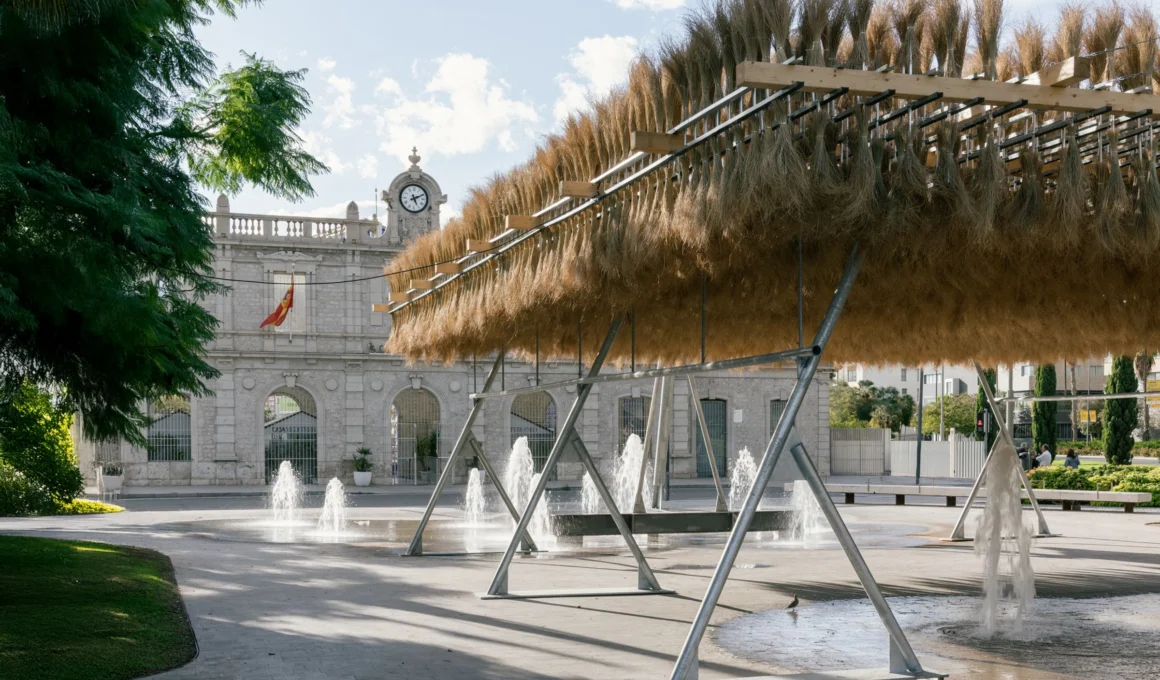
A striking new installation is redefining public space in the heart of Alicante, Spain. The Espartal Temporary Pavilion, the winning entry of the third edition of the TAC! Urban Architecture Festival, has transformed the Plaza Arquitecto Miguel López into a sensory and climatic haven. Promoted by the Ministry of Housing and Urban Agenda and the Arquia Foundation, this ephemeral structure offers a powerful statement on territory and tradition, supported by Casa Mediterráneo. It will remain open to the public until November 14th, inviting a timely reflection on the capacity of contemporary Spanish architecture to revitalize the urban center.
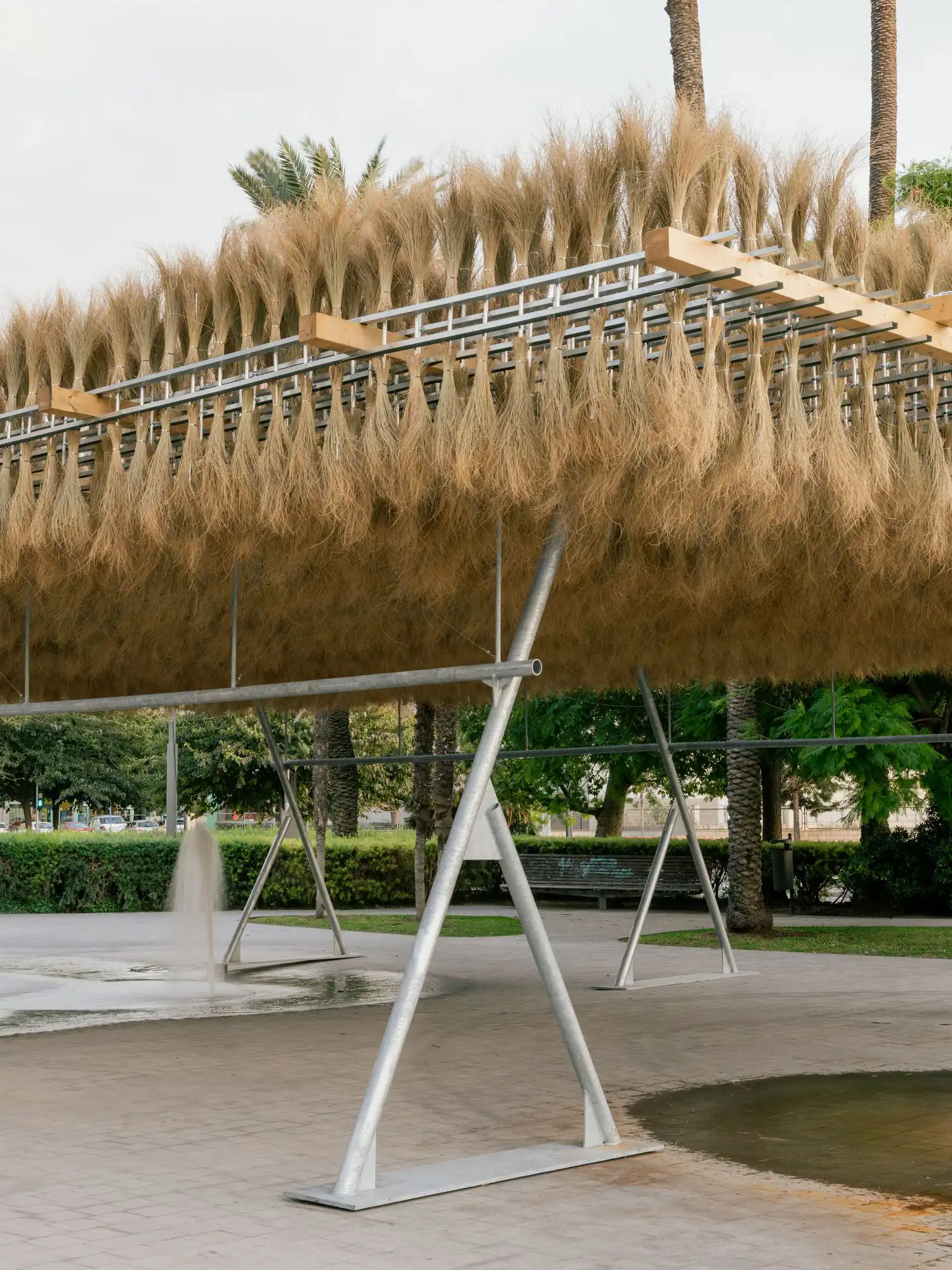
The visionary design is the result of a collaborative effort between the studios GA Estudio (composed of Tomás García de la Huerta and Xaviera Gleixner) and ELE Arkitektura (by Eduardo Landia and Eloi Landia), alongside architect Florencia Galecio and architect Juan Gubbins. Their combined expertise hinged upon a singular, historically resonant material: esparto grass. This humble fibre, utilized across the peninsula since the Phoenician era, is the key to the proposal, demonstrating a profound commitment to local material culture within the context of sustainable design.
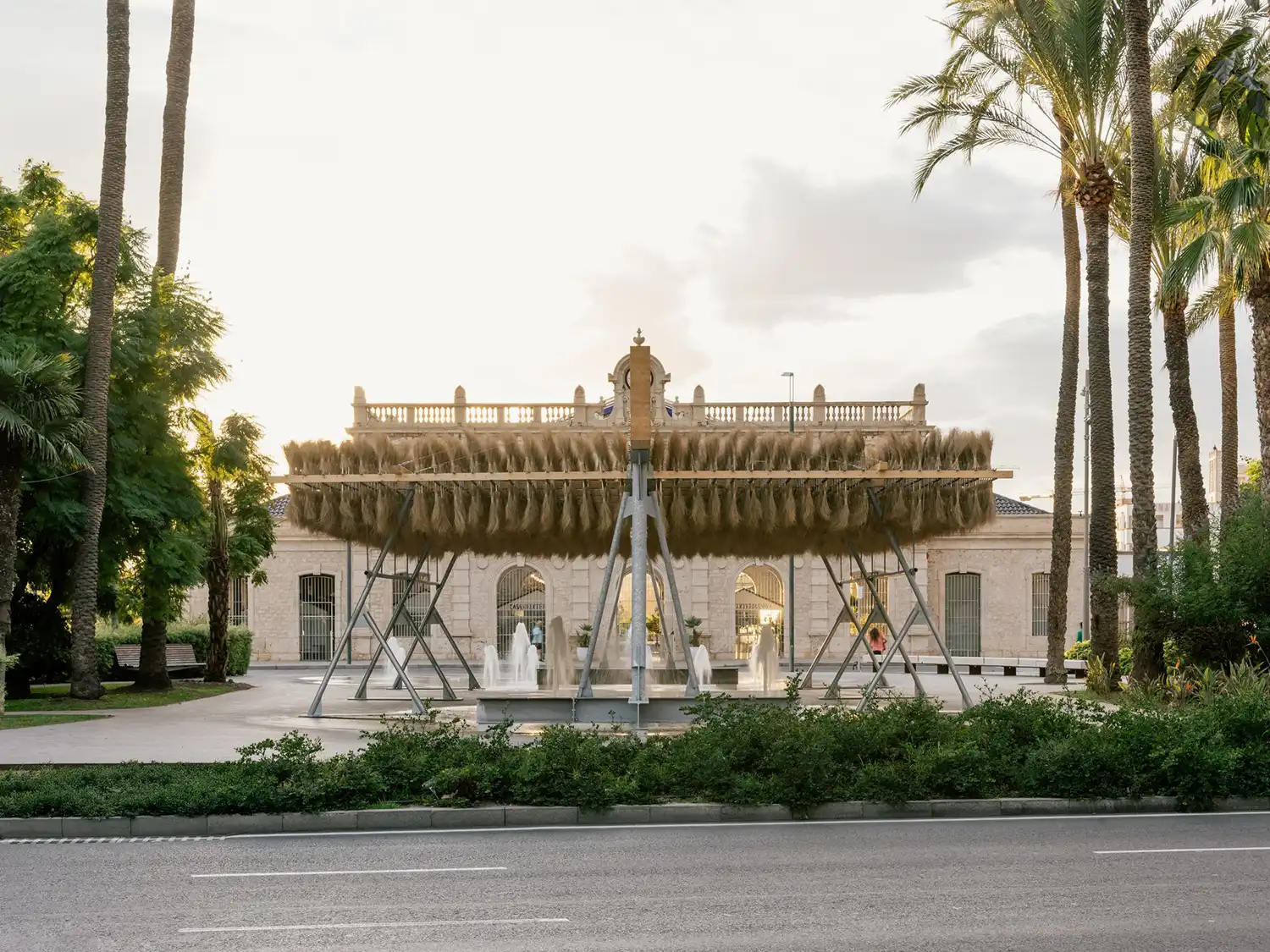
More than just a shelter, the pavilion recovers and redefines the utility of esparto. Traditionally linked to Mediterranean agricultural culture, the design team has managed to elevate this historic fibre into a sophisticated architectural resource. The project deftly bridges the conceptual gap between countryside and city, nature and artifice, presenting a compelling model for how ancient techniques can inform a truly contemporary and sustainable future.
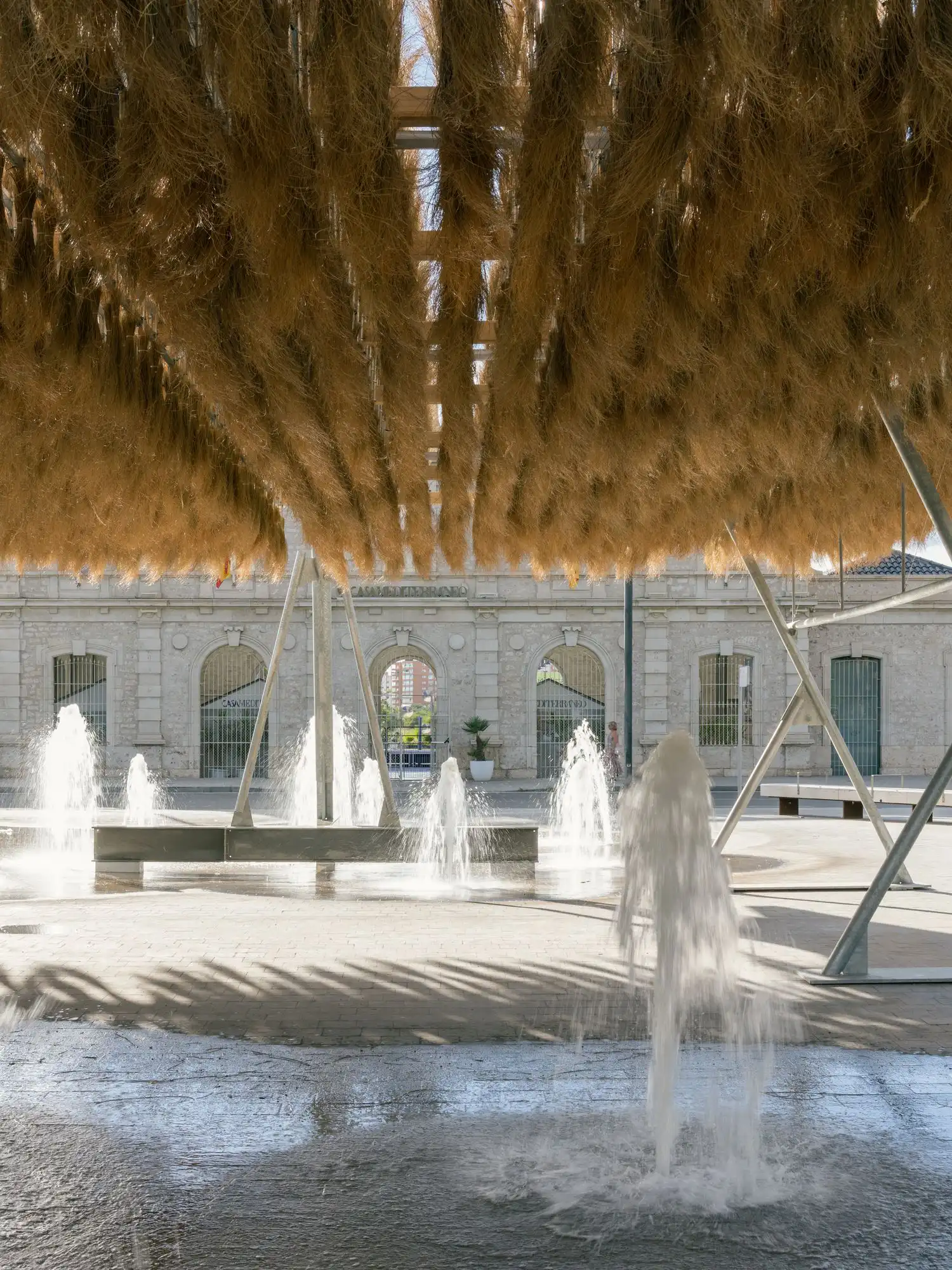
The core design consists of a suspended esparto grass structure. Functionally brilliant, this canopy filters the intense Spanish sun, projecting a dense, complex shadow below. This crucial passive strategy allows the installation to generate significant thermal comfort and actively modify the square’s microclimate. The resulting space feels radically different, mitigating the harshness of the urban environment through completely natural means.
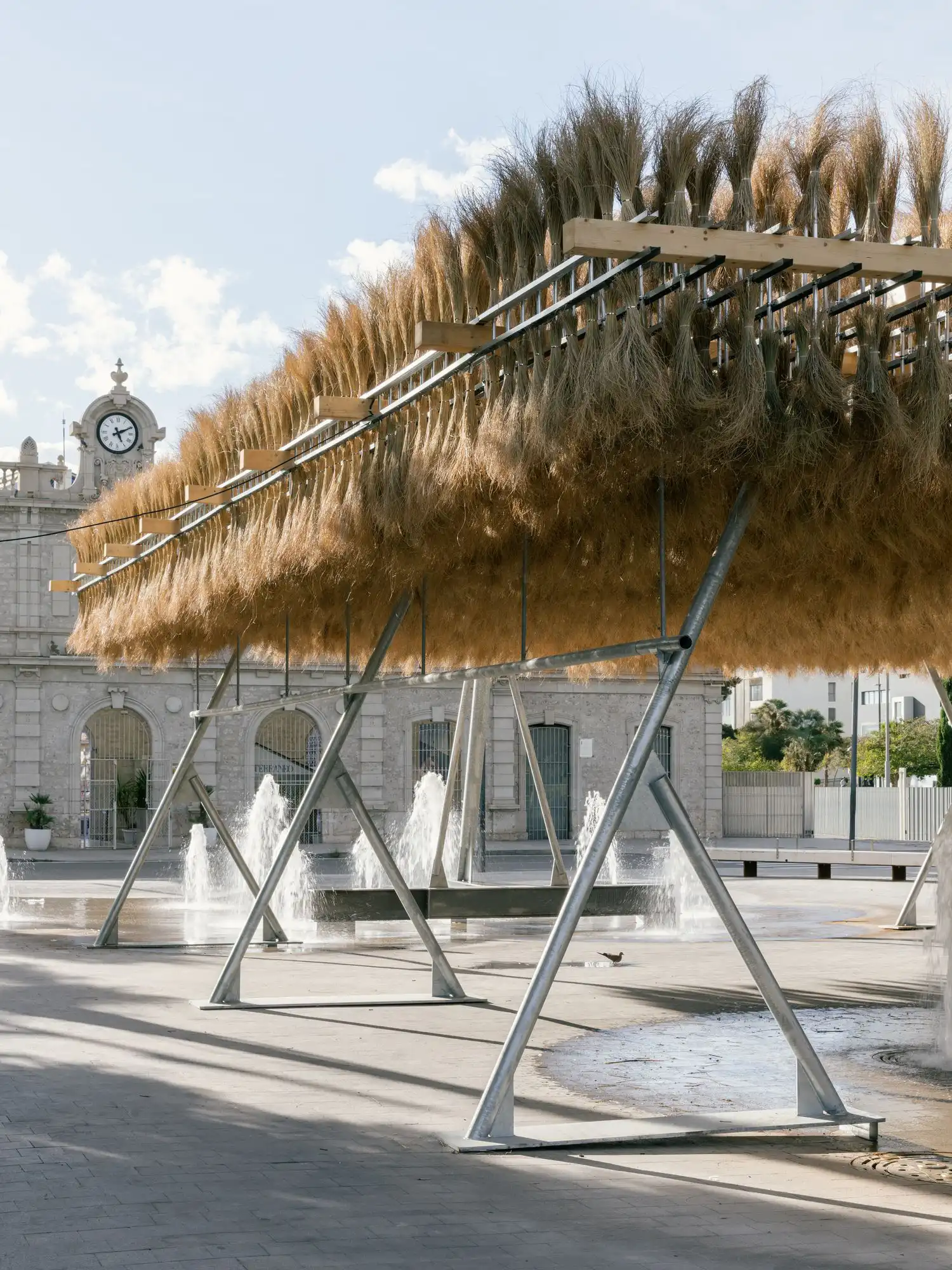
By successfully manipulating the environment, the Espartal Temporary Pavilion converts what was previously a high-traffic transit space into a genuine place of stay and social encounter. It offers citizens a renewed, qualitative experience in the intense rhythm of the urban center. The successful intervention is a testament to how small-scale sustainable design can have a monumental, positive impact on the quality of public life, demonstrating the power of material choice in Alicante.
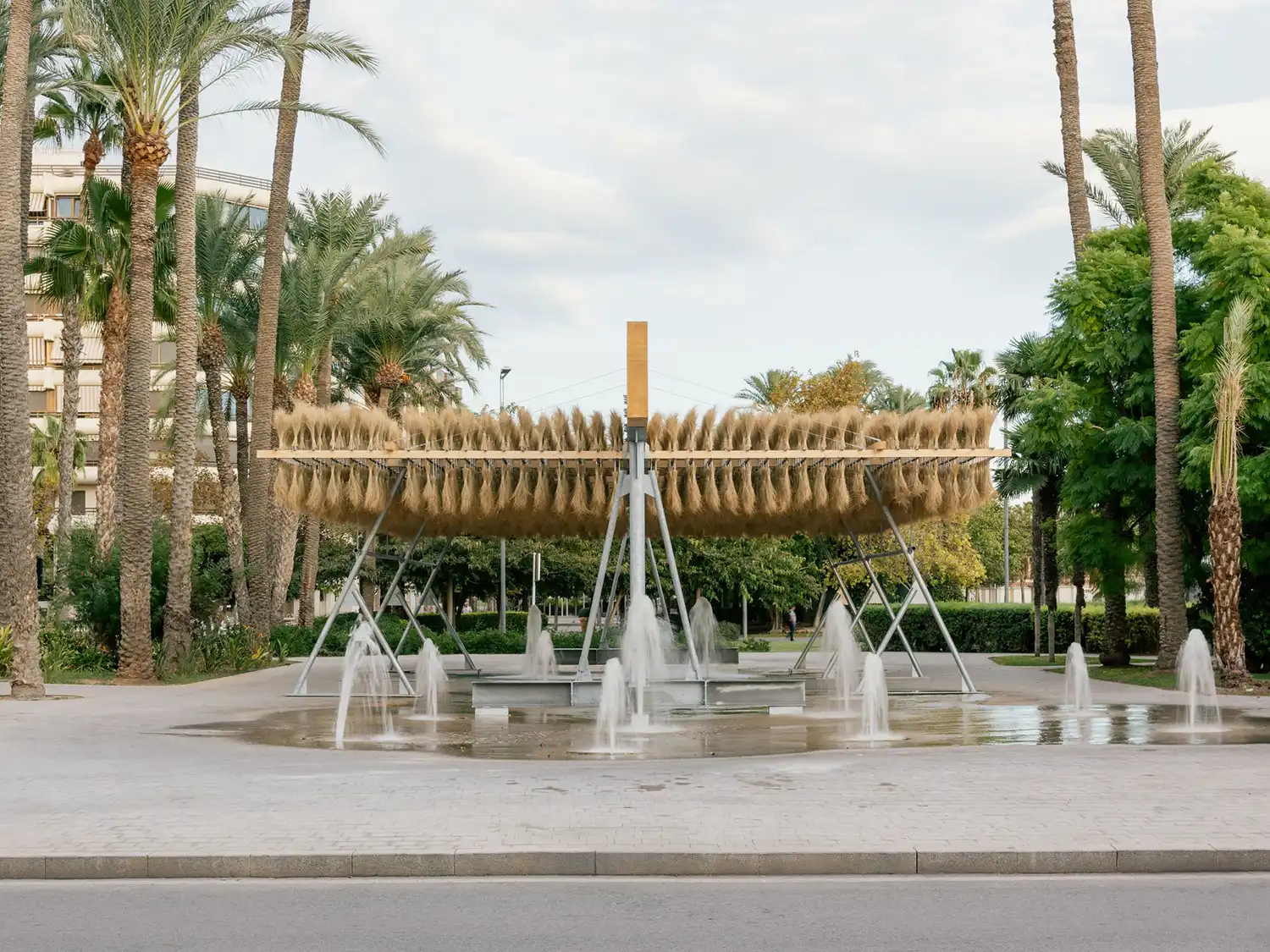
Ultimately, the project underscores a vital necessity: the critical review of construction materials through an ecological, functional, and symbolic lens. It champions rootedness to the territory and attention to local history, thereby advocating for material culture as a direct driver of sustainability. The installation is not merely a sensory experience; it is an invitation to reflect on natural cycles and the profound capacity of the work by ELE Arkitektura and GA Estudio to re-establish vital links between urban life and its agricultural, historical environment.