



In the West Seattle neighborhood, local architecture practice GO’C has completed the Ceramics Studio, a light-filled DADU (Detached Accessory Dwelling Unit) designed as a tactile workshop and communal hub for a maker whose work is deeply rooted in her Denesuline heritage from Northern Saskatchewan.
A dialogue with heritage defines the conceptual core of this project. For the client—a maker whose functional vessels echo the “sustenance and stillness” of her ancestral lands—the workspace could not be a mere utility shed. The structure acts as a physical extension of her craft, mirroring the quiet, simplified forms she coaxes from clay. The architects were tasked with translating a vast Canadian landscape of earthy tones into a compact, urban residential lot footprint that fosters both private creation and public education.
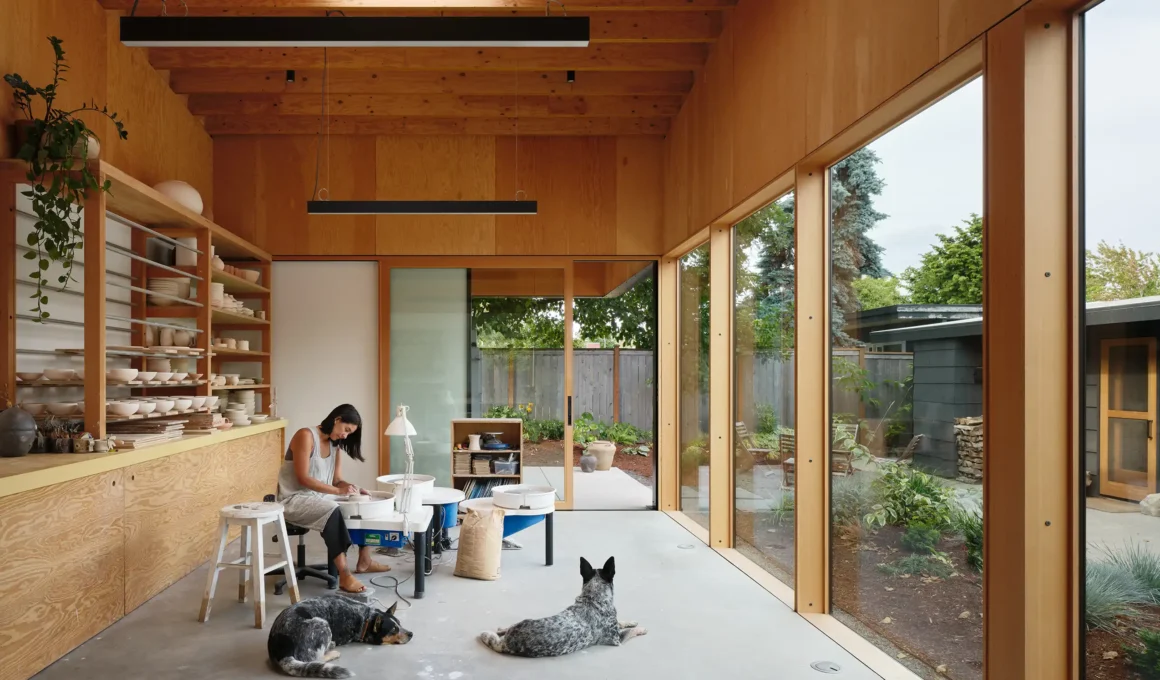
Structural honesty is the primary language of the interior. By utilizing exposed rafters that run uninterrupted from the indoor studio to the outdoor terrace, the studio establishes a rhythmic warmth that counters the grey winters of the Pacific Northwest. This timber skeleton creates a visual canopy of natural wood tones, which is further emphasized by a distinct material datum: clean, white display walls at the lower level, contrasted with the honeyed grain of the ceiling structure above.
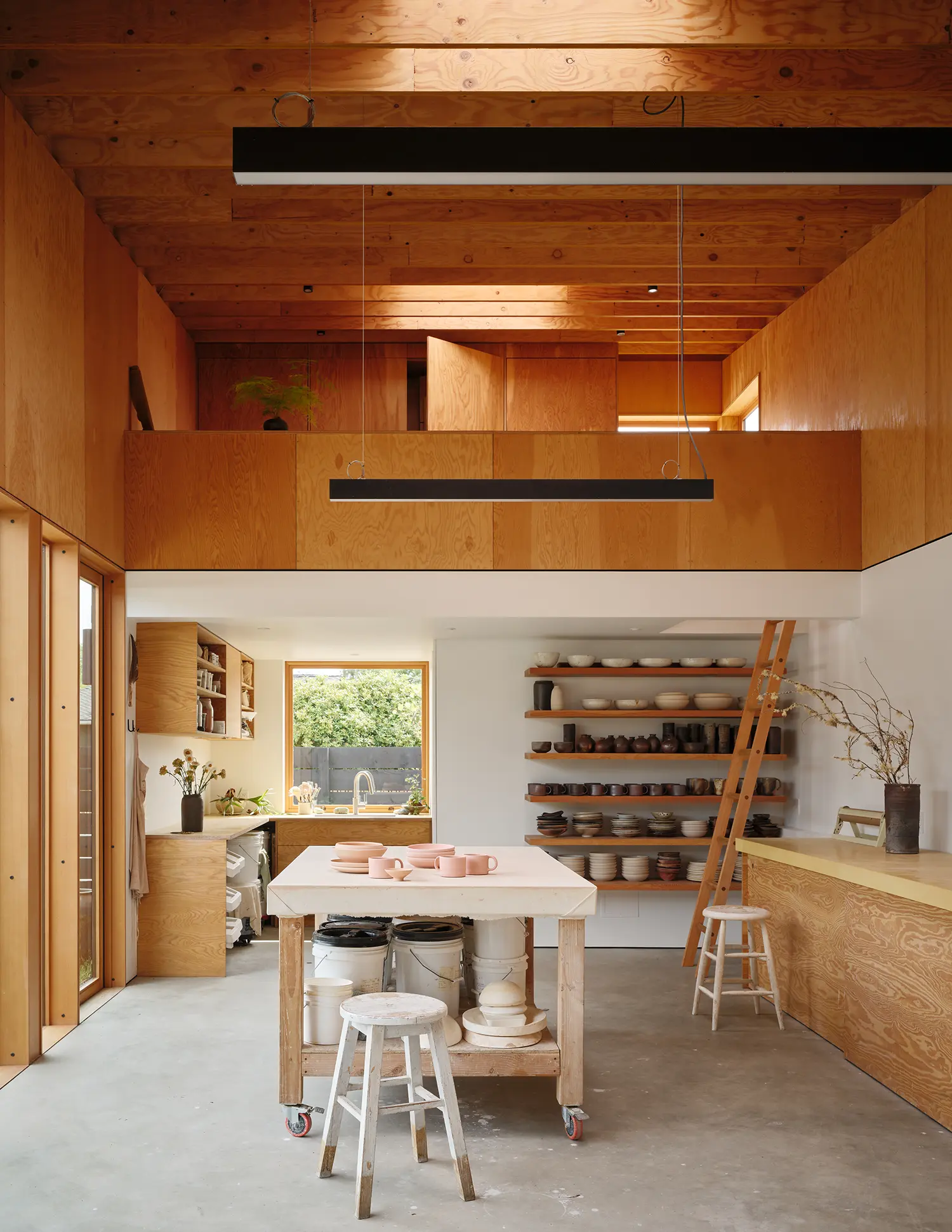
The choreography of light is managed through a series of strategic apertures. Three large skylights pierce the roof plane, dropping pools of brightness onto the loft, the primary sculpting floor, and the exterior kiln area. This vertical illumination ensures that the subtle textures of the clay are visible throughout the day, while a system of linear up-lighting allows the wooden ceiling to glow after sunset, maintaining a sense of professional focus during the short days of the Seattle winter.
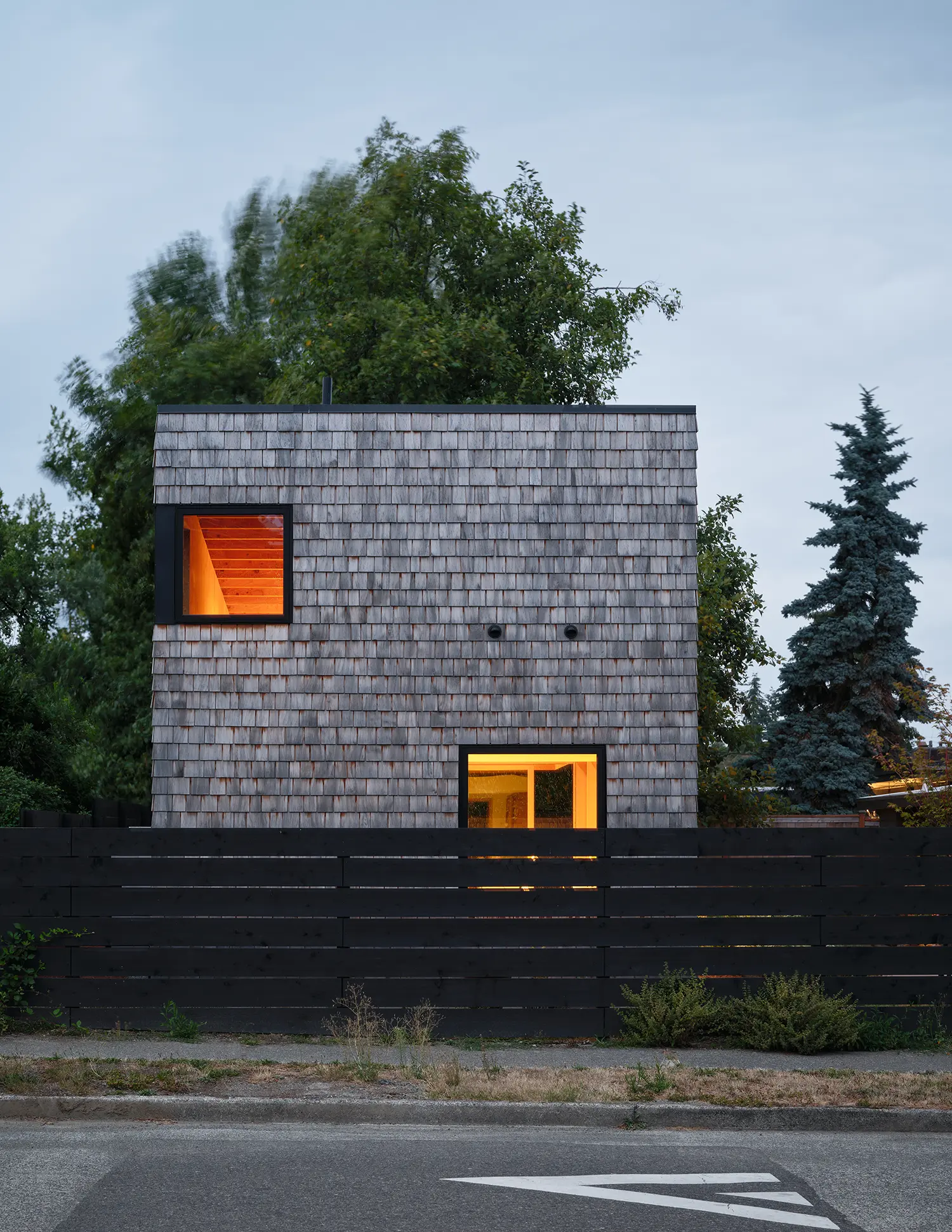
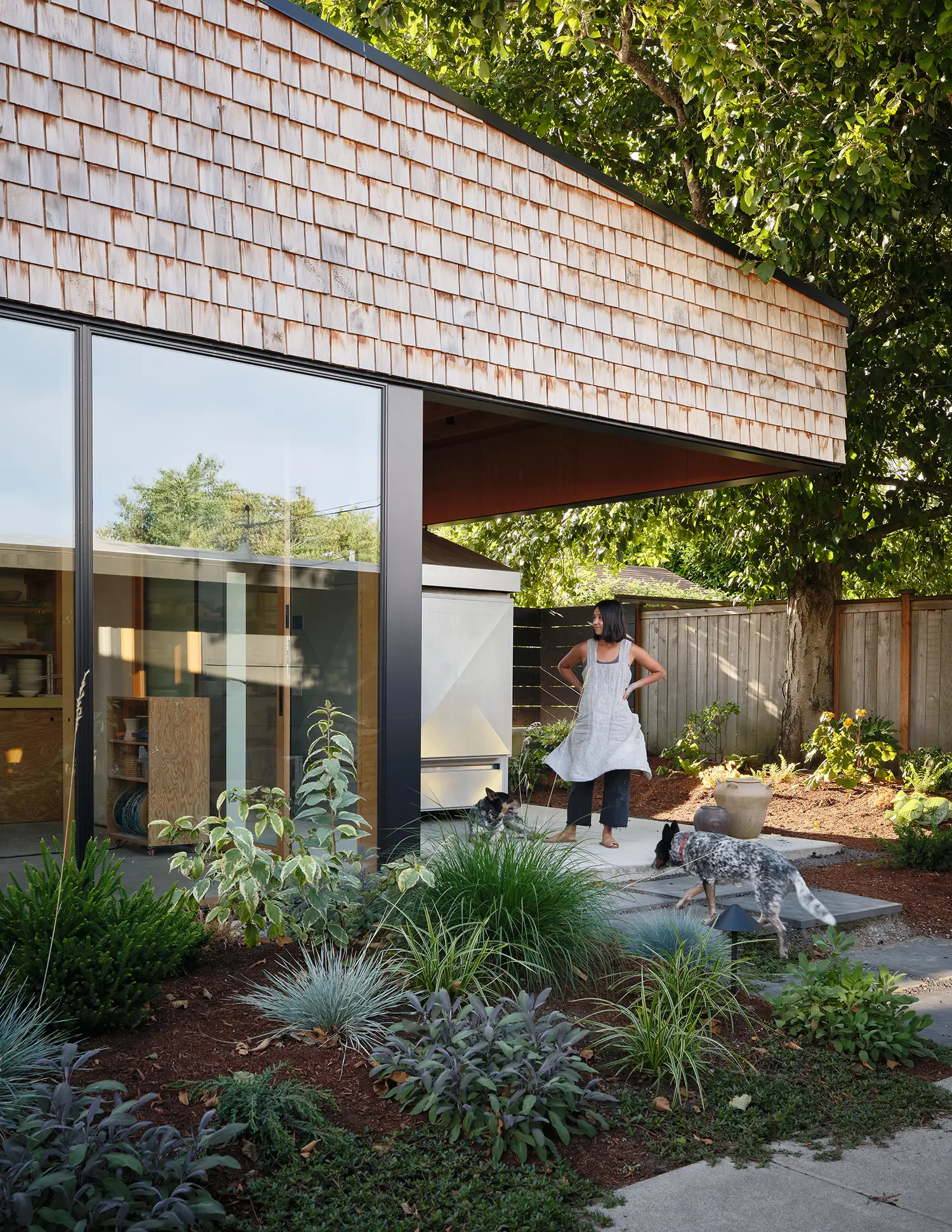
Expanding the footprint through smart geometry, the design features a significant cantilevered roof that shelters an exterior working terrace. This outdoor room houses two kilns, allowing the firing process to occur in a protected, ventilated environment while effectively doubling the usable square footage. This transition between interior and exterior is seamless, encouraging a flow of movement essential for the physical demands of forming and firing ceramics and the hosting of seasonal pop-up shops.
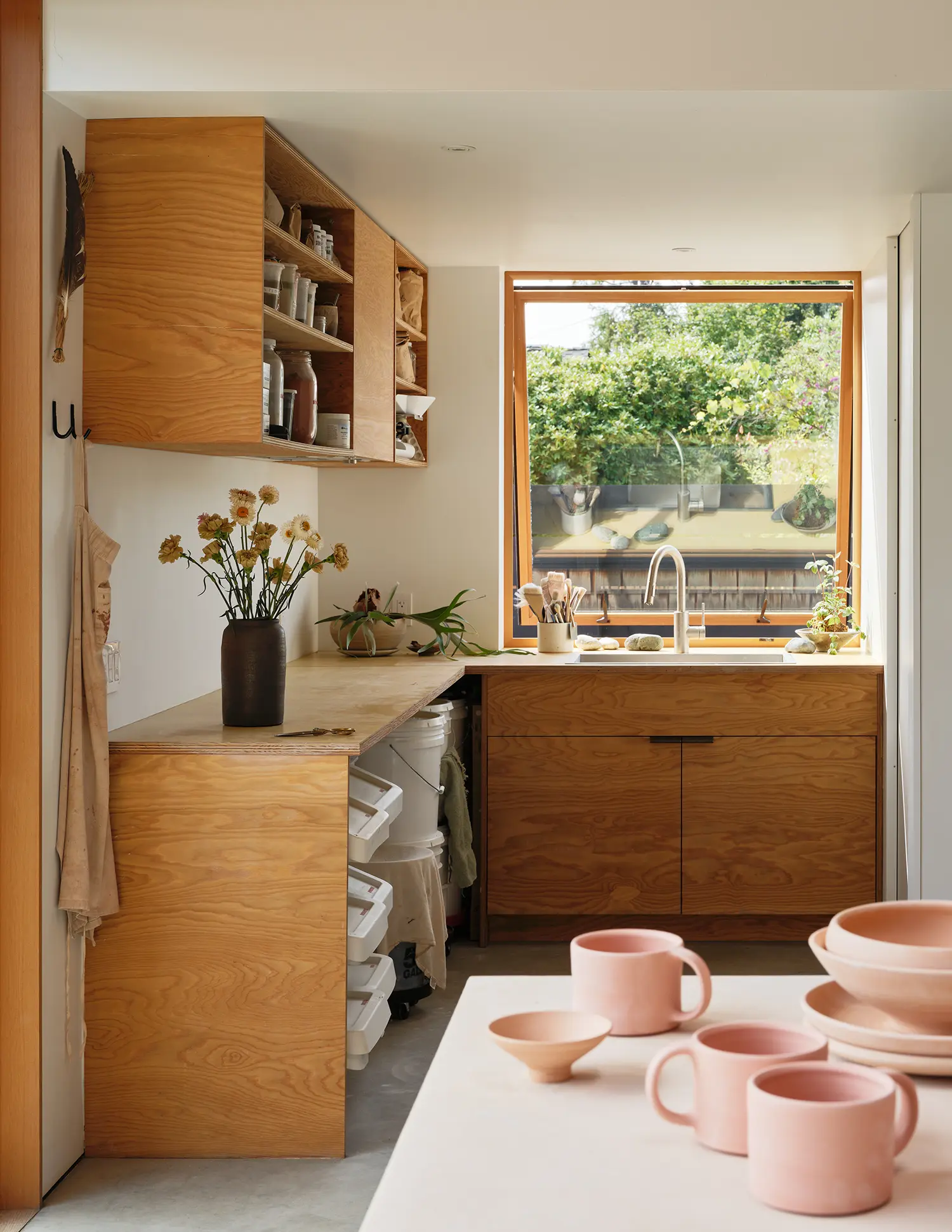
A spirit of collective labor underpinned the construction phase. Built on a tight budget, the project saw the client working full-time alongside the contractor, enlisting friends and family to realize the vision. This hands-on involvement has imbued the walls with a communal energy that transcends its primary function. Since its completion, the studio has evolved into a versatile neighborhood hub, shifting effortlessly from a workspace and classroom to a venue for communal dinners and a quiet guest bedroom loft.
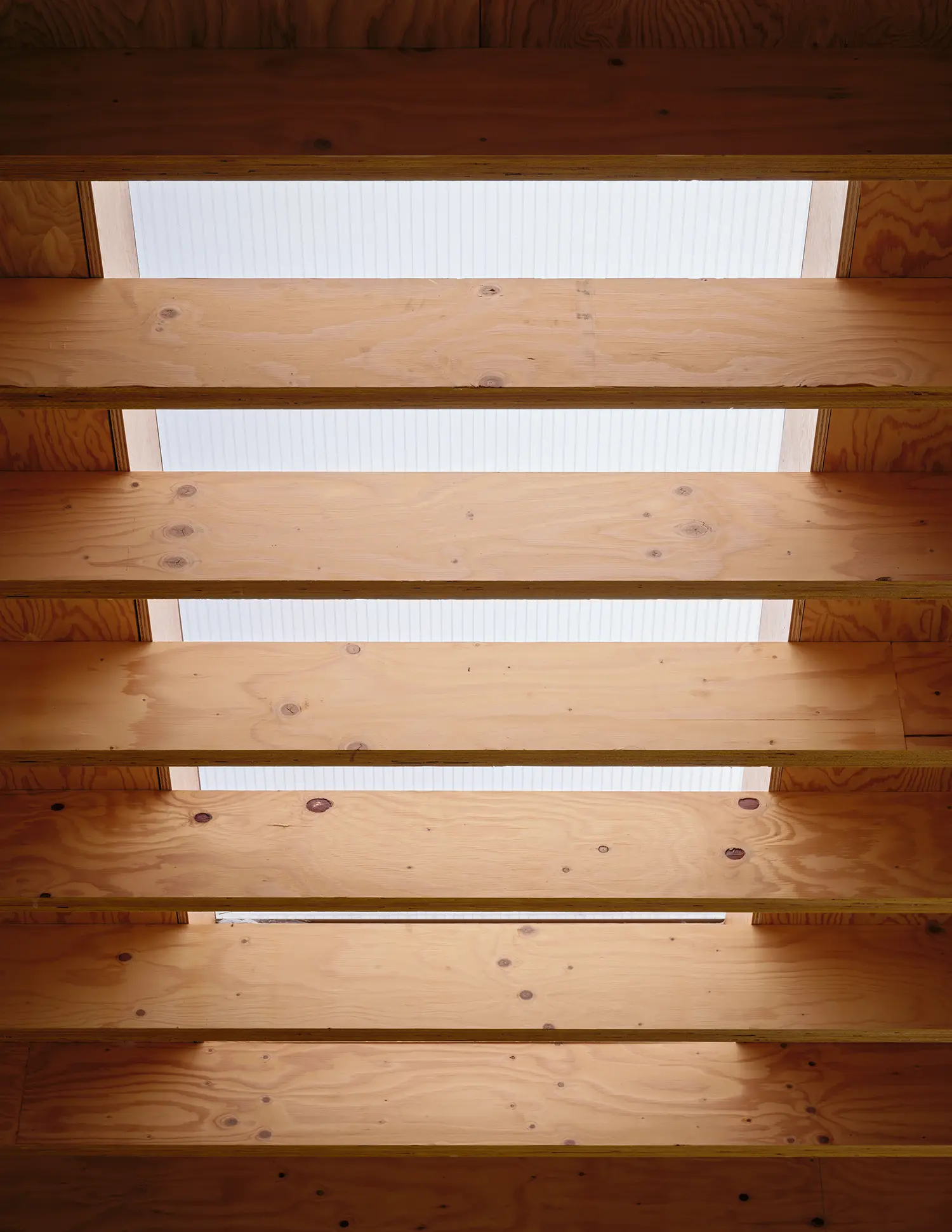
The sensory experience of the Ceramics Studio is one of atmospheric weight and lightness. There is a palpable tension between the heavy, grounded nature of the clay being worked at the benches and the soaring, light-drenched timber rafters above. It is a space that understands the “maker’s pace,” providing the silence necessary for individual focus while remaining open enough to invite the local community into the creative process.
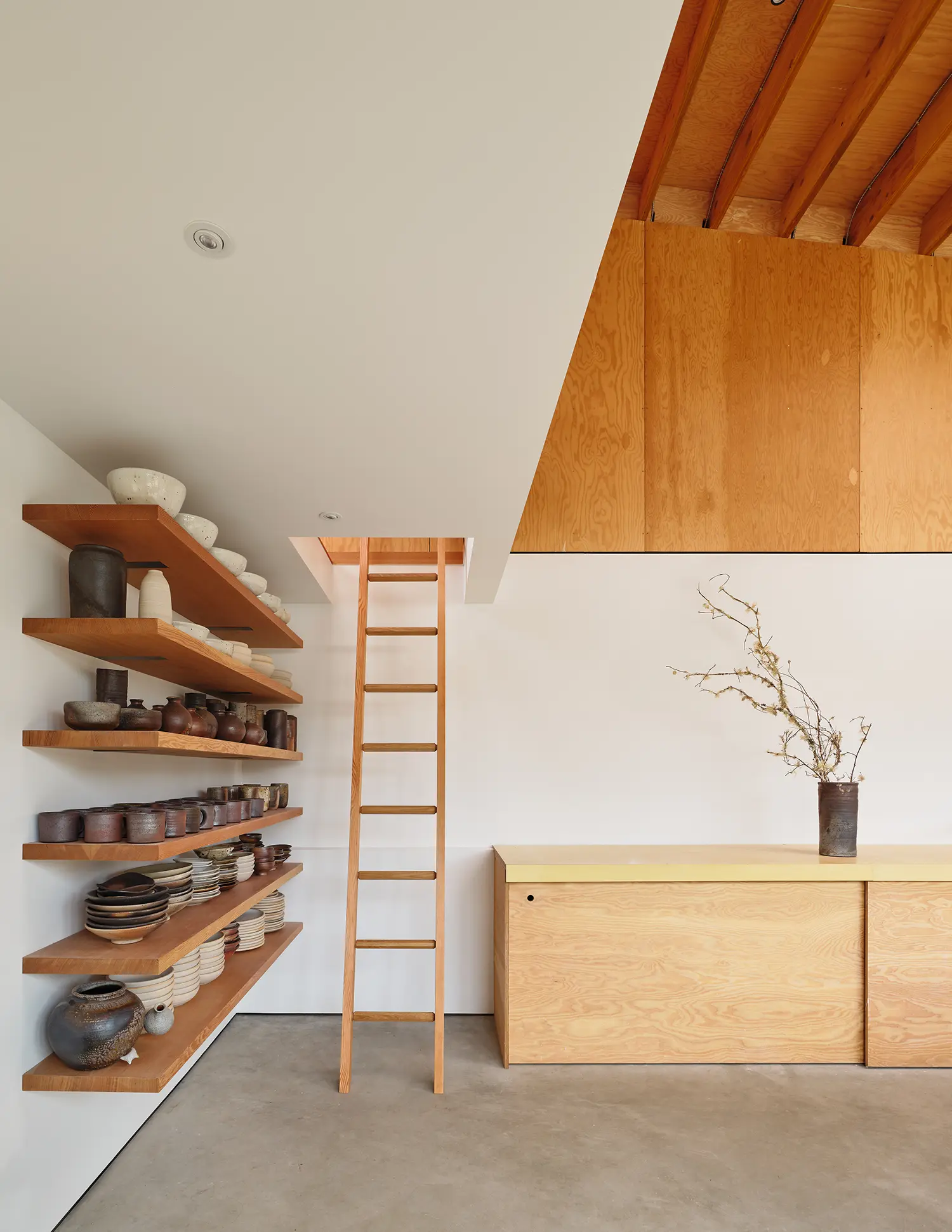
The rise of the multipurpose workshop reflects a broader shift in how we utilize residential peripheries. Similar to the Ono Two-Fold Studio in Fairfax, which we recently explored for its dual-purpose shingled garden room, this Seattle project highlights the growing necessity for flexible, detached accessory dwelling units. These modern outbuildings are no longer just for leisure; they have become critical sites of economic production and creative autonomy.
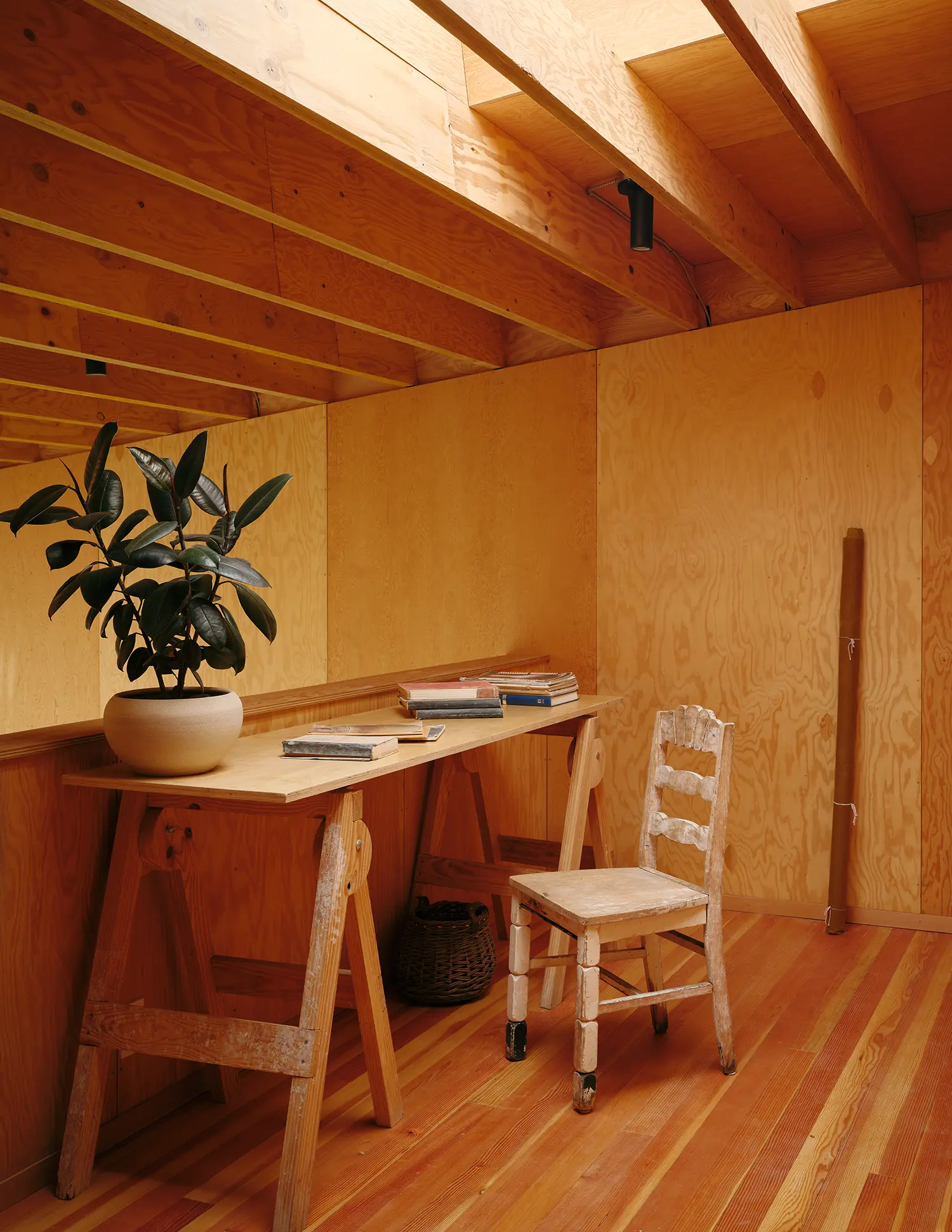
Beyond the typical DADU, this studio serves as a case study in how small-scale interventions can yield significant cultural impact. By prioritizing the client’s specific history and the physical requirements of her medium, GO’C has delivered a space that is both a functional tool and a poetic tribute. It stands as a testament to the idea that the most successful creative studios are those that do not just house a craft, but actively participate in the storytelling of the maker.