



Neural Expressive, the new design language Google rolled out globally on May 19 during I/O 2026, does something no Gemini update has attempted before: it treats the AI response itself as a designed object, not a text output. The shift reframes what an AI interface is supposed to do — and exposes just how much the industry has been coasting on the chat log as a default format. For 900 million monthly users across 230 countries, the experience of talking to Gemini is about to feel fundamentally different.
The typography was the first tell. Before Neural Expressive, Gemini responses arrived in undifferentiated blocks — the same visual weight whether the answer was three words or three thousand. The redesign inverts that logic: the most critical information surfaces at the top, bolded and isolated, with additional depth scrollable below. It’s a hierarchy borrowed less from chat interfaces and more from the logic of editorial layout, where the reader’s eye is guided rather than dumped on. The pill-shaped prompt input and consolidated “plus” menu complete the shift — a visual grammar that reads as considered, not assembled.

What the animations are actually doing is more interesting than they appear. The fluid transitions and haptic feedbackaren’t ornamental — they’re communicating state. When a model is processing, retrieving, or switching modes, the interface moves in ways that correspond to cognitive load. This is a design choice with real stakes: most AI tools either freeze or spin; Gemini now breathes. The result is an interface that feels less like software waiting for input and more like something that has its own rhythm.
The integration of Gemini Live into the core experience quietly eliminates one of the most friction-heavy moments in AI interaction: the modal switch. Previously, moving from typed queries to voice conversation required a deliberate context break. Neural Expressive folds the two together, allowing the user to slip between typing and speaking without the interface resetting. “We re-engineered the mic so you can tap and talk through a complex idea at your own pace without getting cut off mid-thought,” wrote Josh Woodward, VP of Google Labs, in the official announcement — a detail that sounds minor until you’ve lost a thread mid-sentence.
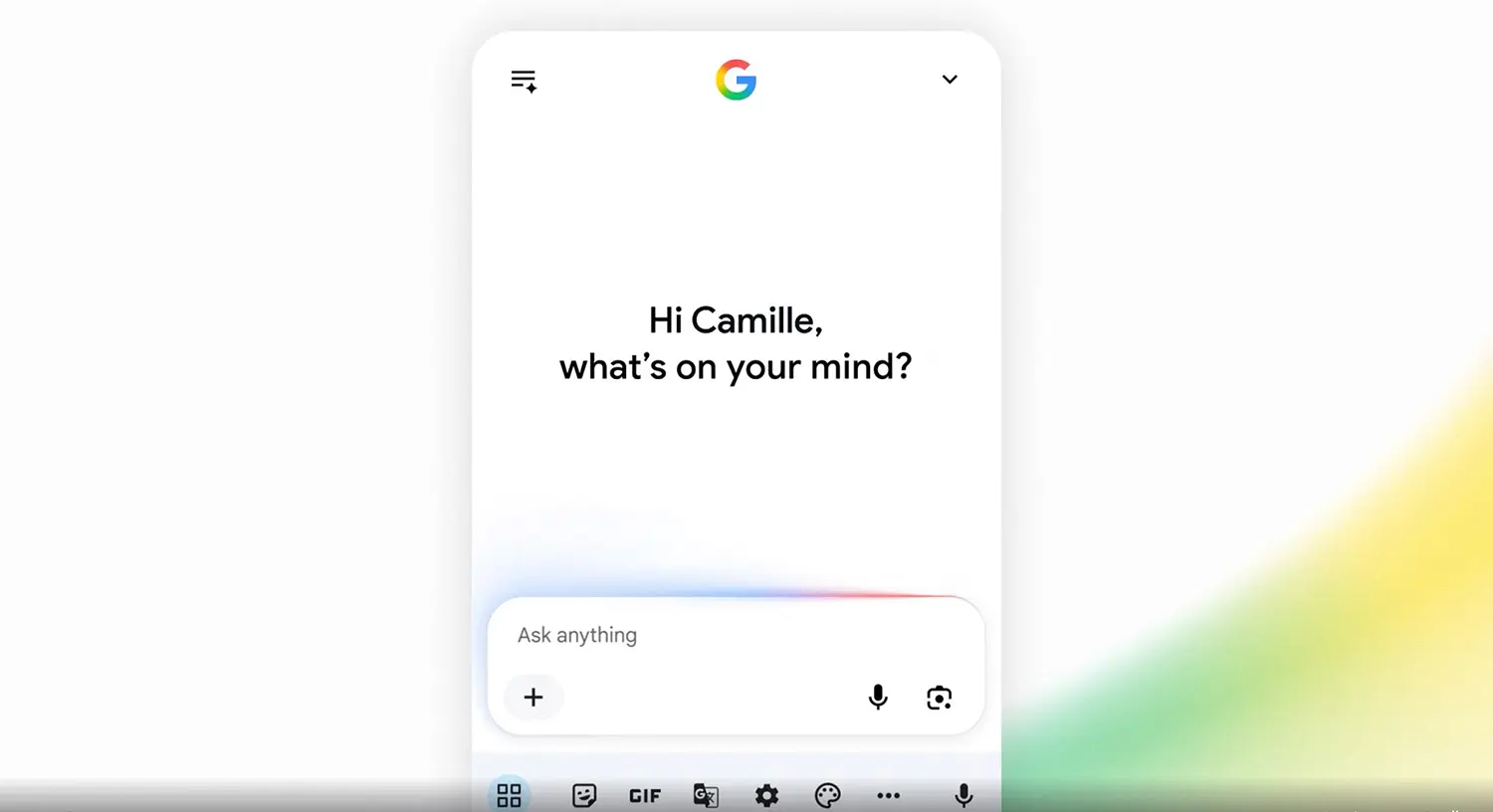
Responses as designed artifacts is the conceptual leap that the redesign is building toward. Rather than returning prose, Gemini now assembles answers in real time from a palette that includes inline imagery, narrated video, interactive timelines, and dynamic graphics. The model decides the format based on the query. Ask about a historical event and you might get a timeline; ask for a recipe and you might get a narrated walkthrough. This is less a feature than a repositioning: Gemini is no longer a tool you query but a system that composes.
The cost of this ambition is legibility. When the interface is making editorial decisions about how to present information — choosing when to show a video instead of text, when to use a timeline rather than prose — the user cedes a degree of control over how they receive answers. That trade-off is real, and it’s not obvious that every user will want it. The expressiveness that makes Neural Expressive compelling in a creative or research context may feel intrusive in a quick factual exchange. Google hasn’t yet shown how the system decides when to dial it back.

Regionally, the redesign carries an additional layer of specificity. Google has announced that regional dialects and accents will arrive in Gemini Live as part of the Neural Expressive rollout — a detail that sounds cosmetic but isn’t. Designing voice outputs for dialect variation requires the system to model not just phonetics but register, cadence, and cultural texture. It’s one of the few moments in tech’s long AI UX conversation where localization is being treated as a design problem rather than a translation task.
What’s visible in Neural Expressive is a company betting that the next competitive frontier in AI isn’t model capability — it’s legibility, warmth, and the quality of the moment between input and output. ChatGPT and Claude have both converged on variations of the same text-heavy interface that Gemini is now moving away from — a pattern of visual and narrative sameness that has quietly eroded user trust across digital platforms. The redesign is a wager that users are ready to be shown something, not just told it.
Neural Expressive will ultimately be judged not by its launch but by its behavior at scale — and specifically by whether its dynamism remains a feature when the novelty wears off, or hardens into noise. A system that composes its own response format is only as good as the judgment calls it makes; right now, Google has designed the instrument without yet publishing the score.