

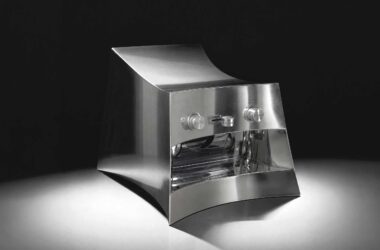

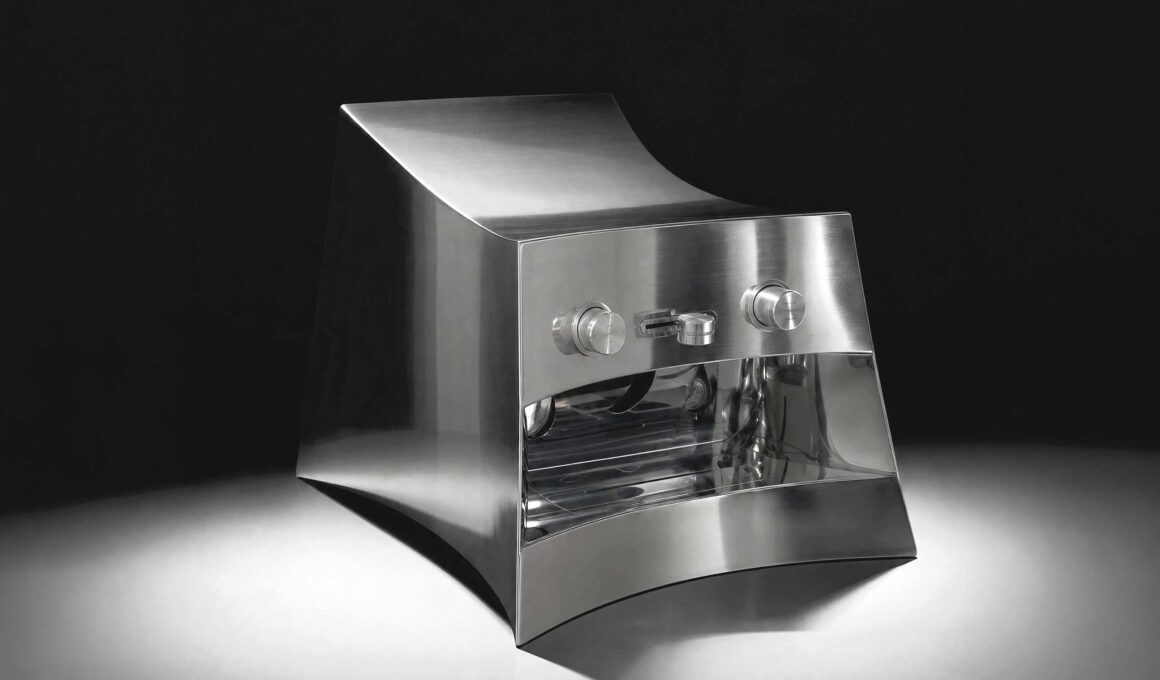
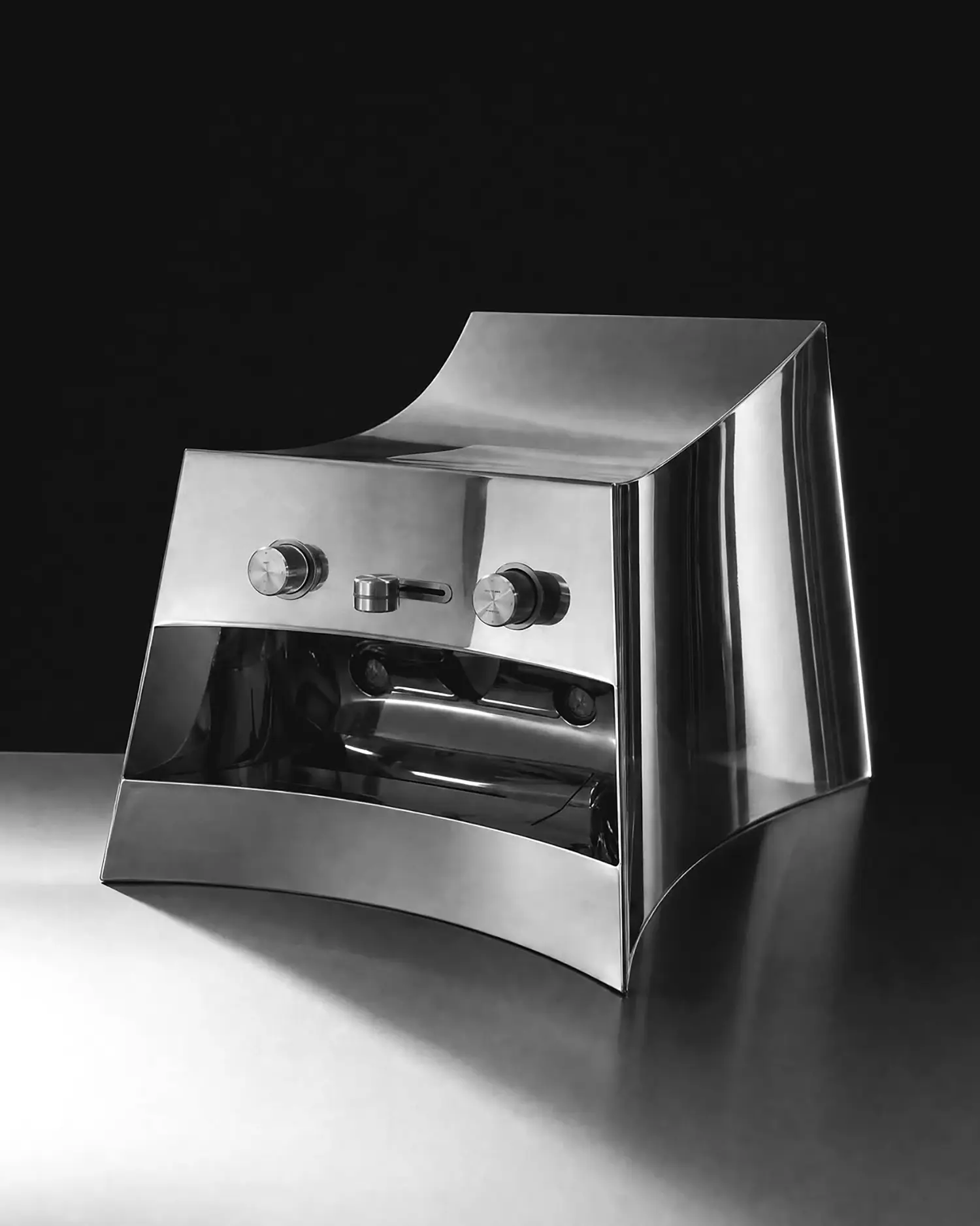
CALIPER strips every straight line from a La Marzocco Linea Mini, leaving a machine with nowhere to set a cup down. Developed for HELIOT EMIL‘s Paris SS27 showroom “Troxler” and unveiled by Joe & The Juice during Paris Men’s Fashion Week, the Madrid-based studio rebuilt the Linea Mini’s entire housing in polished stainless steel, curving every surface until the machine no longer reads as an appliance with a modified shell — it reads as an entirely different object that happens to still pull espresso.
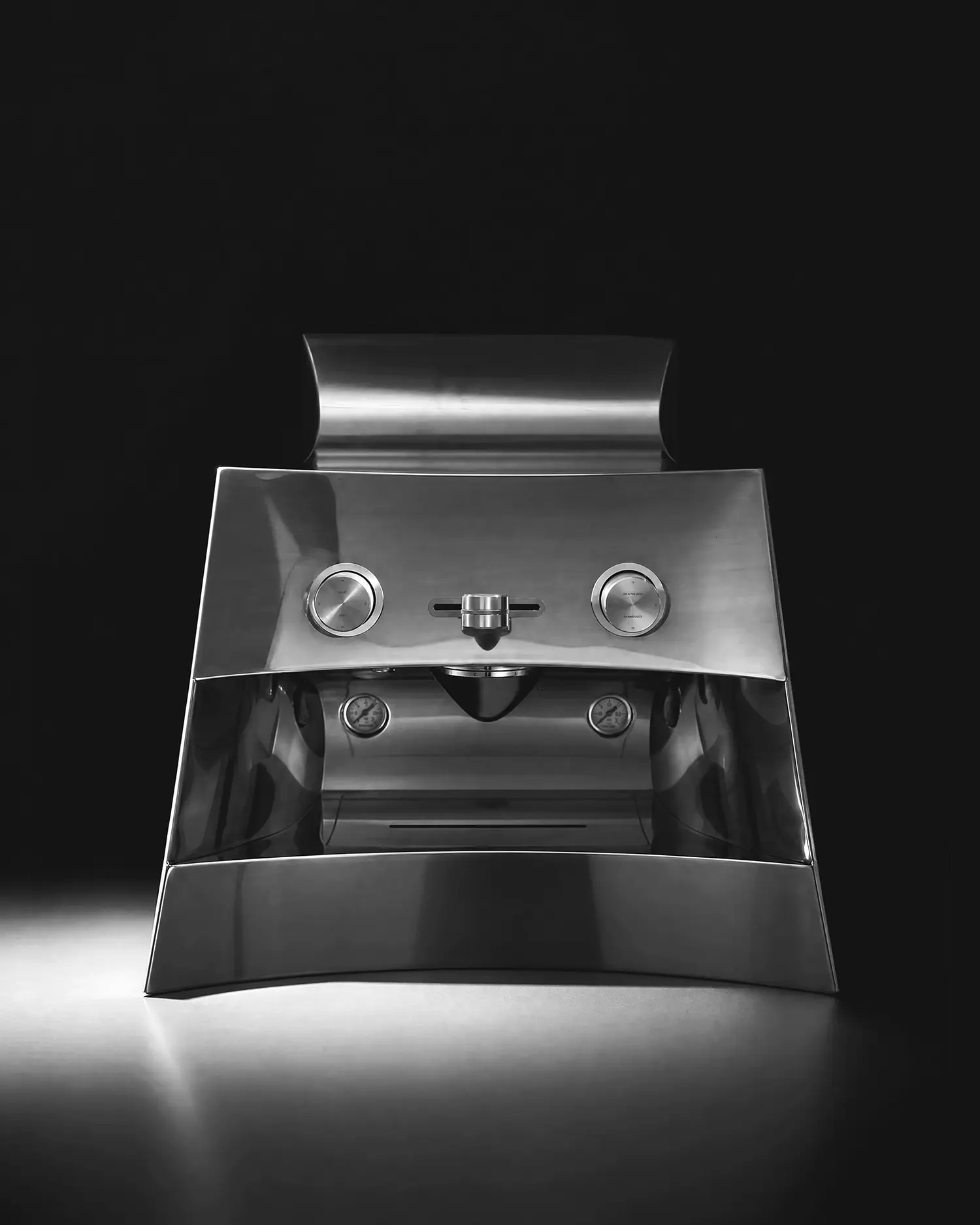
Most customized La Marzoccos, whether from the brand’s own Officine Fratelli Bambi atelier or aftermarket studios, keep the Linea’s foundational shape recognizable underneath new paneling. CALIPER’s version breaks from that pattern entirely: no vertical line, no flat top, no custom espresso machine housing surface left where a mug, a spare bag of beans, or a stack of takeaway cups could accumulate. The absence of usable surface is deliberate rather than incidental to the aesthetic.
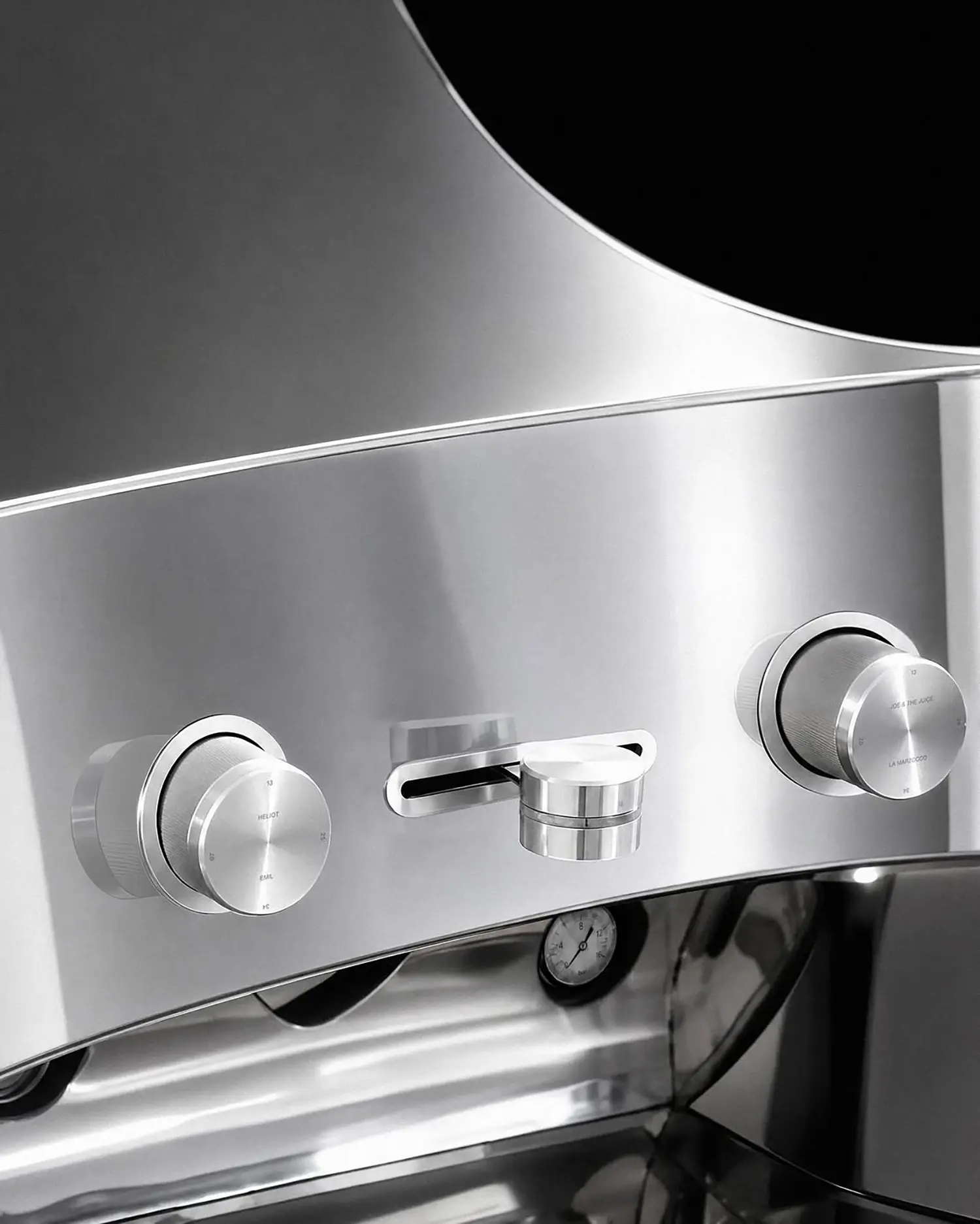
Heliot Emil explained the reasoning directly in the project’s Instagram caption: “Espresso has a window. Two, maybe three minutes before the crema breaks and the temperature drops, before it stops being the coffee it was. The machine is built to protect that window. The shape is built to make sure you do not waste it.” Removing every surface to rest a cup forces the coffee to stay in hand until it’s finished — a brutalist coffee machine design decision framed as protecting the drink rather than restricting the drinker.
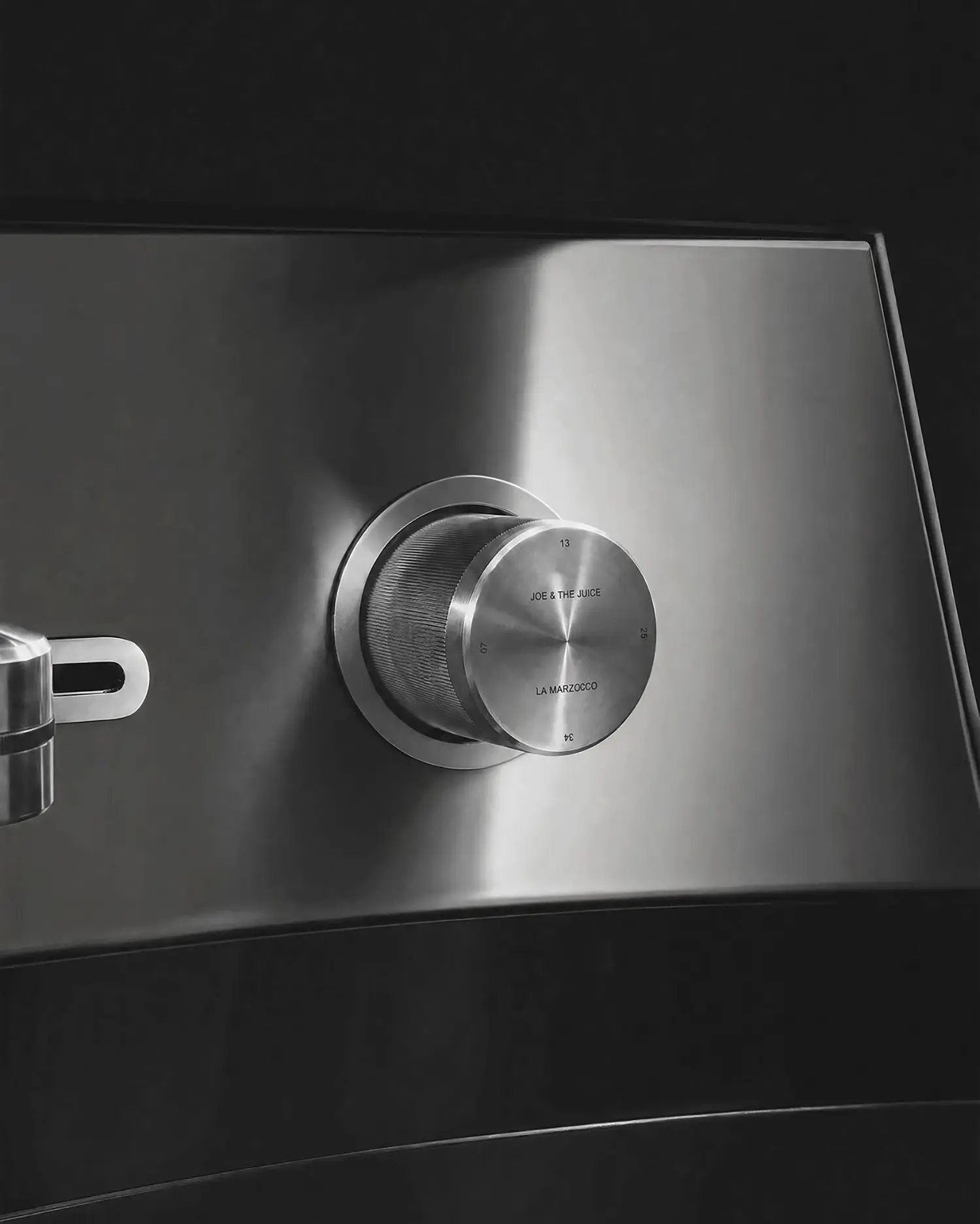
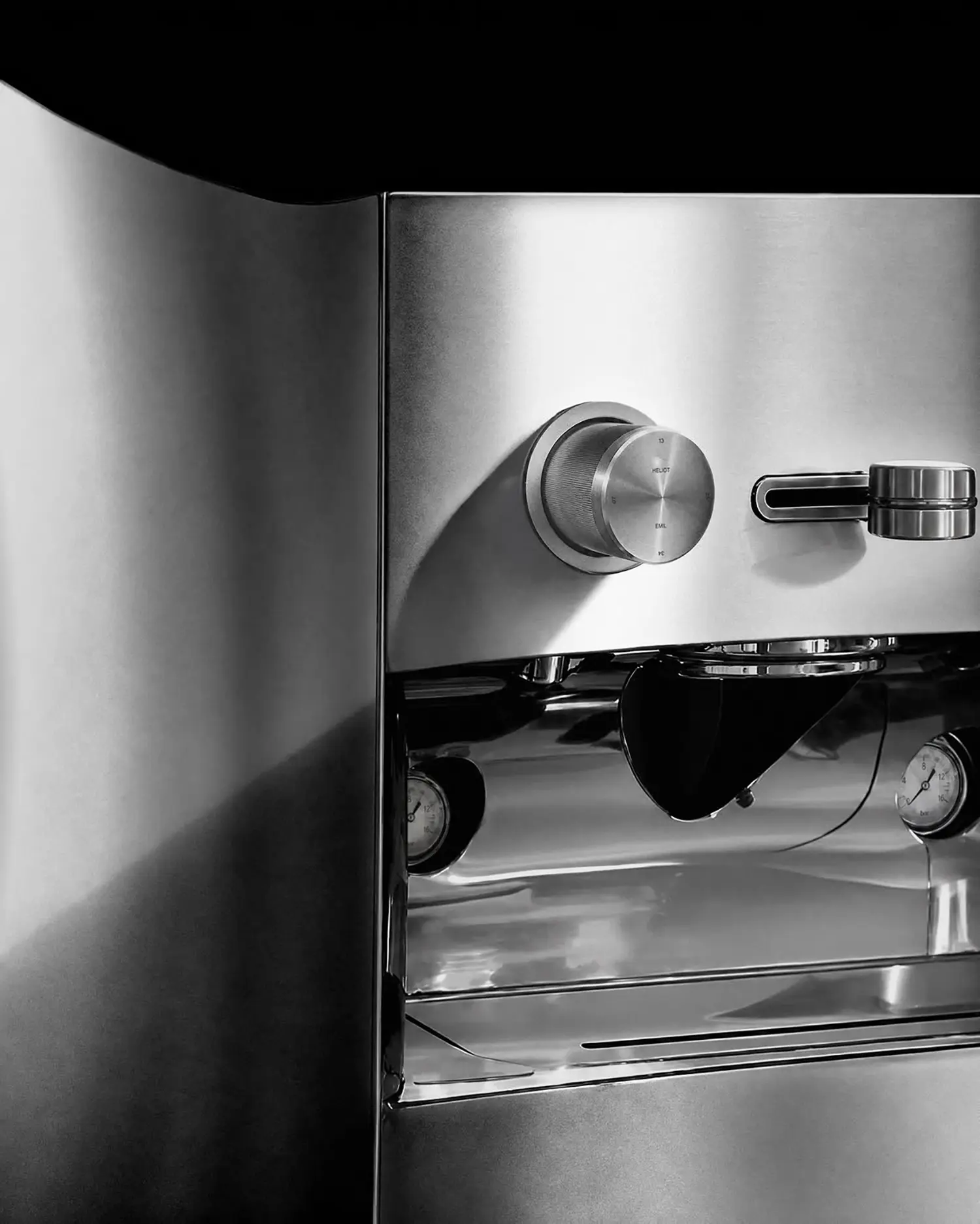
A custom paddle replaces the standard portafilter handle, and two machined adjustment knobs carry the names of both collaborating brands etched directly into the metal, alongside the numbers 07, 13, 25 and 34 — a reference to Heliot Emil’s four design pillars. The drip tray received the same treatment, curved to match the rest of the housing rather than left as a flat, standard component.
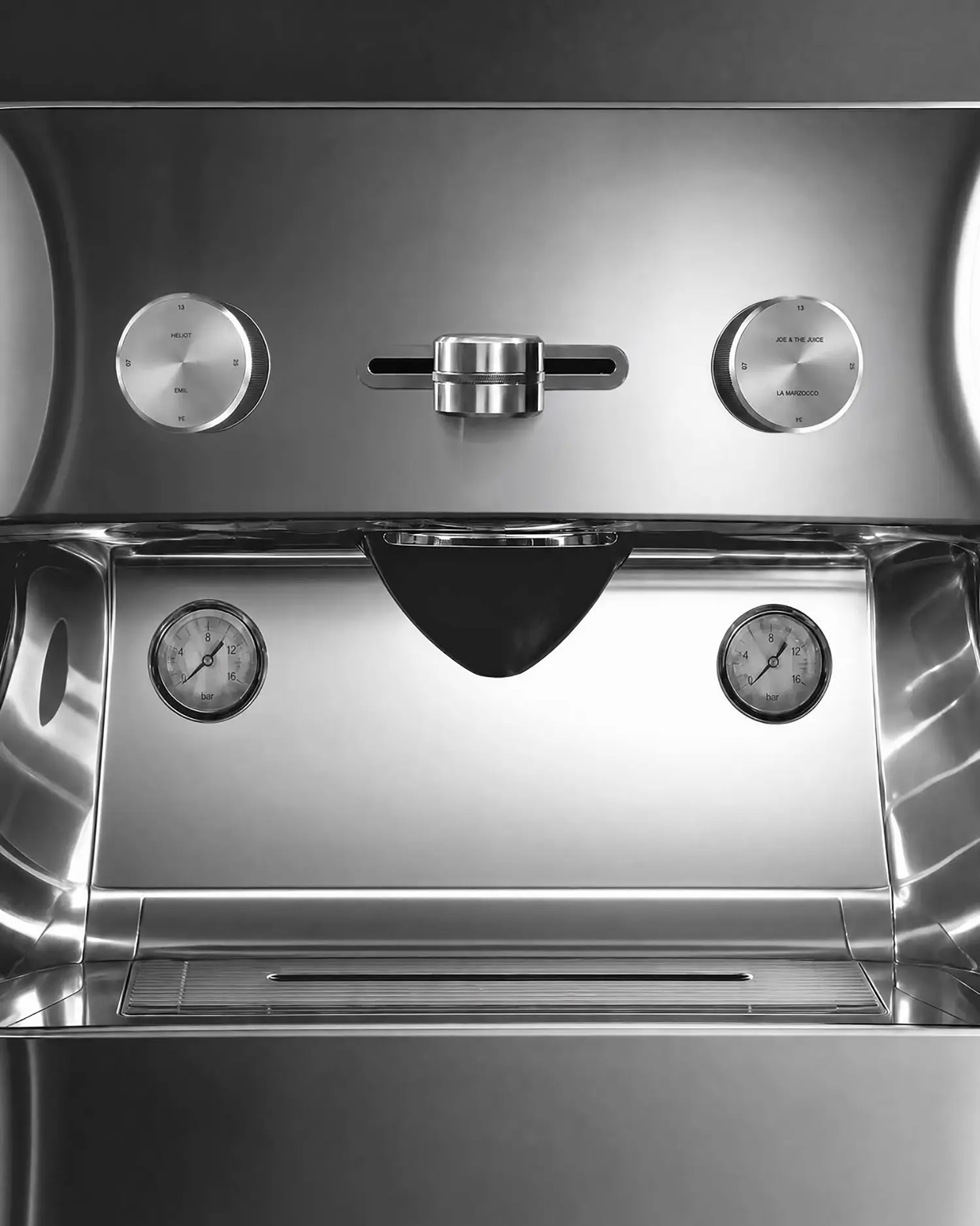
Two pressure gauges remain visible through the machine’s lower window, along with the internal group head — the one point where the polished shell opens enough to show the mechanical core still doing the work. Everything surrounding that window is unbroken steel, curved to a degree that removes any visual cue this started as a modular hospitality appliance built for routine servicing rather than display.
The activation extended beyond the machine itself: Joe & The Juice converted its Rue Marbeuf store into a full black-on-black takeover for the showroom’s run, with custom window vinyls, a black menu, black cups and sleeves, and a limited-edition Black Iced Latte made with black sesame syrup and raw cacao. The machine functioned as the centerpiece of a room built around a single restrained palette rather than a conventional product launch. Anza’s aluminum-cast espresso machine by Montaag took a comparably reductive approach to the category, though Anza pared the object down rather than removing its usable surfaces entirely — a useful comparison for a category that rarely separates form this decisively from function.
Whether a coffee machine needs a place to rest a cup is not a question the espresso industry has ever seriously asked, because every machine on the market answers it the same way. CALIPER’s version argues that removing the answer entirely — forcing the object to do only one thing — communicates more about a brand’s discipline than any amount of added functionality could.
La Marzocco Linea Mini for HELIOT EMIL x Joe & The Juice by CALIPER | Where: Joe & The Juice, Rue Marbeuf, 75008 Paris, France — When: June 23–28, 2026, Paris Fashion Week Men’s SS27 “Troxler”