



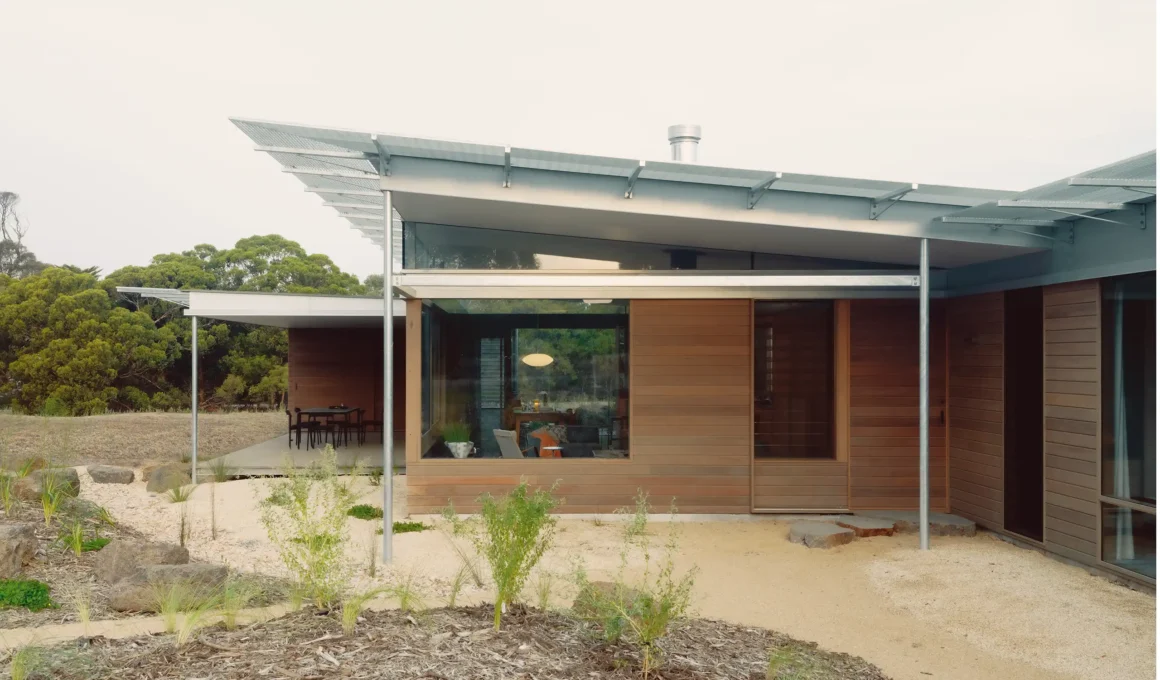
Set within the coastal bushland of Victoria’s Great Ocean Road, the Ironbark House by local practice Not All Architecture is a robust, climate-resilient dwelling that masterfully balances family connection with the rugged beauty of its site. Designed for a family of five, the home steps gently across the natural terrain of Wadawurrung Country, utilizing heavy-timber cladding and a modular, additive layout that embraces both structural honesty and the shifting patterns of the Australian coastal wind.
A rhythmic dialogue with Utzon’s principles shapes the very core of this project, finding its conceptual roots in the legendary Danish architect Jørn Utzon’s theory of “additive architecture.” Rather than forcing a singular, monumental volume onto the site, the layout utilizes the repetition and subtle variation of simple, prefabricated structural bays to form a complex, organic configuration. This choice mirrors the modular logic of Utzon’s Expansiva system, allowing the home to step down along the site’s contours, ensuring the built form feels additive rather than disruptive to the surrounding eucalyptus forest.
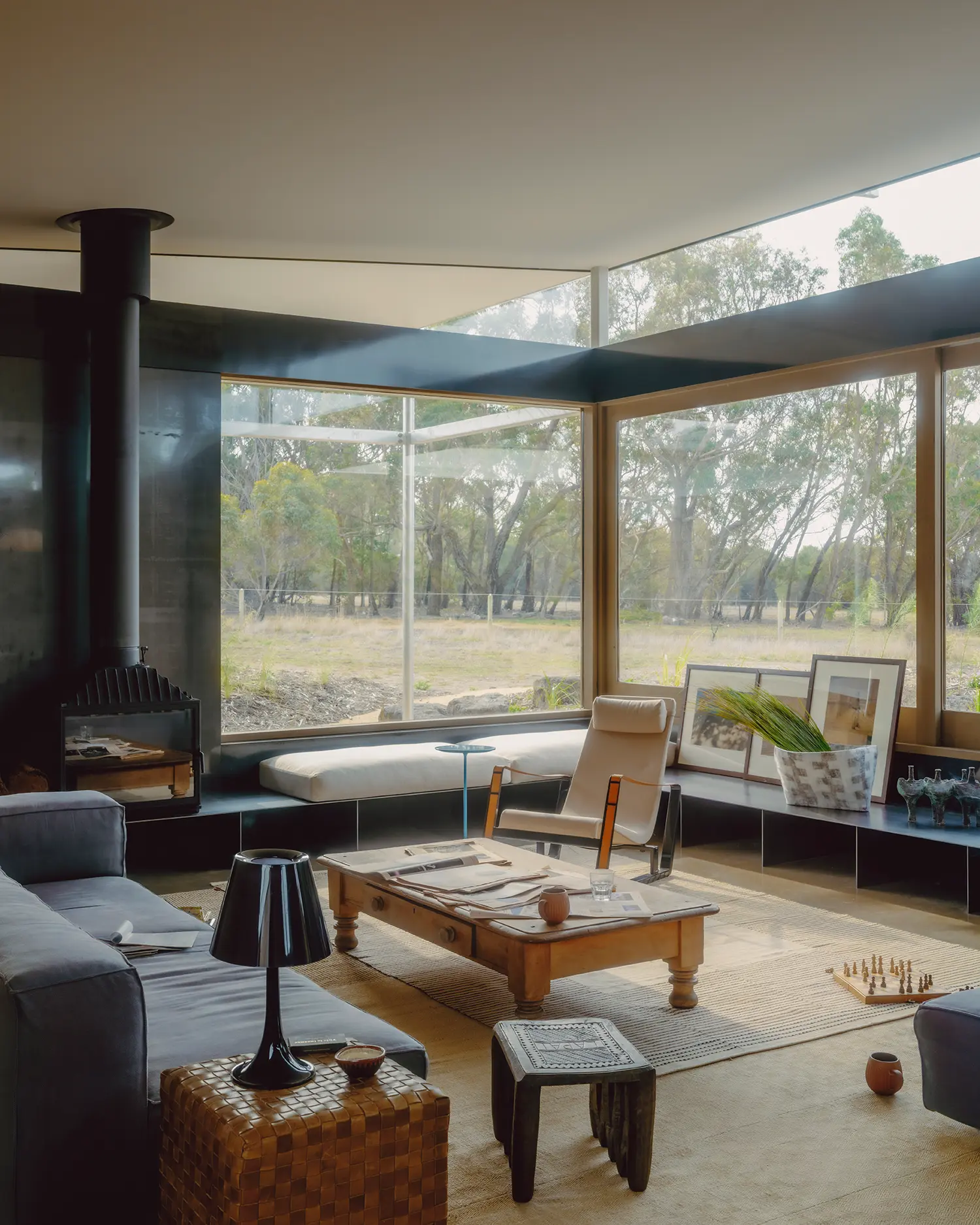
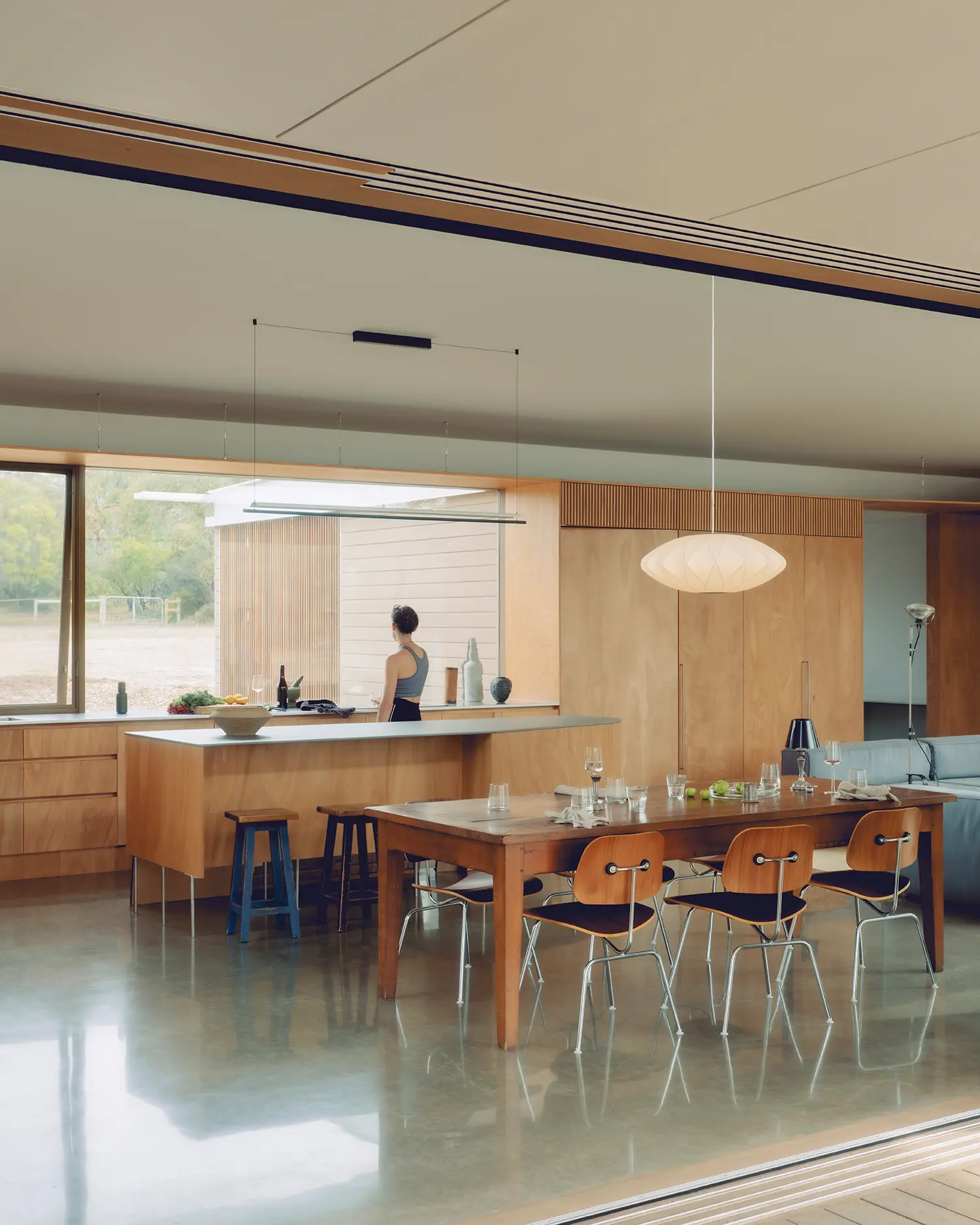
Choreographing daily family connection was a primary driver for the spatial flow, which is meticulously arranged to prompt a dynamic diagonal movement throughout the day. The program separates the private quarters into distinct wings: the adults’ retreat extends to the east, while the children’s zone occupies the west. These private wings converge directly into the central communal core, forcing family members to cross paths and interact. By integrating a built-in daybed, a central steel hearth, and custom joinery, the shared living room becomes the warm, highly tactile heart of the home.
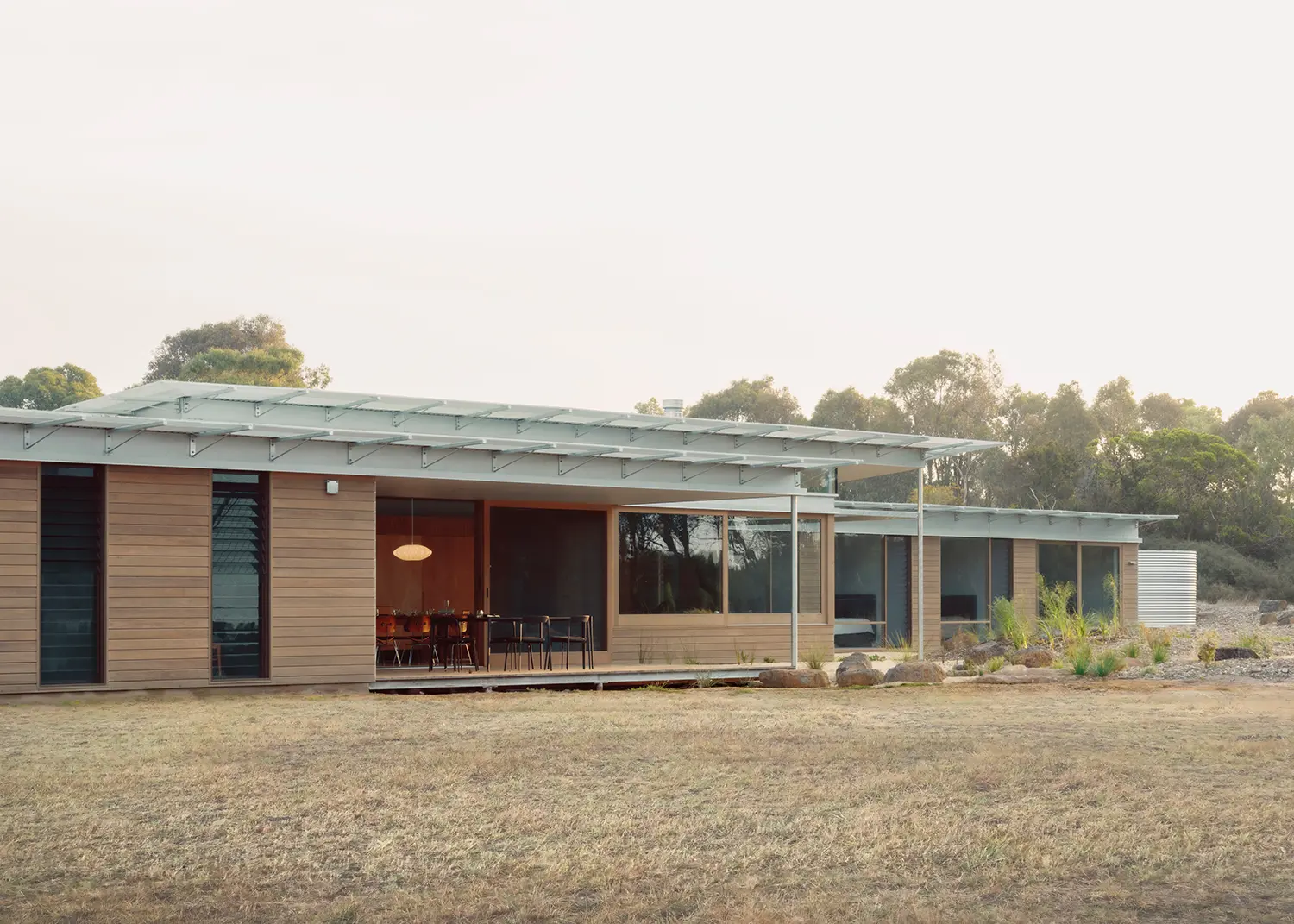
Responding to the coastal microclimate required a deep understanding of the regional weather, which is characterized by harsh seasonal winds and intense sun along Victoria’s south-west coast. In response, the staggered footprint of the home is strategically configured to create a series of sheltered, deep-set courtyards. These outdoor rooms act as microclimate buffers, allowing the family to enjoy the outdoors year-round, shielded from the biting ocean breezes. Large-span glazed openings frame the native landscape, seamlessly merging the interior sensory experience of this coastal home with the surrounding bushland.
A structural language built to last defines the material selection, especially when addressing the severe environmental demands of a bushfire-prone area. The exterior is wrapped in dense, Class 1 ironbark timber cladding, which naturally achieves a BAL 29 bushfire rating while weathering into a soft silver-grey that mimics the native tree trunks. This heavy timber skin is supported by an exposed galvanized steel skeleton. To prioritize long-term sustainability, the architects developed custom, fully demountable steel connection details, allowing structural elements to be easily repaired, reversed, or replaced as the building ages.

The evolving context of Australian residential design serves as an essential backdrop for this project, reflecting a broader movement where designers are increasingly rejecting generic suburban typologies in favor of climate-specific honesty. We see a similar dedication to raw materiality and site integration in projects like Sonelo Architects’ Cascade House, which renegotiates inner-city heritage footprints with a similarly refined, tactile material palette that celebrates local craftsmanship.
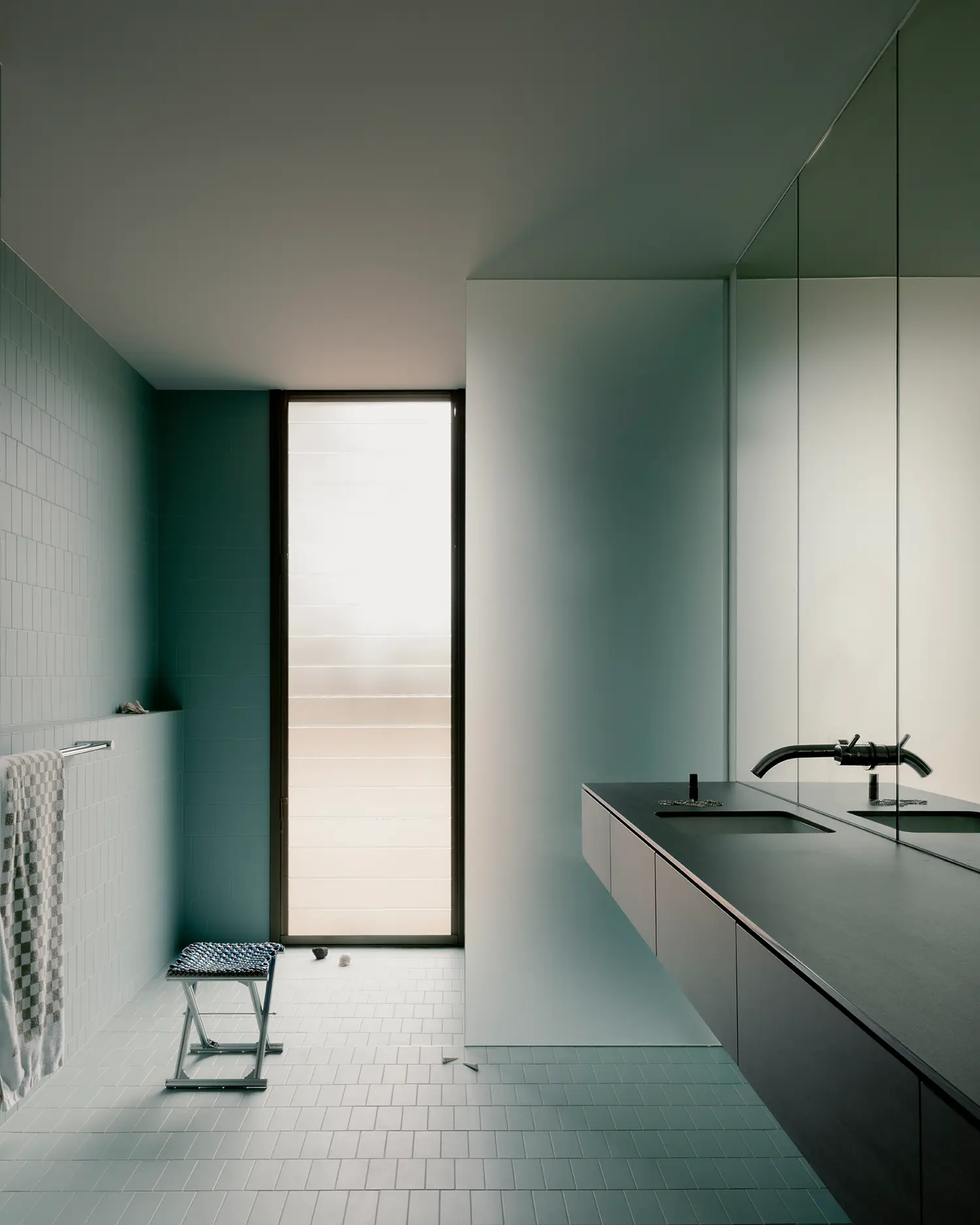
Modular flexibility and structural honesty are not unique to this site but connect it to a wider national dialogue, echoing the functionalism of Nick Kent Design’s Bondi House. That project demonstrated how a modular steel home can elegantly solve complex site constraints. Both projects celebrate their structural skeletons rather than hiding them, treating structural elements as vital contributors to the visual and spatial rhythm of the dwelling, resulting in highly efficient, adaptable living spaces.
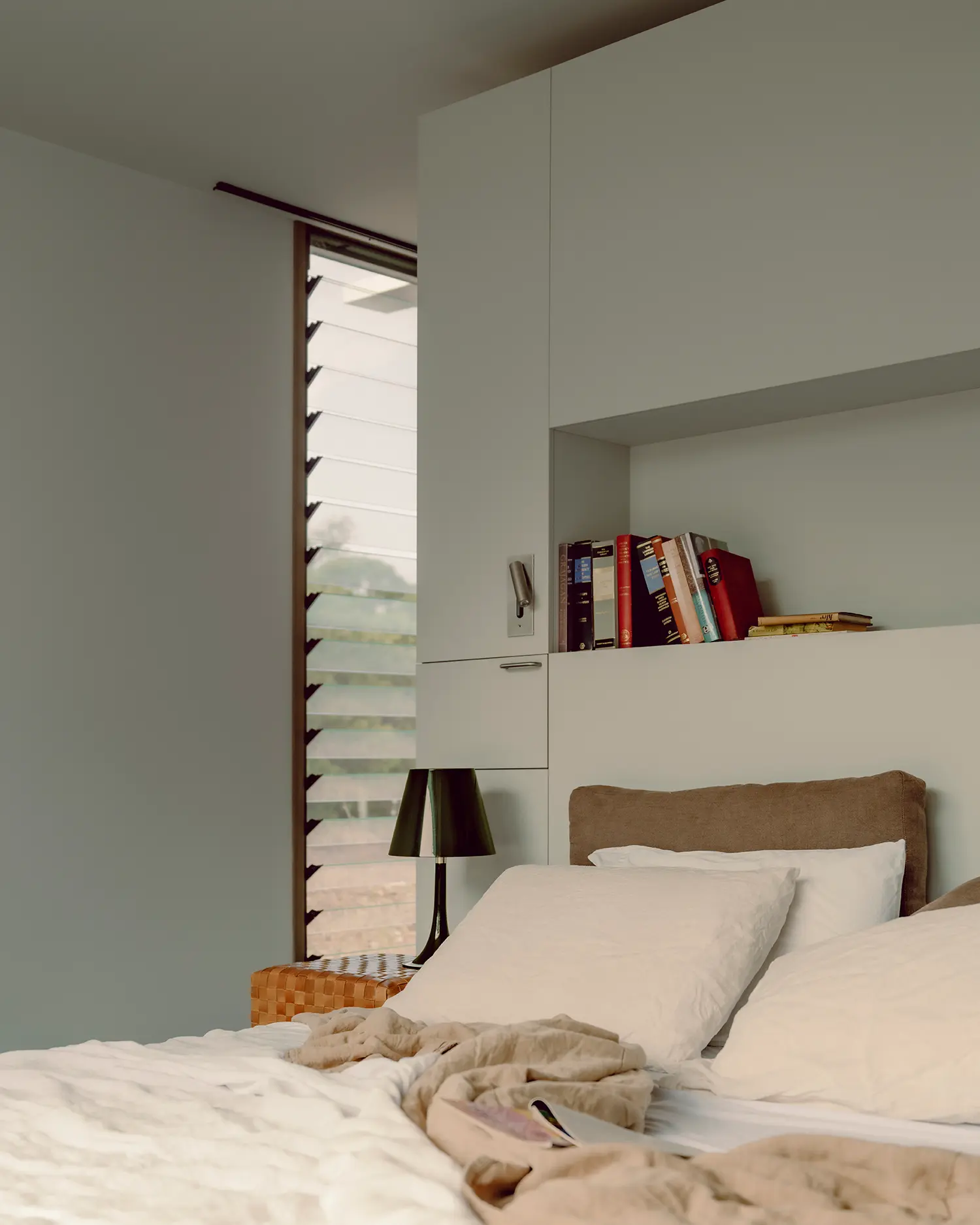
Crafting a permanent connection to place is a shared philosophy that unites these contemporary works. Further down the Victorian coast, JAK Architecture’s Barwon Heads House similarly showcases how a thoughtful coastal house renovation can ground a home within its environment through carefully considered timber interventions. What sets Not All Architecture’s work apart is how the timber skin and galvanized steel frame are not merely decorative but serve as a direct shield against the elements, proving that high-performance, climate-resilient dwellings can also feel incredibly warm, poetic, and deeply human.