



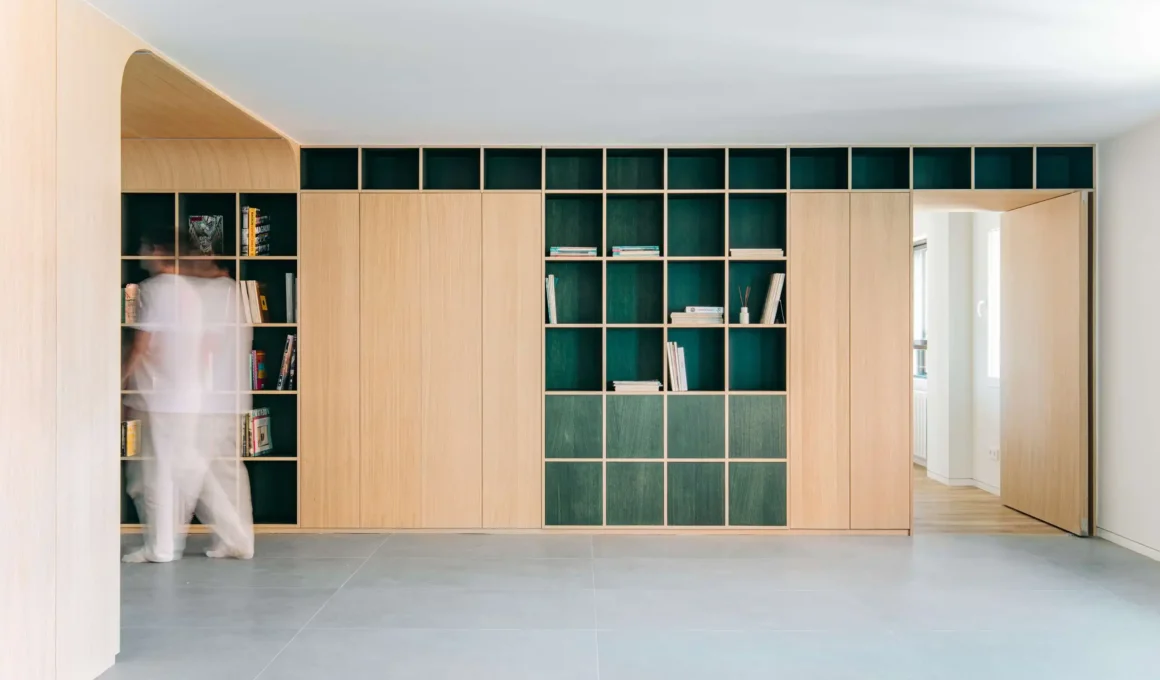
By treating joinery as an architectural anchor rather than a secondary fitting, Madrid-based studio JOTAJOTA+ reconfigures a domestic interior in the Chamartín district into a highly disciplined study of spatial efficiency and visual weight. Instead of relying on traditional partition walls that permanently sever light and movement, the intervention centers on a singular, multi-functional timber structure that dictates the rhythm of the entire floor plan. This strategic choice bypasses the standard open-plan layout, opting instead for a sophisticated game of concealment and exposure that challenges how contemporary families inhabit dense urban apartments. It is a critical response to the generic minimalism often found in modern renovations, proving that identity can be carved directly from structural utility.
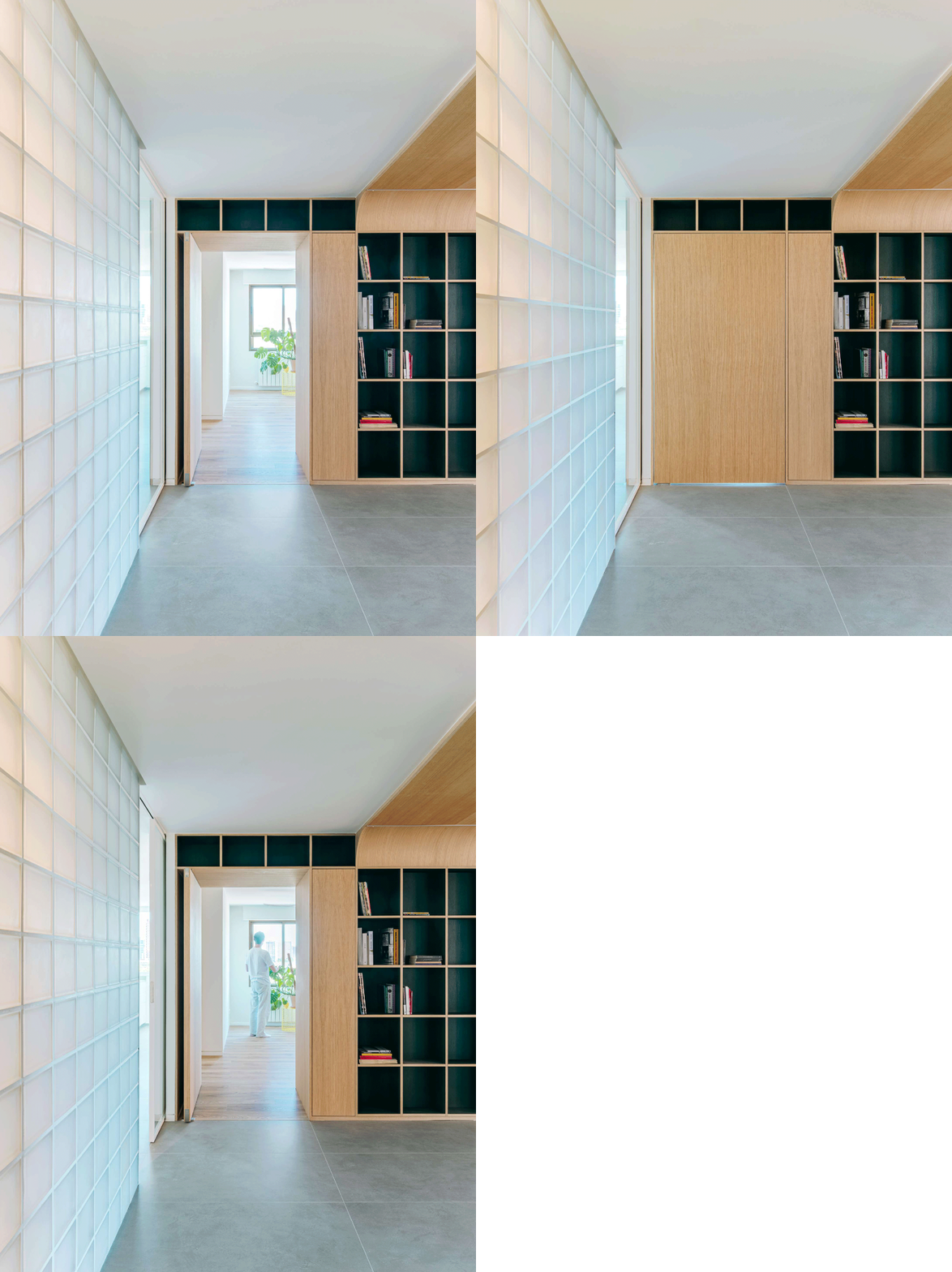
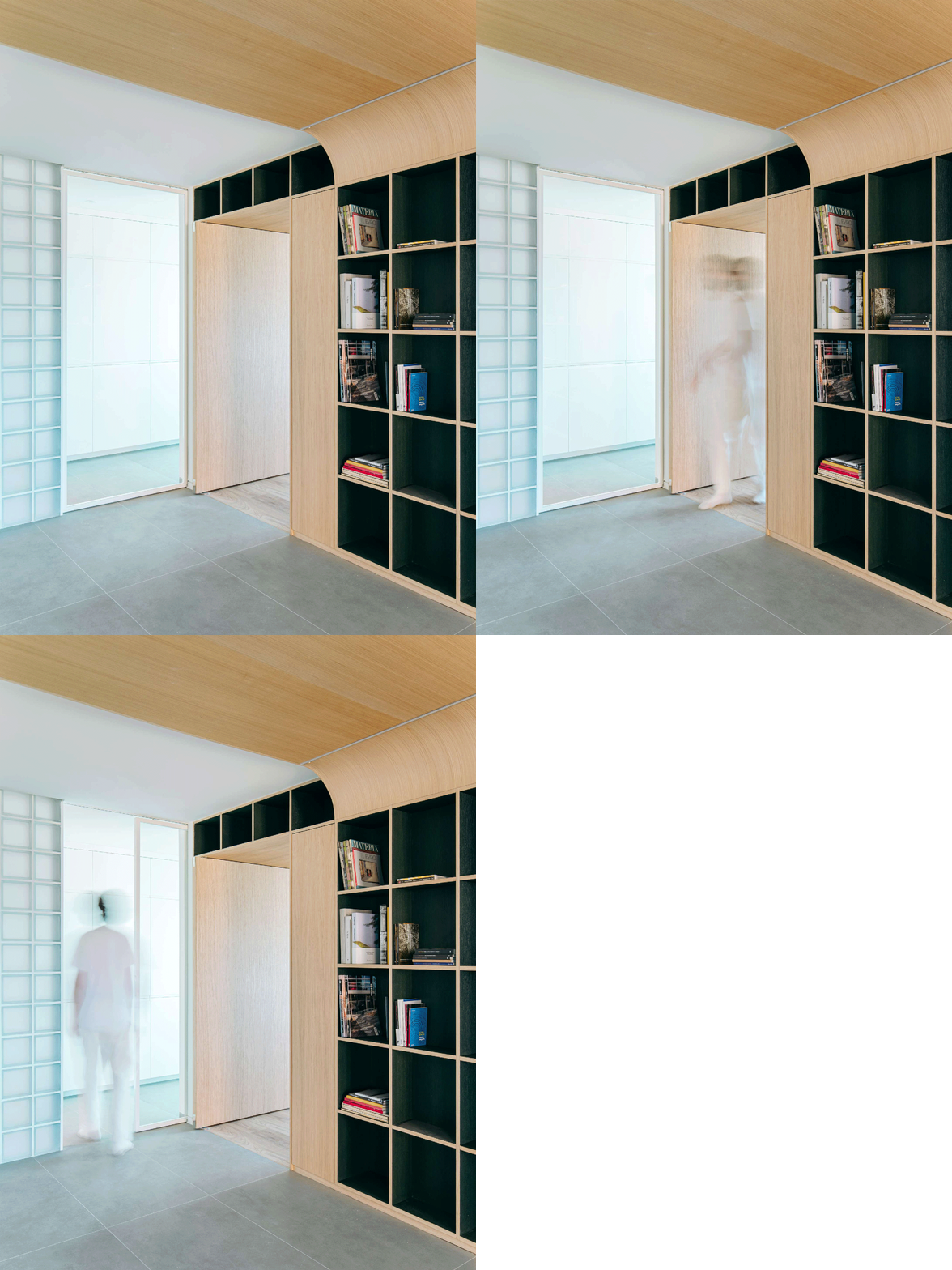
The entry sequence sets a rigorous precedent for how illumination and privacy interact within the home. Rather than opening immediately into a chaotic living zone, the threshold introduces a translucent glass-block wall that gently refracts inbound natural light, obscuring direct views while establishing a clear line of sight toward the primary timber volume. This luminous barrier acts as a physical decompression chamber, slowing down the transition from the bustling Madrid streets into a quieter, controlled domestic realm.
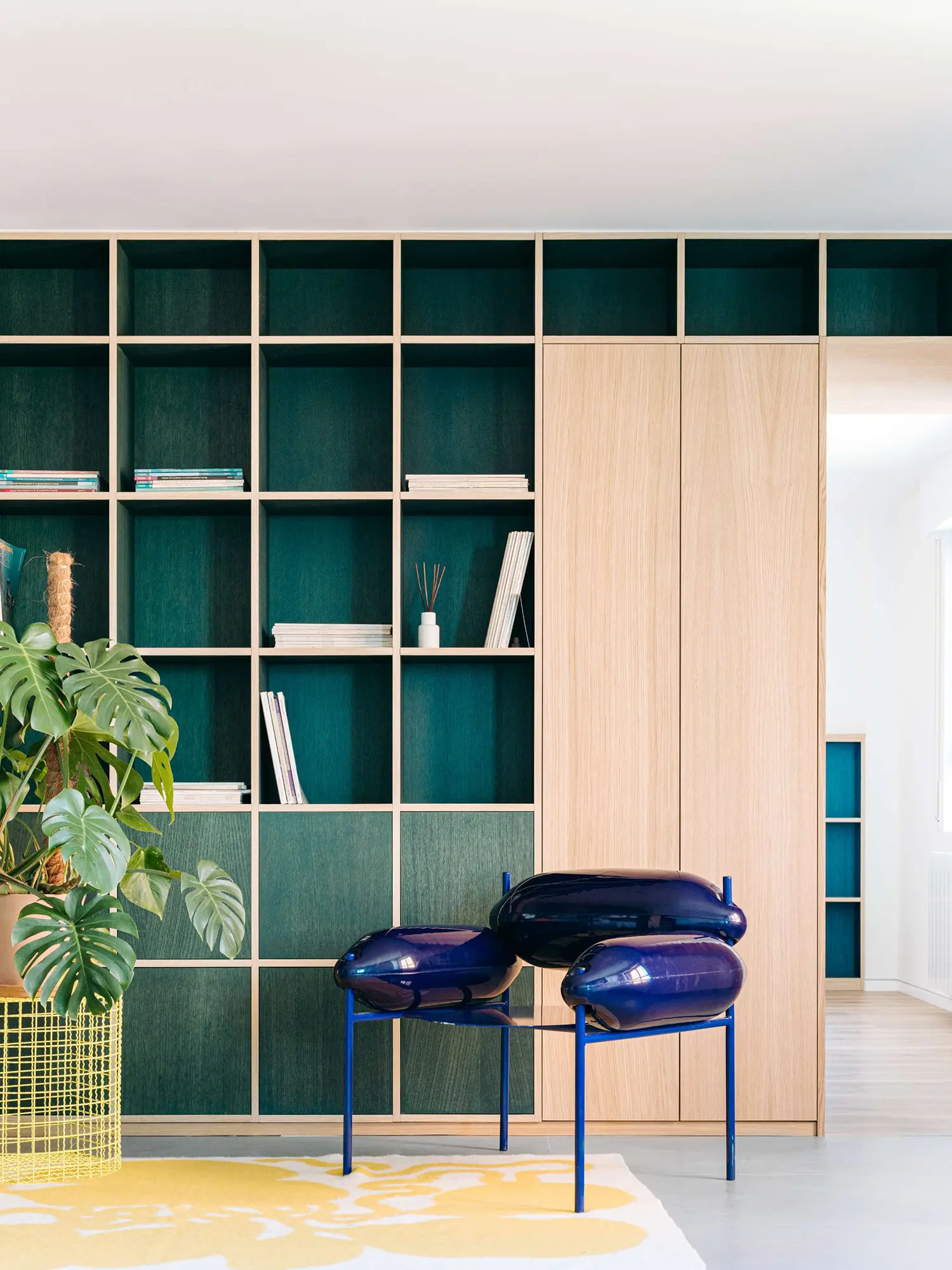
An engineered central carpentry element dominates the physical core of the layout, serving as the definitive threshold between daytime communal activity and private evening quarters. JOTAJOTA+ composed this monolithic volume through a calculated arrangement of solids and voids, balancing heavy storage enclosures with open niches that prevent the structure from overwhelming the interior. By avoiding standard drywall partitions, this functional spine handles all structural transitions, housing essential utilities while establishing an elegant, continuous architectural datum line throughout the property.
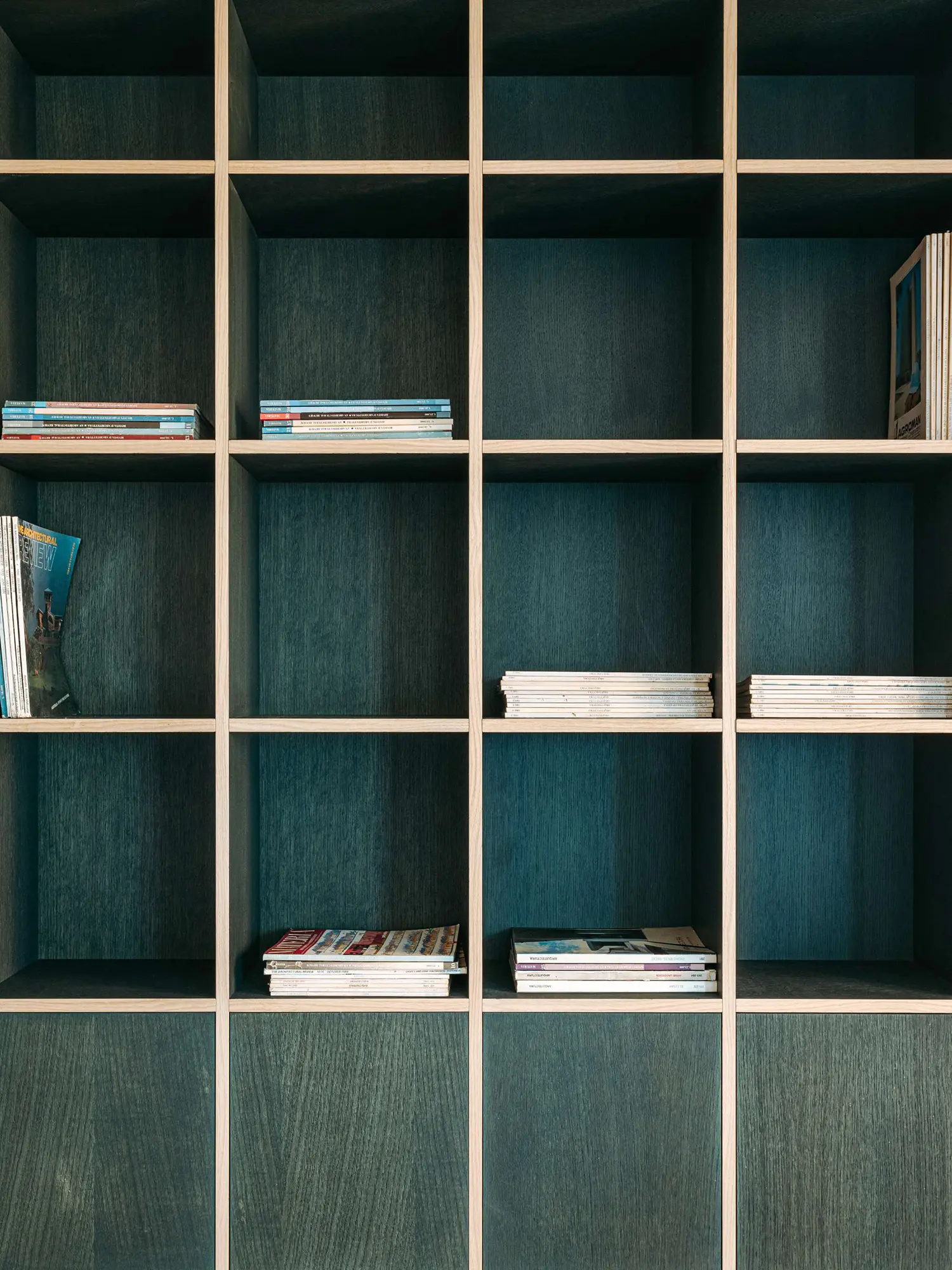
Material contrast highlights the internal geometry of this central spine, transforming ordinary cabinetry into a sculpture of light and shadow. The interior voids are finished with a rich, dark-toned stain using Rubio Monocoat’s Midnight Sky pigmented oil, while the exterior faces and main doors retain their raw, natural oak veneer finish. This stark juxtaposition creates an optical depth that changes depending on the time of day, making the open shelving segments appear to recede into the wall while the lighter surfaces catch the shifting daylight.
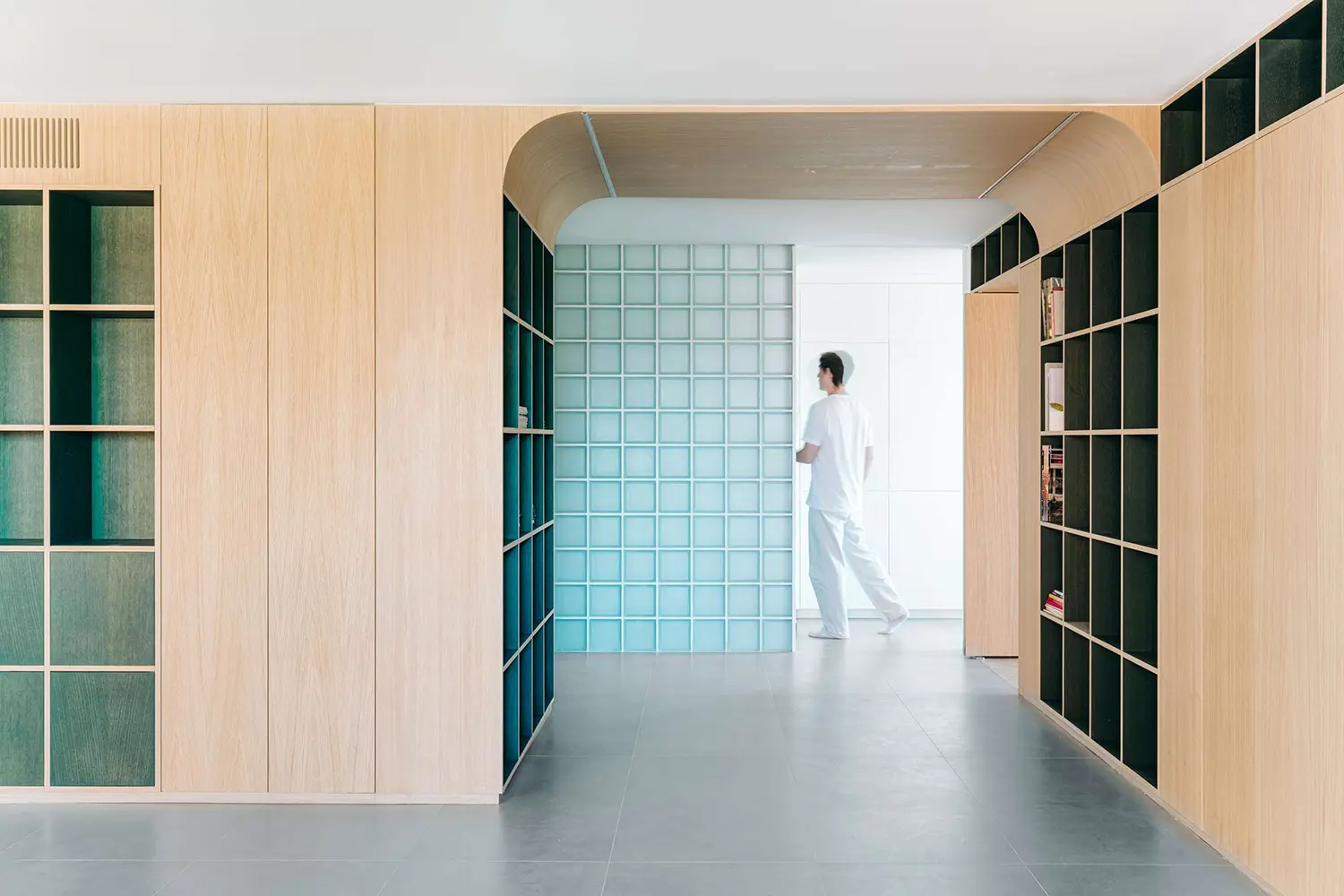
Tactile shifts underfoot explicitly demarcate the boundaries between public gatherings and private retreat without requiring physical thresholds. Smooth, cool porcelain flooring covers the high-traffic public areas, kitchen, and laundry zones, offering resilience and a crisp architectural aesthetic. As one transitions into the private family rooms, this surface seamlessly gives way to warm laminated wood flooring, shifting the acoustics of the home from the bright resonance of the living areas to a hushed, intimate softness.
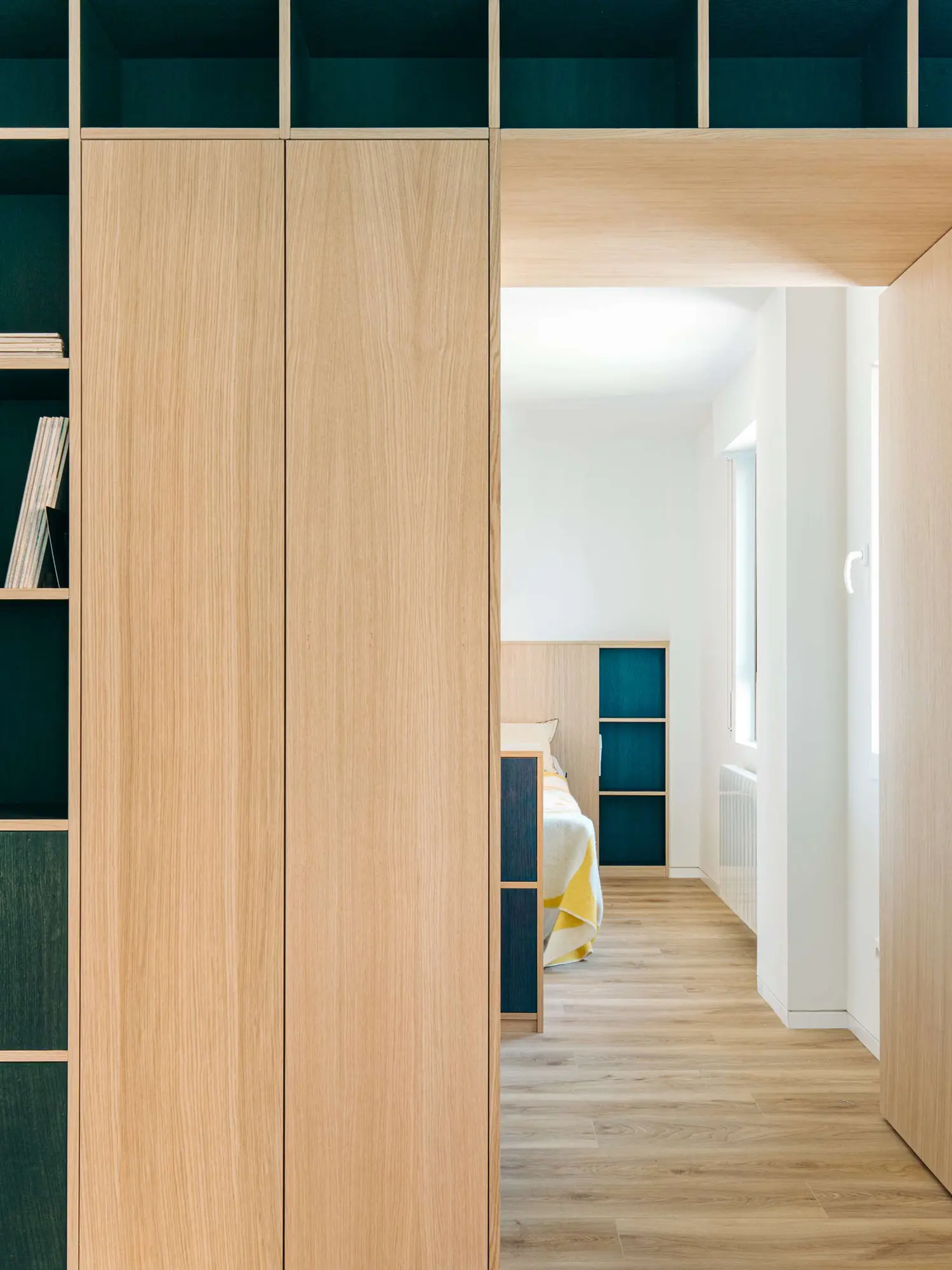
The same constructive logic extends directly into the sleeping quarters, reinforcing a sense of holistic unity across the entire project. In the main bedrooms, the designers adapted the system used for the main timber spine to construct custom integrated headboards and a low dresser. This intentional repetition of form and material prevents the project from feeling fragmented, anchoring the bed within a protective timber enclosure that visually shields the resting spaces from the entryways.
A disciplined approach to surface textures continues within the wet areas, swapping standard ceramic tiles for highly specific artisanal applications. The private bathroom features a meticulous glass mosaic wall cladding that catches the light through varying textures, while the guest bathroom utilizes a muted porcelain wall cladding from Matter Atelier. These selections echo the studio’s broader portfolio of thoughtful Madrid apartment renovations, showing a clear evolution from the vibrant, color-driven zoning seen in their previous Chromatic Home project toward a more restrained, texture-focused material palette.
Spatial continuity across different scales has become a hallmark of how this collaborative practice approaches commercial and residential interiors alike. Whether configuring a complex residential layout for three people or developing custom modular fixtures for retail environments like the Colchón Exprés showroom, the studio consistently prioritizes bespoke joinery to define spatial flow. This methodology treats interior architecture not as a series of decorated surfaces, but as a rigorous puzzle where every custom element must simultaneously perform structural, functional, and aesthetic duties.
As urban apartments face increasing pressure to balance flexibility with permanent privacy, this project offers a compelling argument for the return of the permanent, heavy core. By investing the budget into single, high-quality architectural interventions rather than multiple lightweight partitions, the design achieves a rare longevity. It suggests that the future of urban density lies not in fluid, constantly shifting layouts, but in the grounding presence of permanent elements that provide families with an unshakeable sense of place.