



The Hainan Science Museum, designed by Ma Yansong and his firm MAD Architects, has emerged as a landmark of fluid connectivity on the edge of Wuyuan River National Wetland Park in Haikou, China, where a column-free, spiraling structure seamlessly integrates exhibition spaces with the surrounding tropical landscape.
A Shift from Facts to Inquiry marks the philosophical foundation of this new institution. Rather than treating science as a static collection of data, Ma Yansong has envisioned a space defined by “flow and chaos,” where the boundaries between different fields of study are intentionally blurred. This approach reflects a modern pedagogical shift; in an era where information is instantly accessible, the physical museum’s primary purpose is to foster curiosity and teach the next generation how to question the world around them.
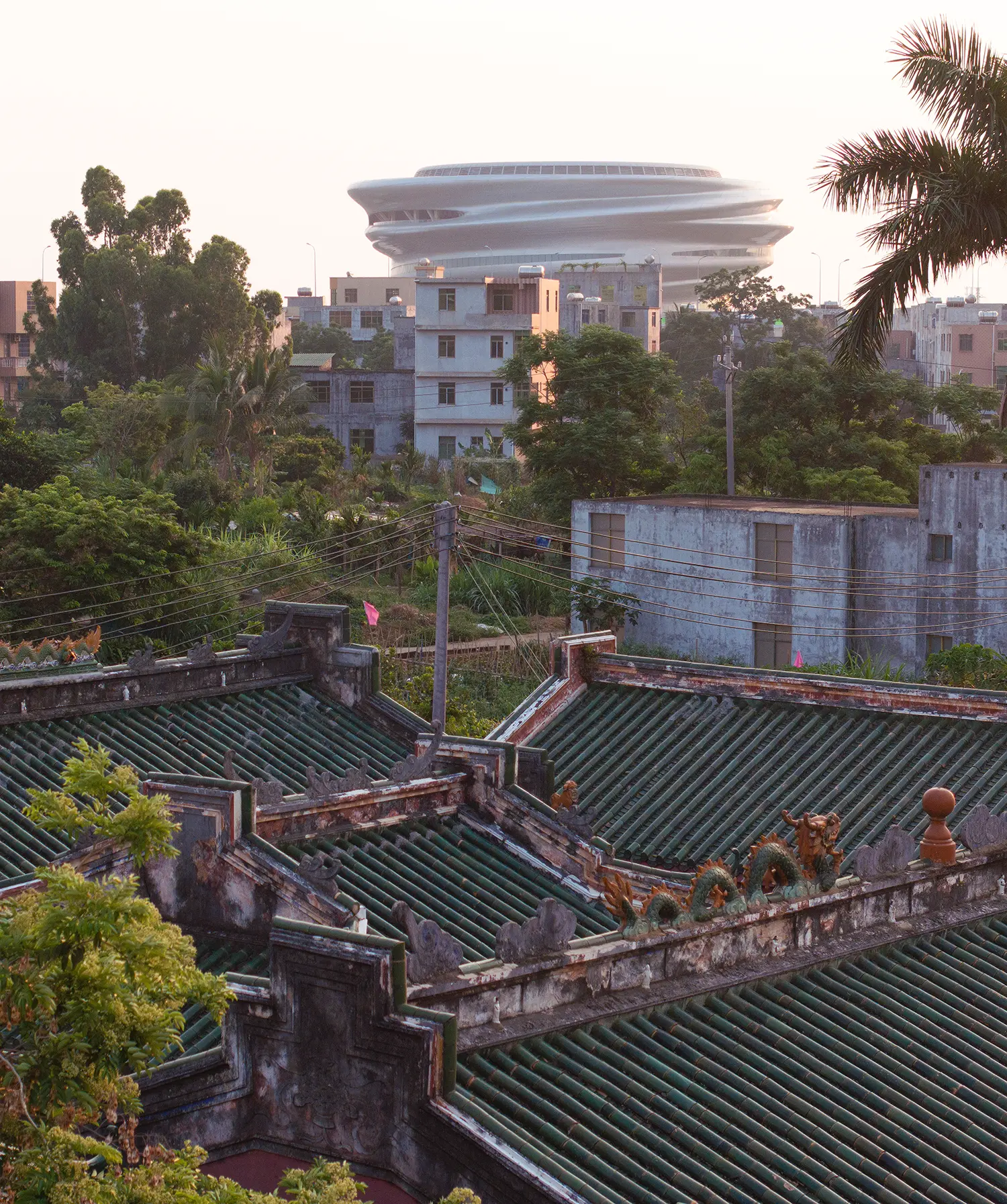
Civic Infrastructure for a Scientific Frontier is the role this 46,528-square-meter complex plays within its local context.While Hainan serves as a critical node in China’s aerospace ambitions—hosting the nation’s only coastal spaceport—the museum translates these high-level scientific pursuits into a tangible, community-oriented experience. Located near dozens of schools, the building functions less like a formal institution and more like a vast public living room, providing a sheltered urban canopy where families and students can gather freely.
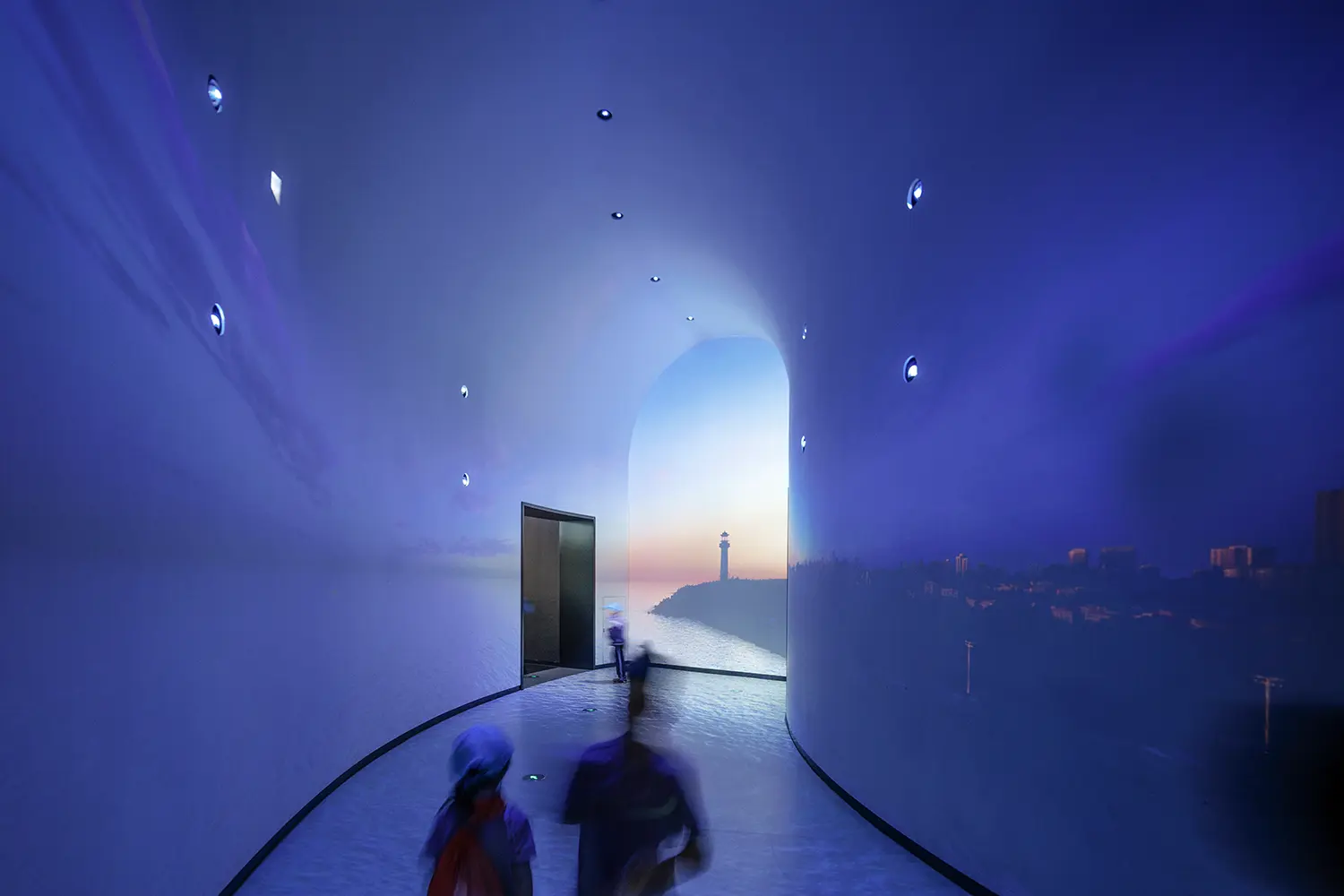
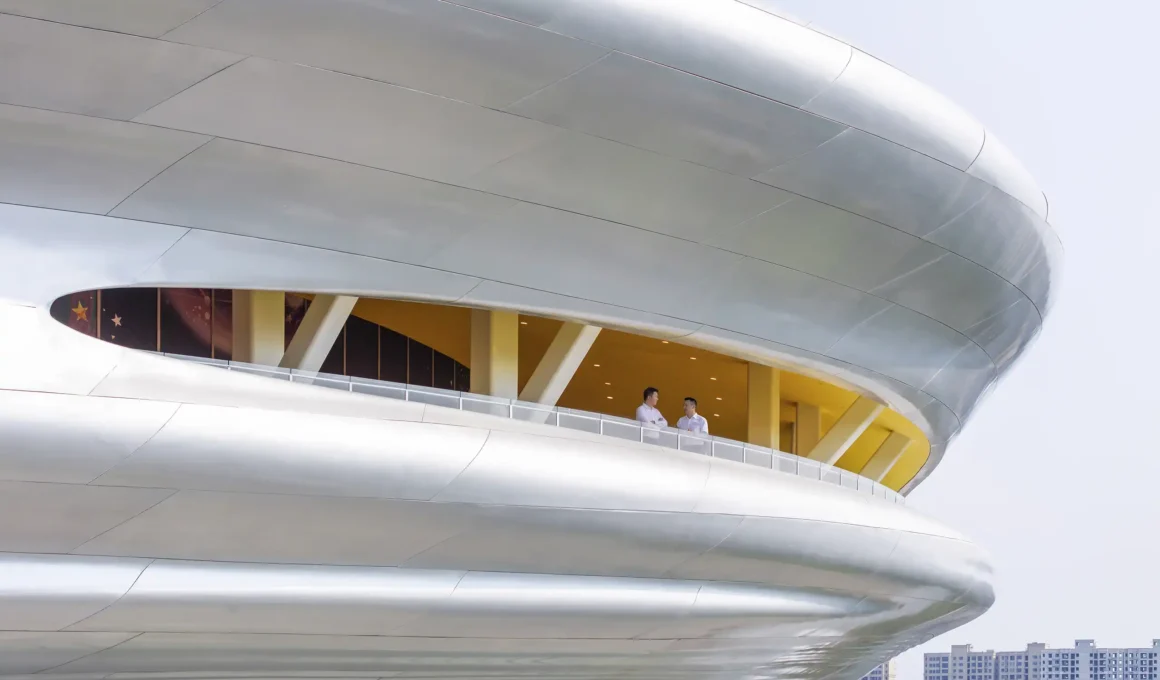
The Sensory Weightlessness of the Silver Shell is achieved through a sophisticated exterior composed of 843 fiber-reinforced polymer panels. This curvilinear facade acts as a reflective skin, shifting its appearance based on the intensity of the tropical sun and the movement of the sky. The building appears to float above its site, anchored by a wide canopy that creates a deep, shaded plaza. This outdoor void pulls the park’s atmosphere directly into the heart of the complex,offering a cool respite from the Haikou heat.
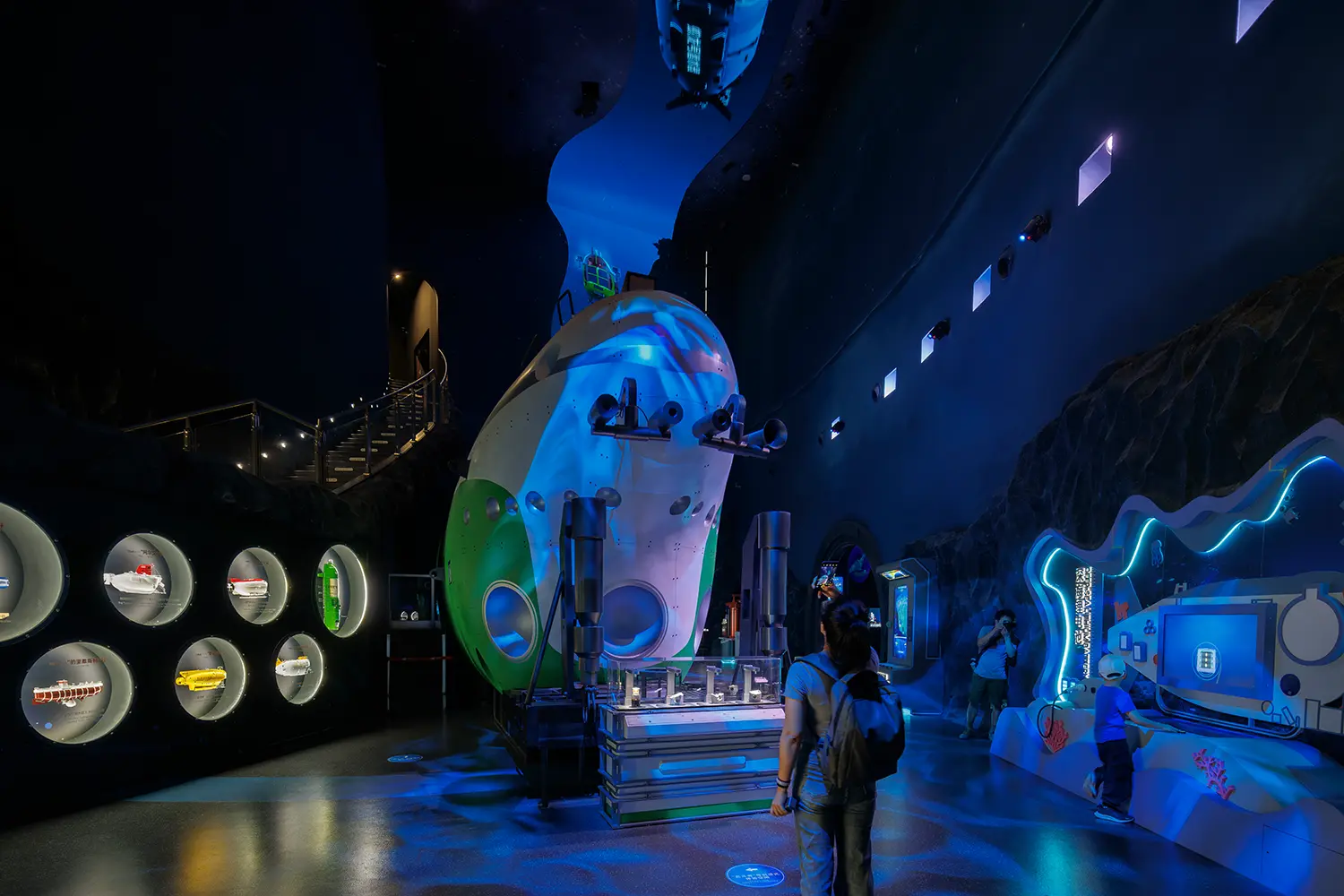
Vertical Movement as Narrative defines the internal organization of the museum. The layout is dictated by a single,continuous spiral that encourages two distinct ways of experiencing the content. Visitors can ascend to the top and wind downward through the ring-shaped galleries, moving from the vastness of deep space toward the intricate ecosystems of Hainan’s rainforests. Alternatively, those starting at the ground floor experience a journey of expansion, moving from tactile, hands-on exhibits toward the cosmic scale of the upper levels.
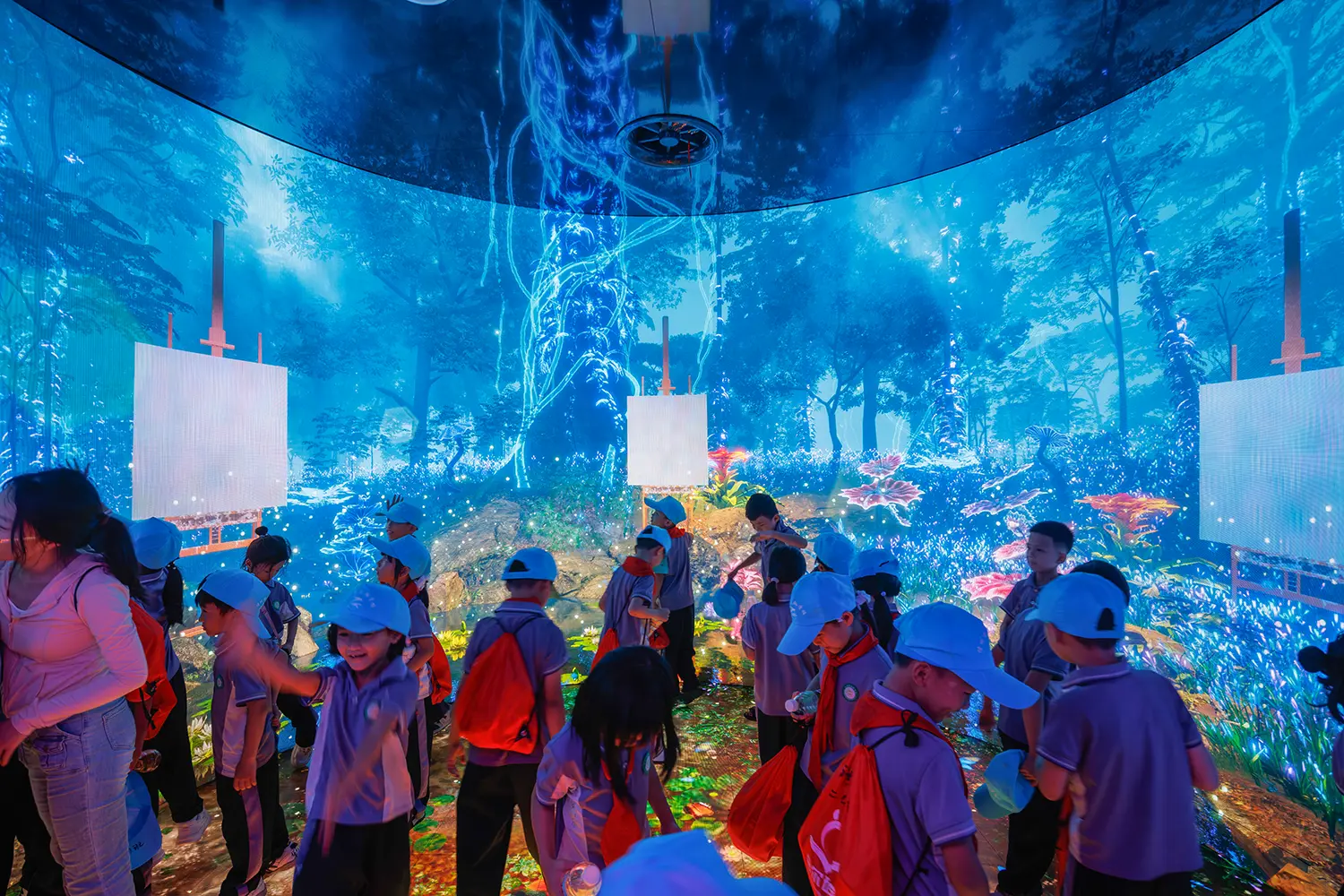
Engineering the Column-Free Void required a bold structural strategy that eliminates traditional supports from the exhibition floors. The entire spiraling volume is supported by three massive concrete core tubes, which house the primary circulation and services. This engineering feat ensures that the internal layout remains entirely flexible and open,allowing the different subjects to overlap and flow into one another without the interruption of load-bearing walls,reinforcing the theme of intellectual fluidity.
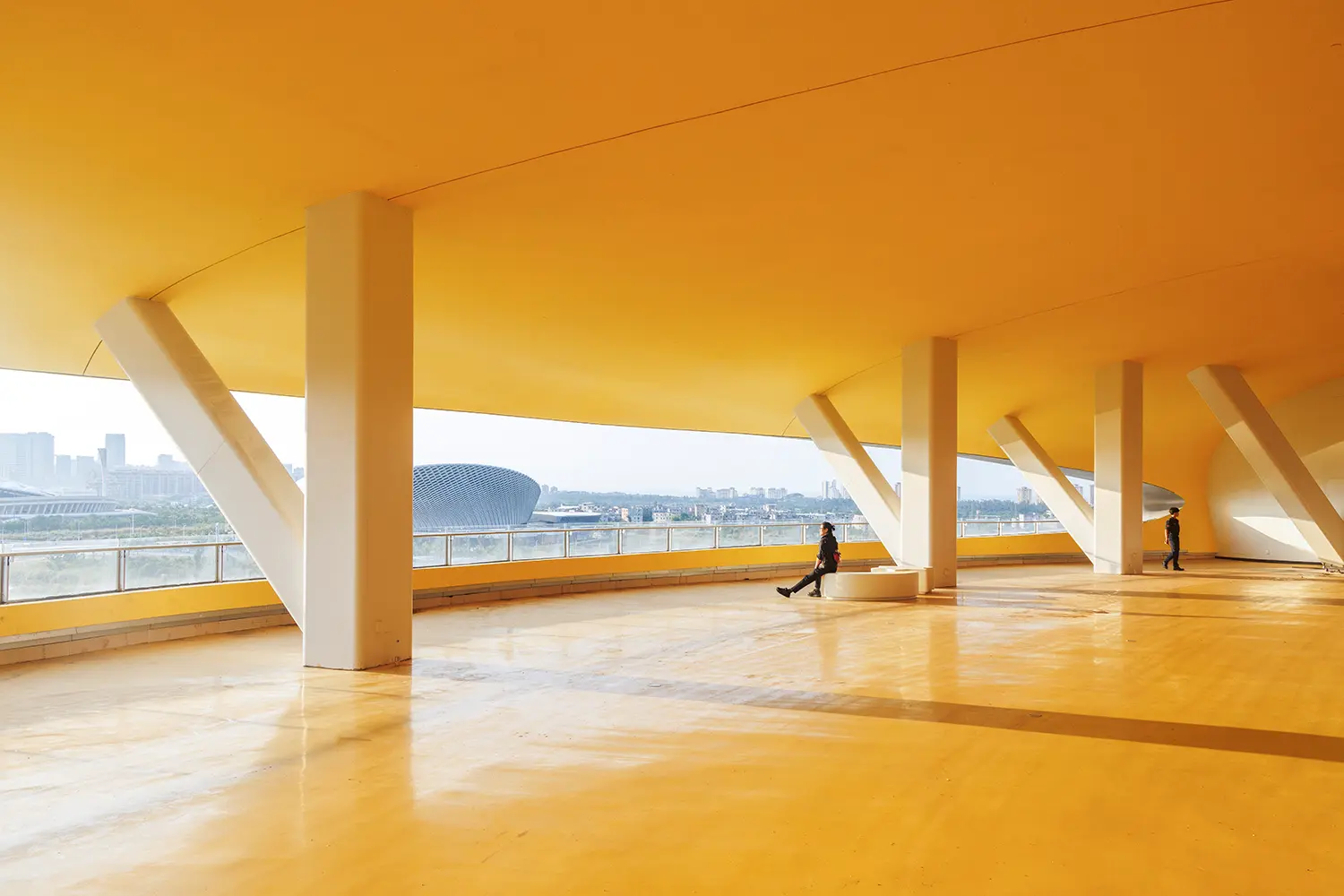
A Holistic Educational Ecosystem extends beyond the main exhibition rings. The complex integrates a planetarium, a giant-screen cinema, and a sunken plaza designed for social interaction. Shaded outdoor areas are dedicated to agricultural education, allowing students to engage with the island’s unique botany in a real-world setting. A covered walkway binds these various components together, ensuring that even the transit between specialized zones remains an immersive part of the visitor’s journey.
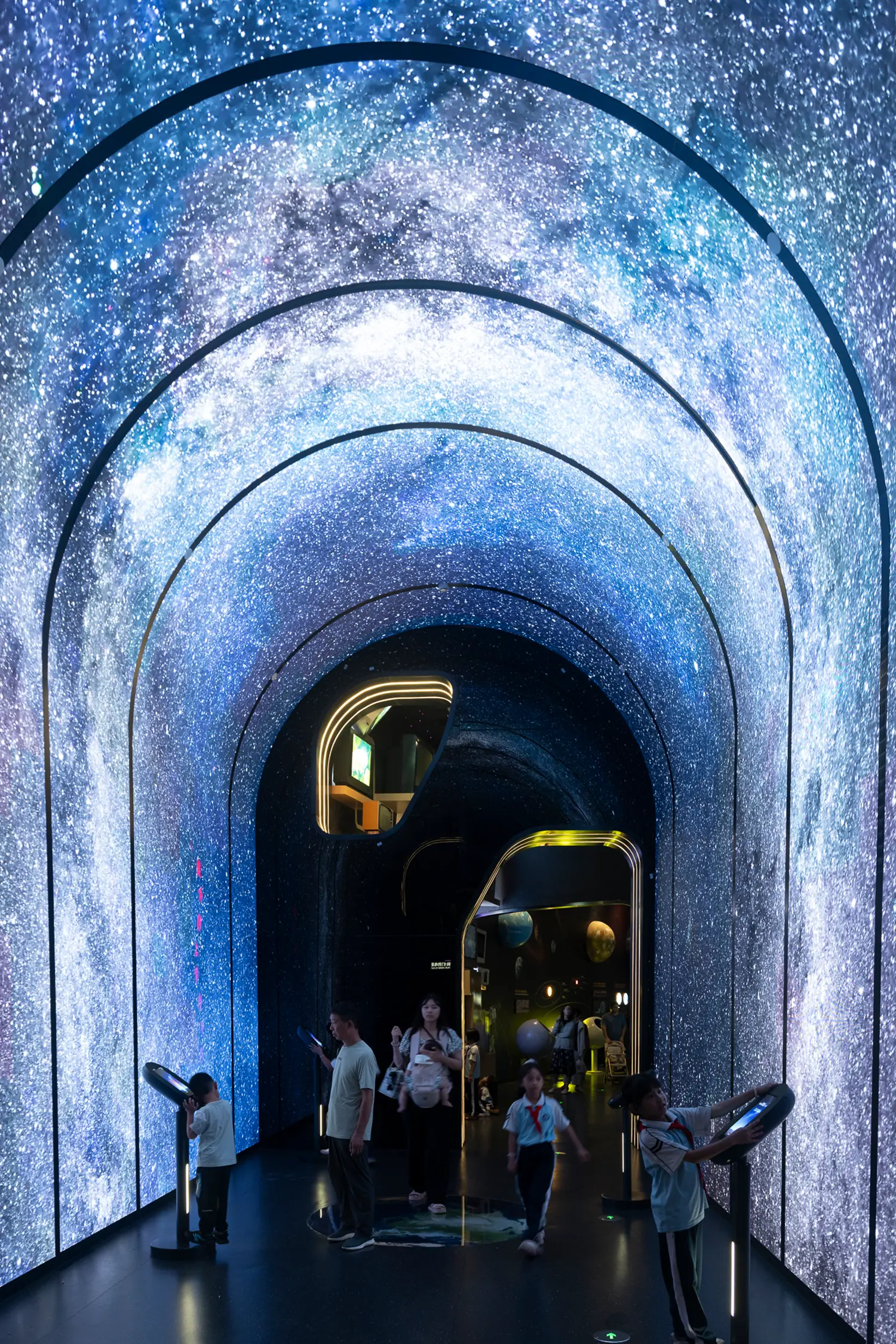
The Integration of Landscape and Tech is visible in how the museum interacts with the Wuyuan River National Wetland Park. The reflecting pools scattered around the base of the structure do more than just mirror the silver facade; they act as a thermal regulator and a visual extension of the wetland. By elevating the main volume, MAD Architects has allowed the natural environment to breathe underneath the building, creating a porous boundary between the high-tech galleries and the humid, lush greenery of Hainan.
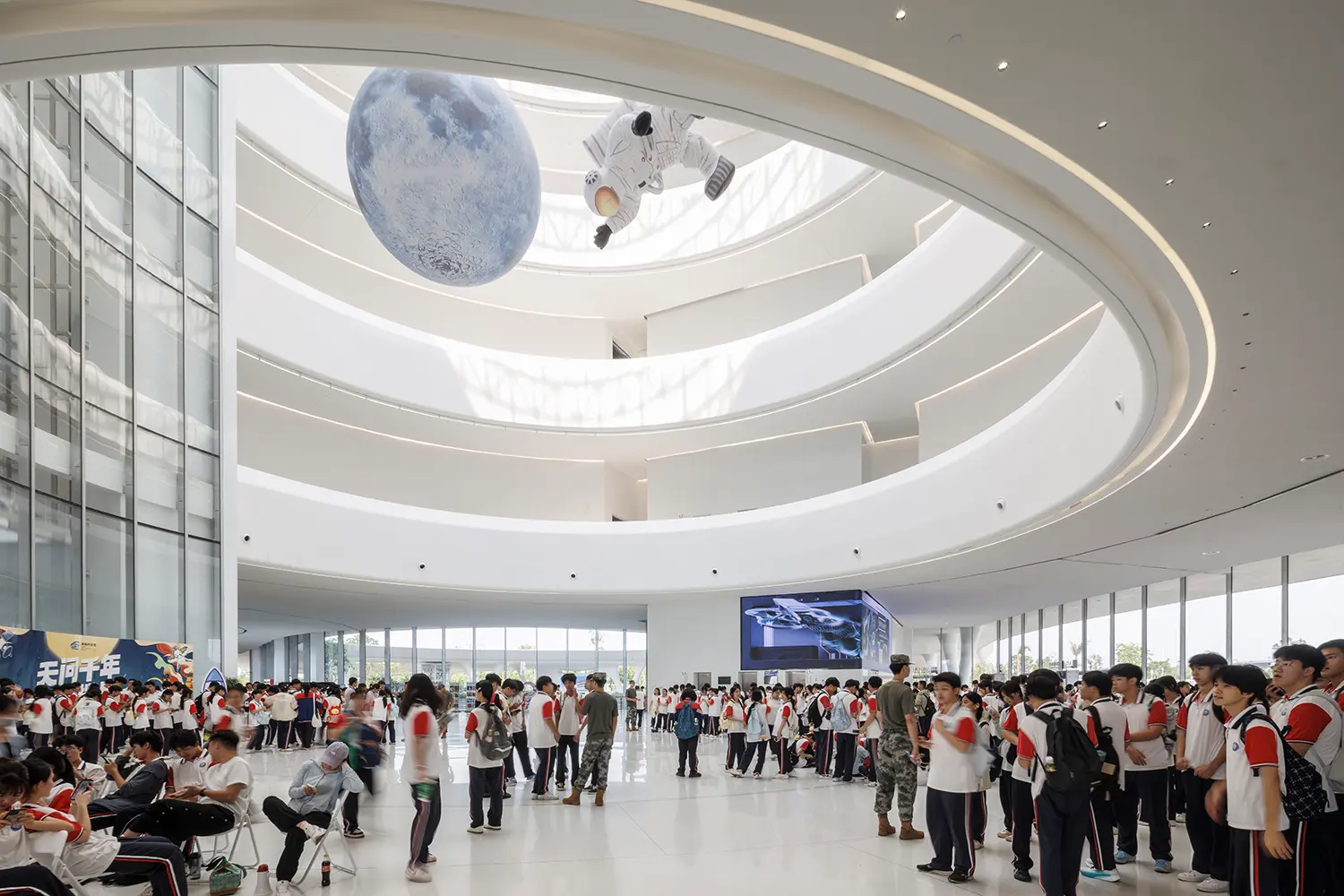
Defining the New Haikou Coastline represents MAD’s ongoing contribution to the city’s urban identity. Following the success of the Cloudscape of Haikou, the Hainan Science Museum further establishes a sequence of evocative, dreamlike structures along the seafront. These projects represent a departure from rigid, utilitarian urbanism in favor of an organic landscape that prioritizes emotional resonance and public accessibility. For Ma Yansong, the building is not merely a container, but an integral part of the scientific content.
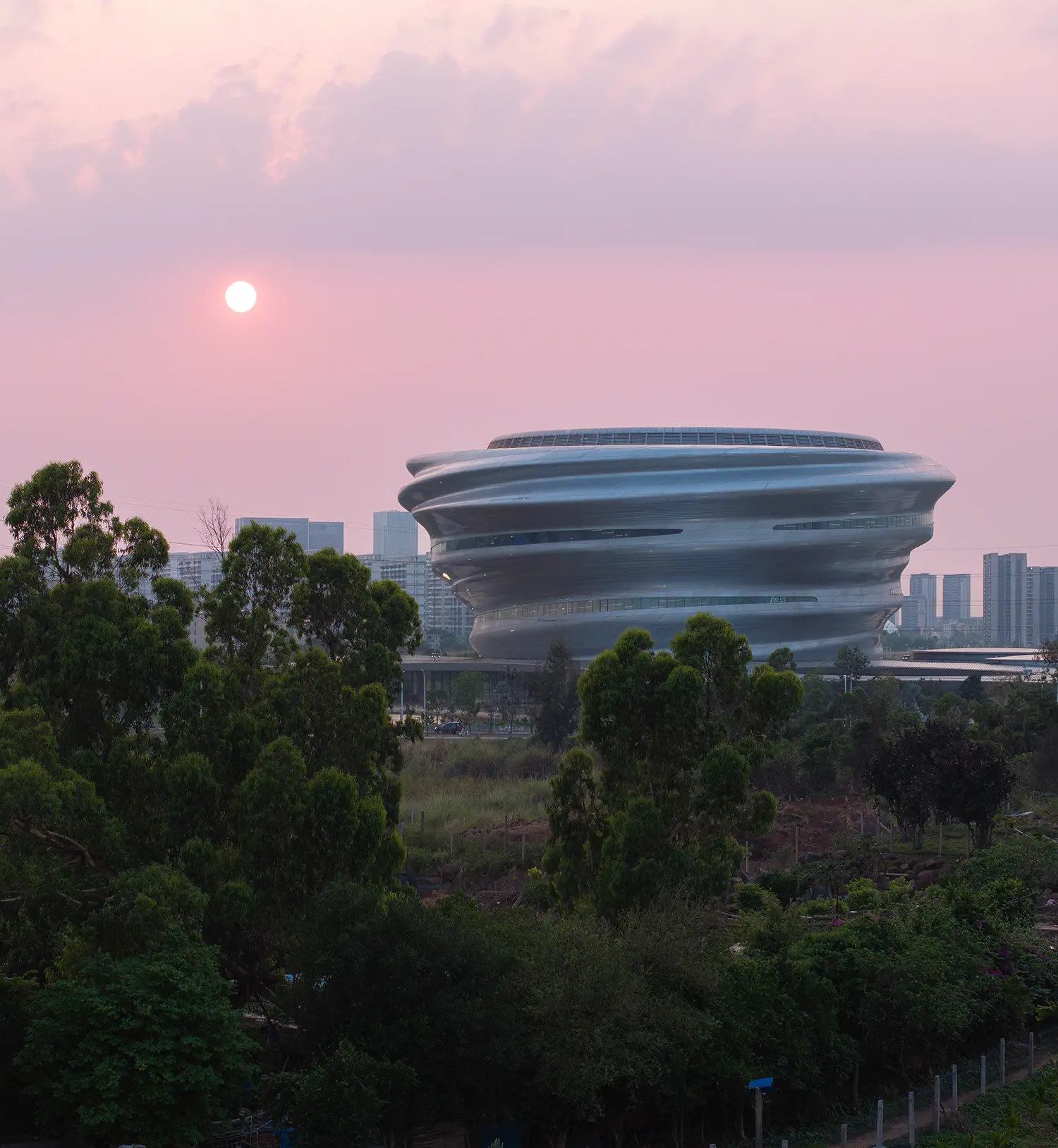
The Evolution of the MAD Narrative continues as the firm pushes the boundaries of how infrastructure can serve as a catalyst for community life. This philosophy of “living” structures is evident in other recent global projects, such as the bird-like Lishui Airport in Zhejiang or the biophilic Breathing Cells installation in Seoul. As the studio prepares for the City of Plants at the Venice Biennale 2025 and nears the completion of the highly anticipated Lucas Museum of Narrative Art in Los Angeles, the Hainan Science Museum stands as a definitive example of MAD’s ability to merge technical innovation with a deeply human-centric vision.