

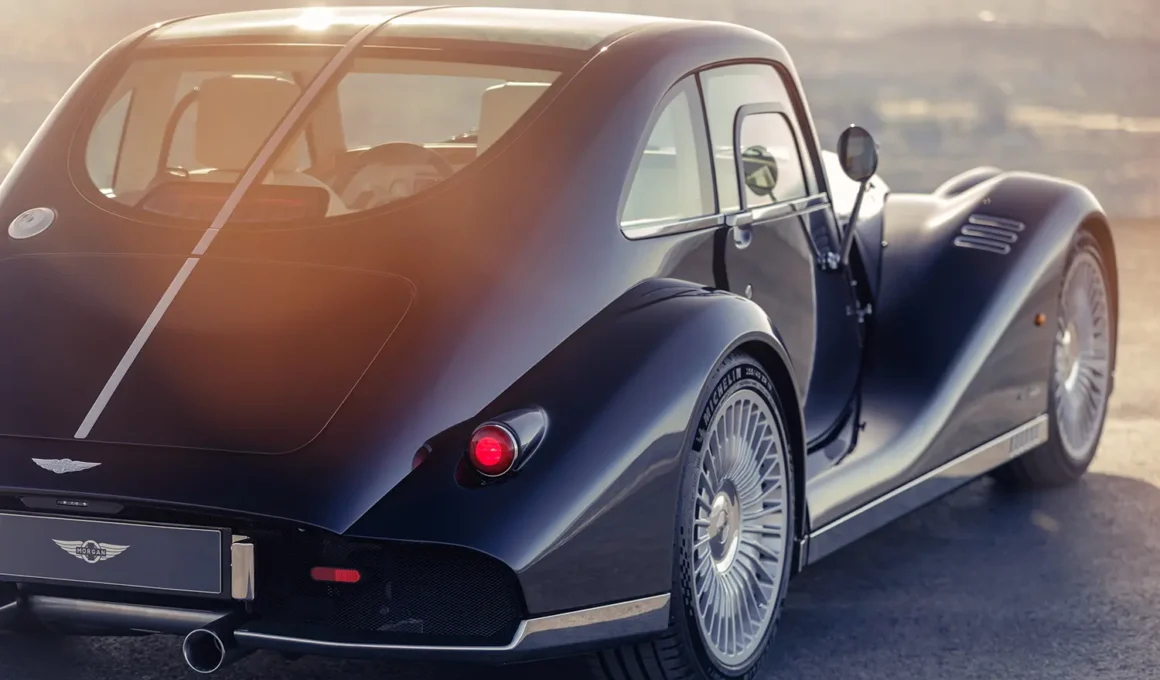
Morgan Motor Company and Pininfarina have completed the Midsummer Coupé, a fixed-head coachbuilt commission that proves, structurally and formally, that adding a roof to a car conceived as an open barchetta is not an additive operation — it is a complete architectural renegotiation. Built on Morgan’s CXV-Generation bonded-aluminium platform and revealed today as the artists’ proof, with nine client commissions to follow, the Midsummer Coupé required new A-pillar architecture, bonded structural glazing, and stressed-skin construction that did not exist at Pickersleigh Road before this project. The original Midsummer barchetta provided the starting point. What arrived at the end of the process is a fundamentally different vehicle.
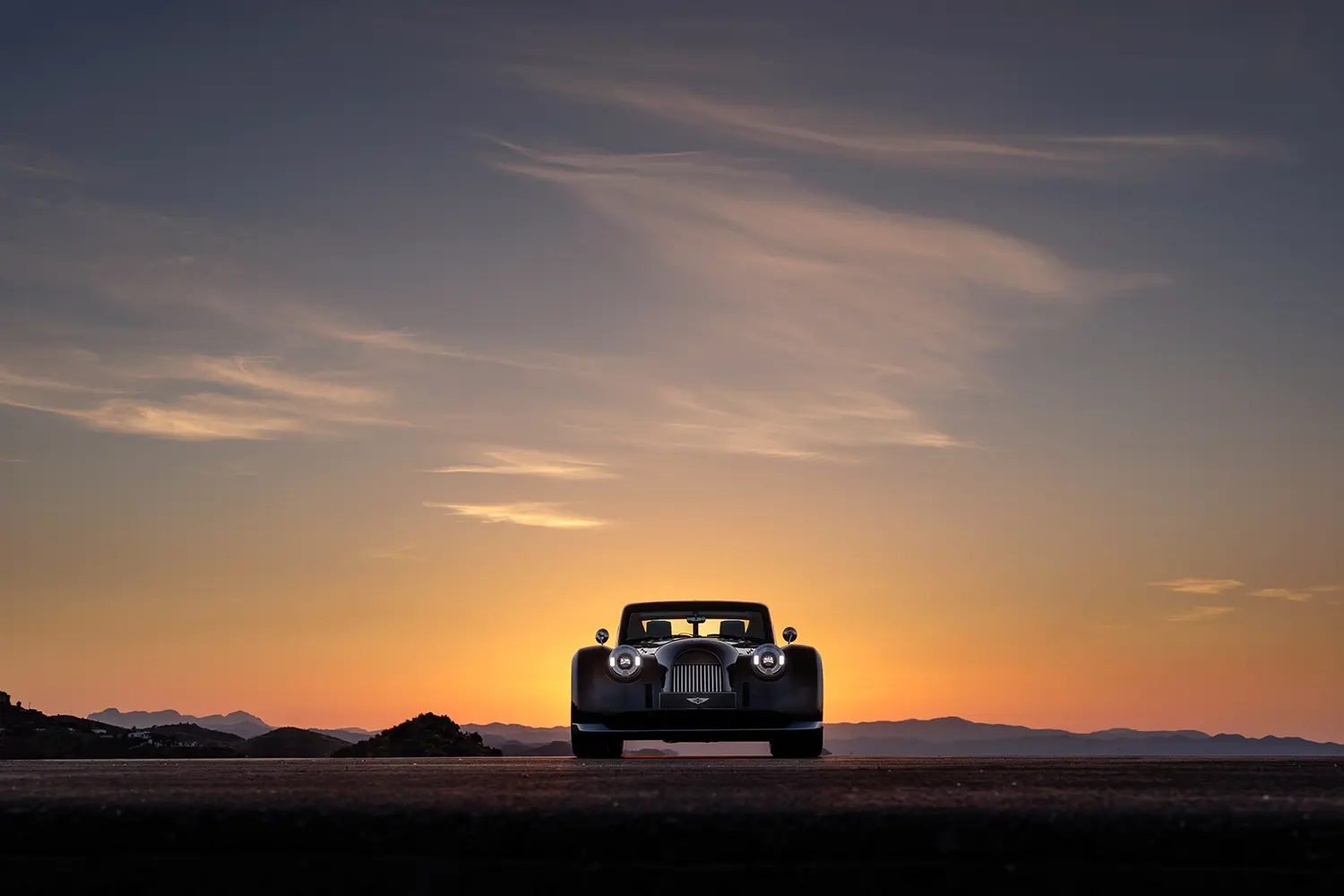
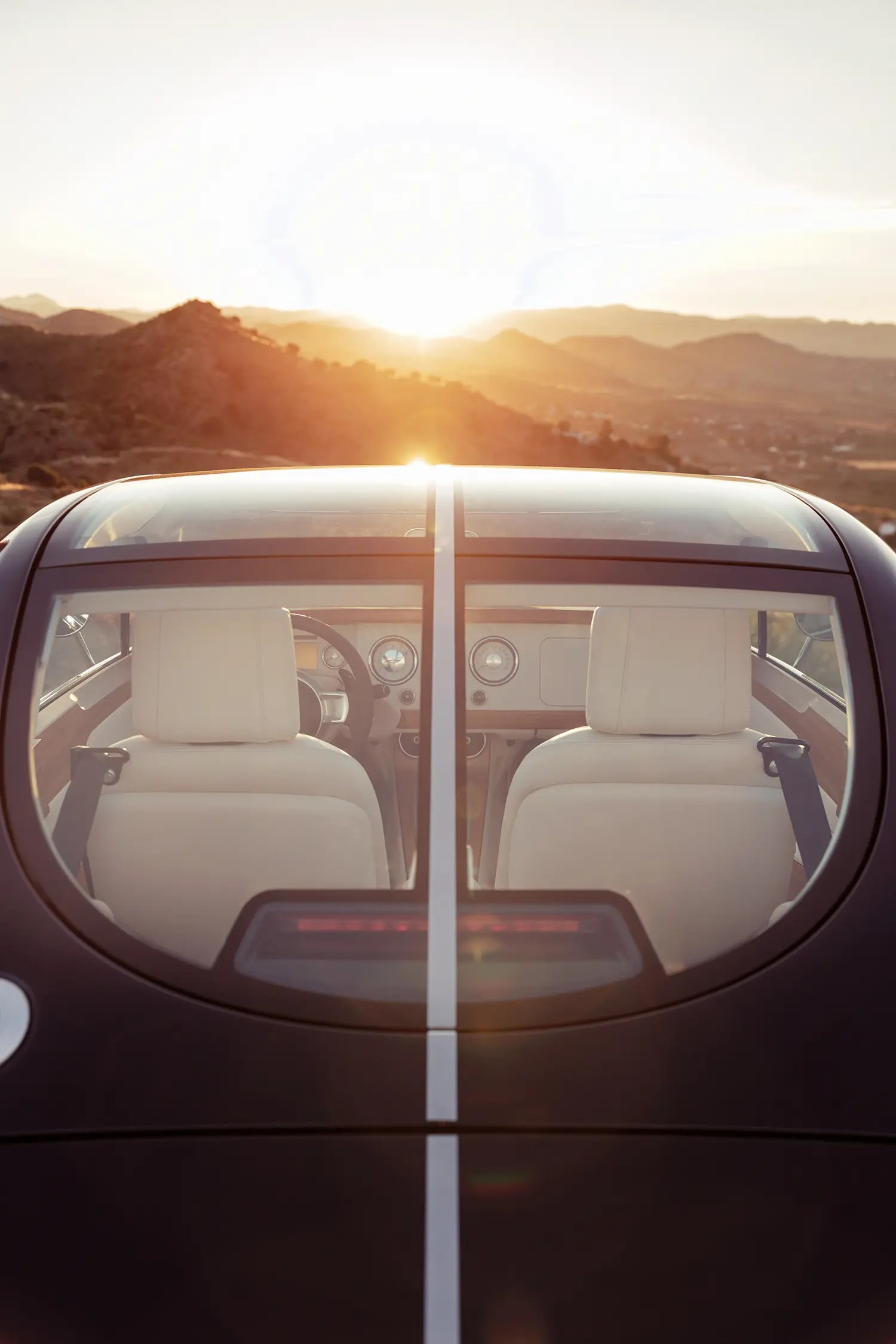
The roofline forced every other decision. Integrating a fixed head into a car designed as an open two-seater meant the roof could not be treated as an enclosure. Morgan’s engineers developed billet-machined aluminium A-pillars that carry roof loads into the front structure while providing precise mounting points for the doors and the new drop-window system. The windscreen is bonded directly to the aluminium body — not retained by rubber seal as on every other Morgan — allowing the glass to distribute loads through the structure and reduce peak stresses in key areas by around 50%. The fixed glass roof is bonded into the aluminium in the same way. The result is a car in which aluminium, glass, and wood operate within a single load path — and despite the addition of the entire fixed-head architecture, the Midsummer Coupé weighs just 2.5% more than a Supersport fitted with a hardtop.
The Pininfarina collaboration went further for the Coupé than for the original Midsummer. Designers in Cambiano and Malvern worked digitally across multiple proportion and surfacing themes before any physical coachbuilding began, testing assumptions that neither studio would have challenged working independently. “The resulting design is the product of this shared exploration, arriving at a destination that neither studio would have reached independently,” said the project team. The car carries the Pininfarina Fuoriserie mark — “out of series” — positioned behind the front wheels. Fuoriserie is not a styling credit. It denotes genuine collaborative authorship on a vehicle produced beyond conventional production programmes, and Pininfarina applies it selectively.
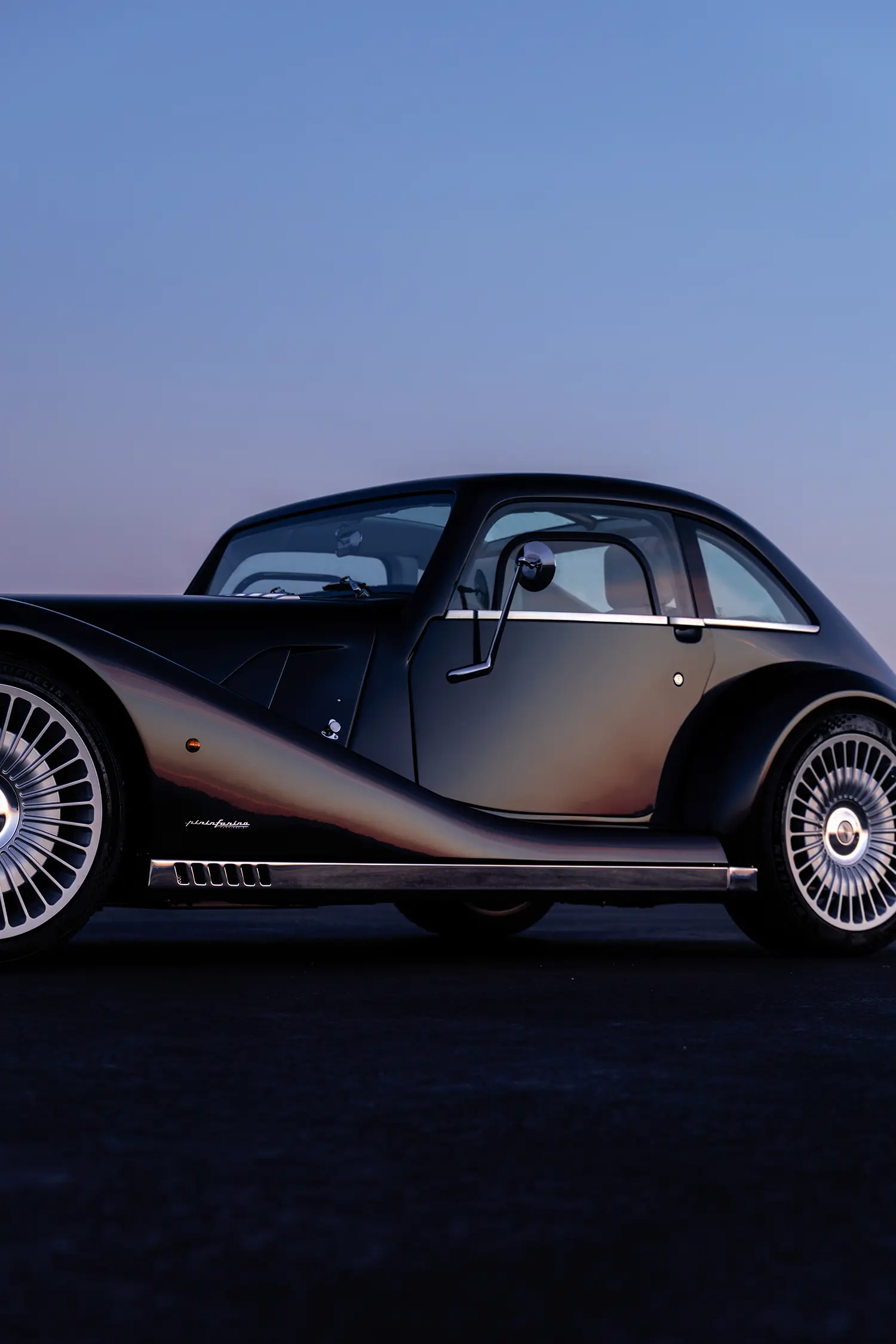
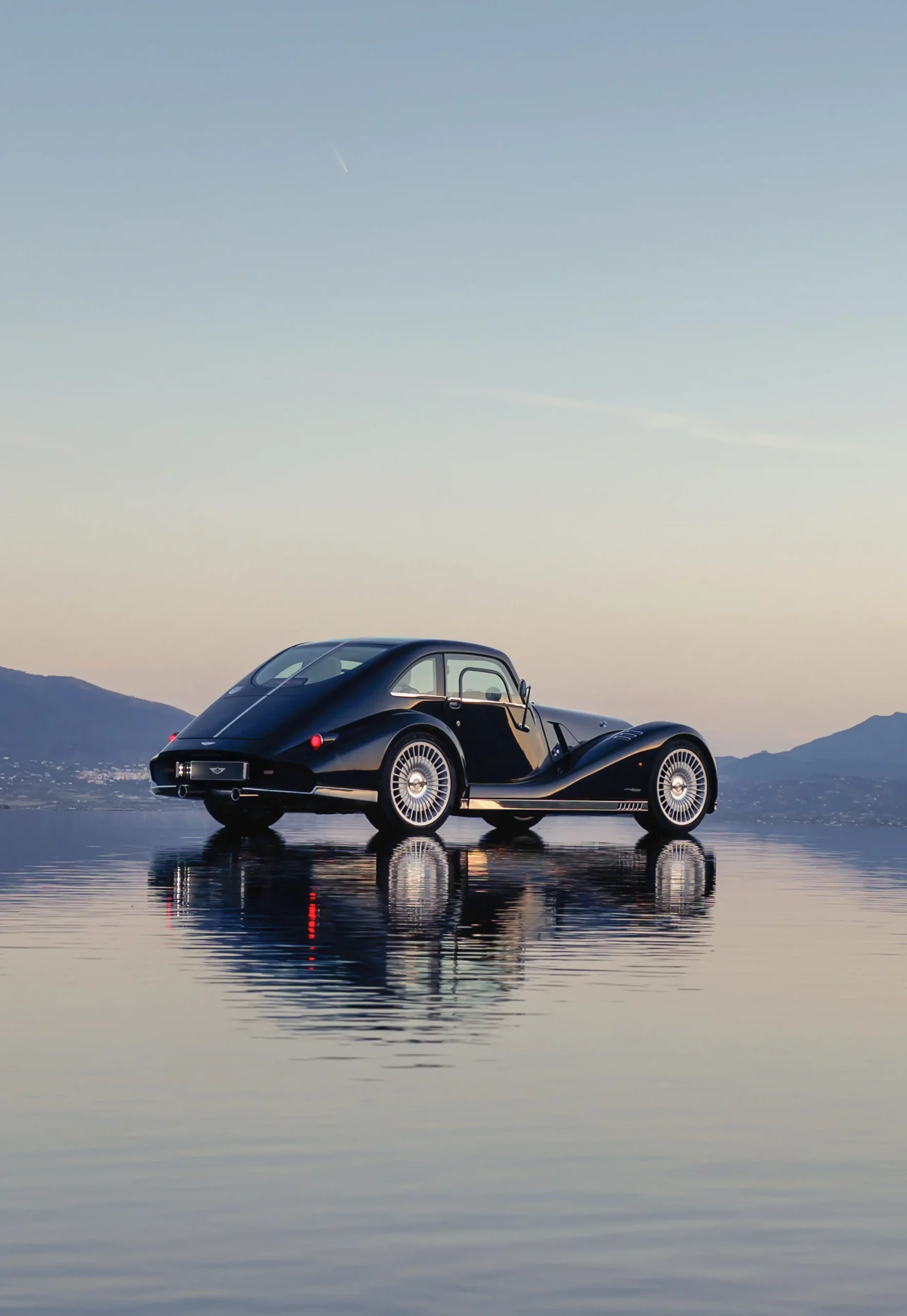
The silhouette achieves what the barchetta could not. Viewed from the high rear three-quarter, the Midsummer Coupé has a formal clarity that the open car — by definition — left unresolved. The roofline introduces a third line to the profile; the glazed canopy creates a continuous surface from A-pillar to trailing edge; the relationship between the fixed outer glazing and the drop-window system references 1960s Italian sports car proportions without reproducing them. The beltline, machined from solid aluminium and incorporating the door handle within its structure, introduces a technical precision that plays deliberately against the flowing body surfaces. Polished stainless-steel panels along the lower body maintain visual continuity with the original barchetta — a material thread connecting the two commissions across a structural divide. This kind of detail-level conviction in contemporary coachbuilt automotive design is rare, and shares a formal intelligence with the best recent exercises in the discipline, including Antonino Barone’s Alfa Romeo Junior concept.
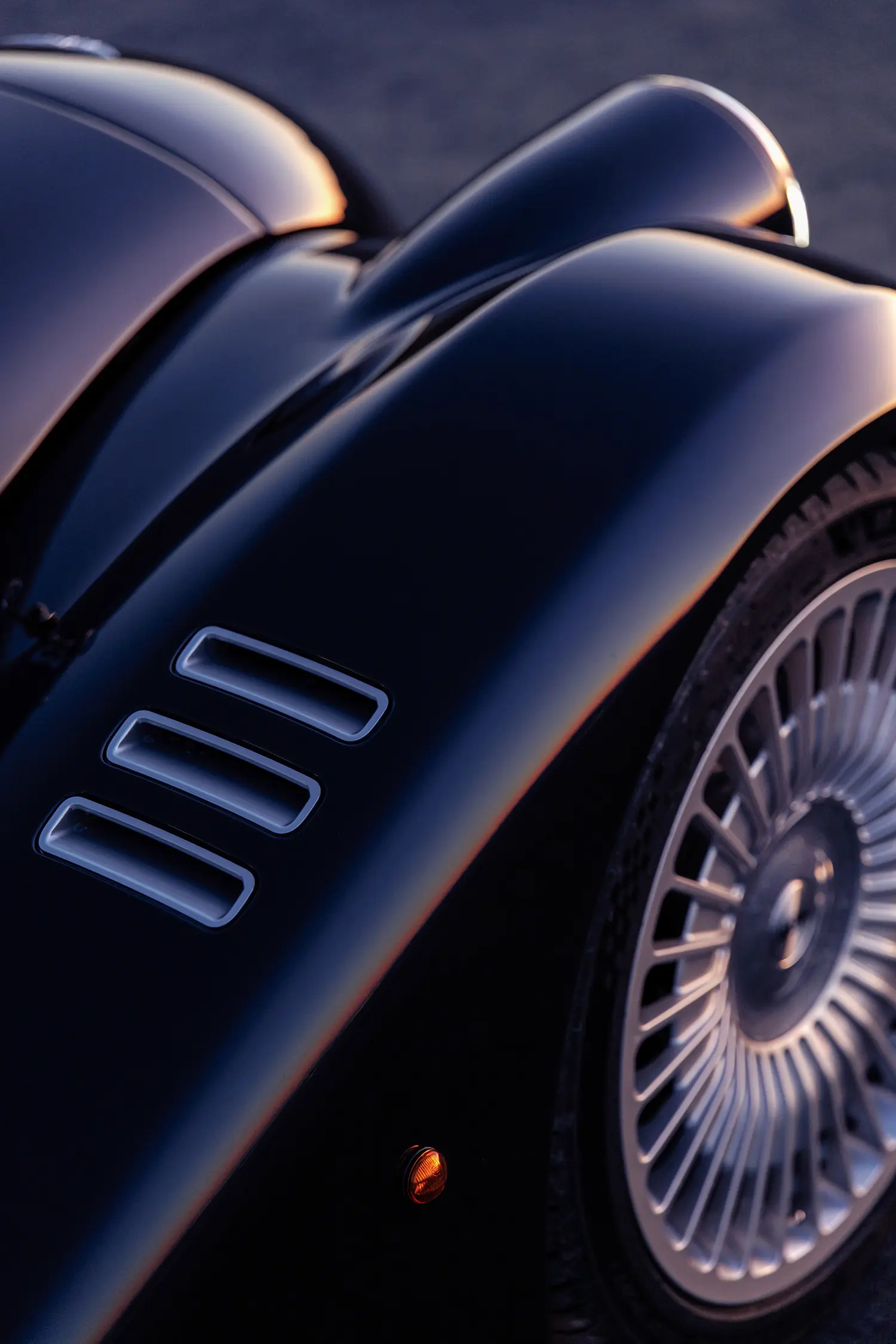
The manufacturing process is where Morgan’s claim to contemporary coachbuilding either holds or collapses. Here it holds. The aluminium skin is hand-formed using English wheels, each panel shaped with precision sufficient to minimize body filing while maintaining the material thickness required for stressed-skin structural performance. Peak loads reach approximately 30% of the material’s yield strength — a margin that permits hand-forming without compromising structural integrity. TIG welding without filler material, solid aluminium rivets double-countersunk into the skin, laser measurement to 0.3mm accuracy across a precision surface table: this is a manufacturing vocabulary that belongs to pre-war aircraft construction as much as to contemporary automotive coachbuilding. Digital scanning provides the reference; the final surface quality depends on the judgment of Morgan’s artisans working against physical templates and accumulated experience.
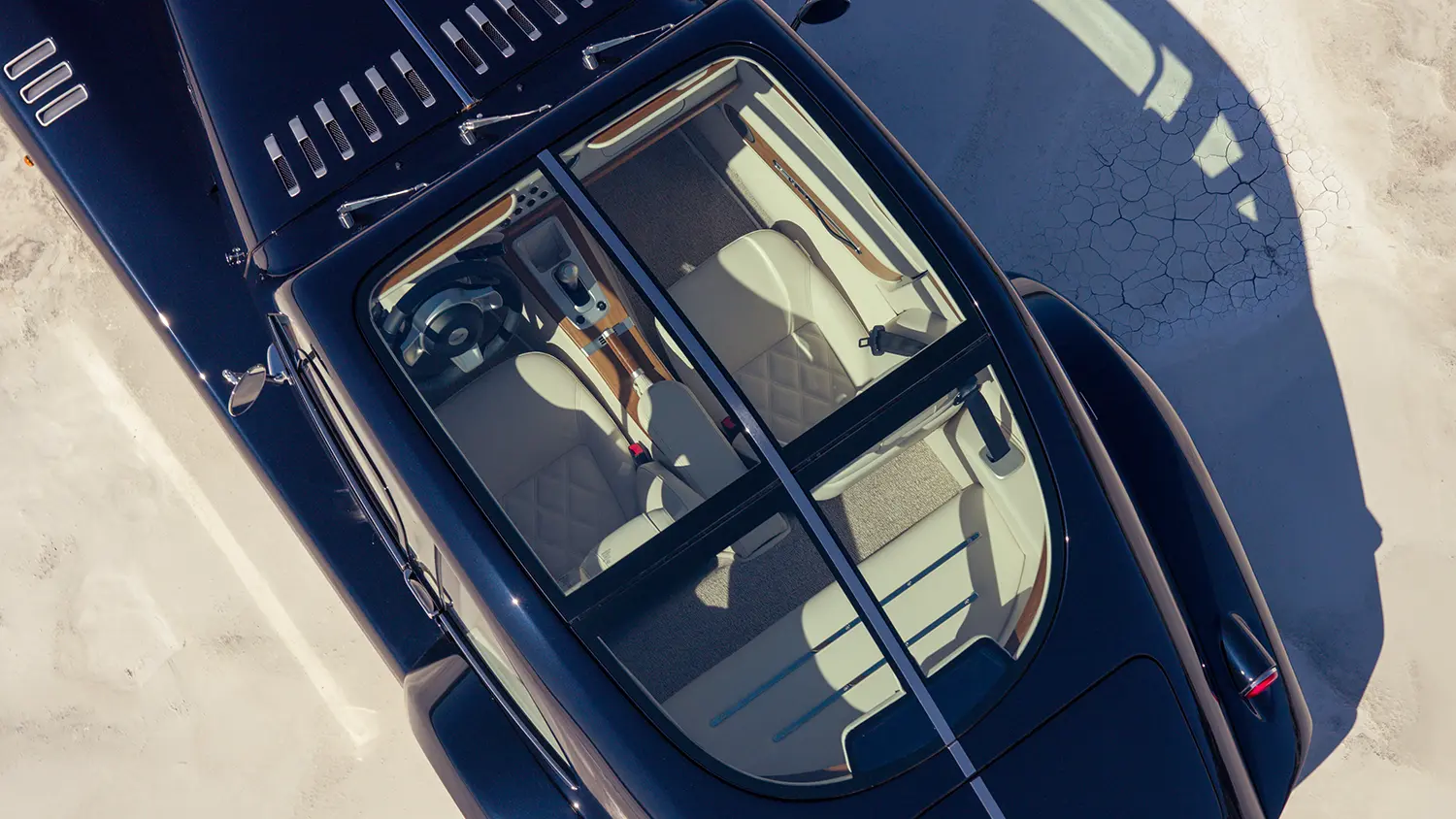
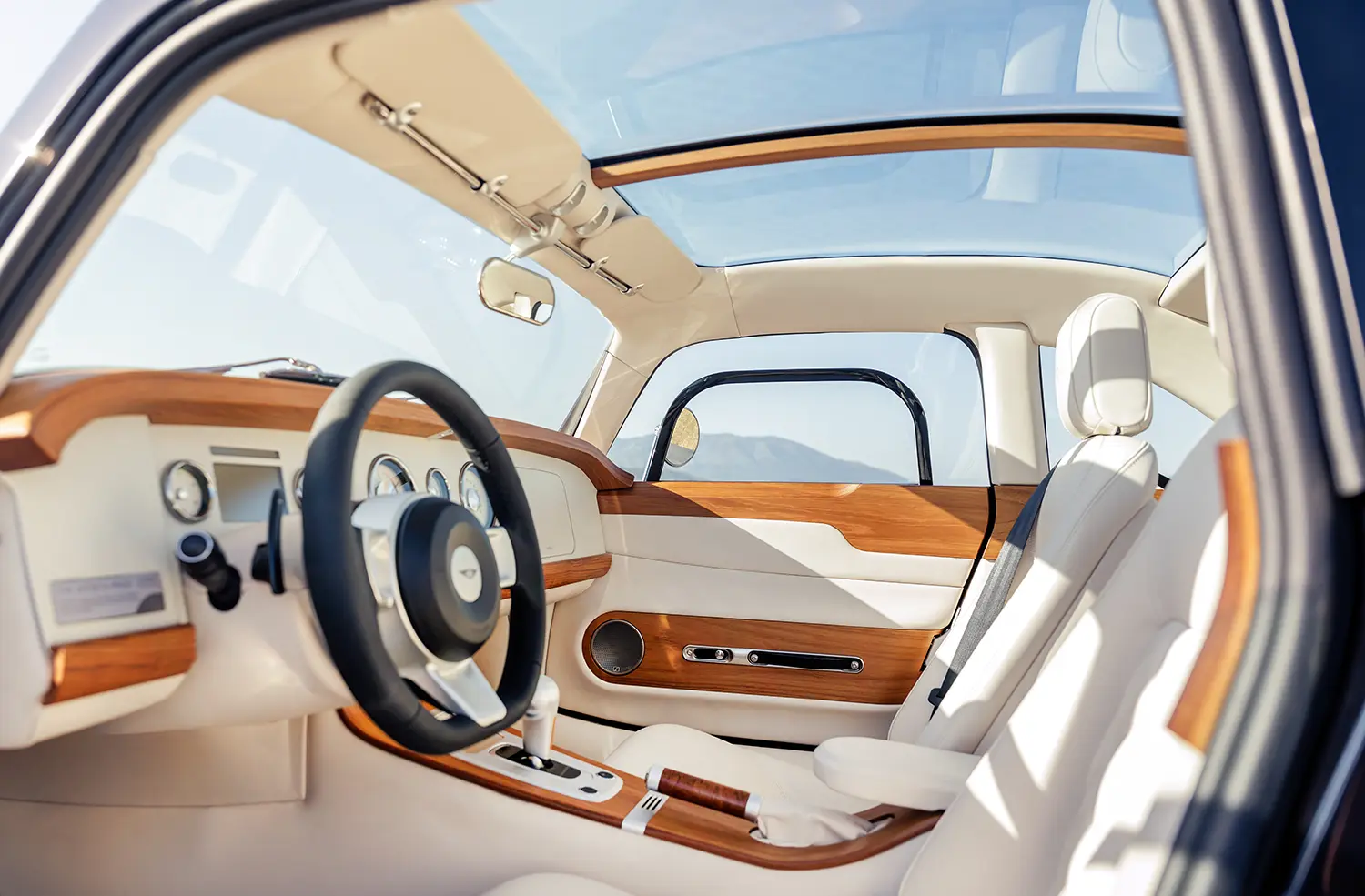
The interior extends the structural logic into material expression. Teak appears throughout — on the gear selector inlay, the sun visors, the rear-view mirror mounting — all carried on a solid aluminium rail spanning the width of the cabin. The glazed roof floods the interior with natural light, and the window switches are mounted within the roof structure itself, making a functional interaction into a formal one. Laminated wood panels, built from veneers approximately 0.6mm thick and hand-fitted to each car, serve as both surface and acoustic damping — the natural properties of wood reducing aluminium panel resonance in a structure where the skin itself carries load. “Midsummer Coupé introduces a new level of interior craftsmanship,” said Jonathan Wells, Chief Design Officer at Morgan. The prototype will join the Louwman Collection in The Hague; the nine client commissions will each be developed individually through direct collaboration between owner and Morgan’s design team, with colour, leather, timber finish, and bespoke detail determined per vehicle.
The 19-inch forged aluminium wheels are Morgan’s most complex wheel design to date, combining polished and painted finishes and previewing the breadth of personalization available across the nine commissions. The combination of forged aluminium construction and highly detailed form introduces a level of visual sophistication that the original Midsummer — deliberately more restrained in its detailing — did not attempt. Each commission will be materially distinct: shared body architecture, entirely individual execution. It is a model for bespoke production that Morgan has practiced for over a century, now applied at a level of structural and aesthetic ambition the company has not previously reached.
The question the Midsummer Coupé poses — and answers — is whether Morgan Motor Company’s coachbuilding programme can produce objects of genuine architectural conviction rather than expensive personalization exercises. The structural evidence says yes. Unlike the broader automotive industry’s current anxiety about whether heritage and innovation can coexist — a tension the Ferrari Luce controversy made visible — Morgan has not attempted to resolve that tension. It has simply continued developing its own structural vocabulary at higher resolution, commissioning by commissioning. Nine vehicles is barely a series. But the techniques developed here — the bonded glazing, the stressed-skin aluminium, the laser-verified hand-forming — will shape what Morgan can propose next. The Midsummer Coupé is not a statement about the past. It is a proof of capability for whatever comes after.